Hardcover. NY, Atlantic Monthly Press, 1st, 1988, Book: Very Good, Dust Jacket: Very Good, Hardcover, 101 pages. Black & white photos of Hollywood in the 1980s. Introduction by Bret Easton Ellis.
Hardcover. New York, Abbeville Press, 1st, 1985, Dust Jacket: Near Fine, 228 pages. Pink cloth covered hardcover with gray lettering on spine. Square quarto. B/W and color plates. a romantic and nostalgic look back at the fabulous nightclubs and palaces of entertainment that lined the Hollywood hills and spread across California's Southland in the heyday of the film capital, from 1915 to 1945. Clean, bright copy.
Softcover. NY, Harry N. Abrams, 1st, 2003, Book: Very Good, Dust Jacket: None, Softcover, 160 pages. An entertaining collection celebrating the work of cutting-edge animation filmmakers features frame grabs, production stills, original artwork, behind-the-scenes photographs, and interviews from twenty-five years of teh Spike & Mike Festival of Animation, with works by Nick Park and Peter Lord of Aardman, John Lasseter, Craig McCracken, Mike Judge, and others.
Softcover. NY, Harry N. Abrams, 1st, 2003, Book: Very Good, Dust Jacket: None, Softcover, 160 pages. An entertaining collection celebrating the work of cutting-edge animation filmmakers features frame grabs, production stills, original artwork, behind-the-scenes photographs, and interviews from twenty-five years of teh Spike & Mike Festival of Animation, with works by Nick Park and Peter Lord of Aardman, John Lasseter, Craig McCracken, Mike Judge, and others.
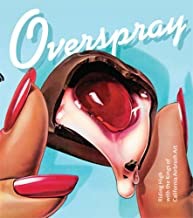
Hardcover. NY, PictureBox, 1st, 2008, Book: Very Good, Dust Jacket: Very Good, Hardcover, 226 pages. Color illustrations. Overspray is the conclusive account of the rise of airbrush art, and of the equally bright and glossy Los Angeles culture alongside which it came to prominence in the 1970s. Inspired by surf graphics, psychadelia and the slick shine of Hollywood, a generation of young artists began to make every lip and palm tree glisten, and every record cover shine. Fueled by a combination of intense demand, sleepless nights and brutal competition, the four men at the center of L.A.'s airbrush art market--Charles E. White III, Peter Palombi, Dave Willardson and Peter Lloyd-embarked on careers encompassing work for Playboy, Levi's, the Rolling Stones, Rod Stewart and major studio films including American Graffiti and Tron. Together, their work came to define the look of illustrative graphics for a generation of viewers. This book tells the story of these four artists for the first time through hundreds of images of the artists' best and best-known work, unseen production roughs, documentary photographs and other ephemera. Viewed now, their surreal, funny and utterly slick imagery seems all the more fantastic-combining technical precision with wild flights of imagination that bring to mind the work of some of today's top artists, from Takashi Murakami to Matthew Barney. Essay by Mike Salisbury, acclaimed designer of everything from Disney logos to Jurassic Park ad campaigns to Sassy magazine.
Hardcover. NY, Assouline, 1st, 1998, Book: Very Good, Dust Jacket: Very Good, Hardcover, 80 pages. Photos from the Rome-based hunters of famous faces and celebrities in the 1960s who inspired Fellini's LA Dolce Vita.
Hardcover. NY, Hyperion, 2nd Ed., 2006, Book: Very Good, Dust Jacket: Very Good, Hardcover, 288 pages. Canemaker's second volume on Disney animation (his first was Before the Animation Begins, pub. 11/15/96) covers new territory. Focusing on the birth and progression of the storyboard method, the noted animator/historian explores both the history and the personalities of the Disney storyboard department. He takes readers from the early Disney days (when Walt created the storyboard to add depth and substance to the animated shorts the early studio produced) to today (when ever-changing teams of story specialists gather material and prepare sequence drawings before artists flesh out those Disney masterpieces). Along the way, Canemaker reveals the human effort required to bring an animated film to life and throws in juicy tidbits garnered from his interviews with animation pioneers. Lavish illustrations accompany the text. Recommended for larger public libraries and essential for collections in film and animation history.
Hardcover. NY, Hyperion, 2nd Ed., 2006, Book: Very Good, Dust Jacket: Very Good, Hardcover, 288 pages. Canemaker's second volume on Disney animation (his first was Before the Animation Begins, pub. 11/15/96) covers new territory. Focusing on the birth and progression of the storyboard method, the noted animator/historian explores both the history and the personalities of the Disney storyboard department. He takes readers from the early Disney days (when Walt created the storyboard to add depth and substance to the animated shorts the early studio produced) to today (when ever-changing teams of story specialists gather material and prepare sequence drawings before artists flesh out those Disney masterpieces). Along the way, Canemaker reveals the human effort required to bring an animated film to life and throws in juicy tidbits garnered from his interviews with animation pioneers. Lavish illustrations accompany the text. Recommended for larger public libraries and essential for collections in film and animation history.
Hardcover. NY, Disney Editions, 1st, 1999, Book: Very Good, Dust Jacket: Very Good, Hardcover in a bright dust jacket. Featuring the art and artists used to plan and map out Disney's many classic animated films, a collection of "storyboard" images offers a fascinating retrospective of the company's history of animation, from Snow White to The Hunchback of Notre Dame.
Hardcover. NY, Simon & Schuster, 1st, 2022, Book: Very Good, Dust Jacket: Very Good, Hardcover in a bright, unclipped dust jacket. Jim Thorpe rose to world fame as a mythic talent who excelled at every sport. He won gold medals in the decathlon and pentathlon at the 1912 Stockholm Olympics, was an All-American football player at the Carlisle Indian School, the star of the first class of the Pro Football Hall of Fame, and played major league baseball for John McGraw's New York Giants. Even in a golden age of sports celebrities, he was one of a kind. But despite his colossal skills, Thorpe's life was a struggle against the odds. As a member of the Sac and Fox Nation, he encountered duplicitous authorities who turned away from him when their reputations were at risk. At Carlisle, he dealt with the racist assimilationist philosophy "Kill the Indian, Save the Man." His gold medals were unfairly rescinded because he had played minor league baseball. His later life was troubled by alcohol, broken marriages, and financial distress. He roamed from state to state and took bit parts in Hollywood, but even the film of his own life failed to improve his fortunes. But for all his travails, Thorpe did not succumb. The man survived, complications and all, and so did the myth. Clean, like new.
Hardcover. New York, Aperture Foundation and Fundacion Televisa, 1st, 2010, Book: Very Good, Dust Jacket: None, Hardcover issued without a dust jacket. This publication tells the story of the photographer's journeys through Mexico in the early 1930s. In search of a fresh start, Strand traveled to Mexico City in late 1932 at the invitation of Carlos Chavez, the eminent Mexican composer and conductor. The culmination of Strand's time in Mexico was his collaboration with Emilio Gomez Muriel and Academy Award-winning director Fred Zinnemann on the groundbreaking film, Redes (The Wave) (1936). A remastered DVD version of the film is included in this volume. Illus., 100 color/89 tritone/240 b&w. 356 pages.
Hardcover. NY, Oxford University Press, 2nd pr., 2112, Book: Very Good, Dust Jacket: Very Good, Hardcover in a bright dust jacket, 270 pages. Since the birth of cinema at the end of the nineteenth century religion and film have been entwined. The Jesus-story and other religious narratives were the subject matter of some of the earliest cinema productions and this relationship has continued into the present. A recent proliferation of texts, conferences and courses bear witness to burgeoning academic interest in the relation between religion and film. In this study, Jonathan Brant explores the possibility that even films lacking religious subject matter might have a religious impact upon their viewers, the possibility of revelation through film. The book begins with a reading of Paul Tillich's theology of revelation through culture and continues with a qualitative research project which grounds this theoretical account in the experiences of a group of filmgoers. The empirical research takes place in Latin America where the intellectual puzzle and central research questions that drive the thesis arose and developed.
Softcover. Austin TX, University of Texas Press, reprint, 1982, Book: Very Good, Dust Jacket: None, Softcover, 260 pages, b&w photos. There have been very few directors in the history of Hollywood who have ever had as hard a time as Sam Peckinpah did. In a career that lasted only from 1961 to his death near the end of 1984, the man known (rather errantly) as Bloody Sam made only fourteen films--not exactly a large volume work. Despite this, however, and despite (or perhaps because of) his penchant for raising hell with studio heads and producers, Peckinpah was a never-a-dull-moment director. And when he wasn't doing that, he made himself a target for critics, both inside and outside of Hollywood, with his graphic and complex approaches to violence (his 1969 Western epic THE WILD BUNCH), while at the same time also numbering among his films two, largely non-violent gems in THE BALLAD OF CABLE HOGUE and JUNIOR BONNER that prove that the man was able to show sides of the human experience that didn't involve bullets or bloodshed.
Hardcover. Urbana IL, University of Illinois Press, 1st revised, 1997, Book: Very Good, Dust Jacket: Very Good, Hardcover in a bright dust jacket, 410 pages. The book that re-established Peckinpah's reputation--now thoroughly revised and updated! When critics hailed the 1995 re-release of Sam Peckinpah's masterpiece, The Wild Bunch, it was a recognition of Paul Seydor's earlier claim that this was a milestone in American film, perhaps the most important since Citizen Kane. Peckinpah: The Western Films first appeared in 1980, when the director's reputation was at low ebb. The book helped lead a generation of readers and filmgoers to a full and enduring appreciation of Peckinpah's landmark films, locating his work in the central tradition of American art that goes all the way back to Emerson, Hawthorne, and Melville. In addition to a new section on the personal significance of The Wild Bunch to Peckinpah, Seydor has added to this expanded, revised edition a complete account of the successful, but troubled, efforts to get a fully authorized director's cut released. He describes how an initial NC-17 rating of the film by the Motion Picture Association of America's ratings board nearly aborted the entire project. He also adds a great wealth of newly discovered biographical detail that has surfaced since the director's death and includes a new chapter on Noon Wine, credited with bringing Peckinpah's television work to a fitting resolution and preparing his way for The Wild Bunch. This edition stands alone in offering full treatment of all versions of Peckinpah's Westerns. It also includes discussion of all fourteen episodes of Peckinpah's television series, The Westerner, and a full description of the versions of Pat Garrett and Billy the Kid now (or formerly) in circulation, including an argument that the label "director's cut" on the version in release by Turner is misleading. Additionally, the book's final chapter has been substantially rewritten and now includes new information about Peckinpah's background and sources.
Hardcover. NY, Miramax/Hyperion, 1st, 1997, Book: Very Good, Dust Jacket: Very Good, Hardcover, 191 pages, in a bright, unclipped dust jacket.Profusely illustrated with black and white film stills. With a knowledgeable text by the director and film historian. Clean.
Hardcover. NY, Pantheon, 1st, 1997, Book: Very Good, Dust Jacket: Very Good, Hardcover in a bright, unclipped dust jacket, 470 pages. An unfinished novel by the murdered Italian author and filmmaker focuses on Carlo, a left-wing Italian Catholic working for the state-controlled oil company, a man who becomes obsessed with satisfying his perverse, insatiable sexual passions. Small remainder dot to bottom edge otherwise a clean copy of this now scarce book.
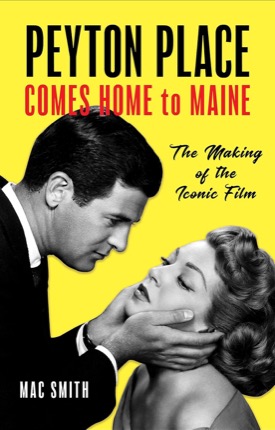
Hardcover. Down East Books, 1st, 2019, Book: Very Good, Dust Jacket: Very Good, Hardcover in a bright, unclipped dust jacket. 110 pages, b&w illustrations. It is a well-known fact, perhaps legend now, that Peyton Place, the controversial, scandalous blockbuster was filmed in Camden, Maine and the surrounding towns in 1957. But how did the movie come to be filmed in Maine, who was involved in getting it here, and what did the locals think about 20th Century Fox shooting a big-budget film in their front yards? Historian Mac Smith has done the research and conducted the interviews and presents a fascinating account of events and key players. Beginning with the arrival of film crews, he traces the making of the movie, what happened after the crews left, and the premiere of the film, which was held in Camden. Clean copy.
Hardcover. Chicago, Chicago Review Press, 1st, 2007, Book: Very Good, Dust Jacket: Very Good, Hardcover in a bright, unclipped dust jacket. 378 pages, b&w illustrations. Lanza looks at the life and work of director Ken Russell, detailing the wild ideas, surreal moments, personal faith, and the cavalcade of colorful personalities surrounding this eccentric filmaker, on and off the set. Clean copy.
Hardcover. Berlin, Guido Hackebeil, 1st, 1926, Book: Very Good, Dust Jacket: None, 344 pages plus tables, ads in rear. Red cloth spine, cream colored boards with light soil. A book on amateur film making, b&w illustrations, German text. AGFA has an ad in the back with actual film stills. Previous owner's bookplate, signature on front fly leaf, otherwise clean.
Hardcover. New York, Pace Wildenstein, 1st, 2007, Book: Very Good, Dust Jacket: Very Good, Hardcover, 188 pages. Illustrated in full color and black & white. Clean, bright copy.
Hardcover. New York, PaceWildenstein, 1st, 2007, Book: Very Good, Dust Jacket: Very Good, 187 pages. Hardcover with dust jacket. Sun fading to dust jacket spine and front cover. An otherwise very clean, unmarked copy with only minor wear to dust jacket edges. Color works throughout as well as black & white and color film stills. A tight copy.
Softcover. New Haven CT, Yale University Press, 1st, 2005, Book: Very Good, Dust Jacket: None, Softcover, 144 pages. Comics, graphic novels, and single panel cartoons have long flourished as an alternative medium. In recent years these forms of narrative illustration-artwork that tells its own story rather than supporting a text-have increasingly crossed over into mainstream popular culture. Pictorial storytelling now reaches the public through animated films (Spirited Away) and films with animated sequences (Kill Bill), while graphic novels win literary prizes and comic art hangs in art galleries. This delightful book explores the various uses of images with and without text in the work of over thirty artists from around the world.
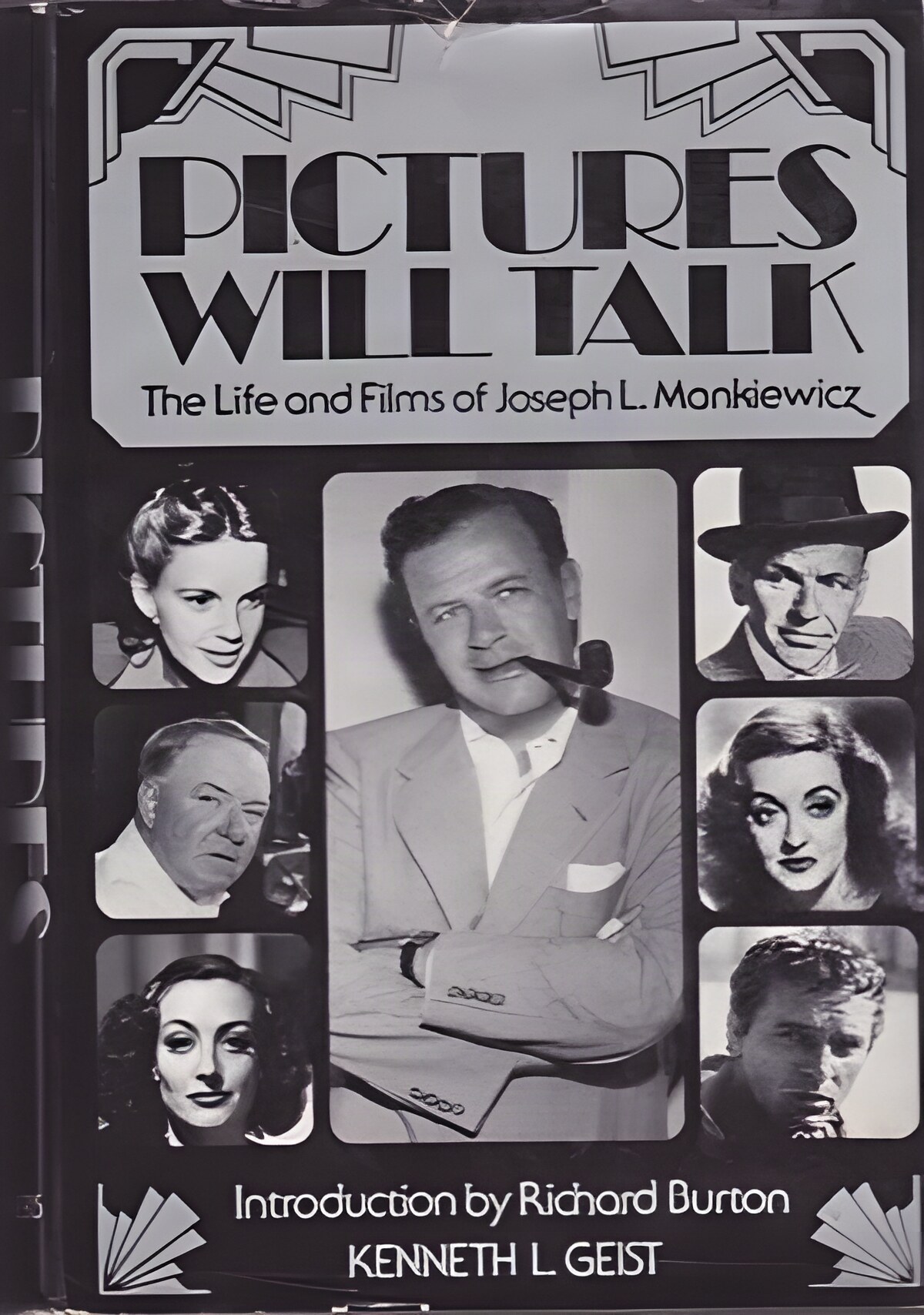
Hardcover. NY, Charles Scribner's Sons, 1st, 1978, Book: Very Good, Dust Jacket: Very Good, Hardcover in a bright dust jacket with light edgewear. Introduction by Richard Burton. An in depth look at the career and films of Joseph Mankiewicz whose career spanned nearly half a century. His credits include such classics as The Philadelphia Story; A Letter to Three Wives; All About Eve, and Five Fingers. 443 pages, b&w photos. Clean copy.
Hardcover. London, Arcperiplus Publishing, 1st UK, 2002, Book: Very Good, Dust Jacket: Very Good, Hardcover in a bright dust jacket. Two major events in the Buddhist world occurred in 2002. In January, the small village of Bodhgaya in Bihar, India, was chosen by the Dalai Lama as the site for the highly important Kalachakra Initiation ceremony. Some half-million pilgrims made their way there by any means possible. In May, at the holy Mount Kailash in Tibet, the celebration of the Buddha's birth and death was particularly auspicious in this Year of the Horse, and the usual trickle of pilgrims swelled to tens of thousands. Photographer Lena Herzog, wife of film director Werner Herzog, presents this evocative album of 146 color images of the holy and the penitent.

 "Our Hollywoodby: Strick, David, Bret Easton Ellis")

 "Outlaw Animation: Cutting-Edge Cartoons from the Spike and Mike Festivalsby: Beck, Jerry")

 "Paparazzi: The Early Yearsby: Taroni, Francesca")


 "Paper Dreams: The Art And Artists Of Disney Storyboardsby: Canemaker, John")

 "Paul Strand in Mexico by: Krippner, James")

 "Peckinpah: A Portrait in Montageby: Garner Simmons")

 "Personal Journey With Martin Scorsese Through American Movies, Aby: Scorsese, Martin And Wilson, Michael Henry")
 "Petrolioby: Pier Paolo Pasolini")