Softcover. Urbana, University of Illinois Press, 1st, 2005, Book: Very Good, Dust Jacket: None, Softcover, 277 pages. Starting in the 1980s, anti-immigrant discourse shifted away from the "color" of immigrants to their religion and culture. It focused in particular on newcomers from Muslim countries--people feared both as terrorists and as products of tribal societies with values opposed to those of secular Western Europe. Leo Lucassen tackles the question of whether the integration process of these recent immigrants will fundamentally differ in the long run (over multiple generations) from the experiences of similar immigrant groups in the past. For comparison, Lucassen focuses on "large and problematic groups" from Western Europe's past (the Irish in the United Kingdom, the Poles in Germany, and the Italians in France) and demonstrates a number of structural similarities in the way migrants and their descendants integrated into these nation states. Lucassen emphasizes that the geographic sources of the "threat" have changed and that contemporaries tend to overemphasize the threat of each successive wave of immigrants, in part because the successfully incorporated immigrants of the past have become invisible in national histories. Clean copy.
Hardcover. Boston, Little, Brown and Company, 1st, 1957, Book: Very Good, Dust Jacket: None, Hardcover, blue cloth with gilt lettering on spine. Volume XI in The History of United States Naval Operations in World War II. 360 pages, illustrated with maps (one fold-out) and b&w photos. Gilt on spine with light fading, lacks dust jacket, dj flap copy pasted inside front cover, otherwise clean, tight copy.
Softcover. NY, Oxford University Press, reprint, 1989, Book: Very Good, Dust Jacket: None, Softcover, 310 pages. Jacques Adler (1927-2017) was born in 1927. Jacques brought his experience in the Resistance to the study of history and used it in his pioneering Ph.D. Jacques joined the Jewish underground in Paris and was active throughout the war. During the Liberation, Jacques was involved in the Resistance takeover of the offices of the Union generale des israelites de France (UGIF), the organization which the Vichy regime forced French Jews to create and pay for in order to control the Jewish community. Clean copy.
Hardcover. Philadelphia , Hogan and Thompson, reprint, 1836, Book: Good, Dust Jacket: None, Hardcover, leather bound, 285 pages with index. Front fly leaf gone, book opens to title page. Hinges cracked, rear cover barely holding on. No markings.
Hardcover. Gloucester MA, Peter Smith, reprint, 1959, Book: Very Good, Dust Jacket: None, Hardcover, light blue cloth with dark blue lettering on spine. 360 pages. Originally published in 1902. The author looks at the formation of the Tory or Loyalist party in the American Revolution, its persecution, the banishment (or death) of over 100,000 of these most conservative and respectable Americans, and the consequences of their banishment. In numbers, historically it is only comparable to the fates of the Moors of Spain and the Huguenots of France. This was the first book by the famous historian Claude Halstead van Tyne (1869-1930), who was a Michigan and Pennsylvania professor and author who wrote extensively on the American Revolution. Name on front fly leaf, otherwise a bright, clean copy.
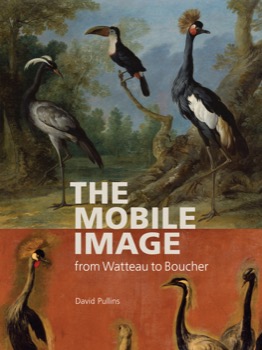
Softcover. Los Angeles, Getty Research Institute, 1st, 2024, Book: Very Good, Dust Jacket: None, Softcover, 199 pages illustrated in color. This book provides a new way of thinking about eighteenth-century French art and visual culture by prioritizing production over reception. Abandoning the ideologically driven discourse that distinguished fine from decorative art between the 1690s and 1770s, The Mobile Image reveals how the two have been inextricably bound from the earliest stages of artistic instruction through the daily life of painters' workshops. In this study, author David Pullins defines artisanal and artistic means of learning, seeing, and making through a system of "mobile images": motifs that were effectively engineered for mobility and designed never to be definitive, always awaiting replication and circulation. He examines the careers of Antoine Watteau, Jean-Baptiste Oudry, and Francois Boucher, situating them against a much broader cast of actors--such as printmakers, publishers, anonymous studio assistants, and architects, among others--to place eighteenth-century painting within a wider context of media and making. clean, bright copy.
Hardcover. NY, Verso, 1st, 2009, Hardcover in a bright, unclipped dust jacket, 561 pages. The New Old World looks at the history of the European Union, the core continental countries within it, and the issue of its further expansion into Asia. It opens with a consideration of the origins and outcomes of European integration since the Second World War, and how today's EU has been theorized across a range of contemporary disciplines. It then moves to more detailed accounts of political and cultural developments in the three principal states of the original Common Market-France, Germany and Italy. A third section explores the interrelated histories of Cyprus and Turkey that pose a leading geopolitical challenge to the Community. The book ends by tracing ideas of European unity from the Enlightenment to the present, and their bearing on the future of the Union. The New Old World offers a critical portrait of a continent now increasingly hailed as a moral and political example to the world at large. Clean copy.
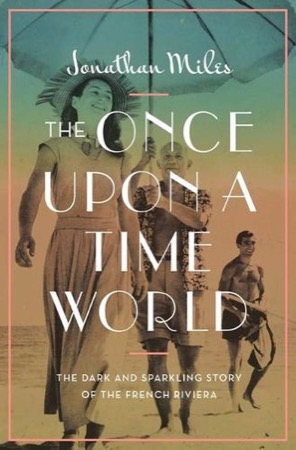
Hardcover. NY, Pegasus Books, 1st, 2023, Book: Very Good, Dust Jacket: Very Good, Hardcover in a bright, unclipped dust jacket. Chronicling two-hundred years of glamour, intrigue, and hedonism, this rich and vivid history of the French Riviera features a vast cast of characters, from Pablo Picasso and Coco Chanel to Andre Matisse and James Baldwin. In 1835, Lord Brougham founded Cannes, introducing bathing and the manicured lawn to the wilds of the Mediterranean coast. Today, much of that shore has become a concrete mass from which escape is an exclusive dream. In the 185 years between, the stretch of seaboard from the red mountains of the Esterel to the Italian border hosted a cultural phenomenon well in excess of its tiny size. A mere handful of towns and resorts created by foreign visitors - notably English, Russian and American - attracted the talented, rich and famous as well as those who wanted to be. For nearly two centuries of creativity, luxury, excess, scandal, war and corruption, the dark and sparkling world of the Riviera was a temptation for everybody who was anybody. Clean copy.
Hardcover. NY, Farrar, Straus and Giroux, 1st, 2015, Book: Very Good, Dust Jacket: Very Good, Hardcover in a bright, unclipped dust jacket. Paris, the City of Light, the city of fine dining and seductive couture and intellectual hauteur, was until fairly recently always accompanied by its shadow: the city of the poor, the outcast, the criminal, the eccentric, the willfully nonconforming. In The Other Paris, Luc Sante gives us a panoramic view of that second metropolis, which has nearly vanished but whose traces are in the bricks and stones of the contemporary city, in the culture of France itself, and, by extension, throughout the world.Drawing on testimony from a great range of witnesses-from Balzac and Hugo to assorted boulevardiers, rabble-rousers, and tramps-Sante, whose thorough research is matched only by the vividness of his narration, takes the reader on a whirlwind tour. Richly illustrated with more than three hundred images, The Other Paris scuttles through the knotted streets of pre-Haussmann Paris, through the improvised accommodations of the original bohemians, through the whorehouses and dance halls and hobo shelters of the old city. A lively survey of labor conditions, prostitution, drinking, crime, and popular entertainment, and of the reporters, realiste singers, pamphleteers, and poets who chronicled their evolution, The Other Paris is a book meant to upend the story of the French capital, to reclaim the city from the bons vivants and the speculators, and to hold a light to the works and lives of those expunged from its center by the forces of profit.
Hardcover. New Haven CT, Yale University Press, 1st, 2007, Book: Very Good, Dust Jacket: Very Good, Hardcover, 288 pages. The meaning of a painted portrait and even its subject may be far more complex than expected, Tamar Garb reveals in this book. She charts for the first time the history of French female portraiture from its heyday in the early nineteenth century to its demise in the early twentieth century, showing how these paintings illuminate evolving social attitudes and aesthetic concerns in France over the course of the century.
Hardcover. New Haven CT, Yale University Press, 1st, 1997, Book: Very Good, Dust Jacket: Very Good, Hardcover in a bright dust jacket, 354 pages, b&w illustrations. An illustrated study brings to life the atmosphere and personalities of pre-revolutionary Paris, traces their influence on the American envoy, and recounts his participation in the life of the city and its intrigues at court. Clean copy.
Hardcover. NY, Knopf, 1st, 1964, Book: Very Good, Dust Jacket: Very Good, Hardcover in a nice, unclipped dust jacket with light tanning to spine. 290 pages plus index. Clean copy. THE ENLIGHTENMENT has long been the victim of uninformed or hostile criticisms. Even so respected a source as the Shorter Oxford English Dictionary defines the Enlightenment as "shallow and pretentious intellectualism, unreasonable contempt for authority and tradition," thus collecting in one sentence most of our current prejudices. In this provocative book--at once a scholarly study and a vigorous polemic--Peter Gay sets out to shatter old myths, to sort out illusion from reality, and to restore the men of the Enlightenment--Voltaire, Rousseau, Diderot--to the esteem they deserve.
Hardcover. NY, Walker & Company, 1st, 2000, Book: Very Good, Dust Jacket: Very Good, Hardcover in a bright, unclipped dust jacket. chronicles the Roman Catholic Church's crusade against--and ultimate annihilation of--the Albigenses, or Cathars, a group of heretical Christians who thrived in what is now the Languedoc region of Southern France. The Cathars held revolutionary beliefs that threatened the authority of the church. The world, they maintained, was not created by a benevolent God. Rather, it was the creation of a force of darkness, immanent in all things. They considered worldly authority a fraud, and authority based on some divine sanction, such as claimed by the church, outright hypocrisy. Innocent III, resolved to eradicate the Cathar threat to church authority, recruited the military powers of France, eager to expand their territory to the south. Together, they systematically exterminated the Cathars and their supporters in a series of crusades between 1209 and 1229. The Dominican-led Inquisition that ensued built upon this momentum of intolerance and tormented Europe for centuries to come. 333 pages, endpapers map.
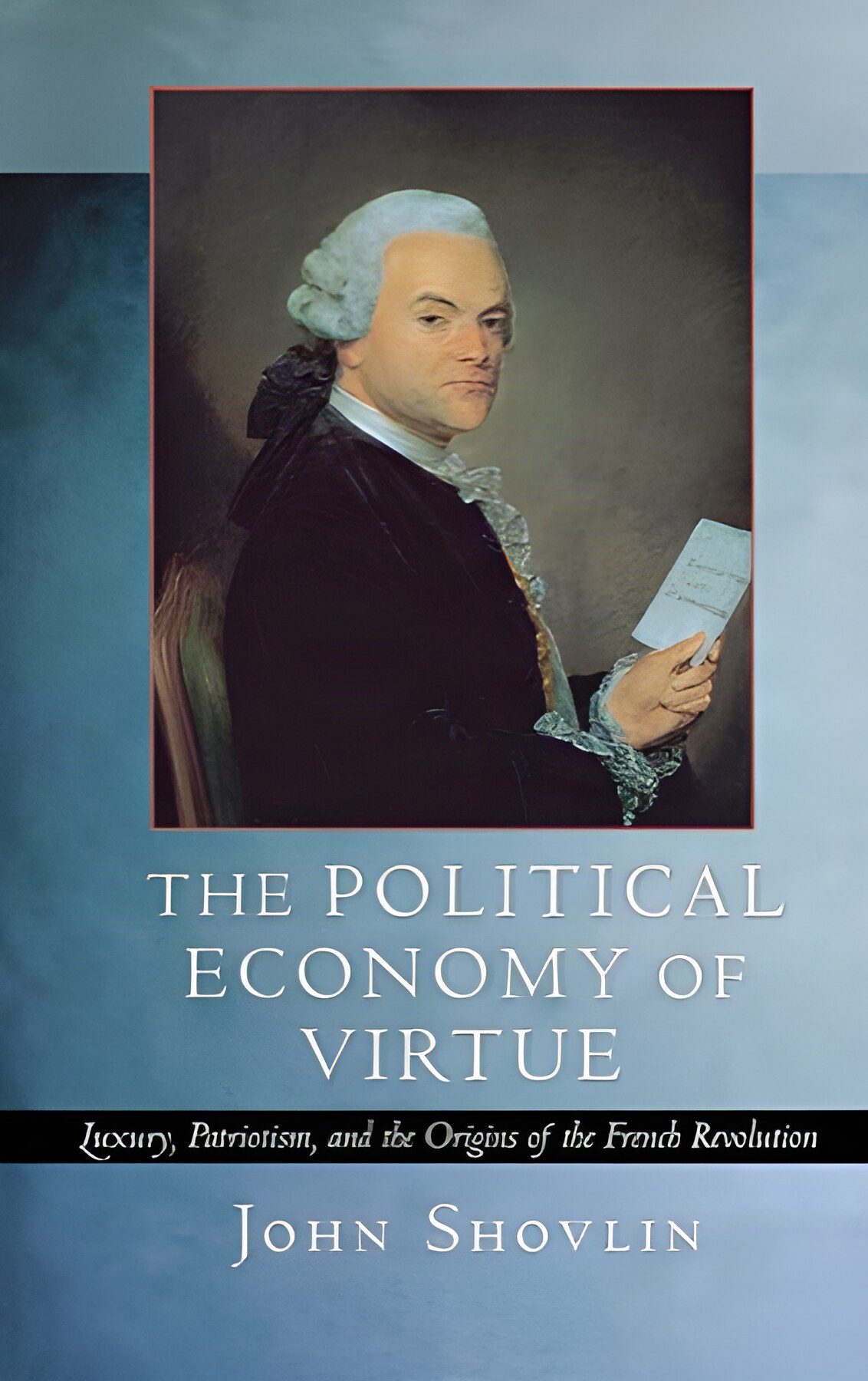
Softcover. Ithaca NY, Cornell University Press, 1st pbk., 2007, Book: Very Good, Dust Jacket: None, Softcover, 265 pages. Drawing on hundreds of political economic tracts published in France between the 1740s and the early nineteenth century, Shovlin shows how mid-level French elites (magistrates, clerics, lawyers, soldiers, landed gentlemen) sought to balance their interests and values with the need to regenerate a nation that had seemingly entered a period of decline. In their view, France's moral, political, and economic power depended not simply on expanding the national wealth but also on reviving civic spirit. The "political economy of virtue" held that luxury was the cause of the nation's economic and moral degeneration. When the monarchy failed to reform its political economic structures in the 1760s and 1770s, mid-level elites sought to eliminate the stranglehold of the plutocracy. Clean copy.
Hardcover. NY, BlueBridge, 1st US, 2008, Book: Very Good, Dust Jacket: Very Good, Hardcover in a bright dust jacket, 246 pages. This narrative history masterfully weaves together the sweeping events surrounding what has become known as the "Babylonian captivity" of the popes into the broader story of 14th-Century Europe?one of the most turbulent times in the continent's history. It was a time of fear, ferocity, and religious agony, which saw the suppression of the Knights Templar and the Cathars, the first onslaught of the plague, and the beginning of the Hundred Years' War. The century also produced some of the greatest writers and artists in the western tradition, including Giotto, Boccaccio, Petrarch, and Chaucer. Central to this period was the movement of the papal seat from Rome to Avignon in the south of France, where seven successive popes held power from 1309 to 1377. The drama, intrigue, and tumult associated with the papacy in exile forms the perfect lens through which to clearly see a Europe making the transition from the Middle Ages to the Renaissance. Clean copy.
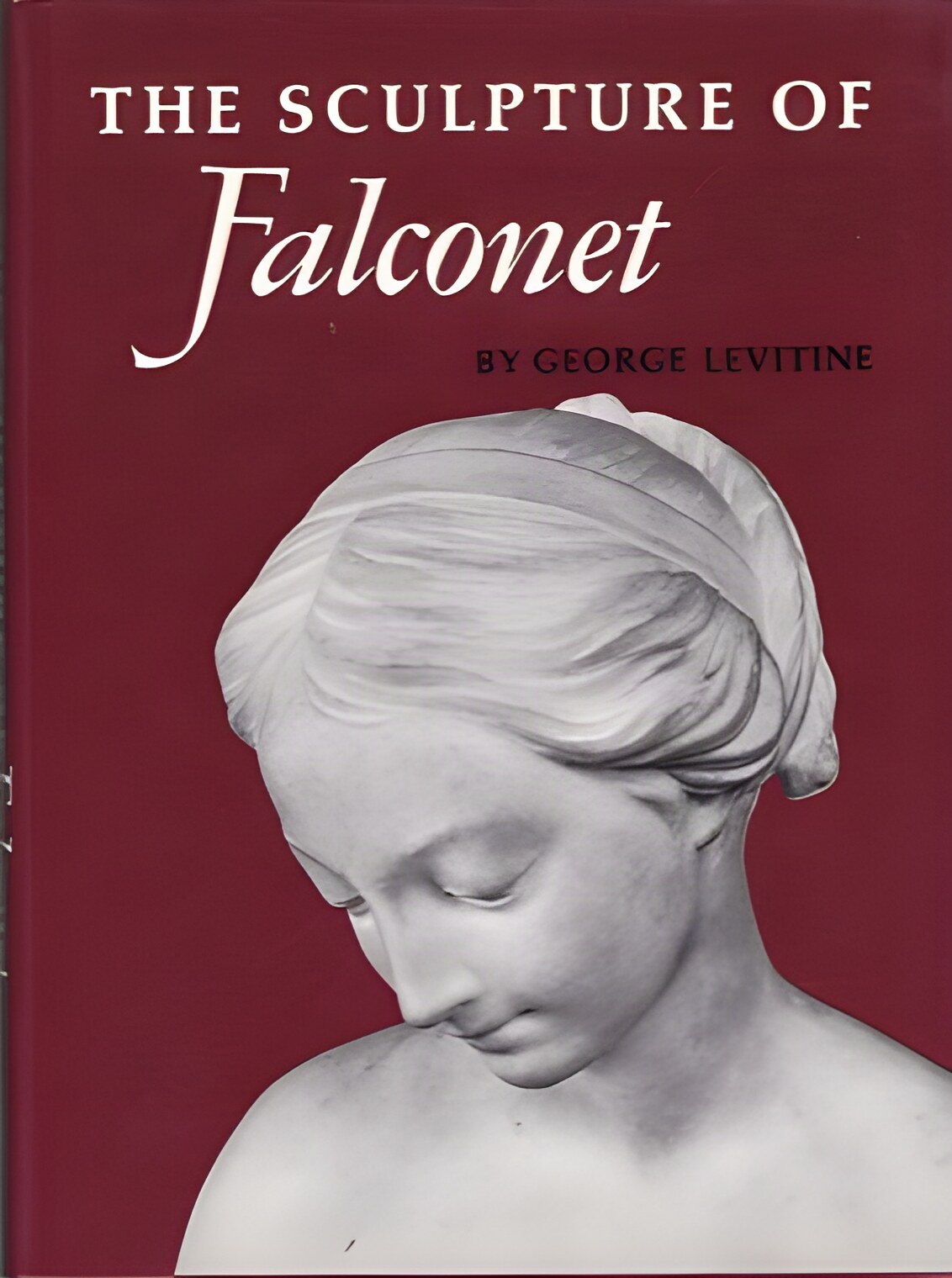
Hardcover. Greenwich CT, New York Graphic Society, 1st, 1972, Book: Very Good, Dust Jacket: Very Good, Hardcover, dark red cloth/dark red DJ. 144 pp. 108 bw plates. All of Falconet's major works and attributions are illustrated in gravure, with many details. Includes a translation from the French of Falconet's Reflections sur la sculpture by Eda Mezer Levitine.
Hardcover. NY, Harry N. Abrams, 1st, 1998, Book: Very Good, Dust Jacket: Very Good, Hardcover in a bright dust jacket. 120 pages illustrated in color. Since the first report of cave art (at Altamira in 1879), attempts have been made to explain the purpose of the mysterious drawings. Art for art's sake; totemism; hunting, destructive, or fertility magic; and modern structuralist theories have all been proposed. Clottes and Lewis-Williams propose a new theory emphasizing the shamanic aspects of Paleolithic cave paintings. After an unavoidably technical chapter providing the basics of shamanism, the authors examine Paleolithic paintings from across France and Spain, noting the use of animal figures, composite figures combining both human and animal characteristics, and geometric designs that are all common elements of shamanism. The bulk of the book is both fascinating and thought-provoking, and while it is not likely to be the last word on the subject, it is an important contribution to the field. Clean, bright copy.
Hardcover. NY, Farrar Straus & Giroux, 1st, 2006, Book: Very Good, Dust Jacket: Very Good, Hardcover in a bright, unclipped dust jacket. 441 pages, index, notes, glossary, chronology, b&w illustrations. A dramatic new interpretation of the French Revolution that draws troubling parallels with today's politic and religious fundamentalism.
Hardcover. NY, Random House, 1st, 1964, Book: Very Good, Dust Jacket: Good, Hardcover in a dust jacket with some fading, 461 pages. History of the six-year period between the fall of Robespierre and the rise of Napoleon Bonaparte. Bookplate on inside front cover, otherwise clean.
Hardcover. Berkeley, University of California Press, 1st, 2006, Book: Very Good, Dust Jacket: Very Good, Hardcover in a bright, unclipped dust jacket, 385 pages, b&w illustrations. In this highly original history of the world's most famous bicycle race, Christopher S. Thompson, mining previously neglected sources and writing with infectious enthusiasm for his subject, tells the compelling story of the Tour de France from its creation in 1903 to the present. Weaving the words of racers, politicians, Tour organizers, and a host of other commentators together with a wide-ranging analysis of the culture surrounding the event including posters, songs, novels, films, and media coverage Thompson links the history of the Tour to key moments and themes in French history. He argues persuasively that this hugely popular sporting event has been instrumental in French attempts to grapple with the great challenges they have confronted during their tumultuous twentieth century from World Wars, political divisions, and class conflict to economic modernization, women's emancipation, and threats to public health. Name on half title page, otherwise clean.
Hardcover. NY, E. P. Dutton, 2nd pr., 1931, Book: Good, Dust Jacket: None, Hardcover, red cloth covers with gilt lettering (now partially faded). 320 pages, b&w plates. Chapters include: The Scientific detective; Human Monsters; Famous bandits; Crimes of the insane; Political crime; Some famous women criminals; The case of a spy - Mata Hari; The Death Penalty. Spine faded, otherwise, clean copy.
Hardcover. Hartford, Joel Barlow, 1st, 1787, Book: Very Good, Dust Jacket: None, 258 pages. Red leather covers with gilt lines along cover edges, and decorations on spine. Covers with light rubbing to edges and at corners. Title on spine in gilt on black. Marbled endpapers. Previous owners name on preliminary page and at top of title page. Includes Dedication to The King of France, and Introduction. All edges gilt.
Hardcover. NY, Random House, 1st, 1985, Book: Very Good, Dust Jacket: Very Good, Hardcover in a bright dust jacket, 487 pages, b&w illustrations. Napoleon's colorful but disastrous Russian campaign has been strangely neglected by American publishers. Bridging the gap between popular and scholarly history, historian Cate has written a thoroughly detailed and researched account that should also appeal to the lay reader. His writing is deliberately paced but dramatic and does far more justice to the extremely complex political and military situation of 1812 than Philippe de Segur's Napoleon's Russian Campaign (1965), the only other work available in the United States. Clean copy.
Hardcover. Princeton NJ, Princeton University Press, 1st, 2010, Book: Very Good, Dust Jacket: Very Good, Hardcover in a bright, unclipped dust jacket, 391 pages. How Maoism captured the imagination of French intellectuals during the 1960s. Michel Foucault, Jean-Paul Sartre, Julia Kristeva, Phillipe Sollers, and Jean-Luc Godard. During the 1960s, a who's who of French thinkers, writers, and artists, spurred by China's Cultural Revolution, were seized with a fascination for Maoism. Combining a merciless expose of left-wing political folly and cross-cultural misunderstanding with a spirited defense of the 1960s, The Wind from the East tells the colorful story of this legendary period in France. Richard Wolin shows how French students and intellectuals, inspired by their perceptions of the Cultural Revolution, and motivated by utopian hopes, incited grassroots social movements and reinvigorated French civic and cultural life.

 "The Immigrant Threat: The Integration of Old and New Migrants in Western Europe since 1850 by: Leo Lucassen")
 "The Invasion of France and Germany, 1944-1945: History of United States Naval Operations in World War II, Volume 11 by: Morison, Samuel Eliot")
 "The Jews of Paris and the Final Solution: Communal Response and Internal Conflicts 1940-1944 by: Adler, Jacques")





 "The Other Paris: The People's City, Nineteenth and Twentieth Centuries by: Luc Sante")
 "The Painted Face: Portraits of Women in France, 1814-1914by: Tamar Garb")
 "The Paris Years of Thomas Jeffersonby: William Howard Adams")




 "The Terror: The Merciless War for Freedom in Revolutionary Franceby: Andress, David")

 "The Tour de France: A Cultural History by: Thompson, Christopher S.")
 "The Underworld of Paris: Secrets of the Surete by: Morain, Alfred")