Hardcover. NY, The Grolier Club, 1st, 2012, Book: Very Good, Dust Jacket: None, Hardcover, cream colored boards with a red cloth spine, 195 pages. Limited to 500 copies. This excellent catalogue includes introductory essays by Martino Marazzi, Francesco Durante, and Robert Viscusi. It contains a bibliography of over 800 primary and secondary Italian-language works printed in America. Signed & inscribed by James Periconi to the previous owner on title page. Light fade to boards at top edge, Clean copy.
Hardcover. Harrisburg, Stackpole Company, 1st, 1961, Book: Good, Dust Jacket: None, 322 pages. Hardcover. Features 16 pages of black & white photographs. Notations in red pencil on 2 maps - pages 92 and 97. Light wear to yellow cloth covers. No dust jacket.
Softcover. Paris, S.N.E.P., 1st, 1952, Book: Very Good, Dust Jacket: None, Softcover. very good. 116 tipped-in color plates, folio, printed beige boards. Paris: Editions SNEP, (1952). Very good (+). The evolution of painting in Europe, from the Middle Ages to the 18th century. PLEASE NOTE: DUE TO WEIGHT, DOMESTIC SHIPPING ONLY.
Softcover. NY, W. W. Norton & Company, reprint, 1985, Book: Very Good, Dust Jacket: None, Softcover, 447 pages, b&w illustrations. Sylvia Beach ran a bookshop in Paris in the 1920s and 30s and was at the heart of the literary world there which also included Hemingway, Pound, Flanner, Gide, and of course Joyce whose novel "Ulysses" she published. Clean, bright copy.
Softcover. NY, Harmony Books, 1st, 1974, Book: Very Good, Oblong softcover, 182 pages. A wonderful photographic documentary of the era: daily life, workers, the rich and/or famous, the military, public schools, etc.
Softcover. Chapel Hill NC, The University of North Carolina Press., 1st pbk, 2000, Book: Very Good, Dust Jacket: None, Softcover, 363 pages, b&w illustrations. Laura Wexler presents an incisive analysis of how the first American female photojournalists contributed to a "domestic vision" that reinforced the imperialism and racism of turn-of-the-century America. These women photographers, white and middle class, constructed images of war disguised as peace through a mechanism Wexler calls the "averted eye," which had its origins in the private domain of family photography. Wexler examines the work of Frances Benjamin Johnston, Gertrude Kasebier, Alice Austen, the Gerhard sisters, and Jessie Tarbox Beals. The book includes more than 150 photographs taken between 1898 and 1904, such as photos Johnston took aboard Admiral Dewey's flagship as it returned home from conquering Manila, Austen's photos of immigrants at Ellis Island, and Beals's images of the St. Louis World's Fair of 1904. In a groundbreaking approach to the study of photography, Wexler raises up these images as "texts" to be analyzed alongside other texts of the period for what they say about the discourses of power. Tender Violence is an important contribution not only to the fields of history of photography and gender studies but also to our growing understanding of U.S. imperialism during this period.
Softcover. NY, Vintage, 1st pbk, 2008, Book: Very Good, Dust Jacket: None, Softcover, pages. That Sweet Enemy brings both British wit (Robert Tombs is a British historian) and French panache (Isabelle Tombs is a French historian) to bear on three centuries of the history of Britain and France. From Waterloo to Chirac's slandering of British cooking, the authors chart this cross-channel entanglement and the unparalleled breadth of cultural, economic, and political influence it has wrought on both sides, illuminating the complex and sometimes contradictory aspects of this relationship--rivalry, enmity, and misapprehension mixed with envy, admiration, and genuine affection--and the myriad ways it has shaped the modern world. Clean copy.
Softcover. NY, New York Review Books, 1st US., 2005, Book: Very Good, Dust Jacket: None, Softcover, 488 pages. In the seventeenth and eighteenth centuries, between the reign of Louis XIII and the Revolution, French aristocratic society developed an art of living based on a refined code of good manners. Conversation, which began as a way of passing time, eventually became the central ritual of social life. In the salons, freed from the rigidity of court life, it was women who dictated the rules and presided over exchanges among socialites, writers, theologians, and statesmen. They contributed decisively to the development of the modern French language, new literary forms, and debates over philosophical and scientific ideas. With a cast of characters both famous and unknown, ranging from the Marquise de Rambouillet to Madame De Stael was a, and including figures like Ninon de Lenclos, the Marquise de Sevigne, and Madame de Lafayette, as well as Pascal, La Rochefoucauld, Diderot, and Voltaire, Benedetta Craveri traces the history of this worldly society that carried the art of sociability to its supreme perfection-and ultimately helped bring on the Revolution that swept it all away. Clean copy.
Hardcover. NY, Doubleday, 1st, 2002, Book: Very Good, Dust Jacket: Very Good, Hardcover in a bright, unclipped dust jacket. The discovery of gold by a team of Mormon mill workers in 1848 sparked a frenzy that shook the world. People swarmed to California from as far as China and Australia. They came from England and France, from Ireland and Chile, leaving behind their families and everything they owned in the hope of making their fortunes in the new world. They came by ship and overland, braving Tierra del Fuego and the pestilences of Panama, lured by the promise of gold. In a spellbinding narrative that spans several continents, Brands brings the fervour and excitement of the gold rush vividly to life. The Age of Gold is narrative history at its best -- the astonishing tale of one of the most extraordinary speculative frenzies in history, told by a master historian. 547 pages, clean copy.
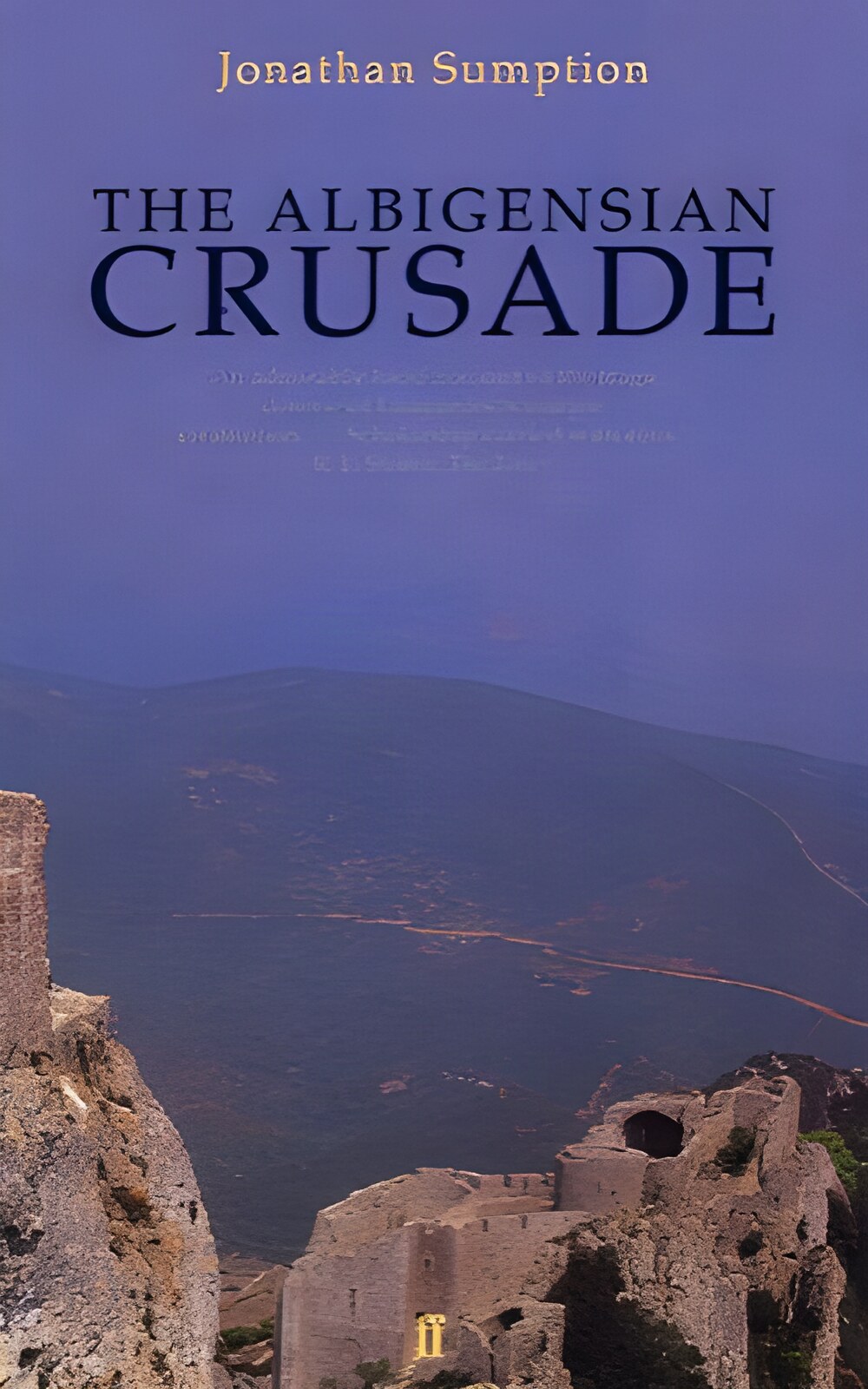
Softcover. UK, Faber & Faber, reprint, 1988, Book: Very Good, Dust Jacket: None, Softcover, 271 pages. In the twelfth century, Languedoc, in the far south, was among the most beautiful parts of France, far away from the world of the feudal north. However, it was in this rich region that a heresy of Eastern origin took hold, forcing the Catholic Church to confront a rival whose teachings questioned the foundations of Christian thought. These heretics, called Cathars, held a profoundly pessimistic view of the world that was based on the duality of all things, including good and evil: according to one heretic, "The one, the good God, made the invisible world, while the other, the evil God, made the visible one." Jonathan Sumption's acclaimed history examines the roots of this heresy as well as of the crusade the Church undertook in 1208 to stamp out the infidels, who ultimately were conquered by the Catholic armies. But this book does more than simply describe this terrible war; it reconstructs a lost world of great cultural richness, one that saw the creation in Languedoc of the troubadour tradition as well as the magnificent castles at Cabaret and Carcassonne. Clean copy.
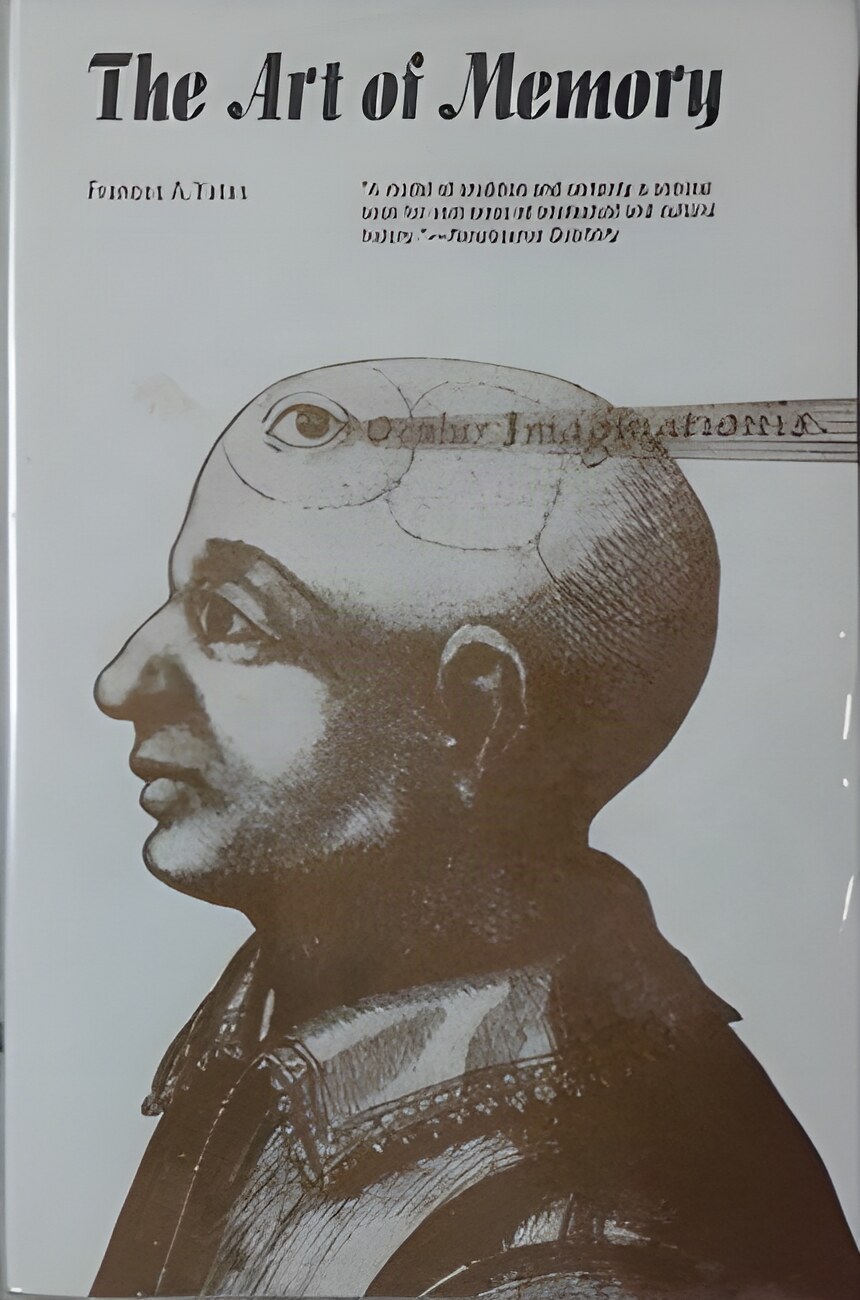
Softcover. Chicago, University of Chicago Press, reprint, 1978, Book: Very Good, Dust Jacket: None, Softcover, 400 pages. A landmark work by English historian Frances A. Yates (1899-1981); an examination of the mnemonic systems developed by the ancient Greeks, and their impact on the Renaissance thought of Giordano Bruno and others. Named one of the top 100 nonfiction books of the century by the Modern Library in 1999. One large fold-out plate, clean copy.
Hardcover. Chicago, University of Chicago Press, 1st, 1996, Book: Very Good, Dust Jacket: Very Good, Hardcover in a bright dust jacket. Clean, bright copy, 467 pages. Illustrated with 36 pages of historic Plates, b/w, on coated paper. One of the most famous works of history, Johan Huizinga presents a brilliant portrait of life, thought, and art in 14th and 15th century France and the Netherlands.
Hardcover. Chicago, University of Chicago Press, 1st, 1996, Book: Very Good, Dust Jacket: Very Good, Hardcover in a bright dust jacket. Clean, bright copy, 467 pages. Illustrated with 36 pages of historic Plates, b/w, on coated paper. One of the most famous works of history, Johan Huizinga presents a brilliant portrait of life, thought, and art in 14th and 15th century France and the Netherlands.
Hardcover. NY/London, Verso, 1st, 2003, Book: Very Good, Dust Jacket: Very Good, Hardcover in a bright, unclipped dustjacket. The violence that has ravaged Algeria has often defied explanation. Regularly invoked in debates about political Islam, transitions to democracy, globalization, and the right of humanitarian interference, Algeria's tragedy has been reduced to a clash of stereotypes: Islamists vs.a secular state, terrorists vs. innocent civilians, or generals vs. a defenseless society. The prevalence of such simplistic representations has disabled public opinion inside as well as outside the country and contributed to the intractability of the conflict. This collection of essays offers a radical corrective to Western misconceptions. Rejecting essentialist and determinist approaches, Hugh Roberts explores the outlook and evolution of the various internal forces as they emerged--the Islamists, the Berberists, the factions within the army, and the regime in general--and he looks at external interests and actors. Clean copy.
Hardcover. Berkeley CA, University of California Press, 1st, 1994, Book: Very Good, Dust Jacket: Very Good, Hardcover in a bright dust jacket, 200 pages, b&w illustrations. Kathleen Kete's wise and witty examination of petkeeping in nineteenth-century Paris provides a unique window through which to view the lives of ordinary French people. She demonstrates how that cliche of modern life, the family dog, reveals the tensions that modernity created for the Parisian bourgeoisie. Kete's study draws on a range of literary and archival sources, from dog-care books to veterinarians's records to Dumas's musings on his cat. The fad for aquariums, attitudes toward vivisection, the dread of rabies, the development of dog breeding-all are shown to reflect the ways middle-class people thought about their lives. Petkeeping, says Kete, was a way to imagine a better, more manageable version of the world-it relieved the pressures of contemporary life and improvised solutions to the intractable mesh that was post-Enlightenment France. Clean copy.
Hardcover. London , Rupert Hart=Davis, 1st, 1968, Book: Very Good, Dust Jacket: Good, Hardcover in a dust jacket with light edgewear, 365 pages. An informal military history of the North American continent. The two major campaigns covered being the war with France for the possession of Canada & the American War of Independence. Service discipline in the British Army meant a bloody back, hence the nickname for the soldiers of the time. Name on front fly leaf, otherwise clean.
Hardcover. Belgium, Brepols , 1st, 2012, Book: Very Good, Dust Jacket: None, Hardcover, pictorial boards, 696 pages, 34 b/w illustrations.The rise of modern science and European colonial and imperial expansion are indisputably two defining elements of modern world history. James E. McClellan III and Francois Regourd explore these two world-historical forces and their interactions in this comprehensive and in-depth history of the French case in the Old Regime presented here for the first time. The case is key because no other state matched Old-Regime France as a center for organized science and because contemporary France closely rivaled Britain as a colonial power, as well as leading all other nations in commodity production and participating in the slave trade. Based on extensive archival research and vast primary and secondary literatures and sharply reframing the historiography of the field, this landmark volume traces the development and significance for early-modern history of the Colonial Machine of Old-Regime France, an unparalleled agglomeration of institutions geared to the success of the French colonial enterprise, including the Royal Navy, the Academie Royale des Sciences, the Jardin du Roi, and a host of related specialist institutions working together at home and overseas. Mainly supported by the French state, the Colonial Machine reveals itself through its actions from the time of Colbert and Louis XIV as it grappled with fundamental problems facing contemporary European colonialism. SIGNED LETTER from co-author McClelland laid in. Clean copy.
Softcover. Ithaca NY, Cornell University Press, 1st pbk, 1973, Book: Very Good, Dust Jacket: None, Softcover, 180 pages. The spirit of an event consecrated in anarchist legend is captured in these documents. Eyewitness reports, accounts of participants, and archival documents are used by Dr Edwards to illustrate the many facets of the seventy-three-day Paris Commune of 1871, the largest urban insurrection in modern history. Each section of the book is preceded by an explanatory note, and footnotes clarify contemporary references The introduction to the documents provides a general survey of the origins and events of the Commune. Bright, clean copy.
Softcover. NY, Pantheon Books, 1st US, 1983, Book: Very Good, Dust Jacket: None, Softcover, 301 pages. The classic study of the life of the nobility at the royal court of France, especially under Louis XIV. Paper tanning slightly, clean copy.
Hardcover. Cambridge MA, The MIT Press, 1st, 2016, Book: Very Good, Dust Jacket: Very Good, Hardcover in a bright dust jacket. The daguerreotype, invented in France, came to America in 1839. By 1851, this early photographic method had been improved by American daguerreotypists to such a degree that it was often referred to as "the American process." The daguerreotype-now perhaps mostly associated with stiffly posed portraits of serious-visaged nineteenth-century personages-was an extremely detailed photographic image, produced though a complicated process involving a copper plate, light-sensitive chemicals, and mercury fumes. It was, as Sarah Kate Gillespie shows in this generously illustrated history, something wholly and remarkably new: a product of science and innovative technology that resulted in a visual object. It was a hybrid, with roots in both fine art and science, and it interacted in reciprocally formative ways with fine art, science, and technology. Gillespie maps the evolution of the daguerreotype, as medium and as profession, from its introduction to the ascendancy of the "American process," tracing its relationship to other fields and the professionalization of those fields. She does so by recounting the activities of a series of American daguerreotypists, including fine artists, scientists, and mechanical tinkerers. She describes, for example, experiments undertaken by Samuel F. B. Morse as he made the transition from artist to inventor; how artists made use of the daguerreotype, both borrowing conventions from fine art and establishing new ones for a new medium; the use of the daguerreotype in various sciences, particularly astronomy; and technological innovators who drew on their work in the mechanical arts.
Softcover. Middletown CT, Wesleyan University Press, 1st, 1974, Book: Very Good, Dust Jacket: None, Softcover, 225 pages. First published in 1930 and untranslated until now, this is one of the minor classics of French historical literature. The author relates the bizarre beginnings of the Third Republic during the presidency of Adolphe Thiers (1871-1873), when an assembly dominated by monarchists groped uncertainly toward the establishment of a republican government.
Hardcover. Dublin, Brett Smith, 1st thus, 1788, Book: Very Good, Dust Jacket: None, Hardcover, leather bound. 553 pages plus Index of Proper Names. Uncommon translation from Ireland. Hawkey was a Reverend and Master of the Free-School in Dundalk. "The Commentaries of his Wars in Gaul" is Julius Caesar's firsthand account of the Gallic Wars, written as a third-person narrative. In it Caesar describes the battles and intrigues that took place in the nine years he spent fighting the Germanic peoples and Celtic peoples in Gaul that opposed Roman conquest. The Gallic Wars were a series of military campaigns waged by the Roman proconsul Julius Caesar against several Gallic tribes. Rome's war against the Gallic tribes lasted from 58 BC to 50 BC and culminated in the decisive Battle of Alesia in 52 BC, in which a complete Roman victory resulted in the expansion of the Roman Republic over the whole of Gaul (mainly present-day France and Belgium). "His Commentaries of the Civil War" is an account written by Julius Caesar of his war against Gnaeus Pompeius and the Senate. It covers the events of 49-48 BC, from shortly before Caesar's invasion of Italy to Pompey's defeat at the Battle of Pharsalus and flight to Egypt with Caesar in pursuit. It closes with Pompey assassinated, Caesar attempting to mediate rival claims to the Egyptian throne, and the beginning of the Alexandrian War. Prelim pages gone so the book opens on the title page. Interior pages bright with no foxing, firm binding. Light wear to covers, front cover with partial split along spine, Otherwise clean.
Softcover. Honolulu HA, University Press of the Pacific, reprint, 2002, Book: Very Good, Dust Jacket: None, Softcover. First published in 1874, 448 pages with index. Clean, bright copy.
Softcover. New Haven CT, Yale University Press, 1st, 2014, Book: Very Good, Dust Jacket: Very Good, Softcover, 339 pages, b&w illustrations. The Hundred Years War (1337-1453) dominated life in England and France for well over a century. It became the defining feature of existence for generations. This sweeping book is the first to tell the human story of the longest military conflict in history. Historian David Green focuses on the ways the war affected different groups, among them knights, clerics, women, peasants, soldiers, peacemakers, and kings. He also explores how the long war altered governance in England and France and reshaped peoples' perceptions of themselves and of their national character. Clean copy.


 "Street Without Joy - Indochina at War - 1946-54by: Fall, Bernard B.")
 "Sur l'?©volution de la grande peinture ?©trangereby: Baschet, Roger")

 "Talent for Detail, A - The Photographs of Miss Frances Benjamin Johnston 1889-1910by: Daniel, Pete and Raymond Smock")
 "Tender Violence: Domestic Visions in an Age of U.S. Imperialism (Cultural Studies of the United States) by: Wexler, Laura")
 "That Sweet Enemy: Britain and France: The History of a Love-Hate Relationshipby: Tombs, Robert; Tombs, Isabelle")

 "The Age of Gold: The California Gold Rush and the New American Dream by: Brands, H.W.")


 "The Battlefield: Algeria 1988 2002 Studies in a Broken Polity by: Roberts, Hugh")
 "The Beast in the Boudoir: Petkeeping in Nineteenth-Century Parisby: Kathleen Kete")



 "The Early American Daguerreotype: Cross-Currents in Art and Technologyby: Sarah Kate Gillespie")

 "The Gallic and Civil Wars of Caesarby: Rev. John Pullein Hawkey(transl.)")