Hardcover. NY, Museum of Modern Art , 1st, 1982, Book: Very Good, Dust Jacket: Good, Hardcover in a bright, price-clipped dust jacket. Volume Two Only. First Edition. Photographs by Eugene Atget. Essay and notes to the plates by Maria Morris Hambourg. Appendixes include Berenice Abbott's typewritten copy of Andre Calmette's handwritten letter to her (late 1928). Maroon cloth with debossed title blind-stamped on cover and in gilt on spine, with dust jacket. 192 pp. with 116 plates and 84 black and white reference illustrations. Printed by The Meriden Gravure Company from halftone negatives made by Richard Benson. Clean, tight copy.
Hardcover. NY, Museum of Modern Art , 1st, 1983, Book: Very Good, Dust Jacket: Good, Hardcover in a bright, price-clipped dust jacket. Volume Three Only. First Edition. 188 pages, 120 plates. Fore-edge of dust jacket has chipping, edgewear. Otherwise a clean, VG copy.
Hardcover. NY, Museum of Modern Art , 1st, 1985, Book: Very Good, Dust Jacket: Good, Hardcover in a bright, price-clipped dust jacket. Volume Four Only. First Edition. Photographs by Eugene Atget. Essay and notes to the plates by Maria Morris Hambourg. 182 pages, 117 bw photographic plates and several text illustrations. A nice, bright copy.
Hardcover. NY, Museum of Modern Art , 1st, 1981, Book: Very Good, Dust Jacket: Very Good, Hardcover in a bright, price-clipped dust jacket. Volume One Only. First Edition. 180 pages,121 plates with 83 b&w photo illustrations, slight edgewear to jacket, else a very nice, clean copy. Atget was a groundbreaking photographer, documenting three decades of rapid urban transition in Paris from the late 19th to early 20th centuries. His works depict the architecture, streets, gardens, and people of the city.
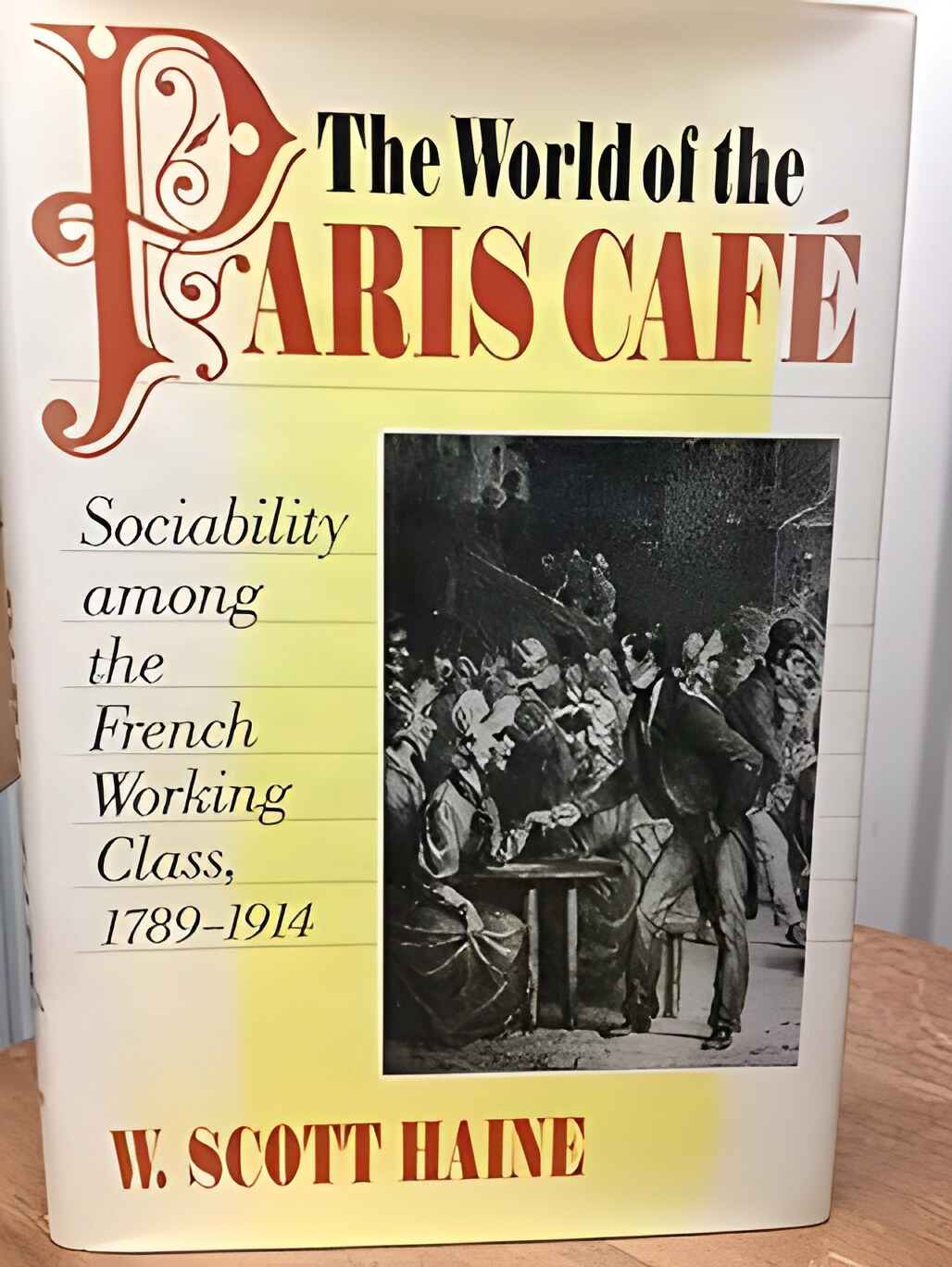
Hardcover. Baltimore, Johns Hopkins University Press, 1st, 1996, Book: Very Good, Dust Jacket: Good, Hardcover in a dust jacket with sunning to spine, 325 pages, b&w illustrations. In The World of the Paris Café, W. Scott Haine investigates what the working-class café reveals about the formation of urban life in nineteenth-century France. Café society was not the product of a small elite of intellectuals and artists, he argues, but was instead the creation of a diverse and changing working population. Making unprecedented use of primary sources -- from marriage contracts to police and bankruptcy records -- Haine investigates the café in relation to work, family life, leisure, gender roles, and political activity. This rich and provocative study offers a bold reinterpretation of the social history of the working men and women of Paris. Clean copy.
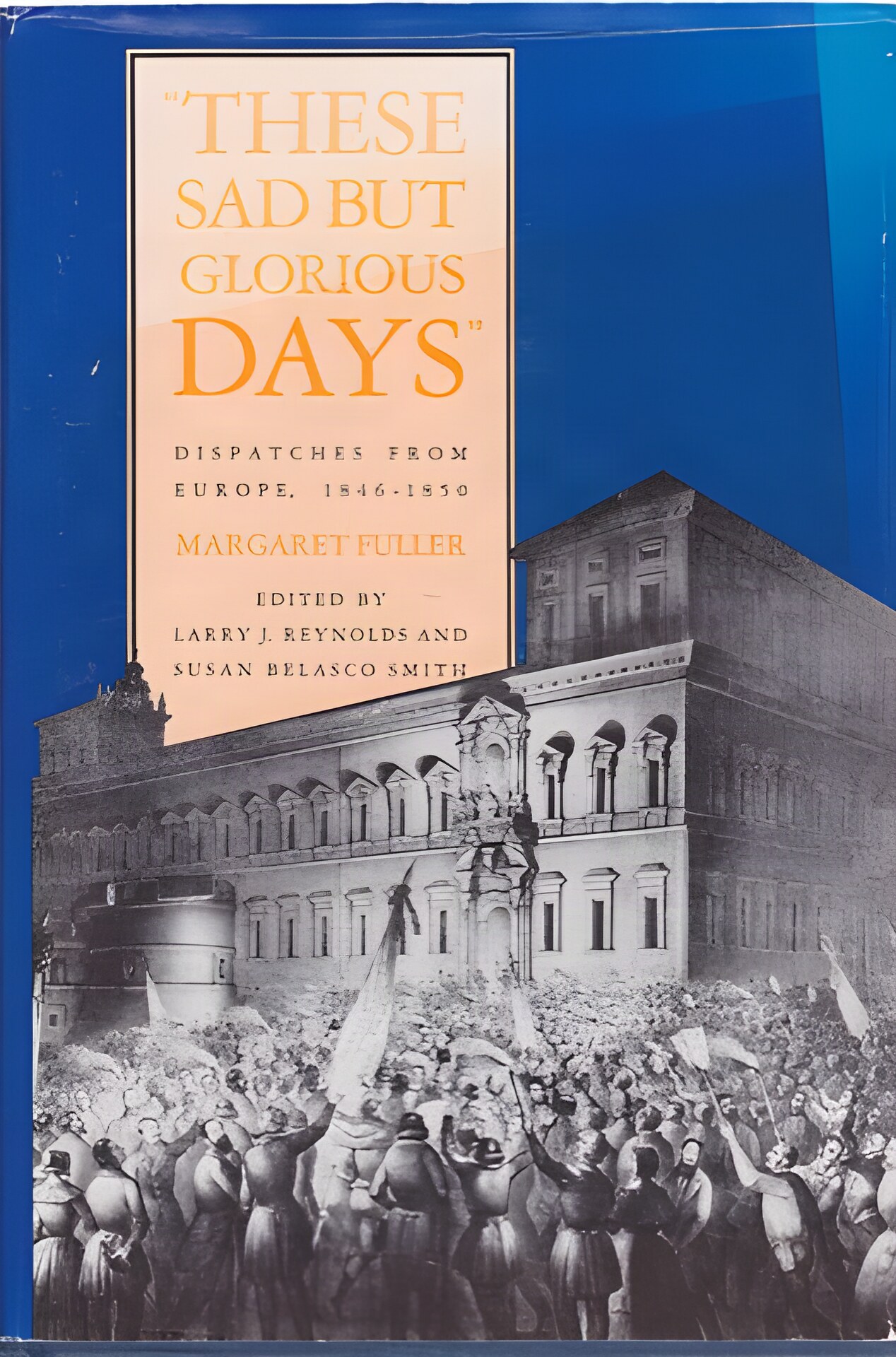
Hardcover. New Haven CT, Yale University Press, reprint, 1991, Book: Very Good, Dust Jacket: None, Hardcover in a dust jacket with fading to some areas, 338 pages. Margaret Fuller - journalist, critic, radical feminist, and political activist - traveled in Europe between 1846 and 1850 as a foreign correspondent for the New York Tribune. Her letters from England, France, and Italy, which began as engaging travel sketches, soon became moving accounts of the most widespread revolutionary upheaval within modern history. These dispatches are now reproduced in their entirety for the first time. Clean copy.
Softcover. London, T. Plummer, Printer, Seething Lane, reprint, 1801, Book: Very Good, Dust Jacket: None, Disbound stab-stitched pamphlet. 4 pages in small typeface. Presumably reduced from the 8 page 1798 printing. Moore, a Scottish cartographer, chart seller and educator with a somewhat controversial reputation, was accused of copying a chart of the coasts of France, Spain and Portugal drawn up by William Heather. The case was heard before Lord Kenyon with the prosecution led by Erskine; the jury quickly found for the defendant despite Kenyon's balanced instruction.
Hardcover. Princton NJ, Princeton University Press, 1st, 2001, Book: Very Good, Dust Jacket: Very Good, Hardcover in a bright dust jacket. Fairy tales, often said to be ''timeless'' and fundamentally ''oral,'' have a long written history. However, argues Elizabeth Wanning Harries in this provocative book, a vital part of this history has fallen by the wayside. The short, subtly didactic fairy tales of Charles Perrault and the Grimms have determined our notions about what fairy tales should be like. Harries argues that alongside these ''compact'' tales there exists another, ''complex'' tradition: tales written in France by the conteuses (storytelling women) in the 1690s and the late-twentieth-century tales by women writers that derive in part from this centuries-old tradition. Grounded firmly in social history and set in lucid prose, Twice upon a Time refocuses the lens through which we look at fairy tales.
Softcover. Paris, ACAER/GPC, 1st, 1994, Book: Very Good, Dust Jacket: None, 68 pages. Softcover. Exhibition catalog. French and English text. Black & white photographs. From the introduction: "This catalogue has been re-edited by advanced reading copy wraps en reve architecture centre with the Georges Pompidou Centre, for the presentation in France of the exhibition "Warchitecture-Sarajevo, a wounded city". The exhibition and the catalogue were prepared by the architects of the Sarajevo association, members of the associations of Architects of Bosnia-Herzegovina DAS-SABIH". Light rubbing to cover edges, minor creases at corners. Clean, unmarked text.
France, Michelin & Co., 1st, 1931, Book: Very Good, Dust Jacket: Very Good, Hardcover, 176 pages. Guide book to WW1 battlefield, illust. with black & white photos, maps (color two-page of Verdun). End-pages with ads. Previous owner's signature front endpaper. Dust jacket in excellent condition.
Softcover. UK, Antony Rowe, reprint, nd, Book: Very Good, Dust Jacket: None, Softcover, 112 pages, b&w illustrations. 178 b/w photos. The great German assault on Verdun opened on 21 February 1916 and the battle went on with furious attacks and counterattacks till it finally petered out on 18 December, ten months later, some two and a half months longer than the British offensives of the Somme and Third Ypres combined. After describing the origins and conduct of the battle with maps and illustrations the book takes us on a tour of the town and of various parts of the battlefield with its numerous forts. Originally published in 1919 by Michelin. Clean copy.
Hardcover. Cambridge MA, Harvard University Press, 1st, 1963, Book: Very Good, Dust Jacket: Good, Hardcover in a lightly worn dust jacket, 292 pages. A look at early Federal society and government in an epistolatory format by a young Scottish woman on tour in America in the early 1800s. Edited by Paul R. Baker. Name on front fly leaf, otherwise clean
Hardcover. New York, Harry N. Abrams, 1st English, 1996, Book: Very Good, Dust Jacket: Very Good, Hardcover, 143 pages, b&w photographs throughout. A very clean, tight copy.
Softcover. SelfMadeHero, 1st US, 2015, Softcover, 142 pages illustrated in color by Stok. Translated from the Dutch by Laura Watkinson. This graphic biography documents the brief and intense period of creativity Vincent van Gogh (1853-1890) spent in Arles, Provence, in southern France. Here van Gogh dreams of setting up an artists' studio--a haven where he and his friends can paint together. But attacks of mental illness leave the painter confused and disoriented. When his friend and fellow artist Paul Gauguin refuses to reside permanently at the Yellow House, a distraught van Gogh cuts off part of his own ear. Throughout this period of intense emotion and hardship, Vincent's brother, Theo, stands by him, offering constant and unconditional support. Writer and illustrator Barbara Stok breathes riveting new life into a fascinating episode of art history, creating a vivid portrait of one of the world's most beloved and legendary artists. Clean copy.
Softcover. London, Frances Lincoln, 1st, 2011-08-30, Book: Very Good, Dust Jacket: None, Illustrated throughout in b&w. Softcover. Clean, unmarked copy with only minor wear to wrappers. Here are 160 unique street photographs of London when it was the style, musical, political and fashion capital of the world.
Softcover. London, Frances Lincoln, 1st, 2011, Book: Very Good, Dust Jacket: None, Illustrated throughout in b&w. Softcover. Clean, unmarked copy with only minor wear to wrappers. No other city has the variety of hairstyles male and female that parade the streets of London. The bouffant, the duck arse, the white wings of power swept over the ears, the coxcomb punk, the flat top, the social outrider's bowl cut. They're all there to make a place. In respect of the hair of the 80s, the rest of the world was dead from the neck up.' Buy a 35mm camera at the beginning of 1980 and spend the next 10 years walking around London taking half a roll of black and white a day and photograph whatever happens in front of you. You get Mick Jagger, New Romantics, Ra Ra skirts, Boy George, Sloane Rangers. The beginning of Covent Garden, Yuppies, The IRA bombings, the Iranian Embassy siege. 100s of newspaper flyers - John Lennon Shot Dead - Margaret Thatcher's London, Fashions that came and went. Here are 160 unique street photographs of London when it was the style, musical, political and fashion capital of the world.
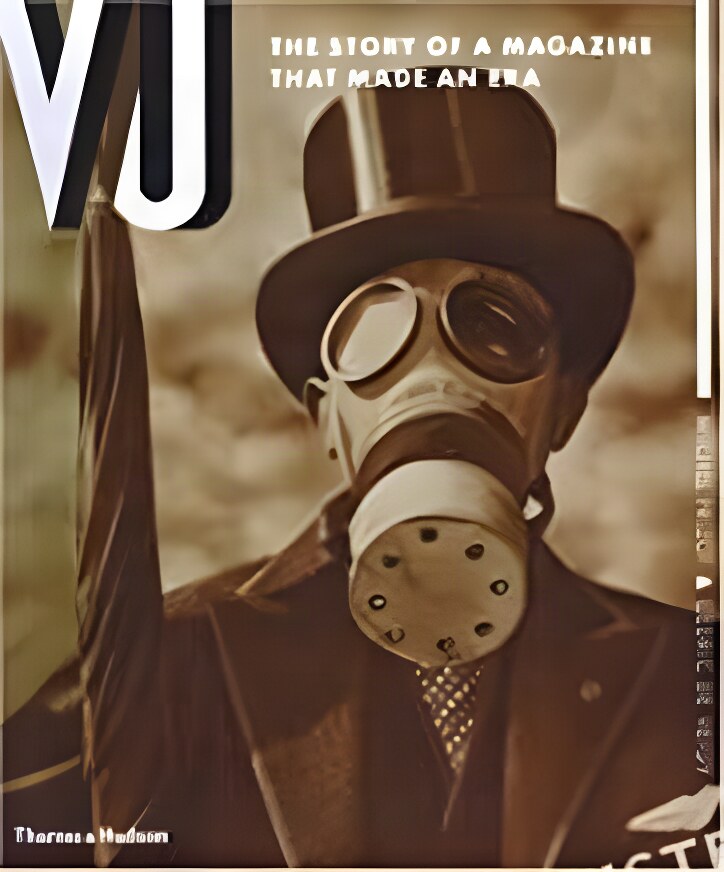
Hardcover. NY, Thames & Hudson, 1st, 2009, Hardcover, 320 pages. The best pages from the sensational photo magazine published in France in the 1920s and 1930s. Established in Paris in 1928, VU combined stunning photography with dynamic layouts and first-rate reporting, creating a revolution in journalism and setting the stage for future photo magazines like Life, Stern, and Paris Match. VU covered a wide and eclectic range of subjects including politics, world affairs, social issues, discoveries, exploration, the arts, sports, and entertainment. It intended to be an illustrated journal of the week's events-a movie newsreel on paper-and published work by some of the most important photographers of the time: Robert Capa, Andre Kertesz, Henri Cartier-Bresson, Brassai, Man Ray, and more. This book gathers some of the best work from more than 600 issues of VU: covers, double-page spreads, and complete reports. It provides both a record of the prewar world of the twenties and thirties, and an unparalleled history of photojournalism in the early twentieth century. 200+ b&w illustrations
Hardcover. NY, Houghton Mifflin Harcourt, 1st, 2019, Book: Very Good, Dust Jacket: Very Good, Hardcover in a bright, unclipped dust jacket. Nigel Hamilton's celebrated trilogy culminates with a story of triumph and tragedy. Just as FDR was proven right by the D-day landings he had championed, so was he found to be mortally ill in the spring of 1944. He was the architect of a victorious peace that he would not live to witness. Using hitherto unpublished documents and interviews, Hamilton rewrites the famous account of World War II strategy given by Winston Churchill in his memoirs. Seventy-five years after the D-day landings we finally get to see, close-up and in dramatic detail, who was responsible for rescuing, and insisting upon, the great American-led invasion of France in June 1944, and why the invasion was led by Eisenhower. As FDR's D-day triumph turns to personal tragedy, we watch with heartbreaking compassion the course of the disease, and how, in the months left him as US commander in chief, the dying president attempted at Hawaii, Quebec, and Yalta to prepare the United Nations for an American-backed postwar world order. Now we know: even on his deathbed, FDR was the war's great visionary.
Hardcover. New Haven CT, Yale University Press, 1st thus, 1950, Book: Very Good, Dust Jacket: None, Hardcover. The Chronicles of America Vol. 54. 364 pages, b&w illustrations. Red gilt-decorated cloth, top edge gilt, no dust jacket as issued. Details the campaigns of the U.S. Armed Forces in all theaters of World War II, including Tunisia, France, Italy, the Philippines, and Guadalcanal. A very nice, tight, clean copy in excellent condition.
Hardcover. NY, Dutton Caliber, 1st, 2022, Book: Very Good, Dust Jacket: Very Good, Hardcover in a bright dust jacket, 324 pages, b&w illustrations. When the P-51 Mustang began tearing across European skies in early 1944, the Allies had been losing the air war for years. Staggering numbers of bomber crews, both British and American, had been shot down and killed thanks to the Luftwaffe's superior fighter force. Not only did the air war appear grim, but any landing of troops in France was impossible while German fighters hunted overhead. But behind the scenes, a team of visionaries had begun to design a bold new type of airplane, one that could outrun and outmaneuver Germany's best. Wings of War is the incredible true story of the P-51 Mustang fighter and the unlikely crew of designers, engineers, test pilots, and army officers who brought it from the drafting table to the skies over World War II. This is hardly a straightforward tale of building an airplane--for years, the team was stymied by corruption within the defense industry and stonewalled by the Army Air Forces, who failed to understand the Mustang's potential. But when squadrons of Mustangs were finally unleashed over Hitler's empire, the Luftwaffe was decimated within months, clearing the skies for D-Day. Clean copy.
Hardcover. NY, Scribner, 2nd pr., 1997, Book: Very Good, Dust Jacket: Very Good, Hardcover, 475 pages, b&w photos, in a bright, unclipped dust jacket. Remainder line on bottom edge. A biography of Frances Marion, one of the earliest--and for many years the most successful--screenwriters in Hollywood. Cari Beauchamp masterfully combines biography with social and cultural history to examine the lives of Frances Marion and her many female colleagues who shaped filmmaking from 1912 through the 1940s.
Softcover. Bloomington, IN, Indiana University Press, 1st, 2015, Book: Very Good, Dust Jacket: None, 232 pages. Softcover. A very clean, unmarked copy with only minor edgewear. Black and white photographs throughout. The center of the art world before the war, Paris fired the Nazis' greed. The discovery of more than 1,500 prized paintings and drawings in a private Munich residence, as well as a recent movie about Allied attempts to recover European works of art, have brought Nazi plundering back into the headlines, but the thievery was far from being limited to works of art. From 1942 onwards, ordinary Parisian Jews-mostly poor families and recent immigrants from Eastern Europe-were robbed, not of sculptures or paintings, but of toys, saucepans, furniture, and sheets. Witnessing the Robbing of the Jews tells how this vast enterprise of plunder was implemented in the streets of Paris by analyzing images from an album of photographs found in the Federal Archives of Koblenz. Brought from Paris in 1945, the photographs were cataloged by the staff of the Munich Central Collecting Point. Beyond bearing witness to the petty acts of larceny, these images provide crucial information on how the Germans saw their work. They enable us to grasp the "Nazi gaze" and to confront the issue of the relation between greed and mass destruction.
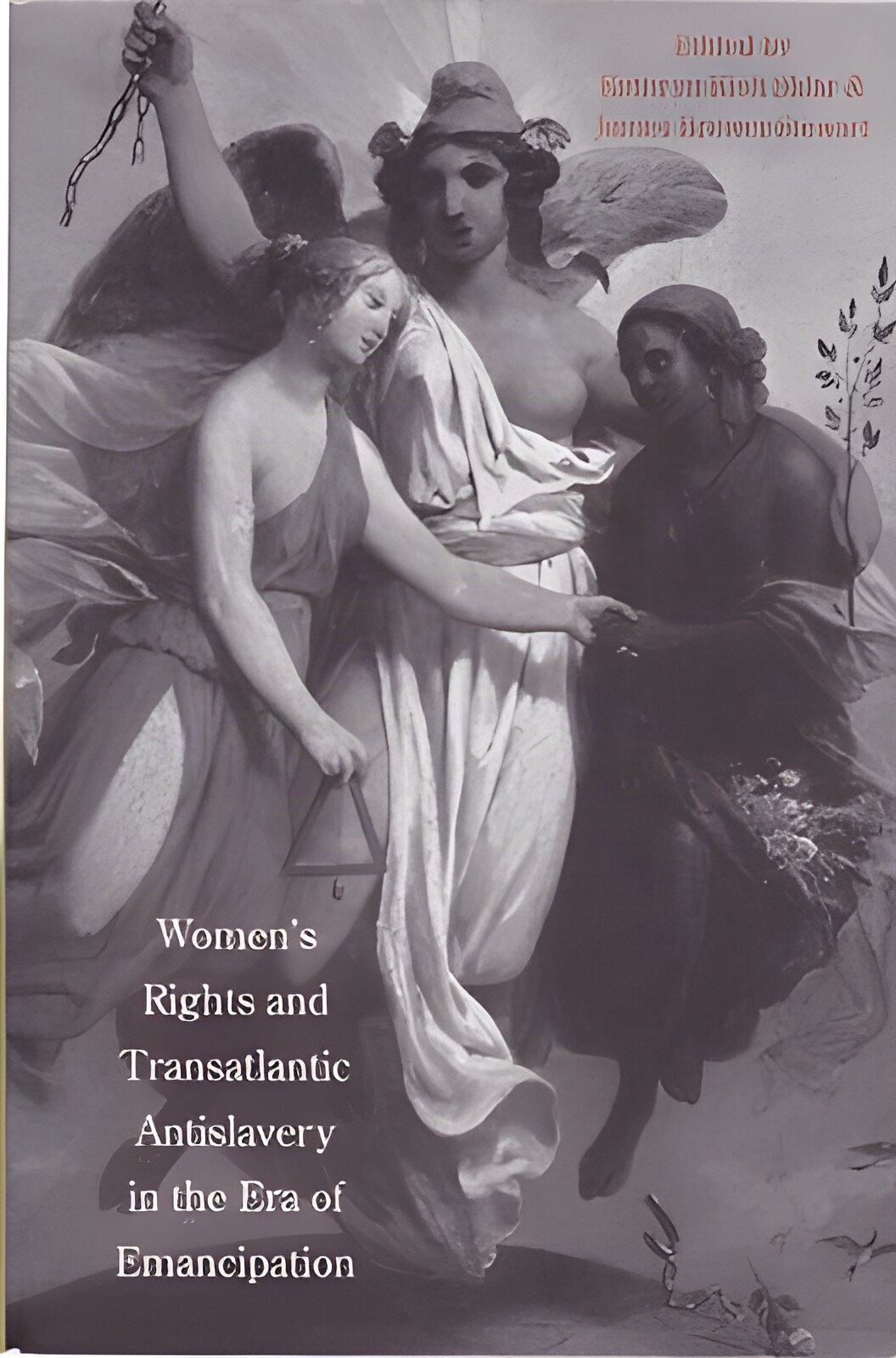
Softcover. New Haven CT, Yale University Press, 1st, 2007, Book: Very Good, Dust Jacket: None, Softcover, 385 pages, b&w illustrations. Two epochal developments profoundly influenced the history of the Atlantic world between 1770 and 1870-the rise of women's rights activism and the drive to eliminate chattel slavery. The contributors to this volume, eminent scholars from a variety of disciplines, investigate the intertwining histories of abolitionism and feminism on both sides of the Atlantic during this dynamic century of change. They illuminate the many ways that the two movements developed together and influenced one another. Approaching a wide range of transnational topics, the authors ask how conceptions of slavery and gendered society differed in the United States, France, Germany, and Britain; how women's activism reached across national boundaries; how racial identities affected the boundaries of women's activism; and what was distinctive about African-American women's participation as activists. Their thought-provoking answers provide rich insights into the history of struggles for social justice across the Atlantic world. Sine faded. Clean copy.
Hardcover. New York, W. W. Norton & Company, 1st, 2010, Book: Very Good, Dust Jacket: Good, 160 pages. Hardcover with dust jacket. Clean, unmarked copy with minor wear to dust jacket. Also small tear with piece missing from dust jacket bottom fore edge front. The photographer Pierre Yves-Petit, who called himself "Yvon," wandered the streets of Paris between the world wars looking for the moment when the shifting light and clouds would perfectly reveal the city?s ephemeral, iconic beauty. The dramatic images of the city and its people that he made during those years would become the most popular postcards in France. Yvon?s Paris reproduces more than one hundred of his loveliest images, many made from recently discovered glass negatives.

![The Work of Atget, Vol. 2: The Art of Old Parisby: [Eugene Atget] Szarkowski, John and Hambourg, Maria](javascript:largeIMTop('https://www.browsingisarousing.com/shop/images/The-Work-of-Atget-Vol.-2-The-Art-of-Old-Paris_by_Eugene-Atget-Szarkowski-John-and-Hambourg-Maria398320-451721.jpg','https://www.browsingisarousing.com/shop/images/The-Work-of-Atget-Vol.-2-The-Art-of-Old-Paris_by_Eugene-Atget-Szarkowski-John-and-Hambourg-Maria398320-451721.jpg',0,'398320',0,'') "The Work of Atget, Vol. 2: The Art of Old Parisby: [Eugene Atget] Szarkowski, John and Hambourg, Maria")
![The Work of Atget, Vol. 3: The Ancien Regime by: [Eugene Atget] Szarkowski, John and Hambourg, Maria](javascript:largeIMTop('https://www.browsingisarousing.com/shop/images/The-Work-of-Atget-Vol.-3-The-Ancien-Regime_by_Eugene-Atget-Szarkowski-John-and-Hambourg-Maria398319-451855.jpg','https://www.browsingisarousing.com/shop/images/The-Work-of-Atget-Vol.-3-The-Ancien-Regime_by_Eugene-Atget-Szarkowski-John-and-Hambourg-Maria398319-451855.jpg',0,'398319',0,'') "The Work of Atget, Vol. 3: The Ancien Regime by: [Eugene Atget] Szarkowski, John and Hambourg, Maria")
![The Work of Atget, Vol. 4: Modern Timesby: [Eugene Atget] Szarkowski, John and Hambourg, Maria](https://www.browsingisarousing.com/shop/images/The-Work-of-Atget-Vol.-4-Modern-Times_by_Eugene-Atget-Szarkowski-John-and-Hambourg-Maria398321-451824.jpg "The Work of Atget, Vol. 4: Modern Timesby: [Eugene Atget] Szarkowski, John and Hambourg, Maria")
![The Work of Atget, Vol. 4: Modern Timesby: [Eugene Atget] Szarkowski, John and Hambourg, Maria](https://www.browsingisarousing.com/shop/images/The-Work-of-Atget-Vol.-4-Modern-Times_by_Eugene-Atget-Szarkowski-John-and-Hambourg-Maria398321-451824_50_th.jpg)
![The Work of Atget, Vol. 4: Modern Timesby: [Eugene Atget] Szarkowski, John and Hambourg, Maria](https://www.browsingisarousing.com/shop/images/The-Work-of-Atget-Vol.-4-Modern-Times_by_Eugene-Atget-Szarkowski-John-and-Hambourg-Maria398321-451825_50_th.jpg)
![The Work of Atget, Vol. I, Old Franceby: [Eugene Atget] Szarkowski, John and Hambourg, Maria](https://www.browsingisarousing.com/shop/images/The-Work-of-Atget-Vol.-I-Old-France_by_Eugene-Atget-Szarkowski-John-and-Hambourg-Maria398317-451719.jpg "The Work of Atget, Vol. I, Old Franceby: [Eugene Atget] Szarkowski, John and Hambourg, Maria")
 "Trial of John Hamilton Moore for Pirating a Chart: Sittings After Term, March 1798, Before Lord Kenyon and a Special Jury of Merchants. Guildhall, London. by: Trial;")
 "Twice Upon a Time: Women Writers and the History of the Fairy Taleby: Harries, Elizabeth Wanning")
 "Urbicide - Sarajevo - Sarajevo, Une Ville Blesseeby: Curic, Borislav/Nedzad Delija/Igor Grozdanic/Nazif Hasanbegovic/Boran Hrelja/Nedzad Hrelja/Aida Kalauzovic-Mandic")
 "Verdun - Argonne (1914-1918)by: Michelin Co.")

 "Village in France: Louis Clergeau's Photographic Portrait of Daily Life in Pontlevoy, 1902-1936by: Couderc, Jean-Mary")

 "Vintage 80's: London Street Photographyby: Stiletto, Johnny")
 "Vintage 80's: London Street Photographyby: Stiletto, Johnny")
 "War And Peace: FDR's Final Odyssey: D-Day to Yalta, 1943")


 "Without Lying Down: Frances Marion and the Powerful Women of Early Hollywoodby: Beauchamp, Cari")
 "Witnessing the Robbing of the Jews: A Photographic Album, Paris, 1940-1944by: Gensburger, Sarah")
 "Yvon's Parisby: Stevens, Robert")