Hardcover. New York, Alfred A. Knopf, 1st, 1949, Book: Very Good, Dust Jacket: Good, 374 pages. Hardcover. Dust jacket with short tape repaired tears along edges, fading to spine. Clean, unmarked pages.
Hardcover. New York, Coward, McCann & Geoghegan, Inc., 1st US, 1975, Book: Very Good, Dust Jacket: Good, Hardcover, 319 pages. Hardcover. Previous owners bookplate on preliminary pages. 16 pages of black & white illustrations. Foxing to top edge. Dust jacket with chipping along edges.
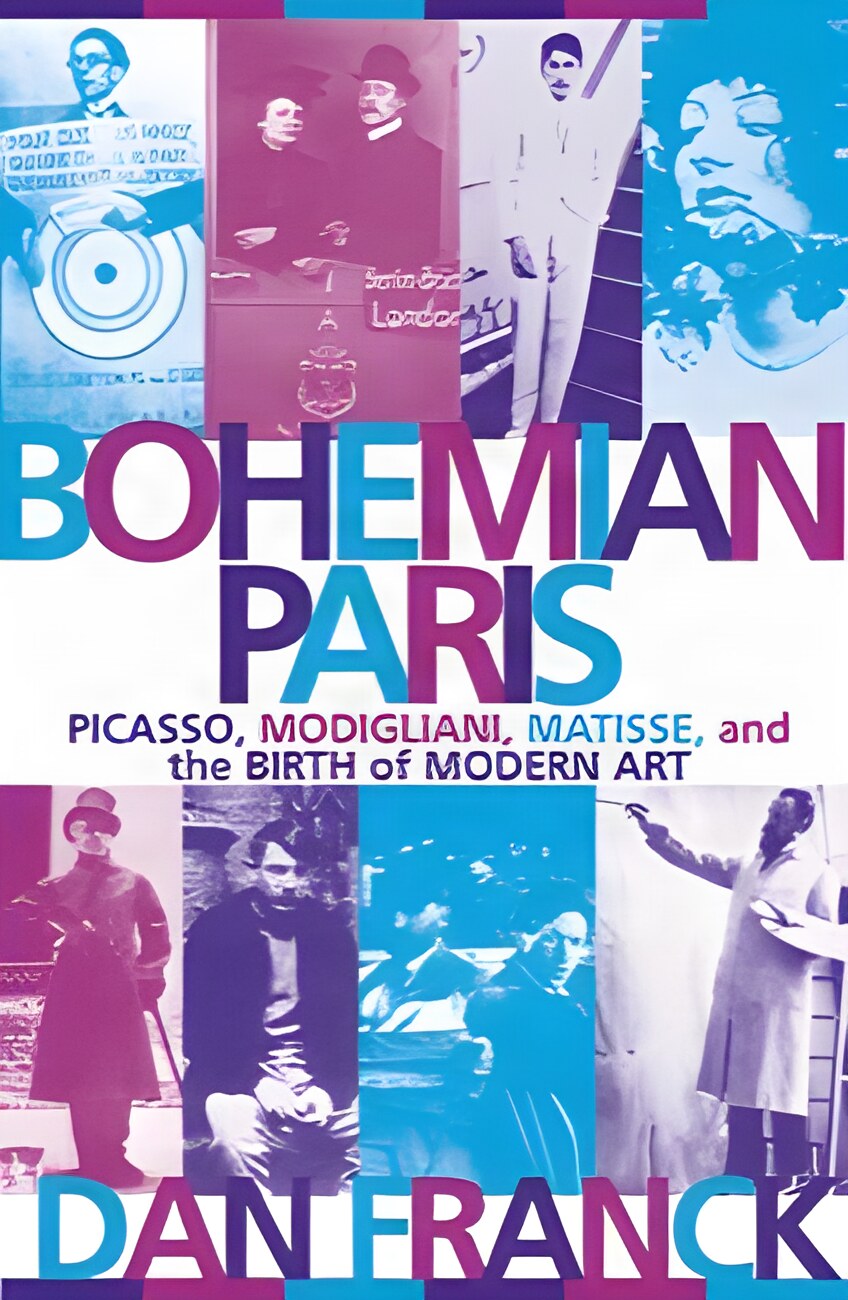
Softcover. NY, Grove Press, 1st pbk, 2003, Book: Very Good, Dust Jacket: None, Softcover, 430 pages, b&w illustrations. A legendary capital of the arts, Paris hosted some of the most legendary developments in world culture -- particularly at the beginning of the twentieth century, with the flowering of fauvism, cubism, dadaism, and surrealism. In Bohemian Paris, Dan Franck leads us on a vivid and magical tour of the Paris of 1900-1930, a hotbed of artistic creation where we encounter Apollinaire, Modigliani, Cocteau, Matisse, Picasso, Hemingway, and Fitzgerald, working, loving, and struggling to stay afloat. Clean, bright copy.
Hardcover. Switzerland, A. Guichard, 1st, 1966, Book: Very Good, Dust Jacket: None, A very good hardcover copy, 126 pages with decorative burgundy boards and gilding on the spine and covers. Covers, spine head and tail have some light wear. Small scrape on front cover. Tight binding. Clean pages. Though not indicated as such, appears to be a book of 164 facsimile tipped-in plates. Production by Edita S. A. Lausanne. Illustration by Imprimerie Centrale Lausanne S. A. Text by Offset Jean Genoud S. A. Lausanne. Engraving by Photogravure Dupuis & Cie Lausanne. Binding by Maurice Busenhart, Lausanne.
Hardcover. Switzerland, A. Guichard, 1st, 1966, Book: Very Good, Dust Jacket: None, A very good hardcover copy, 126 pages with decorative burgundy boards and gilding on the spine and covers. A book of 164 facsimile tipped-in plates. Production by Edita S. A. Lausanne. Illustration by Imprimerie Centrale Lausanne S. A. Text by Offset Jean Genoud S. A. Lausanne. Engraving by Photogravure Dupuis & Cie Lausanne. Binding by Maurice Busenhart, Lausanne. At the age of seven, at the begining of the 20th century, Lartique received a camera as a gift from his father, and from then on, day after day, he would try to 'fix' scenes of his domestic life, having been allowed by the conditions of his life sufficient leisure to do so." Roger Therond. In this, Lartique's premier collection, presented in the form of an album of pasted-in pictures, we are treated to his madcap antics with flying machines and automobiles when they were still a novelty. With his cousins, we have pictures of their three-seater peddle racing machine of their own invention - gliders built and flown in the field, crashes included, an inflatable suit for drifting in the river without getting wet . These are photographs one would not see in a typical family album, rather, they are the record of a joyful and artistic youth. Clean copy.
Hardcover. Chicago, University of Chicago Press, 1st, 2008, Book: Very Good, Dust Jacket: Very Good, 320 pages, b&w illustrations. Clean, unmarked copy with only minor wear to dust jacket. Building the Devil's Empire is the first comprehensive history of New Orleans's early years, tracing the town's development from its origins in 1718 to its revolt against Spanish rule in 1768. Shannon Lee Dawdy's picaresque account of New Orleans's wild youth features a cast of strong-willed captives, thin-skinned nobles, sharp-tongued women, and carousing travelers. But she also widens her lens to reveal the port city's global significance, examining its role in the French Empire and the Caribbean, and she concludes that by exemplifying a kind of rogue colonialism--where governments, outlaws, and capitalism become entwined--New Orleans should prompt us to reconsider our notions of how colonialism works.
Softcover. Athens/Paris, Ecole Francaise d'Athenes, 1st, 1967, Book: Very Good, Dust Jacket: None, Softcover, Volume Two: pages 371-900, followed by 16 b&w plates. Cream paper wraps. Glossy pages with many black and white photographs are uncut. Text in English and French.
Hardcover. Los Angeles, J. Paul Getty Museum, 1st, 2010, Book: Very Good, Dust Jacket: Very Good, Hardcover, 160 pages, like new in dust jacket. This fascinating account of Silvy's life and photography is published to mark the centenary of his death. Combining research into exhibition prints, still lifes, and street scenes, as well as the intimate, beautifully lit and posed cartes-de-visite, the book demonstrates Silvy's extraordinary originality and his life as a man of both art and commerce. Color and b&w illustrations.
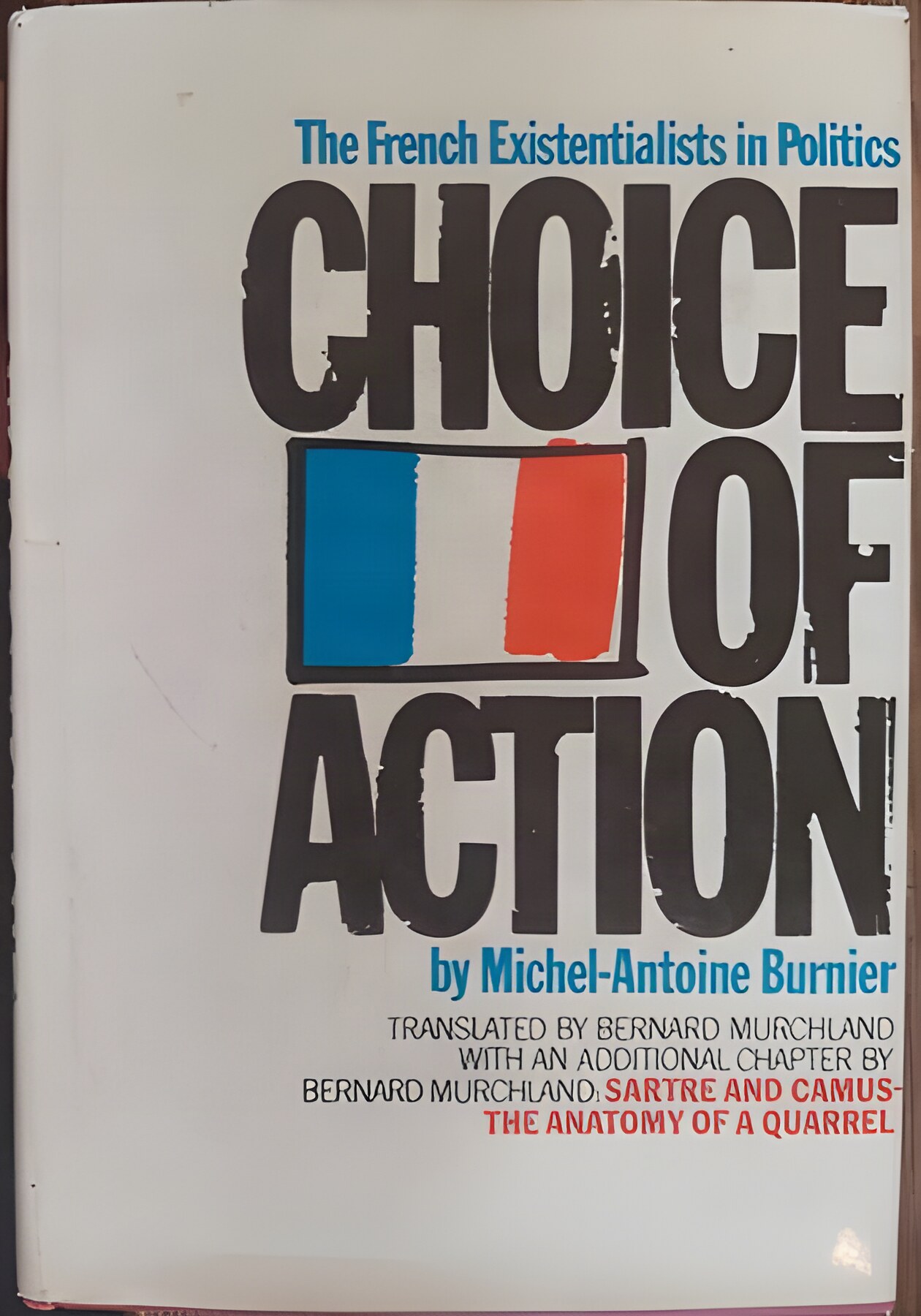
Hardcover. NY, Random House , 1st, 1968, Book: Very Good, Dust Jacket: Very Good, Hardcover in a bright dust jacket, 206 pages. Translated from the French by Bernard Murchland. First American edition. Contains an additional chapter by Bernard Murchland: Sartre and Camus --The Anatomy of a Quarrel. Clean copy.
Hardcover. France, Editions Artlys, 1st, 2005, Book: Very Good, Dust Jacket: None, 256 pages. Hardcover no dust jacket. Like new in publisher's shrink-wrap. At once Dior scrapbook, survey and autobiography, this magnificent compendium offers a panorama of the life and art of one of the twentieth century's most influential fashion designers. It reprints Dior's 1956 autobiography Christian Dior et moi--in which the designer contrasted his reputation as both an individual and as a company with his own sense of himself--alongside eight articles by Dior first published in Elle magazine in 1951, which were then collected as Je suis couturier. Throughout, the volume takes as its thematic anchor the designer's beautiful childhood home in Granville, elaborating his lifelong attachment to the house (now the Christian Dior Museum) and its gardens, and showing how his work was influenced by these resplendent environs--a theme that especially preoccupied Dior himself, who once affirmed his "tender and wonderful memories of my childhood home," declaring that "my life and my style owe everything to its location and architecture." Many of the copious illustrations that accompany these writings are supplied by the Christian Dior Museum collection, and reproduce family albums and archival photographs, fashion sketches and formal presentations of classic Dior dresses, hats, shoes and jewelry. Dior scholar Jean-Luc Dufresne conducts a tour of the Dior house and garden, narrating its long and fascinating history.
Hardcover. London, George Routledge and Sons, Reprint, 1867, Book: Very Good, Dust Jacket: None, Two hardcover volumes. Translated by Thomas Johnes. 102 engravings. 3/4 blue leather & patterned paper on boards, Spine with gilt & raised bands. All edges gilt. Previous owner's name stamp on front end paper. Volume 1 - 640 pages. Light wear. Clean, unmarked text. Volume 2 - 552 pages. Light wear. Clean, unmarked pages.
Softcover. Rochester VT, Park Street Press, 1st, 2018, Book: Very Good, Dust Jacket: None, Softcover, 246 pages. A lavishly illustrated history of coca wine and the revolutionary advertising methods that made it a world-wide success. Follows 19th-century pharmacist Angelo Mariani's interest in coca from medical uses to the development and healing effects of his world-famous coca wine, Vin Mariani. In this full-color illustrated history of coca wine, the first of its kind, author Aymon de Lestrange follows Mariani's interest in coca from its medicinal applications to the creation of the tonic wine. The author explores the botany of coca, how it differs from cocaine, its traditional use in pre-Columbian America, and scientific studies on coca from the 17th through 19th centuries, including from Sigmund Freud, who was a known user. He describes the introduction of coca in the U.S. and France and the many coca preparations then available at drugstores. He also studies the introduction of cocaine in these two countries and the prohibition laws that followed.
Hardcover. NY/Paris, Pergamon Press, reprint, 1969, Book: Very Good, Dust Jacket: None, Approximately 7000 pages, 5 hardcover volumes complete, each book is 10" by 15'', bound in burgundy cloth covers with gilt lettering. Reproduced from the original 1651 17-volume edition, reduced here allowing 4 pages per sheet. French text. Clean, bright copies. No dust jackets ever issued. HUGE VOLUMES, DOMESTIC SHIPPING ONLY.
Softcover. NY, Semiotext(e)/MIT, 1st transl., 2008, Book: Very Good, Dust Jacket: None, Softcover, 400 pages. Letters by writer, filmmaker, and cultural revolutionary Guy Debord conjure a vivid picture of the dynamic first years of the Situationist International movement. Debord's letters-published here for the first time in English-provide a fascinating insider's view of just how this seemingly disorganized group drifting around a newly consumerized Paris became one of the most defining cultural movements of the twentieth century. Clean copy.
Hardcover. London, Arthur Baker, 1st, 1967, Book: Very Good, Dust Jacket: Good, Hardcover in a dust jacket with partial fading, 449 pages, b&w illustrations. The definitive biography of the larger-than-life figure of the French Revolution who was found guilty of loyalist inclinations and executed at the guillotine. Name on front fly leaf otherwise clean.
Hardcover. A. Rotterdam, 1st, 1764, Book: Very Good, Hardcover, gilt-ruled calf, ribbed spine with gilt lettering, designs, 204 pages. Marbled endpapers and edges. FRENCH TEXT. Apparently there are at least three editions published in the same year, no priority established. Observations concerning economics, finances, justice, the army, education and population (the Christian morals are favorable to population whereas luxury is not): deals furthermore with 'L'Argent', 'Du Luxe', 'Des Subsides', 'Des Obligations de la Patrie envers les Citoyens', 'De L'Administration des Finances', 'Des Impots', 'Des Rentes', 'Des Pensions', 'Des Charges', 'Des Ambassades', 'Des Guerres', 'De la Discipline Militaire', 'Des Réformes', 'Des Désertions', 'Des Grades Militaires', 'Des Fondations', 'De L'Usure', 'Des Loteries', 'Des Monnoyes', 'Des Marchandises', 'Des Voitures & des Postes'. Clean copy.
Hardcover. London, John Murray, 1st, 1936, Book: Very Good, Dust Jacket: None, Hardcover, 313 pages, b&w photos. Orange cloth, gilt titles to front and spine, no dust jacket. Faint spotting to rear cover, light wear to edges of spine. Clean, tight copy.
Hardcover. Germany, Taschen, 1st, 2013, Book: Very Good, Dust Jacket: Very Good, 3-vol set in slip case. Hardcovers. Like new in publisher's shrink-wrap. Editor Dian Hanson traces the fascinating development of the genre from 1900 to 1969 in three compact, informative volumes. In Volume 1 you'll learn about the first magazines that appeared around 1900 in France, Germany, and the U.S., and follow the development of the genre through the First and Second World Wars. Covered are men's magazines masquerading as movie magazines, humor magazines, art magazines, nudist magazines, and "spicy" fiction. Volume 2 documents the proliferation of pin-up magazines following World War II, most notably a little item called Playboy that debuted in December 1953 and spawned dozens of imitators. This volume also charts the emergence of English men's magazines, fetish magazines, and the top five covergirls of the 1950s. Volume 3 begins with an explosion of new American pin-up magazines following the loosening of U.S. obscenity laws, and continues with French titles in decline, England going pervy; nudists going hippy, and Germany going pervy, hippy and political.
Hardcover. Leiden/NY, E.J. Brill, 1st, 1996, Book: Very Good, Dust Jacket: Very Good, Hardcover in a bright dust jacket, 376 pages. This volume consists of 21 papers delivered at an international Spinoza conference on Disguised and Overt Spinozism around 1700, held at the Erasmus University (Rotterdam) in October 1994. In these papers, scholars from Italy, France, Germany, Great Britain, the Netherlands and the United States examine the impact of Spinoza's philosophy on the European Republic of Letters, one generation after the death, in 1677, of the greatest philosopher in the history of the Netherlands. Clean copy.
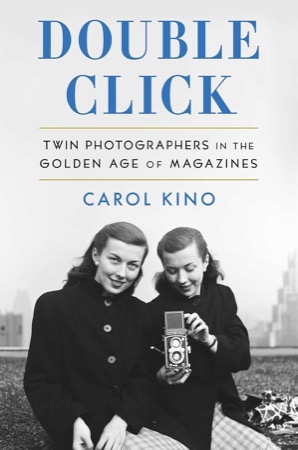
Hardcover. NY, Scribner, 1st, 2024, Book: Very Good, Dust Jacket: Very Good, Hardcover in a bright, unclipped dust jacket, 405 pages, b&w illustrations. The McLaughlin twins were trailblazing female photographers, celebrated in their time as stars in their respective fields, but have largely been forgotten since. Here, in Double Click, Carol Kino brings these two brilliant women and their remarkable accomplishments to vivid life. Frances was the only female photographer on staff in Conde Nast's photo studio, hired just after Irving Penn, and became known for streetwise, cinema verite-style work, which appeared in the pages of Glamour and Vogue. Her sister Kathryn's surrealistic portraits filled the era's new "career girl" magazines, including Charm and Mademoiselle. Both twins married Harper's Bazaar photographers and socialized with a glittering crowd that included the supermodel Lisa Fonssagrives and the photographer Richard Avedon. Kino uses their careers to illuminate the lives of young women during this time, an early 20th-century moment marked by proto-feminist thinking, excitement about photography's burgeoning creative potential, and the ferment of wartime New York.
Hardcover. NY, Liveright, 1st, 2012, Book: Very Good, Dust Jacket: Very Good, Hardcover, 272 pages. Who could have imagined that in 1972, when Aline Kominsky, a Long Island escapee and bodaciously talented artist, broke her foot one rainy fall day, it would result in the most unique collaboration in comics history? Laid up in her house, she was persuaded by R. Crumb, her nerdy, neurotic boyfriend, to pass the time drawing together a "two-man" comic. The result is a jaw-dropping yet tender account, not only of the joys and challenges of a legendary marriage but also of the obstacles faced by struggling female artists. In Drawn Together, our foremost male-female cartooning couple recall their success at shocking America with Weirdo Magazine, the life-altering birth of their precocious daughter Sophie, and their astonishing move to the safe haven of France. With an irresistible introduction and a striking four-color section, Drawn Together becomes a graphic cause-celebre and a must-have for any comics devotee.
Hardcover. New Haven, Yale University Press, 1st, March 1, 2002, Book: Very Good, Dust Jacket: Very Good, Hardcover, 245 pages, illustrated throughout. Clean, bright pages and tight binding. Pierre Puvis de Chavannes (1824-1898) was a towering figure in late nineteenth-century France. The country's greatest public painter, he created murals that decorated museums in Amiens, Rouen, and Lyons as well as major buildings in Paris-most notably the Pantheon, the Sorbonne, and the city hall. Critics from the political right, left, and center, the avant-garde, the Academy, and the state all agreed on the importance of Puvis's murals. Avant-garde artists greatly admired and drew from his work. There was much controversy, however, over the meaning of these murals. This handsomely illustrated book is the first full-length examination of Puvis's murals and their critical reception during the artist's lifetime. Jennifer L. Shaw explains that Puvis's paintings were imagined to embody a vision of France. Although his regional images, allegories of the French heritage, and evocations of the nation as an embracing motherland were all part of a grand tradition of public art, Puvis's painting style was more closely aligned with the avant-garde. Rather than providing a specific narrative or allegory of France, Puvis's murals provoked viewers to experience their own fantasies of Frenchness; rather than using the close brushwork favored by most of his contemporaries, Puvis used large flat areas of color to render his subjects. Shaw persuasively argues that Puvis was the only painter of the period to unite the traditions of public art and modernist form. Her original analysis of Puvis's art underlines his importance to the history of modernism; her examination of the public response to his art illuminates debates about art, subjectivity, and national identity in fin de siecle France.
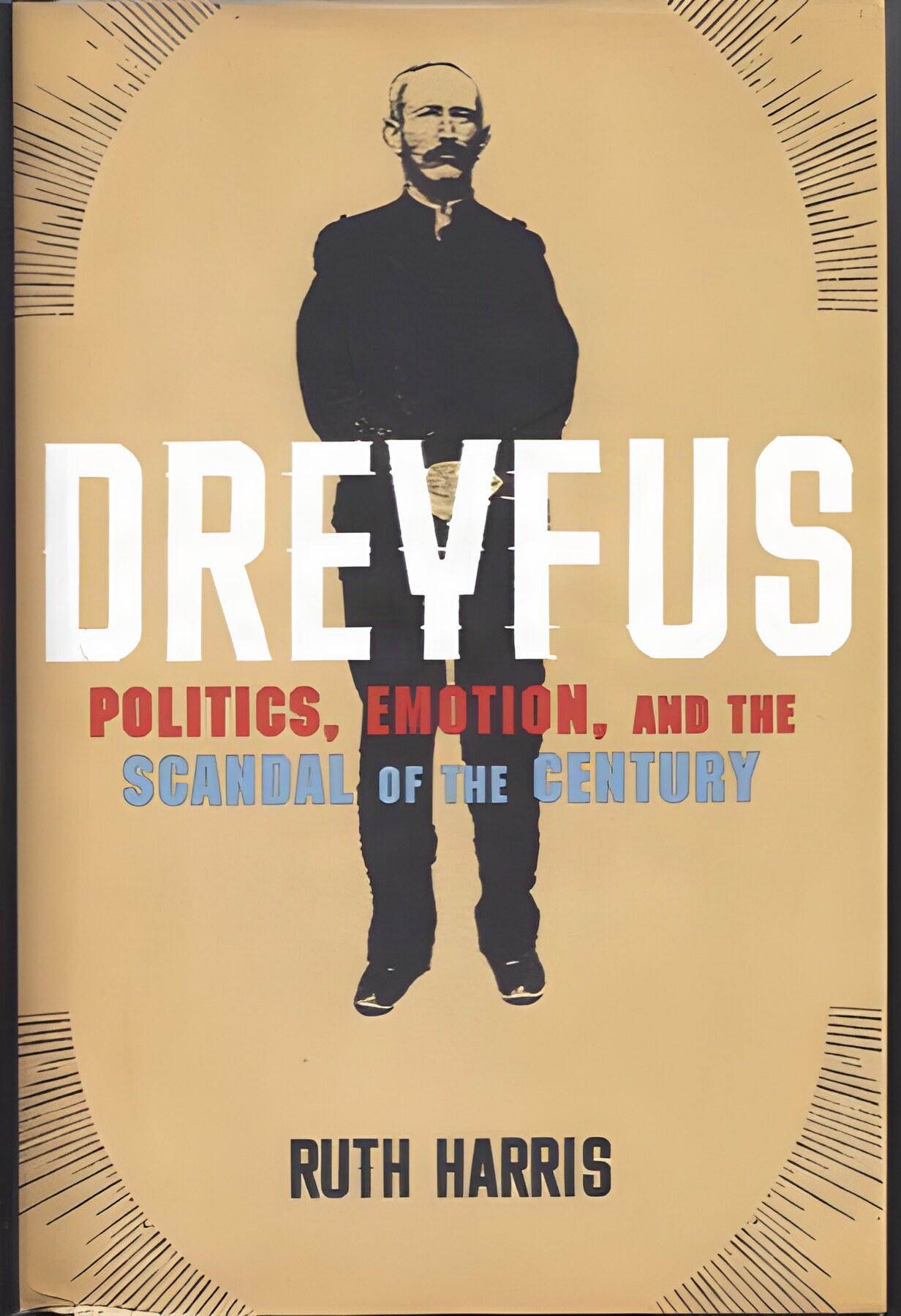
Hardcover. NY, Metropolitan Books, 1st, 2010, Book: Very Good, Dust Jacket: Very Good, Hardcover in a bright, unclipped dust jacket, 542 pages with index. In 1894, Alfred Dreyfus, a Jewish officer in the French army, was wrongfully convicted of being a spy for Germany and imprisoned on Devil's Island. Over the following years, attempts to correct this injustice tore France apart, inflicting wounds on the society which have never fully healed. But how did a fairly obscure miscarriage of justice come to break up families in bitterness, set off anti-Semitic riots across the French empire, and nearly trigger a coup d'etat? Drawing upon thousands of previously unread and unconsidered sources, prizewinning historian Ruth Harris goes beyond the conventional narrative of truth loving democrats uniting against proto-fascists. Instead, she offers the first in-depth history of both sides in the Affair, showing how complex interlocking influences--tensions within the military, the clashing demands of justice and nationalism, and a tangled web of friendships and family connections--shaped both the coalition working to free Dreyfus and the formidable alliances seeking to protect the reputation of the army that had convicted him. Clean copy.

 "Beaumarchaisby: Lemaitre, Georges")
 "Blanche of Castileby: Pernoud, Regine")

 "Boyhood Photos of J.H. Lartigue: The Family Album of a Gilded Ageby: Jacques-Henri Lartigue/ Ami Guichard")

 "Bulletin de Correspondance Hellenique XCI, 1967-IIby: Ecole Francaise d'Athenes")
 "Business Contracts of Medieval Provence: Selected Notulae from the Cartulary of Giraud Amalric of Merseilles 1248by: Pryor, John H.")
 "Camille Silvy: Photograher of Modern Life by: Haworth-Booth, Mark")
 "Christian Dior: Man of the Centuryby: Dufresne, Jean-Luc")
 "Chronicles of Enguerrand de Monstrelet, The - Containing an Account of the Cruel Civil Wars Between the Houses of Orleans and Burgundy; Of the Possession of Paris and Normandy by the English; Their Expulsion Thence; and of Other Memo")
 "Coca Wine: Angelo Mariani's Miraculous Elixir and the Birth of Modern Advertisingby: Aymon de Lestrange")

 "Correspondence: The Foundation of the Situationist International (June 1957-August 1960)by: Debord, Guy")



 "Diamonds and Dust: India through French Eyesby: Pellenc, Baron Jean")
 "Dian Hanson's History of Pin-up Magazines Vol. 1-3by: Hanson, Dian (editor)")


 "Disguised and Overt Spinozism around 1700: Papers presented at the international colloquium held at Rotterdam 5-8 October 1994by: Bunge, Wiep van & Wim Klever (Ed.)")
 "Drawn Together: The Collected Works of R. and A. Crumbby: R. Crumb and A. Crumb")
 "Dream States: Puvis de Chavannes, Modernism, and the Fantasy of Franceby: Shaw, Professor Jennifer L.")