Softcover. Athens, GA, University of Georgia Museum of Art, 1st, 1970, Book: Very Good, Dust Jacket: None, Softcover. Unpaginated, 80 b&w images. Light edge wear to wrappers. Light foxing on rear cover. Else a clean, tight copy.
Hardcover. NY, Farrar, Straus and Giroux, 1st, 1975, Book: Very Good, Dust Jacket: Very Good, Hardcover in a bright, unclipped dust jacket. First edition of this collection of pieces penned in the first half of the 1970s, by four-time Pulitzer nominee. Included are reflections on man and nature in rural Georgia ("Travels in Georgia"), a profile of an Arkansas horseman hoping to make it big in an important horse race ("Ruidoso"), a quest to discover the true location that inspired the "Marvin Gardens" square in the Monopoly game, ("In Search of Marvin Gardens"), and more. Very bright, clean copy.
Hardcover. NY, D. Appleton and Co., 1st, 1891, Book: Very Good, Dust Jacket: None, Hardcover, 310 pages. B/W illustrations by E.W. Kemble, A.B. Frost and others. Previous owner's signature on front fly leaf (dated 1891). Light fraying to top and bottom edge of spine.
Hardcover. NY, Grossman Publishers, 1st, 1966, Book: Very Good, Dust Jacket: Good, Hardcover in a worn, unclipped dust jacket. The personal memoirs of a participant in the Albany Georgia civil rights movement. 185 pages + photographic plates at end. No markings.
Hardcover. Baltimore, Genealogical Publishing Company, 2nd pr., 1997, Book: Very Good, Dust Jacket: None, Hardcover, blue cloth stamped with gilt lettering, 608 pages. After the Revolutionary War, the federal government awarded bounty lands to citizens and soldiers for services rendered. In its simplest form, this involved the exchange of free land for military service. Federal records of these Revolutionary War bounty land awards are well known and readily accessible to genealogists. But the federal government was not alone in rewarding its citizens and soldiers with bounty lands. Nine state governments adopted similar policies, generating even more records. Unlike the federal bounty land records, however, these state records are not centralized; instead, they are found in the various states in the form of manuscript records and printed books and are all but inaccessible to the researcher. Until now, that is! Because with this work by Lloyd Bockstruck we now have a master index to state bounty land records, a Revolutionary War resource unparalleled for freshness, originality, and research potential. The nine states that awarded bounty lands in their western reserves or on their western borders (directly affecting the future states of Indiana, Kentucky, Maine, Ohio, and Tennessee) are Connecticut, Georgia, Maryland, Massachusetts, New York, North Carolina, Pennsylvania, South Carolina, and Virginia. (The basis for the Connecticut and Georgia awards, by the way, differ from the norm.) Clean, bright copy.
Hardcover. NY, Time Life, reprint, 1983, Book: Very Good, Dust Jacket: None, 389 pages. Hardcover with no dust jacket. Dark blue leather bound with gilt titles to front cover and spine. Embossed decoration on front cover. Gilt text block edges, red ribbon marker. Clean, tight copy. The commander of a Georgia regiment through much of the Civil War mused later in his memoirs that the heaviest burden fell not upon the man at the front, but upon the woman who waited and prayed for victory: "While the men were carried away with the drunkenness of the war, she dwelt in the stillness of her desolate home." Sallie Brock Putnam spoke for Southern womanhood. She was a native of Madison County, Virginia, and seems to have come from a family of good social standing. The book contains an unexpectedly full history of the Civil War; the author exhibits a strong grasp of strategy and tactics. But at its heart is an incisive eyewitness account of life in a capital that was swollen to four times its normal population by the exigencies of war. Brock's descriptions of Jefferson Davis' inauguration and the Richmond Bread Riot of 1863 are dramatic, but no more so than her accounts of nameless refugees, race relations, opportunistic merchants and blockade runners. Confederate prisons and family matters. In contrast to other female Southern writers of the period, she was more sober and factual, less gossipy and speculative. She wrote with shrewdness and maturity, and with a remarkable lack of self-pity and exaggeration. Yet the reader cannot miss her courage, sacrifice and suffering. Sallie Brock Putnam died in 1911.
Hardcover. NY, Charles Scribner's Sons, 1st, 1970, Book: Very Good, Dust Jacket: Very Good, Hardcover in a bright dust jacket, 64 pages, illustrated by Paul Giovanopoulos. Dust jacket with mild edgewear. Tale of the young son of a Georgia sharecropper who loves animals & wants to be a zoologist. Clean copy.
Hardcover. NY, Aperture, 1st, 1991, Book: Very Good, Dust Jacket: Very Good, Hardcover in a bright dust jacket. An acclaimed photographer's images and the words of Russia's foremost writers combine in an intimate record of the contemporary Russian experience: an intractable culture in the throes of irrevocable change. 30 color and 70 black-and-white photographs. This handsome photo album with Morath's own foreword and captions depicts a world to which many Russians in the grip of post-Soviet nostalgia long to return. Morath's Russia is devoid of Soviet excresence: no ugly concrete apartment blocks, Stalinist skyscrapers, or exhortative banners appear. Landscapes and street scenes are poetic and largely deserted. Sidetrips to Armenia, Georgia, Kyrgyzstan, Lithuania, and Uzbekistan are subsumed under "Russian culture." The people shown are mainly artists and intellectuals, and portraits of embattled dissident writers (Nadezhda Mandelstam and Joseph Brodsky) testify to the moral support Morath and her husband Arthur Miller offered them in the 1960s. The album includes fond letters from Mandelstam and poet Andrei Voznesensky, as well as Olga Andreyev Carlisle's reminiscence of her 1967 trip to the Soviet Union with Morath. Clean copy.
Hardcover. New York, Watson-Guptill, 1st, 1970, Book: Very Good, Dust Jacket: Very Good, Hardcover, 88 pages. 32 plates in full color. Takes us past the image of Sargent, portrait painter of Edwardian and Georgian high society, and views instead his vast talent as a watercolorist. Blue cloth, silver lettering to spine and front color. Price clipped. Previous owner's inscription in front. Pictorial dust jacket with two minor sealed up tears, otherwise a very clean, tight and crisp copy.
Hardcover. Savannah, Beehive Press, 3rd pr., 1977, Book: Very Good, Dust Jacket: Very Good, Hardcover, 214 pages. INSCRIBED BY AUTHOR on half title page. Illustrated with black & white photographs and reproductions relating to the architecture and history of Savannah, Georgia. Clean, Tight copy.
Hardcover. New York , Neale Publishing, 1st, 1910, Book: Good, Dust Jacket: None, Hardcover, pebbled brown cloth with maroon lettering (bearly readable), 163 pages. A history of coastal Georgia taken from oral reminiscences of Wylly's distinguished family and their friends and acquaintances. Hinges cracked, light fraying to top and bottom of spine, previous owner's inscription on front fly leaf.
Hardcover. Athens GA, University of Georgia Press, 1st, 2001, Book: Very Good, Dust Jacket: Very Good, Hardcover in a bright dust jacket, 168 pages. This work tells how the first generation of Protestant fundamentalists embraced the modern business and entertainment techniques of marketing, advertising, drama, film, radio, and publishing to spread the gospel. Clean copy.
Hardcover. New York, John S. Taylor, 2nd pr., 1837, Book: Good, Dust Jacket: None, Hardcover, leather bound with gilt design on front and rear covers, spine also with gilt design with the title Cabinet of Freedom (the series under which the publisher issued this narrative). 517 pages with an extra illustrated title page dated 1836, the regular title page dated 1837. All edges gilt. First published by John Shugert in Lewistown PA a year earlier. Written with the help of Isaac Fisher, a white Philadelphia lawyer, who declares in his preface that he has edited the oral narrative Ball had dictated to him to omit any beliefs or feelings Ball may have expressed about slavery. This declaration of significant editing has led scholars to debate the authenticity of Ball's narrative, but most agree that it represents a true story. Ball describes his experiences as a slave, including the uncertainty of slave life and the ways in which the slaves are forced to suffer harsh and inhumane conditions. In particular, he recounts the qualities of his various masters, and the ways in which his fortune depended on their temperament. The leather has separated from the spine of the book but appears to be very repairable. The first 3 pages loose (a blank leaf and the two title pages), there is a light stain to the illustrated one and light foxing. The interior of the book is clean, tight with minimal foxing throughout.
Hardcover. Athens GA, University of Georgia Press, 1st, 2007, Book: Very Good, Dust Jacket: Very Good, Hardcover in a bright dust jacket, 135 pages. INSCRIBED BY AUTHOR on the title page. In the fall of 1996 Sydney Plum encountered a solitary Canada goose on a pond near her home in New England. Caring for the animal became a way for her to reconnect with nature. Walks to the pond were daily rituals--reflective times during which Plum thought about the relationships between humans and animals. Mixing memoir with closely observed nature writing, Plum searches for a deeper understanding of what was changed by the experience with the solitary goose she named SG. In the tradition of Elizabeth Marshall Thomas, Plum writes lyrical lessons on the life cycle of geese, the mystery of their great migratory patterns, and their amazing adaptability. Canada geese were not always so plentiful in the United States, she explains, nor were they always denigrated as "flying carp." Plum shows how species-management programs reestablished the birds outside their previous range at the same time as golf courses, office parks, and suburban ponds began dotting the countryside, providing them with prime habitats where they were unwanted.
Hardcover. Albuquerque NM, University of New Mexico Press, reprint, 1988, Book: Very Good, Dust Jacket: Very Good, Hardcover in a bright dust jacket, 107 pages. A collection of Georgia O'Keeffe's major drawings done between 1915 and 1963. Each drawing is accompanied by the artist's comments, usually on how, why, where or when she made the drawing. Originally published in 1974 in a signed limited edition of 100 copies. Edited by Doris Bry. Clean copy.
Hardcover. Princeton NJ, Princeton University Press, 1st, 2016, Book: Very Good, Dust Jacket: Very Good, Hardcover in a bright dust jacket. Between 1908 and 1917, the American photographer and sociologist Lewis Hine (1874-1940) took some of the most memorable pictures of child workers ever made. Traveling around the United States while working for the National Child Labor Committee, he photographed children in textile mills, coal mines, and factories from Vermont and Massachusetts to Georgia, Tennessee, and Missouri. Using his camera as a tool of social activism, Hine had a major influence on the development of documentary photography. But many of his pictures transcend their original purpose. Concentrating on these photographs, Alexander Nemerov reveals the special eeriness of Hine's beautiful and disturbing work as never before. Richly illustrated, the book also includes arresting contemporary photographs by Jason Francisco of the places Hine documented. Clean copy.
Hardcover. Harrisburg PA, National Historical Society, reprint, 1988, Book: Very Good, Dust Jacket: None, Hardcover, glossy green pictorial boards. No DJ as issued. Volume 16 of the Architectural Treasures of Early America. From material originally published as the Georgian Period edited by Professor William Rotch Ware. 224 page book with historic photographs and home plans. Clean copy.
Hardcover. Harrisburg PA, National Historical Society, reprint, 1988, Book: Very Good, Dust Jacket: None, Hardcover, glossy green pictorial boards. No DJ as issued. A like new copy, no marks. Volume 13 of the Architectural Treasures of Early America. From material originally published as the Georgian Period edited by Professor William Rotch Ware. 223 page book with historic photographs and home plans. Clean copy.
Softcover. NY, International Polygonics, reprint, 1991, Book: Very Good, Dust Jacket: None, Softcover, 365 pages. Known for her hard-boiled mystery plots combined with screwball comedy, Georgiana 'Craig' Rice was the author of twenty-three novels, six of them posthumous, numerous short stories, and some true crime pieces. In the 1940s she rivaled Agatha Christie in sales and was featured on the cover of Time Magazine in 1946. However, over the past sixty years she has fallen into relative obscurity. This mystery was first published in 1942. The murder of a show biz midget whom everybody feared and hated brings lots of plot twists and goofy suspects. Lots of surprises. Great fun. Clean, like new.
Hardcover. Athens GA, University of Georgia Press, 1st, 1988, Book: Very Good, Dust Jacket: Very Good, Hardcover, 145 pages, b&w illustrations. Clean, unmarked copy with only minor wear to dust jacket.
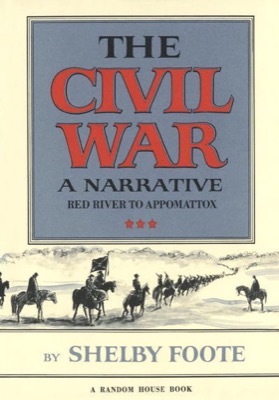
Hardcover. NY, Random House, reprint, 1974, Book: Very Good, Dust Jacket: Very Good, Hardcover in a bright, unclipped dust jacket. The Civil War: A Narrative. In the third -- and last -- volume of this vivid history, Foote brings to a close the story of four years of turmoil and strife which altered American life forever. Here, told in vivid narrative and as seen from both sides, are those climactic struggles, great and small, on and off the field of battle, which finally decided the fate of this nation. "Red River to Appomattox" opens with the beginning of the two final, major confrontations of the war: Grant against Lee in Virginia, and Sherman pressing Johnston in North Georgia. While the Virginia-Georgia fighting is in progress, Kearsarge sinks the Alabama and Forrest gains new laurels at Brice's Crossroads.With Grant and Lee deadlocked at Petersburg, Sherman takes Atlanta -- assuring Lincoln's reelection, together with the certainty that the war will be fought (not negotiated) to a finish. These events are followed by Hood's bold northward strike through middle Tennessee while Sherman sets out on his march to the sea, to be opposed at its end by the ghost of the Army of Tennessee. Endpaper maps. First published in 1974, this appears to be a reprint (no price on dust jacket). Newspaper obituary of Foote laid in. Clean copy.
Hardcover. Chicago, University Of Chicago Press, 1st, 2007, Book: Very Good, Dust Jacket: Very Good, Hardcover in a bright dust jacket, 182 pages. The Reverend Howard Finster was twenty feet tall, suspended in darkness. Or so he appeared in the documentary film that introduced a teenaged Greg Bottoms to the renowned outsider artist whose death would help inspire him, fourteen years later, to travel the country. Beginning in Georgia with a trip to Finster's famous Paradise Gardens, his journey--of which The Colorful Apocalypse is a masterly chronicle--is an unparalleled look into the lives and visionary works of some of Finster's contemporaries: the self-taught evangelical artists whose beliefs and oeuvres occupy the gray area between madness and Christian ecstasy. With his prodigious gift for conversation and quietly observant storytelling, Bottoms draws us into the worlds of such figures as William Thomas Thompson, a handicapped ex-millionaire who painted a 300-foot version of the book of Revelation; Norbert Kox, an ex-member of the Outlaws biker gang who now lives as a recluse in rural Wisconsin and paints apocalyptic visual parables; and Myrtice West, who began painting to express the revelatory visions she had after her daughter was brutally murdered. These artists' works are as wildly varied as their life stories, but without sensationalizing or patronizing them, Bottoms--one of today's finest young writers--gets at the heart of what they have in common: the struggle to make sense, through art, of their difficult personal histories. Clean copy.
Softcover. New Haven CT, Yale University Press, reprint, 1999, Book: Very Good, Dust Jacket: None, Softcover, 436 pages, b&w illustrations. Eighteenth-century women have long been presented as the heroines of traditional biographies, or as the faceless victims of vast historical processes, but rarely have they been deemed worthy of historical inquiry. "The Gentleman's Daughter" provides an account of the lives of genteel women - the daughters of merchants, the wives of lawyers and the sisters of gentlemen. Based on a study of the letters, diaries and account books of over 100 women from commercial, professional and gentry families, mainly in provincial England, "The Gentleman's Daughter" challenges the view that the period witnessed a new division of the everyday worlds of privileged men and women into the separate spheres of home and work. Amanda Vickery invokes the women's own accounts of their lives to argue that in the course of the 18th and early 19th centuries the scope of female experience did not diminish - in fact, quite the reverse. Contrary to orthodoxy, in the 18th century there was neither a loss of female freedoms, nor a novel retreat into the home. In their own writing, genteel women throughout the Georgian era singled out their social and their emotional roles: kinswoman, wife, mother, housekeeper, consumer, hostess and member of polite society. Clean copy.
Hardcover. Harrisburg PA, National Historical Society, reprint, 1988, Book: Very Good, Dust Jacket: None, Hardcover, glossy green pictorial boards. No DJ as issued. Volume 15 of the Architectural Treasures of Early America. From material originally published as the Georgian Period edited by Professor William Rotch Ware. 224 page book with historic photographs and home plans. Clean copy.

 "Philip Pearlsteinby: University of Georgia Museum of Art")

 "Primes and Their Neighbors, The: Ten Tales of Middle Georgiaby: Johnston, Richard Malcolm")
 "Prison Notes by: Deming, Barbara")
 "Revolutionary War Bounty Land Grants Awarded by State Governmentsby: Bockstruck, Lloyd DeWitt")
 "Richmond During the War; Four Years of Personal Observation By a Richmond Lady (Leather Bound Hardcover) by: Putnam, Sallie B.")
 "Rufus Gideon Grant by: Dean, Leigh/Paul Giovanopoulos")

 "Sargent Watercolorsby: Hoopes, Donelson F.")
 "Savannah Revisited - History, Architecture, Restoration (SIGNED COPY)by: Lane, Mills")
 "Seed That Was Sown In the Colony of Georgia. The Harvest and Aftermath 1740-1870, The by: Wylly, Charles Spalding")
 "Selling the Old-Time Religion: American Fundamentalists and Mass Culture, 1920-1940 by: Douglas Carl Abrams")
 "Slavery in the United States: A Narrative of the Life and Adventures of Charles Ball, a Black Man, Who Lived Forty Years in Maryland, South Carolina and Georgia, as a Slave Under Various Masters, and was One Year in the Navy with Com")

 "Some Memories of Drawings by: Georgia O'Keeffe")


 "Soulmaker: The Times of Lewis Hineby: Nemerov, Alexander")
 "Spirit of New England (Architectural Treasures of Early America, Vol. 16) by: Mullins, Lisa C. (editor)")
 "Styles of the Emerging Nation (Architectural Treasures of Early America, Vol. 13) by: Mullins, Lisa C. (editor)")
 "THE BIG MIDGET MURDERSby: Craig Rice")


 "The Gentleman's Daughter: Women's Lives in Georgian England by: Vickery, Amanda")
 "The Georgian Heritage (Architectural Treasures of Early America, Vol. 15)by: Mullins, Lisa C. (editor)")