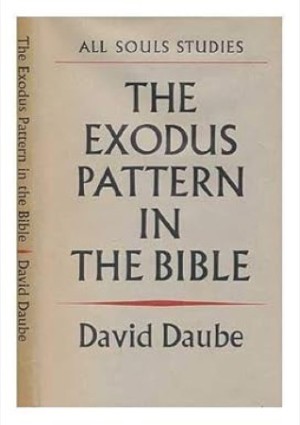
Hardcover. London, Faber & Faber, 1st, 1963, Book: Very Good, Dust Jacket: Very Good, Hardcover in a bright dust jacket, 94 pages. David Daube was a scholar of Roman and Jewish law, and his expertise led him to some unique scriptural insights. In this stimulating monograph, Daube argues that the Bible presents the exodus as a judicial proceeding, with Egypt coming under God's judgment for its treatment of the Israelite slaves. He shows that this judicial model explains some unusual details of the narrative. For example, Moses' negotiations with Pharaoh and the fact that Israelite women were given jewelry before their departure are part of implementing the proper procedures for releasing slaves as outlined in Deut 15:13. Daube also brings out parallels in the biblical accounts of Israel's release from Egypt, Jacob's departure from Laban in Gen 31, and the release of the captured ark of the covenant by the Philistines in I Sam 6. Name on front fly leaf, light pencil notations to several pages.
Hardcover. Oakland CA, Pacific Press, reprint, 1888, Book: Good, Dust Jacket: None, Hardcover, leather bound with gilt lettering on spine and front cover. 704 pages, b&w illustrations. The book explores the ongoing spiritual conflict between good and evil from a Christian perspective, focusing on the consequences of humanity's choices throughout history. It seeks to illuminate the relationship between divine providence and human agency, ultimately aiming to provide readers with understanding and hope in the face of moral struggles and cosmic battles. The opening of this work introduces the foundational themes of the great controversy, beginning with a poignant depiction of Jesus' sorrow over Jerusalem's future destruction due to its rejection of Him. White emphasizes the spiritual blindness and rebellion of the people, reflecting on the historical and prophetic significance of Jerusalem as the chosen city of God. The author sets the stage for exploring the broader themes of persecution, apostasy, and the eventual triumph of good over evil, indicating that the narrative will trace historical events and divine truths that shape the ongoing struggle between Christ and Satan. Covers worn, short split to spine at top. Copyright page states 1888 with no other printings but one of the illustrated plates has a 1891 date, so assumed a reprint edition. The endpapers, front and back, are frayed, wrinkled. All edges gilt. Interior clean. Due to size and weight, DOMESTIC SHIPPING ONLY.
Softcover. NY, W. W. Norton & Company, 1st US, Book: Very Good, Dust Jacket: None, Softcover, Advance Reading Copy, 408 pages. The seven-foot Dirk Nowitzki is one of the greatest players in basketball history. The Dallas Maverick's legend revolutionized the sport, redefining the role of the big man in the modern game. Dirk moved differently: flexible and fast, confident and in control. He thought differently, too. On the court, his shots were masterful-none more venerated than his signature one-legged flamingo fadeaway, a move that lives on in the repertoire of today's most skilled NBA players. How did this lanky kid from the German suburbs become an all-time top ten scorer and NBA champion? How can a superstar stay so humble? Award-winning novelist and sportswriter Thomas Pletzinger spent over seven years traveling with Nowitzki. He witnessed Dirk's summer workouts, involving fingertip pushups and the study of the physics, and spent days discussing literature and philosophy with Holger Geschwindner, Dirk's enigmatic mentor and coach. Watching Nowitzki in empty gyms and in packed arenas with 30,000 fans, Pletzinger began to understand how Dirk and Holger's philosophical insights on performance, creativity, and freedom enabled his success and longevity. This proof edition lacks the photo section. Clean copy.
Hardcover. New Haven CT, Yale /Houston Museum of Fine Arts, 1st, 2007, Book: Very Good, Dust Jacket: Very Good, Hardcover, 168 pages. Chen Changfen (b. 1941) began to photograph the Great Wall twenty years before the Chinese government officially adopted it as the national symbol in 1984. This fascinating book presents a small fraction of his decades-long study of the monumental form and conveys the fertile range of themes and ideas that Chen has investigated, each informed by traditional Chinese art, history, and philosophy. Combining a unique blend of traditional and contemporary technical processes, Chen's richly evocative photographs at once celebrate the remarkable series of building campaigns that produced the Wall and memorialize the thousands of conscripted laborers whose lives were sacrificed to its construction.One of the most striking features of Chen's photographs is their unexpected variety of perspectives and moods, capturing the vicissitudes of weather, time, and human history that have acted upon it. By excluding the people, highways, factories, and modern buildings that encroach on and daily destroy sections of the Wall, however, Chen eliminates major aspects of the Wall's present reality from his pictures. In a thoughtful essay and interview with the artist, Anne Wilkes Tucker probes the meanings of such omissions and guides the reader through Chen's extraordinary images. The Great Wall of China is essential reading for photographers, historians, and travelers.
Hardcover. Edinburgh, T & T Clark, Revised Ed., 1998, Book: Very Good, Dust Jacket: Very Good, Hardcover in a bright dust jacket, 704 pages. Volume 3/Part 1 ONLY. A New English Edition revised and edited by Geza Vermes, Fergus Millar and Matthew Black. Critical presentation of the whole evidence concerning Jewish history, institutions, and literature from 175 BC to AD 135; with updated bibliographies. Name on front fly leaf, otherwise clean.
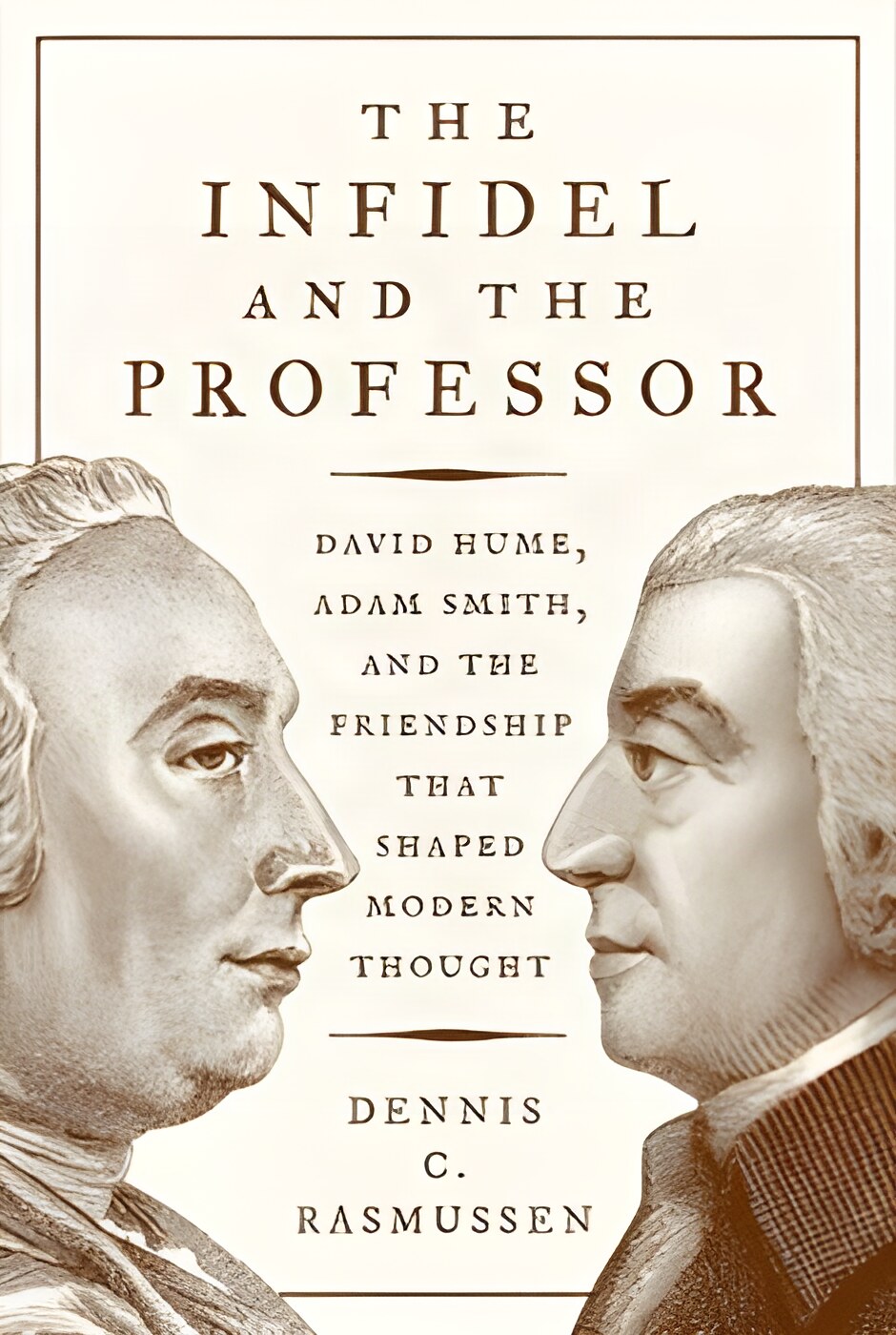
Hardcover. Princeton NJ, Princeton University Press, 3rd pr., 2017, Book: Very Good, Dust Jacket: Very Good, Hardcover in a bright dust jacket, 316 pages. David Hume is widely regarded as the most important philosopher ever to write in English, but during his lifetime he was attacked as "the Great Infidel" for his skeptical religious views and deemed unfit to teach the young. In contrast, Adam Smith was a revered professor of moral philosophy, and is now often hailed as the founding father of capitalism. Remarkably, the two were best friends for most of their adult lives, sharing what Dennis Rasmussen calls the greatest of all philosophical friendships. The Infidel and the Professor is the first book to tell the fascinating story of the friendship of these towering Enlightenment thinkers-and how it influenced their world-changing ideas. The book follows Hume and Smith's relationship from their first meeting in 1749 until Hume's death in 1776. It describes how they commented on each other's writings, supported each other's careers and literary ambitions, and advised each other on personal matters, most notably after Hume's quarrel with Jean-Jacques Rousseau. Clean copy.
Softcover. Cambridge UK, Cambridge University Press, 1st pbk., 2002, Book: Very Good, Dust Jacket: None, Softcover, 359 pages. In this major reevaluation of Isaac Newton's intellectual life, Betty Jo Teeter Dobbs shows how his pioneering work in mathematics, physics, and cosmology was intertwined with his study of alchemy. Professor Dobbs argues that to Newton those several intellectual pursuits were all ways of approaching Truth, and that Newton's primary goal was not the study of nature for its own sake but rather an attempt to establish a unified system that would have included both natural and divine principles. She also argues that Newton's methodology was much broader than modern scholars have previously supposed, and she traces the evolution of his thought on the intertwined problems of the microcosmic "vegetable spirit" of alchemy and the "cause" of the cosmic principle of gravitation. Clean, bright copy.
Hardcover. NY, Frederick Ungar, 1st thus, 1974, Book: Very Good, Dust Jacket: Very Good, Hardcover in a lightly worn dust jacket, 263 pages. 1st American Edition of this Abridged Translation. This is Kraus's masterpiece, with half of Europe as its stage. It is presented here in English for the first time, in an abridged version that preserves the essence of the 800-page original. Its influence on Brecht, Ionesco, and other playwrights is acknowledged. Mingling actual quotations, news reports, and government orders with Kraus's own satiric dialogue, this immense drama (never meaning to be performed) offers a vast fresco of events at the front and at home during, as it prophesied, the last days of the Austro-Hungarian Empire. Indeed, Kraus anticipated the development of atomic warfare and its threat to all mankind. Some of Kraus is untranslatable, but, as Stanley Kauffmann wrote in his New Republic review, "Ungar has done us a benefit at least by bringing us a bit closer to this sharp-eyed, angry, prickly, lover-hater of mankind." INSCRIBED BY FREDERICK UNGAR, the editor and publisher on the half-title page. He also wrote the 14 page introduction. Clean copy.
Hardcover. UK, Oxford University at the Clarendon Press, 2nd Ed., 1980, Book: Very Good, Dust Jacket: Very Good, Hardcover in a bright dust jacket, 709 pages. B&W frontispiece portrait of Hume and folding family tree to rear. Mossner's Life of David Hume remains the standard biography of this great thinker and writer. First published in 1954, and now updated, in response to an overwhelming interest in Hume's brilliant ideas. Containing more than a simple biography, this exemplary work is also a study of intellectual reaction in the eighteenth century. In this new edition are a detailed bibliography, index, and textual supplements, making it the perfect text for scholars and advanced students of Hume, epistemology, and the history of philosophy. It is also ideal for historians and literary scholars working on the eighteenth century, and for anyone with an interest in philosophy. Name and date on front fly leaf, otherwise clean.
Softcover. NY, Macmillan, reprint, 1963, Book: Good, Dust Jacket: None, Softcover, 674 pages, b&w illustrations. According to Keynes' biographer, "Keynes' contributions to the theory of economics tended to be closely related to his practical proposals, and these in turn were also influenced by his general philosophy. An understanding of the background of his thought is indispensable for a correct interpretation of his conclusions. Furthermore, I venture to think that those who come after will be interested in Keynes, not only on account of his teachings and influence, but also for what he was in himself. If I am right in supposing that he was one of the greatest Englishmen of his age, then it is expedient that an attempt should be made to bring together all the varied aspects of his character and interests into a single biography." Light shelfwear.
Hardcover. Chicago, University of Chicago Press, 1st, 2011, Book: Very Good, Dust Jacket: Very Good, Hardcover in a bright dust jacket, 250 pages. With The Lucretian Renaissance, Gerard Passannante offers a radical rethinking of a familiar narrative: the rise of materialism in early modern Europe. Passannante begins by taking up the ancient philosophical notion that the world is composed of two fundamental opposites: atoms, as the philosopher Epicurus theorized, intrinsically unchangeable and moving about the void; and the void itself, or nothingness. Passannante considers the fact that this strain of ancient Greek philosophy survived and was transmitted to the Renaissance primarily by means of a poem that had seemingly been lost--a poem insisting that the letters of the alphabet are like the atoms that make up the universe. Name and date on front fly leaf, light pencil marginalia and a few underlinings.
Hardcover. Oxford UK, Clarendon Press, 1st, 1993, Book: Very Good, Dust Jacket: Very Good, Hardcover in a bright dust jacket, Maurice Wiles was Regius Professor of Divinity at the University of Oxford from 1970-1991. To celebrate his seventieth birthday, a group of distinguished friends and colleagues have written this important series of original and perceptive essays on the twin themes of making and remaking Christian doctrine. The topics covered in this thought-provoking collection range from the notion of divine action in Hebrew Wisdom literature to reflections on the nature of the ministry, from the concept of God and the doctrines of Christology and of the Trinity to the character of theological reflection, and from revelation and tradition to the "lex orandi," the nature of interpretation in religion and the historical basis of theological understanding. Clean copy.
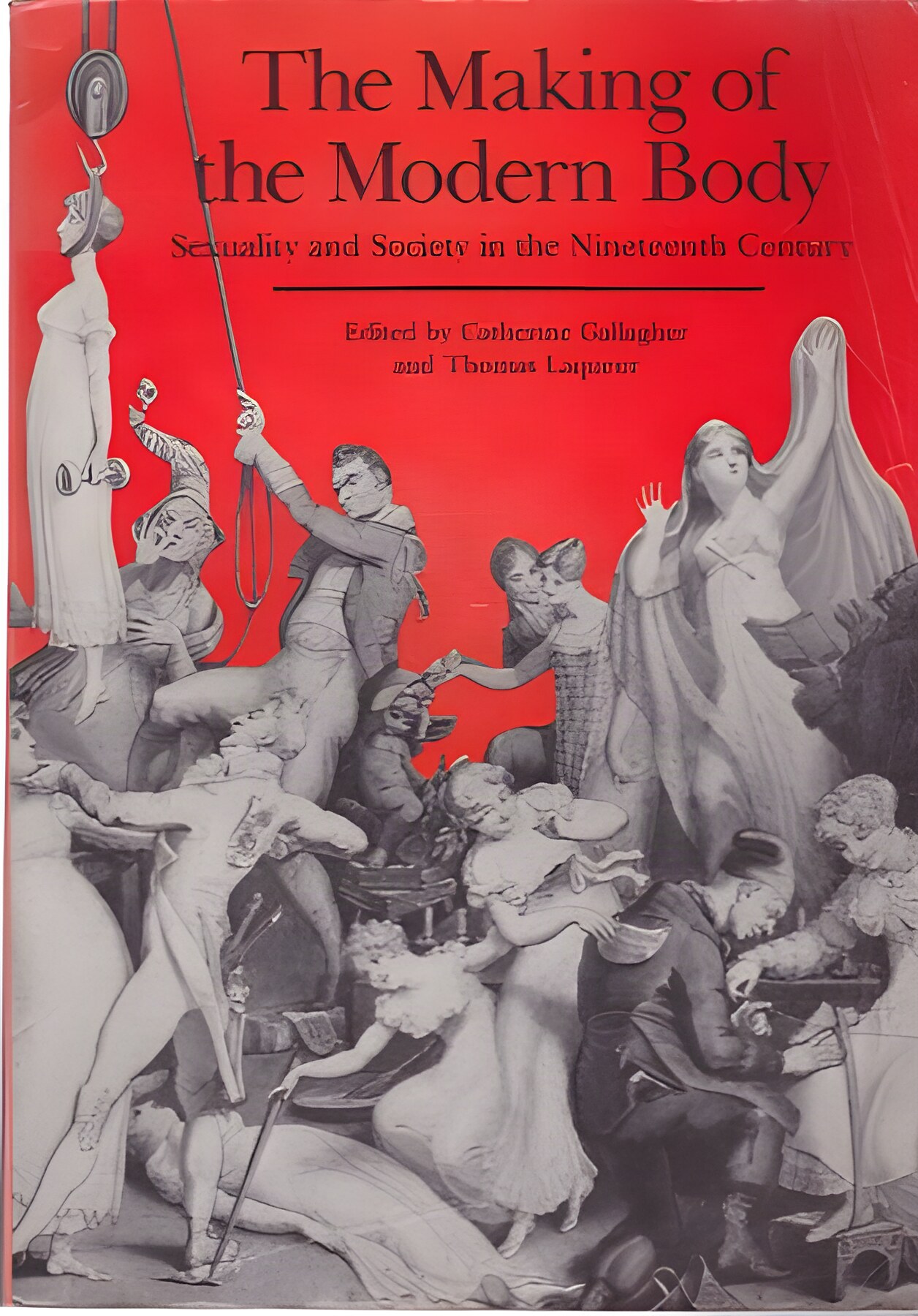
Softcover. Berkeley CA, University of California Press, reprint, 1987, Book: Good, Dust Jacket: None, Softcover, 242 pages. Scholars have only recently discovered that the human body itself has a history. Not only has it been perceived, interpreted, and represented differently in different epochs, but it has also been lived differently, brought into being within widely dissimilar material cultures, subjected to various technologies and means of control, and incorporated into different rhythms of production and consumption, pleasure and pain. The eight articles in this volume support, supplement, and explore the significance of these insights. They belong to a new historical endeavor that derives partly from the crossing of historical with anthropological investigations, partly from social historians' deepening interest in culture, partly from the thematization of the body in modern philosophy (especially phenomenology), and partly from the emphasis on gender, sexuality, and women's history that large numbers of feminist scholars have brought to all disciplines. Lightly worn copy, clean, solid binding.
Hardcover. London, Humanities Press, Revised Ed., 1951, Book: Very Good, Dust Jacket: None, A Historical and Critical Essay. Analyzes the works of Copernicus, Kepler, Galileo, Descartes, Hobbes, Gilbert, Boyle, and Newton to establish the reasons for the triumph of the modern scientific perspective. Hardcover, blue cloth with bright gilt lettering on spine, 343 pages. Clean, bright copy.
Hardcover. UK, Routledge / Thoemmes, reprint, 1995, Book: Very Good, Dust Jacket: None, Hardcover, maroon cloth with gilt lettering on spine. 450 pages plus index. A facsimile reprint of the second edition published in 1738. One of 8 volumes in the series History of British Deism. Clean, bright copy.
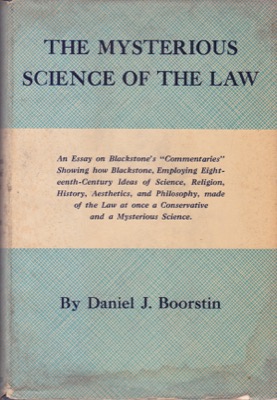
Hardcover. Cambridge MA, Harvard University Press, 1st, 1941, Book: Very Good, Dust Jacket: Fair, Hardcover in a worn, soiled dust jacket. Bright blue cloth covers with spine label. 257 pages. Frontispiece, 9 black and white illustrations. The Mysterious Science of Law was based on Boorstin's Yale SJD thesis. (He also held an Oxford BCL and was admitted to the Inner Temple.). It was the first of many important books by Boorstin, who went on to became a prominent historian and, from 1975 to 1987, Librarian of Congress. Appears to se SIGNED on the inside cover and dated Dec., 1941. Otherwise a clean copy.
Hardcover. Princeton Architectural Press, 1st, 2005, Book: Very Good, Dust Jacket: Very Good, Hardcover, 224 pages. Daring, bold, dramatic, towering, impossibly glamorous: this is how we imagine New York in its golden age, and this is how Samuel H. Gottscho, the preeminent architectural photographer of his generation, captured it. Through his lens, New York of the 1930s became the quintessential modern metropolis, a round-the-clock city in which night was as charismatic as day. Rigorously editing out the Depression-weary city's more seamy aspects--its tenement slums, breadlines, and soup kitchens--Gottscho presented a dreamlike Gotham of skyscrapers and penthouse luxury that literally and figuratively glowed with glamour's sheen. His gimlet eye focused on the bold interplay of sun and shadow, dramatizing the chiseled forms of Manhattan's signature skyline and bridges. The Empire State and Chrysler buildings, Rockefeller Center, the Plaza, the George Washington Bridge--Gottscho brought them all to sparkling life. In this beautifully produced, landmark book, historian Donald Albrecht presents 175 of Gottscho's extraordinary images of the city, from the Battery to Harlem. An introductory essay tells the story of this legendary photographer, describing his working methods and philosophy, while placing his work in the broader context of photographic history.
Hardcover. NY, Doubleday and Company, 1st, 1983, Book: Very Good, Dust Jacket: Very Good, Hardcover in a lightly chipped dust jacket. The writers of the Bible, like any other authors, were dependent on a vast array of literary sources from their time-the ancient world. Many of these documents are tragically lost, but what remains provides insight into the voluminous, fascinating, complex, and dynamic literary world that shaped the expressions of faith found in the Old and New Testaments. Part of these extant sources are known as the Pseudepigrapha. This collection of Jewish and Christian writings shed light on early Judaism and Christianity and their doctrines. Volume 1 only (of a 2-volume set). 995 pages. Clean copy.
Hardcover. NY, Doubleday and Company, 1st, 1985, Book: Very Good, Dust Jacket: Very Good, Hardcover in a lightly chipped dust jacket. The writers of the Bible, like any other authors, were dependent on a vast array of literary sources from their time-the ancient world. Many of these documents are tragically lost, but what remains provides insight into the voluminous, fascinating, complex, and dynamic literary world that shaped the expressions of faith found in the Old and New Testaments. Part of these extant sources are known as the Pseudepigrapha. This collection of Jewish and Christian writings shed light on early Judaism and Christianity and their doctrines. Volume 2 only (of a 2-volume set). 1006 pages. Clean copy.
Hardcover. Oxford UK, Clarendon Press, reprint, 2006, Book: Very Good, Dust Jacket: None, Hardcover, black glossy boards, 363 pages. This volume belongs to the first new critical edition of the works of Francis Bacon (1561-1626) to have been produced since the nineteenth century. The edition presents the works in broadly chronological order and according to the best principles of modern textual scholarship. The seven works in the present volume belong to the final completed stages (Parts III-V) of Bacon's hugely ambitious six-part sequence of philosophical works, collectively entitled Instauratio magna (1620-6). All are presented in the original Latin with new facing-page translations. Three of the seven texts (substantial works in two cases, and all sharing a startlingly improbable textual history) are published and translated here for the first time: these are an early version of the Historia densi, the 'lost' Abecedarium, and the Historia de animato & inanimato. Another--the Prodromi sive anticipationes philosphiae secundae--has likewise never been translated before. Together with their commentaries and the introduction they open the way to important new understandings of Bacon's mature philosophical thought. Clean copy.
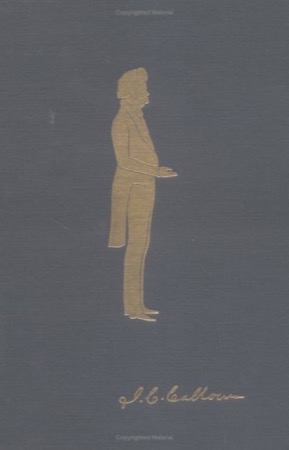
Hardcover. Columbia, University of South Carolina Press, reprint, 2003, Book: Very Good, Dust Jacket: None, Hardcover, blue cloth wth gilt lettering on spine, gilt silhouette of Calhoun on cover. 244 pages with index. The Papers of John C. Calhoun, Volume XXVIII is the final volume in a distinguished documentary edition, the first volume of which was published more than fifty years ago. While identical to others in the series in terms of typeface, binding, and letterpress printing, this volume does not contain any of John C. Calhoun's personal papers, rather it features Calhoun's only formal, scholarly writings on political science and political philosophy. A Disquisition on Government is an examination of the first principles of political science, much in the model of Aristotle's Politics or Baron Montesquieu's Spirit of the Laws. It examines basic principles of politics, including concepts of sovereignty and personal liberty and the relationships between states and nations. A Discourse on the Constitution and Government of the United States is a focused study of American political thought and constitutional history since the ratification of the Constitution. It pays particular attention to antifederalist views of the Constitution, the Virginia and Kentucky Resolutions of the 1790s, and the Bill of Rights, the first ten amendments to the Constitution. Clean copy.
Softcover. The Hague, Martinus Nijhoff, 2nd Ed., 1965, Book: Very Good, Dust Jacket: None, Two matching softcover volumes, 765 total pages, b&w illustrations. Clean copies.
Hardcover. Rochester NY, University of Rochester Press, 1st, 1996, Book: Very Good, Dust Jacket: Very Good, Hardcover in a bright dust jacket, 224 pages. 10 Essays, ranging from Locke, Berkeley, and Hume to Foucault's Critique of the Enlightenment, with an Introduction by Sylvana Tomaselli. Contributors include Richard H. Popkin, Peter Laslett, and Michael Ayers.
Hardcover. London, Routledge & Kegan Paul, reprint, 1965, Book: Very Good, Dust Jacket: Good, Hardcover in a lightly worn dust jacket, 368 pages. Hans Vaihinger (1852-1933) was an important and fascinating figure in German philosophy in the early twentieth century, founding the well-known journal Kantstudien. Yet he was overshadowed by the burgeoning movements of phenomenology and analytical philosophy, as well as hostility towards his work because of his defense of Jewish scholars in a Germany controlled by Nazism. However, it is widely acknowledged today that The Philosophy of 'As If' is a philosophical masterwork. Vaihinger argues that in face of an overwhelmingly complex world, we produce a simpler set of ideas, or idealizations, that help us negotiate it. When cast as fictions, such ideas provide an easier and more useful way to think about certain subjects, from mathematics and physics to law and morality, than would the truth in all its complexity. Even in science, he wrote, we must proceed "as if" a material world exists independently of perceiving subjects; in behavior, we must act "as if" ethical certainty were possible; in religion, we must believe "as if" there were a God. He also explores the role of fictions in the history of philosophy, going back to the ancient Greeks and the work of Leibniz, Adam Smith and Bentham. Name on front fly leaf, otherwise clean.

 "The Great Controversy Between Christ and Satan During the Christian Dispensationby: Ellen Gould Harmon White")

 "The Great Wall of China: Photographs by Chen Changfen (Houston Museum of Fine Arts)by: Anne Wilkes Tucker and Jonathan D. Spence")
 "The History of the Jewish People in the Age of Jesus Christ: Volume III.1by: Emil Schurer")

 "The Last Days of Mankind: A Tragedy in Five Acts by: Kraus, Karl; /Ungar, Frederick(Ed.) /Wright, E Sue (transl.)")
 "The Life of David Humeby: Mossner, Ernest Campbell")
 "The Life of John Maynard Keynesby: R. F. Harrod")



 "The Moral Philosopherby: Morgan, Thomas /Price, John V. (Intro)")


 "The Mythic City: Photographs of New York by Samuel H. Gottscho, 1925-1940by: Donald Albrecht")


 "The Oxford Francis Bacon XIII: The Instauratio Magna: Last Writingsby: Bacon, Francis, and Rees, Graham (Edited and translated by)")
 "The Phenomenological Movement: A Historical Introduction (2 volumes). by: Spiegelberg, Herbert")
 "The Philosophy of 'As If' : A System of the Theoretical, Practical and Religious Fiction of Mankind. by: Hans Vaihinger")