Hardcover. NY, Macmillan Company, 1st, 1936, Book: Very Good, Dust Jacket: None, Hardcover, gray cloth with gilt lettering on spine faded, 271 pages. The book covers the life and work of Bishop Butler and the impact his philosophy had on the Age of Reason. Name, date on front fly leaf, otherwise a clean, tight copy.
Hardcover. New York, Thomas Whittaker, 1st, 1886, Book: Very Good, Dust Jacket: None, 225 pages, blue cloth covers with gilt lettering on spine. Clean, bright copy.
Softcover. UK, Cambridge University Press, reprint, 1996, Book: Very Good, Dust Jacket: None, Softcover, 141 pages. This volume contains the essential points of Jean Bodin's theory of sovereignty, a landmark in legal theory and royalist ideology. The four chapters presented form the core of Bodin's classic work, Six Livres de la Republique. Bodin was primarily responsible for introducing the seductive but erroneous notion that sovereignty is indivisible, that the entire power of the state had to be vested in a single individual or group. This thesis, combined with the prevailing crisis of authority during the French religious wars, led Bodin to a systematically absolutist interpretation of the French and other European monarchies. This is the first complete translation of this material into English since 1606, and is accompanied by a lucid introduction, chronology, and bibliography. Clean copy.
Hardcover. New York , Abaris Books, Inc., 1st, 1974, Book: Very Good, Dust Jacket: None, 344 pages. Oversized red decorated cloth cover, gilt lettering, minor wear to corners. This copy does not have original slipcase. Light foxing on top and fore edge, but inside is bright and clean, with many colored illustrations throughout. Contains a history of the Prayer Book and a synopsis of the life of Emperor Maximilian I.
Softcover. Berkeley, University of California Press, 1st pbk, 1987, Book: Very Good, Dust Jacket: None, Softcover, 839 pages. Traces the history of bribery from ancient Egypt to ABSCAM, examines changing perceptions of bribery, and discusses the legal, ethical and religious injunctions against bribes. Clean, bright copy.
Hardcover. Oxford UK, Oxford University Press, 1st, 2015, Book: Very Good, Dust Jacket: Very Good, Hardcover in a bright dust jacket, 286 pages. Sarah Hutton presents a rich historical study of one of the most fertile periods in modern philosophy. It was in the seventeenth century that Britain's first philosophers of international stature and lasting influence emerged. Its most famous names, Hobbes and Locke, rank alongside the greatest names in the European philosophical canon. Bacon too belongs with this constellation of great thinkers, although his status as a philosopher tends to be obscured by his statusas father of modern science. The seventeenth century is normally regarded as the dawn of modernity following the breakdown of the Aristotelian synthesis which had dominated intellectual life since the middle ages. In this period of transformational change, Bacon, Hobbes, Locke are acknowledged tohave contributed significantly to the shape of European philosophy from their own time to the present day. But these figures did not work in isolation. Sarah Hutton places them in their intellectual context, including the social, political and religious conditions in which philosophy was practised. She treats seventeenth-century philosophy as an ongoing like all conversations, some voices will dominate, some will be more persuasive than others and there will be enormous variationsin tone from the polite to polemical, matter-of-fact, intemperate. The conversation model allows voices to be heard which would otherwise be discounted. Hutton shows the importance of figures normally regarded as 'minor' players in philosophy (e.g. Herbert of Cherbury, Cudworth, More, Burthogge,Norris, Toland) as well as others who have been completely overlooked, notably female philosophers. Crucially, instead of emphasizing the break between seventeenth-century philosophy and its past, the conversation model makes it possible to trace continuities between the Renaissance and seventeenth century, across the seventeenth century and into the eighteenth century, while at the same time acknowledging the major changes which occurred.
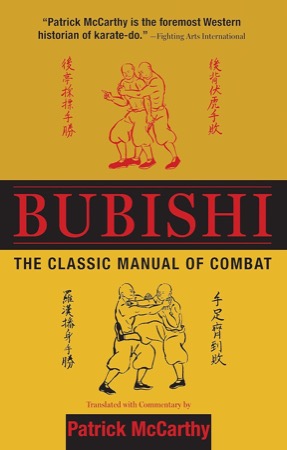
Hardcover. Rutland VT, Tuttle Publishing, 2nd pr., 2008, Book: Very Good, Dust Jacket: Very Good, Hardcover in a bright dust jacket, 255 pages, b&w illustrations. Treasured for centuries by karate's top masters, the Bubishi is a classic Chinese work on philosophy, strategy, medicine, and technique as they relate to the martial arts. Referred to as the "bible of karate" by famous master Chojun Miyagi, for hundreds of years the Bubishi was a secret text passed from master to student in China and later in Okinawa. All of karate's legendary masters have studied it, applied its teachings, or copied passages from it. No other classic work has had as dramatic an impact on the shaping and development of karate as the Bubishi. Karate historian and authority Patrick McCarthy spent over ten years researching and studying the Bubishi and the arts associated with it. The first English translation of this remarkable tome includes numerous explanations and notes. McCarthy's work also includes groundbreaking research on Okinawan and Chinese history, as well as the fighting and healing traditions that developed in those countries, making it a gold mine for researchers and practitioners alike. For the final word on the true origins and spirit of classic Okinawan martial arts, one need look no further. This karate book is one of the best karate training supplements available. Clean copy.
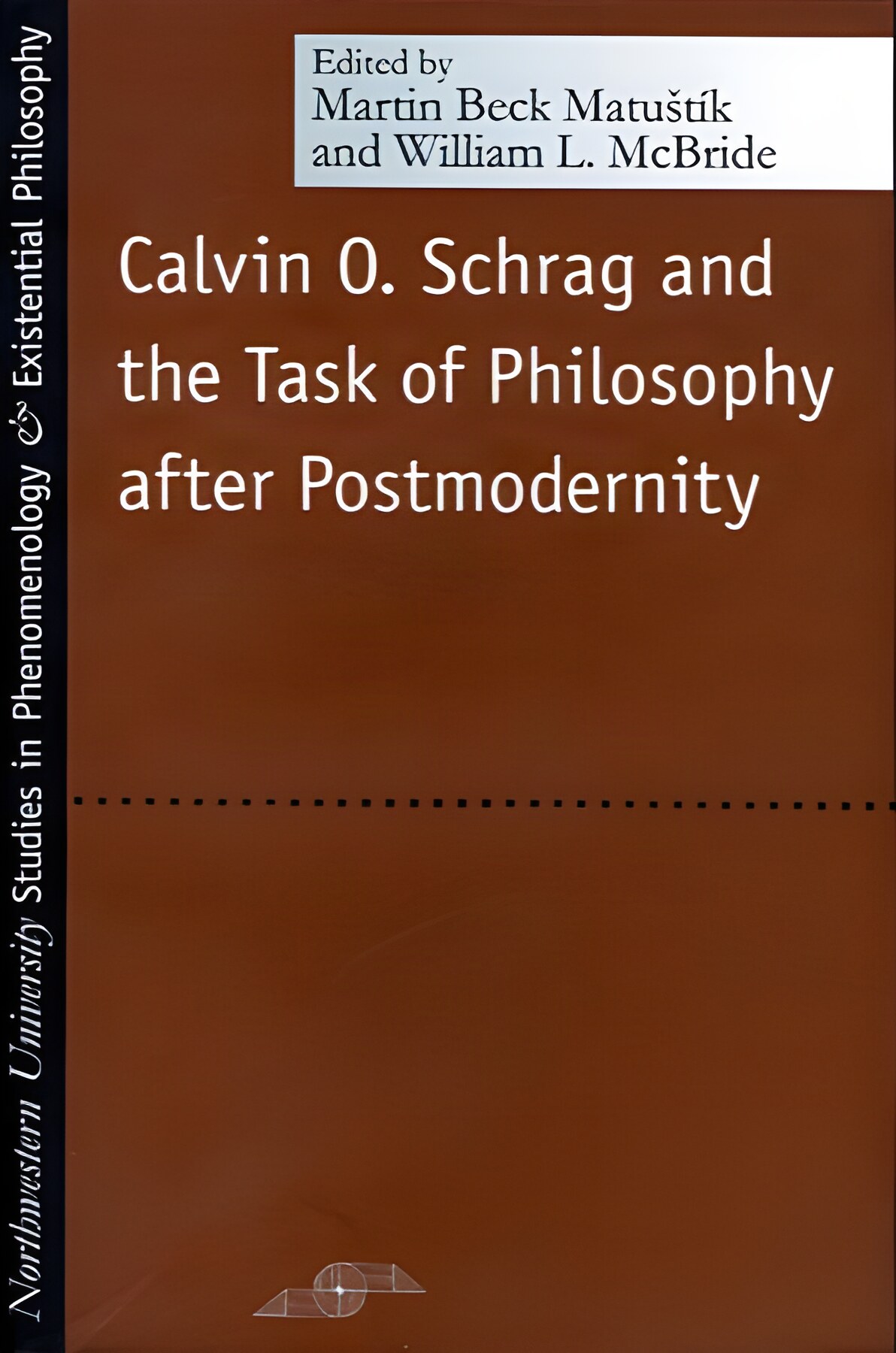
Softcover. Evanston IL, Northwestern University , 1st, 2002, Book: Very Good, Dust Jacket: None, Softcover, 325 pages. Devoted to the most important American Continental philosopher of his generation and one of the discipline's founding fathers, and featuring some of the field's most distinguished luminaries, this anthology constitutes a critical document in Continental philosophy, reflecting its recent history, its present state, and its debt to Calvin Schrag. Taking up themes central to Schrag's own philosophical concerns, these essays refer throughout to his salient "interventions" in the dialogue of late twentieth-century thought characterized as "postmodernity." In doing so, all contributors address, implicitly or directly, the question of philosophy's role and responsibility, or "task." The volume begins with an overview of this task and of Schrag's contributions to it, written from the perspective of a resolute defender of the phenomenological tradition that Schrag's work has extended and reconfigured. Clean copy.
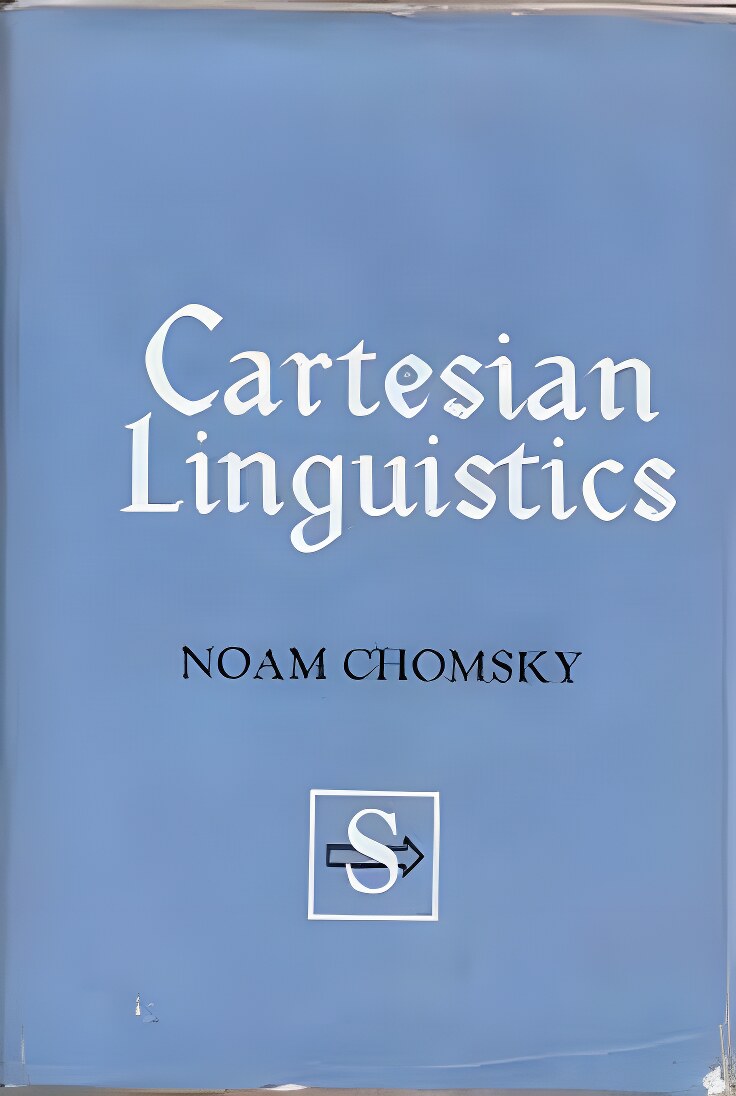
Hardcover. NY, Harper & Row, reprint, Book: Very Good, Dust Jacket: Very Good, Hardcover in a bright dust jacket, 119 pages. A book on linguistics by Noam Chomsky, written with the purpose of deepening 'our understanding of the nature of language and the mental processes and structures that underlie its use and acquisition'. Chomsky wished to shed light on these underlying structures of the human language, and subsequently whether one can infer the nature of an organism from its language. Cartesian linguistics refers to a form of linguistics developed during the time of RenE Descartes, a prominent 17th century philosopher whose ideas continue to influence modern philosophy. In Cartesian Linguistics, Chomsky traces the development of linguistic theory from Descartes to Wilhelm von Humboldt, that is, from the period of the Enlightenment directly up to Romanticism. The central doctrine of Cartesian linguistics maintains that the general features of grammatical structure are common to all languages and reflect certain fundamental properties of the mind. Clean copy.
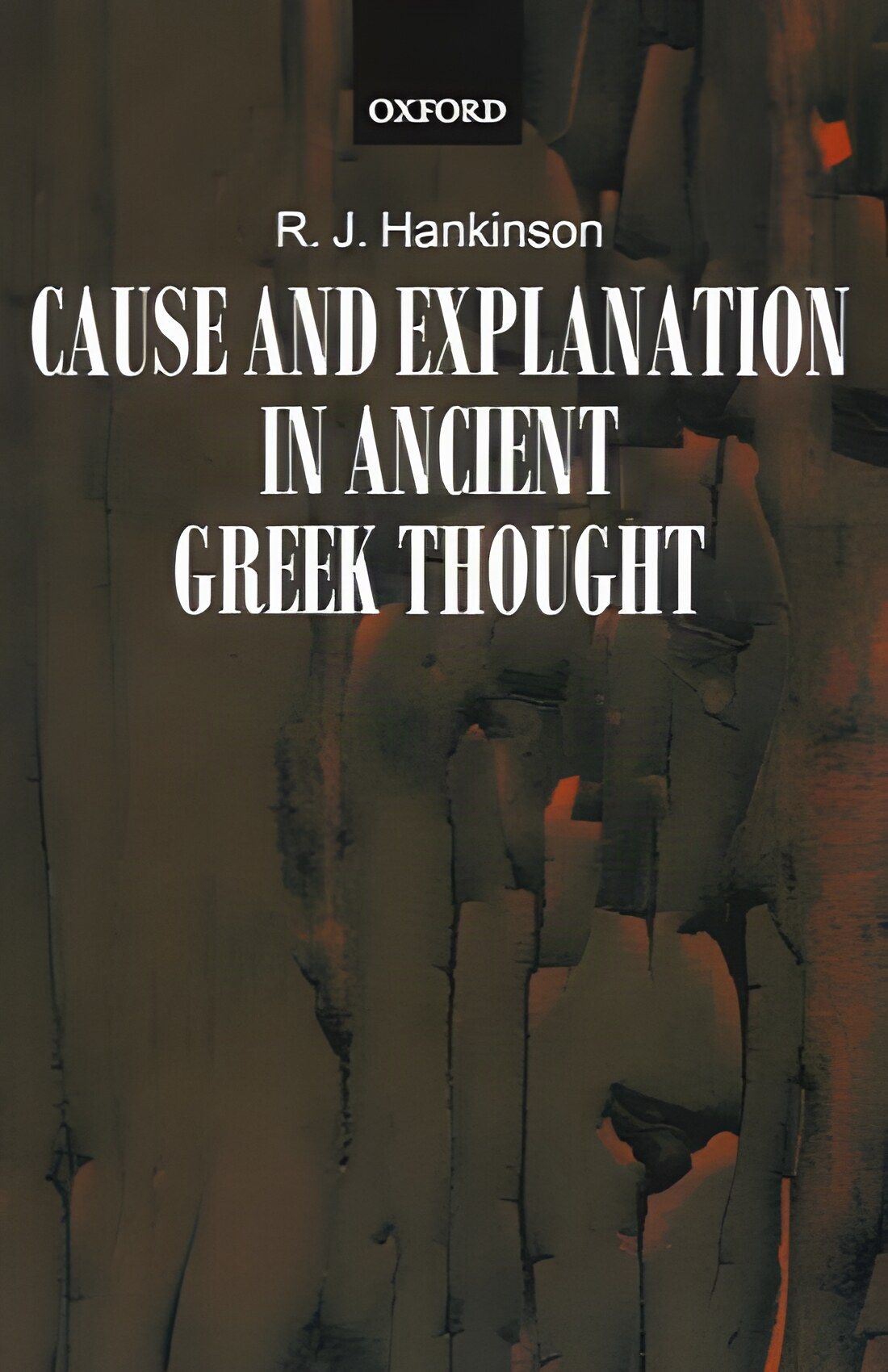
Softcover. UK, Clarendon Press, reprint, 2004, Book: Very Good, Dust Jacket: None, Softcover, 499 pages. R. J. Hankinson traces the history of ancient Greek thinking about causation and explanation, from its earliest beginnings through more than a thousand years to the middle of the first millennium of the Christian era. He examines ways in which the Ancient Greeks dealt with questions about how and why things happen as and when they do, about the basic constitution and structure of things, about function and purpose, laws of nature, chance, coincidence, and responsibility. Clean copy.
Softcover. Chico CA, Scholars Press, reprint, 1985, Book: Very Good, Dust Jacket: None, Softcover, 374 pages. A collection of essays first published in 1869. Clean copy.
Hardcover. London, John Bennett, reprint, 1832, Book: Very Good, 366 pages photocopied from the 1832 Seventh Edition, xeroxed two leafs per page with the reverse side blank. Bound in oblong black cloth covers. Volume 1 only (of 2).
Softcover. Cambridge, UK, Cambridge University Press, 1st, 2006, Book: Very Good, Dust Jacket: None, Softcover, 331 pages including index. Who would the Saviour have to be, what would the Saviour have to do to rescue human beings from the meaning-destroying experiences of their lives? This book offers a systematic Christology that is at once biblical and philosophical. Starting with human radical vulnerability to horrors such as permanent pain, sadistic abuse or genocide, it develops what must be true about Christ if He is the horror-defeater who ultimately resolves all the problems affecting the human condition and Divine-human relations. Distinctive elements of Marilyn McCord Adams' study are her defence of the two-natures theory, of Christ as Inner Teacher and a functional partner in human flourishing, and her arguments in favour of literal bodily resurrection (Christ's and ours) and of a strong doctrine of corporeal Eucharistic presence. The book concludes that Christ is the One in Whom, not only Christian doctrine, but cosmos, church, and the human psyche hold together.
Hardcover. London, Routledge/Thoemmes Press, 1st thus, 1995, Book: Very Good, Dust Jacket: None, Hardcover, maroon cloth with gilt lettering on spine. Facsimile reprints of the two works (1696 and 1697). Introduction by John Valdimir Price. Approx, 430 pages, light pencil markings to about 20 pages. Otherwise clean, tight copy.
Hardcover. New York, Simon & Schuster, 1st US, 2003, Book: Very Good, Dust Jacket: Very Good, Hardcover in a bright dust jacket. 423 pages, SIGNED BY AUTHOR on title page. Very clean and tight copy. With "humanism, generosity, and a passionate, beating heart" (The Times, London), Janice Galloway's Clara reignites, from between the lines of history, the great love of Robert and Clara Schumann. In her lifetime, Clara was a celebrated concert pianist and composer, editor and teacher, friend of Brahms -- as well as mother of the eight Schumann children and caretaker of her husband through a series of crippling mental illnesses. In its luminous integrity the novel brings Clara Schumann to life as a woman of genius. Galloway is at once a meticulous researcher of her subjects' remarkable and highly dramatic artistic careers and a virtuoso storyteller whose imagination and empathy lead her to that place off limits to history and biography -- inside the human mind. Distilling the memories, poetry, and musical notes therein, she examines the ways artists divine patterns out of life's chaos. "Passion," writes Galloway of Clara's performance philosophy, "one might take for granted -- its control is the mechanism through which all else flows." Though music may have bent to Clara's will, love served her far more tragically. Dismissing the cliches of Great Art and rejecting the romantic conflation of Madness and Creativity, Clara boldly ventures that in a life marred by alienation and isolation, "Work alone endures."
Softcover. Oxford, UK, Clarendon Press, Reprint, 1978, Book: Very Good, Dust Jacket: None, 306 pages. Softcover with light wear to wraps. Sunfade to spine. Spine faded. Small black mark on rear wrap, some lines highlighted on four pages. Light toning throughout, illustrated by tables & figures in bw.
Hardcover. Canada, McGill-Queen's University Press, 1st, 1982, Book: Very Good, Dust Jacket: None, 227 pages. Hardcover. Brown cloth cover boards, black title on spine and front cover. Pages clean and bright. Spine straight. Binding tight. Previous owner's name on front flyleaf. Brown endpapers. This book challenges widespread asumptions about common-sense philosophies and provides a major reassessment of an influential segment of the history of ideas.
Hardcover. Oxford UK, Clarendon Press, 1st, 1935, Book: Very Good, Dust Jacket: None, Hardcover, blue cloth with gilt lettering on spine, 347 pages. Light pencil notes on rear fly leaf, otherwise clean, tight copy. Volume 1 only of a two volume set.
Hardcover. Oxford UK, Clarendon Press, 1st, 1935, Book: Very Good, Dust Jacket: None, Hardcover, blue cloth with gilt lettering on spine, pages 349-708. A clean, tight copy. Volume 2 only of a two volume set.
Hardcover. University Park, Pennsylvania State University Press, 1st Edition, 2012, Book: Very Good, Dust Jacket: Very Good, 346 pages. Hardcover. Dust jacket with only minor wear. Clean, unmarked and tight copy.
Hardcover. New York, Dodd, Mead and Company, 1st Edition, 1920, Book: Good, Dust Jacket: None, 370 pages. Hardcover. Green cloth covers with gilt titles to cover & spine. Fraying, scuffing to edges. Light sunfade to spine. As is, with light pencil marking throughout. Cracked rear hinge.
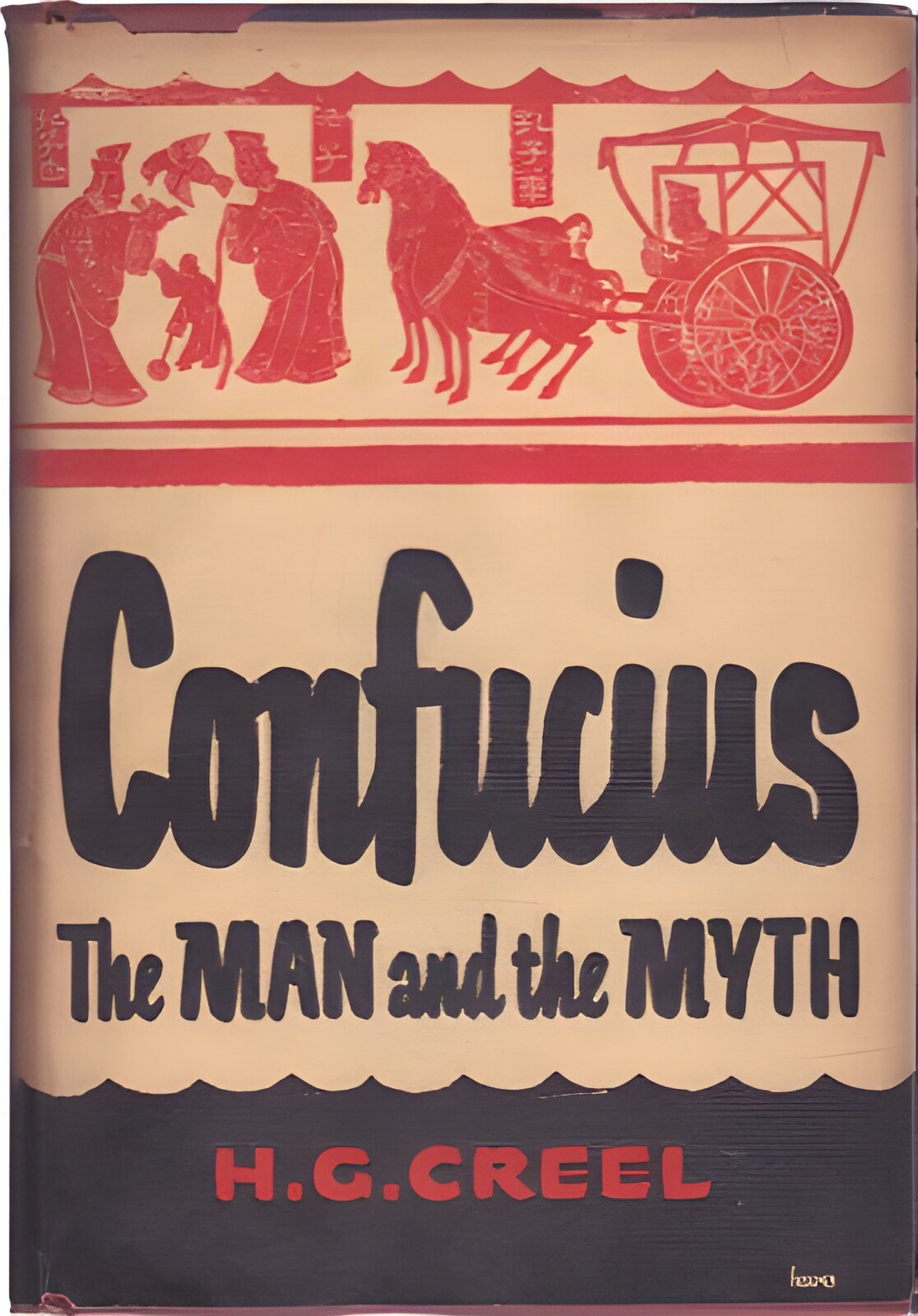
Hardcover. NY, John Day, 1st, 1949, Book: Good, Dust Jacket: Good, Hardcover in a bright, edgeworn and chipped dust jacket. Explores the life and teachings of the ancient Chinese philosopher, Confucius. The book delves into Confucius' background, upbringing, and the cultural and political context in which he lived. It also examines the various interpretations of Confucianism throughout history and how his teachings have influenced Chinese society and beyond. The author offers a critical analysis of Confucius' philosophy and challenges some of the popular myths and misconceptions that have surrounded him. Mild musty smell, clean copy.
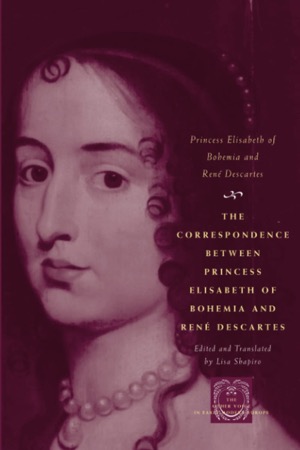
Softcover. Chicago, University of Chicago Press, 2nd pr., 2007, Book: Very Good, Dust Jacket: None, Softcover, 246 pages. Between the years 1643 and 1649, Princess Elisabeth of Bohemia (1618-80) and Rene Descartes (1596-1650) exchanged fifty-eight letters--thirty-two from Descartes and twenty-six from Elisabeth. Their correspondence contains the only known extant philosophical writings by Elisabeth, revealing her mastery of metaphysics, analytic geometry, and moral philosophy, as well as her keen interest in natural philosophy. The letters are essential reading for anyone interested in Descartes's philosophy, in particular his account of the human being as a union of mind and body, as well as his ethics. They also provide a unique insight into the character of their authors and the way ideas develop through intellectual collaboration.

 "Bishop Butler and the Age of Reason: A Study in the History of Thoughtby: Mossner, Ernest Campbell")
 "Bishops in the Tower, The: A Record of the Stirring Events Affecting the Church and Nonconformists from the Restoration to the Revolutionby: Luckock, Herbert Mortimer")

 "Bribes: The Intellectual History of a Moral Idea by: John T. Noonan, Jr.")
 "British Philosophy in the Seventeenth Century by: Hutton, Sarah")


 "Chips from a German Workshop, Vol. 1: Essays on the Science of Religionby: Max Muller")
 "Christ Alone Exalted: In the Perfection and Encouragements of the Saints, Notwithstanding Sins and Trials - Being the Complete Works of Tobias Crisp Containing Fifty-Two Sermons - Volume 1by:")
 "Christ and Horrors: The Coherence of Christology by: Adams, Marilyn McCord")
 "Clara: A Novel (SIGNED COPY)by: Galloway, Janice")
 "Classical Economists, Theby: O'Brien, D. P.")


 "Collected Essays (Volume 1) by: Bradley, F. H.")
 "Colonialism and Postcolonial Development: Spanish America in Comparative Perspectiveby: Mahoney, James")
 "Companion to Michael Oakeshott, Aby: Oakeshott, Michael/Paul Franco & Leslie Marsh")
 "Complex Vision, The by: Powys, John Cowper")