Softcover. Cambridge UK, Cambridge University Press, reprint, 1995, Book: Very Good, Dust Jacket: None, Softcover, 290 pages. This study provides a comprehensive reinterpretation of the meaning of Locke's political thought. John Dunn restores Locke's ideas to their exact context, and so stresses the historical question of what Locke in the Two Treatises of Government was intending to claim. By adopting this approach, he reveals the predominantly theological character of all Locke's thinking about politics and provides a convincing analysis of the development of Locke's thought. In a polemical concluding section, John Dunn argues that liberal and Marxist interpretations of Locke's politics have failed to grasp his meaning. Locke emerges as not merely a contributor to the development of English constitutional thought, or as a reflector of socio-economic change in seventeenth-century England, but as essentially a Calvinist natural theologian. Name on front fly leaf, otherwise clean.
Hardcover. NY, Alfred A. Knopf, 1st, 2001, Book: Very Good, Dust Jacket: Very Good, Hardcover in a bright, unclipped dust jacket, 355 pages. In this meticulously researched, unflinching, and reasoned study, National Book Award finalist David I. Kertzer presents shocking revelations about the role played by the Vatican in the development of modern anti-Semitism. Working in long-sealed Vatican archives, Kertzer unearths startling evidence to undermine the Church's argument that it played no direct role in the spread of modern anti-Semitism. In doing so, he challenges the Vatican's recent official statement on the subject, We Remember. Kertzer tells an unsettling story that has stirred up controversy around the world and sheds a much-needed light on the past. Newspaper review laid in. Clean copy.
Hardcover. Omohundro Institute/University of North Carolina Press, 1st, 2004, Book: Very Good, Dust Jacket: Very Good, Hardcover in a bright dust jacket, 349 pages. In an examination of transatlantic Puritanism from 1570 to 1638, Theodore Dwight Bozeman analyzes the quest for purity through sanctification. The word "Puritan," he says, accurately depicts a major and often obsessive trait of the English late Reformation. He argues forcefully for the various movements in England and New England termed 'antinomianism' to be seen as sustained protests against and deliberate alternatives to this great and defining Puritan achievement in practical divinity.
Hardcover. Amherst NY, Prometheus Books, 1st, 2000, Book: Very Good, Dust Jacket: Very Good, Hardcover in a bright dust jacket, 554 pages. More than one hundred years ago Western scholars began to investigate the origins of Islam, using the highest standards of objective historical scholarship of the time. Their aim was to determine what could be known about Muhammad and the rise of early Islam quite apart from the pious and totally unobjective traditions preserved by the Muslim religious community. In some ways this research was inspired by a similar investigation of Christianity made famous by Albert Schweitzer's Quest of the Historical Jesus. Today although much has been learned about early Christianity, little comparable progress has been made in the field of Islamic Studies. Here objective historical research has long been severely handicapped both by the resistance of Muslim societies to Western analysis of their sacred traditions and by the apologetic approaches of many Western scholars, who have compromised their investigations for fear of offending Muslim sensibilities. It is in this context that Ibn Warraq presents this important anthology of the best studies of Muhammad and early Islam ranging from the very beginnings of Islamic Studies in the nineteenth century to contemporary research. Clean copy.
Hardcover. London, Pickering & Chatto, 1st, 1999, Book: Very Good, Dust Jacket: None, Hardcover, black cloth, spine with maroon title block and gilt lettering, 377 pages. Vol. 2 ONLY of a six volume set. Clean, bright copy, no markings.
Hardcover. London, Pickering & Chatto, 1st, 1999, Book: Very Good, Dust Jacket: None, Hardcover, black cloth, spine with maroon title block and gilt lettering, 384 pages. Vol. 3 ONLY of a six volume set. Name and date on front fly leaf, otherwise clean.
Hardcover. London, Pickering & Chatto, 1st, 1999, Book: Very Good, Dust Jacket: None, Hardcover, black cloth, spine with maroon title block and gilt lettering, 448 pages. Vol. 4 ONLY of a six volume set. Clean, bright copy, no markings.
Hardcover. Ithaca NY, Cornell University Press, 2nd pr., 2005, Book: Very Good, Dust Jacket: Very Good, Hardcover in a bright dust jacket, 261 pages, previous owner's signature on front fly leaf. "Evil is the most serious of our moral problems. All over the world cruelty, greed, prejudice, and fanaticism ruin the lives of countless victims. Outrage provokes outrage. Millions nurture seething hatred of real or imagined enemies, revealing savage and destructive tendencies in human nature. Understanding this challenges our optimistic illusions about the effectiveness of reason and morality in bettering human lives. But abandoning these illusions is vitally important because they are obstacles to countering the threat of evil. The aim of this book is to explain why people act in these ways and what can be done about it." The first part of this book is a detailed discussion of six horrible cases of evil: the Albigensian Crusade of about 1210; Robespierre's Terror of 1793?94; Franz Stangl, who commanded a Nazi death camp in 1943?44; the 1969 murders committed by Charles Manson and his "family"; the "dirty war" conducted by the Argentinean military dictatorship of the late 1970s; and the activities of a psychopath named John Allen, who recorded reminiscences in 1975. John Kekes includes these examples not out of sensationalism, but rather to underline the need to hold vividly in our minds just what evil is. The second part shows why, in Kekes's view, explanations of evil inspired by Christianity and the Enlightenment fail to account for these cases and then provides an original explanation of evil in general and of these instances of it in particular.
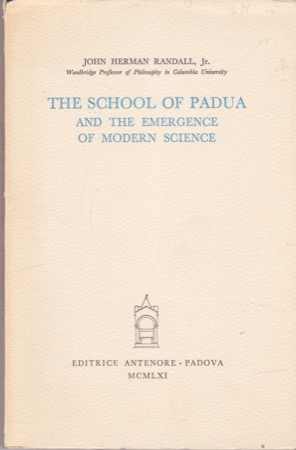
Softcover. Padova Italy, Editrice Antenore, 1st, 1961, Book: Very Good, Dust Jacket: None, Softcover, cream color wrappers with black and blue type, 141 pages with index. Foreword by author. English text. Name on front fly leaf, light pencil marking to 10 pages.
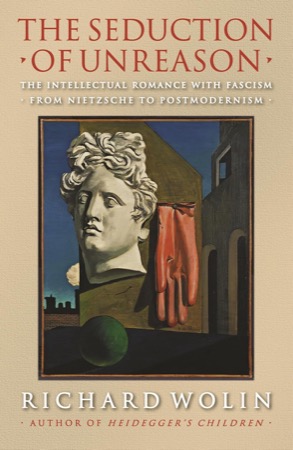
Hardcover. Princeton NJ, Princeton University Press, 1st, 2004, Book: Very Good, Dust Jacket: Very Good, Hardcover in a bright dust jacket, 375 pages. In probing chapters on C. G. Jung, Hans-Georg Gadamer, Georges Bataille, and Maurice Blanchot, Wolin discovers an unsettling commonality: during the 1930s, these thinkers leaned to the right and were tainted by a proverbial "fascination with fascism." Frustrated by democracy's shortcomings, they were seduced by fascism's grandiose promises of political regeneration. The dictatorships in Italy and Germany promised redemption from the uncertainties of political liberalism. But, from the beginning, there could be no doubting their brutal methods of racism, violence, and imperial conquest. Postmodernism's origins among the profascist literati of the 1930s reveal a dark political patrimony. The unspoken affinities between Counter-Enlightenment and postmodernism constitute the guiding thread of Wolin's suggestive narrative. In their mutual hostility toward reason and democracy, postmodernists and the advocates of Counter-Enlightenment betray a telltale strategic alliance--they cohabit the fraught terrain where far left and far right intersect. Clean copy.
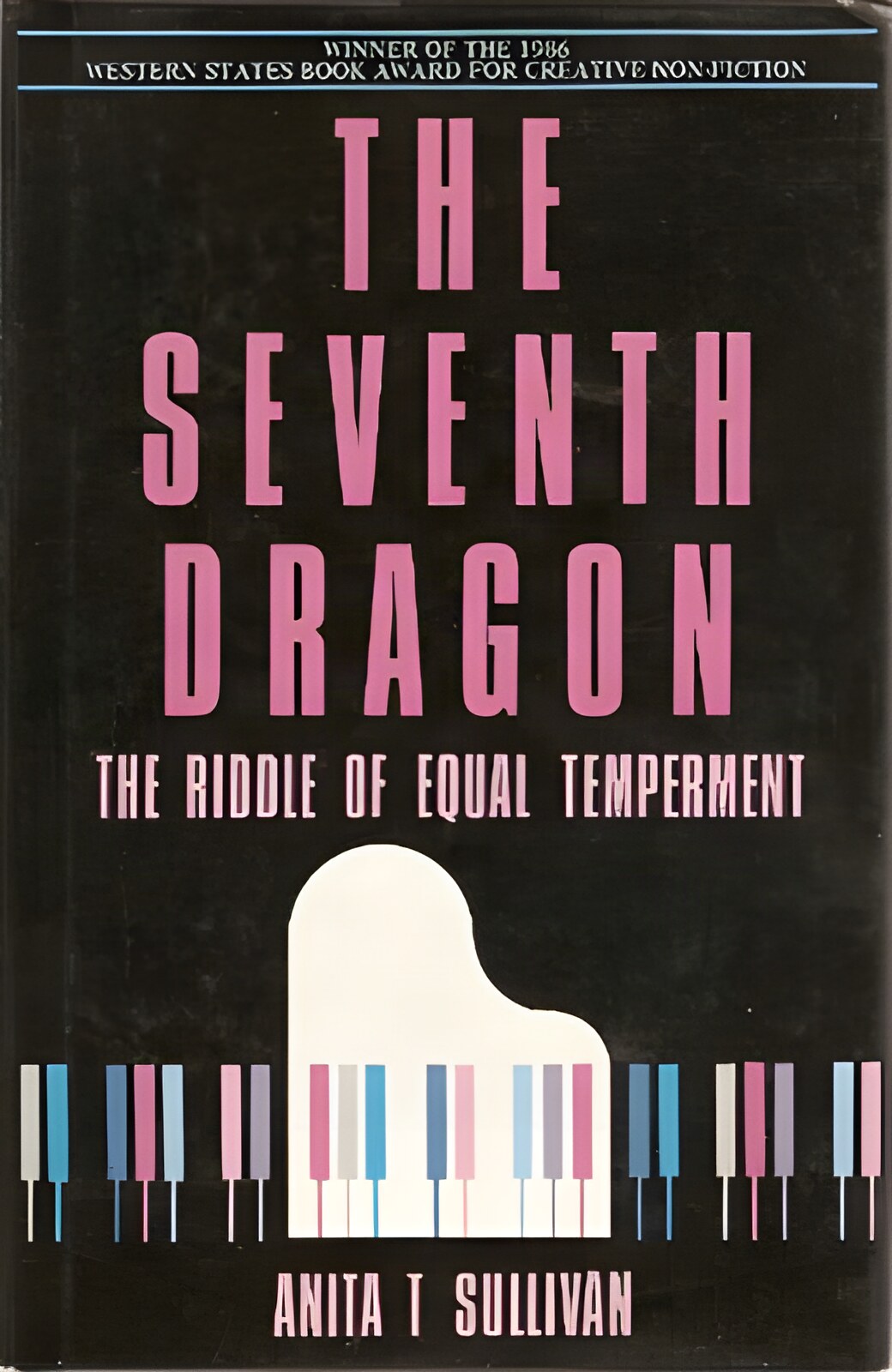
Hardcover. Lake Oswego OR, Metamorphous Press, 1st, 1985, Book: Very Good, Dust Jacket: Very Good, Hardcover in a bright dust jacket, b&w illustrations, 104 pages. A veteran piano tuner presents a non-technical, literary view of the quixotic tuning system used on keyboard instruments for hundreds of years. Focuses on the "comma", which is the pitch difference by which (9/8)^12 > (2/1), discusses its history, its importance in piano tuning, and philosophically what it all means. Winner of the Western States Book Award for creative nonfiction in 1986.
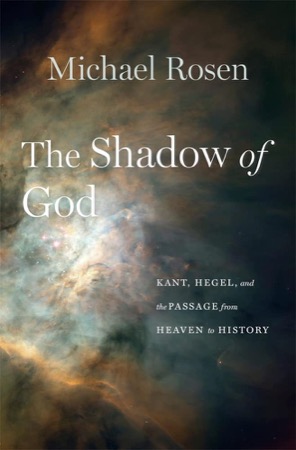
Hardcover. Cambridge MA, Belknap Press: An Imprint of Harvard University Press, 1st, 2022, Book: Very Good, Dust Jacket: Very Good, Hardcover in a bright dust jacket, 406 pages. A bold and beautifully written exploration of the "afterlife" of God, showing how apparently secular habits of mind in fact retain the structure of religious thought. Once in the West, our lives were bounded by religion. Then we were guided out of the darkness of faith, we are often told, by the cold light of science and reason. To be modern was to reject the religious for the secular and rational. In a bold retelling of philosophical history, Michael Rosen explains the limits of this story, showing that many modern and apparently secular ways of seeing the world were in fact profoundly shaped by religion. Clean copy.
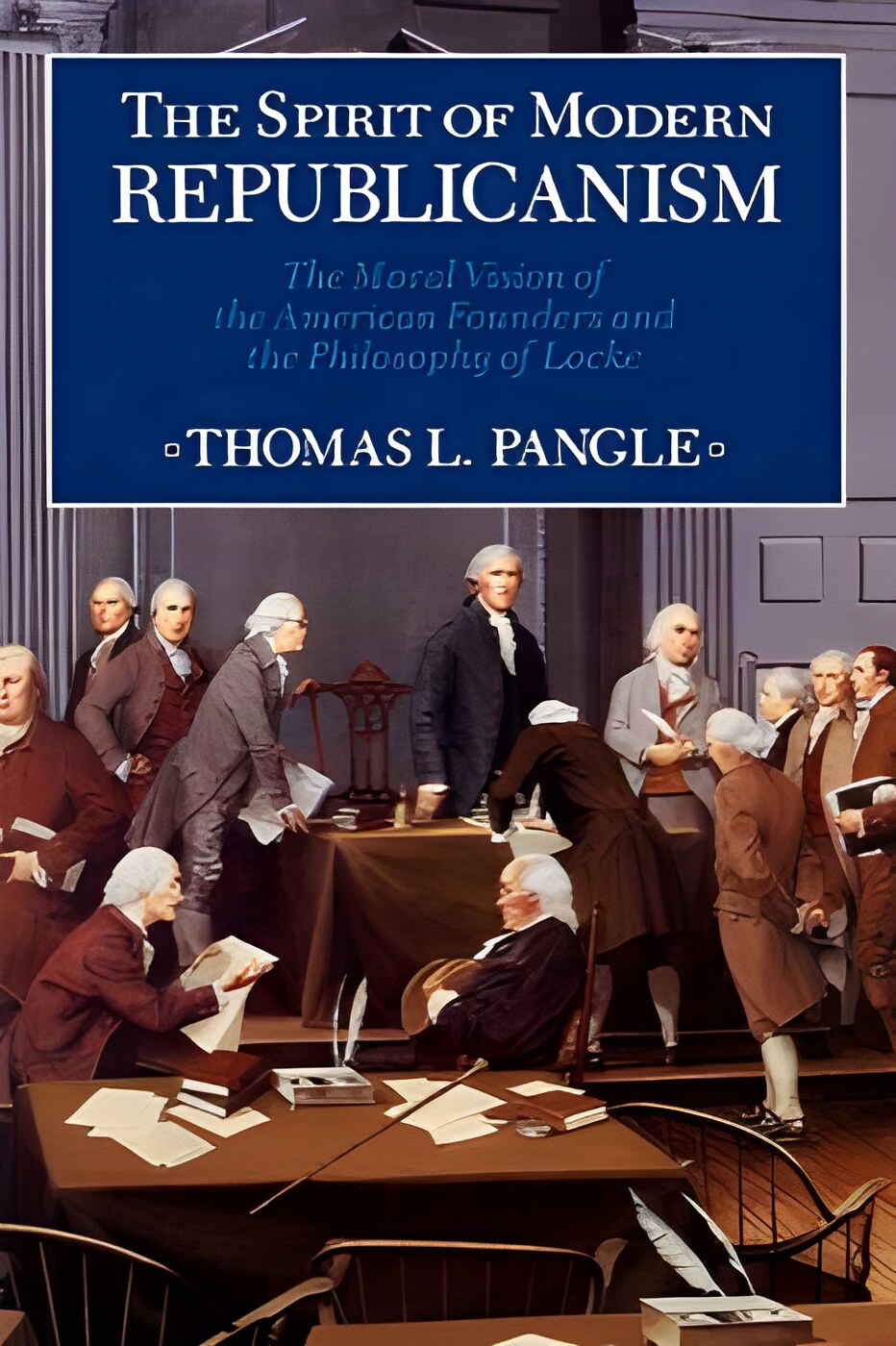
Hardcover. Chicago, University Of Chicago Press, reprint, 1990, Book: Very Good, Dust Jacket: None, Softcover, 334 pages. The Spirit of Modern Republicanism sets forth a radical reinterpretation of the foundations on which the American regime was constructed. Thomas L. Pangle argues that the Founders had a dramatically new vision of civic virtue, religious faith, and intellectual life, rooted in an unprecedented commitment to private and economic liberties. It is in the thought of John Locke that Pangle finds the fullest elaboration of the principles supporting the Founders' moral vision. Clean copy.
Hardcover. London, George Allen & Unwin Ltd, 2nd Ed., 1955, Book: Very Good, Dust Jacket: Good, Hardcover in a worn, chipped dust jacket. 664 pages with index. Volume 2 ONLY. Masaryk was the president of Czechoslovakia after World War I. Long a student of Russia this book was first published in 1913. Clean copy.
Hardcover. NY, Free Press, 5th pr., 1990, Book: Very Good, Dust Jacket: Very Good, Hardcover in a bright dust jacket, 432 pages. INSCRIBED BY BORK on the title page, wishing someone success in his law career. A nominee for the Supreme Court, Judge Bork writes about his social and legal philosophy in what is described on the front flap as "the definitive formulation of the wisdom and necessity of interpreting the Constitution according to the "original understanding" of the framers and the people for whom it was written." A brilliant argument for the wisdom and necessity of interpreting the Constitution according to the "original Understanding" of the Framers and the people for whom it was written. Illuminates the history of the Supreme Court and the underlying meaning of constitutional controversy. Relational between values and the law, concludes with a personal account of Judge Bork's chillingly emblematic experiences during the Senate Judiciary Committee's hearing on his Supreme Court nomination. Clean copy.
Hardcover. Bristol UK, Thoemmes Press, reprint, 1995, Book: Very Good, Dust Jacket: None, Three hardcover volumes, uniform blue cloth covers with gilt lettering on spines. 638, 662 and 700 pages. Cudworth's magisterial work is a sweeping philosophical and religious treatise, tackling some of the biggest questions in the history of thought. He examines the nature of the universe, the concept of God, and the foundations of morality, weaving together insights from ancient philosophy, Christian theology, and contemporary science. This work is a monument to the intellectual ambition and erudition of one of Britain's greatest philosophers. A reprint of the 1845 edition published in London. Pencil marking to about 50 pages combined in volumes 1 and 3, name on front fly leaf of Volume 3. DUE TO WEIGHT, DOMESTIC SHIPPING ONLY.
Hardcover. London/NY, Springer , 1st, 2013, Book: Very Good, Dust Jacket: None, Hardcover in glossy boards, 315 pages. This book is a study of the scientific revolution as a movement of amateur science. It describes the ideology of the amateur scientific societies as the philosophy of the Enlightenment Movement and their social structure and the way they made modern science such a magnificent institution. It also shows what was missing in the scientific organization of science and why it gave way to professional science in stages. In particular the book studies the contributions of Sir Francis Bacon and of the Hon. Robert Boyle to the rise of modern science. The philosophy of induction is notoriously problematic, yet its great asset is that it expressed the view of the Enlightenment Movement about science. This explains the ambivalence that we still exhibit towards Sir Francis Bacon whose radicalism and vision of pure and applied science still a major aspect of the fabric of society. Finally, the book discusses Boyle's philosophy, his agreement with and dissent from Bacon and the way he single-handedly trained a crowd of poorly educated English aristocrats and rendered them into an army of able amateur researchers. Clean, bright.
Hardcover. NY, Arno Press, reprint, 1977, Book: Very Good, Dust Jacket: None, Hardcover, dark green cloth with gilt lettering. A facsimile reprint of the London 1717 edition. 405 pages plus publisher's ads. Light pencil notes on front endpapers with owner's name in ink. Otherwise clean, tight copy.
Hardcover. UK, Oxford University Press, 1st, 2012, Book: Very Good, Dust Jacket: Very Good, This is the first volume in the four-volume edition of The Works of Lucy Hutchinson, the first-ever collected edition of the writings of the pioneering author and translator. Hutchinson (1620-81) had a remarkable range of her interests, from Latin poetry to Civil War politics and theology. In two parts, two volumes: 797 total pages. This edition of her translation of Lucretius's De rerum natura offers new biographical material, demonstrating the changes and unexpected continuities in Hutchinson's life between the work's composition in the 1650s and its dedication in 1675. Hers is the first complete surviving English translation of one of the great classical epics, a challenging text at the borderlines of poetry and philosophy. For the first time, the Lucretius translation is made available alongside the Latin text Hutchinson used, which differs in innumerable ways from versions known today. The commentary, the fullest in any edition of a literary translation, provides multiple ways into further understanding of the translation and its contexts. Written at a momentous period in political and literary history, Hutchinson's Lucretius throws light on the complex transition between 'ancient' and 'modern' conceptions of the classical canon and of natural philosophy. It offers a case study in the history of reading, and more specifically of reading by a woman. Name on front fly leaves, pencil notations to front fly leaf, a dozen pages in Part 1. DUE TO WEIGHT, DOMESTIC SHIPPING ONLY.
Softcover. London/NY, Routledge, reprint, 2001, Book: Very Good, Dust Jacket: None, Softcover, 328 pages. This unique collection of essays, published together for the first time, not only elucidates the complexity of ancient Greek thought, but also reveals Karl Popper's engagement with Presocratic philosophy and the enlightenment he experienced in his reading of Parmenides. As Karl Popper himself states himself in his introduction, he was inspired to write about Presocratic philosophy for two reasons - firstly to illustrate the thesis that all history is the history of problem situations and secondly, to show the greatness of the early Greek philosophers, who gave Europe its philosophy, its science and its humanism. Light pencil marking to 8 pages.
Hardcover. New Haven CT, Yale University Press, 1st, 2001, Book: Very Good, Dust Jacket: None, Hardcover in burgundy cloth boards with gilt lettering to front panel and spine, as issued w/out dj. Short inscription on front fly leaf, otherwise clean. This book gathers together for the first time an important body of texts written between 1672 and 1686 by the great German philosopher and polymath Gottfried Leibniz. These writings, most of them previously untranslated, represent Leibniz's sustained attempt on a problem whose solution was crucial to the development of his thought, that of the composition of the continuum. The volume begins with excerpts from Leibniz's Paris writings, in which he tackles such problems as whether the infinite division of matter entails "perfect points," whether matter and space can be regarded as true wholes, whether motion is truly continuous, and the nature of body and substance. Comprising the second section is Pacidius Philalethi, Leibniz's brilliant dialogue of late 1676 on the problem of the continuity of motion. In the selections of the final section, from his Hanover writings of 1677-1686, Leibniz abandons his earlier transcreationism and atomism in favor of the theory of corporeal substance, where the reality of body and motion is founded in substantial form or force. Leibniz's texts (one in French, the rest in Latin) are presented with facing-page English translations, together with an introduction, notes, appendixes containing related excerpts from earlier works by Leibniz and his predecessors, and a valuable glossary detailing important terms and their translations.
Softcover. Indianapolis, Hackett Publishing, reprint, 1989, Book: Very Good, Dust Jacket: None, Softcover, 358 pages. This volume includes Whewell's seminal studies of the logic of induction (with his critique of Mill's theory), arguments for his realist view that science discovers necessary truths about nature, and exercises in the epistemology and ontology of science. The book sets forth a coherent statement of a historically important philosophy of science whose influence has never been greater: every one of Whewell's fundamental ideas about the philosophy of science is presented here. Clean, bright copy.
Softcover. NY, Farrar, Straus and Giroux, 1st, 2012, Book: Very Good, Dust Jacket: Very Good, Hardcover, 416 pages. In this definitive biography, Justin Wolff places Benton in the context of his tumultuous historical moment-as well as in the landscapes and cultural circles that inspired him. Thomas Hart Benton-with compelling insights into Benton's art, his philosophy, and his family history-rescues a great American artist from myth and hearsay, and provides an indelibly moving portrait of an influential, controversial, and often misunderstood man.
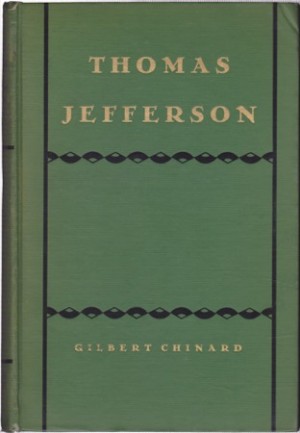
Hardcover. Boston, Little, Brown and Company, 1st, 1929, Book: Very Good, Dust Jacket: None, Hardcover, bright green cloth with gilt and black stamping, 548 pages. Illustrated from photographs, facsimiles, plates. Study of Jefferson's mind based on contributions of "French thinkers" on his political philosophy. Inscription on inside front cover, otherwise a clean, tight copy.

 "The Political Thought of John Locke: An Historical Account of the Argument of the 'Two Treatises of Government'by: Dunn, John/John Locke")


 "The Quest for the Historical Muhammadby: Ibn Warraq (Editor)")
 "The Reception of Locke's Politics Vol 2: Patriarchalism, the Social Contract and Civic Virture 1705- 1760by: Goldie, Mark (Ed.)")
 "The Reception of Locke's Politics Vol 3: The Age of the American Revolution 1760-1780by: Goldie, Mark (Ed.)")
 "The Reception of Locke's Politics Vol 4: Poitical Reform in the Age of The French Revolution 1780-1838by: Goldie, Mark (Ed.)")



 "The True Intellectual System Of The Universe: Wherein All The Reason And Philosophy Of Atheism Is Confuted, And Its Impossibility Demonstrated: With A Treatise Concerning Eternal And Immutable Morality - Three Volumes")





 "Thomas Hart Benton: A Life by: Wolfe, Justin")