Hardcover. NY, Zone Books, 1st, 2022, Book: Very Good, Dust Jacket: Very Good, Hardcover in a bright dust jacket, 214 pages. The philosopher and literary and cultural critic Samuel Weber returns to past narratives of plagues and pandemics to reproduce the myriad ways individual and collective, historical and actual, intentional and unintentional forces converge to reveal how cultures and societies deal with their vulnerability and mortality. The "preexisting conditions"-a phrase taken from the American healthcare industry-of these very cultures converge and collide with the urgent situations of individuals confronting the plague. Texts drawn from the Bible, Sophocles, Thucydides, Boccaccio, Luther, Defoe, Kleist, Holderlin, Artaud, and Camus demonstrate how in the process of narration individuals come to reconsider their relationship to others, to themselves, and to the collectives to which they belong and on which they depend. Clean copy.
Hardcover. Cambridge MA, Harvard University Press, 1st, 2011, Book: Very Good, Dust Jacket: Very Good, Hardcover in a bright, unclipped dust jacket. Tracing the history of isolationist and internationalist ideas from the 1890s through the 1930s, Nichols reveals unexpected connections among individuals and groups from across the political spectrum who developed new visions for America's place in the world. From Henry Cabot Lodge and William James to W. E. B. Du Bois and Jane Addams to Randolph Bourne, William Borah, and Emily Balch, Nichols shows how reformers, thinkers, and politicians confronted the challenges of modern society--and then grappled with urgent pressures to balance domestic priorities and foreign commitments.
Softcover. Costa Mesa CA, Mazda Publishers, 1st, 1999, Book: Very Good, Dust Jacket: None, Softcover, 134 pages. The history of Iran is a subject attracting increasing interest, and in it the history of the Qajar period, here dated 1796-1925, occupies a pivotal transitional place. The Qajar rulers reunited Iran after a century of weakness and division, and helped create modern Iran and its response to western power. Although the Qajars were not great reformers, their period saw the development of many new trends of thought, ranging from new religious ideas and groups to the adapting of modern ideas to Iranian circumstances. This book covers intellectual trends and equally it covers the political and socioeconomic history of Iran, including the growth of western incursions and control, which led to social, economic, and political disruptions and helped lead to a major revolution that gave Iran a modern constitution. Later developments culminated in a modernizing central government under the Pahlavi shahs. The period 1796-1925 saw a flowering of Iran's visual arts, politically oriented literature, popular culture, and crafts and carpets, and the beginnings of photography and film. The book interprets all these developments as part of a readable and comprehensible history of a period that helped bring Iran into the modern world while continuing its cultural greatness. Clean copy.
Hardcover. Princeton University Press, 1st, 2025, Book: Very Good, Dust Jacket: None, Original pictorial boards (in publisher's unopened shrinkwrap). 280 pages illustrated in b&w and color. Alice Friedman tells the fascinating story of the queer avant-garde of the 1920s and '30s in New York, Paris, and Venice, as seen through the eyes of Max Ewing (1903-1934), a young musician, photographer, and man-about-town who, although virtually unknown today, moved in extraordinary circles. Among his friends and acquaintances, he listed Carl Van Vechten, Gertrude Stein, Muriel Draper, Romaine Brooks, Tallulah Bankhead. In his photographs and letters, we meet the rising stars of modern art, music, dance, and literature and enter a world of interracial friendship, "queer space," and experimentation that shone brightly before being swept away by the Depression.
Hardcover. New York, Plenum Press, 1st, 1997, Book: Very Good, Dust Jacket: Very Good, 293 pages. Hardcover with dust jacket. Clean, unmarked copy with only minor wear to dust jacket. Black and white pictures throughout.
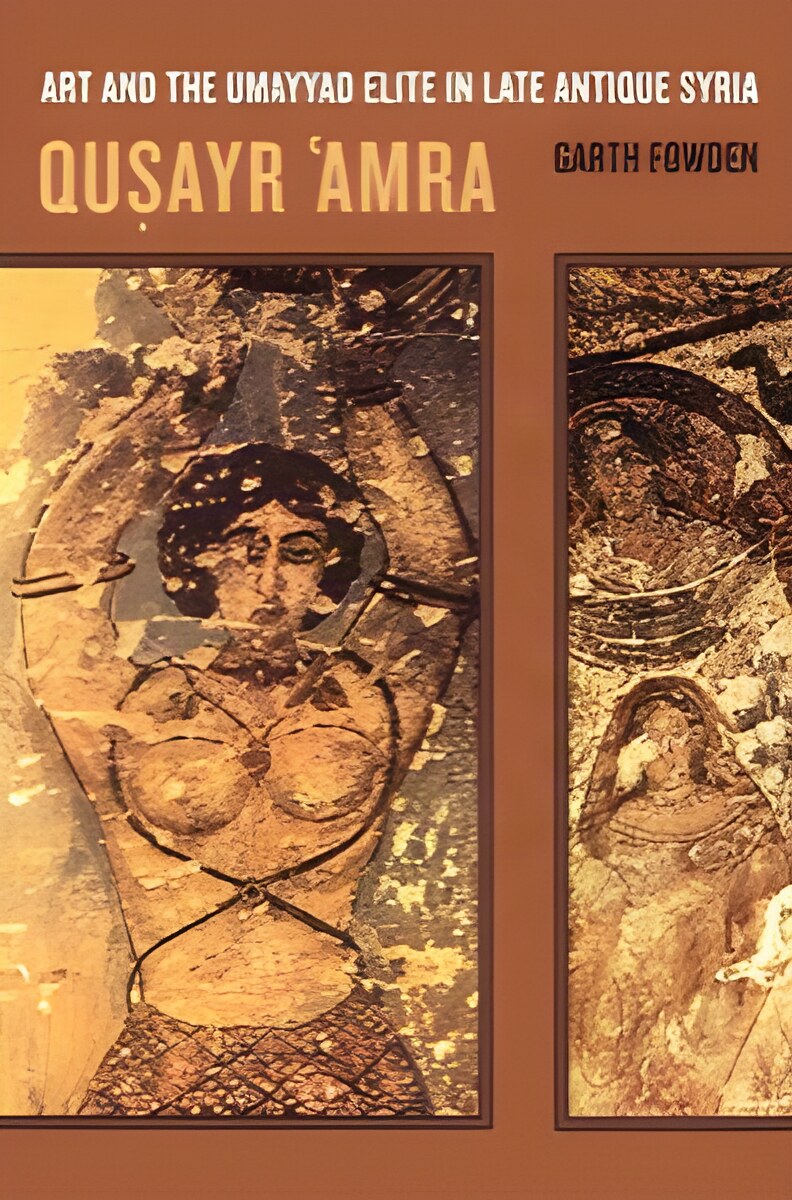
Hardcover. Berkeley, University of California Press, 1st, 2004, Book: Very Good, Dust Jacket: Very Good, Hardcover in a bright dust jacket, 390 pages, b&w illustrations. From the stony desolation of Jordan's desert, it is but a step through a doorway into the bath house of the Qusayr 'Amra hunting lodge. Inside, multicolored frescoes depict scenes from courtly life and the hunt, along with musicians, dancing girls, and naked bathing women. The traveler is transported to the luxurious and erotic world of a mid-eighth-century Muslim Arab prince. For scholars, though, Qusayr 'Amra, probably painted in the 730s or 740s, has proved a mirage, its concreteness dissolved by doubts about date, patron, and meaning. This is the first book-length contextualization of the mysterious monument through a compelling analysis of its iconography and of the literary sources for the Umayyad period. It illuminates not only the way of life of the early Muslim elite but also the long afterglow of late antique Syria. Clean copy.
Hardcover. NY, Rizzoli, 1st, 2023, Book: Very Good, Dust Jacket: Very Good, Hardcover in a bright dust jacket. This special volume presents a visual timeline of Ralph Lauren's remarkable history as a lifestyle innovator. Lauren's unparalleled ability to seamlessly blend fashion and the home is illustrated with the groundbreaking designs and innovative use of materials that have distinguished the home collection since its inception in 1983: menswear-inspired Oxford Cloth bedding that required the creation of special looms and took two years to refine; the sleek RL-CF1 chair, crafted of carbon fiber and inspired by Lauren's McLaren F1 racecar; and an appreciation for a timeworn, weathered aesthetic, as exemplified in the iconic Writer's Chair with its hand-burnished leather and rich patina. Historic achievements such as the opening of his first New York City flagship on Madison Avenue - which invited guests to experience the complete World of Ralph Lauren in a residential environment - and his renowned restaurants that offer the epitome of gracious hospitality, demonstrate the magnitude of Ralph Lauren's influence on the worlds of lifestyle design and hospitality. The timeline is complete with quotes from distinguished members of the design world and prominent figures of our culture including Oprah Winfrey, Hillary Rodham Clinton, and architecture critic Paul Goldberger. Ralph Lauren's signature ability to create transportive environments begins with his private homes that inspire his iconic lifestyle collections. Ralph Lauren: A Way of Living offers an in-depth look at all the places Lauren calls home, from a sprawling ranch in Colorado and an island retreat in Jamaica, to a Fifth Avenue penthouse overlooking Manhattan's Central Park, a seaside home in Montauk and a country estate in Bedford. Lauren's homes are deeply personal expressions of his vision for living; captivating imagery is complemented by essays and descriptions written in his own words that intimately express the meaning of home and share inspiration and anecdotes for each residence. The photos of Lauren's captivating homes are followed by a celebration of Ralph Lauren Home's lifestyle collections - cinematic worlds that are brought to life with iconic imagery showcasing Lauren's pioneering lifestyle approach and all-encompassing home collection. DUE TO WEIGHT. DOMESTIC SHIPPING ONLY.
Hardcover. Surrey UK, Ashgate Publishing, 1st, 2014, Book: Very Good, Dust Jacket: Very Good, Hardcover in a bright dust jacket, 165 pages. Author Leah Knight explores the physical and figurative potentials of green as they were understood in Renaissance England, including some that foreshadow our paradoxical dependence on and sacrifice of the green world. Ranging across contexts from early modern optics and olfaction to horticulture and herbal health care, this study explores a host of human encounters with the green world: both the impressions we make upon it and those it leaves with us. B&w, color illustrations.
Hardcover. Greenwich CT, New York Graphic Society, 1st, 1974, Book: Very Good, Dust Jacket: Very Good, Hardcover, 128 pages, b&w illustrations throughout. Clean, in a bright, price clipped dust jacket. "Reality Recorded takes a look at early documentary photography and the extraordinary individuals who recorded with calotype and wetplate camera those things they felt to be important. Great changes took place in the world while the camera was in its infancy. The early photographers had open eyes and few prejudices; they were involved with the problems, advancements, and events of their times."
Hardcover. NY, Thames & Hudson , 1st, 2023, Book: Very Good, Dust Jacket: None, Hardcover in white boards stamped in gilt. A comprehensive, chronological history surveying over ninety years of fashion on the Oscars red carpet. The red carpet is so much more than fabulous gowns on famous people; it reflects the styles and values of each era and has become a platform to make social statements. Red Carpet Oscars presents over ninety years of fashion worn at the film world's biggest event since its inception in 1929, charting what the stars wore and why. From homemade and preloved dresses to ready-to-wear and haute couture, it tracks the style evolution of Hollywood's leading stars, the commercialization of the red carpet, the emergence of stylists, and the radical shifts that reshaped formal dressing. This comprehensive chronological survey showcases a thousand looks across almost a century. In addition to carefully curated images of the most iconic and inspiring outfits, each year features a short overview, sharing the stories behind the looks and tapping into fashion trends, along with the social and political influences of the time. Fashion writer Dijanna Mulhearn has compiled the ultimate fashion resource that celebrates both the glamour and the impact of one of the most watched red-carpet runways in the world. DUE TO WEIGHT. DOMESTIC SHIPPING ONLY.
Softcover. University Press of Maryland, 2000, Softcover, 306 pages. Memoir (translated from the German by Henny Wenkart) of a Jewish woman in 19th-century Russia, with scholarly introduction and analysis. Pauline Wengeroff's memoir tells what it was like to be a Jewish girl and a Jewish woman in 19th-century Russia, as foundations of faith and tradition eroded around her. Clean copy.
Hardcover. NY, Rizzoli, 1st, 3009, Book: Very Good, Dust Jacket: Very Good, Hardcover, 288 pages. Like an around-the-world vacation through resort locations and timeless fashions, the history of resort clothing is fashion at its most fun. Crossing continents, styles, and generations, the book travels through the tradition of vacation style, taking a visually stunning trip from early beach pajamas by Chanel and Schiaparelli to sailor stripes, to Pucci and Pulitzer prints, and, of course, to the bikini. Resort Fashion features rare photographs and never-before-published images by photographer legends, including Louise Dahl-Wolfe, Toni Frissell, Norman Parkinson, Jacques-Henri Lartigue, Helmut Newton, and Scavullo. The fashions showcase renowned designers from the past and present who have contributed their unique touch to resort wear, including Claire McCardell, Michael Kors, Rodarte, and many more. From Palm Beach to Montego Bay to St. Tropez, this book celebrates resort wear's vibrant history with an allure that extends beyond runways to the most exotic, far-flung destinations.
Hardcover. NY, Rizzoli, 1st, 3009, Book: Very Good, Dust Jacket: Very Good, Hardcover, 288 pages. Like an around-the-world vacation through resort locations and timeless fashions, the history of resort clothing is fashion at its most fun. Crossing continents, styles, and generations, the book travels through the tradition of vacation style, taking a visually stunning trip from early beach pajamas by Chanel and Schiaparelli to sailor stripes, to Pucci and Pulitzer prints, and, of course, to the bikini. Resort Fashion features rare photographs and never-before-published images by photographer legends, including Louise Dahl-Wolfe, Toni Frissell, Norman Parkinson, Jacques-Henri Lartigue, Helmut Newton, and Scavullo. The fashions showcase renowned designers from the past and present who have contributed their unique touch to resort wear, including Claire McCardell, Michael Kors, Rodarte, and many more. From Palm Beach to Montego Bay to St. Tropez, this book celebrates resort wear's vibrant history with an allure that extends beyond runways to the most exotic, far-flung destinations.
Cleveland, World Publishing Company, 1st, 1965, Book: Very Good, Dust Jacket: Very Good, Hardcover in a bright, unclipped dust jacket. 240 pages, b&w illustrations. Clean, tight copy of this history of the professional football team from it's founding by taxicab magnet Arther McBride to the championship season of 1964.
Softcover. Washington DC, National Museum of American Art and National Portrait Gallery, Smithsonian Institution, 1st, 1993, Book: Very Good, Dust Jacket: None, Softcover, 408 pages, illustrated throughout in color and b&w. Light edgewear and rubbing to wrappers, else a clean, tight copy.
Hardcover. NY, Thames & Hudson, 1st, 2006, Book: Very Good, Dust Jacket: Very Good, Hardcover, 249 pages. Marking the fiftieth anniversary of the October 1956 Hungarian revolt against Soviet domination after World War II, this imposing volume contains powerful black-and-white photographs taken during the years preceding as well as the outbreak and crushing of the uprising by a German member of the international photojournalist cooperative Magnum. Introduced by Lessing's recollections and Hungarian French historian Francois Fejto's precis of the momentous events, the pictures appear in three chapters, "Communist Hungary," "The Revolution," and "The Failure." Hungarian novelist George Konrad's intense impressions of the time, during which he carried a rifle as a revolutionary young intellectual, follow the first chapter, and French political scientist Nicolas Bauquet's assessment of the revolt's impact on Western Europe's Communist parties, the USSR, and subsequent European history follows the third. Views of the cemetery in which the uprising's martyrs are now buried conclude the book elegiacally, and brief last words by Lessing and the director of Hungary's Institute 56 indicate who may forget what happened and why the rest of us should always remember. An extraordinary document.
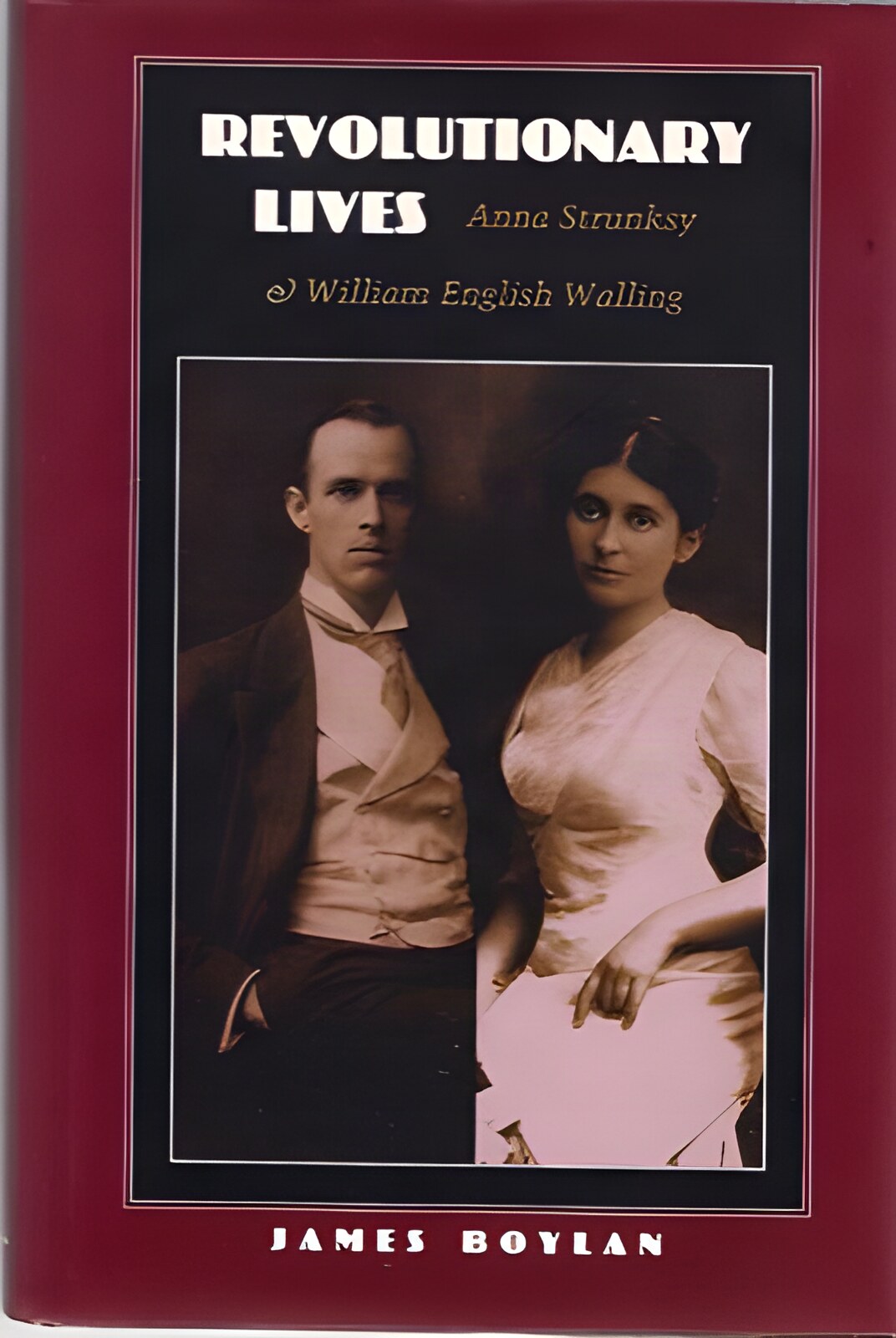
Hardcover. Amherst MA, University of Massachusetts Press, 1st, 1999, Book: Very Good, Dust Jacket: Very Good, Hardcover in a bright dust jacket, 334 pages, b&w illustrations. Relying on original historical materials, an illustrated biography traces the lives of an influential pair of American socialists--he a wealthy journalist-activist, she an aspiring novelist. When they fell in love amid the tumult of the 1905 Russian revolution, they believed they were destiny's match: William English Walling, a wealthy American journalist-activist from the Midwest, an Anna Strunsky, an aspiring novelist from San Francisco. Vowing to dedicate themselves to socialist ideals, they soon became celebrities who moved in an elite circle of writers, journalist, and reformers. ultimately, both their marriage and their political commitment faltered, but not before they had participated in some of the most urgent social causes of their day. Drawing on archival sources and family materials, James Boylan creates engaging portraits of two striking figures. He reveals the details of Strunsky's intesnse involvement with Jack London and their troubled literary collaboration. He describes the creation of Walling's "revolutionary news bureau" in Russia under scrutiny of the czarist police, and Strunsky's harrowing journey to report on a pogrom. He also recounts the couple's dash to cover a race riot in Illinois, Walling's pivotal role in creating the NAACP and the disasterous schism between Strunksky's pacifism and Walling's bellicosity during World War I. Clean copy.
Softcover. Oxford UK, Clarendon Press, reprint, 2002, Book: Very Good, Dust Jacket: None, Softcover, 353 pages. Social revolutions--that is critical periods of decisive, qualitative change--are a commonly acknowledged historical fact. But can the idea of revolutionary upheaval be extended to the world of ideas and theoretical debate? The publication of Kuhn's The Structure of Scientific Revolutions in 1962 led to an exciting discussion of revolutions in the natural sciences. A fascinating, but little known, off-shoot of this was a debate which began in the United States in the mid-1970's as to whether the concept of revolution could be applied to mathematics as well as science. Michael Grove declared that revolutions never occur in mathematics, while Joseph Dauben argued that there have been mathematical revolutions and gave some examples. This book is the first comprehensive examination of the question. It reprints the original papers of Grove, Dauben, and Mehrtens, together with additional chapters giving their current views. To this are added new contributions from nine further experts in the history of mathematics, who each discuss an important episode and consider whether it was a revolution. The whole question of mathematical revolutions is thus examined comprehensively and from a variety of perspectives. This thought-provoking volume will interest mathematicians, philosophers, and historians alike. Small bump to bottom corner, otherwise clean, very good.
Hardcover. Boston, Museum of Fine Arts, 1st, 2008, Book: Very Good, Dust Jacket: Very Good, Hardcover in a bright dust jacket. It is little known that interbellum Britain hosted a generation of Modernist artists who absorbed the wealth of Continental avant-garde idioms and adapted them to their own unique ends. Some of this work was done under the rubric of Vorticism, the Neofuturist movement spearheaded by Wyndham Lewis, while other artists were closely associated with London's Grosvenor School of Art (and so came to be known collectively as the Grosvenor School), breaking new ground in the practice of linocut. Rhythms of Modern Life examines the impact of Cubism and Futurism on British printmaking in the years between the First and Second World Wars, focusing in particular on the dynamic imagery of 13 artists, including C.R.W. Nevinson, Paul Nash, Edward Wadsworth and David Bomberg, all early followers of Italian Futurism and British Vorticism, and on the works of Grosvenor School artists Claude Flight, Sybil Andrews, Cyril Power and Lill Tschudi. All of these artists coined styles that addressed the velocity of modern life, espousing industry, speed and an optimism for the century ahead. This book, the first survey of its kind, features more than 100 lithographs, etchings, woodcuts and linocuts, ranging from geometric abstractions to forceful impressions of the first fully mechanized war, Jazz Age images of sporting events, speed trials and other contemporary diversions. Clifford S. Ackley's introduction takes stock of the art historical moment and is followed by discussions of the prints, an overview of the history and technique of the modern linocut and short biographies of the artists.
Hardcover. The Monacelli Press , 1st, 2018, Book: Very Good, Dust Jacket: Very Good, Hardcover in a bright dust jacket, 264 pages. Richard Filipowski (1923-2008) was among the most gifted polymaths in the annals of American modernism. Whether as a painter, sculptor, or designer of furniture and jewelry, Filipowski developed a lush, abstract, and amazingly consistent visual language that marks him among the finest figures of midcentury art and design. As a student at the Institute of Design (formerly the New Bauhaus) in Chicago, he quickly became a protege of founder Laszlo Moholy-Nagy, who featured several of Filipowski's works in his seminal text Vision in Motion (1947); Filipowski was the only student Moholy-Nagy called upon to join the faculty, where he taught alongside Walter Gropius and Marcel Breuer. Recruited by Gropius to develop a course in design fundamentals at Harvard, which remains a cornerstone of design pedagogy to this day, he would move to MIT where he taught for more than three decades, until his retirement in 1988. With a foreword by Laszlo Moholy-Nagy's daughter Hattula, Richard Filipowski: Art and Design Beyond the Bauhaus is the first monograph of this master, who over the course of his career created a unique body of work in diverse media that has largely, until recently, been held in private collections due to his relative lack of compulsion to seek media attention or worldly rewards. But now through the efforts of the Filipowski family and new attention by design scholars--several of whom contribute essays here on Filipowski's graphic and painted works, sculpture, furniture, and position in design history--the work is being revealed to a new generation of aficionados. Richard Filipowski is a rich document of a life and career that is poised to reenter the canon of modernism.
Hardcover. Newburyport Press, 1st, 2006, Book: Very Good, Dust Jacket: Very Good, Hardcover in a bright, unclipped jacket. Richard Henry Arbib was considered one of the leading industrial designers in the United States in the years following World War II. By the 1950s, he had established himself as one of the true visionaries in his field, producing groundbreaking design concepts not only for automobiles, but for a range of products that included wristwatches, pens, boats and even personal helicopters--designs so innovative than many of them would still be considered advanced today. This book is an attempt to rediscover both the man and his extraordinary work. Combining a biographical essay and commentary by historian and collector Frederic A. Sharf with 35 never-before-seen drawings by Arbib, this is a revelatory look at one of the great artists of America's industrial history, and the first biographic study of his work.
Hardcover. New Haven, Yale University Press, 1st, 2008, Book: Very Good, Dust Jacket: Very Good, 129 pages. Hardcover. Color and b/w illustrations throughout. Clean inside and out. In excellent shape. From the Foreward: "River of No Return is organized like a long poem or a piece of music...a stunning look at an actual place, a meditation on rivers, nature history, the history of landscape photography of the American West and the idea of the American West. And the nature of fact and the nature of myth, and how we hold the world in our hands."
Hardcover. Toronto, Trafalgar Press, 1st, 1986 , Book: Very Good, Dust Jacket: Very Good, Hardcover in a bright "(Skillfully traces the causes of the Crimean War and sketches a vivid picture of an age which made possible 'the world's most curious and unneccesary struggle'. Troubetzkoy ingeniously weaves together the varied developments in diplomacy, trade, nationalistic expression and personality conflict in the decade which led to the hostilities. The armies of the belligerents are described (and the) reader is introduced to the principal personages of the drama - Napoleon III, Marshal St. Arnaud, Lord Raglan and the great Russian engineer, Todleben, who, apart from Florence Nightingale, was the only one to earn true distinction during the War. Vividly described are Nicholas I and the Russian Empire." Clean copy.
Hardcover. NY, W. W. Norton, 1st, 2000, Book: Very Good, Dust Jacket: Very Good, Hardcover in a bright dust jacket, 464 pages, b&w illustrations. Johnson's exquisitely researched and beautifully written book starts with the premise that the Southern mines during the early years of the California Gold Rush (1948-1852) were "a grand field for human interaction and connectedness." They were a kind of experiment in human relations, and Johnson points the spot light on the dynamic and flexible quality of race, gender, and sexuality. She argues that the social world of the gold rush - the organization of domestic labor, the leisure pursuits, and gaming activities (both mining and gambling) - reflected a topsy-turvy world not at all comfortable with itself. Johnson tells a story whereby the gold rush, particularly the relationships that developed in the more diverse and less wealthy Southern mines, created a crisis of racial and gender representation that only sorted itself out with the collusion of Anglo miners and the authority of the state. Johnson notes that Anglo miners, "Conflated their daily lives with a project of national expansion and economic growth infused with notions of progress and 'manifest destiny.'" In this way, Johnson explains the messy and not uncontested work of colonization and racial dominance, and she does so with an eye to the function of gender and sexuality. Clean copy.


 "Promise and Peril: America at the Dawn of a Global Ageby: Nichols, Christopher McKnight")
 "Qajar Iran and the Rise of Reza Khan 1796-1925by: Nikki R. Keddie")

 "Quest for Alien Planets, The: Exploring Worlds Outside the Solar Systemby: Halpern, Paul")


 "Reality Recorded: Early Documentary Photography by: Buckland, Gail")

 "Rememberings: The World of a Russian-Jewish Woman in the Nineteenth Century by: Pauline Wengeroff")


 "Return to Glory: The Story of the Cleveland Browns by: Bill Levy")
 "Revisiting the White City: American Art at the 1893 World's Fairby: Art, National Museum of American (U.S.)")
 "Revolution in Hungary: The 1956 Budapest Uprisingby: Erich Lessing")

 "Rhythms of Modern Life: British Prints, 1914-1939by: Clifford Ackley (Editor), Stephen Coppel/Thomas Rassieur / Samantha Rippner")
 "Richard Filipowski: Art and Design Beyond the Bauhausby: Marisa Bartolucci (Editor), Hattula Moholy-Nagy (Foreword)")
 "Richard H. Arbib: 1917-1995 Visionary American Designerby: Arbib, Richard")
 "River of No Return: Photographs by Laura McPheeby: McPhee, Laura")

 "Roaring Camp: The Social World of the California Gold Rushby: Johnson, Susan Lee")