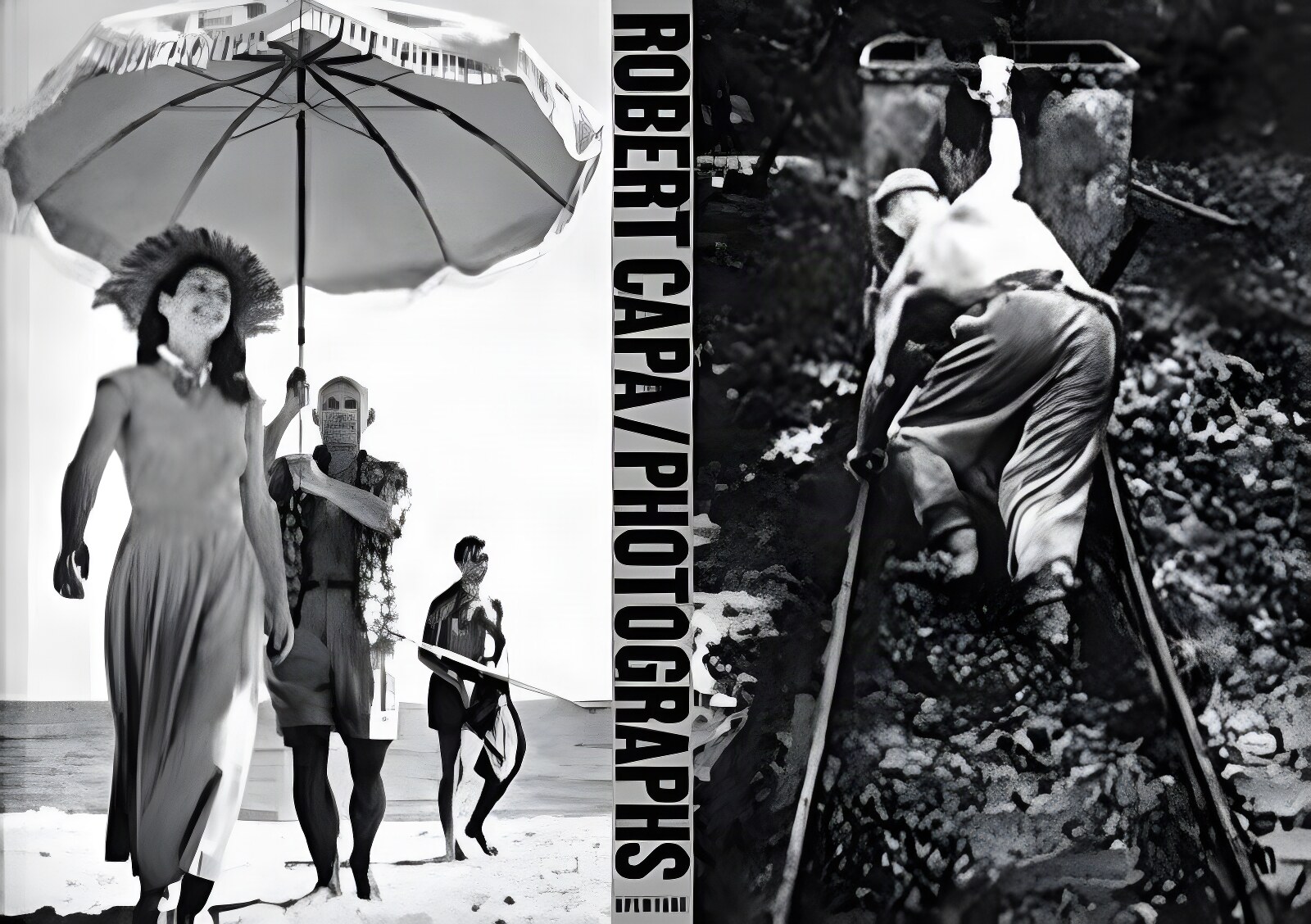
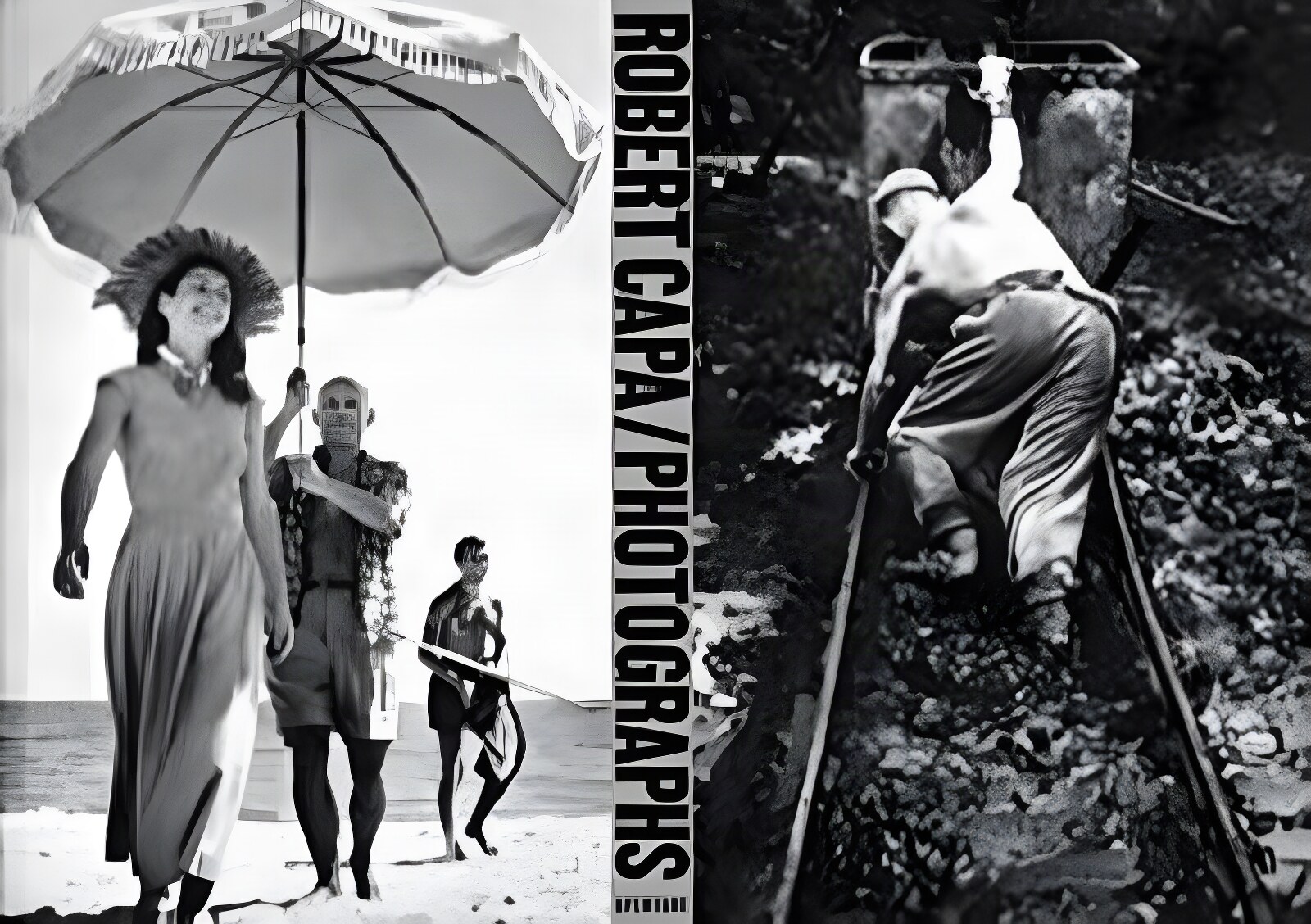
Hardcover. NY, Aperture, 1st, 2005, Book: Very Good, Dust Jacket: Very Good, Hardcover, 192 pages. Robert Capa: Photographs is a major retrospective of one of the century's greatest photographers. Drawing upon hundreds of previously unseen images, this collection reveals Capa as one of the great poets of the camera. In these photographs, we see the world through the eyes of a driven humanist who was also a documentarian of the highest caliber. While previous volumes on Capa have focused on his role as a war photographer, Robert Capa: Photographs shows us the remarkable range of his work: the sufferings as well as the tenderness, humor, and wonder of his subjects. The extraordinary book includes poignant comments by Capa's close friend Henri Cartier-Bresson and by Cornell Capa (Robert's younger brother and the Founding Director of the International Center of Photography), as well as a historical essay by Robert Capa biographer Richard Whelan. The dramatic collection of images in Robert Capa: Photographs shows that he captured-through the events of history-the very heart of humanity.
Hardcover. NY, Aperture, 1st, 2005, Book: Very Good, Dust Jacket: Very Good, Hardcover, 192 pages. Robert Capa: Photographs is a major retrospective of one of the century's greatest photographers. Drawing upon hundreds of previously unseen images, this collection reveals Capa as one of the great poets of the camera. In these photographs, we see the world through the eyes of a driven humanist who was also a documentarian of the highest caliber. While previous volumes on Capa have focused on his role as a war photographer, Robert Capa: Photographs shows us the remarkable range of his work: the sufferings as well as the tenderness, humor, and wonder of his subjects. The extraordinary book includes poignant comments by Capa's close friend Henri Cartier-Bresson and by Cornell Capa (Robert's younger brother and the Founding Director of the International Center of Photography), as well as a historical essay by Robert Capa biographer Richard Whelan. The dramatic collection of images in Robert Capa: Photographs shows that he captured-through the events of history-the very heart of humanity.
Softcover. NY, Abrams, 1st, 2005, Book: Very Good, Dust Jacket: None, Flexible covers, 540 pages, 1,500 illustrations in full color. A visual survey of the scientific developments and cultural significance of robots documents the history of automatons, androids, and other forms of artificial intelligence, both of the fictional and real-world arenas, in a volume that features interviews with scientists, doctors, toy creators, science-fiction writers, and more.
Hardcover. Casemate, 1st, 2010, Book: Very Good, Dust Jacket: Very Good, Hardcover in a bright dustjacket, 264 pages. Following the Allied breakout from the Normandy beachhead in July 1944, the vaunted German Army seemed on the verge of collapse. As British and US forces fanned out across northwestern France, enemy resistance unexpectedly dissolved into a headlong retreat to the German and Belgian borders. In early September an elated Allied High Command had every expectation of continuing their momentum to cripple the enemy's warmaking capability, by capturing the Ruhr industrial complex and plunging into the heart of Germany. After a brief pause to allow for resupply, Courtney Hodge's First Army prepared to punch through the ominous but largely outdated Westwall (Siegfried Line) surrounding Aachen. Drawing on primary Wehrmacht and US sources, including battle analysis and daily situation and after-action reports, The Roer River Battles provides insight into the desperate German efforts to keep a conquering enemy at the borders of their homeland. Tactical maps down to battalion level help clarify the very fluid nature of the combat. Combined, they serve to explain not just how, but why decisions were made and events unfolded, and how reality often differed from doctrine in one of the longest US campaigns of World War II.
Hardcover. Berkeley CA, University of California Press, 1st, 1999, Book: Very Good, Dust Jacket: Very Good, Hardcover, 156 pages. Between 1935 and 1938 the celebrated photographer Roman Vishniac explored the cities and villages of Eastern Europe, capturing life in the Jewish shtetlekh of Poland, Romania, Russia, and Hungary, communities that even then seemed threatened-not by destruction and extermination, which no one foresaw, but by change. Using a hidden camera and under difficult circumstances, Vishniac was able to take over sixteen thousand photographs; most were left with his father in a village in France for the duration of the war. With the publication of Children of a Vanished World, seventy of those photographs are available, thirty-six for the first time. The book is devoted to a subject Vishniac especially loved, and one whose mystery and spontaneity he captured with particular poignancy: children.
Hardcover. Montpelier, Vermont General Assembly, 1st, 1927, Book: Very Good, Dust Jacket: None, 1665 pages, black leatherette binding with gilt lettering. Bright, clean copy.
Softcover. Port Townsend WA, Feral House, 1st, 2022, Book: Very Good, Dust Jacket: None, Softcover, 339 pages. Ladies' man. Child soldier. Civil War hero. Egotist. Tramp. Drunkard. Published author. Roving Bill Aspinwall: Dispatches from a Hobo in Post-Civil War America tells the story of an American hobo entirely in his own words. William 'Roving Bill' Aspinwall was all of these things and yet no lone descriptor does him justice. Born one of 23 siblings, married 5 times, wounded fighting for the Union in one of the bloodiest battles of the American Civil War, kicked out of numerous jobs and soldiers' homes for drunkenness, and having spent decades wandering as a penniless vagabond, Bill also kept up a 24-year correspondence with John James McCook, Professor of Modern Languages at Trinity College, Hartford, Connecticut. In so doing Bill provided the earliest and best account of life on the road by an American hobo. Written between 1893 and 1917, Roving Bill Aspinwall: Dispatches from a Hobo in Post-Civil War America tells Bill's story entirely in his own words. Describing experiences on the road, the people he meets, his dalliances with women and his memories of the Civil War, the letters are a rich and unique correspondence. Having been physically and mentally scarred at the 1863 Battle of Champion Hill, Bill details his lifelong battle with booze. He also gives first-hand accounts of men thrown out of work during the economic Panic of 1893, of wandering around the country as an itinerant umbrella-mender, of working in factories, farms and even a circus, as well as his visit to the St. Louis World's Fair in 1903. Bill's words are the real voice of a nineteenth-century hobo.
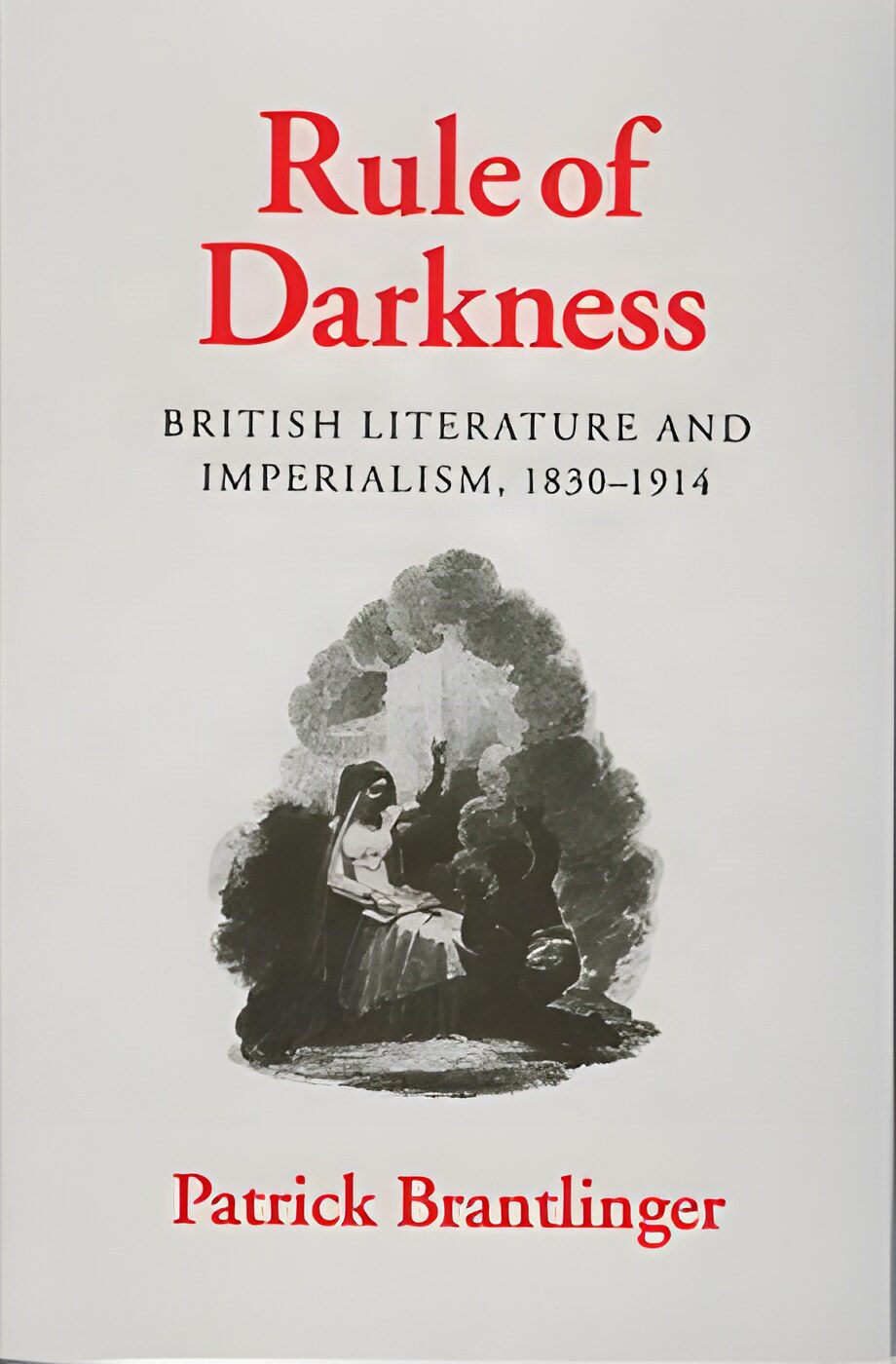
Softcover. Ithaca NY, Cornell University Press, reprint, 1990, Book: Very Good, Dust Jacket: None, Softcover, 309 pages. A major contribution to the cultural and literary history of the Victorian age, Rule of Darkness maps the complex relationship between Victorian literary forms, genres, and theories and imperialist, racist ideology. Critics and cultural historians have usually regarded the Empire as being of marginal importance to early and mid-Victorian writers. Patrick Brantlinger asserts that the Empire was central to British culture as a source of ideological and artistic energy, both supported by and lending support to widespread belief in racial superiority, the need to transform "savagery" into "civilization," and the urgency of promoting emigration. Rule of Darkness brings together material from public records, memoirs, popular culture, and canonical literature. Brantlinger explores the influence of the novels of Captain Frederick Marryat, pioneer of British adolescent adventure fiction, and shows the importance of William Makepeace Thackeray's experience of India to his novels. He treats a number of Victorian best sellers previously ignored by literary historians, including the Anglo-Indian writer Philip Meadows Taylor's Confessions of a Thug and Seeta. Brantlinger situates explorers' narratives and travelogues by such famous author-adventurers as David Livingstone and Sir Richard Burton in relation to other forms of Victorian and Edwardian prose. Through readings of works by Arthur Conan Doyle, Joseph Conrad, H. Rider Haggard, Rudyard Kipling, John Hobson, and many others, he considers representations of Africa, India, and other non-British parts of the world in both fiction and nonfiction. Clean, bright copy.
Hardcover. New York, Oxford University Press, 1st, 1990, Book: Very Good, Dust Jacket: Very Good, Hardcover, 239 pages. Minor edge wear to dust jacket. Else a very clean, tight copy. The dramatic events of the twentieth century have often led to the mass migration of intellectuals, professionals, writers, and artists. One of the first of these migrations occurred in the aftermath of the Russian Revolution, when more than a million Russians were forced into exile. With this book, Marc Raeff, one of the world's leading historians of Russia, offers the first comprehensive cultural history of the "Great Russian Emigration." He examines the social and institutional structure of the emigration and describes its rich cultural and intellectual life. He points out that what distinguishes this emigration from other such episodes in European history is the extent to which the emigres succeeded in reconstituting and preserving their cultural creativity in the West. The flourishing Russian communities of Paris, Berlin, Prague and Kharbin not only enriched Russian arts and letters, but also significantly influenced the culture of their Western hosts, and Raeff concludes with an assessment of their impact on the development of modern Western and Soviet culture.
Hardcover. NY, Hanover House, 1st US, 1954, Book: Very Good, Dust Jacket: Good, Hardcover in an edgeworn, chipped dust jacket, 280 pages. " A popular history of the Sahara and the men who have lived and died there to open this wild desert to the world". No markings.
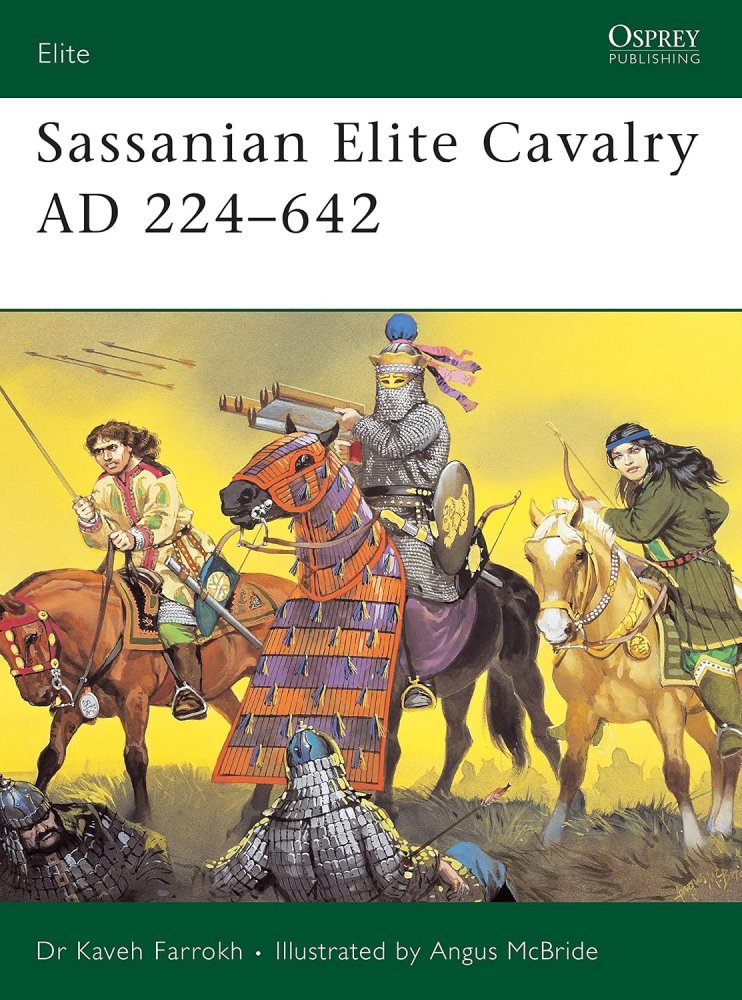
Softcover. NY/Oxford, Osprey Publishing, 1st, 2005, Book: Very Good, Dust Jacket: None, Softcover, 64 pages illustrated in color and b&w. An unrivaled illustrated reference source on fighting men and commanders of the period. The Sassanians ruled the last great imperial Empire of Persia before the Arab conquests of the 7th century. Rome's only equal in the classical world, the Sassanian Empire had an enormous impact on the development of architecture, mythology, arts, music, military tactics and technology. Within the Sassanian military, the cavalry was the most influential element, and Sassanian cavalry tactics were adopted by the Romans, Arabs, and Turks. Clean copy.
Hardcover. New Haven CT, Yale University Press, 1st, 1935, Book: Very Good, Dust Jacket: Very Good, Hardcover, 82 pages. pre-World War II collection of satire on history, man and current events. Periwinkle linen-lilke cloth with bright red cover lettering and decoration. Day illustrates his humorous verse with Thurber-like cartoons. Nice dustjacket with light edgewear, mild tanning, unclipped.
Softcover. Flammarion, 1st, 1995, Book: Very Good, Softcover, 223 pages, illustrated in color and b&w. Tracing the origins of Americanism back to the late nineteenth century, Scenes of the World to Come focuses on the European discovery of the American city--with its grand hotels, skyscrapers, and massive industrial plants, its new-found sense of efficiency and mobility, and its infatuation with domestic appliances and mechanization. The book analyzes the global structures and thematic strategies according to which American architectural forms and urban models migrated to Europe, bringing the promise of a new architecture and, along with it, the threat of a dissolution of European identity. Clean copy.
Hardcover. New Haven CT, Yale University Press, 3rd pr., 1979, Book: Very Good, Dust Jacket: Very Good, Hardcover in a bright dust jacket, 287 pages. The treatment of German physicists under the Nazi regime had far-reaching consequences both for the outcome of the Second World War and for the course of science for decades thereafter. Although this fact has been known from a few famous episodes, it has not been dealt with thoroughly by scholars because it involves two very different disciplines. Political historians have cautiously left it to historians of science, who in turn have shied away from it out of ignorance of the political intricacies. Alan D. Beyerchen here examines this history in detail, basing his research on archival materials in Germany and the United States and on tape-recorded interviews with leading physicists. At least twenty-five percent of Germany's academic physicists who were working in 1933 lost their positions during the Nazi period. The victims -- Jews and other "politically unreliable" persons -- included some of Germany's finest scientists. Those who remained faced opposition not only from Nazi officials but also from certain members of their own community, notably the Nobel laureates Philipp Lenard and Johannes Stark. Beyerchen describes the mechanisms of prejudice, the reaction to the dismissals, and the impact of the "Aryan physics" movement which ultimately failed. Clean copy.
Hardcover. Lawrence KS, University Press of Kansas, 1st, 2003, Book: Very Good, Dust Jacket: Very Good, Hardcover in a bright dust jacket, 313 pages, b&w illustrations. Working from the fossil record, Richard Ellis explores the natural history of these fierce predators, speculates on their habits, and tells how they eventually became extinct - or did they? He traces the 200-million-year history of the great ichthyosaurs, plesiosaurs, and mosasaurs who swam the ancient oceans - and who, according to some, may even still frequent the likes of Loch Ness. The first book about these animals in nearly a century, Sea Dragons draws upon the most recent scientific research to reconstruct their lives and habitats. Along the way, the book also provides insights into and tales about the work, discoveries, and competing theories that compose the world of vertebrate paleontology. Clean, tight copy.
Softcover. Annapolis MD, Naval Institute Press, reprint, 1979, Book: Very Good, Dust Jacket: None, Softcover, pictorial wrappers, 145 pages. Black and white photographs and sketches throughout. Cohesive history follows the evolution of United States coastal defense from the 1700s until World War II. Appendix. Clean copy.
Hardcover. NY, St. Martin's Press, 1st, 2021, Book: Very Good, Dust Jacket: Very Good, Hardcover in a bright, unclipped dust jacket. For the past four decades, no film saga has touched the world in the way that Star Wars has, capturing the imaginations of filmgoers and filmmakers alike. Now, for the first time ever, Edward Gross and Mark A. Altman, the bestselling authors of The Fifty-Year Mission, are telling the entire story of this blockbuster franchise from the very beginning in a single exhaustive volume. Featuring the commentaries of hundreds of actors and filmmakers involved with and impacted by Star Wars, as well as writers, commentators, critics, executives, authors, film historians, toy experts and many more, Secrets of the Force, will reveal all in Altman and Gross's critically acclaimed oral history format from the birth of the original film through the latest sequels and the new televisions series. 550 pages. Clean copy.
Hardcover. NY, Knopf, 1st, 2004, Book: Very Good, Dust Jacket: Very Good, Hardcover in a bright dust jacket with light wear to top of dj spine, 429 pages. The fledgling science of psychoanalysis permanently altered the nineteenth-century worldview with its remarkable new insights into human behavior and motivation. It quickly became a benchmark for modernity in the twentieth century--though its durability in the twenty-first may now be in doubt. More than a hundred years after the publication of Freud's The Interpretation of Dreams, we're no longer in thrall, says cultural historian Eli Zaretsky, to the "romance" of psychotherapy and the authority of the analyst. Only now do we have enough perspective to assess the successes and shortcomings of psychoanalysis, from its late-Victorian Era beginnings to today's age of psycho-pharmacology. In Secrets of the Soul, Zaretsky charts the divergent schools in the psychoanalytic community and how they evolved-sometimes under pressure-from sexism to feminism, from homophobia to acceptance of diversity, from social control to personal emancipation. From Freud to Zoloft, Zaretsky tells the story of what may be the most intimate science of all. Clean copy.
Hardcover. New Haven CT, Yale University Press, 1st, 2000, Book: Very Good, Dust Jacket: Very Good, Hardcover in a bright dust jacket. 328 pages, 267 b&w and color illustrations. "The only comprehensive discussion available on materials, techniques, and condition issues in Western easel paintings from medieval times to the present. In detailed case studies of 25 paintings by artists from Giotto and Leonardo to Vermeer, Degas, and Pollock, the authors take the reader through the layers of a painting, from canvas or panel to varnish, in clear, readable language, de-mystifying the world of the conservator for art historians, dealers, collectors, or curators." Clean, bright copy.
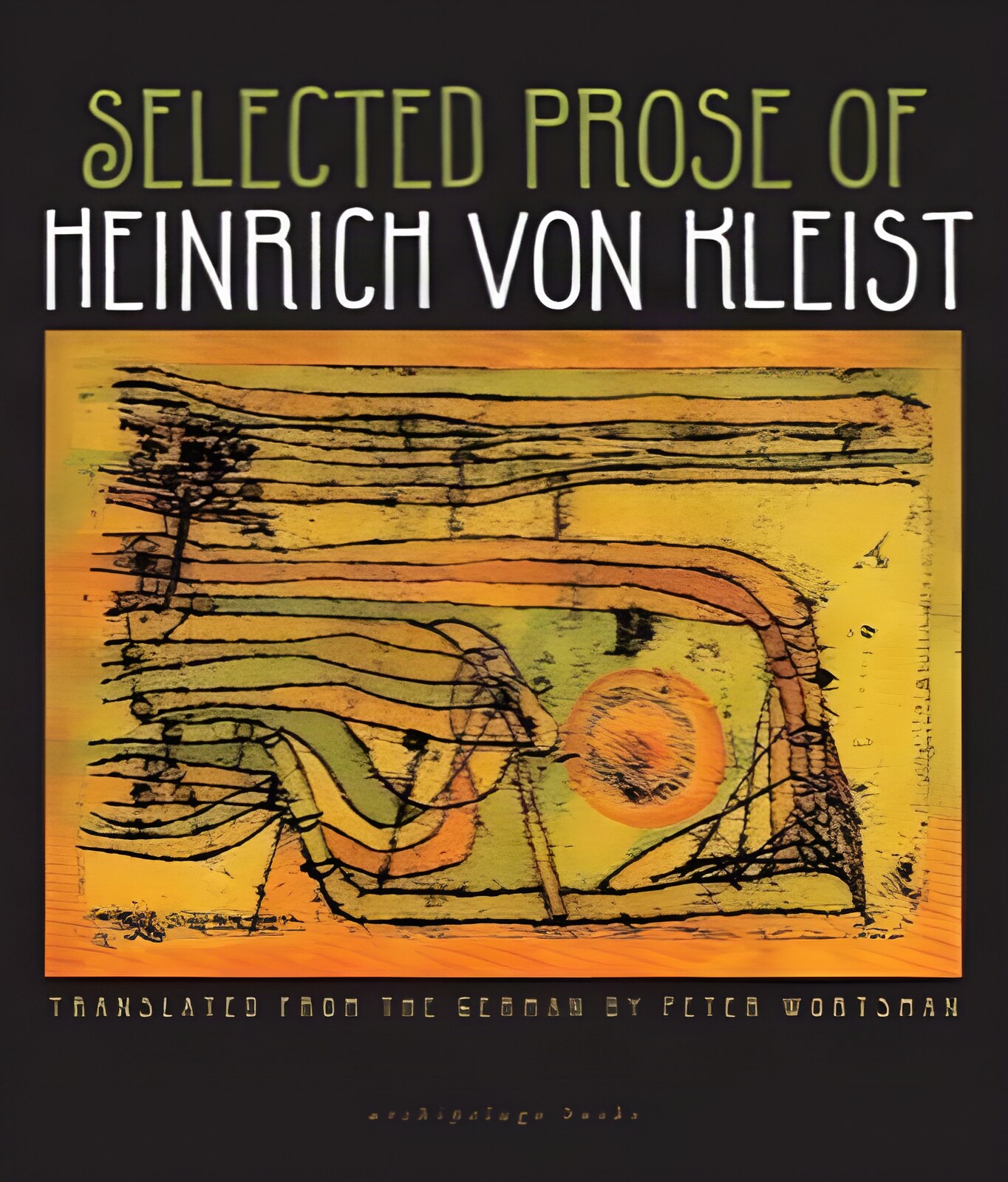
Softcover. NY, Archipelago Books, 2nd pr., 2010, Book: Very Good, Dust Jacket: None, Softcover in pictorial wrappers, 283 pages. In this extraordinary and unpredictable cross-section of the work of one of the most influential free spirits of German letters, Peter Wortsman captures the breathlessness and power of Heinrich von Kleist's transcendent prose. These tales, essays, and fragments move across inner landscapes, exploring the shaky bridges between reason and feeling and the frontiers between the human psyche and the divine. From the "The Earthquake in Chile," his damning invective against moral tyranny; to "Michael Kohlhaas," an exploration of the extreme price of justice; to "The Marquise of O . . . ," his twist on the mythic triumph of love story; to his essay "On the Gradual Formulation of Thoughts While Speaking," which tracks the movements of the unconscious decades before Freud; Kleist unrelentingly confronts the dangers of self-deception and the ultimate impossibility of existence in a world of absolutes. Wortsman's illuminating afterword demystifies Kleist's vexed history, explaining how the century after his death saw Kleist's legacy transformed from that of a largely derided playwright into a literary giant who would inspire Thomas Mann and Franz Kafka. Clean copy.
Hardcover. New York, Association Press, 1st, 1922, Book: Very Good, Dust Jacket: None, Volume 1: 636 pages. Volume 2: 664 pages. Hardcovers. Bound in maroon, gilt titles on spine, somewhat muted with age. Letter from Trustees of the War Fund, dated April 11, 1924, presenting volumes to previous owner (Gilbert Colgate), as well as original packing list enclosed in Volume 1. Full color fold-out maps throughout both books. Gutter cracked in a few spots, but both book's pages still completely intact. Pages slightly yellowed with age. In very good condition.
Softcover. NY, Burns Archive Press, 1st, 2017, Book: Very Good, Dust Jacket: None, Softcover, 106 pages, color plates throughout. SIGNED/INSCRIBED BY STANLEY BURNS on the title page. Japan, an island nation isolated until the mid-nineteenth century, opened its doors to foreign photographers in the 1860s. These photographers presented a visual cultural kaleidoscope of Japanese life to an eager outside world. The 160 photographs in this volume are curated from tourist albums and presented in the typical sequence. The modern reader will experience Meiji Japan in the way of a nineteenth century armchair traveler. While photographers in other countries were marketing sepia-toned prints, photographers in Japan took advantage of local artists and had their prints exquisitely painted. As with all hand-rendered artworks, quality varied; many photographs were executed so well as to challenge modern color photography. Photographers were limited by government restrictions and many scenes were set in studios rather than in real life. Despite the limitations, tourists visiting the country could purchase albums filled with colorful renditions of Japan's peoples and places. The carefully staged and approved photographs promoted an idealized and romanticized vision of Meiji Japan. Modernization and industrialization changed the country dramatically and the last vestiges of the disappearing feudal culture are captured by the camera. These intriguing photographs are beautiful multi-media artworks representing a vanished world. Clean copy.
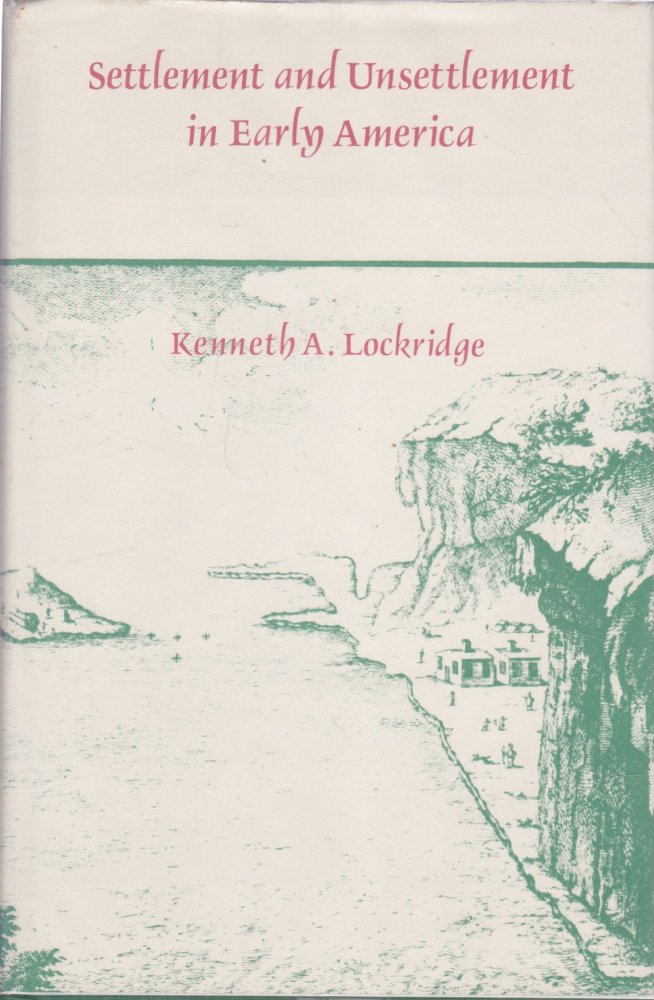
Hardcover. NY/UK, Cambridge University Press , 1st, 1981, Book: Very Good, Dust Jacket: Very Good, Hardcover in a bright dust jacket, 134 pages. Kenneth Lockridge portrays a society divided against itself and unable to arrive at a generally acceptable basis for political order. The special circumstances of American life eroded the foundations of social and political stability, and continued to do so until long after the Revolution. The original stream of emigration deposited in the New World a great many people unwilling to accept any person, principle, or institution as a legitimate source of authority. The claims of would-be American gentlemen were subjected to unyielding scrutiny. Rejecting all claims to higher social, political, and religious authority. A highly mobile populace kept its distance from putative hierarchs by venturing again and again beyond the perimeters of settled social institutions. This recurring process of settlement and unsettlement encouraged an active scepticism regarding all pretensions to hierarchy, and it reaffirmed a commitment to local authorities, locally legitimated. Faint residue on front fly leaf, clean copy.
Hardcover. NY, W. W. Norton , 1st, 2022, Book: Very Good, Dust Jacket: Very Good, Hardcover in a bright, unclipped dust jacket. Checkers, backgammon, chess, and Go. Poker, Scrabble, and bridge. These seven games, ancient and modern, fascinate millions of people worldwide. In Seven Games, Oliver Roeder charts their origins and historical importance, the delightful arcana of their rules, and the ways their design makes them pleasurable. Clean copy.

 "Robots: From Science Fiction To Technological Revolutionby: Ichbiah, Daniel")
 "Roer River Battles: Germany's Stand at the Westwall, 1944")
 "Roman Vishniac: Children of a Vanished Worldby: Mara Vishniac Kohn/Roman Vishniac")
 "Roster of Vermont Men and Women in the Military and Naval Service of the United States and Allies in the World War 1917-1919by: Johnson, Herbert T.")
 "Roving Bill Aspinwall: Dispatches from a Hobo in Post-Civil War America by: Bill Aspinwall (Author), Owen Clayton (Editor)")
 "Russia Abroad: A Cultural History of the Russian Emigration, 1919-1939by: Raeff, Marc")
 "Saharaby: Ren")
 "Scenes from the Mesozoic and Other Drawings By Clarence Day by: Day, Clarence")


 "Sea Dragons: Predators of the Prehistoric Oceansby: Richard Ellis")



 "Seeing Through Paintings: Physical Examination in Art Historical Studies by: Andrea Kirsh; Rustin Levenson")
 "Service with Fighting Men: An Account of the Work of the American Young Men's Christian Associations in the World War (2 volume set)by: Taft (Chairman), William Howar")