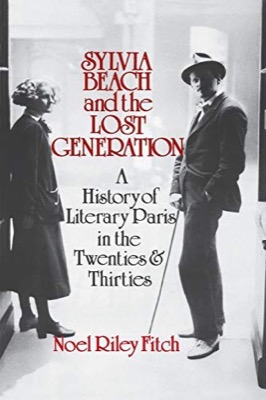
Softcover. NY, W. W. Norton & Company, reprint, 1985, Book: Very Good, Dust Jacket: None, Softcover, 447 pages, b&w illustrations. Sylvia Beach ran a bookshop in Paris in the 1920s and 30s and was at the heart of the literary world there which also included Hemingway, Pound, Flanner, Gide, and of course Joyce whose novel "Ulysses" she published. Clean, bright copy.
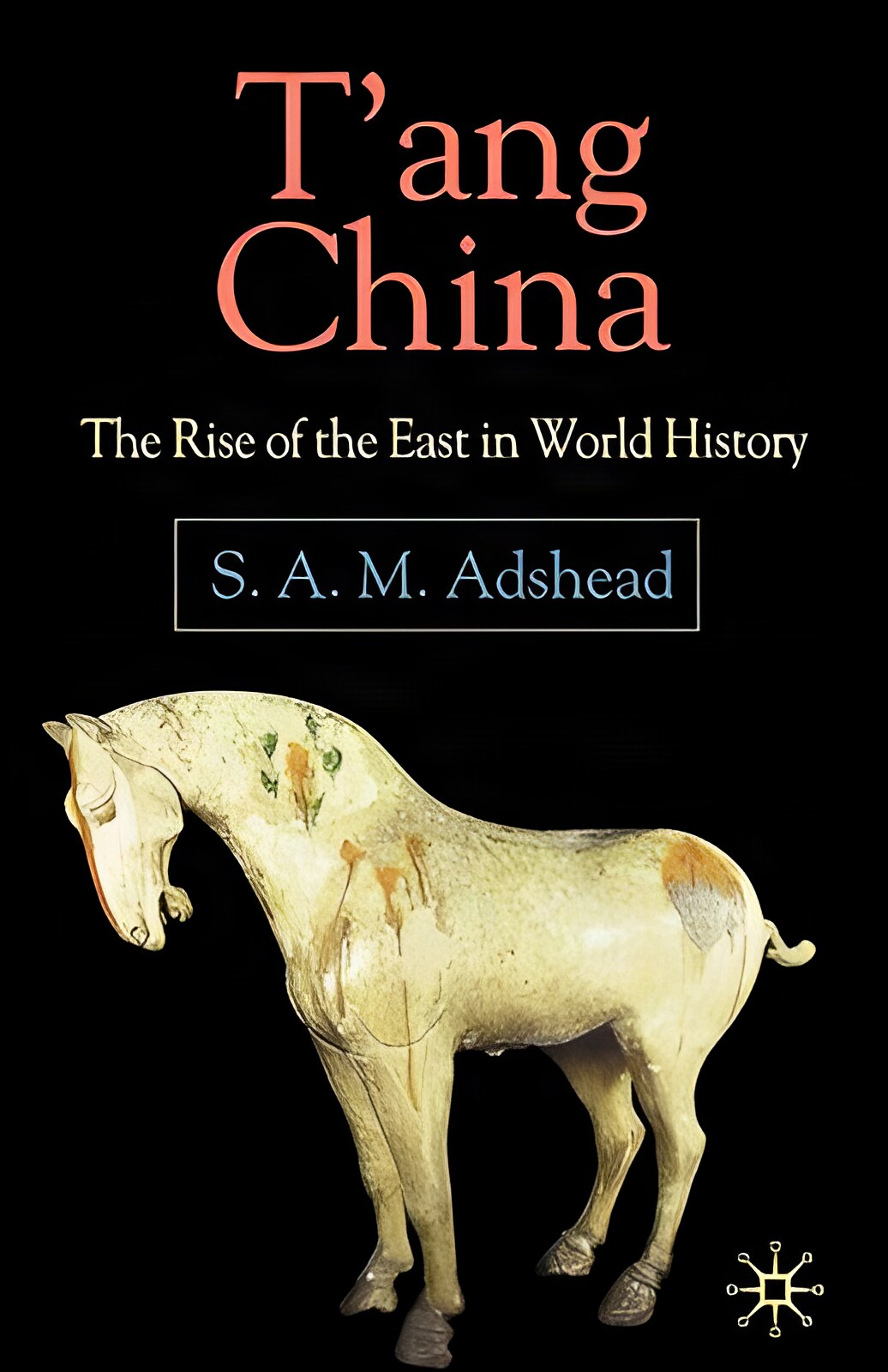
Softcover. London/NY, Palgrave Macmillan, 2nd pr., 2004, Book: Very Good, Dust Jacket: None, Softcover, 233 pages. China's role in world history has been controversial, especially as seen through an economic lens. This book presents an alternative interpretation of that role, less exclusively economic, more broadly based, and focused on the T'ang period, one of China's acknowledged golden ages. It shows how a different China, Buddhist or Taoist rather than Confucian, aristocratic as much as meritocratic, achieved, through openness to the outside world and partnership with its elites, a multiple preeminence in politics, economics, society and the intellect, not unlike that enjoyed by the United States today. Within a looser web of globalization, the T'ang period and its dynamics offers a distant mirror of our own time, casting a new light on issues in contemporary politics. Clean copy.
Hardcover. London, Transaction Publishers, 2nd Ed., 2014, Book: Very Good, Dust Jacket: Very Good, Hardcover in a bright dust jacket. The late twentieth century witnessed rapid changes not only in Taiwan's economy, but also in its identity. Both economic as well as ideological restructuring have been basic elements in the transformation of postwar Taiwan, as rapid democratization opened a Pandora's Box, and stirred a whirlwind of social discord. This volume considers such important questions as whether the old Taiwanese work ethic is a relic of the past, and whether Taiwan is likely to become a battleground of ideological wars. The book addresses Taiwanese nostalgia for Chinese culture; the rise and fall of postwar Taiwanese agrarian culture; the transformation of farmers' social consciousness in the period 1950-1970; the place of Confucianism in postwar Taiwan; and the awakening of the "self" and the development of a Taiwanese national identity in the post-World War II period. Finally, it considers whether "mutual historical understanding" may be the basis for Taiwan-Mainland relations in the twenty-first century. This second edition includes a new chapter on the history of Taiwan after World War II, incorporating additional developments in Taiwan in the past decade.
Hardcover. NY, Free Press, 1st, 1991, Book: Very Good, Dust Jacket: Very Good, Hardcover, 219 pages. B&W photos. The twentieth-century rise of the automobile collided head on with Victorian prescriptions for the proper role and place of women in society. Gender conventions cast women as too weak, dependent, and flighty to manage the fiery motored beast. Overcoming that stereotype was as difficult for women as gaining access to the vote, the professions, and education, yet their personal feats of driving in both war and peace demolished the gender barriers against their taking the road. After women proved once and for all that they could drive under the worst conditions in World War I, they adapted the automobile to their domestic roles in urban society during the 1920s. Written with flair and verve, this volume displays Scharff's erudition in social, cultural, gender, and technological history.
Hardcover. NY, Century Co., 1st, 1918, Book: Very Good, Dust Jacket: None, Hardcover, red cloth with black lettering and decoration on spine and front board. The author's reminiscences of time in the trenches during World War I. An American serving at the time with British 'Tommies', he also wrote 'Over the Top' and other books about his experiences. Front fly leaf missing, book opens to half title page, otherwise a clean, tight copy.
London, Independent Books, 1st, 1995, Book: Very Good, Dust Jacket: Very Good, Hardcover, 256 pages, b&w illustrations. Like new in a bright dust jacket. Target Dresden chronicles the development of bombing from the earliest days through the Zeppelin and Gotha raids of the First World War to the development of strategic bombing of WWII and examines how it affected post war thinking. Packed with facts Target Dresden gives the story behind the raids which were the most controversial conventional bombing attacks of World War Two.
Softcover. Chapel Hill NC, The University of North Carolina Press., 1st pbk, 2000, Book: Very Good, Dust Jacket: None, Softcover, 363 pages, b&w illustrations. Laura Wexler presents an incisive analysis of how the first American female photojournalists contributed to a "domestic vision" that reinforced the imperialism and racism of turn-of-the-century America. These women photographers, white and middle class, constructed images of war disguised as peace through a mechanism Wexler calls the "averted eye," which had its origins in the private domain of family photography. Wexler examines the work of Frances Benjamin Johnston, Gertrude Kasebier, Alice Austen, the Gerhard sisters, and Jessie Tarbox Beals. The book includes more than 150 photographs taken between 1898 and 1904, such as photos Johnston took aboard Admiral Dewey's flagship as it returned home from conquering Manila, Austen's photos of immigrants at Ellis Island, and Beals's images of the St. Louis World's Fair of 1904. In a groundbreaking approach to the study of photography, Wexler raises up these images as "texts" to be analyzed alongside other texts of the period for what they say about the discourses of power. Tender Violence is an important contribution not only to the fields of history of photography and gender studies but also to our growing understanding of U.S. imperialism during this period.
Hardcover. Clover Press , 1st, 2024, Book: Very Good, Dust Jacket: None, Hardcover in pictorial boards. The saga continues in Terry and the Pirates Volume 7, reproduced from Milton Caniff's personal set of color syndicate tabloid proofs! Embroiled in the guerilla struggle against the invader, Terry meets "Madame Lustre" (AKA Burma!) and matches wits German officers Kiel and Wolff. When Terry eventually reunites with Dude Hennick and Raven Sherman, the stage is set for one of the greatest stories in comics history, with Death waiting to strike unexpectedly. Terry's road leads back to Hong Kong for a major reunion and a welcome-home kiss from April, but the delightful Miss Kane has secret troubles in the form of small-time grifter Sammy the Tapper. Everyone's fortunes are poised to change as Christmas arrives and America charges headlong into World War II! This tabloid-sized Volume 7 containing the 1941 dailies and Sundays is an unparalleled upgrade that no Terry fan can afford to pass up. Still in publisher's shrinkwrap. DOMESTIC SHIPPING ONLY.
Hardcover. Crowood Press, 1st, 2008, Book: Very Good, Dust Jacket: Very Good, Hardcover, 222 pages., color plates. This impressive work encompasses history, anthropology, and an expert exposition of textile arts from this region where textiles may denote group identity and may represent a large portion of a family's wealth. The author draws upon both published information and her own extensive travels in the area, describing practices and techniques that she observed in use in situ. She illustrates cultural and historical patterns in costume, often with the aid of temple paintings, sculpture, and historic photographs to supplement current images. Her descriptions of techniques, for example of weaving, are admirably balanced -- detailed enough to inform while presented with sufficient general information for a non-specialist reader. The illustrative material is good, often her own or her son's photographs, that shows the labor-intensive processes and world-class skills as well as the resulting spectacular museum pieces.
Softcover. NY, Vintage, 1st pbk, 2008, Book: Very Good, Dust Jacket: None, Softcover, pages. That Sweet Enemy brings both British wit (Robert Tombs is a British historian) and French panache (Isabelle Tombs is a French historian) to bear on three centuries of the history of Britain and France. From Waterloo to Chirac's slandering of British cooking, the authors chart this cross-channel entanglement and the unparalleled breadth of cultural, economic, and political influence it has wrought on both sides, illuminating the complex and sometimes contradictory aspects of this relationship--rivalry, enmity, and misapprehension mixed with envy, admiration, and genuine affection--and the myriad ways it has shaped the modern world. Clean copy.
Softcover. Washington DC, National Gallery of Art, 1st, 2010, Book: Very Good, Dust Jacket: None, Softcover, pictorial wrappers, 430 pages. This volume of essays reexamines the establishment and early history of the Accademia di San Luca in Rome, one of the most important centers of governance, education, and theory in the arts for the early modern period and the model for all subsequent academies of art worldwide. It is the most comprehensive history of the Accademia to be published in more than forty years, and the first in nearly two hundred years to be based almost entirely on new primary and documentary material. In reconstructing the early history of the institution, the volume also provides a new basis for tracking the careers of painters, sculptors, and architects working in Rome in the early 16th century, and for understanding the artistic and professional issues that engaged them.
Hardcover. NY, Pantheon, 1st, 2005, Book: Very Good, Dust Jacket: None, Hardcover, 108 pages in color. With all his literary accolades and awards, it's easy to forget Ware (Jimmy Corrigan) is one of the warmest, funniest cartoonists in America. The Acme Novelty Library collects a few issues of Ware's comic book series by the same name and adds plenty of new pages and visual delights. It is, like all of his work, an utterly immersive experience. You're not just reading his comics, you're inhabiting his world: from fake ads to diagrams for paper models to a lengthy and very funny fictional history of the Acme Novelty Company. These strips combine complex and beautiful visuals with the humor of hapless, often sad characters in ridiculous predicaments. "Rusty Brown", a series of strips based around an obsessive collector who will be the subject of Ware's next graphic novel, is particularly strong. These comics showcase Ware's unusual sensitivity towards his characters, building an incisive, multi-dimensional portrait of Brown and his friend Chalky White. On top of all of these riches there is Ware's own personal "history of art" in cartoon form, and a multi-page story about a naked superhero. Combining surreal humor, cutting satire, stunning visuals, and empathic characters, Ware's latest is a wondrous journey into the universe of a master cartoonist in peak form.
Hardcover. NY, Pantheon, 1st, 2005, Book: Very Good, Dust Jacket: None, Hardcover, 108 pages in color. With all his literary accolades and awards, it's easy to forget Ware (Jimmy Corrigan) is one of the warmest, funniest cartoonists in America. The Acme Novelty Library collects a few issues of Ware's comic book series by the same name and adds plenty of new pages and visual delights. It is, like all of his work, an utterly immersive experience. You're not just reading his comics, you're inhabiting his world: from fake ads to diagrams for paper models to a lengthy and very funny fictional history of the Acme Novelty Company. These strips combine complex and beautiful visuals with the humor of hapless, often sad characters in ridiculous predicaments. "Rusty Brown", a series of strips based around an obsessive collector who will be the subject of Ware's next graphic novel, is particularly strong. These comics showcase Ware's unusual sensitivity towards his characters, building an incisive, multi-dimensional portrait of Brown and his friend Chalky White. On top of all of these riches there is Ware's own personal "history of art" in cartoon form, and a multi-page story about a naked superhero. Combining surreal humor, cutting satire, stunning visuals, and empathic characters, Ware's latest is a wondrous journey into the universe of a master cartoonist in peak form.
Softcover. NY, New York Review Books, 1st US., 2005, Book: Very Good, Dust Jacket: None, Softcover, 488 pages. In the seventeenth and eighteenth centuries, between the reign of Louis XIII and the Revolution, French aristocratic society developed an art of living based on a refined code of good manners. Conversation, which began as a way of passing time, eventually became the central ritual of social life. In the salons, freed from the rigidity of court life, it was women who dictated the rules and presided over exchanges among socialites, writers, theologians, and statesmen. They contributed decisively to the development of the modern French language, new literary forms, and debates over philosophical and scientific ideas. With a cast of characters both famous and unknown, ranging from the Marquise de Rambouillet to Madame De Stael was a, and including figures like Ninon de Lenclos, the Marquise de Sevigne, and Madame de Lafayette, as well as Pascal, La Rochefoucauld, Diderot, and Voltaire, Benedetta Craveri traces the history of this worldly society that carried the art of sociability to its supreme perfection-and ultimately helped bring on the Revolution that swept it all away. Clean copy.
Hardcover. NY, Doubleday, 1st, 2002, Book: Very Good, Dust Jacket: Very Good, Hardcover in a bright, unclipped dust jacket. The discovery of gold by a team of Mormon mill workers in 1848 sparked a frenzy that shook the world. People swarmed to California from as far as China and Australia. They came from England and France, from Ireland and Chile, leaving behind their families and everything they owned in the hope of making their fortunes in the new world. They came by ship and overland, braving Tierra del Fuego and the pestilences of Panama, lured by the promise of gold. In a spellbinding narrative that spans several continents, Brands brings the fervour and excitement of the gold rush vividly to life. The Age of Gold is narrative history at its best -- the astonishing tale of one of the most extraordinary speculative frenzies in history, told by a master historian. 547 pages, clean copy.
Hardcover. Princeton NJ, Princeton University Press, 1st, 2011, Book: Very Good, Dust Jacket: Very Good, Hardcover in a bright, unclipped dust jacket, 543 pages. This is the history of how two countries on the northern edge of Europe built societies in the twentieth century that became objects of inspiration and envy around the world. Francis Sejersted, one of Scandinavia's leading historians, tells how Norway and Sweden achieved a rare feat by realizing grand visions of societies that combine stability, prosperity, and social welfare. It is a history that holds many valuable lessons today, at a time of renewed interest in the Scandinavian model. The book tells the story of social democracy from the separation of Norway and Sweden in 1905 through the end of the century, tracing its development from revolutionary beginnings through postwar triumph, as it became a hegemonic social order that left its stamp on every sector of society, the economy, welfare, culture, education, and family. The book also tells how in the 1980s, partly in reaction to the strong state, a freedom and rights revolution led to a partial erosion of social democracy. Yet despite the fracturing of consensus and the many economic and social challenges facing Norway and Sweden today, the achievement of their welfare states remains largely intact.
Softcover. UK, Faber & Faber, reprint, 1988, Book: Very Good, Dust Jacket: None, Softcover, 271 pages. In the twelfth century, Languedoc, in the far south, was among the most beautiful parts of France, far away from the world of the feudal north. However, it was in this rich region that a heresy of Eastern origin took hold, forcing the Catholic Church to confront a rival whose teachings questioned the foundations of Christian thought. These heretics, called Cathars, held a profoundly pessimistic view of the world that was based on the duality of all things, including good and evil: according to one heretic, "The one, the good God, made the invisible world, while the other, the evil God, made the visible one." Jonathan Sumption's acclaimed history examines the roots of this heresy as well as of the crusade the Church undertook in 1208 to stamp out the infidels, who ultimately were conquered by the Catholic armies. But this book does more than simply describe this terrible war; it reconstructs a lost world of great cultural richness, one that saw the creation in Languedoc of the troubadour tradition as well as the magnificent castles at Cabaret and Carcassonne. Clean copy.
Hardcover. Boston, Thomas & Andrews , 6th Ed., 1812, Book: Good, Dust Jacket: None, Hardcover in contemporary calf, with gilt letting on red leather spine label and sound and bright internally with 3 fold-out maps (Africa, Asia/Arabia and Europe). Covers worn, bottom of spine has a small chunk gone from bottom, about a square inch. Interior clean, minor foxing. VOLUME 2 ONLY.
Hardcover. NY, Doubleday & Company, reprint, 1963, Book: Very Good, Dust Jacket: Good, Hardcover in a lightly worn, price-clipped dust jacket with fading to spine. 408 pages with b&w illustrations. Classic work by the famed science fiction author and engineer, providing a fascinating account of pyramids, aqueducts, catapults, fortifications, ships, and technology from the ancient world to the Renaissance. No First Edition indicated on copyright page so assumed early reprint.
Softcover. Atlantic Highlands NJ, Humanities Press, 1st, 1981, Book: Very Good, Dust Jacket: None, Softcover, 329 pages. A Marxian perspective on anthropology. Sections are pre-capitalist societies with hunter-gatherers, pastoralists, lineage-based societies and the Asiatic mode of production; and recent Marxian studies, rethinking traditional aspects of anthropology, including phenomenological anthropology, the history of the social sciences, world-systems theory, the nature of peripheral societies, and feminist perspectives.
Hardcover. NY, MacMillan Company, 1st US, 1971, Book: Very Good, Dust Jacket: Very Good, Hardcover in a bright, unclipped dust jacket, 312 pages. Includes footnotes, bibliography, and index. Foreword by Stephen Spender. A narrative study of the troubling phenomenon why many European intellectuals and artists were drawn to and embraced Fascism during the period between the world wars. This conundrum may find expression today. Clean copy.
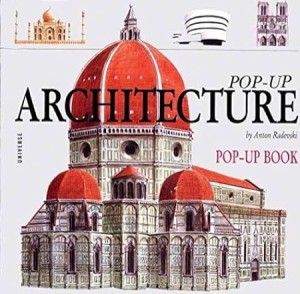
Hardcover. New York, Universe Publishing, 2nd printing, 2009, Book: Very Good, Dust Jacket: None, Non paginated. Hardcover. Six pages of pop-ups in excellent condition, each page has several smaller pop-ups laid in. Bright cover boards & bright illustrations throughout by illustrator, Anton Radevsky. A magnificent journey through the history of architecture. Featuring amazing three-dimensional replications of famous buildings from ancient to modern times, The Architecture Pop-Up Book showcases artwork, photographs, pop-ups, and detailed text of the ancient Egyptian pyramids; the great constructions of Greece and Rome, such as the Parthenon and the Colosseum; majestic Asian wonders, including the Taj Mahal; Gothic and Neoclassical masterpieces, such as Notre Dame and the Florence Duomo; and the work of such important modern architects as Gaudi, Frank Lloyd Wright, and Frank Gehry. From a brilliantly elaborate Gothic cathedral nave to a telescoping Chrysler Building skyscraper, the talent and imagination of architects and builders from all eras and from all over the world are displayed and compared here.Clean, unmarked & tight copy.
Hardcover. NY, VIking, 1st, 2010, Book: Very Good, Dust Jacket: Very Good, Hardcover in a bright, unclipped dust jacket, 261 pages, illustrations. Philip Mould takes a wonderfully interesting look at how art restoration works. But, in looking at restoration of existing paintings, he also delves into how he, as a gallery owner, along with his team, find work that has remained under-valued or unvalued for centuries. And then how that piece, now restored by Mould's experts, ventures back into the art world in renewed glory. Mould takes five or so examples of "found" paintings - one from his "Antique Roadshow" - and writes how instinct and education about a painter, his other work, the painting's subject's history, and other "intangables' go into Mould and his staff taking on an often dirty and undistinguished painting on the chance that the painting is "the real thing" - a real Rembrandt, a real Homer Winslow, etc. Probably the most interesting story was that of a Norman Rockwell painting on display at the Rockwell Museum in Massachusetts that...wasn't. Wasn't the "real" Rockwell painting, but rather one done by a disciple of Rockwell, who copied the original for reasons sort of murky, and donated to the museum. The "real" Rockwell was found by the copier's sons after his death and turned over to the museum. Clean copy.
Hardcover. NY, Abrams, 1st, 2024, Book: Very Good, Dust Jacket: None, Hardcover, slipcase edition. Celebrate 30 years of DreamWorks Animation's visually rich worlds with this luxurious edition of the studio's artistic achievements in both film and television Brimming with rare concept art, preproduction designs, and character sketches, this comprehensive collection offers behind-the-scenes access to the DreamWorks archives. Featuring a foreword from Cameron Diaz, along with insider anecdotes and perspectives from actors, directors, producers, and artists, 571 pages in color. Over the past 30 years, the premier studio has produced some of the most groundbreaking and illustrious animated movies of all time, such as Shrek, Trolls, Kung Fu Panda, How to Train Your Dragon, The Bad Guys, Madagascar, and the newest addition, The Wild Robot, as well as acclaimed TV shows, such as Gabby's Dollhouse, Jurassic World: Camp Cretaceous, Trollhunters, and Spirit Riding Freeamong many others. Like new, in publisher's shrinkwrap. Due to size and weight, DOMESTIC SHIPPING ONLY.

 "Taiwan in Transformation: Retrospect and Prospect/2nd Editionby: Chun-chieh Huang")
 "Taking the Wheel - Women and the Coming of the Motor Ageby: Scharff, Virginia")
 "Target Dresdenby: Cooper, Alan W.")
 "Tender Violence: Domestic Visions in an Age of U.S. Imperialism (Cultural Studies of the United States) by: Wexler, Laura")

 "Textiles of South-East Asiaby: Thompson, Angela")
 "That Sweet Enemy: Britain and France: The History of a Love-Hate Relationshipby: Tombs, Robert; Tombs, Isabelle")
 "The Accademia Seminars: The Accademia di San Luca in Rome, c. 1590-1635by: Peter M. Lukehart")
 "The Acme Novelty Library (Pantheon Graphic Library)by: Ware, Chris")
 "The Acme Novelty Library (Pantheon Graphic Library)by: Ware, Chris")

 "The Age of Gold: The California Gold Rush and the New American Dream by: Brands, H.W.")
 "The Age of Social Democracy: Norway and Sweden in the Twentieth Centuryby: Francis Sejersted")





 "The Art Detective: Fakes, Frauds, and Finds and the Search for Lost Treasuresby: Philip Mould")