Hardcover. Hoboken NJ, John Wiley & Sons, 1st, 2009, Book: Very Good, Dust Jacket: Very Good, Hardcover in a bright, unclipped dust jacket. The biography of one of the most controversial figures in sports: New York Yankees owner George Steinbrenner For 34 years, he berated his players and tormented Yankees managers and employees. He played fast and loose with the rules, and twice could have gone to jail. He was banned from baseball for life--but was allowed back in the game. Yet George Steinbrenner also built the New York Yankees from a mediocre team into the greatest sports franchise in America. The Yankees won ten pennants and six World Series during his tenure. Now acclaimed sportswriter and New York Times bestselling author Peter Golenbock tells the fascinating story of "The Boss," from his Midwestern childhood through his decades-long ownership of the Yankees-the longest in the team's history. Clean copy.
Hardcover. Atglen, PA, Schiffer Military History Book, 1st, 2008, Book: Very Good, Dust Jacket: Very Good, 256 pages. Hardcover with dust jacket. Profusely illustrated with b&w photos. Clean, tight copy.
Hardcover. NY, Abrams, 1st, 2024, Book: Very Good, Dust Jacket: None, Hardcover, pictorial boards, 330 pages. A visually captivating history of the evolution of Glamour magazine and the brands legendary decades at the forefront of female empowerment in an incredible photographic volume For more than 80 years, Glamour has been the preeminent women's empowerment brand in America. But until now, no one has told the extraordinary story of its origins, the famous names who helped shape the magazine into the global powerhouse it is today, and Glamour's many historic firsts. Glamour was the first American fashion magazine to feature a Black cover star, the first to present Gloria Steinem's writing, and the first to feature groundbreaking reporting on reproductive rights. In a gripping journey, follow the group of women editors and journalists who spearheaded the magazine as World War II transformed the female landscape with over 7.5 million working women suddenly in the US workforce in 1940 and repositioned the title from charting Hollywood glamour to the magazine for the girl with a job.
Softcover. NY, Metropolitan Museum of Art, 1st, 2001, Book: Very Good, Dust Jacket: None, Softcover, 330 pages illustrated in color. Islamic glassmakers were not only brilliant technicians and innovators in their own right, but they also preserved many of the methods of their Sasanian and Roman predecessors, passing them on centuries later to Venetian and other masters. Glass of the Sultans is the first comprehensive study of the accomplishments of these craftsmen, which are of lasting significance both to Islamic and to world art. Clean, bright copy.
Hardcover. UK, Oxford University Press, 1st, 2012, Book: Very Good, Dust Jacket: Very Good, Hardcover in a bright, unclipped dust jacket. God in the Age of Science? is a critical examination of strategies for the philosophical defence of religious belief. The main options may be presented as the end nodes of a decision tree for religious believers. The faithful can interpret a creedal statement (e.g. "God exists") either as a truth claim, or otherwise. If it is a truth claim, they can either be warranted to endorse it without evidence, or not. Finally, if evidence is needed, should its evidential support be assessed by the same logical criteria that we use in evaluating evidence in science, or not? Each of these options has been defended by prominent analytic philosophers of religion. In part I Herman Philipse assesses these options and argues that the most promising for believers who want to be justified in accepting their creed in our scientific age is the Bayesian cumulative case strategy developed by Richard Swinburne. Parts II and III are devoted to an in-depth analysis of this case for theism. Using a "strategy of subsidiary arguments," Philipse concludes (1) that theism cannot be stated meaningfully; (2) that if theism were meaningful, it would have no predictive power concerning existing evidence, so that Bayesian arguments cannot get started; and (3) that if the Bayesian cumulative case strategy did work, one should conclude that atheism is more probable than theism. Philipse provides a careful, rigorous, and original critique of theism in the world today. Clean copy.
Hardcover. NY, Pantheon, 1st, 2007, Book: Very Good, Dust Jacket: Very Good, Hardcover in a bright, unclipped dust jacket. Grand Avenues tells the riveting story of Pierre Charles L'Enfant and the creation of Washington D.C.--from the seeds of his inspiration to the fulfillment of his extraordinary vision. L'Enfant's story is one of consuming passion, high emotion, artistic genius, and human frailty. As a boy he studied drawing at the most prestigious art institute in the world. As a young man he left his home in Paris to volunteer in the army of the American colonies, where he served under George Washington. There he would also meet many of the people who would have a profound impact on his life, including Alexander Hamilton and James Monroe. And it was Washington himself who, in 1791, entrusted L'Enfant with the planning of the nation's capital--and reluctantly allowed him to be dismissed from the project eleven months later. The plan for the city was published under another name, and for the remainder of his life L'Enfant fought for recognition of his achievement. But he would not live to see that day, and a century would pass before L'Enfant would be given credit for his brilliant design. Scott W. Berg recounts this tale, richly evocative of time and place, with the narrative verve of a novel and with a cast of characters that ranges from Thomas Jefferson and the other Founding Fathers to the surveyor who took credit for L'Enfant's plans, the assistant who spent a week in jail for his loyalty to L'Enfant, and the men who finally restored L'Enfant's reputation at the beginning of the twentienth century.
Hardcover. Princeton Architectural Press, 1st, 2006, Book: Very Good, Dust Jacket: Very Good, Hardcover, 256 pages. The Breakers, the Waldorf, the Biltmore, the Sherry, the Pierre--these landmark hotels are synonymous with grand luxury and style. When they were built, in the 1920s, their refined elegance and grandeur set the bar for hotels and resorts the world over. Responsible for creating these and countless other hotels throughout the United States, were the partners of a single architectural firm: Schultze & Weaver. Together, this duo--an architect and an engineer--virtually invented the glamorous lifestyle made famous in films like Grand Hotel. Catering to the social elite of which they were themselves a part, Schultze & Weaver synthesized the Old World style of Renaissance Italy, Moorish Spain, and Georgian England with all of the modern amenities that made hotel living luxurious. This book presents portfolios of fifteen of the firm's most spectacular hotels, culminating in the Art Moderne masterpiece of the Waldorf-Astoria. Over two hundred period photographs and hand-colored architectural renderings chart the ascent of the American hotel in all its glory and glamour, before the Great Depression forever changed the lifestyles of America's rich and famous. Essays address the cultural and technological developments that underpin the creation of resort and residential hotels, including the elemental role played by Schultze & Weaver.
Hardcover. Roaring Brook Press, 1st, 2011, Book: Very Good, Dust Jacket: Very Good, Hardcover, 32 pages illustrated in color by Lane and SIGNED BY LANE. From the creator of the national bestseller It's a Book comes a timeless story of family history, legacy, and love. Grandpa Green wasn't always a gardener. He was a farmboy and a kid with chickenpox and a soldier and, most of all, an artist. In this captivating new picture book, readers follow Grandpa Green's great-grandson into a garden he created, a fantastic world where memories are handed down in the fanciful shapes of topiary trees and imagination recreates things forgotten. In his most enigmatic and beautiful work to date, Lane Smith explores aging, memory, and the bonds of family history and love; by turns touching and whimsical, it's a stunning picture book that parents and grandparents will be sharing with children for years to come.
Hardcover. Roaring Brook Press, 1st, 2011, Book: Very Good, Dust Jacket: Very Good, Hardcover, 32 pages illustrated in color by Lane and SIGNED BY LANE. From the creator of the national bestseller It's a Book comes a timeless story of family history, legacy, and love. Grandpa Green wasn't always a gardener. He was a farmboy and a kid with chickenpox and a soldier and, most of all, an artist. In this captivating new picture book, readers follow Grandpa Green's great-grandson into a garden he created, a fantastic world where memories are handed down in the fanciful shapes of topiary trees and imagination recreates things forgotten. In his most enigmatic and beautiful work to date, Lane Smith explores aging, memory, and the bonds of family history and love; by turns touching and whimsical, it's a stunning picture book that parents and grandparents will be sharing with children for years to come.
Hardcover. NY, Doubleday, 1st, 1972, Book: Very Good, Dust Jacket: Very Good, Hardcover in a bright, lightly worn dust jacket, 510 pages. Bibliography, Index. Numerous b&w photographs, drawings, and maps throughout text. A portrayal of the history, geography, architecture, and people of fourteen ancient cities at their height, among them Thebes, Jerusalem, Babylon, Athens, Carthage, and Rome. Clean copy.
Hardcover. New York, Tim Duggan Books, 1st, 2017, Book: Very Good, Dust Jacket: Very Good, Hardcover, 248 pages, b&w illustrations. The first great portrait photographer, a pioneering balloonist, the first person to take an aerial photograph, and the prime mover behind the first airmail service, Nadar was one of the original celebrity artist-entrepreneurs. A kind of 19th-century Andy Warhol, he knew everyone worth knowing and photographed them all, conferring on posterity psychologically compelling portraits of Manet, Sarah Bernhardt, Delacroix, Daumier and countless others--a priceless panorama of Parisian celebrity. Born Gaspard-Felix Tournachon, he adopted the pseudonym Nadar as a young bohemian, when he was a budding writer and cartoonist. Later he affixed the name Nadar to the facade of his opulent photographic studio in giant script, the illuminated letters ten feet tall, the whole sign fifty feet long, a garish red beacon on the boulevard. Nadar became known to all of Europe and even across the Atlantic when he launched "The Giant," a gas balloon the size of a twelve-story building, the largest of its time. With his daring exploits aboard his humongous balloon (including a catastrophic crash that made headlines around the world), he gave his friend Jules Verne the model for one of his most dynamic heroes.
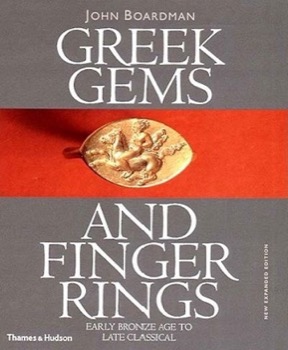
Hardcover. NY, Thames & Hudson Ltd, reprint, 2001, Book: Very Good, Dust Jacket: Very Good, Hardcover in a bright dust jacket, 480 pages illustrated in color and b&w. first published in 1970, this is the new enlarged edition. The miniaturist art of gem engraving is the least familiar of the major arts of ancient Greece, yet we know it to have been practiced by the greatest artists. This book presents a comprehensive account of the art in Greek lands from the early Bronze Age down to the Hellenistic period. The gems are related to history and to the artistic achievements in other media of their day, and the subject matter of the scenes engraved upon them is examined and found to hold much that will be new to students of Greek myth and iconography. The development of the Bronze Age studios in the Minoan and Mycenaean world is discussed, and the works of the great period of Classical gem engraving are resolved into their styles and schools, with a special chapter devoted to Greek works within the Persian Empire. Clean copy. DOMESTIC SHIPPING ONLY.
Hardcover. NY, Oxford University Press, 1st, 2011, Book: Very Good, Dust Jacket: Very Good, Hardcover in a bright dust jacket, 229 pages, b&w illustrations. The searing accounts of Aleksandr Solzhenitsyn, Evgeniia Ginsberg and Varlam Shalamov opened the world's eyes to the terrors of the Soviet Gulag. But not until now has there been a memoir of life inside the camps written from the perspective of an actual employee of the Secret police. In this riveting memoir, superbly translated by Deborah Kaple, Fyodor Mochulsky describes being sent to work as a boss at the forced labor camp of Pechorlag in the frozen tundra north of the Arctic Circle. Only twenty-two years old, he had but a vague idea of the true nature of the Gulag. What he discovered was a world of unimaginable suffering and death, a world where men were starved, beaten, worked to death, or simply executed. Mochulsky details the horrific conditions in the camps and the challenges facing all those involved, from prisoners to guards. He depicts the power struggles within the camps between the secret police and the communist party, between the political prisoners (most of whom had been arrested for the generic crime of "counterrevolutionary activities") and the criminal convicts. And because Mochulsky writes of what he witnessed with the detachment of the engineer that he was, readers can easily understand how a system that destroyed millions of lives could be run by ordinary Soviet citizens who believed they were advancing the cause of socialism. Clean copy.
Softcover. Washington DC, United States Air Force, 1959, Book: Very Good, Dust Jacket: None, Softcover, unpaginated, approximately 300 stapled pages. A guide to the SAC's worldwide bases, circa 1959. 8 1/2 X 11", three hole punched. Profusely illustrated with b&w photos of airfields, barracks, NCO clubs, housing for airmen and other facilities covering bases in the states, England, Guam, Germany, etc. Also maps showing locations. Not classified in the early days of the Cold War. Front fly leaf with and introduction by Thomas Power, Commanding General.
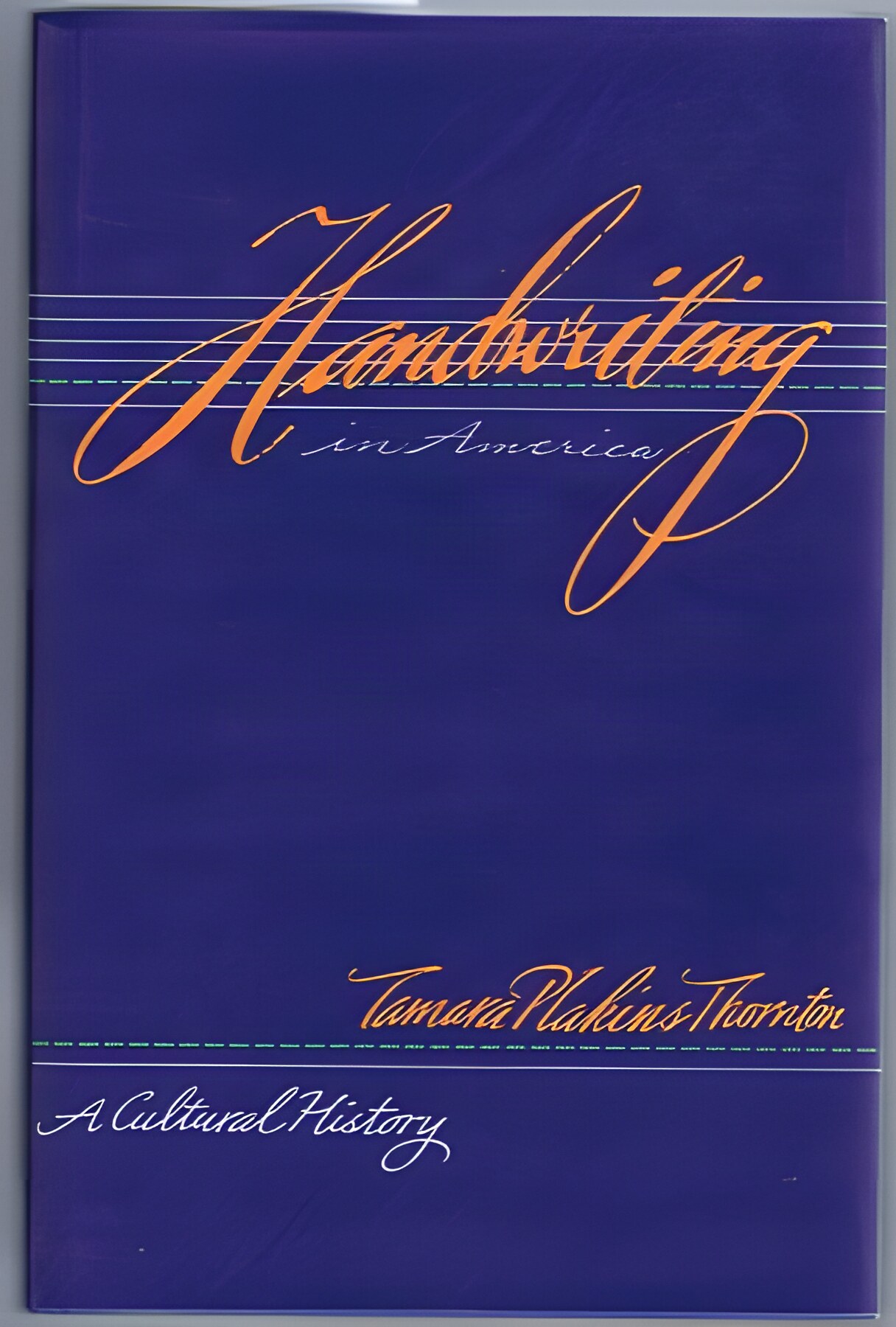
Softcover. New Haven CT, Yale University Press, reprint, 1996, Book: Very Good, Dust Jacket: None, Softcover, 248 pages. Copybooks and the Palmer method, handwriting analysis and autograph collecting - these words conjure up a lost world, in which people looked to handwriting as both a lesson in conformity and a talisman of individuality. In this engaging history, ranging from colonial times to the present, Tamara Plakins Thornton explores the shifting functions and meanings of handwriting in America.
Hardcover. NY, McGraw-HIll Books, 1st, 1975, Book: Very Good, Dust Jacket: Very Good, Hardcover in a bright, price-clipped dust jacket. 412 pages with index, b&w photos. A chronicle of the Hollywood that was, a mythic playground where cinema of both enduring and dubious value was created. .Into this world of illusion and disillusion came some of the greatest literary figures in our history. This is their story, from the 1930's and the early days of sound to the House Un-American Activities Committee. Clean copy.
Hardcover. New York, Monacelli Press , 1st, 2012, Book: Very Good, Dust Jacket: None, 320 pages. Hardcover without dust jacket. Extensive b&w and color photography throughout. Illustrated end papers and fly leafs. Includes extensive bibliography and chronology. Clean, tight copy. In early October 1959, thirty-two-year-old Allan Kaprow presented a performance piece entitled "18 Happenings in 6 Parts." This unique conjunction of visual, aural, and physical events, performed for an intimate art world audience by his friends and colleagues, would change the course of art history. The genre of artwork that evolved from this debut would become known as Happenings. This new volume provides a comprehensive look at this revolutionary art form. Prepared in conjunction with an exhibition at the Pace Gallery in New York, it focuses on the years that saw the movement's birth in New York and Provincetown, Mass., and the artists who made the genre a legend: Red Grooms, Allan Kaprow, Robert Whitman, Jim Dine, Claes Oldenburg, Simone Forti, Carolee Schneemann. Together, they created a new and outrageous art form with an "anything goes" attitude, one whose influence is still felt within the contemporary art world.
Hardcover. Naperville IL, Sourcebooks MediaFusion, 1st, 2006, Book: Very Good, Dust Jacket: Very Good, Hardcover in a bright dust jacket. 502 pages, b&w illustrations. For three decades after World War I, Harlem was the site of burgeoning racial and cultural awareness and ambitions among African Americans. In the opening section of this book, Wintz provides the historical context for what became known as the Harlem Renaissance. In separate sections devoted to poetry, music, politics, art, and the phenomenon of the New Negro, contributors profile many of the era's major figures, including Langston Hughes, Zora Neale Hurston, Bessie Smith, Ethel Waters, Josephine Baker, W. E. B. DuBois, Paul Robeson, A. Phillip Randolph, and Marcus Garvey. The essays place the Harlem Renaissance in the broader context of an awakening of black culture throughout the U.S. The book contains references to the accompanying CD, which offers 60 minutes of music, poetry, interviews, performances, and speeches, giving voice to the vibrant life of Harlem. Photographs, drawings, book covers, and posters add to the richness of this collection. A fabulous resource on the Harlem Renaissance.
Hardcover. Washington DC, Brassey's , 1st, 2003, Book: Very Good, Dust Jacket: Very Good, Hardcover in a bright, unclipped dust jacket, b&w illustrations, 293 pages. The 369th became one of the few U.S. units that American commanding general John J. Pershing agreed to let serve under French command. Donning French uniforms and taking up French rifles, the men of the 369th fought valiantly alongside French Moroccans and held one of the widest sectors on the Western Front. The entire regiment was awarded the Croix de Guerre, the French government's highest military honor. Clean copy.
Softcover. Philadelphia, Jewish Publication Society, 1st, 2013, Book: Very Good, Dust Jacket: None, Softcover, oblong format, 238 pages illustrated in color. Today e-mail, Facebook, and Twitter are sometimes used to spread hateful messages and slurs masking as humor. In the late nineteenth and early twentieth centuries postcards served this purpose. The images collected in this volume make it painfully clear that anti-Semitic propaganda did not simply begin with the Nazis. Nor was it the sole province of politicians, journalists, and rabble-rousers. One of the most virulent forms of anti-Semitism during this time was spread by quite ordinary people through postcards. Of the millions of postcards exchanged during their heyday of 1890 through 1920, a considerable percentage carried the anti-Semitic images that publishers churned out to meet public demand, reflecting deep-seated attitudes of society. Over 250 examples of such postcards, largely from the pre-Holocaust era, are reproduced here for the first time-selected, translated, and historically contextualized by one of the world's foremost postcard collectors. Clean copy.
Hardcover. NY, Prestel, 1st, 1999, Book: Very Good, Dust Jacket: Very Good, Hardcover, 104 pages. Ever since Fidel Castro came to power as the leader of Cuba's communist regime in 1959, Havana has remained all but impenetrable to the outside world. The revolution cut Cuba off from the West, but at the same time preserved a century of built substance and style through the accident of fmancial stagnation. Without capital investment, time stood still, and five epochs of architectural style have survived to the present day. From the majesty of colonial city palaces to the half-hearted hope of heroic modernism, Engels' photographs show a city in silent transition, a microcosm of architecture through the ages. All of the structures picttired here were built in the twentieth century, but for the most part they have suffered from neglect in the form of peeling paint and stucco, &M grime, and abandonment. Yet there is utter beauty and dignity here-a sense of being trapped in time-that is no longer evident in America's everchanging cities. Like the structures he photographs, Engels uses a timeless approach to the artistic and technical aspect of his work. He uses a Sinar catnera with a 4 x 5 inch format, standing under a darkening cloth, just as photographers did a century ago. Using a Polaroid image to feel and see the light, Engels takes a single shot of each building. Most of these images were taken during die month of February, in 1997 and 1999 respectively. These photographs of apartment dwellings, office buildings, private residences, and places of worship tell a story on their own. Their haunting images seem to speak about more than just the men who made them or the materials they are made of. The buildings and streetscapes depicted in Havana speak to us of yesterday, today, and tomorrow.
Hardcover. NY, STEWART TABORI CHANG, 1ST, Book: Very Good, Dust Jacket: Very Good, Hardcover, 378 pages. Here is a musical history told in legends, facts, and rumors every bit as colorful as the images that illustrate the book. The story is filled with characters such as O.V. Wright, a singer deemed "too ugly to tour"; Frnakie Lymon, who received a hot dog as full payment for some of the greatest R&B songs of all time; LaVern Baker, a.k.a. "Little Miss Sharecropper"; Bille Holiday shooting dice with the boys on the bus; Solomon Burke, R&B immortal and Doctor of Mortuary Sciences; soul ghoul Screamin' Jay Hawkins locked in his coffin by the Drifters; and many otehr talented and unique entertainers. Illustrated with more than 400 original photographs, publicity shots, posters, programs, advertisements, program covers, magazine covers, album covers and sleeves, sheet music, and record labels in full color, this is a story of hot music and high style, of people who made history by being themselves and made the world a richer, wilder and definitely cooler place for the rest of us.
Hardcover. NY, NYU Press, 1st, 2011, Book: Very Good, Dust Jacket: Very Good, Hardcover in a bright dust jacket, 281 pages, b&w illustrations. Before Liz Smith and Perez Hilton became household names in the world of celebrity gossip, before Rush Limbaugh became the voice of conservatism, there was Hedda Hopper. In 1938, this 52-year-old struggling actress rose to fame and influence writing an incendiary gossip column, "Hedda Hopper's Hollywood," that appeared in the Los Angeles Times and other newspapers throughout Hollywood's golden age. Often eviscerating moviemakers and stars, her column earned her a nasty reputation in the film industry while winning a legion of some 32 million fans, whose avid support established her as the voice of small-town America. Yet Hopper sought not only to build her career as a gossip columnist but also to push her agenda of staunch moral and political conservatism, using her column to argue against U.S. entry into World War II, uphold traditional views of sex and marriage, defend racist roles for African Americans, and enthusiastically support the Hollywood blacklist. Clean copy.
Hardcover. NY, Jewish Theological Seminary of America, 2nd Ed., 1962, Book: Very Good, Dust Jacket: None, Hardcover, dark green cloth with gilt lettering on spine, 231 pages. (Essays in Judaism series) In this book, master Talmudist and scholar of the Greco-Roman world, the late Professor Saul Lieberman, elucidates words, texts, customs, and practices in either rabbinic or classical literature, often by reference to passages in the other. In Greek in Jewish Palestine, he demonstrates that almost every foreign word and phrase have their raison d'etre in rabbinic literature and that all Greek phrases in rabbinic literature are quotations. Hellenism in Greek Palestine is an inquiry into the spirit of many rabbinic observations and investigations of the facts, incidents, opinions, notions and beliefs to which the Rabbis allude in their statements. Name on front fly leaf, otherwise clean.

 "George: The Poor Little Rich Boy Who Built the Yankee Empire by: Golenbock, Peter")

 "Glamour: An Extraordinary History: 85 Years of Women Breaking Boundariesby: Pearlman, Natasha; Wolle, Ruhama; Moeslein, Anna")



 "Grand Avenues: The Story of the French Visionary Who Designed Washington, D.C.by: Scott W. Berg")
 "Grand Hotels of the Jazz Age: The Architecture of Schultze & Weaverby: Marianne Lamonaca")






 "Great Nadar, The: The Man Behind the Cameraby: Begley, Adam")




 "Hanging on in Paradiseby: Guiles, Fred Lawrence")
 "Happenings: New York 1958-1963by: Glimcher, Mildred L.")
 "Harlem Speaks: A Living History of the Harlem Renaissance (with CD)by: Cary D. Wintz")
 "Harlem's Hell Fighters: The African-American 369th Infantry in World War I by: Stephen L. Harris")

 "Havana: The Photography of Hans Engelsby: Engels/ Beth Dunlop, et al., Hans")
 "Heart & Soul: A Celebration of Black Music Style in America, 1930-1975by: Merlis, Bob")

 "Hellenism in Jewish Palestine: Studies in the Literary Transmission Beliefs and Manners of Palestine in the I Century B.C.E.-IV Century C.E. by: Lieberman, Saul")