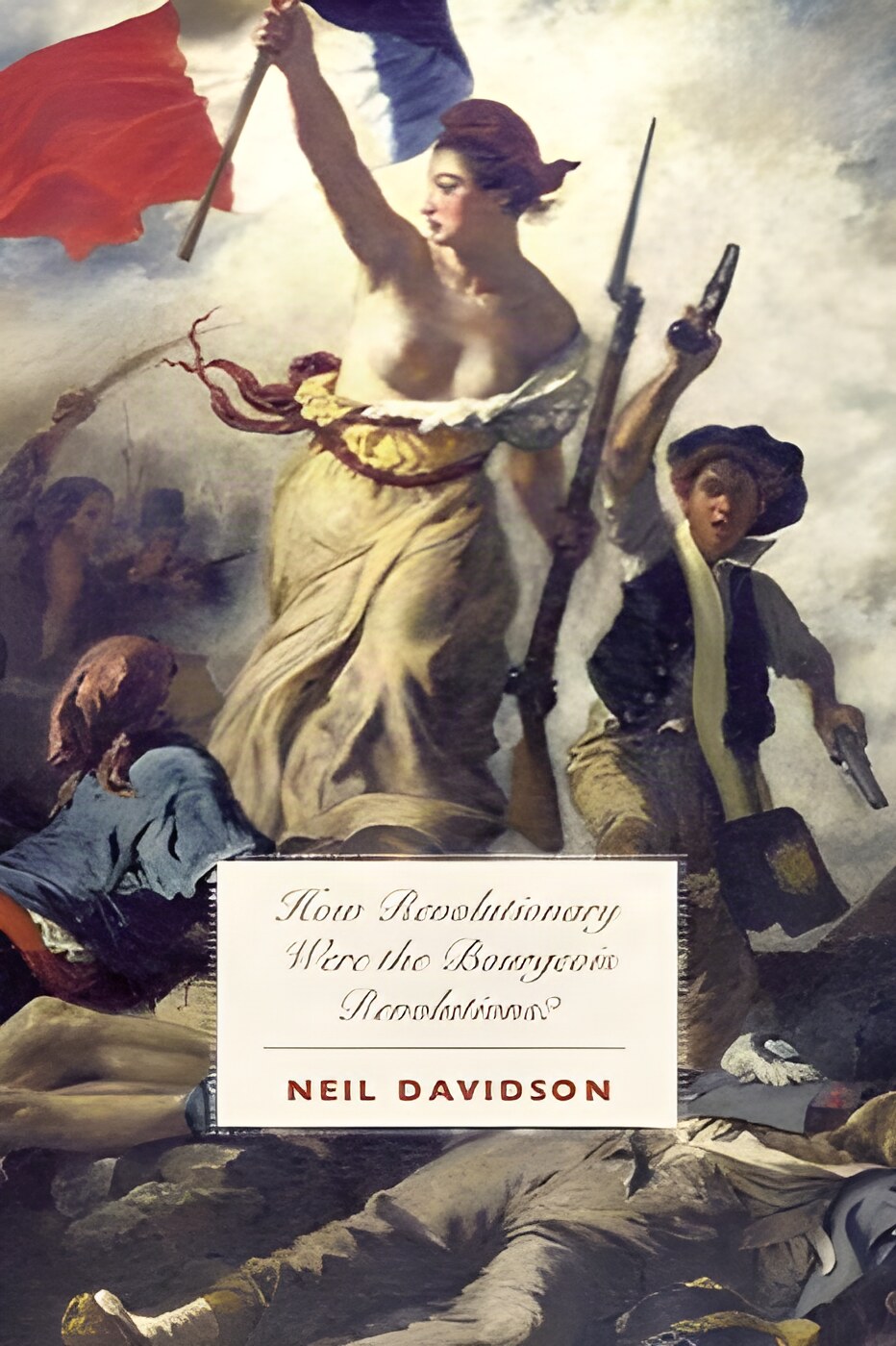
Softcover. Chicago, Haymarket Books, 1st, 2012, Book: Very Good, Dust Jacket: None, Softcover, 812 pages. Once of central importance to left historians and activists alike, the concept of the bourgeois revolution has recently come in for sustained criticism from both Marxists and conservatives. In this comprehensive rejoinder, Neil Davidson seeks to answer the question by systematically examining the approach taken by a wide range of thinkers to explain their causes, outcomes, and content across the historical period from the sixteenth-century Reformation to twentieth-century decolonization. Davidson's far-reaching research and comprehensive analysis shows that far from being a stale issue for the history books, understanding these struggles of the past can offer insightful lessons for today's radicals. Clean copy.
Hardcover. NY, Basic Books, 2nd pr., 1986, Book: Very Good, Dust Jacket: Very Good, Hardcover in a bright dust jacket, 416 pages. How did the West--Europe, Canada, and the United States--escape from immemorial poverty into sustained economic growth and material well-being when other societies remained trapped in an endless cycle of birth, hunger, hardship, and death? In this elegant synthesis of economic history, two scholars argue that it is the political pluralism and the flexibility of the West's institutions--not corporate organization and mass production technology--that explain its unparalleled wealth. Clean copy.
Hardcover. Gotham Books, 1st, 2004, Book: Very Good, Dust Jacket: Very Good, Hardcover in a bright, unclipped dust jacket, 358 pages. Retracing the 1799-1804 odyssey of von Humboldt through South and Central America, Helferich synthesizes the many biographies written about the explorer into a concise appreciation of his personality and scientific significance. The author also appropriately digresses about the history of the places visited by von Humboldt, who was a perceptive reporter of conditions in the Spanish empire immediately before its colonies revolted. Despite almost three centuries of rule by 1799, the Spanish domains still had unexplored territory, tempting von Humboldt, then 30, to seek there the scientific glory he aimed for since his youth in Prussia. Supported by an inheritance and buddy Aime Bonpland, von Humboldt set forth initially to investigate a geographical controversy (Did the Orinoco River connect with the Amazon?) but wowed the world largely with his discoveries in botany, zoology, and geology. Helferich recounts the journey's risks, from piranhas to volcanoes, and his presentation is sure to satisfy reader curiosity about the explorer who had so many places named for him. Clean copy.
Hardcover. Steidl/The George Eastman House , 1st, 2007, Book: Very Good, Dust Jacket: Very Good, Hardcover, 288 pages. Imagining Paradise is the first book to showcase the treasures of The George Eastman House's incomparable Richard and Ronay Menschel Library. It features over 250 rare books, each beautifully illustrated here and accompanied by commentary from prominent scholars. A large and handsome volume itself, as befits its subject, it ranges over the history of the medium of photography, its practitioners and its processes -- from bucolic landscapes, to travel and exploration, science and medicine, the literary and the illustrious. It encompasses the incunabula of William Henry Fox Talbot through the reveries of Maxime Du Camp and Francis Frith; the vision of Peter Henry Emerson to Alfred Stieglitz's Camera Work and 291; and the exceptional published and unpublished books by Alvin Langdon Coburn. It documents works illustrated with tipped-in original salt prints, albumen prints, platinum prints, photogravures, carbon prints, collotypes and Woodburytypes. It includes translations in five languages of Louis Jacques Mande Daguerre's seminal instructional manual describing the daguerreotype process and works of great and unusual beauty, such as a red leather, bronze-trimmed Bible, illustrated in the 1860s with 56 photographs by Francis Frith. No other library in the world holds this breadth and depth of the history, aesthetics and technology of photography and no other book can bring them so thoroughly into the reader's hands. This exceptional collection of rare books was formed from the Eastman Historical Photographic Collection of the Kodak Company, which encompassed the collections of many of the most important photographic scientists, historians and collectors in the world. Due to size and weight, DOMESTIC SHIPPING ONLY.
Hardcover. NY, Penguin Press, 1st, 2019, Book: Very Good, Dust Jacket: Very Good, Hardcover in a bright, unclipped dust jacket., 310 pages, color and b&w illustrations. In Montparnasse begins on the eve of the First World War and ends with the 1936 unveiling of Dali's Lobster Telephone. As those extraordinary years unfolded, the Surrealists found ever more innovative ways of exploring the interior life, and asking new questions about how to define art. In Montparnasse recounts how this artistic revolution came to be amidst the salons and cafes of that vibrant neighborhood. Sue Roe is both an incisive art critic of these pieces and a beguiling biographer with a fingertip feel for this compelling world. Beginning with Duchamp, Roe then takes us through the rise of the Dada movement, the birth of Surrealist photography with Man Ray, the creation of key works by Ernst, Cocteau, and others, through the arrival of Dali. On canvas and in their readymades and other works these artists juxtaposed objects never before seen together to make the viewer marvel at the ordinary--and at the workings of the subconscious. We see both how this art came to be and how the artists of Montparnasse lived. Roe puts us with Gertrude Stein in her box seat at the opening of The Rite of Spring; with Duchamp as he installs his famous urinal; at a Cocteau theatrical with Picasso and Coco Chanel; with Breton at a session with Freud; and with Man Ray as he romances Kiki de Montparnasse.
Hardcover. NY, Walker Books, 1st, 2007, Book: Very Good, Dust Jacket: Very Good, Hardcover in a bright, unclipped dust jacket. Thomas Pakenham, no stranger to Africa with his award-winning books The Boer War and The Scramble for Africa, nor to remarkable trees with his bestselling Remarkable Trees of the World, combines his two interests on safari in Southern Africa. His particular quarry is the rare, the giant, the very old, the extraordinary, or the simply beautiful-from a giant baobab and a prickly quiver tree in Namibia to a glorious jacaranda in South Africa and sesame bushes attacked by elephants in Botswana. He uncovers trees written about by the great explorers of the past, or associated with magic, folklore, or ritual. The narrative accompanying each image interweaves the stories of Pakenham's own journey-at some moments scaling trees to escape from enraged wildlife, while at others standing in awe before a particular tree, connected by some primitive, atavistic bond-with those of the trees themselves, imbuing each with personality and presence. The result is a beautifully crafted blend of botany and social history, the product of a brilliant photographer, an original mind, and a superlative writer. 208 pages in color. Clean copy. DOMESTIC SHIPPING ONLY.
Softcover. Bangor ME, Bangor and Aroostook Railroad , 1st, 1941, Book: Very Good, Dust Jacket: None, Softcover. Published by the Bangor and Aroostook Railroad, this wonderfully evocative magazine brings the unspoiled Maine woods of pre-World War II back to life. The magazine has articles on a variety of topics, including camping, canoeing, Indian relics, Maine guides, Moosehead Lake and climbing Mt. Katahdin. Illustrated throughout with black and white photos designed to make you drop everything and head North. With canoeing map, list of big game records for 1940, Sportsman's Directory of camps, hotels and fishing waters reached by the railroad and 39 pages of vintage advertisements. 128 pages. Light edgewear, small name on first page, otherwise clean.
Hardcover. NY, Assouline, 1st, 2004, Book: Very Good, Dust Jacket: Very Good, Hardcover in a bright dust jacket. For decades, the sunny village of Cannes has hosted a wealth of glamour, talent, and beauty from A to Z. As the site of the most prominent international cinema contest in the world, Cannes is a magical milieu that has attracted paparazzi and film critics from the entire world. But often hidden from view are the sumptuous villas and yachts of millionaires that Cannes has been home to for more than a century. Here is a carnival of celebrities captured by photographers that covered the annual event. Clean, bright copy.
Hardcover. New York, Rizzoli, 3rd pr., 2007, Book: Very Good, Dust Jacket: Very Good, 409 pages, color and b&w plates. A 100-year history of woman's fashion from the pages of the magazine. Some wrinkles along spine on cover where paper over boards got crimped in production. Otherwise very good in a bright dust jacket.
Softcover. US, University of California Press, 1st, 1995, Book: Very Good, Dust Jacket: None, 304 pages, illustrated throughout in color and b&w. Light sun-fade and edgewear to wrappers, else a clean, tight copy. Independent Spirits brings to vivid life the West as seen through the eyes of women painters from 1890 to the end of World War II. Expert scholars and curators identify long-lost talent and reveal how these women were formidable cultural innovators as well as agitators for the rights of artists and women during a period of extraordinary development.
Softcover. St. Louis MO, Missouri Historical Society Press, 1st, 1996, Book: Very Good, Dust Jacket: None, Softcover, 156 pages, illustrated in b&w and color. The history, description, and the writings of four very different Fair visitors, each of whom had made multiple visits to the Fair. Their diaries, memoirs, and letters reveal the wealth of sensation and emotion that overwhelmed visitors to the 1904 St. Louis World's Fair.
Hardcover. UK, Cambridge University Press, 1st, 2005, Book: Very Good, Dust Jacket: Very Good, Hardcover, 334 pages. Spanning his renunciation of the Salon in 1834 until his large retrospective at the crucial 1855 Universal Exposition, this book examines the critical writing and journalistic reportage on Jean-Auguste-Dominque Ingres. It demonstrates how Ingres shaped his career in the rapidly evolving art world of mid-nineteenth century Paris. While enjoying the benefits of his affiliation with the Academy, the artist also pursued certain modes of presentation, most notably the single-artist exhibition and illustrated monograph, through which he distanced himself from the embattled world of artistic officialdom.
Hardcover. London, Quin Press Ltd., 2nd Ed., 1957, Book: Very Good, Dust Jacket: None, Hardcover, bright blue cloth with gilt lettering on cover and spine, 800 pages. A cornucopia of information about steel and iron production in the mid-1950s. A comprehensive global review of plants worldwide. Include producers of pig-iron, raw steel, rolled products, tinplate, etc. Ads from various companies throughout the listings. Valuable historic information on tonnage produced in the period. Excellent condition, clean. Due to size and weight, DOMESTIC SHIPPING ONLY.
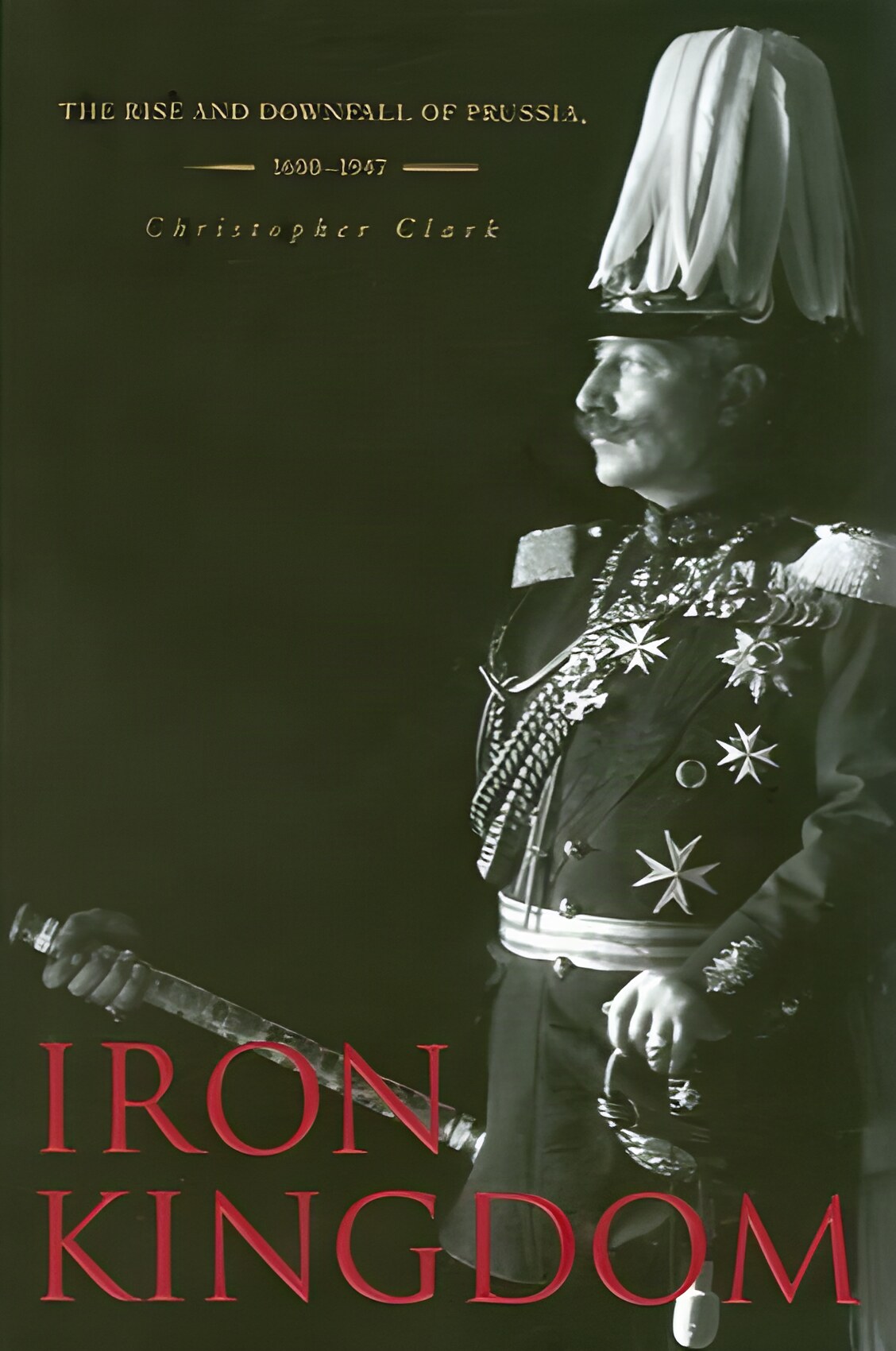
Softcover. Cambridge MA, Harvard University Press, reprint, 2008, Book: Very Good, Dust Jacket: None, Softcover, 776 pages. "Iron Kingdom, Christopher Clark's stately, authoritative history of Prussia from its humble beginnings to its ignominious end, presents a much more complicated and compelling picture of the German state, which is too often reduced to a caricature of spiked helmets and polished boots. Prussia and its army were inseparable, but Prussia was also renowned for its efficient, incorruptible civil service; its innovative system of social services; its religious tolerance; and its unrivaled education system, a model for the rest of Germany and the world. This too was Prussia-a tormented kingdom that, like a tragic hero, was brought down by the very qualities that raised it up. Mr. Clark, a senior lecturer in modern European history at Cambridge University, does an exemplary job. A lively writer, he organizes masses of material in orderly fashion, clearly establishing his main themes and pausing at crucial junctures to recapitulate and reconsider. Prussia, a self-invented artifact right down to its name, demands the kind of careful demythologizing that it receives from Mr. Clark, who gently but insistently exposes the flaws in most of the received wisdom about his subject. A result is an illuminating, profoundly satisfying work of history, brightened by vivid character sketches of the principals in his drama." Clean copy.
Hardcover. Leiden, The Netherlands, Brill, 1st edition, 2012, Book: Near Fine, Dust Jacket: None, 352 pages. Hardcover. Decorated cover boards, excellent. Very clean pages, edges. Biding tight. Spine straight. Like new. most remembered for his biblical criticism, Vossius played a central role in the early modern European world of learning.
Hardcover. NY, Knopf, 1st, 1976, Book: Very Good, Dust Jacket: Very Good, Hardcover in a bright dust jacket, 360 pages. Published in association with the American Heritage Publishing Co. Text by Bernard Lewis, Richard Ettinghausen, Oleg Grabar, Fritz Meier, Charles Pellat, A. Shiloah, A.I. Sabra, Edmund Bosworth, Emilio Garcia Gomex, Roger M. Savory, Norman Itzkowitz, S.A.A. Rizvi, Elie Kedourie. Illustrated with 495 reproductions, photographs, drawings, and maps, 160 of them in full color.
Hardcover. NY, Oxford University Press, 1st, 1990, Book: Very Good, Dust Jacket: Very Good, Hardcover in a bright dust jacket, 199 pages. This book examines Syria's religious, intellectual, and political history during the period of transformation before World War I. Focusing on an attempt to reform Islamic belief and practice at the turn of the century, Commins shows how the reformers used debates over the religious law of Islam to advance their visions of a progressive Islamic state. Based on a wide variety of previously unpublished sources, the book will shed new light on a period that is of considerable importance for the modern history of the Middle East. Clean copy.
Hardcover. New York, Da Capo Press, 1st, 2017, Book: Very Good, Dust Jacket: Very Good, 327 pages. Hardcover. Gilt title on spine. Dust jacket unclipped. B/w illustrations throughout. In excellent condition, clean inside and out. Remainder mark on bottom edge. Binding tight, looks barely read.
Hardcover. Seattle, Fantagraphics, 1st, 2016, Book: Very Good, Dust Jacket: Very Good, Hardcover in a bright dust jacket, 304 pages. In 1976, the critic Paul Nelson spent several weeks interviewing his literary hero, legendary detective writer Ross Macdonald. Beginning in the late 1940s with his shadowy creation, ruminating private eye Lew Archer, Macdonald had followed in the footsteps of Dashiell Hammett and Raymond Chandler, but ultimately elevated the form to a new level. "We talked about everything imaginable," Nelson wrote-including Macdonald's often meager beginnings; his dual citizenship; writers, painters, music, books, and movies he admired; how he used symbolism to change detective writing; his own novels and why Archer was not the most important character-"my God, everything." It's All One Case provides an open door to Macdonald at his most unguarded. The book is far more than a collection of never-before-published interviews, though. Published in a handsome, oversized format, it is a visual history of Macdonald's professional career, illustrated with rare and select items from one of the world's largest private archives of Macdonald collectibles. Featuring in full color the covers of the various editions of Macdonald's more than two dozen books, facsimile reproductions of pages from his manuscripts, magazine spreads, and many never before seen photos of Macdonald and his friends (such as Kurt Vonnegut), including those by celebrated photojournalist Jill Krementz. It's All One Case is an intellectual delight and a visual feast, a fitting tribute to Macdonald's distinguished career. Full-color illustrations throughout
Hardcover. Cambridge UK, Cambridge University Press, 1st, 1987, Book: Very Good, Dust Jacket: Very Good, Hardcover in a dust jacket with minor fade to top edge. 348 pages including index. Sir James G. Frazer's The Golden Bough, first published in 1890, was the first work in English to understand the religion of classical antiquity in the context of primitive religion. Its dramatic impact on the history of ideas lasted well into the twentieth century, in its association of religious myths with the more primitive forms of ritual and magic generated by the 'savage mind', identified as a common misunderstanding of the scientific laws governing the natural world. This highly acclaimed biography is a comprehensive study of Frazer's life, the influences on his work, and its wide-ranging implications for modern anthropology, classics, cultural history and folklore. clean copy.
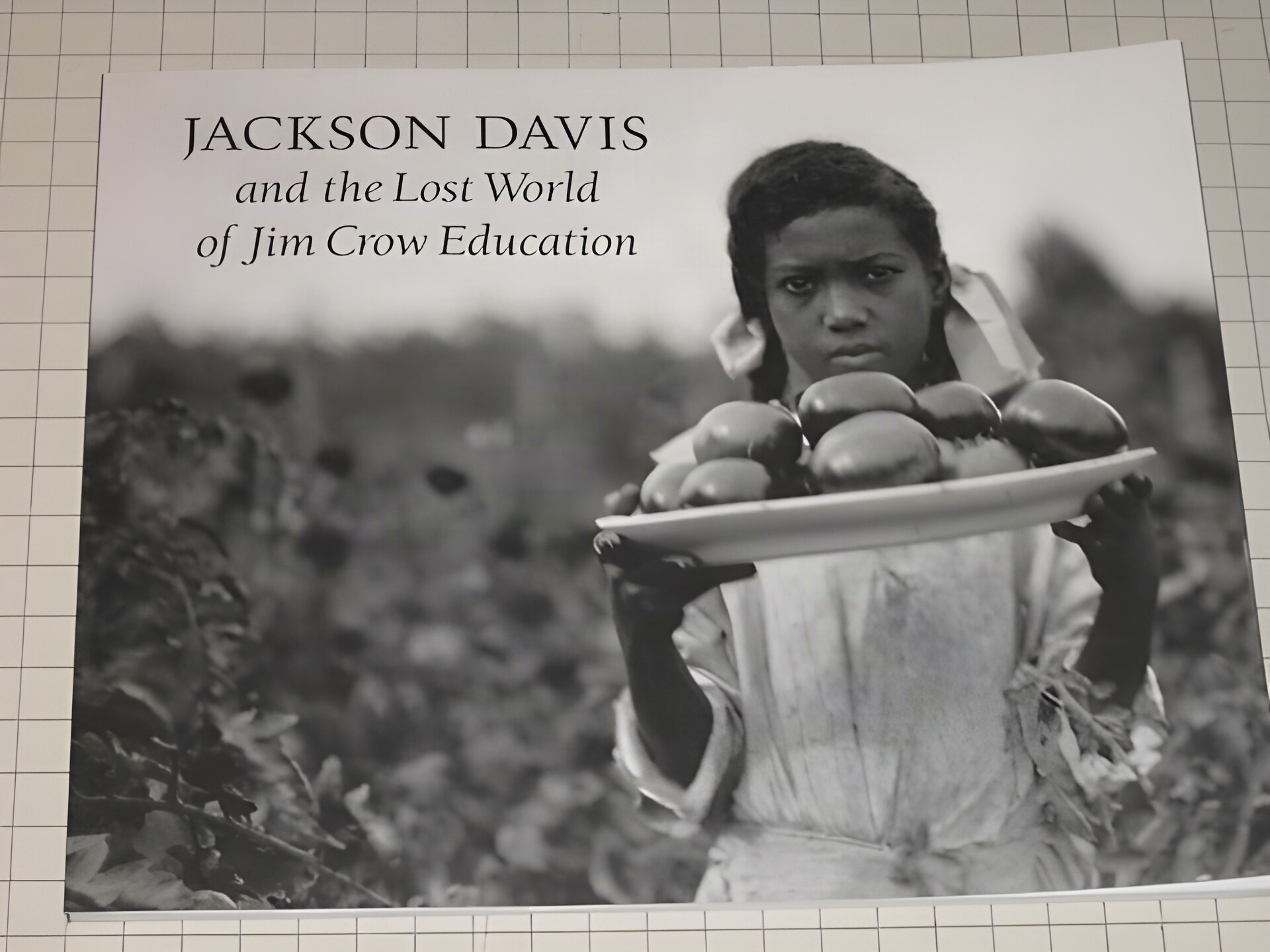
Softcover. Charlottesville VA, University of Virginia Library, 1st, 2000, Book: Very Good, Dust Jacket: None, Softcover, 64 pages, b&w photos throughout. This is a history of African-American public school education in Henrico County, Virginia. Introductory essay by William A. Link. Author documented his work (as a field agent for the General Education Board) being an amateur photographer. Davis' photographs are organized by subject (Events, People, Demonstration Farming, etc.). Limited to 3.000 copies. Clean.
Hardcover. New Haven CT, Yale University Press, 1st, 2015, Hardcover with a bright dust jacket, oblong format, 336 pages. 25 color, 375 duotone + 210 b/w illustrations. This important publication is the first comprehensive study and complete catalogue of Riis's world-famous images, and places him at the forefront of early-20th-century social reform photography. It is the culmination of more than two decades of research on Riis, assembling materials from five repositories (the Riis Collection at the Museum of the City of New York, the Library of Congress, the New-York Historical Society, the New York Public Library, and the Museum of South West Jutland, Denmark) as well as previously unpublished photographs and notes. In this handsome volume, Bonnie Yochelson proposes a novel thesis--that Riis was a radical publicist who utilized photographs to enhance his arguments, but had no great skill or ambition as a photographer. She also provides important context for understanding how Riis's work would be viewed in turn-of-the-century New York, whether presented in lantern slide lectures or newspapers. Still in publisher's shrinkwrap.
Softcover. Bew Haven CT, Yale University Press, 1st, Book: Very Good, Dust Jacket: None, Softcover, 272 pages. Richly illustrated with images from Jan Tschichold's little-known private collection of design ephemera, this important book explores a legendary figure in the history of modern graphic design through the artists, ideas, and texts from the Bauhaus that most influenced him. Tschichold (1902-1974), a prolific designer, writer, and theorist, stood at the forefront of a revolution in visual culture that made printed material more elemental and dynamic. His designs were applied to everyday graphics, from billboard advertisements and business cards to book jackets and invoices. This handsome volume offers a new understanding of Tschichold's work, and of the underlying theories of the artistic movement he helped to form, by analyzing his collections. Clean copy. The book is still in the original publisher shrink wrap.
Hardcover. Cambridge MA, MIT Press, 1st, 1974, Book: Very Good, Dust Jacket: Very Good, Hardcover in a price-clipped dust jacket, 162 pages. Japan's economy enjoyed unprecedented technological growth in the decades after World War II. At first stereotyped as an exported of shoddy goods, Japan enjoyed a worldwide reputation as an efficient manufacturer of high-quality products. This comprehensive analysis of Japanese management treats four related but distinct subject matters: the economic, social, cultural, and political environment pertinent to Japan's industrial and managerial system; the ideologies and background to the Japanese business elite structure and the relationship between government and business; and managerial practices (organizational structure, personnel practices, decision making). The book first describes the postwar technological environment in and outside Japan. It identifies the Schumpeterian characteristics of economic development and the particular set of relationships that Japan had with the United States and with developing nations in Asia that provided it with the incentive and the necessary mechanisms to advance technologically. Name on front fly leaf, otherwise clean.

 "Humboldt's Cosmos: Alexander von Humboldt and the Latin American Journey that Changed the Way We See the World by: Gerard Helferich")
 "Imagining Paradise: The Richard and Ronay Menschel Libraryby: Manfred Heiting, Sheila Foster, et al.")
 "In Montparnasse: The Emergence of Surrealism in Paris, from Duchamp to Daliby: Sue Roe")




 "In Vogue: The Illustrated History of the World's Most Famous Fashion Magazineby: Angeletti, Norberto and Alberto Oliva")
 "Independent Spirits: Women Painters of the American West, 1890-1945by: Trenton, Patricia")

 "Ingres and his Critics by: Shelton, Andrew Carrington")
 "Iron and Steel Works of the World 1956-1957by: H. G. Cordero")
 "Isaac Vossius (1618-1689): Between Science and Scholarshipby: Jorink, Eric (Editor), Dirk Van Miert (Editor)")

 "Islam and the Arab World: Faith, People, Culture by: Bernard Lewis (Ed.)")

 "Island of the Blue Foxes: Disaster and Triumph on the World's Greatest Scientific Expeditionby: Bown, Stephen R.")
 "It's All One Case: The Illustrated Ross Macdonald Archivesby: Kevin Avery , Paul Nelson, et al.")
 "J. G. Frazer: His Life and Work by: Ackerman, Robert")




 "Japan's Technological Challenge to the West, 1950-1974:Motivation and Accomplishment by: Ozawa, Terutomo")