Hardcover. New Haven CT, Yale University Press;, 1st, 2009, Book: Very Good, Dust Jacket: Very Good, Hardcover, 180 pages. John Gutmann (1905-1998) was one of America's most distinctive photographers. Born in Germany where he trained as an artist and art teacher, he fled the Nazis in 1933 and settled in San Francisco, reinventing himself as a photo-reporter. Gutmann captured images of American culture, celebrating signs of a vibrant democracy, however imperfect. His own status as an outsider--a Jew in Germany, a naturalized citizen in the United States--informed his focus on individuals from the Asian-American, African-American, and gay communities, as well as his photography in India, Burma, and China during World War II. This handsome book acknowledges Gutmann's place in the history of photography. Drawing on his archive of photographs and papers at the Center for Creative Photography, it presents both unfamiliar works and little-known contexts for his imagery, linking his photography to his passionate interest in painting and filmmaking, his collections of non-Western art and artifacts, and his pedagogy. In addition to a major essay by Sally Stein, the volume includes an introduction by Douglas R. Nickel, and an overview of the Gutmann archive by Amy Rule.
Hardcover. NY, Farrar, Straus and Giroux, 1st, 2005, Book: Very Good, Dust Jacket: Very Good, Hardcover in a bright, unclipped dust jacket. INSCRIBED BY AUTHOR on front fly leaf. Born and raised on a small Canadian farm, Galbraith began teaching at Harvard during the Depression. He was FDR's "price czar" during the war and then a senior editor of Fortune before returning to Harvard and to fame as a bestselling writer. Parker shows how, from his early championing of Keynes to his acerbic analysis of America's "private wealth and public squalor," Galbraith regularly challenged prevailing theories and policies. And his account of Galbraith's remarkable friendship with John F. Kennedy, whom he served as a close advisor while ambassador to India, is especially relevant for its analysis of the intense, dynamic debates that economists and politicians can have over how America should manage its wealth and power. This masterful chronicle gives color, depth, and meaning to the record of an extraordinary life. Clean copy.
Hardcover. New York , Metropolitan Books, 1st US, 2012, Book: Very Good, Dust Jacket: None, Hardcover, 191 pages, illustrated throughout in color and b&w. Clean, unmarked copy in excellent condition. Over the past decade, Joe Sacco has increasingly turned to short-form comics journalism to report from conflict zones around the world. Collected here for the first time, Sacco's darkly funny, revealing reportage confirms his standing as one of the foremost war correspondents working today. Journalism takes readers from the smuggling tunnels of Gaza to war crimes trials in The Hague, from the lives of India's "untouchables" to the ordeal of Saharan refugees washed up on the shores of Malta. And in pieces never published before in the United States, Sacco confronts the misery and absurdity of the war in Iraq, including the darkest chapter in recent American history-the torture of detainees.
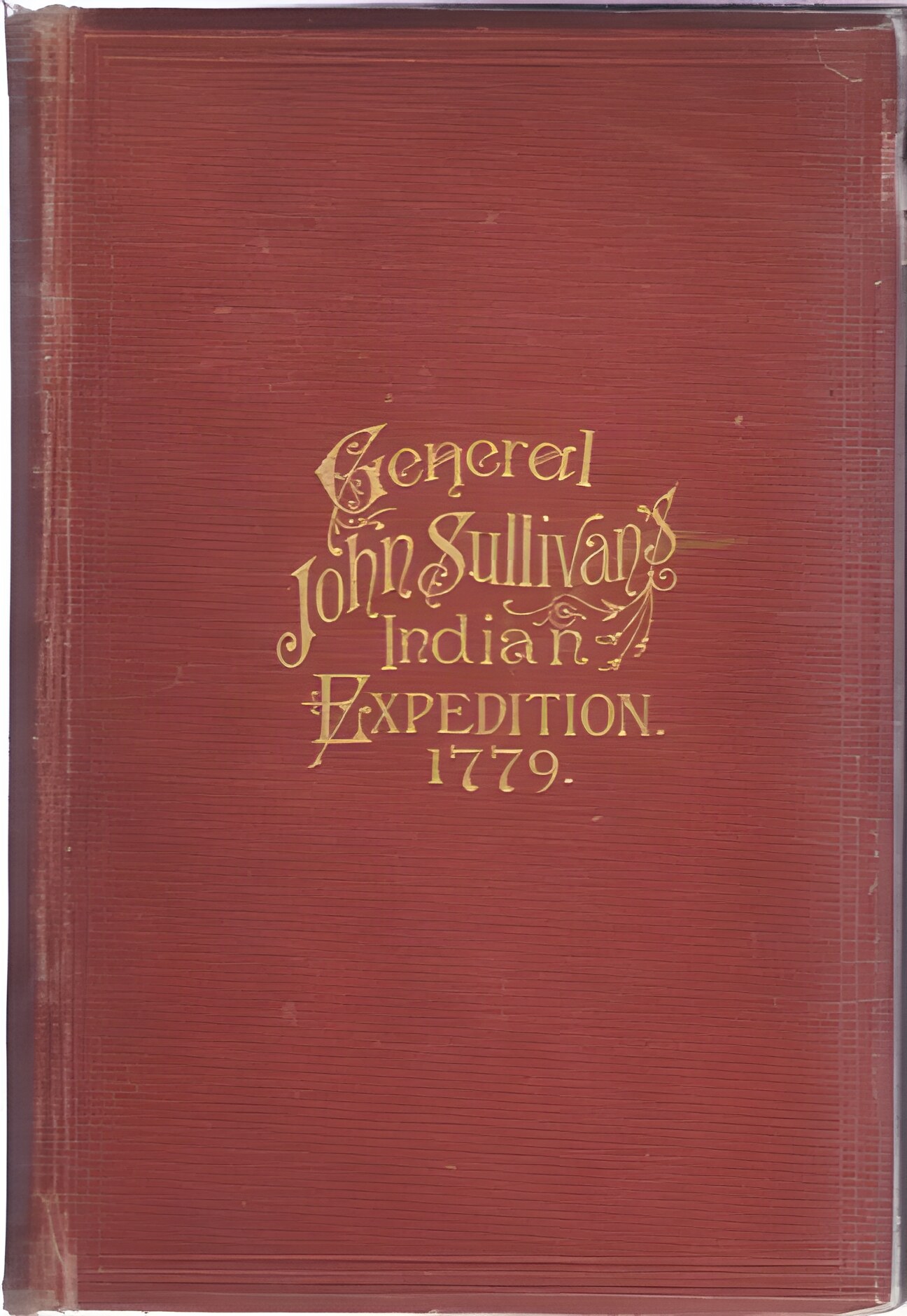
Hardcover. Auburn NY, Knapp, Peck and Thomson, 1st, 1887, Book: Fair, Dust Jacket: None, Hardcover, original red cloth, gilt titles and rules, blind-stamped double border. 581 pages including Errata leaf. Includes several fold-out maps, plus pockets inside the front and rear boards containing maps and plans. Engraved frontispiece of Sullivan, engraved portraits in text of Brigadier General James Clinton, Colonel Peter Gansevoort (from a portrait by Gilbert Stuart, famous for his portrait of George Washington), and Colonel Philip Van Cortlandt. John Sullivan was an American general in the Revolutionary War and a delegate in the Continental Congress. Sullivan served as a major general in the Continental Army and as Governor (or 'President') of New Hampshire. He is most famous for leading the Sullivan Expedition in 1779, a scorched earth campaign against the Iroquois towns that had taken up arms against the American revolutionaries. This volume contains journals by 27 officers present during the campaign, and has become the authoritative primary source of the event. Both front and rear hinges cracked with spine cloth loose, battlefield map at page 288 has a tear but no loss, front signature with title page loose but whole. All other maps present in envelopes and in very good condition. Covers worn.
Hardcover. Cincinnati OH, George Conclin, 6th Ed., 1841, Book: Very Good, Dust Jacket: None, Hardcover, 288 pages, 9 b&w woodcut illustrations. Sixth edition, first published in 1838. Tan cloth, paper label on spine, label is chipped, worn in areas. Covers with light soil. Still, internally a tight, clean copy with light foxing.
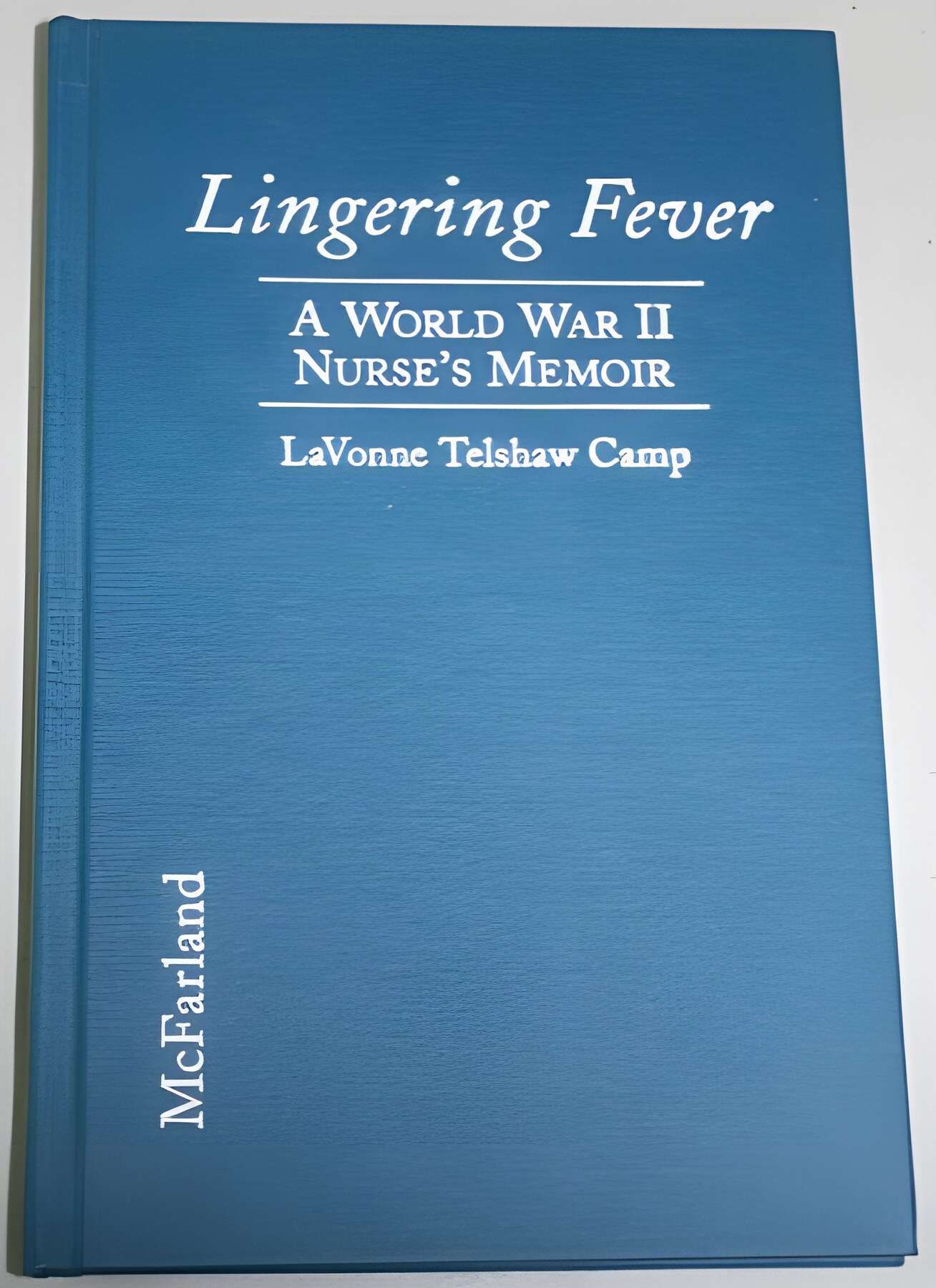
Hardcover. Jefferson NC, McFarland Publishing, 1st, 1997, Book: Very Good, Dust Jacket: None, Hardcover, blue cloth with white lettering. 176 pages, b&w illustrations. In 1945, the author found herself in the monsoon-drenched jungles of Assam, caring for soldiers in the China-Burma-India theater of war. Nothing in her nurse's training had prepared her for the tropical diseases her patients faced, nor had her experiences readied her for a hospital where men spat on the floor, rats were pervasive, and patients were as likely to sell their medicine as swallow it. What made the experience tolerable was Nurse Camp's romance with one of the airmen who flew the Hump, supplying O.S.S. troops behind Japanese lines and carrying General Joseph Stillwell's Chinese troops to fight the battle of North Burma. She accompanied her future husband on some of his missions. Based, in part, on letters she wrote to her parents, this is the poignant story of one nurse's experience in World War II and how her service changed her life forever. Name on front fly leaf, otherwise a clean, bright copy.
Hardcover. US, Combined Books, 1st, 1993, Book: Very Good, Dust Jacket: Very Good, Hardcover, 312 pages, b&w illustrations. Light shelf-wear to dust jacket, else a clean, tight copy. The destruction of George Armstrong Custer's command at Little Bighorn by the Sioux and Northern Cheyenne on 25 June, 1876 has been etched in the national memory and has remained one of America's longest lingering controversies. The Little Bighorn Campaign penetrates the mysteries of Custer's disaster as well as the broader context of the 1876 campaign against the Sioux.
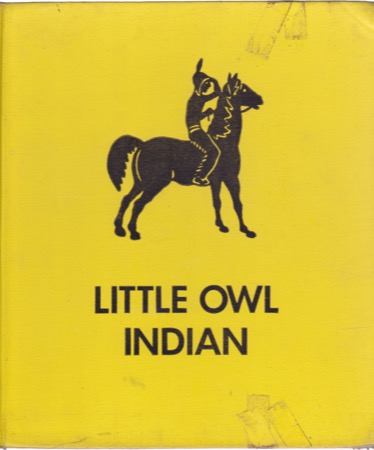
Hardcover. Boston, Houghton Mifflin, reprint, Book: Good, Dust Jacket: None, Hardcover, yellow cloth with black stamping. 32 pages illustrated with bold colors by the author. A young Indian boy gives timely warning of a forest fire, saving both the wild animals and his people. Tape residue on covers where dj was taped to book, light stamp to front endpaper. Ex-lib. Interior clean.
Hardcover. New York, D.A.P.//La Fabrica , 1st, 2013, Book: Very Good, Dust Jacket: Very Good, Hardcover, 192 pages. Like new in publisher's shrink-wrap. America's first female war correspondent, Margaret Bourke-White was also something of a media star, with the portrait of her decked out in flying gear, camera in hand, about to set off on a bombing raid, being a favorite pin-up among U.S. forces. Focusing on the work Bourke-White made in the 1930s and 40s in Czechoslovakia, Germany, Italy, the Soviet Union and the U.K., Moments in History presents 150 classic photographs alongside revelatory extracts from letters and publications in periodicals. Bourke-White traveled to the USSR when the first Five-Year Plan was being implemented; she documented the German invasion of the Soviet Union in 1941, and the Allied bombing of Germany. In the summer of 1945 she was commissioned by Life to make a photographic record of the destroyed German cities. She was present at the liberation of the Buchenwald concentration camp and the Leipzig-Thekla forced labor camp. She recorded the partition of India and the Korean War, and one of her most famous pictures of this period is "Gandhi," which shows the subject at his spinning wheel. Also included in the catalogue are some of the word-picture sequences Bourke-White did for Fortune and Life, as well as extracts from her correspondence with personalities from the worlds of politics and culture, such as Winston Churchill and Georgia O'Keeffe. Bourke-White wanted to be the "eyes of the age," and her pictures testify to (as she put it) her "unquenchable desire to be present when history is being made."
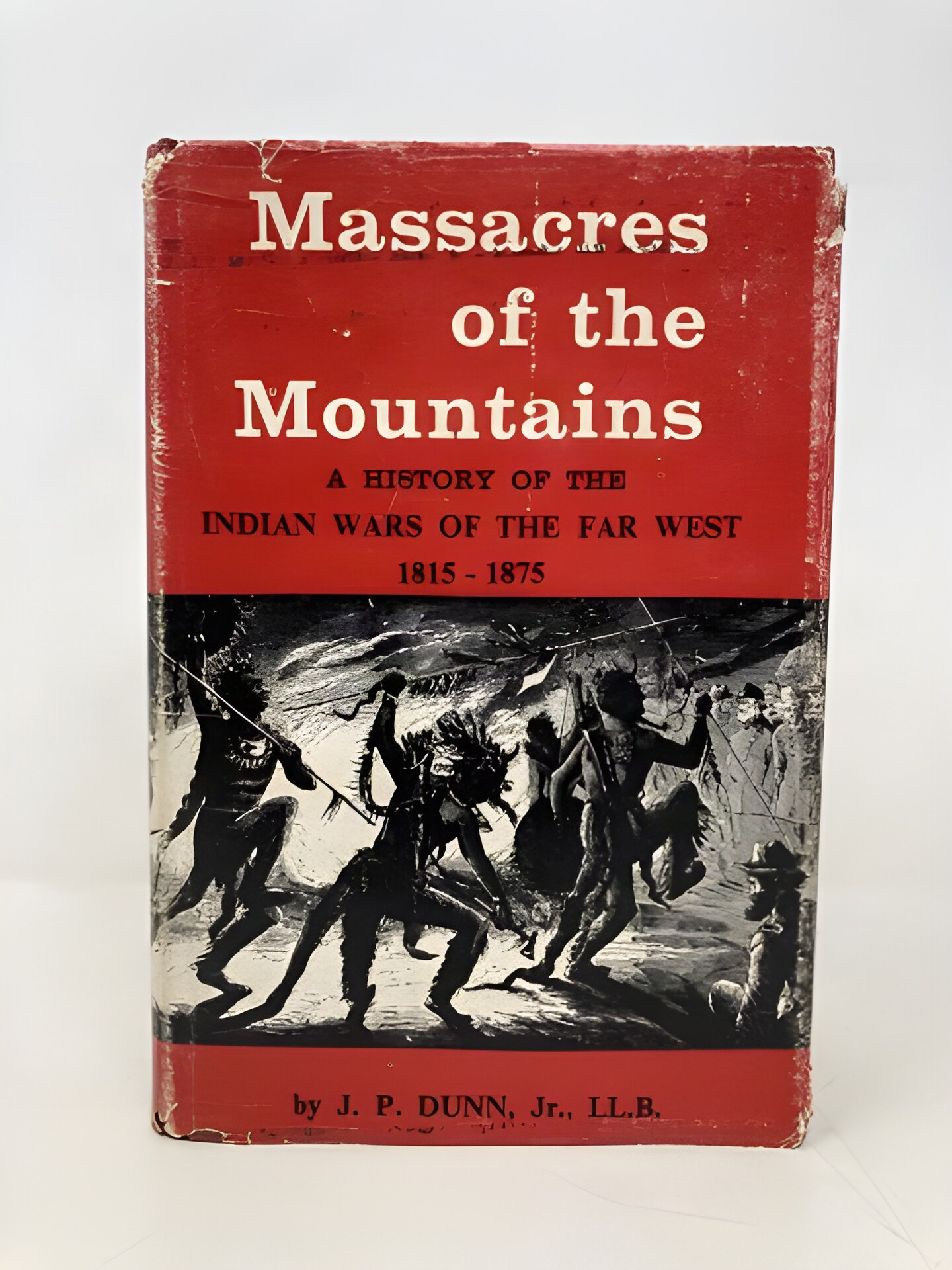
Hardcover. NY, Archer House, reprint, 1958, Book: Very Good, Dust Jacket: Good, Hardcover in a lightly worn dust jacket, 110 b/w illustrations. 669 pages. This is a facsimile reprint of edition first published in 1886. Covering 60 years of merciless bloody conflict, it documents in detail every major Indian battle between 1815 and 1876. Dust jacket spine faded, otherwise a clean, very good copy.
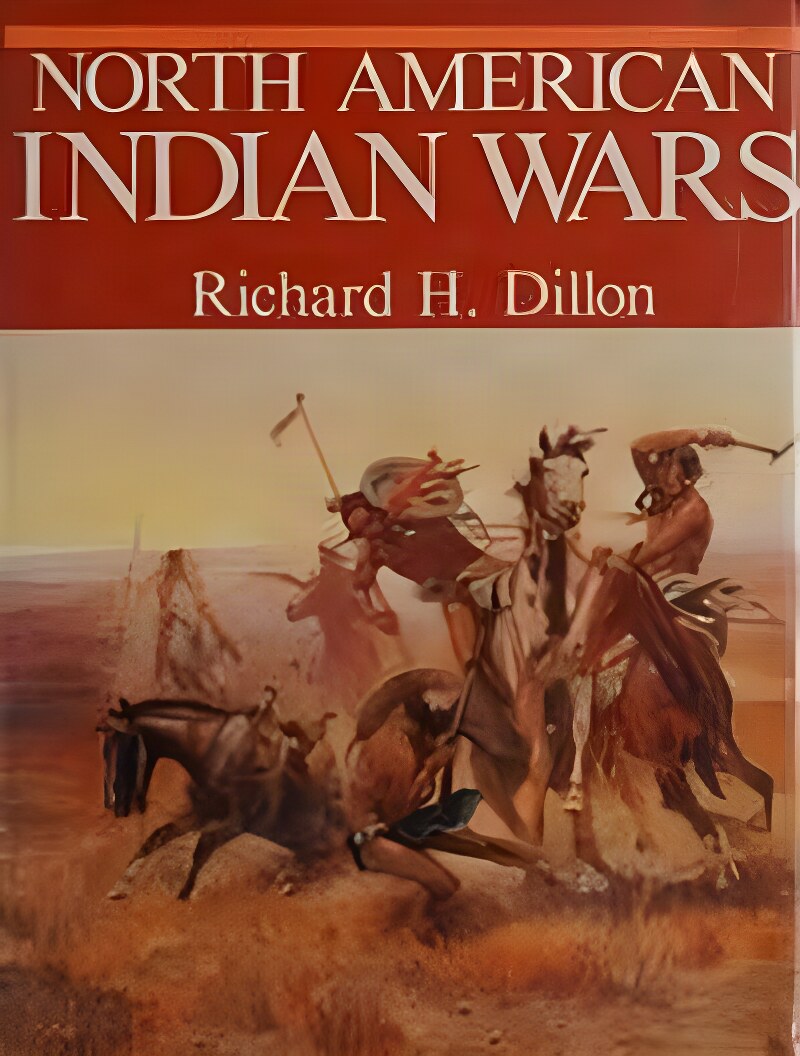
Hardcover. Secaucus NJ, Chartwell Books, 1993, Book: Very Good, Dust Jacket: Very Good, Hardcover, 255 pages, illustrated throughout in color and b&w. Folio. Light edgewear to dust jacket, else a clean, tight copy.
Hardcover. NY, Doubleday, Doran & Company, , 1st thus, 1937, Book: Very Good, Dust Jacket: None, Hardcover in light tan cloth, black and gilt design on spine, 709 pages. Title page with 1937 date and title in orange. Endpaper maps in color. (route map in front and map of United States in back). The 1st printing was a two-volume limited edition. No indication of other printing on copyright page. The story of Rogers' Rangers expedition against St. Francis, on the Maine/Quebec border, during the French and Indian Wars. Spine title faded with mild chipping. No dust jacket. Clean copy.
Hardcover. NY, Harper & Brothers, 1st, 1881, Book: Very Good, Dust Jacket: None, Hardcover, expertly rebound green cloth with original gilt and black design inlaid on front cover. New color pattern endpapers, 460 pages, plus publisher's ads. Frontis w/ tissue guard many b/w engravings throughout. Various artists. illustrated tale of the triumphs and tragedies of the formation of the English colonies through the French & Indian War. Light shelf wear, no marking.
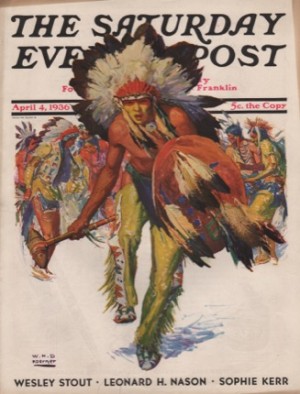
1936, Color art of Native American war dance by W.H.D. Koerner. 10 X 13". PLEASE NOTE: The image shown is a scan of the actual product you are purchasing. What you see is what you get. The sheet may have some imperfections beyond the cropped area shown. You are buying THIS PAGE ONLY- not the entire magazine. Your order will be placed carefully between stiff paper and an acetate overlay, then packed in a rigid cardboard sleeve to prevent bending.
Hardcover. Bloomington, Indiana University Press, 1st, Book: Very Good, Dust Jacket: Very Good, Hardcover in a bright dust jacket, 341 pages. This book presents the remarkable correspondence between Alfred Schutz and Aron Gurwitsch, emigre philosophers influenced by Edmund Husserl, who fled Europe on the eve of World War II and ultimately became seminal figures in the establishment of phenomenology in the United States. Their deep and lasting friendship grew out of their mutual concern with the question of the connections between science and the life-world. Interwoven with philosophical exchange is the two scholars' encounter with the unfamiliar problems of American academic life-what Gurwitsch called the "passology" of exile. Apart from its brilliant and moving portrait of two distinguished men, the correspondence holds rich significance for current issues in philosophy and the social sciences. Clean copy.
Hardcover. Albuquerque, University of New Mexico, 1st, 2002, Book: Very Good, Dust Jacket: Very Good, 224 pages. Hardcover with dust jacket. Clean, tight copy. Black and white phots throughout. In the early 1950s the great anthropological photographer John Collier Jr. made nearly 1,000 photographs documenting Navajo life in Fruitland, New Mexico, near the Four Corners. Lost until recently in archives far from the Southwest, most of these photos have never before been published. The authors of this book have assembled a selection of Collieri? 1/2 s Navajo photographs showing the changes in post-World War II reservation life.
New York, Julian Messner Inc., 1st, 1948, Book: Good, Dust Jacket: Fair, Hardbound in a damaged dust jacket. Previous owner's signature back of front endpaper. Soiling to endpapers, covers. Waterstains to covers. Spine wear. Dust jacket with large chunk missing from top of spine and back cover. Pinto Goodluck, a little Indian boy, lived with his mother, his grandfather and his burro, Ambrosio. His grandfather made beautiful jewelry from silver and turquoise. Then the Great War came and all the young men went away and the turquoise mines were closed. Grandfather knew of a secret mine but it was a long way off and the journey was full of danger. How Pinto found the secret mine and brought home the turquoise is an absorbing adventure story beautifully illustrated in b/w and color by Bronson.
NY, Longmans, Green and Co., 1st, 1942, Book: Very Good, Dust Jacket: Poor, Hardcover in a poor, worn and chipped dust jacket. Bright blue cloth covers stamped with a treasure chest on the cover. INSCRIBED BY IVY BOLTON (SISTER MERCEDES) on the front fly leaf. Black & white illustrations by William M. Berger. When Captain Raeburn and his wife sail away on an important mission, their five children go to live with an uncle on the Kennebec in Maine. Lost treasure, mutiny on shipboard, French and Indian plots of war are woven into this historical adventure novel for young adults. Clean copy.
Hardcover. Boston, Houghton Mifflin, Book Club Ed., 1948, Book: Good, Dust Jacket: None, Hardcover, green cloth with black and gilt stamping. 1066 pages. A number-one bestseller when it was first published in 1948, this powerful novel is a compelling vision of nineteenth-century America with timeless resonance. Throughout a single day in 1892, John Shawnessy recalls the great moments of his life -- from the battles of the Civil War to the politics of the Gilded Age, from the love affairs of his youth in Indiana to his homecoming as schoolteacher, husband, and father. This panoramic epic of the nineteenth century in Raintree County--particularly of the Civil War and its effects -- was produced after six years of research, writing, and revision. It continues to command attention and respect as a stylistically unique work of considerable force. Gutter crack at title page, sound, clean copy.
Softcover. Bowie MD, Heritage Books, reprint, 2001, Book: Very Good, Dust Jacket: None, Softcover, 425 pages. A facsimile reprint of the 1904 edition. Volume 1 ONLY. The present-day New York City neighborhood of Harlem was founded in the mid-17th century by Dutch Protestants, whose numbers included Huguenots (or their descendants) who had fled the counter-Reformation in France and the Walloon provinces of Artois, Cambresis, and Hainalt. Riker's Harlem is an extremely detailed historical and genealogical account of Harlem from its establishment by Kuyter and Stuyvesant between 1656 and 1660 to the end of the 17th century. Following several preliminary chapters on the Dutch and French context for the settlement of "New Haerlem," the author treats us to what seem like minute-by-minute accounts of its colonial development, including early efforts to settle the territory that became Harlem, the original land patents and their subsequent rearrangement, Indian wars, displacement of Dutch rule by the British in 1663 (and the brief reoccupation by Dutch forces in 1673), 17th-century village life, migrations to New Jersey, influx of Swedes, difficulties in assimilating English ways, and much, much more.
Softcover. Bowie MD, Heritage Books, reprint, 2001, Book: Very Good, Dust Jacket: None, Softcover, Pages 426-908 . A facsimile reprint of the 1904 edition. Volume 2 ONLY. The present-day New York City neighborhood of Harlem was founded in the mid-17th century by Dutch Protestants, whose numbers included Huguenots (or their descendants) who had fled the counter-Reformation in France and the Walloon provinces of Artois, Cambresis, and Hainalt. Riker's Harlem is an extremely detailed historical and genealogical account of Harlem from its establishment by Kuyter and Stuyvesant between 1656 and 1660 to the end of the 17th century. Following several preliminary chapters on the Dutch and French context for the settlement of "New Haerlem," the author treats us to what seem like minute-by-minute accounts of its colonial development, including early efforts to settle the territory that became Harlem, the original land patents and their subsequent rearrangement, Indian wars, displacement of Dutch rule by the British in 1663 (and the brief reoccupation by Dutch forces in 1673), 17th-century village life, migrations to New Jersey, influx of Swedes, difficulties in assimilating English ways, and much, much more.
Hardcover. Baltimore, Genealogical Publishing Company, 2nd pr., 1997, Book: Very Good, Dust Jacket: None, Hardcover, blue cloth stamped with gilt lettering, 608 pages. After the Revolutionary War, the federal government awarded bounty lands to citizens and soldiers for services rendered. In its simplest form, this involved the exchange of free land for military service. Federal records of these Revolutionary War bounty land awards are well known and readily accessible to genealogists. But the federal government was not alone in rewarding its citizens and soldiers with bounty lands. Nine state governments adopted similar policies, generating even more records. Unlike the federal bounty land records, however, these state records are not centralized; instead, they are found in the various states in the form of manuscript records and printed books and are all but inaccessible to the researcher. Until now, that is! Because with this work by Lloyd Bockstruck we now have a master index to state bounty land records, a Revolutionary War resource unparalleled for freshness, originality, and research potential. The nine states that awarded bounty lands in their western reserves or on their western borders (directly affecting the future states of Indiana, Kentucky, Maine, Ohio, and Tennessee) are Connecticut, Georgia, Maryland, Massachusetts, New York, North Carolina, Pennsylvania, South Carolina, and Virginia. (The basis for the Connecticut and Georgia awards, by the way, differ from the norm.) Clean, bright copy.
Hardcover. New Haven, Yale University Press, 1st, May 11, 2000, Book: Very Good, Dust Jacket: Very Good, Hardcover, 303 pages, illustrated throughout. Very clean and tight copy. Although lumped together with Pop artists such as Roy Liechtenstein and Andy Warhol, and often the movement's spokesperson, Indiana and his paintings actually have an uneasy fit in Pop company, mostly because his work isn't grounded in the commodity-oriented (Campbell Soup) realism of most Pop Art. Instead, his work engages with literature and poetry and with the popular rhetoric of the American dream-all permeated by the particularities of his upbringing and life. Ryan's dual accomplishments are in articulating the dynamics of Indiana's art-especially the connections between the artworks and the sources of imagery and themes in his own biography-and in rendering a sophisticated and judicious roundup of the Pop Art movement.
Chicago, Wilcox and Follett, 1st, 1944, Book: Very Good, Dust Jacket: None, Hardcover, orange cloth covers stamped in black. B&W illustrations by Milo Winter. 189 pages. Small bookstore stamp to front end papers otherwise very good. An "action-packed adventure story based on authentic history of early Illinois" set during the Black Hawk War. Clean copy.

 "John Gutmann: The Photographer at Workby: Sally Stein , Douglas R. Nickel, et al.")
 "John Kenneth Galbraith His Life His Politics His Economics (SIGNED COPY)by: Parker Richard")
 "Journalismby: Sacco, Joe")
 "Little Bighorn Campaign, The : March-September 1876 (Great Campaigns Series)by: Sarf, Wayne Michael")


 "Margaret Bourke- White: moments in historyby: Quimby, Sean")


 "Old Times in the Coloniesby: Coffin, Charles Carleton")

 "Photographing Navajos: John Collier Jr. on the Reservation, 1948-1953by: Doty, C. Stewart")
 "Pinto's Journeyby: Bronson, Wilfrid S.")


 "Raeburn Unafraid (SIGNED COPY)by: Bolton, Ivy")



 "Revolutionary War Bounty Land Grants Awarded by State Governmentsby: Bockstruck, Lloyd DeWitt")
 "Robert Indiana: Figures of Speechby: Ryan, Professor Susan Elizabeth")
 "Sandy and the Indiansby: Friskey, Margaret")