Hardcover. Seattle, Fantagraphics, 1st, 2013, Book: Very Good, Dust Jacket: None, Hardcover, 112 pages. Hal Foster's masterpiece of adventure enters its second decade as Valiant and Aleta journey to "The New World" a 16-month epic that allows Foster to draw some of his spectacular native Canadian backgrounds, and during which Aleta gives birth to Arn and acquires her Indian nurse, Tillicum. Most of the rest of the book is taken up with the action-packed five-month sequence "The Mad King" during which Val, back at Camelot, confronts the evil, fat little King Tourien of Cornwall. This volume will be rounded off with an essay by Foster scholar Brian M. Kane (The Prince Valiant Companion) discussing Foster's depiction of "Indians" as it relates to other interpretations of the times, accompanied by various graphic goodies such as a previously unpublished camping cartoon by Foster from circa 1915, some of Foster's Mountie paintings, Foster's own map of Val's voyage to/from the New World, and more rare photos and art. As always, this volume is shot directly from Foster's personal collection of syndicate proofs, their glorious colors restored to create an unprecedentedly sumptuous reading experience.
Hardcover. Seattle, Fantagraphics, 1st, 2013, Book: Very Good, Dust Jacket: None, Hardcover, 112 pages. Hal Foster's masterpiece of adventure enters its second decade as Valiant and Aleta journey to "The New World" a 16-month epic that allows Foster to draw some of his spectacular native Canadian backgrounds, and during which Aleta gives birth to Arn and acquires her Indian nurse, Tillicum. Most of the rest of the book is taken up with the action-packed five-month sequence "The Mad King" during which Val, back at Camelot, confronts the evil, fat little King Tourien of Cornwall. This volume will be rounded off with an essay by Foster scholar Brian M. Kane (The Prince Valiant Companion) discussing Foster's depiction of "Indians" as it relates to other interpretations of the times, accompanied by various graphic goodies such as a previously unpublished camping cartoon by Foster from circa 1915, some of Foster's Mountie paintings, Foster's own map of Val's voyage to/from the New World, and more rare photos and art. As always, this volume is shot directly from Foster's personal collection of syndicate proofs, their glorious colors restored to create an unprecedentedly sumptuous reading experience.
Hardcover. US, Prestel USA, 1st, 2012, Book: Very Good, Dust Jacket: Very Good, 264 pages. Hardcover in slipcase. Like new in publisher's shrink-wrap. This elegant volume is the first comprehensive published study in English of the finely carved wooden covers designed to protect fragile Tibetan Buddhist texts. From the 11th through 14th centuries, Tibetan monks worked tirelessly to transcribe the life and teachings of the Buddha onto paper. Highly skilled craftsmen then covered these pages with wooden boards that had been elaborately and painstakingly carved, gilded, and painted. The MacLean Collection, based in Chicago, has significant holdings of these extremely rare and ornately decorated objects. The first and most comprehensive of its kind, this lavishly produced, oversize volume features numerous illustrations of magnificent book covers from Tibet as well as several examples from other cultures. The volume tells the fascinating history of these objects, examines the materials from which they were carved, and traces stylistic influences from Kashmir, India, Nepal, and China.
Hardcover. NY, Century Co., Revised from 1894 ed., 1910, Book: Very Good, Dust Jacket: None, Hardcover. 257 pages. Illustrated with black & white drawings by George Wharton Edwards. Missing front endpaper. Illustrated front cover. Soil, spotting to binding.
Softcover. Santa Fe NM, School of American Research Press, 1st, 1983, Book: Very Good, Dust Jacket: None, Softcover, 118 pages illustrated in color and b&w. Light sunning to front wrapper. Otherwise clean.
Indianapolis, Bobbs Merrill, 1st, 1962, Book: Very Good, Dust Jacket: Very Good, Hardcover, 188 pages, b&w illustrations by Stuart Tresilian. In a bright, lightly worn dust jacket. The Brevitt brothers find themselves being tracked down by two ruthless murders when they undertake a search for hidden treasure. Set in Australia.
NY, Longmans, Green and Co., 1st, 1942, Book: Very Good, Dust Jacket: Poor, Hardcover in a poor, worn and chipped dust jacket. Bright blue cloth covers stamped with a treasure chest on the cover. INSCRIBED BY IVY BOLTON (SISTER MERCEDES) on the front fly leaf. Black & white illustrations by William M. Berger. When Captain Raeburn and his wife sail away on an important mission, their five children go to live with an uncle on the Kennebec in Maine. Lost treasure, mutiny on shipboard, French and Indian plots of war are woven into this historical adventure novel for young adults. Clean copy.
Hardcover. Boston, Houghton Mifflin, Book Club Ed., 1948, Book: Good, Dust Jacket: None, Hardcover, green cloth with black and gilt stamping. 1066 pages. A number-one bestseller when it was first published in 1948, this powerful novel is a compelling vision of nineteenth-century America with timeless resonance. Throughout a single day in 1892, John Shawnessy recalls the great moments of his life -- from the battles of the Civil War to the politics of the Gilded Age, from the love affairs of his youth in Indiana to his homecoming as schoolteacher, husband, and father. This panoramic epic of the nineteenth century in Raintree County--particularly of the Civil War and its effects -- was produced after six years of research, writing, and revision. It continues to command attention and respect as a stylistically unique work of considerable force. Gutter crack at title page, sound, clean copy.
Hardcover. Paris, Arthaud, 1st, 1981, Book: Very Good, Dust Jacket: Very Good, Hardcover, 32 pages of French text followed by full color photographs of the people and culture of the Rajasthan region of India. Light edge wear to dust jacket. Clean, tight copy.
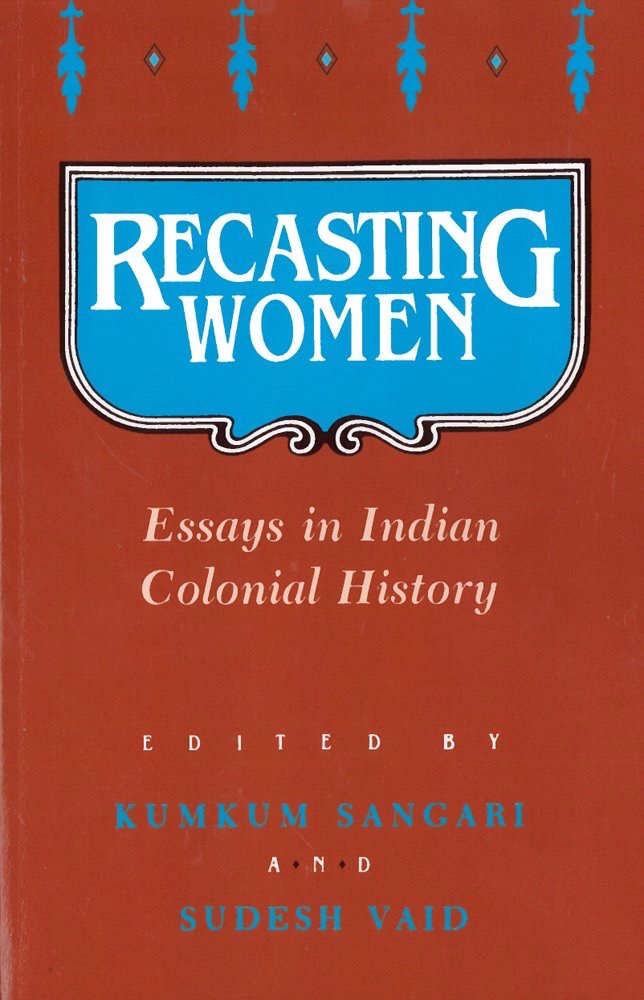
Softcover. New Brunswick NJ, Rutgers University Press, 1st pbk., 1990, Book: Very Good, Dust Jacket: None, Softcover, 372 pages. The first set of essays seeks to analyze the patriarchal discourses of a colonial society and includes an analysis of the shaping of Hindu-Aryan identity, the parameters of the discourse on widow-immolation, the "defeminization" of popular culture in nineteenth-century urban Calcutta, the nature of the reforms proposed by early women's journals in Hindi, and the implications of the nationalist movement and of Indo-Anglian literature on middle-class patriarchal norms. The second set of articles relates to women of the productive classes--the reconstitution of patriarchies in the agrarian transition in Haryana, in the Oudh peasant movement, in the armed peasant struggle in Telangana, and among the working class in Bengal. The contributors explore the interrelation of patriarchies with political economy, law, religion, and culture, and suggest a different history of "reform" movements, and of class and gender relations. Clean copy.
Hardcover. New York , Roy Publishers, 1st, 1960, Book: Very Good, Dust Jacket: Very Good, Hardcover, 222 pages, b&w illustrations by C. Walter Hodges.In a bright, unclipped dust jacket. Previous owner's signature on front fly leaf otherwise a clean, bright copy.
Hardcover. New York, The Free Press, 1st, 1968, Book: Very Good, Dust Jacket: Good, Hardcover, 615 pages. Previous owners name on front endpaper. Dust jacket with spine fading, standard wear. Clean, tight copy.
Hardcover. Indiana University Press, 1st, 2017, Book: Very Good, Dust Jacket: Very Good, Hardcover in a bright dust jacket, 475 pages. Rembrandt's stunning religious prints stand as evidence of the Dutch master's extraordinary skill as a technician and as a testament to his genius as a teller of tales. Here, several virtually unknown etchings, collected by the Feddersen family and now preserved for the ages at the University of Notre Dame, are made widely available in a lavishly illustrated volume. Building on the contributions of earlier Rembrandt scholars, noted art historian Charles M. Rosenberg illuminates each of the 70 religious prints through detailed background information on the artist's career as well as the historical, religious, and artistic impulses informing their creation. Readers will enjoy an impression of the earliest work, The Circumcision (1625-26); the famous Hundred Guilder Print; the enigmatic eighth state of Christ Presented to the People; one of a handful of examples of the very rare final posthumous state of The Three Crosses; and an impression and counterproof of The Triumph of Mordecai. From the joyous epiphany of the coming of the Messiah to the anguish of the betrayal of a father (Jacob) by his children, from choirs of angels waiting to receive the Virgin into heaven to the dog who defecates in the road by an ancient inn (The Good Samaritan), Rembrandt's etchings offer a window into the nature of faith, aspiration, and human experience, ranging from the ecstatically divine to the worldly and mundane. Ultimately, these prints? modest, intimate, fragile objects?are great works of art which, like all masterpieces, reward us with fresh insights and discoveries at each new encounter. Clean copy.
Hardcover. New Deli, Academic Foundation, 1st, 2015, Book: Very Good, Dust Jacket: Very Good, Hardcover in a bright dust jacket, 158 pagea. Clean, bright copy.
Hardcover. NY, Knopf, 1st, 1980, Book: Very Good, Dust Jacket: Very Good, Hardcover in a bright dust jacket. 227 pages. Previous owner's signature on front fly leaf, else a clean, tight copy. Naipaul presents here four essays about the "half-made" societies, those still suffering from the profound deprivations of colonialism and prey to corruption." He examines the role of Eva Peron as the catalyst for violence in Argentina, with its yearning for a European culture and the physical, historical, cultural reality of the land in which the native Indians were wiped out and the colonialists took over. He writes of the infamous Michael X in Trinidad whose pretensions to power and destiny led to the man's insanity and execution following two pointless murders. Shorter essays address nihilism in the Congo and Naipaul's take on Joseph Conrad and the Heart of Darkness.
Softcover. Bowie MD, Heritage Books, reprint, 2001, Book: Very Good, Dust Jacket: None, Softcover, 425 pages. A facsimile reprint of the 1904 edition. Volume 1 ONLY. The present-day New York City neighborhood of Harlem was founded in the mid-17th century by Dutch Protestants, whose numbers included Huguenots (or their descendants) who had fled the counter-Reformation in France and the Walloon provinces of Artois, Cambresis, and Hainalt. Riker's Harlem is an extremely detailed historical and genealogical account of Harlem from its establishment by Kuyter and Stuyvesant between 1656 and 1660 to the end of the 17th century. Following several preliminary chapters on the Dutch and French context for the settlement of "New Haerlem," the author treats us to what seem like minute-by-minute accounts of its colonial development, including early efforts to settle the territory that became Harlem, the original land patents and their subsequent rearrangement, Indian wars, displacement of Dutch rule by the British in 1663 (and the brief reoccupation by Dutch forces in 1673), 17th-century village life, migrations to New Jersey, influx of Swedes, difficulties in assimilating English ways, and much, much more.
Softcover. Bowie MD, Heritage Books, reprint, 2001, Book: Very Good, Dust Jacket: None, Softcover, Pages 426-908 . A facsimile reprint of the 1904 edition. Volume 2 ONLY. The present-day New York City neighborhood of Harlem was founded in the mid-17th century by Dutch Protestants, whose numbers included Huguenots (or their descendants) who had fled the counter-Reformation in France and the Walloon provinces of Artois, Cambresis, and Hainalt. Riker's Harlem is an extremely detailed historical and genealogical account of Harlem from its establishment by Kuyter and Stuyvesant between 1656 and 1660 to the end of the 17th century. Following several preliminary chapters on the Dutch and French context for the settlement of "New Haerlem," the author treats us to what seem like minute-by-minute accounts of its colonial development, including early efforts to settle the territory that became Harlem, the original land patents and their subsequent rearrangement, Indian wars, displacement of Dutch rule by the British in 1663 (and the brief reoccupation by Dutch forces in 1673), 17th-century village life, migrations to New Jersey, influx of Swedes, difficulties in assimilating English ways, and much, much more.
Hardcover. Baltimore, Genealogical Publishing Company, 2nd pr., 1997, Book: Very Good, Dust Jacket: None, Hardcover, blue cloth stamped with gilt lettering, 608 pages. After the Revolutionary War, the federal government awarded bounty lands to citizens and soldiers for services rendered. In its simplest form, this involved the exchange of free land for military service. Federal records of these Revolutionary War bounty land awards are well known and readily accessible to genealogists. But the federal government was not alone in rewarding its citizens and soldiers with bounty lands. Nine state governments adopted similar policies, generating even more records. Unlike the federal bounty land records, however, these state records are not centralized; instead, they are found in the various states in the form of manuscript records and printed books and are all but inaccessible to the researcher. Until now, that is! Because with this work by Lloyd Bockstruck we now have a master index to state bounty land records, a Revolutionary War resource unparalleled for freshness, originality, and research potential. The nine states that awarded bounty lands in their western reserves or on their western borders (directly affecting the future states of Indiana, Kentucky, Maine, Ohio, and Tennessee) are Connecticut, Georgia, Maryland, Massachusetts, New York, North Carolina, Pennsylvania, South Carolina, and Virginia. (The basis for the Connecticut and Georgia awards, by the way, differ from the norm.) Clean, bright copy.
Hardcover. Chicago, Albert Whitman & Co., 1st, 1939, Book: Very Good, Dust Jacket: None, Color illustrations by Roger Duvoisin. Light wear to cover. Hardbound. No dust jacket.
Indianapolis, Bobbs-Merrill, reprint, 1920, Book: Very Good, Dust Jacket: Good, Hardover in a worn dust jacket. Illustrated black & white "Hoosier Pictures" by Will Vawter. 188 pages. Previous owner's signature front end-paper. Dust jacket with chunk gone from top edge. Chips to bottom edges. Scarce in dust jacket,
Hardcover. Indianapolis, Bobbs Merrill Company, 1st, 1909, Book: Good, Dust Jacket: None, Hardcover with green cloth covers and gilt lettering. Color illustrations by Howard Chandler Christy throughout. Heavy stock pages, gutter cracked in several places. Glue repair abrasion on first chapter. Cover boards clean with minimal wear.
Hardcover. New Haven, Yale University Press, 1st, May 11, 2000, Book: Very Good, Dust Jacket: Very Good, Hardcover, 303 pages, illustrated throughout. Very clean and tight copy. Although lumped together with Pop artists such as Roy Liechtenstein and Andy Warhol, and often the movement's spokesperson, Indiana and his paintings actually have an uneasy fit in Pop company, mostly because his work isn't grounded in the commodity-oriented (Campbell Soup) realism of most Pop Art. Instead, his work engages with literature and poetry and with the popular rhetoric of the American dream-all permeated by the particularities of his upbringing and life. Ryan's dual accomplishments are in articulating the dynamics of Indiana's art-especially the connections between the artworks and the sources of imagery and themes in his own biography-and in rendering a sophisticated and judicious roundup of the Pop Art movement.
Hardcover. Berlin , Steidl, 1st, 2014, Book: Very Good, Dust Jacket: None, Hardcover. Like new in publisher's shrink-wrap. Robert Polidori is known for his large format photographs of habitats and rooms saturated with the traces of human intervention. In EYE and I, he turns the lens around to reveal the portraits of people he has encountered in his work of over thirty years photographing around the world, particularly in the Middle East and India. These instantaneous portraits of mutual recognition reveal the photographed subject and the photographer intersecting with each other in a fleeting gaze of mutual regard.
Hardcover. NY, Thomas Y. Crowell , 2nd pr., 1967, Book: Very Good, Dust Jacket: Very Good, Hardcover, 178 pages, with illustrations by the author and photographs throughout. Minor dust jacket edge wear, otherwise, very clean and tight.

 "Prince Valiant, Vol. 6: 1947-1948by: Hal Foster and Brian M. Kane")

 "Protecting Wisdom: Tibetan Book Covers from the MacLean Collectionby: Brown, Kathryn H. Selig")


 "Quest of Ati Manu, Theby: Patchett, Mary Elwyn")
 "Raeburn Unafraid (SIGNED COPY)by: Bolton, Ivy")

 "Rajasthanby: Singh, Raghubir")
 "Red Indian Folk and Fairy Talesby: Manning-Sanders, Ruth")
 "Religion, Law and the State in Indiaby: Derrett, J. Duncan M.")

 "Resurgent India: Ideas and Priorities by: Agarwala, Ramgopal; Kumar, Rajiv; Shah, Rajesh")


 "Revolutionary War Bounty Land Grants Awarded by State Governmentsby: Bockstruck, Lloyd DeWitt")
 "Rhamon - A Boy of Kashmirby: Washburne, Heluiz and Roger Duvoisin")
 "Riley Child-Rhymesby: Riley, James Whitcomb")

 "Robert Indiana: Figures of Speechby: Ryan, Professor Susan Elizabeth")
 "Robert Polidori: Eye and Iby: Polidori, Robert")