Hardcover. New York, St. Martin's Press, 1st, 1973, Book: Very Good, Dust Jacket: Very Good, Hardcover, 276 pages, in a bright, unclipped dust jacket. Condon has brought a half century of jazz into focus with his published scrapbook of photographs and recollections. This particular volume contains 16 original autographs obtained by a patron of his jazz clubs. Includes the signatures of all four house band leaders: drummer Buzzy Drootin (1947-1951), pianist Ralph Sutton (1948-1956), pianist Johnny Varro and cornetist Ed Polcer (1957). Also Johnny Blowers, Dick Cary, Peanuts Hucko, Cliff Leeman, Jack Lesberg, Rosy McHargue, Joe Muranyi, Red Norvo, Jess Stacy, Dick Wellstood, Spiegel Wilcox, and Teddy Wilson.
Softcover. Durham NC, Duke University Press, 2nd pr., 1994, Book: Very Good, Dust Jacket: None, Softcover, 342 pages. In Extended Play, one of the country's most innovative music writers conducts a wide-ranging tour through the outer limits of contemporary music. Over the course of more than twenty-five portraits, interviews, and essays, John Corbett engages artists from lands as distant as Sweden, Siberia, and Saturn. With a special emphasis on African American and European improvisers, the book explores the famous and the little known, from John Cage and George Clinton to Anthony Braxton and Sun Ra. Employing approaches as diverse as the music he celebrates, Corbett illuminates the sound and theory of funk and rap, blues and jazz, contemporary classical, free improvisation, rock, and reggae. Using cultural critique and textual theory, Corbett addresses a broad spectrum of issues, such as the status of recorded music in postmodern culture, the politics of self-censorship, experimentation, and alternativism in the music industry, and the use of metaphors of space and madness in the work of African American musicians. He follows these more theoretically oriented essays with a series of extensive profiles and in-depth interviews that offer contrasting and complementary perspectives on some of the world's most creative musicians and their work. Clean copy.
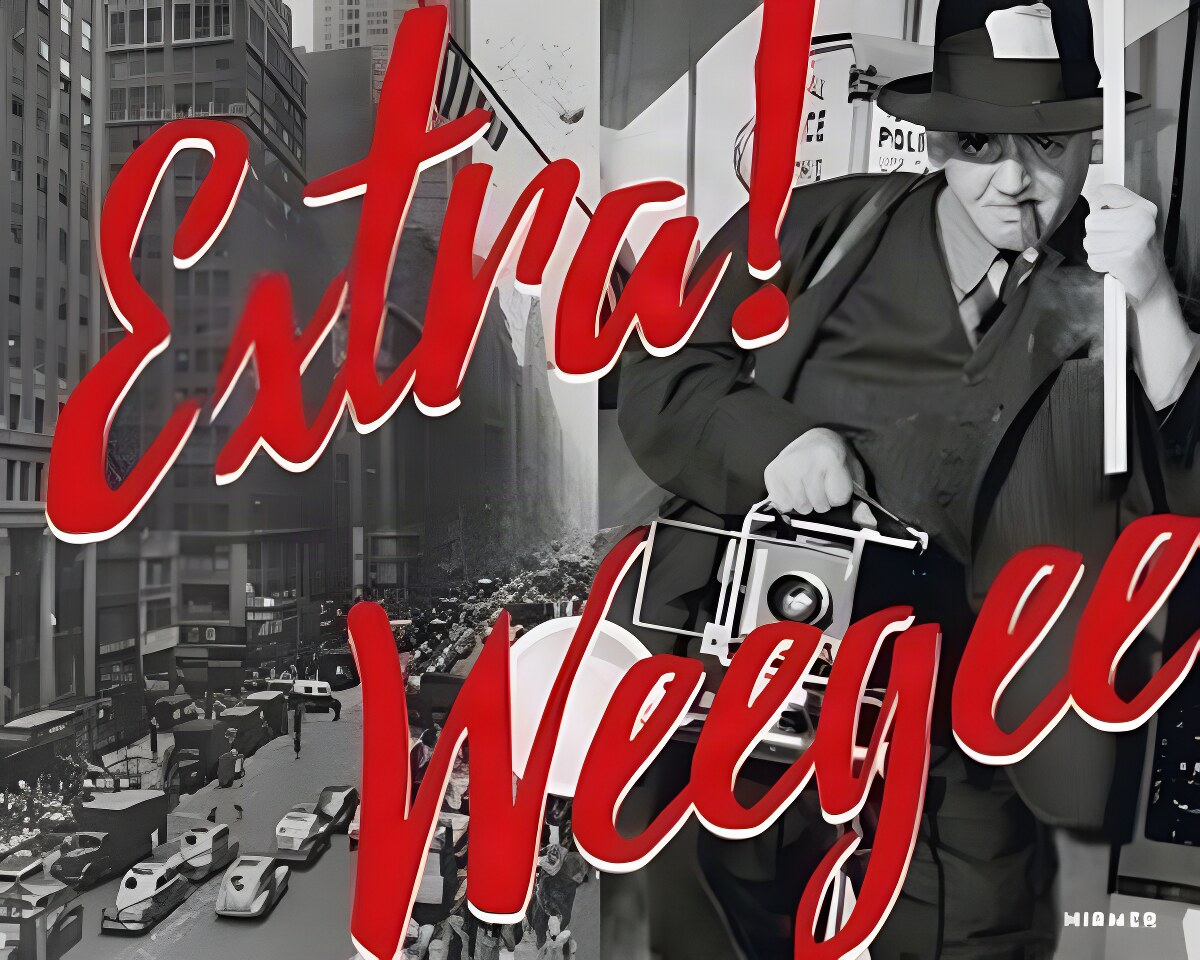
Hardcover. Munich GR, Hirmer Verlag, 1st, 2017, Book: Very Good, Dust Jacket: Very Good, Hardcover, oblong format, in a bright dust jacket. No other photographer has caught the sensations, scandals and catastrophes of the 1930s and 1940s in New York City with his camera as captivatingly as Weegee. He was always directly on the spot when it happened and documented the events and the onlookers. All the works come from the N.E.A. agency archive, which was only rediscovered in 2012; most of the vintage prints are being published for the very first time in this volume. Weegee (1899-1968) was the first photographer to receive official permission in 1938 to listen in live to the New York police radio. From then onwards he sometimes even arrived at the trouble spot before the police and took countless photographs. From the hardened police officer to the loud-mouthed crook; from the midnight boozer to the dancing jazz musician; from a dramatic conflagration to the celebrations at the end of the Second World War: Weegee immortalized all these moments in unforgettable pictures. The volume also shows a hitherto unknown side of the famous photographer - happy people enjoying themselves. The works are complemented by the exciting story of the rediscovery of the archive, which was missing for decades. Still in publisher's shrinkwrap.
Hardcover. NY, Oxford University Press;, 1st, 1992, Book: Very Good, Dust Jacket: Very Good, Hardcover in a bright, unclipped dust jacket, 288 pages. As an essayist and Village Voice columnist, Gary Giddins is widely known as a preeminent jazz writer. Walter Clemons, writing in Newsweek, hailed him as "the best jazz critic now at work," praising his "elegant prose" and "encyclopedic knowledge." Yet he has won a devoted audience for his reflections on popular culture, books, and movies as well--including a marvelous essay on Jack Benny that Gay Talese selected for Best American Essays of 1987. In Faces in the Crowd, Giddins once again demonstrates his graceful style and sharp wit in a brilliant collection of critiques, assessments, and profiles of major figures in the culture of our century.
Softcover. NY, Limelight Editions, 1st, 2000, Book: Very Good, Dust Jacket: None, Softcover, 255 pages. A "fakebook" is a collection of melodies with the chord changes that allows jazz musicians to read the tunes instead of playing solely by ear and memory. It is, then, a place to start, a structure upon which jazz improvisation, "faking," builds. As a young man, the author, a jazz saxophone player, tried to make a living at what he loved most. He failed, gave up jazz and became a college English professor. Today he is playing his saxophone again, at weekend gigs, rediscovering the unending challenge and the fulfillment that jazz brings him. This journey of self-discovery demonstrates the power of both jazz and superbly crafted writing. Clean, bright copy.
Softcover. NY, Oxford University Press, reprint, 2010, Book: Very Good, Dust Jacket: None, Softcover, 402 pages, b&w illustrations. An insightful examination of the impact of the Civil Rights Movement and African Independence on jazz in the 1950s and 60s, Freedom Sounds traces the complex relationships among music, politics, aesthetics, and activism through the lens of the hot button racial and economic issues of the time. Ingrid Monson illustrates how the contentious and soul-searching debates in the Civil Rights, African Independence, and Black Power movements shaped aesthetic debates and exerted a moral pressure on musicians to take action. Throughout, her arguments show how jazz musicians' quest for self-determination as artists and human beings also led to fascinating and far reaching musical explorations and a lasting ethos of social critique and transcendence. Clean copy.
Hardcover. NY, Farrar, Straus and Giroux, 1st, 2017, Book: Very Good, Dust Jacket: Very Good, Hardcover in a bright dust jacket, 206 pages. Famously unabashed, W. Eugene Smith was photography's most celebrated humanist. As a photo essayist at Life magazine in the 1940s and '50s, he established himself as an intimate chronicler of human culture. His photographs of war and disaster, villages and metropolises, doctors and midwives, revolutionized the role of images in journalism, transforming photography for decades to come. When Smith died in 1978, he left behind eighteen dollars in the bank and forty-four thousand pounds of archives. He was only fifty-nine, but he was flat worn-out. His death certificate read "stroke," but, as was said of the immortal jazzman Charlie Parker, Smith died of "everything," from drug and alcohol benders to weeklong work sessions with no sleep. Lured by the intoxicating trail of people that emerged from Smith's stupefying archive, Sam Stephenson began a quest to trace his footsteps. In Gene Smith's Sink, Stephenson merges traditional biography with rhythmic digressions to revive Smith's life and legacy. Traveling across twenty-nine states, Japan, and the Pacific, Stephenson profiles a lively cast of characters, including the playwright Tennessee Williams, to whom Smith likened himself; the avant-garde filmmaker Stan Brakhage, with whom he once shared a Swiss chalet; the artist Mary Frank, who was married to his friend Robert Frank; the jazz pianists Thelonious Monk and Sonny Clark, whose music was taped by Smith in his loft; and a series of obscure caregivers who helped keep Smith on his feet. The distillation of twenty years of research, Gene Smith's Sink is an unprecedented look into the photographer's potent legacy and the subjects around him. Clean, bright copy.
Hardcover. NY, STEWART TABORI CHANG, 1ST, Book: Very Good, Dust Jacket: Very Good, Hardcover, 378 pages. Here is a musical history told in legends, facts, and rumors every bit as colorful as the images that illustrate the book. The story is filled with characters such as O.V. Wright, a singer deemed "too ugly to tour"; Frnakie Lymon, who received a hot dog as full payment for some of the greatest R&B songs of all time; LaVern Baker, a.k.a. "Little Miss Sharecropper"; Bille Holiday shooting dice with the boys on the bus; Solomon Burke, R&B immortal and Doctor of Mortuary Sciences; soul ghoul Screamin' Jay Hawkins locked in his coffin by the Drifters; and many otehr talented and unique entertainers. Illustrated with more than 400 original photographs, publicity shots, posters, programs, advertisements, program covers, magazine covers, album covers and sleeves, sheet music, and record labels in full color, this is a story of hot music and high style, of people who made history by being themselves and made the world a richer, wilder and definitely cooler place for the rest of us.
Hardcover. New York, HarperCollins, 1st, 2010, Book: Very Good, Dust Jacket: Very Good, Hardcover in a bright, unclipped dust jacket. SIGNED by RASCHKA. Raschka's and Radunsky's simpatico styles are at long last paired in this "doggy allegory" told in a hip-hop beat. Born into a litter of 16, the scruffy protagonist is the pup not chosen--the "saddest and the baddest." His solitude, however, facilitates his sensitivity to the sounds that permeate his urban environment, and while the "clatter makes him gladder," ultimately it's the strains of opera that motivate him to "bark it like Brunhilda." Raschka's musicality undergirds his street-savvy lingo, making the narrative fresh and lyrical. The font becomes bigger and bolder to indicate emphasis, a technique that is particularly helpful when the text spirals around the pages. "I'm the zoom-est and the boom-est, spread no gloom-est, say no doom-est. I'm the top-est, never stop-est, Boston Pop-est, be be bop-est. I jazzle dazzle like it as the Hip Hop Dog." Radunsky's caricatures of the moves of a canine version of Snoop Dogg manage to be convincing, poignant, and funny--no small feat. Loose lines, brushwork that allows the textured background to show through, and occasional bits of collage combine to create a gritty cityscape peopled with quirky personalities. This story of a neglected orphan who sings and struts his way to happiness will gladden the hearts of readers young and old.
Hardcover. NY, Oxford University Press, 1st, 1977, Book: Very Good, Dust Jacket: None, Hardcover, blue cloth covers, gilt lettering on spine. 263 pages, no dust jacket. Most of these essays appeared in The New Yorker over the course of 15 years. A tight, bright copy, clean.
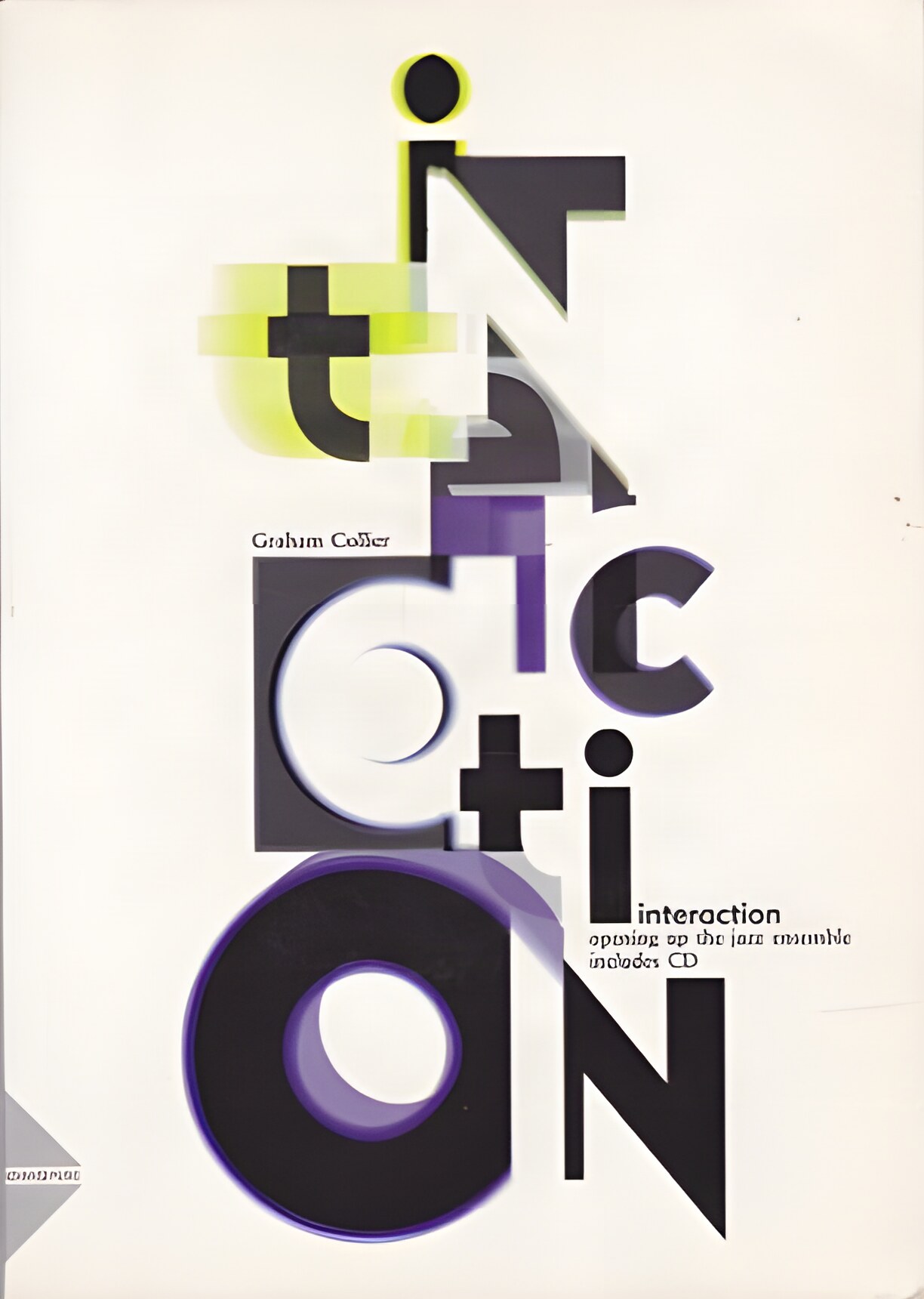
Softcover. Tubingen GR, Advance Music, 1st, 1995, Book: Very Good, Dust Jacket: None, Softcover, 98 pages plus publisher's ads. This book/CD set addresses the development of improvisation in all its forms, individual and collective, textural and structural, and is designed to open up the mind to all the players in any jazz situation. 11 recordings on the CD. Clean copy.
Hardcover. Seattle, Fantagraphics, 1st, 2015, Book: Very Good, Dust Jacket: Very Good, Hardcover in a bright dust jacket, 200 pages. Throughout Les McCann's incredible jazz career, he took hundreds of photos at clubs, studios, and festivals around the world and documented the vibrant cultural life of jazz and soul between 1960 and 1980. These photos include a very young Stevie Wonder, Nina Simone, Sammy Davis Jr., John Coltrane, Aretha Franklin, Nancy Wilson, Richard Pryor, Quincy Jones, Tina Turner, Miles Davis, Cannonball Adderly, Louis Armstrong, Count Basie, B.B. King, Errol Garner, Stanley Clarke, Bill Evans, Lionel Hampton, and many more. 200 pages with sampled works and photography index.
Softcover. San Francisco, Miller Freeman Books, 1st, 1995, Book: Very Good, Dust Jacket: None, Softcover, 263 pages, b&w illustrations. This story of a musician hailed as a genius and dismissed as a madman will appeal to anyone intrigued by the fine line between creative inspiration and insanity. the author looks deep inside the life and music of this talented but tormented bass player who revolutionized his instrument and became one of the most potent forces in modern music. "Like his heroes Charlie Parker and Jimi Hendrix, Jaco didn't make it to age 40. But by the time he died at 35, the music world was indebted to him. Jaco had reinvented the role of the electric bass. Includes is the CD, "Jaco Pastorius: The Birthday Concert" in a pocket in the back of the book and is in excellent condition.
Hardcover. Somerville MA, Candlewick Press, 1st, 2005, Book: Very Good, Dust Jacket: None, Hardcover. Illustrated throughout in color by Paul Rogers. Light shelf-wear to boards, else a clean, tight copy. No dust jacket.
Hardcover. Somerville MA, Candlewick Press, 1st, 2005, Book: Very Good, Dust Jacket: None, Hardcover. Illustrated throughout in color by Paul Rogers. Light shelf-wear to boards, else a clean, tight copy. No dust jacket.
Hardcover. Somerville MA, Candlewick Press, 1st, 2005, Book: Very Good, Dust Jacket: None, Hardcover. Illustrated throughout in color by Paul Rogers. Light shelf-wear to boards, else a clean, tight copy. No dust jacket.
Hardcover. University Of Iowa Press, 1st, 2001, Book: Very Good, Dust Jacket: Very Good, Hardcover in a bright dust jacket, 168 pages. Using jazz as the key metaphor, Porter refocuses old interpretations of Ellison by placing jazz in the foreground and by emphasizing, especially as revealed in his essays, the power of Ellison's thought and cultural perception. Clean copy.
Hardcover. Taschen, 2nd Ed., 2012, Book: Very Good, Dust Jacket: None, Two white folio volumes in a slipcase, 559 pages, b&w illustrations (chiefly color). Vol. 1: Interviews. Bob Ciano ; Fred Cohen ; Michael Cuscuna -- Record covers. A-K by artist -- v. 2: Interviews. Rudy Van Gelder ; Ashley Kahn ; Creed Taylor -- Record covers. L to Z by artist. Vinyl mania: Jazz LP covers from the 1940s to 1990s. This volume features a broad selection of jazz record covers, from the 1940s through the decline of LP production in the early 1990s. Each cover is accompanied by a fact sheet listing performer and album name, art director, photographer, illustrator, year, label, and more.
Hardcover. NY, Da Capo Press, reprint, 1979, Book: Very Good, Dust Jacket: None, Hardcover, red cloth with silver gilt lettering. First published in 1962 Jazz Panorama presents roughly forty short articles from the pages of The Jazz Review from the late 1950s and early 1960s, selected by respected jazz historian Martin Williams, the magazine's co-founder (with Nat Hentoff). This is the type of book that one can dip into from time to time and always find something both enjoyable and educational. Written in clear, understandable prose, the book collects short essays, record reviews (usually of multiple LPs), and two interviews. A wide range of jazz styles and movements is covered here, everything from Dixieland to "third stream" and the avant-garde of Ornette Coleman.The jazz musicians included for discussion range from King Oliver and Jelly Roll Morton to Bix Biederbecke. Louis Armstrong, Billie Holiday, Stan Getz, and Miles Davis. 318 pages, clean copy. No dust jacket.
Softcover. San Francisco, CA, Chronicle Books, reprint, 1996, Book: Very Good, Dust Jacket: None, 124 pages, softcover with French flaps. Bright b&w photos of Jazz legends. Light rubbing to wraps. Unmarked. Bright and clean; a tight copy.
Hardcover. Koln GR, Taschen, 1st, 2008, Book: Very Good, Dust Jacket: Very Good, Huge hardcover volume in a slipcase, 551 pages, In 1959 and 1960, photographer William Claxton and noted German musicologist Joachim Berendt traveled the United States hot on the trail of Jazz music. The result of their collaboration was an amazing collection of photographs and recordings of legendary artists as well as unknown street musicians. The book "Jazzlife", the original fruit of their labors, has become a collector's item that is highly treasured among Jazz and photography fans. They will be delighted to be able to take a Jazz-trip through time, both seeing and hearing the music as Claxton and Berendt originally experienced it.It features photographs of Charlie Parker, Count Basie, Duke Ellington, Muddy Waters, Gabor Szabo, Dave Brubeck, Stan Getz, Billie Holiday, Ella Fitzgerald, Miles Davis, Charlie Mingus, Thelonious Monk, John Coltrane, and many more. It also includes a bonus CD of digitally remastered period recordings. DOMESTIC SHIPPING ONLY.
Softcover. NY, Pathfinder Press , Revised Ed., 1998, Softcover in pictorial wrappers, 500 pages, b&w photos. Coltrane's role in spearheading the last major innovative development in jazz, and how the 1960s jazz revolution reflected an intense cultural, political, and ideological ferment -- marked especially by the rise of resistance to racial discrimination. Also contains the best-known interview with John Coltrane -- recorded in 1966, a year before his death. Clean copy.
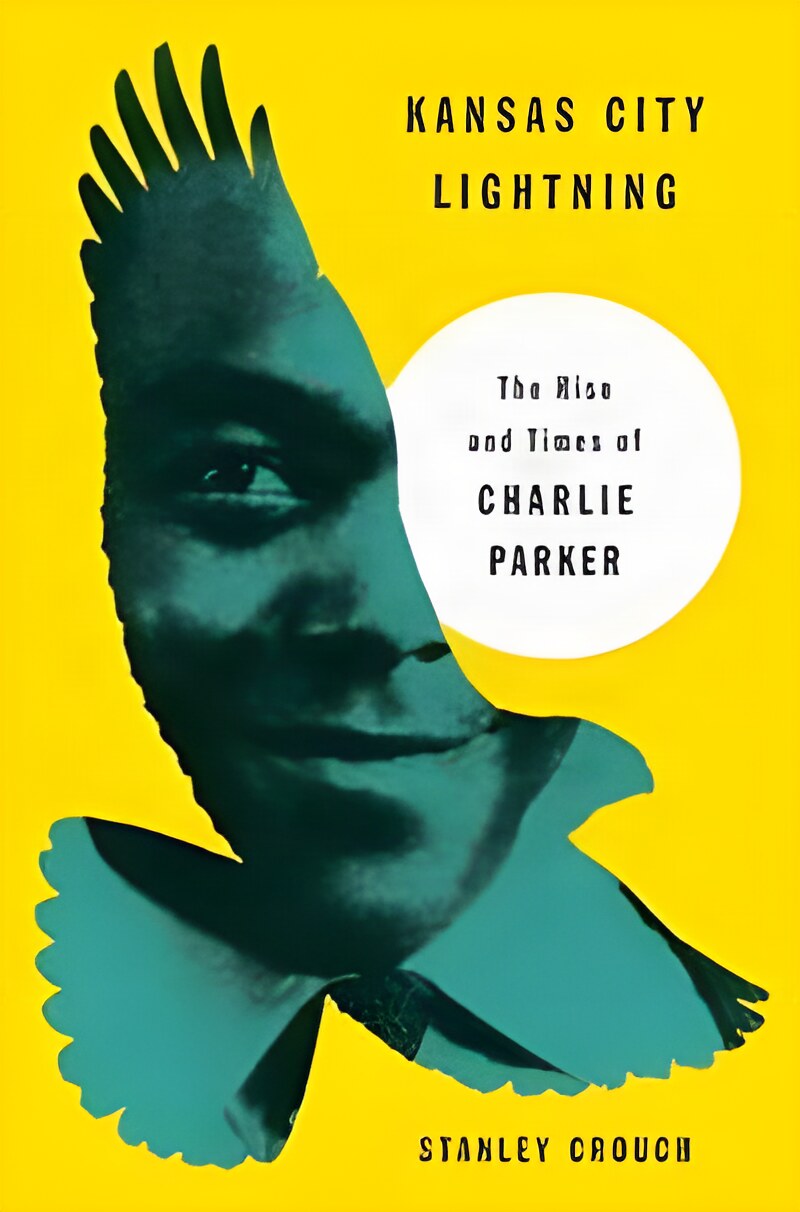
Hardcover. NY, Harper, 2nd pr., 2013, Book: Very Good, Dust Jacket: Very Good, Hardcover in a lightly worn dust jacket, 265 pages, b&w illustrations. The first installment in the long-awaited portrait of one of the most talented and influential musicians of the twentieth century, from Stanley Crouch, one of the foremost authorities on jazz and culture in America. Throughout his life, Charlie Parker personified the tortured American artist: a revolutionary performer who used his alto saxophone to create a new music known as bebop even as he wrestled with a drug addiction that would lead to his death at the age of thirty-four. Drawing on interviews with peers, collaborators, and family members, Kansas City Lightning recreates Parker's Depression-era childhood; his early days navigating the Kansas City nightlife, inspired by lions like Lester Young and Count Basie; and on to New York, where he began to transcend the music he had mastered. Clean copy.
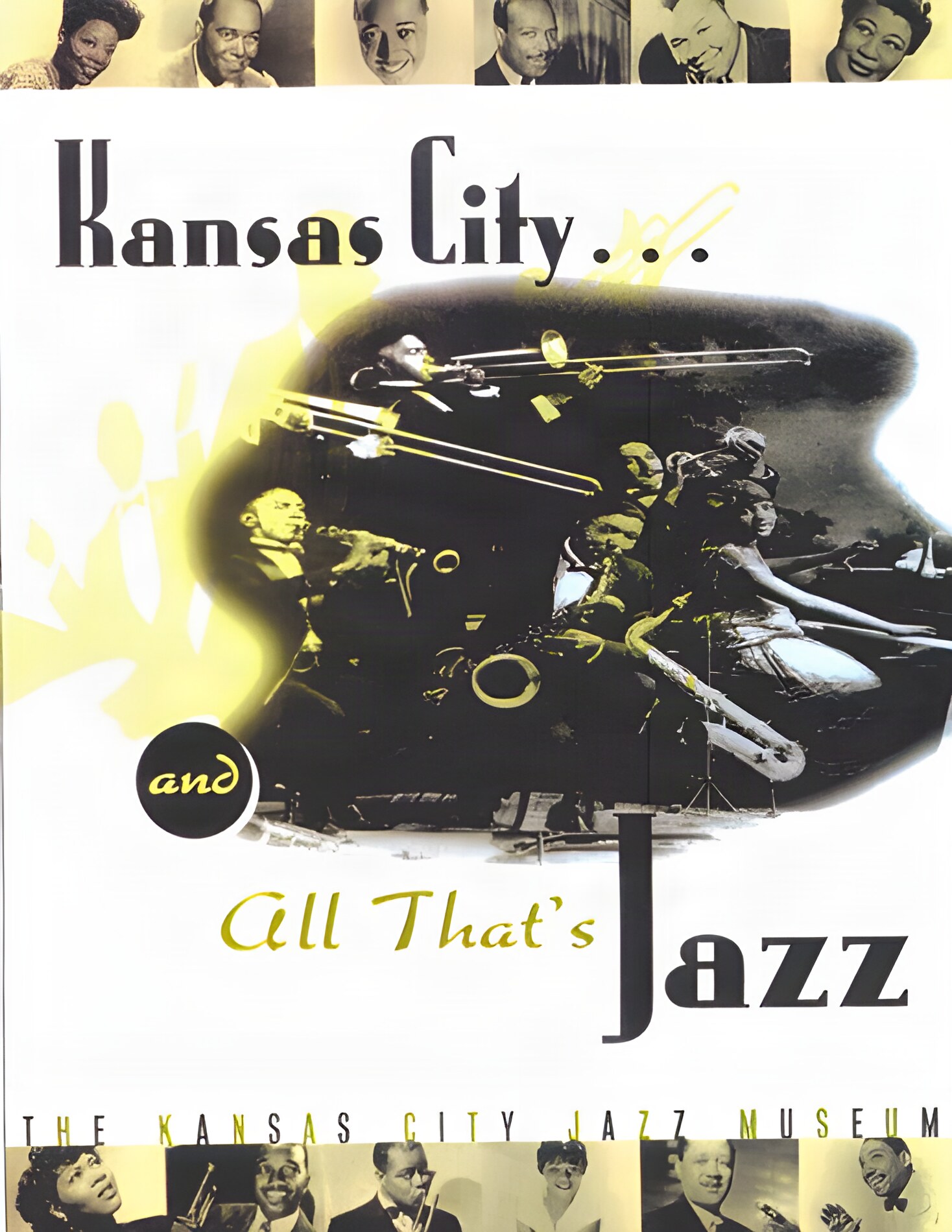
Softcover. Kansas City, Andrews McMeel Publishing, 1st pbk, 1999, Book: Very Good, Dust Jacket: None, Softcover, 120 pages, profusely illustrated. The Kansas City Jazz Museum traces the evolution of jazz music in America, from the early 1920s to the present day, focusing on the contributions of such Kansas City-based musicians as Count Basie, Charlie Parker, Lester Young, and other jazz greats. Clean, bright copy.






 "Heart & Soul: A Celebration of Black Music Style in America, 1930-1975by: Merlis, Bob")
 "Hip Hop Dog (SIGNED BY RASCHKA)by: Raschka/Vladimir Radunsky, Chris")
 "Improvising: Sixteen Jazz Musicians and Their Art by: Balliett, Whitney")
 "Invitation to Openness: The Jazz & Soul Photography of Les McCann 1960-1980 by: McCann Les / Abrahams, Alan Thomas Pat (Editors)")

 "Jazz ABZ: An A to Z Collection of Jazz Portraitsby: Marsalis, Wynton and Paul Rogers")
 "Jazz ABZ: An A to Z Collection of Jazz Portraitsby: Marsalis, Wynton and Paul Rogers")
 "Jazz ABZ: An A to Z Collection of Jazz Portraitsby: Marsalis, Wynton and Paul Rogers")
 "Jazz Country: Ralph Ellison in Americaby: Porter, Horace A.")
 "Jazz Coversby: Paulo, Joaquin and Julius Wiedemann (ed.)")
 "Jazz Panorama: from the Pages of the Jazz Reviewby: Williams, Martin T.")
 "Jazzby: Claxton, William")
 "Jazzlifeby: William Claxton Steve Crist Joachim E. Berendt")