Softcover. Baton Rouge, Louisiana State University , Revised Ed., 2002, Book: Very Good, Dust Jacket: None, Softcover, 105 pages. Interviews with the jazz drummer, known for his wild style of drumming, who recounts his life and adventures playing with some of the best known jazz musicians and bands of his time. Includes additional reading and selected recordings. 6 leaves of b&w photo plates. Bright and clean, but with the light odor of a smoker-owned book.
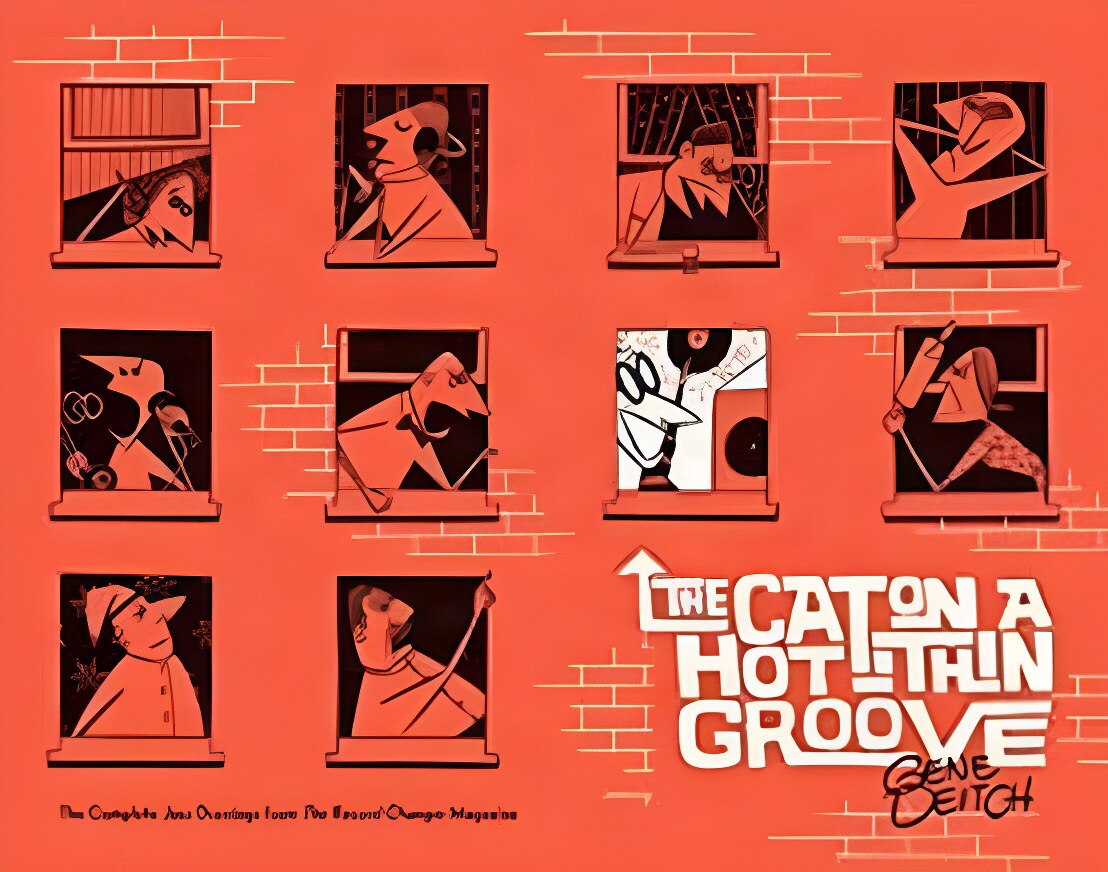
Softcover. Seattle, Fantagraphics, reprint, 2013, Book: Very Good, Dust Jacket: None, Softcover, 160 pages. At the age of 21, Gene Deitch discovered The Record Changer, a jazz fan magazine. Every jazz swinger in the '40s was called a "cat," so Gene Deitch created a cartoon feature titled "The Cat," which quickly became a fixture of the magazine. He also started drawing the covers, which graced almost every issue from 1945 to 1951. Deitch's stylistically virtuoso images exquisitely embodied the essence of the 1950s hipster, and was a visual paean to the joy of collecting records and appreciating jazz. The Cat on a Hot Thin Groove collects all of Deitch's Record Changer work in one gorgeous, coffee-table art book, with commentary and reminiscences by Deitch himself.
Hardcover. Milwaukee WI, Backbeat Books, 1st, 2009, Book: Very Good, Dust Jacket: None, Hardcover, pictorial boards with spiral binding, 304 pages. The Fiddle Handbook is a treasure trove of information spanning the whole range of fiddle playing. It looks in detail at the most commonly played styles among today's fiddlers. From America, there's old time, bluegrass, Cajun, Western swing, country, blues, rock, klezmer, and jazz, while from the British Isles there's Irish, Scottish, and English. There is also a quick romp through Eastern Europe and beyond, from the spike fiddles of Africa and Asia to the Chinese Erhu, the fabulous Indian Sarangi, and the mysterious Norwegian Hardingfele. A wealth of musical examples - ornaments, bowing patterns, scales, modes, exercises and complete tunes - are faithfully reproduced on the accompanying CDs, to give you a taste of each style. Clean copy.
Softcover. NY, Oxford University Press, 1st, 2009, Book: Very Good, Dust Jacket: None, Softcover, 366 pages illustrated in color. The widespread presence of jazz and blues in African American visual art has long been overlooked. The Hearing Eye makes the case for recognizing the music's importance, both as formal template and as explicit subject matter. Moving on from the use of iconic musical figures and motifs in Harlem Renaissance art, this groundbreaking collection explores the more allusive - and elusive - references to jazz and blues in a wide range of mostly contemporary visual artists. There are scholarly essays on the painters Rose Piper (Graham Lock), Norman Lewis (Sara Wood), Bob Thompson (Richard H. King), Romare Bearden (Robert G. O'Meally, Johannes Volz) and Jean-Michel Basquiat (Robert Farris Thompson), as well an account of early blues advertising art (Paul Oliver) and a discussion of the photographs of Roy DeCarava (Richard Ings). These essays are interspersed with a series of in-depth interviews by Graham Lock, who talks to quilter Michael Cummings and painters Sam Middleton, Wadsworth Jarrell, Joe Overstreet and Ellen Banks about their musical inspirations, and also looks at art's reciprocal effect on music in conversation with saxophonists Marty Ehrlich and Jane Ira Bloom. Clean, bright copy
Hardcover. NY, Knopf, 1st, 2009, Book: Very Good, Dust Jacket: Very Good, Hardcover, 268 pages. After having a breakdown in the midst of working on a photo-essay on Pittsburgh in 1957, legendary photographer W. Eugene Smith holed up in a loft in New York's Chelsea, in the Tin Pan Alley area. There, over the next several years, he became deeply embroiled in the New York City jazz scene, opening his home as a practice and performance space for some of the great artists of mid-century jazz, including Thelonious Monk, Zoot Sims and many others. Of course, he took pictures--both of musicians and of a window-size view of mid-century New York--and also wired the place for recording, logging hours and hours of tape, capturing the music and the talk around it. These photos and tapes had been thought lost--the stuff of rumor, buried in Smith's archive--until Stephenson dug them out and culled the best, along with transcriptions of material from the tapes, for this landmark book. Smith's stunning use of contrast makes figures like Monk seem dramatic and completely ordinary at the same time. The photos of the city offer a rare glimpse into a neighborhood being itself when it thought no one was watching. This will be an essential book for jazz fans, photography lovers and those interested in the history of New York.
Hardcover. NY, Broadway Books, 1st, 2003, Book: Very Good, Dust Jacket: Very Good, Hardcover in a bright, unclipped dust jacket. 289 pagesGreen turns his expert hand to the artistic qualities that make an extraordinary musician. He culls advice from dozens of interviews with legends including Joshua Bell, Dave Brubeck, Jeffrey Kahane, Bobby McFerrin, Christopher Parkening, Doc Severinsen, Frederica von Stade, the Harlem Boys Choir, and the Turtle Island String Quartet. Green organizes the ineffable virtuoso quality that the greats possess into ten characteristics, such as confidence, passion, discipline, creativity, and relaxed concentration, and discusses specific ways in which all musicians, composers, and conductors can take their skills to higher levels. Foreword by Mike Stryker.
Hardcover. NY, Farrar Straus Giroux, 1st, 2006, Book: Very Good, Dust Jacket: Very Good, Hardcover in a bright dust jacket, 347 pages. In this first biography focusing on John Hammond, the charismatic American music producer is brought to life by journalist Dunston Prial. Hammond was renowned for his ability to spot new talent, introducing the world to some of most gifted musicians of early jazz- Billie Holiday, Count Basie, and Charlie Christian. Then, as jazz gave way to pop and rock, Hammond staged an amazing second act discovering Bob Dylan, Aretha Franklin, Bruce Springsteen, and Stevie Ray Vaughan. 'The Producer' covers Hammond's entire story from his heyday as a music producer to his privileged upbringing as a Vanderbilt. This is a story of an American music in all its rough-edged vitality. Clean copy.
Softcover. Chicago, University of Chicago Press, reprint, 2004, Book: Very Good, Dust Jacket: None, Softcover, 883 pages.The author reveals how musicians, both individually and collectively, learn to improvise. Chronicling leading musicians from their first encounters with jazz to the development of a unique improvisatory voice, Paul Berliner documents the lifetime of preparation that lies behind the skilled improviser's every idea. The product of more than fifteen years of immersion in the jazz world. Interviews with more than fifty professional musicians: bassists George Duvivier and Rufus Reid; drummers Max Roach, Ronald Shannon Jackson, and Akira Tana; guitarist Emily Remler; pianists Tommy Flanagan and Barry Harris; saxophonists Lou Donaldson, Lee Konitz, and James Moody; trombonist Curtis Fuller; trumpeters Doc Cheatham, Art Farmer, Wynton Marsalis, and Red Rodney; vocalists Carmen Lundy and Vea Williams; and others. Clean copy.
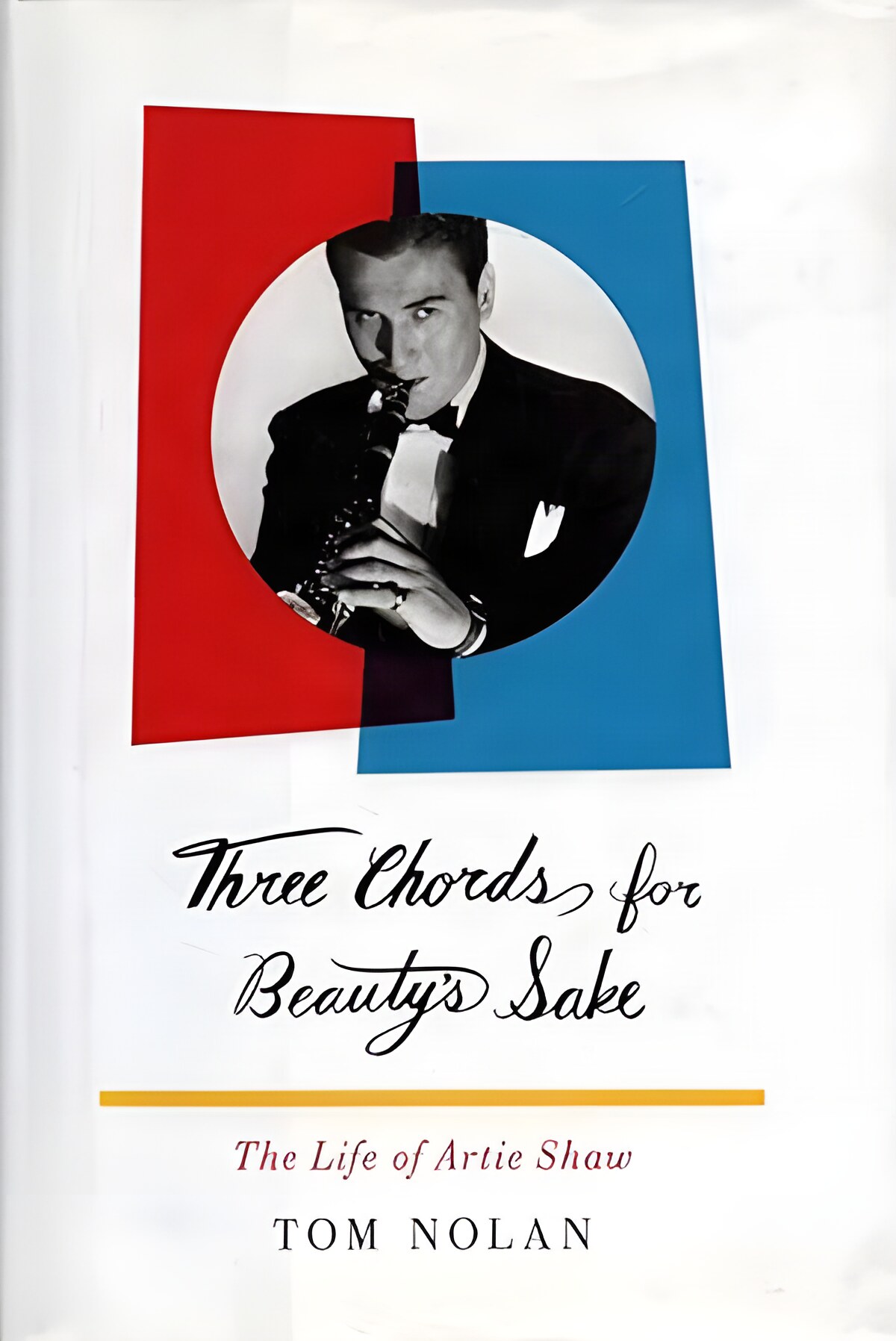
Hardcover. NY, W.W. Norton & Company, 1st, 2010, Book: Very Good, Dust Jacket: Very Good, Hardcover in a bright dust jacket, 430 pages. During America's Swing Era, no musician was more successful or controversial than Artie Shaw: the charismatic and opinionated clarinetist-bandleader whose dozens of hits became anthems for "the greatest generation." But some of his most beautiful recordings were not issued until decades after he'd left the scene. He broke racial barriers by hiring African-American musicians. His frequent "retirements" earned him a reputation as the Hamlet of jazz. And he quit playing for good at the height of his powers. The handsome Shaw had seven wives (including Lana Turner and Ava Gardner). Inveterate reader and author of three books, he befriended the best-known writers of his time. Tom Nolan, who interviewed Shaw between 1990 and his death in 2004 and spoke with one hundred of his colleagues and contemporaries, captures Shaw and his era with candour and sympathy, bringing the master to vivid life and restoring him to his rightful place in jazz history. Clean, bright copy.
Hardcover. NY, Dutton, 1st, 2023, Book: Very Good, Dust Jacket: Very Good, Hardcover in a bright, unclipped dust jacket. The mysterious true story of Connie Converse--a mid-century New York City songwriter, singer, and composer whose haunting music never found broad recognition--and one writer's quest to understand her life This is the mesmerizing story of an enigmatic life. When musician and New Yorker contributor Howard Fishman first heard Connie Converse's voice on a recording, he was convinced she could not be real. Her recordings were too good not to know, and too out of place for the 1950s to make sense--a singer who seemed to bridge the gap between traditional Americana (country, blues, folk, jazz, and gospel), the Great American Songbook, and the singer-songwriter movement that exploded a decade later with Bob Dylan and Joni Mitchell. And then there was the bizarre legend about Connie Converse that had become the prevailing narrative of her life: that in 1974, at the age of fifty, she simply drove off one day and was never heard from again. Could this have been true? Who was Connie Converse, really?
Hardcover. NY, Dey Street Books/Morrow, 1st, 2024, Book: Very Good, Dust Jacket: Very Good, Hardcover in a bright, unclipped dust jacket, 437 pages. Celebrated NPR music critic Ann Powers explores the life and career of Joni Mitchell in a lyrical style as fascinating and ethereal as the songs of the artist herself. In Traveling, Powers seeks to understand Mitchell through her myriad journeys. Through extensive interviews with Mitchell's peers and deep archival research, she takes readers to rural Canada, mapping the singer's childhood battle with polio. She charts the course of Mitchell's musical evolution, ranging from early folk to jazz fusion to experimentation with pop synthetics. She follows the winding road of Mitchell's collaborations with other greats, and the loves that emerged along the way, all the way through to the remarkable return of Mitchell to music-making after the 2015 aneurysm that nearly took her life. Clean copy.
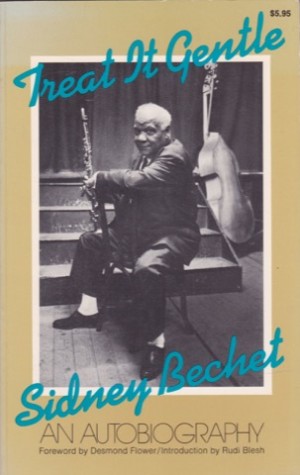
Softcover. NY, Da Capo Press, reprint, 1978, Book: Very Good, Dust Jacket: None, Softcover, 245 pages, b&w photos. Sidney Bechet (1897-1959) was one of the most brilliant exponents of New Orleans jazz. A prodigy on the clarinet, he soloed with Bunk Johnson's orchestra at age eleven, was improvising cornet-clarinet duos with Buddy Petit at age fifteen. Leaving New Orleans in the 1920s, Bechet took his Creole sound and spirit to New York, where he adopted the soprano saxophone and soon developed the unique style that marked his special artistry.
Hardcover. Berkeley/Los Angeles, University of California Press, 1st, 2005, Book: Very Good, Dust Jacket: Very Good, Hardcover, 225 pages, illustrated in b&w. In the first in-depth examination of music written for Hollywood animated cartoons of the 1930s through the 1950s, Daniel Goldmark provides a brilliant account of the enormous creative effort that went into setting cartoons to music and shows how this effort shaped the characters and stories that have become embedded in American culture. Focusing on classical music, opera, and jazz, Goldmark considers the genre and compositional style of cartoons produced by major Hollywood animation studios, including Warner Bros., MGM, Lantz, and the Fleischers. Tunes for 'Toons discusses several well-known cartoons in detail, including What's Opera, Doc?, the 1957 Warner Bros. parody of Wagner and opera that is one of the most popular cartoons ever created.
Softcover. Durham NC, Duke University Press, 1st, 2017, Book: Very Good, Dust Jacket: None, Softcover. pages. From scouring flea markets and eBay to maxing out their credit cards, record collectors will do just about anything to score a long-sought-after album. In Vinyl Freak, music writer, curator, and collector John Corbett burrows deep inside the record fiend's mind, documenting and reflecting on his decades-long love affair with vinyl. Discussing more than 200 rare and out-of-print LPs, Vinyl Freak is composed in part of Corbett's long-running DownBeat magazine column of the same name, which was devoted to records that had not appeared on CD. In other essays where he combines memoir and criticism, Corbett considers the current vinyl boom, explains why vinyl is his preferred medium, profiles collector subcultures, and recounts his adventures assembling the Alton Abraham Sun Ra Archive, an event so all-consuming that he claims it cured his record-collecting addiction. Like new in publisher's shrinkwrap.
Softcover. Lake Front Editions, 1st, 2002, Book: Very Good, Dust Jacket: None, Memoirs of Vermont's own "Big" Joe Burrell with inscription by Big Joe on front fly leaf. Illustrated with photos in b&w. Light wear and rubbing to covers and spine, else a very nice, tight, clean copy.
Hardcover. NY, Skira Rizzoli, 1st, 2010, Book: Very Good, Dust Jacket: Very Good, Hardcover, 224 pages. Illustrated in color and b&w. The most comprehensive book on the artist to date, offering an insightful look into the legendary musician and his enormous impact on the development of jazz. Miles Davis explores the life and art of one of the greatest visionaries in jazz history--through photographs, handwritten musical scores, album covers, posters, and more--cementing his reputation as the embodiment of cool, both on- and offstage. To examine his extraordinary career is also to examine the history of jazz from the mid-1940s through the early 1990s, as Davis was crucial in almost every important innovation and stylistic development during that time. His genius paved the way for these changes, both with his own performances and recordings, and by choosing collaborators with whom he forged new directions. Miles Davis--trumpeter, bandleader, and composer--was one of the most important figures in jazz history. He was born in a well-to-do family in St. Louis in 1926 and died in a Los Angeles hospital in 1991. He was at the forefront of several major developments in jazz music, including cool jazz, hard bop, free jazz, and fusion. Davis worked with many of the greatest jazz musicians of all time, including Ron Carter, John Coltrane, Chick Corea, Herbie Hancock, Quincy Jones, Charlie Parker, and Max Roach, among numerous others.
Hardcover. NY, Oxford University Press, 1st, 2004, Book: Very Good, Dust Jacket: Very Good, 532 pages. Hardcover with dust jacket. Very light wear to jacket, two small scratches to upper jacket spine. Otherwise very clean and tight copy. In this superb collection of essays, reviews and articles, Giddins brings together, for the first time, more than 140 pieces written over a 14-year period, most of them for his column in the Village Voice (also called "Weather Bird"). The book is first and foremost a celebration of jazz, with illuminating commentary on contemporary jazz events, on today's top musicians, on the best records of the year, and on leading figures from jazz's past. Readers will find extended pieces on Louis Armstrong, Erroll Garner, Benny Carter, Sonny Rollins, Dave Brubeck, Ornette Coleman, Billie Holiday, Cassandra Wilson, Tony Bennett, and many others.
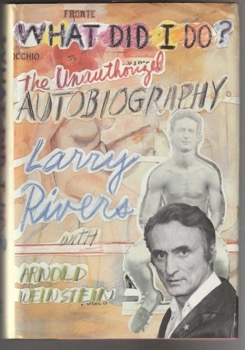
Hardcover. NY, HarperCollins, 1st, 1992, Book: Very Good, Dust Jacket: Very Good, Hardcover in a bright, unclipped dust jacket, 498 pages. The renowned artist offers a humorous take on his own life, discussing among other topics his Bronx childhood, his jazz career, his legendary excesses, and his brief stint in the military. There is the Larry Rivers whose work hangs in the Metropolitan Museum of Art and the National Gallery, and there is the Larry Rivers who himself has hung out in a variety of other, less respectable milieus. Now the artist, musician, friend, lover, and entertaining writer--with help from his old friend playwright Arnold Weinstein--pens perhaps the most outspoken and candid autobiography ever. B&w, some color illustrations. Clean copy.
Softcover. Ventura CA, Pathfinder Publishing, 1st, 1990, Book: Good, Dust Jacket: None, Softcover, 214 pages, b&w illustrations. The story of the career, music, and life of the man who made drums a solo instrument, symbolized the swing era, and is still internationally recognized as "the world's greatest drummer." Book was once owned by a smoker and has odor.
Hardcover. Los Angeles, Reel Art Press, 1sr, 2013, Book: Very Good, Dust Jacket: Very Good, Hardcover. Like new in publishers shrink-wrap. The first anthology dedicated to one of the greatest American photographers of the 20th century, Dennis Stock, during his most celebrated period of the 1950s-1970s. Undisputedly one of America's greatest photographers, in early 1955 Dennis Stock captured one of the iconic images of the 20th century: the black-and-white image of the unknown James Dean walking across a deserted Times Square, trademark cigarette in hand, a brooding and introspective figure hunched into his oversized coat, braced against the rain and set against the backdrop of the Manhattan skyline. Stock took a series of photographs in New York, Hollywood and in Dean's hometown of Fairmount, Indiana. Stock went on to photograph Marlon Brando, Marilyn Monroe, Audrey Hepburn resting her head on a car window on the cusp of fame, JFK on the campaign trail. His catalogue of work throughout this period reflects his ability to empathize with his subjects but not become subservient to them. In the late 1950s, Stock's focus shifted to the leading jazz musicians and performers of the day; this book contains some of the best photographs ever taken of artists such as Duke Ellington, Billie Holiday, Charlie Parker, Miles Davies and Louis Armstrong. This book is a beautiful tribute to Stock's timeless legacy and complete access to the Stock Archive was granted for this stunning 288-page edition.




 "The Jazz Loft Project: Photographs and Tapes of W. Eugene Smith from 821 Sixth Avenue, 1957-1965by: Sam Stephenson")
 "Thinking In Jazz. The Infinite Art Of Improvisationby: Berliner, Paul F")
 "To Anyone Who Ever Asks: The Life, Music, and Mystery of Connie Converseby: Fishman, Howard")
 "Traveling: On the Path of Joni Mitchellby: Ann Powers")
 "Tunes for 'Toons: Music and the Hollywood Cartoonby: Goldmark, Daniel")

 "We call him \"Big\" Joe!: Big horn, big soul, big man: a musician's odyssey, memoirs of \"Big\" Joe Burrell (SIGNED COPY)by: Burrell, Big Joe")
 "We Want Miles: Miles Davis vs. Jazzby: Vincent Bessieres and Franck Bergerot")

 "World of Gene Krupa: That Legendary Drummin' Manby: Bruce H. Klauber")
 "Dennis Stock: American Coolby: Nourmand, Tony")