Softcover. Albuquerque, NM, Amador Publishers, 1st, 1998, Book: Very Good, Dust Jacket: None, Softcover. INSCRIBED by author to Roger Shattuck, literary critic and historian. Publisher's release laid in. 240 pages. "Childhood overseas. Trying to find oneself as an artist. Growing up Latino. Music, musicians, and an eccentric musicologist. A nightmarish piano recital. Abortive romances. Loneliness, silence. The problem of fascism. These are among the subjects evoked in this collection of 14 pieces. Atmospheres vary from wholesome to sinister. Settings include San Juan, Philadelphia, Cambridge, Manhattan, Tucson, Berkeley and an imaginary isle of silence. In the title piece, the Chicano jazz pianist falls in love with a sorority girl who believes in Ayn Rand. To get in her good graces, he reads all of Rand and ends up converted -- with strange consequences." Spine slightly cocked. Else a clean, tight copy.
Hardcover. New Haven, CT, Yale University Art Gallery, 1st, 2014, Book: Very Good, Dust Jacket: None, 207 pages. Hardcover with no dust jacket. Very clean, unmarked copy still in shrink wrap. Images of New Orleans and the city's jazz culture, performers, bands, and clubs between 1957 and 1982. Over 200 black and white photographs taken by Friedlander. Tight copy.
Hardcover. New Haven, CT, Yale University Art Gallery, 1st, 2014, Book: Very Good, Dust Jacket: None, 207 pages. Hardcover with no dust jacket. Very clean, unmarked copy still in shrink wrap. Images of New Orleans and the city's jazz culture, performers, bands, and clubs between 1957 and 1982. Over 200 black and white photographs taken by Friedlander. Tight copy.
Hardcover. Hal Leonard Corporation, 1st, 2007, Book: Very Good, Dust Jacket: Very Good, Hardcover, 226 pages. Haunting the recording studios, jam sessions, concert halls, and nightclubs of New York City, William "PoPsie" Randolph chronicled the postwar transformation of American music from swing and jazz, to rhythm & blues and rock n' roll. The 100,000 negatives left behind after his death in 1978 span the giddy, glitzy heyday of swing in the 1940s, the hot and cool jazz spawned in the clubs of 52nd Street, the rumbling emergence of black R&B and doo-wop, the sudden explosion of rock n' roll in the late '50s, the rise of Brill Building pop and the British Invasion of the '60s, and the growth of rock into a multibillion-dollar industry by the '70s. PoPsie's son Michael has chosen the very best of his father's collection for inclusion in this remarkable book. Here readers will find luscious black-and-white photos of everyone from Benny Goodman and Billie Holiday to Elvis, The Beatles, Hendrix, and the Rolling Stones. Insightful text explains the time, people, and place of each captured moment.
Hardcover. City Hall Records, 1st, 2009, Book: Very Good, Dust Jacket: Very Good, Hardcover, 128 pages. (Book + CD set) Containing the best, and some of the rarest LP covers produced over the long history of the Prestige label, this deluxe coffee table book also features an insightful introduction by famed jazz documentarian Ira Gitler who wrote liner notes for many of Prestige's earliest and best known records. In addition, the book contains an exclusive 9 track bonus CD featuring music culled from several classic Prestige albums. Tracks: Miles Davis - Bemsha Swing, Stan Getz - Lee, Sonny Rollins - Paradox, Jackie McLean - Contour, Moondog - Organ Rounds, John Coltrane - Theme For Ernie, Mose Allison - The Seventh Son, Eric Dolphy - Serene, Booker Ervin - Stella By Starlight.
Hardcover. City Hall Records, 1st, 2009, Book: Very Good, Dust Jacket: Very Good, Hardcover, 128 pages. (Book + CD set) Containing the best, and some of the rarest LP covers produced over the long history of the Prestige label, this deluxe coffee table book also features an insightful introduction by famed jazz documentarian Ira Gitler who wrote liner notes for many of Prestige's earliest and best known records. In addition, the book contains an exclusive 9 track bonus CD featuring music culled from several classic Prestige albums. Tracks: Miles Davis - Bemsha Swing, Stan Getz - Lee, Sonny Rollins - Paradox, Jackie McLean - Contour, Moondog - Organ Rounds, John Coltrane - Theme For Ernie, Mose Allison - The Seventh Son, Eric Dolphy - Serene, Booker Ervin - Stella By Starlight.
Hardcover. Princeton University Press, 1st, 2025, Book: Very Good, Dust Jacket: None, Original pictorial boards (in publisher's unopened shrinkwrap). 280 pages illustrated in b&w and color. Alice Friedman tells the fascinating story of the queer avant-garde of the 1920s and '30s in New York, Paris, and Venice, as seen through the eyes of Max Ewing (1903-1934), a young musician, photographer, and man-about-town who, although virtually unknown today, moved in extraordinary circles. Among his friends and acquaintances, he listed Carl Van Vechten, Gertrude Stein, Muriel Draper, Romaine Brooks, Tallulah Bankhead. In his photographs and letters, we meet the rising stars of modern art, music, dance, and literature and enter a world of interracial friendship, "queer space," and experimentation that shone brightly before being swept away by the Depression.
Hardcover. NY, Abrams, 2006, Book: Very Good, Dust Jacket: Very Good, Hardcover in a bright dust jacket. Introduction by Terry Zwigoff. Includes Bonus Music CD Selected and Compiled by R. Crumb. Bright, clean & tight copy, 240 pages. "Anyone who knows R. Crumb's work as an illustrator knows of his passion for music. And all those who collect his work prize the 'Heroes of the Blues, Early Jazz Greats, and Pioneers of Country Music' trading card sets he created in the early to- mid-1980s. Now they are packaged together for the first time in book form, along with an exclusive 21-track CD of music selected and compiled by Crumb himself (featuring original recordings by Charley Patton, Dock Boggs, Jelly Roll Morton, and others). A brief biography of each musician is provided, along with a full-color original illustration by Crumb.
Hardcover. NY, Norton, 1st, 2011, Book: Very Good, Dust Jacket: None, Hardcover, 96 pages, in slim decorated slipcase. Robert Crumb first began drawing record covers in 1968 when Janis Joplin, a fellow Haight Ashbury denizen, asked him to provide a cover for her album Cheap Thrills. It was an invitation the budding artist couldn't resist, especially since he had been fascinated with record covers-particularly for the legendary jazz, country, and old-time blues music of the 1920s and 1930s-since he was a teen. This early collaboration proved so successful that Crumb went on to draw hundreds of record covers for both new artists and largely forgotten masters. So remarkable were Crumb's artistic interpretations of these old 78 rpm singles that the art itself proved influential in their rediscovery in the 1960s and 1970s. Including such classics as Truckin' My Blues Away, Harmonica Blues, and Please Warm My Weiner, Crumb's opus also features more recent covers done for CDs. R. Crumb: The Complete Record Cover Collection is a must-have for any lover of graphics and old-time music. 450 four-color illustrations.
Hardcover. New York, W. W. Norton & Company, 1st, 2011, Book: Very Good, Dust Jacket: None, Hard cover in slipcase. Like new in publishers shrink-wrap. A landmark work that pays splendid homage to a forgotten era of seminal American music. Robert Crumb first began drawing record covers in 1968 when Janis Joplin, a fellow Haight Ashbury denizen, asked him to provide a cover for her album Cheap Thrills. It was an invitation the budding artist couldn't resist, especially since he had been fascinated with record covers-particularly for the legendary jazz, country, and old-time blues music of the 1920s and 1930s-since he was a teen. This early collaboration proved so successful that Crumb went on to draw hundreds of record covers for both new artists and largely forgotten masters. So remarkable were Crumb's artistic interpretations of these old 78 rpm singles that the art itself proved influential in their rediscovery in the 1960s and 1970s. Including such classics as Truckin' My Blues Away, Harmonica Blues, and Please Warm My Weiner, Crumb's opus also features more recent covers done for CDs. R. Crumb: The Complete Record Cover Collection is a must-have for any lover of graphics and old-time music. 450 four-color illustrations
Hardcover. New York, W. W. Norton & Company, 1st, 2011, Book: Very Good, Dust Jacket: None, Hard cover in slipcasse. Like new in publishers shrink-wrap. A landmark work that pays splendid homage to a forgotten era of seminal American music. Robert Crumb first began drawing record covers in 1968 when Janis Joplin, a fellow Haight Ashbury denizen, asked him to provide a cover for her album Cheap Thrills. It was an invitation the budding artist couldn't resist, especially since he had been fascinated with record covers-particularly for the legendary jazz, country, and old-time blues music of the 1920s and 1930s-since he was a teen. This early collaboration proved so successful that Crumb went on to draw hundreds of record covers for both new artists and largely forgotten masters. So remarkable were Crumb's artistic interpretations of these old 78 rpm singles that the art itself proved influential in their rediscovery in the 1960s and 1970s. Including such classics as Truckin' My Blues Away, Harmonica Blues, and Please Warm My Weiner, Crumb's opus also features more recent covers done for CDs. R. Crumb: The Complete Record Cover Collection is a must-have for any lover of graphics and old-time music. 450 four-color illustrations
Hardcover. NY, Flammarion, 1st, 2020, Book: Very Good, Dust Jacket: Very Good, Hardcover, 360 pages. From high-society balls and fashion shoots to portraits of artists and scenes from urban life in France, this handsome volume--which features an open spine binding so that it lays flat to show off the photographs to their best advantage--showcases Doisneau's best photographs for Vogue Paris. Celebrated photographer Robert Doisneau worked for Vogue from 1949 until 1965, illustrating a postwar France filled with a renewed zest for life. His little-known images of haute couture featured models like Brigitte Bardot and Bettina, who he photographed in the studio and out on the streets. He chronicled the members of the cafe society in their stately homes and at glamorous costume galas, dancing the night away. Best known for his humanist approach, he masterfully captured scenes from everyday life--from the grace of a wedding procession over a footbridge to the petulance of a child impatient for cake. Doisneau's photographs captured the spirit of the era and featured celebrities like Karen Blixen, Picasso, Colette, and Jean Cocteau, as well as jazz musicians, movie stars, and humble craftsmen at work. Legendary Vogue editor in chief Edmonde Charles-Roux's personal homage to the photographer--who was her friend and colleague--offers intimate insight into the man behind the camera, as complex and beautiful as the people and places he immortalized.
Softcover. NY, Da Capo Press, reprint, 1994, Book: Very Good, Dust Jacket: None, Softcover, 301 pages, b&w photos. Sarah Vaughan possessed the most spectacular voice in jazz history. In Sassy, Leslie Gourse, the acclaimed biographer of Nat King Cole and Joe Williams, defines and celebrates Vaughan's vital musical legacy and offers a detailed portrait of the woman as well as the singer. Revealed here is "The Divine One" as only her closest friends and musical associates knew her. By her early twenties Sarah Vaughan was singining with Dizzy Gillespie, Charlie Parker, and Billy Eckstine, helping them invent bebop. For forty-five years thereafter, she reigned supreme in both pop and jazz, with several million-selling hits (among them "Broken Hearted Melody," "Make Yourself Comfortable," and "Misty"). But life offstage was never smooth for Sarah Vaughan. Her voluptuous voice was matched by her exuberant appetite for excess: three failed marriages, financial difficulties through many changes in management, late-night jam sessions, liquor, and cocaine. Remainder line on bottom edge, otherwise clean.
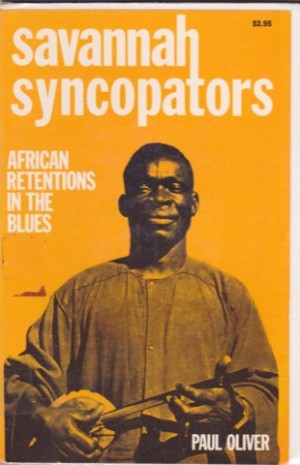
Softcover. NY, Stein and Day, 2nd pr., 1974, Book: Good, Dust Jacket: None, Softcover, laminated card wraps, 112 pages, b&w illustrations. Ex-library copy with light stamping and bookplate on inside front cover. On the African influences on blues and jazz.
Hardcover. New York, Harry N. Abrams, 1st, 2010, Book: Very Good, Dust Jacket: Very Good, 160 pages. Hardcover with dust jacket. Clean, unmarked copy with only minor wear to dust jacket. A celebration of jazz legend Sonny Rollin's incredibly prolific career. This intimate appreciation in pictures and words combines the images of John Abbott, who was Rollin's photographer of choice for the past twernty years has captured the saxophonist at home and at work, and the essays of Bob Blumenthal, a jazz critic who has chronicled Rollins and his art for nearly four decades.
Hardcover. US, Harry N. Abrams, 1st, 2010, Book: Very Good, Dust Jacket: Very Good, 160 pages. Hardcover with dust jacket. Clean, unmarked copy with only minor wear to dust jacket. a celebration of jazz legend Sonny Rollin's incredibly prolific career. This intimate appreciation in pictures and words combines the images of John Abbott, who was Rollin's photographer of choice for the past twernty years has captured the saxophonist at home and at work, and the essays of Bob Blumenthal, a jazz critic who has chronicled Rollins and his art for nearly four decades.
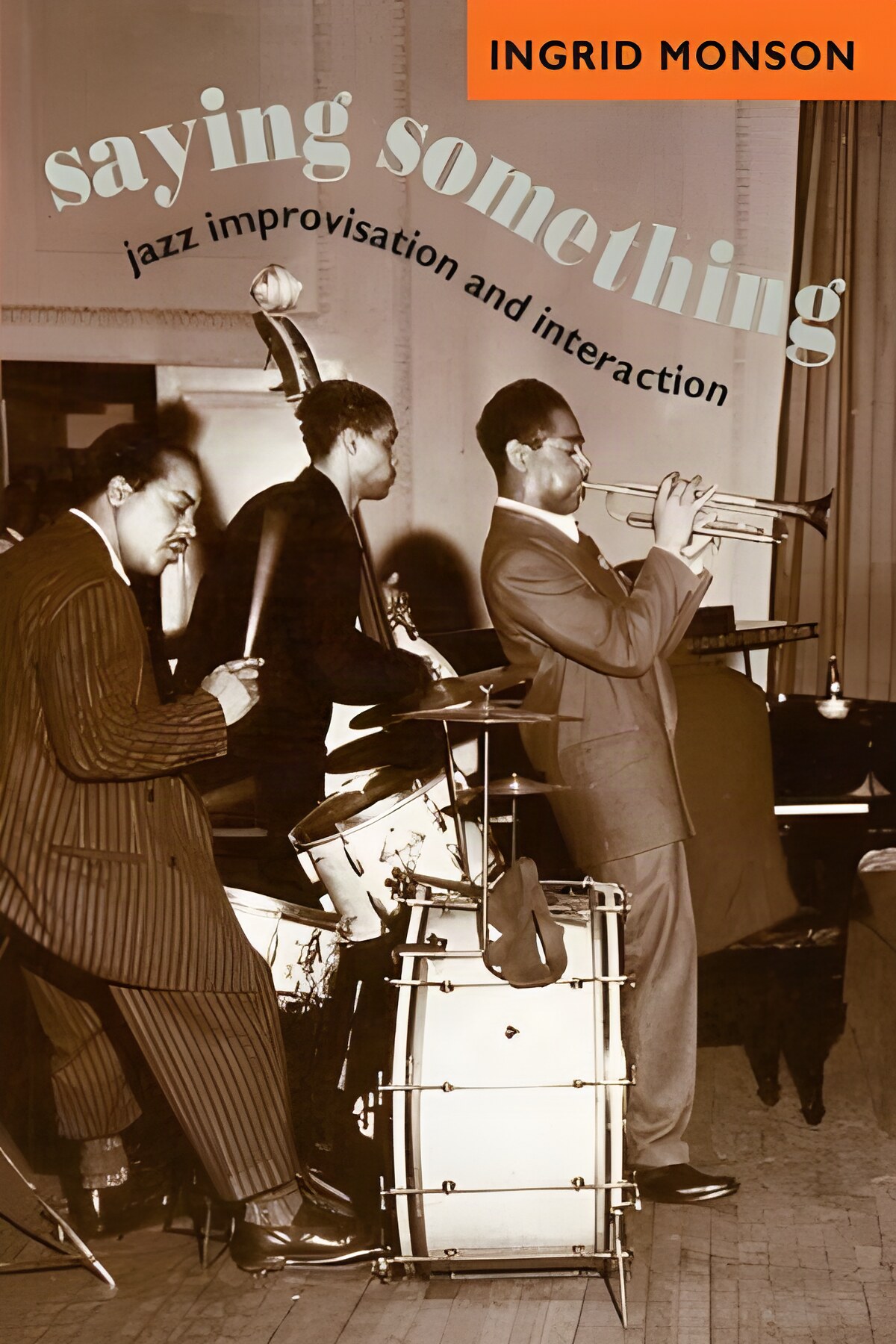
Softcover. Chicago, University of Chicago Press, 1st, 1997, Book: Very Good, Dust Jacket: None, Softcover, 253 pages. In this work, Ingrid Monson juxtaposes musicians' talk and musical examples to ask how musicians go about "saying something" through music in a way that articulates identity, politics, and race. Clean, bright copy.
Hardcover. Berkeley, University of California Press, 3rd pr., 2018, Book: Very Good, Dust Jacket: Very Good, Hardcover in a bright dust jacket, 279 pages, b&w photos. Sophisticated Giant presents the life and legacy of tenor saxophonist Dexter Gordon (1923-1990), one of the major innovators of modern jazz. In a context of biography, history, and memoir, Maxine Gordon has completed the book that her late husband began, weaving his "solo" turns with her voice and a chorus of voices from past and present. Reading like a jazz composition, the blend of research, anecdote, and a selection of Dexter's personal letters reflects his colorful life and legendary times. It is clear why the celebrated trumpet genius Dizzy Gillespie said to Dexter, "Man, you ought to leave your karma to science." Clean copy.
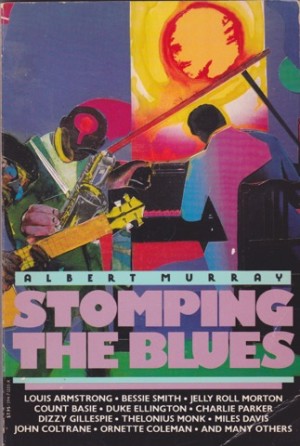
Softcover. NY, Vintage Books, reprint, 1982, Book: Very Good, Dust Jacket: None, Softcover, pictorial wrappers, 264 pages, b&w illustrations. In this classic work of American music writing, renowned critic Albert Murray argues beautifully and authoritatively that the blues as such are synonymous with low spirits. Not only is its express purpose to make people feel good, which is to say in high spirits, but in the process of doing so it is actually expected to generate a disposition that is both elegantly playful and heroic in its nonchalance. In Stomping the Blues Murray explores its history, influences, development, and meaning as only he can. More than two hundred vintage photographs capture the ambiance Murray evokes in lyrical prose. Only the sounds are missing from this lyrical, sensual tribute to the blues. Originally published in 1976. Name on front fly leaf, otherwise clean with mild shelf wear.
Hardcover. Washington, Prestel, 1st, 2016, Book: Very Good, Dust Jacket: None, 288 pages. Softcover. Very clean, like new in publishers shrink-wrap. This book pays tribute to the mature work of Stuart Davis, a distinctly American artist who adapted European modernism to reflect the sights, sounds, and rhythms of popular culture. Beginning in 1921, a series of creative breakthroughs led Davis away from figurative painting and toward a more abstract expression of the world he inhabited. Drawing upon his admiration for Cezanne, Leger, Picasso, and Seurat, Davis developed a style that would evolve over the next four decades to become a dominant force in postwar art. His visionary responses to modern life and culture both high and low remain relevant more than 50 years after his death. Focusing on the images and motifs that became hallmarks of his career, this book features approximately 100 works-from his paintings of tobacco packages of the early 1920s, the abstract Egg Beater series, and the WPA murals of the 1930s, to the majestic works of his last two decades. The authors take a critical approach to the development of Davis's art and theory, paying special attention to the impact his earlier work had upon his later masterpieces. They also discuss Davis's unique ability to assimilate the lessons of Cubism as well as the imagery of popular culture, the aesthetics of advertising, and the sounds and rhythms of jazz-his great musical passion. Informed by previously unpublished primary documents, the detailed chronology is, in effect, the first Davis biography. Together, these elements create a vital portrait of an artist whose works hum with intelligence and energy.
Hardcover. NY, W. W. Norton, 1st, 1993, Book: Very Good, Dust Jacket: Very Good, Hardcover in a bright, unclipped dust jacket. A biography of the jazz clarinetist. Illustrated with photos, 522 pages including index. Clean copy.
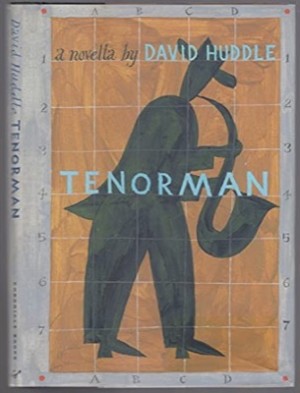
Hardcover. San Francisco, Chronicle Books, 1st, 1995, Book: Very Good, Dust Jacket: Very Good, Hardcover in a bright dust jacket. First work of longer fiction (although still a brief one) by this Virginia-born poet and short story writer. A moving story of jazz and an old muscian brought back to the United States as a 'museum project' to capture his creative process and preserve his music. Clean copy.
Hardcover. Chicago, University of Chicago Press, 1st, 2016, Hardcover in a bright dust jacket, still in publisher's shrinkwrap. This stunning book charts the rich history of the blues, through the dazzling array of posters, album covers, and advertisements that have shaped its identity over the past hundred years. The blues have been one of the most ubiquitous but diverse elements of American popular music at large, and the visual art associated with this unique sound has been just as varied and dynamic. There is no better guide to this fascinating graphical world than Bill Dahl--a longtime music journalist and historian who has written liner notes for countless reissues of classic blues, soul, R&B, and rock albums. With his deep knowledge and incisive commentary--complementing more than three hundred and fifty lavishly reproduced images--the history of the blues comes musically and visually to life.


 "Playing for the Benefit of the Band: New Orleans Music Cultureby: Friedlander, Lee")
 "Playing for the Benefit of the Band: New Orleans Music Cultureby: Friedlander, Lee")
 "PoPsie: American Popular Music Through The Camera Lens of William \"PoPsie\" Randolphby: Randolph, Michael")



![R. Crumb's Heroes of Blues, Jazz & Country [book & CD] by: Crumb, Robert; Calt, Stephen; Nevins, Richard; Jasen, David](https://www.browsingisarousing.com/shop/images/399703.jpg "R. Crumb's Heroes of Blues, Jazz & Country [book & CD] by: Crumb, Robert; Calt, Stephen; Nevins, Richard; Jasen, David")

 "R. Crumb: The Complete Record Cover Collectionby: Crumb, R.")
 "R. Crumb: The Complete Record Cover Collectionby: Crumb, R.")
 "Robert Doisneau: The Vogue Yearsby: Doisneau/Edmonde Charles-Roux, Robert")
 "Sassy: The Life Of Sarah Vaughanby: Leslie Gourse")
 "Saxophone Colossus: A Portrait of Sonny Rollinsby: Blumenthal, Bob")
 "Saxophone Colossus: A Portrait of Sonny Rollinsby: Blumenthal, Bob")

 "Stuart Davis: In Full Swingby: Cooper, Harry")
 "Sweet Man: The Real Duke Ellington by: George, Don")
 "Swing, Swing, Swing: The Life and Times of Benny Goodmanby: Firestone, Ross")
 "The Art of the Blues: A Visual Treasury of Black Music's Golden Ageby: Bill Dahl")

