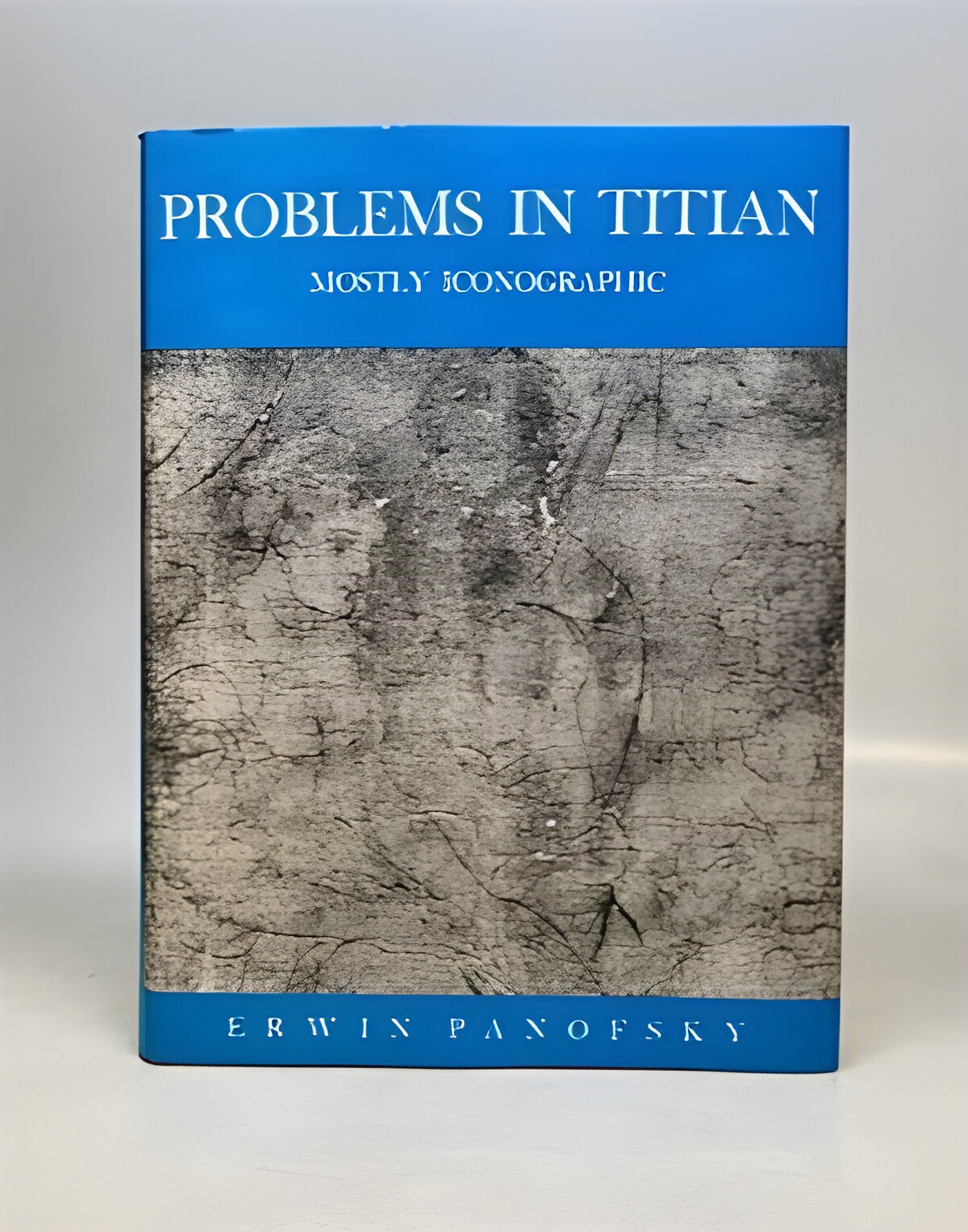
Hardcover. New York, NYUP, 1st, 1969, Book: Very Good, Dust Jacket: Very Good, Hardcover. 208 pages of text followed by a ection of corresponding black & white illustrations. Titian's fame as the greatest colorist in the history of painting has led students of his art to concentrate on problems of style and authenticity rather than on problems of content and meaning. Dr. Panofsky treats this neglected aspect of the Venetian master's work with a wealth of humanistic scholarship, exploring such varied topics as Titian's relationship to the philosophy and literature of his time, his attitude toward the antique, and the reasons behind his unrivaled acclaim as a portraitist. These studies show Titian to have been a man of far richer and more complex culture than hitherto assumed, possessed not only of the supremely gifted hand but of a subtle and poetic mind.Light wear. Clean, tight copy.
Hardcover. Princeton University Press, 1st, 1956, Book: Very Good, Dust Jacket: None, Hardcover, green cloth covers with gilt and black title on spine, 353 pages. WITH THE AUTHOR'S INSCRIPTION pasted to front fly leaf. Clean copy.
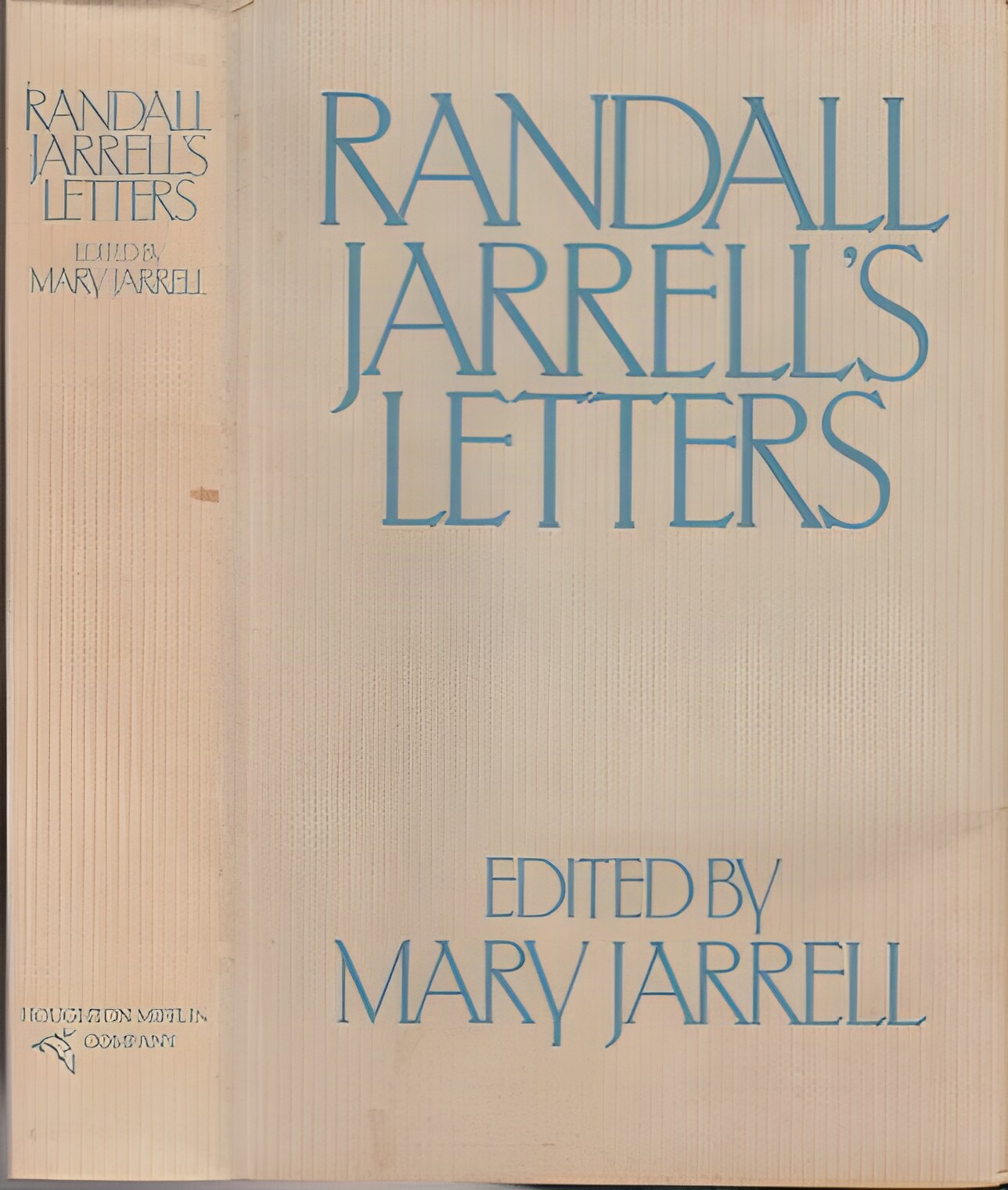
Hardcover. Boston, Houghton Mifflin , 1st, 1985, Book: Very Good, Dust Jacket: Good, Hardcover in a dust jacket, 540 pages. A comprehensive collection of letters from Jarrell. Edited by his second wife Mary Jarrell with the assistance of Stuart Wright. Jarrell's letters span over fifty years and document his life, thoughts, and writing. The letters are insightful and often humorous, and provide a unique perspective on the author's life and work. Paper covered boards with a cloth spine, dust jacket with mild soil, stain. No markings.
Hardcover. Hatje Cantz, 1st, 2013, Book: Very Good, Dust Jacket: None, Hardcover with illustrated boards, 212 pages. Since the late 1970s, as a pioneer of Southern California underground culture, Raymond Pettibon has blurred the boundaries of "high" and "low," from the deviations of marginal youth to art history, literature, sports, religion, politics and sexuality. Rich in detail, his obsessively worked drawings pull freely from myriad sources spanning the cultural spectrum. The resulting, highly poetic constructions function as acute reflections of contemporary society. Throughout the years, his subjects have included political figures and historical events, with particular intensity since the events of September 11, 2001. Seen here are images of Ronald and Nancy Reagan, J. Edgar Hoover, both Bush presidents, the Kennedys, Hitler, scenes from the Vietnam War and protest movements, wars in Iraq and Afghanistan, the prisoner abuse of Abu Ghraib, President Obama and Osama bin Laden. Raymond Pettibon (born 1957) studied economics at UCLA around the same time he joined his brother in the punk band Black Flag. He soon began to contribute artwork to album covers, flyers and t-shirts, for the band and its label, SST Records, and exhibited his work in group shows in galleries in the 1980s. Since the 1990s his work has been the subject of numerous major solo exhibitions.
Hardcover. NY, St. Martin's Press, 1st, 1995, Book: Very Good, Dust Jacket: Very Good, Hardcover in a violet dust jacket with light fading to spine, 232 pages. A collection of essays exploring all aspects on a controversial English poet, the 17th century libertine, The Earl of Rochester. Different sections focus on sexual politics, on the poetry of intellect, and on Rochester and his contemporaries. Name, date and light pencil notations on front fly leaf, otherwise clean.
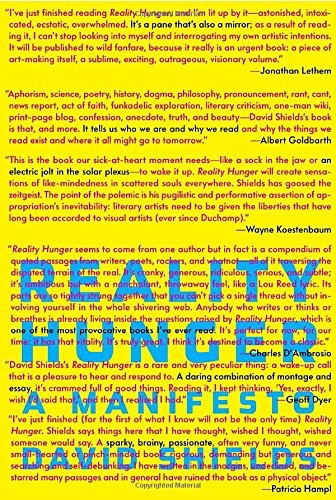
Hardcover. New York, Knopf, 1st, 2010, Book: Very Good, Dust Jacket: Very Good, Hardcover, 219 pages. Clean, bright copy. "I doubt very much that I'm the only person who's finding it more and more difficult to want to read or write novels," David Shields acknowledges in Reality Hunger, then seeks to understand how the conventional literary novel has become as lifeless a form as the mass market bodice-ripper. Shields provides an ars poetica for writers and other artists who, exhausted by the artificiality of our culture, "obsessed by real events because we experience hardly any," are taking larger and larger pieces of the real world and using them in their work. Reality Hunger is made of 600-odd numbered fragments, many of them quotations from other sources, some from Shields's own books, but none properly sourced--the project being not a treasure hunt or a con but a good-faith presentation of what literature might look like if it caught up to contemporary strategies and devices used in the other arts, and allowed for samples (that is, quotation from art and from the world) to revivify existing forms. Shields challenges the perceived superiority of the imagination and exposes conventional literary pieties as imitation writing, the textual equivalent of artificial flavoring, sleepwalking, and small talk. I can't name a more necessary or a more thrilling book.
Hardcover. Madison WI, University of Wisconsin Press, 1st, 1989, Book: Very Good, Dust Jacket: Good, Hardcover in a lightly worn dust jacket with fading to the spine. "Cary Nelson performs an invaluable service to the reader by recovering the work of dozens of forgotten poets, especially women, blacks, and writers on the left, while making it clear that the texts we recover inevitably gain new meaning from their positioning within contemporary culture." Nicely illustrated in b&w and some color, mostly book jackets and title pages of books discussed. Some light pencil marking in margins.
Hardcover. New Haven, Yale University Press, 1st, 1993, Book: Very Good, Dust Jacket: Very Good, Hardcover in a bright, unclipped dust jacket. INSCRIBED BY AUTHOR on the title page. What motivates us to reread literary works? How is our pleasure, interpretation, involvement, and evaluation different when we read a literary work and when we reread it? This fascinating book by Matei Calinescu is the first to focus on the implications of rereading for critical understanding. Drawing on literary theory, cultural anthropology, psychology, philosophy, and previous theories of reading, Calinescu describes the dynamics of rereading and explores the sometimes complementary, sometimes sharply conflicting relationships between reading and rereading. Calinescu analyzes fictional works by Borges, Nabokov, Proust, Robbe-Grillet, and Henry James, among others, explaining how reading texts is related both to symbolic play or make-believe and to games with rules. He reviews the history of reading in modern times, discussing, for example, how the Reformation led to rereadings of Scripture and how the proliferation of books during the Enlightenment led to a shift from "intensive reading" to "extensive reading." Calinescu looks at the distinctions between reading and rereading from the perspectives of the age, situation, and gender of the individual reader. He discusses the problems raised by secret or oblique languages and codes - devised to evade censors, communicate with a select audience of "secret sharers," or play games of hide-and-seek with the reader - and shows that they naturally lead to rereading a text. Calinescu argues persuasively that an understanding of rereading is useful in formulating both analytic strategies of practical criticism and a poetics of reading. Clean, bright copy.
Softcover. Chicago, University Of Chicago Press, 1st pbk, 2005, Book: Very Good, Dust Jacket: None, Softcover, 123 pages, SIGNED BY AUTHOR on title page. Very clean and tight copy.
Hardcover. NY, Henry Holt, 1st, 1995, Book: Very Good, Dust Jacket: Very Good, Hardcover in a bright dust jacket, 524 pages. Robert Graves was astonishingly prolific and worked in many genres. He wrote lyric poetry, scholarly studies of mythology, drama, criticism, and journalism, he translated from Latin, and is probably best known for his potboilers "I, Claudius" and "Claudius the God," works that he considered purely commercial and took little interest in. And, as Miranda Seymour makes clear, he was as odd a duck as ever walked. His life was defined by the women to whom he devoted himself. "Abased himself" would perhaps be the better term. The first and most influential was the American Laura Riding, a second-rate poet who fancied herself some sort of prophetess who would save the world from war and turned Graves into her adoring puppy. Later in life Graves devoted himself to a series of young women, each of whom he claimed embodied "the goddess" in whose service he thought he dwelled. Seymour (a novelist herself) writes beautifully, and with the cooperation of key members of the Graves family she has produced what will surely be the definitive biography of Graves for years to come.
Hardcover. New Haven, Yale University Press, 1st, May 11, 2000, Book: Very Good, Dust Jacket: Very Good, Hardcover, 303 pages, illustrated throughout. Very clean and tight copy. Although lumped together with Pop artists such as Roy Liechtenstein and Andy Warhol, and often the movement's spokesperson, Indiana and his paintings actually have an uneasy fit in Pop company, mostly because his work isn't grounded in the commodity-oriented (Campbell Soup) realism of most Pop Art. Instead, his work engages with literature and poetry and with the popular rhetoric of the American dream-all permeated by the particularities of his upbringing and life. Ryan's dual accomplishments are in articulating the dynamics of Indiana's art-especially the connections between the artworks and the sources of imagery and themes in his own biography-and in rendering a sophisticated and judicious roundup of the Pop Art movement.
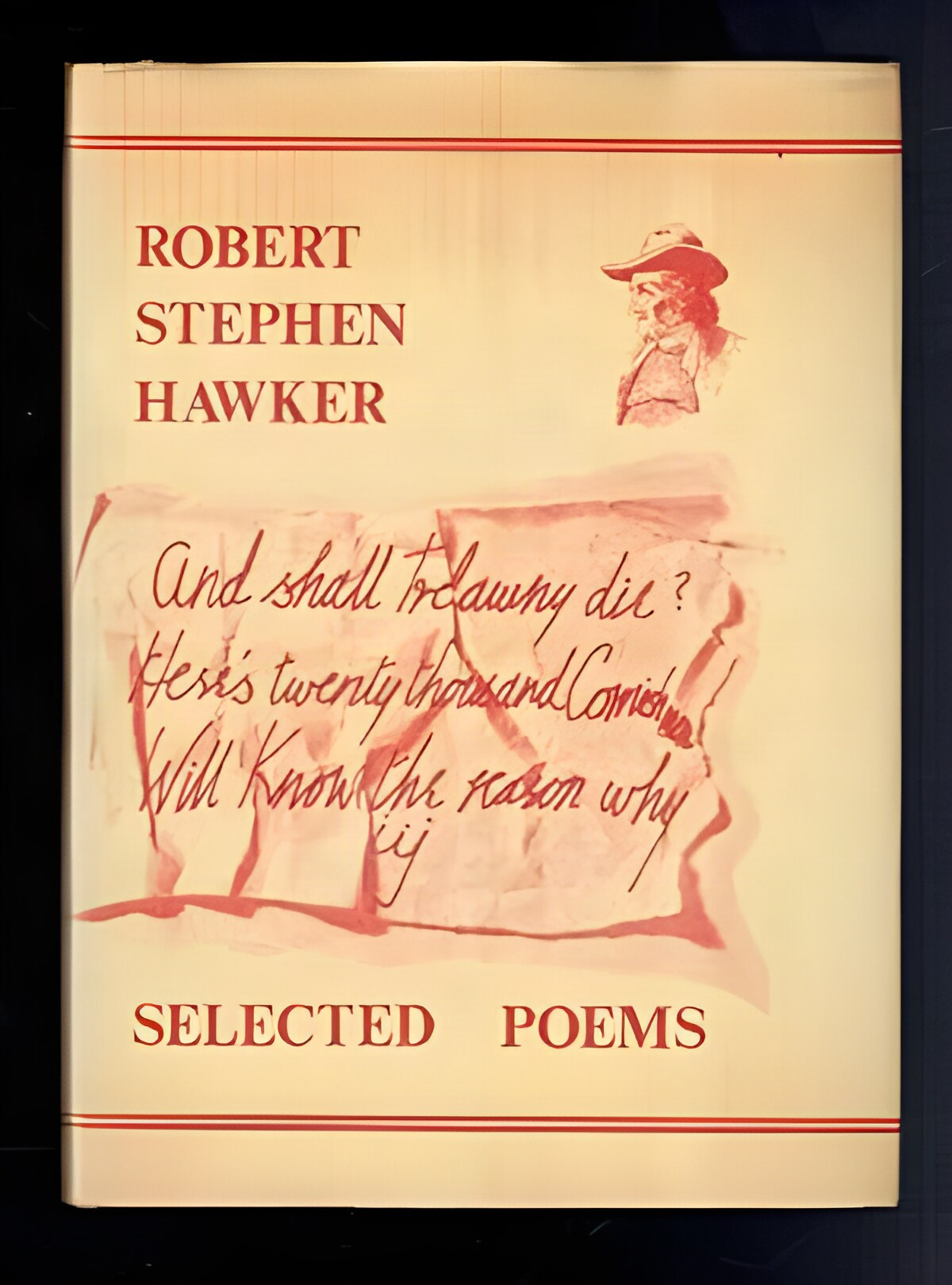
Hardcover. Oxford, Basil Blackwell, 1st, 1926, Book: Very Good, Dust Jacket: None, Hardcover, blue cloth with faded gilt lettering on spine. 191 pages, b&w frontis. of Hawker. Small name stamp on front fly leaf, otherwise clean copy.
Hardcover. NY, Viking, 1st, 1991, Book: Very Good, Dust Jacket: Very Good, Hardcover in a bright, unclipped dust jacket, 402 pages. Biography of American poet Sylvia Plath, author of the autobiographical "The Bell Jar" (1932-1963). Illustrated with black and white photographs. Clean, bright copy.
Hardcover. Bennington VT, Images from the Past, 1st, 1997, Book: Very Good, Dust Jacket: Very Good, Hardcover in a bright dust jacket. Rudyard Kipling in Vermont tells the story of the dynamic years 1892-1896 with Kipling's own letters and memoirs, selected excerpts from his poetry, and the words of those who knew and admired him. More than thirty illustrations illustrate the little-known tale of a time he said "would be blessed to me for all my life." Kipling was born in Bombay, India, and was a prolific writer. He received the Nobel Prize for Literature in 1907. He married an American wife and moved to the village of Brattleboro, VT. He only lived in Vermont for four years. But during that time he wrote his famous "Jungle Book" series. Family troubles forced him to move and the large estate he lived in over looking town fell into disrepair. Clean copy.
Hardcover. NY, Alfred A. Knopf, 1st, 1926, Book: Very Good, Dust Jacket: None, Hardcover, black cloth with gilt stamping, 85 pages. First edition, first printing with date to title page matching that copyright page. Seven b&w plates by the author. A 1926 work by Lebanese-American poet Khalil Gibran. It contains eighty-five pages of aphorisms, poems, and parables that demonstrate Gibran's characteristic ability to masterfully encapsulate profound concepts in just two or three lines. Gilt lettering on spine faded. There is a previous owner's name in red ink on the front fly leaf, otherwise a clean copy.
Softcover. Los Angeles, The Augustan Reprint Society , reprint, 1984, Book: Very Good, Dust Jacket: None, Softcover, Introduction by Vincent Carrata plus 52 pages. Facsimile reprints. Clean copy.
Hardcover. New Haven CT, Yale University Press;, 1st, 2006, Book: Very Good, Dust Jacket: Very Good, Hardcover, 288 pages. Saul Steinberg (1914-99) described himself as a "writer who draws," thus inspiring curator Smith to characterize Steinberg's brilliantly satiric drawings as "illuminations," thus linking his work to illuminated manuscripts and, given Steinberg's love of literature, to a particular favorite, Arthur Rimbaud's Illuminations. Smith also explores Steinberg's mission to illuminate the overlooked and the absurd. In the biographical sections of his beautifully crafted critique, Smith affectingly recounts Steinberg's life as a Jew in anti-Semitic Romania and an architecture student in Fascist Milan whose distinctive cartoons served as his ticket out of Nazi Europe and onto the pages of the New Yorker. Both Smith and renowned poet Charles Simic associate Steinberg's fascination with documents with his harrowing refugee experiences, while Simic, a fellow immigrant from the Balkans and a friend of Steinberg's, offers striking insights into the artist's comic sensibility. Both commentators reflect on the great change in Steinberg's work after 1960, as his images turned hallucinatory and nightmarish, his protest against tyranny more intense. As instantly recognizable as Steinberg's kinetic, punning, and slyly skewering art is, there hasn't been a comprehensive Steinberg book in years, making this outstanding volume invaluable in its reclamation of Steinberg's agile, philosophic, and category-defying art.
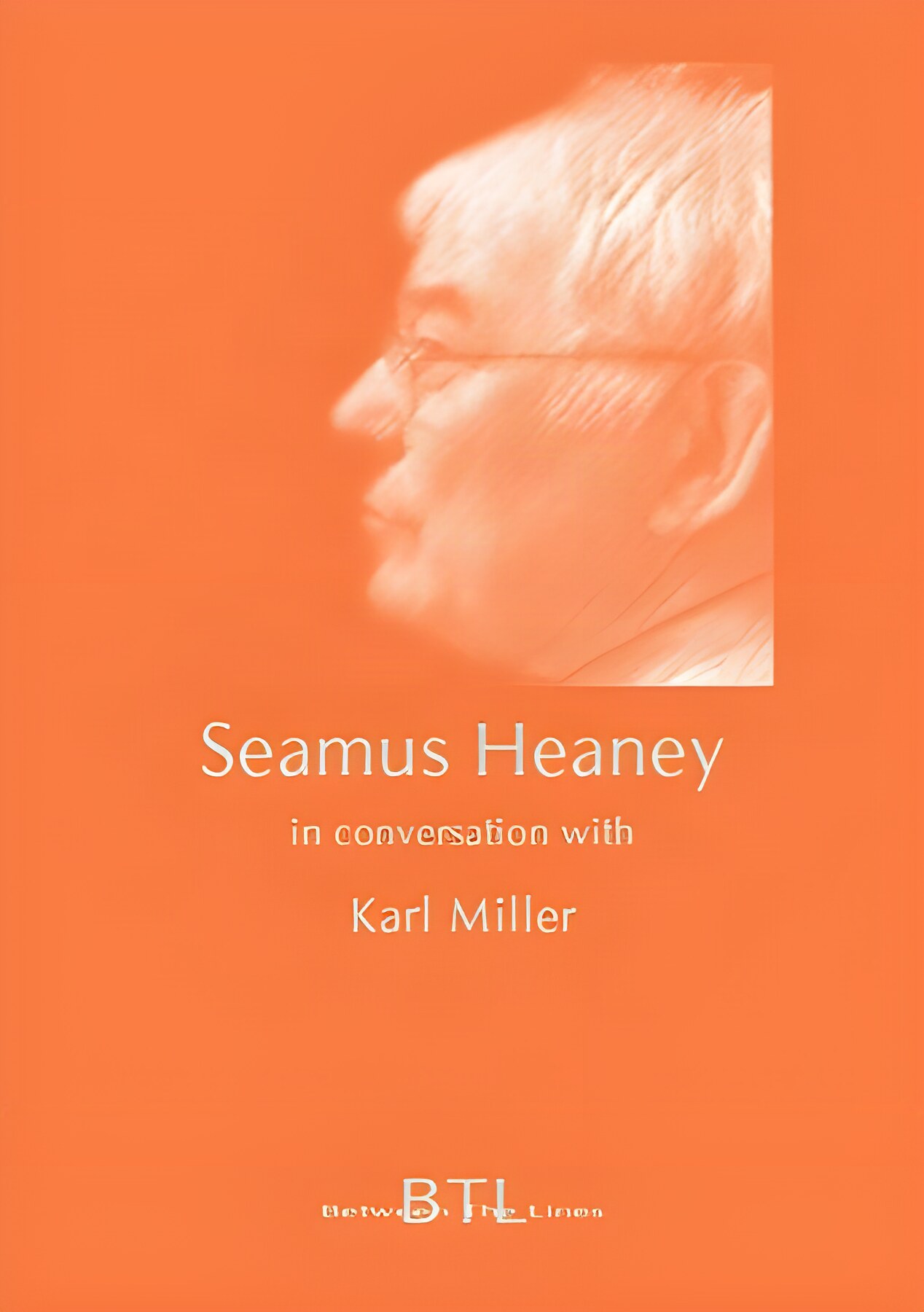
Softcover. London, Between the Lines, 1st, 2000, Book: Very Good, Dust Jacket: None, Softcover, 112 pages. A 17,000 word interview, with a career sketch, a comprehensive bibliography, and a representative list of quotations from Heaney's critics and reviewers. Also included is Heaney's poem, 'Known World'. Spine faded, clean copy.
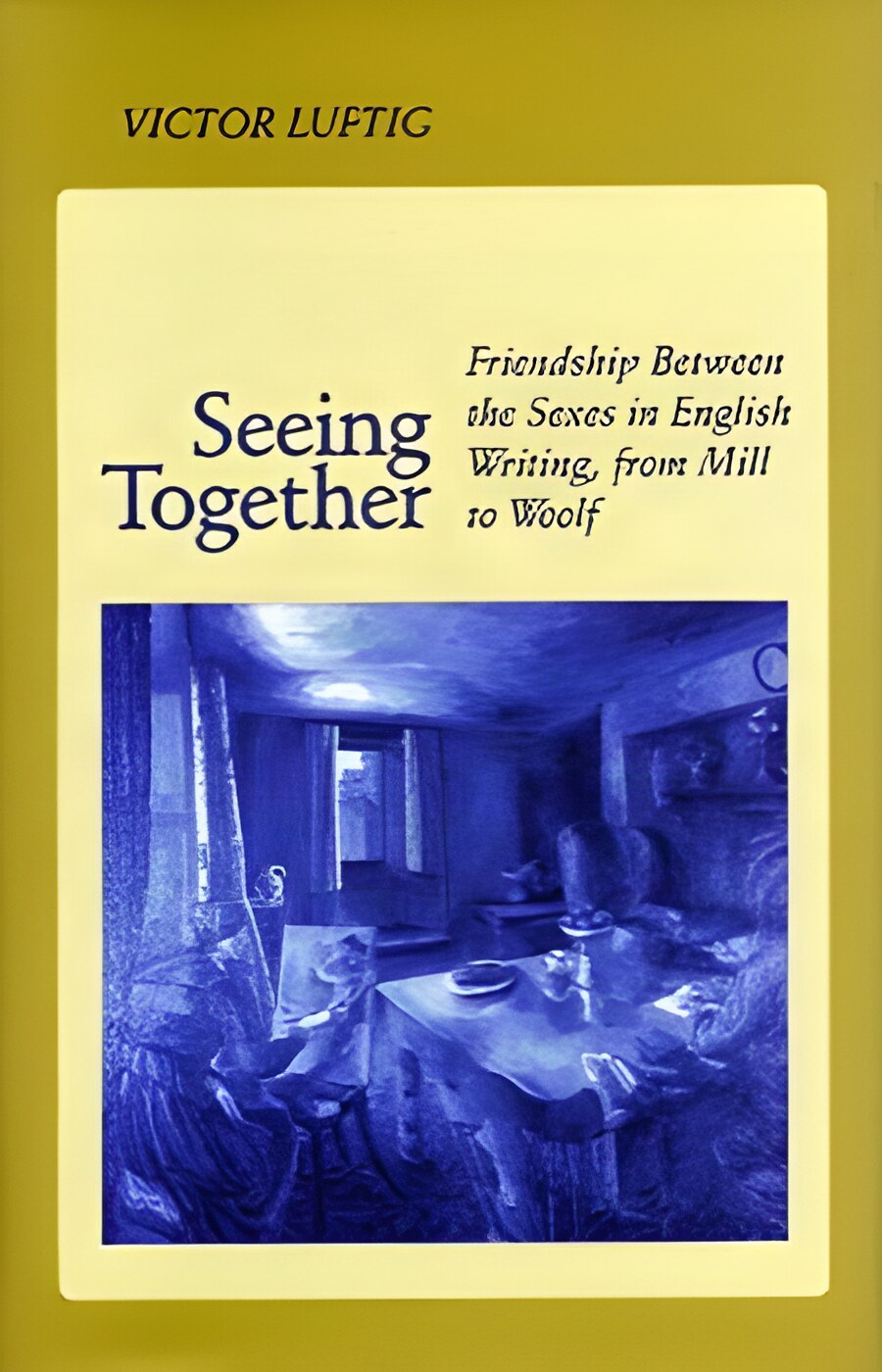
Hardcover. Stanford CA, Stanford University Press, 1st, 1993, Book: Very Good, Dust Jacket: Very Good, Hardcover in a bright dust jacket, 308 pages including index. Friendship between the sexes is notoriously difficult to describe. Seeing Together examines the efforts of some of England's key writers - from poets to propagandists - during a period when 'mere friendship' came to seem intensely important and when discussion of professional relations between men and women came to touch upon a troubling network of sexual, social and political dynamics. Among the authors discussed are John Stuart Mill, Robert Browning, George Eliot, Thomas Hardy, Henry James, Joseph Conrad, D. H. Lawrence and Virginia Woolf. Small name on fly leaf otherwise a bright, clean copy.
Hardcover. Lewisburg/London, Bucknell University Press / Associated University Presses,, 3rd pr., 2003, Book: Very Good, Dust Jacket: Very Good, Hardcover in a bright dust jacket, 268 pages. "Ruben Dario" is the pseudonym of Felix Ruben Garcia Sarmiento. He was born in Metapa, Nicaragua (today known as Ciudad Dario) in January 18, 1867. Dual Spanish/English text. Clean, bright copy. Dario is possibility the poet who has had the greatest and most lasting influence in twentieth century Spanish literature. He has been praised as the prince of Castilian letters.
Hardcover. New Haven CT, Yale University Press, 1st, 1968, Book: Very Good, Dust Jacket: Fair, Hardcover in a chipped, tape repaired dust jacket. Maroon cloth with gilt lettering on spine. 266 pages. INSCRIBED BY SIPE on the front fly leaf to fellow professor Roger Mitchell. English majors are used to being told that Shakespeare frequently broke the rules of iambic pentameter, and that as he matured artistically, his usage became bolder and freer. Well, it isn't true. Shakespeare's iambics turn out to be extremely orthodox (which just makes all the more impressive the variations he was able to create within the rules). In 1968 Dorothy Sipe went to the remarkable labor of demonstrating this objectively through a painstaking analysis of over 13,000 lines of verse. She also supplied information I've never found anywhere else on the prosodic rules taught by poets to poets in Shakespeare's day. All this said, including a five star rating for the perfect achievement of its goal, the book is definitely not for everyone interested in Shakespeare's verse and methods. It is devoted to proving a highly specific case by means of many, many examples that non-specialists are likely to find tedious. But if you are deeply interested in some subjects -- Shakespeare's iambics, his coinages, and the history of English iambic technique -- it is well worth your time. Dust jacket tanned, otherwise a clean, tight copy.
Hardcover. Boston, Le Roy Phillips, 1st, 1912, Book: Very Good, Dust Jacket: None, 652 pages. Hardcover. Brown cloth covers with titles in gilt. Top edge gilt. Illustrated with 46 full color tipped-in plates. Pages featuring illustrations show some age darkening. Clean, tight copy.


 "Raymond Pettibon: Here's Your Irony Back: Political Works 1975-2013by: Raymond Pettibon/Benjamin Buchloh")



 "Repression And Recovery: Modern American Poetry & Politics Of Cultural Memory 1910-1945by: Cary Nelson")
 "Rereading (INSCRIBED COPY)by: Calinescu, Matei")
 "Resistance to Poetry, The (SIGNED COPY)by: Longenbach, James")
 "Robert Graves: Life on the Edgeby: Miranda Seymour")
 "Robert Indiana: Figures of Speechby: Ryan, Professor Susan Elizabeth")

 "Rough Magic: A Biography of Sylvia Plath by: Paul Alexander")




 "Saul Steinberg: Illuminationsby: Joel Smith and Charles Simic")


 "Shakespeare's Metrics (INSCRIBED COPY)by: Sipe, Dorothy L.")
 "Songs & Poems of Robert Burns, Theby: Burns, Robert")