Softcover. NY, Columbia University Press, 1st, 1990, Book: Very Good, Dust Jacket: None, Softcover, 395 pages. The essays gathered here, in addition to those by editors Wm. Theodore de Bary and Irene Bloob, are written by leading scholars of Asian cultures--among them Donald Keene, Peter Awn, Barbara Stoler Miller, Ainslie Embree, Burton Watson, C.T. Hsia, Paul Anderer, and others. They introduce classics from the Islamic, Indian, Chinese, and Japanese traditions, providing entree to texts which have emerged as monuments of Asian thought and literature. Among the works discussed are the Qu'ran, the philosophy of history of Ibn Khaldun, the Upanishads, the epic Mahabarata, the philosopher Mencius, the Lotus Sutra, T'and Poetry, the Tale of Genji, and the poet Basho.
Softcover. Chicago, Chicago Review, 1st, 2004, Book: Very Good, Dust Jacket: None, Softcover, literary journal with entire issue devoted to the poet. Fairly scarce. New and bright all around wraps. Poems by Dorn, plus an interview, correspondence to and from, LeRoi Jones and Tom Raworth, and Dale Smith, an interview with Eleni Sikelianos.
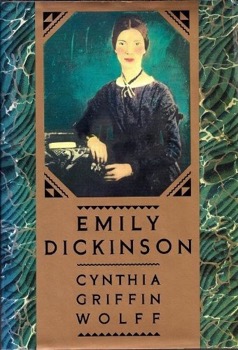
Hardcover. NY, Knopf, reprint, 1986, Book: Very Good, Dust Jacket: Very Good, Hardcover, 638 pages. Dark gray covers, color illustrated dust jacket. Traces the life of the nineteenth-century American poet and analyzes all of her major poems. Light edge wear to dust jacket, pages crisp and unmarked, previous owner's signature to front end paper corner; overall, a very clean, tight copy.
Hardcover. New York , Bollingen Foundation/Pantheon, 1st thus, 1964, Book: Very Good, Dust Jacket: Very Good, Hardcovers, four volumes in a slipcase. Blue cloth covers with red spine labels, gilt lettering. Unclipped dust jackets. 345,547,540, and volume 4 index 109 pages and photo reproduction of the original 1837 edition in Russian. Bollingen Series LXXII. Slipcase is sound. Clean, bright set with only minoe shelf wear.
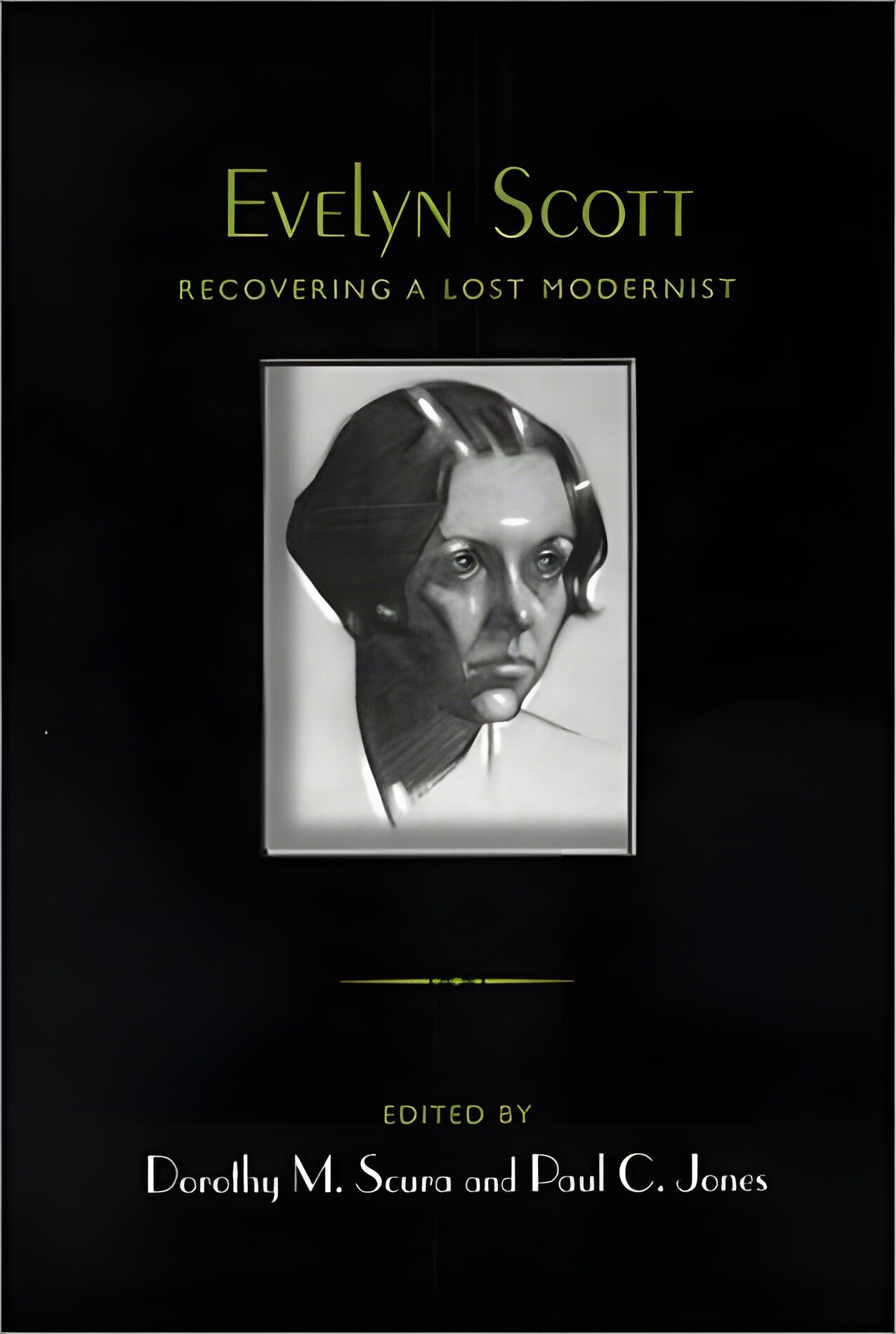
Hardcover. Knoxville TN, University of Tennessee Press, 1st, 2001, Book: Very Good, Dust Jacket: Very Good, Hardcover in a bright dust jacket, 235 pages. Evelyn Scott was a significant literary figure in American letters of the 1920s and 1930s, an important contributor in the experimental forms and techniques of the modernist movement. She wrote and published in many genres -- the novel, short fiction, poetry, memoir, criticism, and drama. Since that time, Scott's work has been forgotten by most readers and critics, and her reputation as an important writer of her day has been obscured. This collection, which features an introduction and thirteen critical essays, is the first volume to focus on Scott's work rather than her intriguing yet troubled life and initiates a long-needed examination of Scott's innovations in fiction, memoir, and other genres. The various essays take diverse critical approaches to Scott's canon, including her best-known works -- Escapade and The Wave -- and explore her views on topics such as women, politics, religion, art, and the South. Clean copy.
Hardcover. NY, Farrar, Straus and Giroux, 1st, 1996, Hardcover, 106 pages, color plates. Edited with an Introduction by William Benton. Illustrated with full-page color reproductions of 40 paintings by Elizabeth Bishop. Elizabeth Bishop (February 8, 1911 October 6, 1979) was an American poet and short-story writer. She was Consultant in Poetry to the Library of Congress from 1949 to 1950, the Pulitzer Prize winner for Poetry in 1956, the National Book Award winner in 1970, and the recipient of the Neustadt International Prize for Literature in 1976. Bump to bottom lower corner of book. Clean copy.
Hardcover. Norfolk UK, Black Dog Books, 1st, 2007, Book: Very Good, Dust Jacket: Very Good, 310 pages. Hardcover. Author signed. B/w illustrations throughout. Dust jacket front flap price clipped. Clean inside and out. From the dust jacket front flap: "These essays, written over a 30-year period and published to celebrate the Benson Medal for Literature awarded to Ronald Blythe in 2006, offer Blythe's lingering comment on his life as a writer."
Hardcover. Philadelphia, John Patterson and Friends, 1st, 1924, Book: Good, Dust Jacket: None, 25 pages, b&w frontispiece portrait of Stevenson, green cloth spine over patterned boards. Some wear, fraying to spine, light residue to front pastedown where bookplate may have resided.
Hardcover. Nashville TN, Vanderbilt University Press, 1st, 1959, Book: Very Good, Dust Jacket: None, Hardcover, light gray cloth with black and gilt title block on spine. 224 pages, Introduction by Louis D. Rubin Jr. B&w frontis portrait of participants: Allen Tate, Robert Penn Warren,Merrill Moore, and others. The Fugitive was a poetry magazine published in the 1920s and this is a record of their gathering some 30 years later with their commentaries. Small name on front fly leaf, otherwise clean.
Hardcover. Cambridge MA, Zoland Books, 1st, 1997, Book: Very Good, Dust Jacket: Very Good, Hardcover in a bright, unclipped dust jacket. INSCRIBED BY CORBETT on the dedication page. A memoir by poet William Corbett recounts the story of his relationship with his father whose sudden and peculiar abandonment of his family in 1965 left numerous unanswered questions. Clean copy.
Hardcover. NY, Alfred A. Knopf, 1st, 2013, Book: Very Good, Dust Jacket: Very Good, 589 pages. Hardcover with dust jacket. Remainder mark on bottom text block. Tight copy. Light rubbing to dust jacket.
Softcover. Bloomington IN, Indiana University Press, 1st, 2003, Book: Very Good, Dust Jacket: None, Softcover, 209 pages. This groundbreaking study explores the Harlem Renaissance as a literary phenomenon fundamentally shaped by same-sex-interested men. Christa Schwarz focuses on Countee Cullen, Langston Hughes, Claude McKay, and Richard Bruce Nugent and explores these writers' sexually dissident or gay literary voices. The portrayals of men-loving men in these writers' works vary significantly. Schwarz locates in the poetry of Cullen, Hughes, and McKay the employment of contemporary gay code words, deriving from the Greek discourse of homosexuality and from Walt Whitman. By contrast, Nugent-the only "out" gay Harlem Renaissance artist-portrayed men-loving men without reference to racial concepts or Whitmanesque codes. Schwarz argues for contemporary readings attuned to the complex relation between race, gender, and sexual orientation in Harlem Renaissance writing. Clean copy.
Hardcover. NY, Columbia University Press, 1st, 2014, Book: Very Good, Dust Jacket: Very Good, Hardcover in a bright dust jacket, 328 pages. William Logan has been a thorn in the side of American poetry for more than three decades. Though he has been called the "most hated man in American poetry," his witty and articulate reviews have reminded us how muscular good reviewing can be. These new essays and reviews take poetry at its word, often finding in its hardest cases the greatest reasons for hope. Logan begins with a devastating polemic against the wish to have critics announce their aesthetics every time they begin a review. "The Unbearable Rightness of Criticism" is a plea to read those critics who got it wrong when they reviewed Lyrical Ballads or Leaves of Grass or The Waste Land. Sometimes, he argues, such critics saw exactly what these books were-they saw the poems plain yet often did not see that they were poems. In such wrongheaded criticism, readers can recover the ground broken by such groundbreaking books. Logan looks again at the poetry of Wallace Stevens, Frank O'Hara, and Philip Larkin; at the letters of T. S. Eliot, Elizabeth Bishop, and Robert Lowell; and at new books by Louise Gluck and Seamus Heaney. Always eager to overturn settled judgments, Logan argues that World War II poets were in the end better than the much-lauded poets of World War I. He revisits the secretly revised edition of Robert Frost's notebooks, showing that the terrible errors ruining the first edition still exist. The most remarkable essay is "Elizabeth Bishop at Summer Camp," which prints for the first time her early adolescent verse along with the intimate letters written to the first girl she loved. Clean, like new.
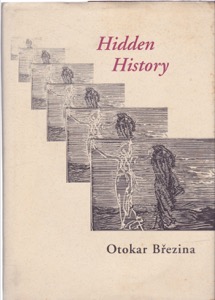
Hardcover. Prague, Twisted Spoon Press, 1st, 1997, Book: Very Good, Dust Jacket: Very Good, Hardcover in a lightly soiled dust jacket, 150 pages. B&w frontis. The works of the Czech Symbolist Otokar Brezina (1868-1929), a writer twice nominated for the Nobel Prize in Literature, influenced an entire generation of artists in Bohemia and Moravia. Hidden History (published posthumously in 1935) is one of the most important works of 20th century Czech prose and represents the apotheosis of Brezina's endeavors in the essay form. In this finely crafted collection, he discusses the role of art as a vanguard of developments in science and as a force for social change. These essays also contribute to an understanding of Brezina's poetry, for which he is better known. They comprise the most systematic exposition of his aesthetic creed, which served to inspire the Czech writers and literary critics who followed in his footsteps. This edition is the first complete English translation of any complete volume of Brezina's work. Afterword by Petr Holman. Light foxing, no markings.
Softcover. Evanston, IL, Northwestern University Press, reprint, 2001, Book: Very Good, Dust Jacket: None, 355 pages. Softcover with light edgewear to paper wrappers. In this groundbreaking volume, Krzysztof Ziarek rethinks modern experience by bringing together philosophical critiques of modernity and avant-garde poetry. Ziarek explores, through selective readings of avant-garde poetry, the key aspects of the radical critique of experience: technology, everydayness, event, and sexual difference. To that extent, The Historicity of Experience is less a book about the avant-garde than a critique of experience through the avant-garde. Ziarek reads the avant-garde in dialogue with the work of some of the major critics of modernity (Martin Heidegger, Walter Benjamin, Jean-Francois Lyotard, and Luce Irigaray) to show how avant-garde experiments bear critically on the issue of modern experience and its technological organization. The four poets Ziarek considers--Gertrude Stein, Velimir Khlebnikov, Miron Biaoszewski, and Susan Howe--demonstrate the broad reach of and variety of forms taken by the avant-garde revision of experience and aesthetics.
Hardcover. NY, Farrar Straus and Giroux, 1st, 2017, Book: Very Good, Dust Jacket: Very Good, Hardcover in a bright dust jacket, 530 pages. A captivating exploration of A. E. Housman and the influence of his particular brand of Englishness. A. E. Housman's A Shropshire Lad made little impression when it was first published in 1896 but has since become one of the best-loved volumes of poetry in the English language. Its evocation of the English countryside, thwarted love, and a yearning for things lost is as potent today as it was more than a century ago, and the book has never been out of print. In Housman Country, Peter Parker explores the lives of A. E. Housman and his most famous book, and in doing so shows how A Shropshire Lad has permeated English life and culture since its publication. Clean copy.
Softcover. NY, Grove Press, reprint, 1997, Book: Very Good, Dust Jacket: None, Softcover, 239 pages. Hettie Jones presents an intimate memoir of her life--from her middle-class Jewish family in Queens to her marriage to the controversial black poet LeRoi Jones and her search for her own artistic voice. Clean copy.
Hardcover. Guilford CT, Backbeat, 1st, 2020, Book: Very Good, Dust Jacket: Very Good, Hardcover in a bright dust jacket, 304 pages, b&w illustrations. Phil Ochs is known primarily as a songwriter; however, his oeuvre extends far beyond that--to short stories, poetry, criticism, journalism, and satire, all of which are included in I'm Gonna Say It Now: The Writings of Phil Ochs, which represents the majority of what Ochs wrote outside of his large circle of songs. This comprehensive tome presents another side of the famous topical songwriter, showcasing his prose and poetry from across the full span of his life. From prizewinning stories and clear-eyed reporting while a journalism major in college to music criticism, satires, and political pieces written while part of the burgeoning folk scene of New York City in the early 1960s and during the tumultuous Vietnam War era; from sharp and lyrical poems (many previously unpublished) to reviews, features, and satires written while living in Los Angeles and the final, elegiac coda writings from near the end of his life--I'm Gonna Say It Now presents the complete picture. The book includes many rare or nearly impossible to find Ochs pieces, as well as previously unpublished works sourced from the unique holdings in the Ochs Archives at the Woody Guthrie Center. Additionally, never-before-seen reproductions from Ochs's journals, notebooks, and manuscripts provide a closer look at the hand of the artist, giving a deeper context and understanding to his writings. Never before published photographs of Ochs bestow the visual cherry on top.
Softcover. Greensboro NC, University of North Carolina Press, 1st, 1999, Book: Very Good, Dust Jacket: None, 108 pages, illustrated in color and b&w. Softcover exhibition catalog featuring the poet's collaboration with various artists like John Altoon, Donald Sultan, others. Includes a CD-ROM.
Hardcover. Saint Paul MN, Paragon House, 1st, 1990, Book: Very Good, Dust Jacket: Very Good, Hardcover in a bright, unclipped dust jacket, 231 pages. Nearly twenty years of letters beginning with the poet's encouragement of guidance, and the sharp critic's mentoring, developing into a sparring intellectual relationship discussing philosophies of literature and culture, and then mental dueling, and finally a rejection of one another. Clean copy.
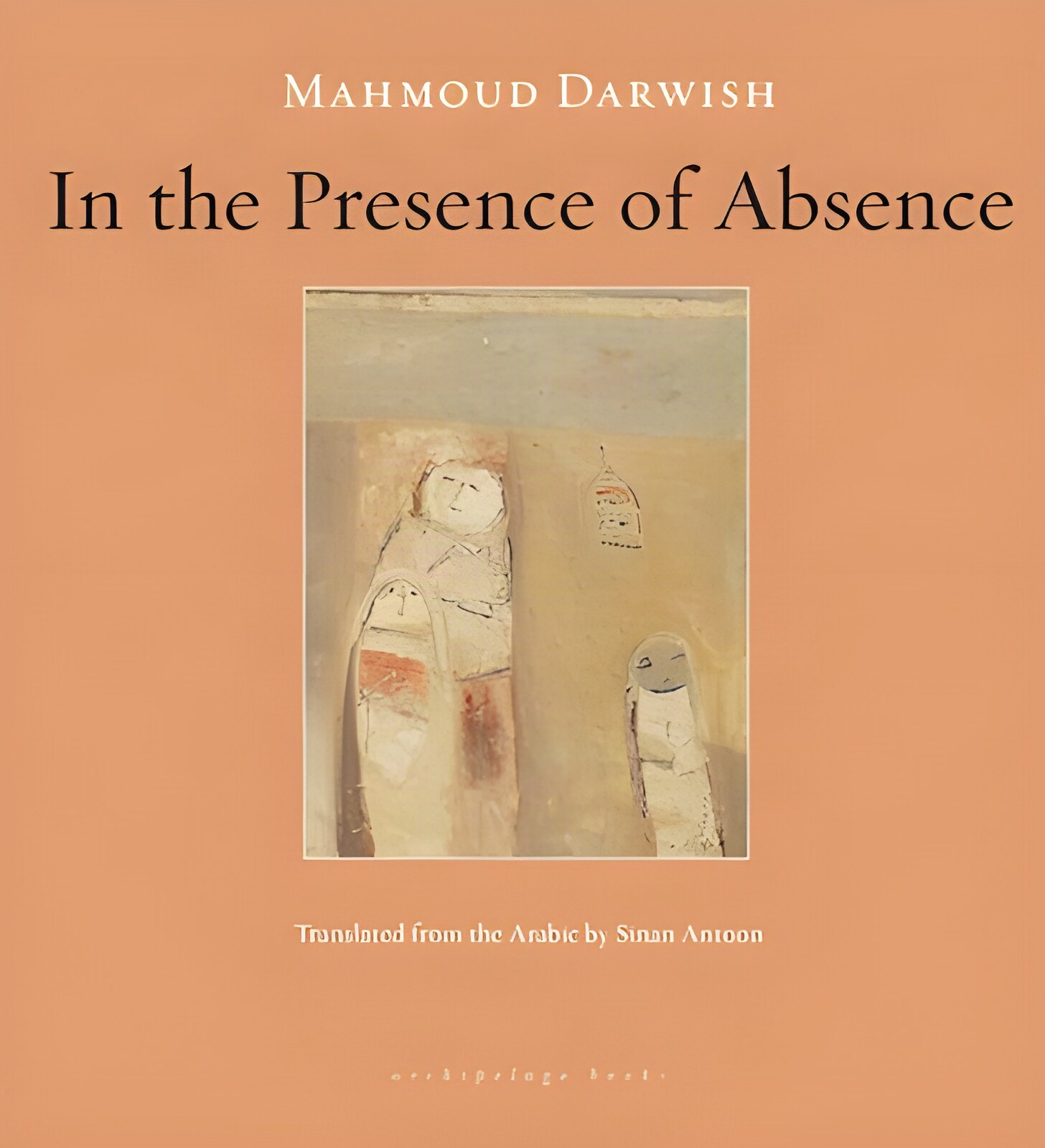
Softcover. NY, Archipelago Books, reprint, 2021, Book: Very Good, Dust Jacket: None, Softcover in pictorial wrappers, 171 pages. One of the most transcendent poets of his generation, Darwish composed this remarkable elegy at the apex of his creativity, but with the full knowledge that his death was imminent. Thinking it might be his final work, he summoned all his poetic genius to create a luminous work that defies categorization. In stunning language, Darwish's self-elegy inhabits a rare space where opposites bleed and blend into each other. Prose and poetry, life and death, home and exile are all sung by the poet and his other. On the threshold of im/mortality, the poet looks back at his own existence, intertwined with that of his people. Clean Copy.

 "E. E. Cummings: A Life by: Cheever, Susan")
 "Eastern Canonsby: Wm. Theodore De Bary, Irene Bloom (Editors)")
 "Edward Dorn: American Heretic / Chicago Review, Summer 2004by: Steinhoff, Eirik (ed.)")
 "Eugene Onegin: A Novel in Verse by Aleksandr Pushkin. Translated from the Russian, with a Commentary, by Vladimir Nabokov (4 Vols.)by: Nabokov (Transl.), Vladimir and")
 "Exchanging Hats: Paintingsby: Bishop, Elizabeth; Benton, William (editor)")
 "Field Work (Author signed)by: Blythe, Ronald")
 "Five Poems and Letters from Robert Louis Stevenson to Charles Warren Stoddard 1880by: Stevenson, Robert Louis")
 "Fugitives' Reunion; Conversations at Vanderbilt: May 3-5, 1956 by: Purdy, Rob Roy (Ed.)")
 "Furthering My Education: A Memoir (SIGNED COPY)by: Corbett, William")

 "Gay Voices of the Harlem Renaissance by: Schwarz, A.B. Christa")

 "Hesiod and the Language of Poetryby: Pietro Pucci")
 "Historicity of Experience: Modernity, the Avant-Garde, and the Event, Theby: Ziarek, Krzysztof")


 "I'm Gonna Say It Now: The Writings of Phil Ochsby: Phil Ochs and David Cohen")
 "In Company: Robert Creeley's Collaborationsby: Cappellazzo (Ed.), Amy and Elizabeth Licata")
![In Love, In Sorrow: The Complete Correspondence of Charles Olson and Edward Dahlberg by: [Olson, Charles and Edward Dalhberg] edited and with an introduction by Paul](https://www.browsingisarousing.com/shop/images/399953.jpg "In Love, In Sorrow: The Complete Correspondence of Charles Olson and Edward Dahlberg by: [Olson, Charles and Edward Dalhberg] edited and with an introduction by Paul")