Hardcover. London, Rudolf Steiner Publishing, 1st, 1945, Book: Good, Hardcover, red cloth faded to tan on front and spine, 211 pages. Translation by H. Collison. Name and stamp on front fly leaf, no other markings.
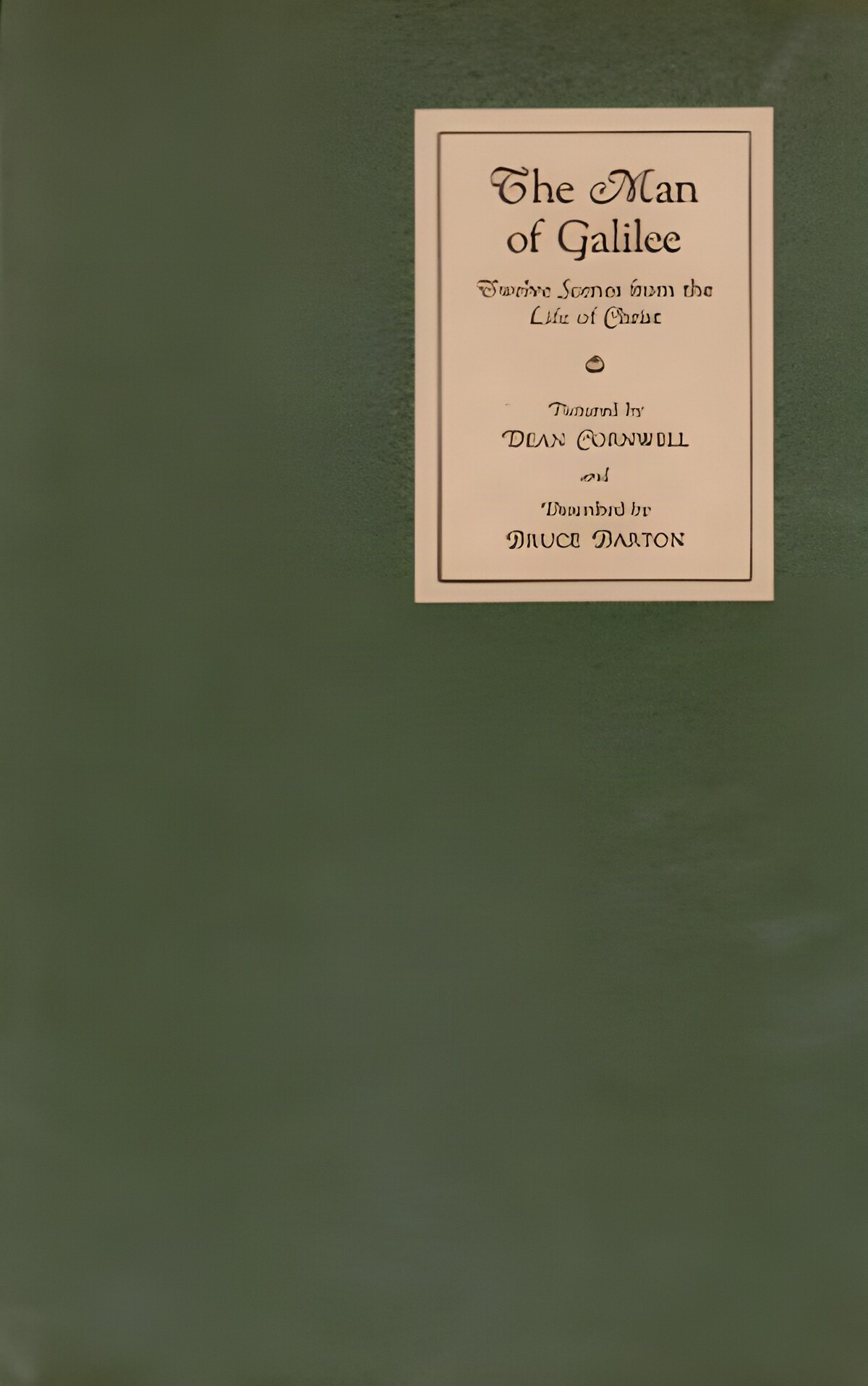
NY, Cosmopolitan Book Corp., 1st Thus, 1928, Book: Very Good, Dust Jacket: None, Hardcover, 137 pages, 12 color plates by Dean Cornwell. Color illustrated frontispiece. Prelim pages with light foxing. Previous owner's signature on front end paper. Soil and light edgewear to covers. Plates clean and bright.
Hardcover. NY, Random House, 1st, 2003, Book: Very Good, Dust Jacket: None, This set by the best-selling artist/author of Manhattan Unfurled includes: A full-color 22-foot-long drawing, in an accordion fold-out format, which provides an amazing 360-degree view of the Manhattan skyline as seen from within Central Park; A separate, enlightening personal journal about the method, philosophy, and evolution of the work, an unprecedented, dramatic re-envisioning of the relationship between the city and its geographical center and escape; and a Visual legend and diagram identifying the city s landmarks and streets. In beautiful slipcase.
Hardcover. Berg Publishers, 1st, 1988, Book: Very Good, Dust Jacket: None, Hardcover, 528 pages. This historico-critical edition of Schopenhauer's manuscript remains contains Schopenhauer's entire surviving philosophical notes, from his university years until his death in 1860. Translated here into English for the first time, it provides a fascinating insight into the workings of Schopenhauer's mind and an important key to his philosophical work. Translated by E.F.J. Payne
Hardcover. New Haven CT, Yale University Press, 2007, Book: Very Good, Dust Jacket: Very Good, Hardcover, 208 pages, color plates. Considered to be among the greatest early American modernists, the painter Marsden Hartley (1877-1943) traveled the United States and Europe in his search for a distinctive American aesthetic. His stay in New Mexico resulted in an extraordinary series of landscape paintings--created in New Mexico, New York, and Europe between 1918 and 1924--that show an evolution in style and thinking that is important for understanding both Hartley's oeuvre and American modernism in the postwar years. Marsden Hartley and the West examines this pivotal stage of the painter's career, drawing upon his writings and providing illustrations of rarely seen and previously unpublished works. The author considers Hartley's involvement with the Stieglitz circle and its "soil-and-spirit" philosophy, the Taos art colony, New York Dada, and the impact of historical events such as World War I. Within this setting she analyzes the pastels and oil paintings that suggest Hartley's increasingly ambivalent response to the land. Beginning with optimistic, naturalistic views, the New Mexico works grew progressively darker and more tumultuous, increasingly reflecting a sense of loss brought on by war. The paintings become a site where the landscapes of memory, self, and nation merge, while reflecting broader modernist debates about "American-ness" and a usable past.
Hardcover. Burlington VT, Ashgate, 1st, 2005, Book: Very Good, Dust Jacket: None, Hardcover, black cloth stamped in gilt, 263 pages. (Early Modern Englishwoman: a Facsimile Library of Essential Works) Name on front fly leaf otherwise clean.
Hardcover. UK, Routledge/Thoemmes Press, reprint, 1992, Book: Very Good, Dust Jacket: None, Hardcover, red cloth with gilt lettering on the spine, 178 pages. A facsimile reprint of the 1778 edition, Clean copy.
Softcover. NY, Seven Stories Press, reprint, 2012, Book: Very Good, Dust Jacket: None, Softcover, 431 pages. A fascinating document of an extraordinary life, Memoirs of A Breton Peasant reads with the liveliness of a novel and bristles with the vigor of an opinionated autodidact from the very lowest level of peasant society. Brittany during the nineteenth century was a place seemingly frozen in the Middle Ages, backwards by most French standards; formal education among rural society was either unavailable or dismissed as unnecessary, while the church and local myth defined most people's reasoning and motivation. Jean-Marie Deguignet is unique not only as a literate Breton peasant, but in his skepticism for the church, his interest in science, astronomy and languages, and for his keen--often caustic--observations of the world and people around him. Born into rural poverty in 1834, Deguignet escapes Brittany by joining the French Army in 1854, and over the next fourteen years he fights in the Crimean war, attends Napoleon III's coronation ceremonies, supports Italy's liberation struggle, and defends the hapless French puppet emperor Maximilian in Mexico. He teaches himself Latin, French, Italian and Spanish and reads extensively on history, philosophy, politics, and literature. He returns home to live as a farmer and tobacco-seller, eventually falling back into dire poverty. Throughout the tale, Deguignet's freethinking, almost anarchic views put him ahead of his time and often (sadly, for him) out of step with his contemporaries. Deguignet's voluminous journals (nearly 4,000 pages in total) were discovered in a farmhouse in Brittany a century after they were written. This narrative was drawn from them and became a surprise bestseller when published in France in 1998. Clean copy.
Hardcover. New York, Mahlon Day, reprint , 1836, Book: Good, Dust Jacket: None, 270 pages. Compilation of three separate volumes published in different times. Rear fly leaf creased. Foxing throughout. Otherwise clean, tight copy.
Softcover. Cambridge MA, Harvard University Press, reprint, 2019, Book: Very Good, Dust Jacket: None, Softcover, 272 pages. We are facing a crisis of civility, a war of words polluting our public sphere. In liberal democracies committed to tolerating active, often heated disagreement, the loss of this virtue appears critical. Most modern appeals to civility follow arguments by Hobbes or Locke by proposing to suppress disagreement or exclude views we deem "uncivil" for the sake of social harmony. By comparison, mere civility-a grudging conformity to norms of respectful behavior-as defended by Rhode Island's founder, Roger Williams, might seem minimal and unappealing. Yet Teresa Bejan argues that Williams's outlook offers a promising path forward in confronting our own crisis, one that challenges our fundamental assumptions about what a tolerant-and civil-society should look like. Clean copy.
Softcover. NY, Archipelago Books, 1st, 2019, Book: Very Good, Dust Jacket: None, Softcover in pictorial wrappers, 318 pages. This new, expanded collection of Antonio Tabucchi's stories collects the best short fiction from the Italian author recognized as one of the masters of the form. These playful tales explore Tabucchi's signature themes, from his inventive, lyrical meditations on language, art, and philosophy, to his fascination with the passage of time, and the mystery of storytelling. Clean copy.
Hardcover. Leiden, E.J. Brill, 1st, 1980, Book: Very Good, Dust Jacket: None, Hardcover, 131 pages. German text. Previous owner's stamp on front end paper. Light wear to blue cloth covers. No dust jacket. Clean, tight copy.
Hardcover. New York , Nelson & Phillips, 1st, 1873, Book: Very Good, Dust Jacket: None, Hardcover, 309 pages. Terracota cloth with gilt titles and decor to front and spine. Light edgewear and rubbing to covers, previous owner's bookplate on front end paper, else a clean, tight copy.
Hardcover. NY, William Lewer, 1st, 1838, Book: Very Good, Dust Jacket: None, Hardcover, bound in 3/4 leather with marbled boards, black calf spine labels with gilt lettering, 396 pages, American Edition noted on title page; its London parent, "The Metropolitan: A monthly journal of literature, science, and the fine arts" was a London monthly journal established by Thomas Campbell in 1831 and continued, under various editors, until 1850. Clean bright copy.
Hardcover. UK, Cambridge University Press, 1st, 2001, Book: Very Good, Dust Jacket: Very Good, 444 pages. Hardcover with dust jacket. Light fading to dust jacket front. Light edgewear to dj. Black and white pictures throughout. Clean, tight copy. In 1999 Pope John Paul II proclaimed Our Lady of Guadalupe a patron saint of the Americas. According to oral tradition and historical documents, in 1531 Mary appeared as a beautiful Aztec princess to Juan Diego, a poor Indian. Speaking to him in his own language, she asked him to tell the bishop her name was La Virgen de Guadalupe and that she wanted a church built on the mountain. During a second visit, the image of the Virgin miraculously appeared on his cape. Through the centuries, the enigmatic power of this image has aroused such fervent devotion in Mexico that it has served as the banner of the rebellion against Spanish rule and, despite skepticism and anticlericalism, still remains a potent symbol of the modern nation. In Mexican Phoenix, David Brading traces the intellectual origins, the sudden efflorescence, and the theology that has sustained the tradition of Our Lady of Guadalupe. Brading also documents the interaction of religion and patriotism, and describes how the image has served as a banner both for independence and for the Church in its struggle against the Liberal and revolutionary state.
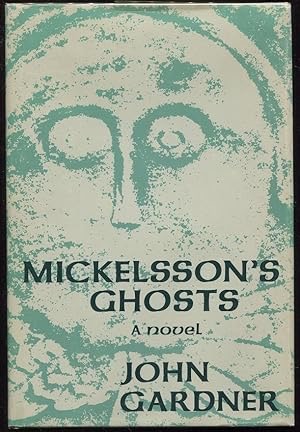
Hardcover. NY, Knopf, 1st, 1982, Book: Very Good, Dust Jacket: Very Good, Hardcover in a bright, unclipped dust jacket. A massive novel illustrated with photographs by Joel Gardner. John Gardner's final novel follows Peter Mickelsson, former football player and current Professor of Philosophy at Binghamton University. Mickelsson is driven, opinionated, probably a drunk, definitely bankrupt, and perhaps going completely mad. During his personal descent, which he seems powerless to arrest, he somehow scrounges enough money together to buy a farmhouse in northern Pennsylvania's Endless Mountains, which seems to be haunted by the ghosts of an incestuous family. Mickelsson's farmhouse sanctuary was (it turns out) not only the residence of Joseph Smith, the Mormon prophet, but the scene of a murder; the place is haunted. Clean copy.
Hardcover. NY, Knopf, 1st, 1982, Book: Very Good, Dust Jacket: Very Good, Hardcover in a bright, unclipped dust jacket. A massive novel illustrated with photographs by Joel Gardner. John Gardner's final novel follows Peter Mickelsson, former football player and current Professor of Philosophy at Binghamton University. Mickelsson is driven, opinionated, probably a drunk, definitely bankrupt, and perhaps going completely mad. During his personal descent, which he seems powerless to arrest, he somehow scrounges enough money together to buy a farmhouse in northern Pennsylvania's Endless Mountains, which seems to be haunted by the ghosts of an incestuous family. Mickelsson's farmhouse sanctuary was (it turns out) not only the residence of Joseph Smith, the Mormon prophet, but the scene of a murder; the place is haunted. Clean copy.
Hardcover. London, Williams and Norgate, 1st, 1897, Book: Good, Dust Jacket: None, Hardbound edition of the four journals for 1897. 584 pages. Half leather with marbled boards, spine with raised bands, fading. Short closed tear at top of spine. Clean, unmarked pages.
Hardcover. Albany, New York, State University of New York Press, 1st, 1989, Book: Good, Dust Jacket: None, Hardcover, 451 pages, with Japanese text in back. Slight wear/rubbing to edges and spine. INSCRIBED BY AUTHOR on front flyleaf and handwritten note by author laid-in. Crisp, clean pages and tight binding.
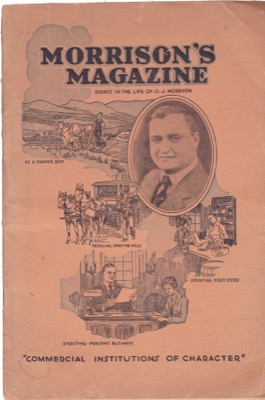
Softcover. Charleston WV, Morrison Department Store, 1928, Book: Very Good, Dust Jacket: None, Softcover, stapled tan wrappers, 72 pages. A brochure featuring the history of a line of department stores in West Virginia. The founder's philosophy laid out in boring detail. Interesting, great photos of his storefronts, store managers. Unusual.
Hardcover. London, The Cresset Press, 1st UK, 1953, Book: Very Good, Dust Jacket: Very Good, Hardcover in a bright dust jacket, 189 pages. 3rd volume of the autobiography of this celebrated thinker and writer on philosophical and metaphysical matters. The greater part deals with the period he spent in England, in Oxford, Cambridge and elsewhere, and his circle of brilliant friends and acquaintances.
Hardcover. NY, D. Appleton and Company, 1st US, 1875, Book: Very Good, Dust Jacket: None, Hardcover, terra-cotta cloth with black design and gilt lettering, 363 pages plus publisher's ads. A late nineteenth century reference on natural science and philosophy. Papillon's engrossing essays, written at various times and put together in this volume as - after the fashion of the time - an effort to dovetail science, metaphysics and philosophy into a higher understanding of life. Name on front fly leaf otherwise a clean, bright copy.

 "Man as Symphony of the Creative Word: (Esoteric Studies) Twelve lectures given in Dornach, Switzerland from October 19th to November 11th, 1923 by: Steiner, Rudolf")



 "Marx's Theory of Scientific Knowledgeby: Murray, Patrick (Irving Adler)")

 "Materialism Philosophically Examinedby: Whitehead, John")
 "Memoirs of a Breton Peasant, 1834-1905by: Jean-Marie D?©guignet")
 "Memorials Concerning Several Ministers, and Others, Deceased: Of the Religious Society of Frineds, Within the Limits of the Yearly Meeting of New York. by: N/A")


 "Metaphysik und Theologieby: No Author")
 "Methodism Forty Years Ago and Now: Embracing Many Interesting Reminiscences and Incidentsby: Culver, Rev. Newell")
 "Metropolitan Magazine: January to June 1838 Vol. Vby: N/A")
 "Mexican Phoenix: Our Lady of Guadalupe: Image and Tradition Across Five Centuriesby: Brading, D.A.")
 "Mind: A Quarterly Review of Psychology and Philosophy - Vol. VI 1897by: Stout, G.F.")
 "Moral and Spiritual Cultivation in Japanese Neo-Confucianism: The Life and Thought of Kaibara Ekken 1630-1740 (SIGNED COPY)by: Tucker, Mary Evelyn")