Hardcover. Chicago, University of Chicago Press, 1st, 2011, Book: Very Good, Dust Jacket: Very Good, Hardcover in a bright dust jacket, 250 pages. With The Lucretian Renaissance, Gerard Passannante offers a radical rethinking of a familiar narrative: the rise of materialism in early modern Europe. Passannante begins by taking up the ancient philosophical notion that the world is composed of two fundamental opposites: atoms, as the philosopher Epicurus theorized, intrinsically unchangeable and moving about the void; and the void itself, or nothingness. Passannante considers the fact that this strain of ancient Greek philosophy survived and was transmitted to the Renaissance primarily by means of a poem that had seemingly been lost--a poem insisting that the letters of the alphabet are like the atoms that make up the universe. Name and date on front fly leaf, light pencil marginalia and a few underlinings.
Hardcover. Oxford UK, Clarendon Press, 1st, 1993, Book: Very Good, Dust Jacket: Very Good, Hardcover in a bright dust jacket, Maurice Wiles was Regius Professor of Divinity at the University of Oxford from 1970-1991. To celebrate his seventieth birthday, a group of distinguished friends and colleagues have written this important series of original and perceptive essays on the twin themes of making and remaking Christian doctrine. The topics covered in this thought-provoking collection range from the notion of divine action in Hebrew Wisdom literature to reflections on the nature of the ministry, from the concept of God and the doctrines of Christology and of the Trinity to the character of theological reflection, and from revelation and tradition to the "lex orandi," the nature of interpretation in religion and the historical basis of theological understanding. Clean copy.
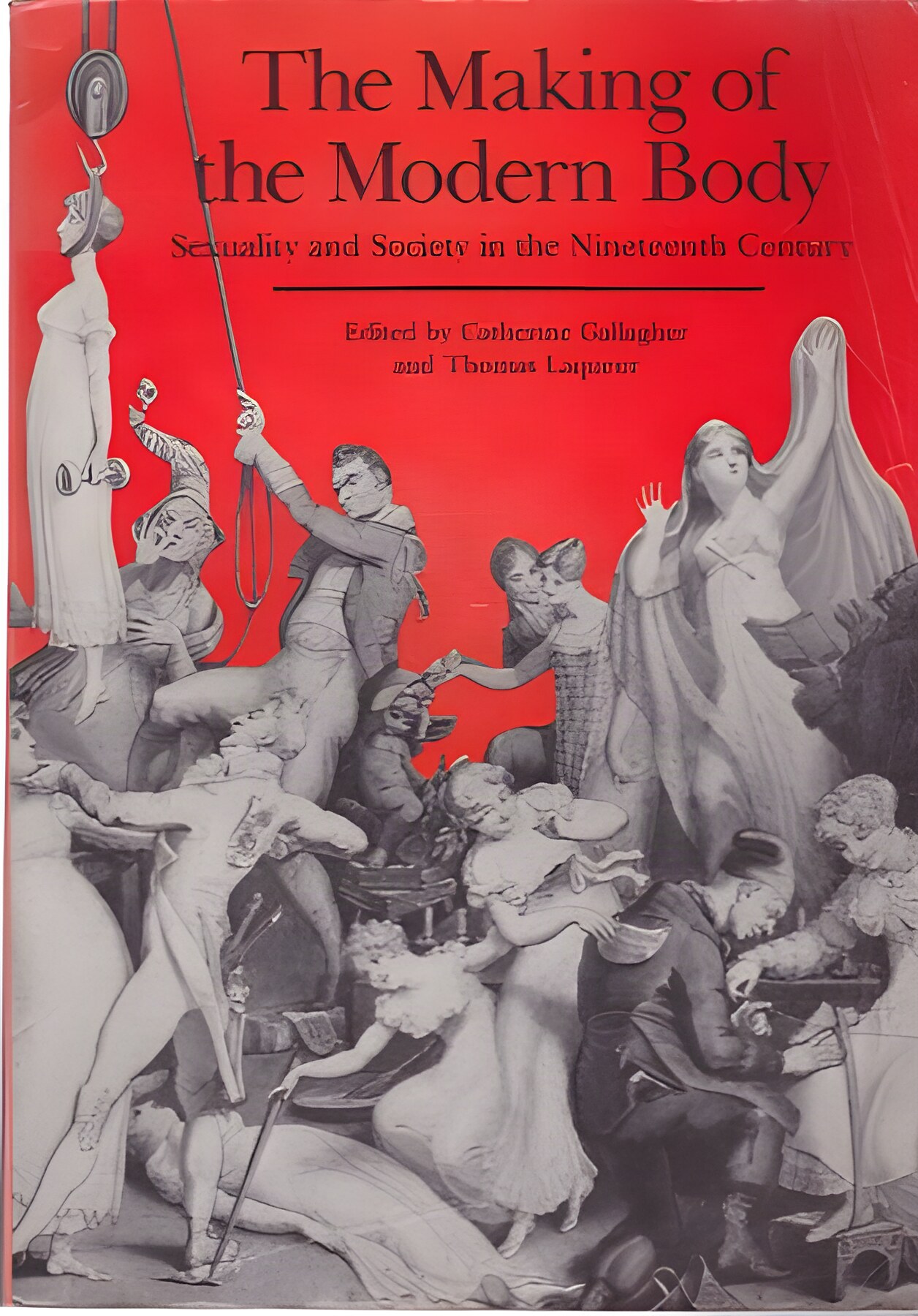
Softcover. Berkeley CA, University of California Press, reprint, 1987, Book: Good, Dust Jacket: None, Softcover, 242 pages. Scholars have only recently discovered that the human body itself has a history. Not only has it been perceived, interpreted, and represented differently in different epochs, but it has also been lived differently, brought into being within widely dissimilar material cultures, subjected to various technologies and means of control, and incorporated into different rhythms of production and consumption, pleasure and pain. The eight articles in this volume support, supplement, and explore the significance of these insights. They belong to a new historical endeavor that derives partly from the crossing of historical with anthropological investigations, partly from social historians' deepening interest in culture, partly from the thematization of the body in modern philosophy (especially phenomenology), and partly from the emphasis on gender, sexuality, and women's history that large numbers of feminist scholars have brought to all disciplines. Lightly worn copy, clean, solid binding.
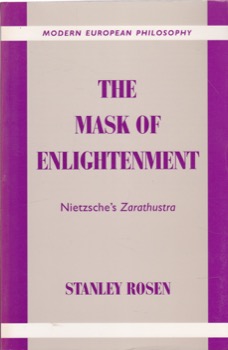
Softcover. UK/NY, Cambridge University Press, reprint, 1996, Book: Very Good, Dust Jacket: None, Softcover, 264 pages. The Mask of Enlightenment is the most detailed textual and thematic study of Nietzsche's most important but least understood works: Thus Spake Zarathustra. In this book Nietzsche was laying the groundwork for a fundamental philosophical and political revolution on a global scale. One of the difficulties that the text poses is Nietzsche's prophetic style; Stanley Rosen unweaves the complex threads that form the rhetorical voices of the work, and so explains the style in an accessible manner. He rejects recent sceptical, deconstructionist interpretations of Nietzsche, and reveals a coherence underlying the multiple and apparently incompatible intentions embedded in the text. Nietzsche is a figure whose influence on contemporary thought in the humanities and social sciences continues to be enormous. This book is sure to become the definitive study of Zarathustra, and will have a broad appeal to philosophers and students of modern philosophy, intellectual historians, political scientists, and literary theorists. Clean copy.
Hardcover. The Hague, Martinus Nijhoff, 3rd pr., 1971, Book: Very Good, Dust Jacket: None, Hardcover, red cloth stamped in gilt, 532 pages. Translated by John Carman. Monumental work by the Norwegian professor on ancient religion, cosmology, and anthropology. Spine cloth lightly faded. Clean copy.
Hardcover. London, Humanities Press, Revised Ed., 1951, Book: Very Good, Dust Jacket: None, A Historical and Critical Essay. Analyzes the works of Copernicus, Kepler, Galileo, Descartes, Hobbes, Gilbert, Boyle, and Newton to establish the reasons for the triumph of the modern scientific perspective. Hardcover, blue cloth with bright gilt lettering on spine, 343 pages. Clean, bright copy.
Hardcover. Oxford UK, Clarendon Press, reprint, 1964, Book: Very Good, Dust Jacket: None, Hardcover, blue cloth with gilt lettering on spine. 316 pages including index. First published in 1952. Clean, bright copy.
Softcover. Berkeley CA, Oneiric Press, reprint, 1977, Book: Very Good, Dust Jacket: None, Softcover, 222 pages. Wilson has blended H.P. Lovecraft's dark vision with his own revolutionary philosophy and unique narrative powers to produce a stunning, high-tension story of vaulting imagination. A professor makes a horrifying discovery while excavating a sinister archeological site. For over 200 years, mind parasites have been lurking in the deepest layers of human consciousness, feeding on human life force and steadily gaining a foothold on the planet. Now they threaten humanity's extinction. Clean copy.
Hardcover. UK, Routledge / Thoemmes, reprint, 1995, Book: Very Good, Dust Jacket: None, Hardcover, maroon cloth with gilt lettering on spine. 450 pages plus index. A facsimile reprint of the second edition published in 1738. One of 8 volumes in the series History of British Deism. Clean, bright copy.
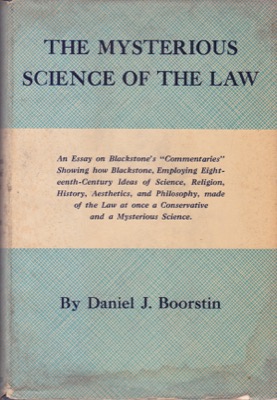
Hardcover. Cambridge MA, Harvard University Press, 1st, 1941, Book: Very Good, Dust Jacket: Fair, Hardcover in a worn, soiled dust jacket. Bright blue cloth covers with spine label. 257 pages. Frontispiece, 9 black and white illustrations. The Mysterious Science of Law was based on Boorstin's Yale SJD thesis. (He also held an Oxford BCL and was admitted to the Inner Temple.). It was the first of many important books by Boorstin, who went on to became a prominent historian and, from 1975 to 1987, Librarian of Congress. Appears to se SIGNED on the inside cover and dated Dec., 1941. Otherwise a clean copy.
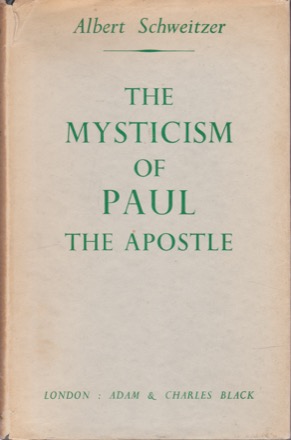
Hardcover. London, Adam & Charles Black, 2nd Ed., 1953, Book: Very Good, Dust Jacket: Good, Hardcover on a worn, chipped dust jacket, 411 pages. First published in 1931, this is the Second Edition with corrections. Albert Schweitzer goes against Luther and the Protestant tradition to look at what Paul actually writes in the Epistles to the Romans and Galatians: an emphasis upon the personal experience of the believer with the divine. Clean copy.
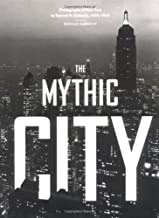
Hardcover. Princeton Architectural Press, 1st, 2005, Book: Very Good, Dust Jacket: Very Good, Hardcover, 224 pages. Daring, bold, dramatic, towering, impossibly glamorous: this is how we imagine New York in its golden age, and this is how Samuel H. Gottscho, the preeminent architectural photographer of his generation, captured it. Through his lens, New York of the 1930s became the quintessential modern metropolis, a round-the-clock city in which night was as charismatic as day. Rigorously editing out the Depression-weary city's more seamy aspects--its tenement slums, breadlines, and soup kitchens--Gottscho presented a dreamlike Gotham of skyscrapers and penthouse luxury that literally and figuratively glowed with glamour's sheen. His gimlet eye focused on the bold interplay of sun and shadow, dramatizing the chiseled forms of Manhattan's signature skyline and bridges. The Empire State and Chrysler buildings, Rockefeller Center, the Plaza, the George Washington Bridge--Gottscho brought them all to sparkling life. In this beautifully produced, landmark book, historian Donald Albrecht presents 175 of Gottscho's extraordinary images of the city, from the Battery to Harlem. An introductory essay tells the story of this legendary photographer, describing his working methods and philosophy, while placing his work in the broader context of photographic history.
Hardcover. NY, Charles Scribner's Sons, 1st thus, 1953, Book: Good, Dust Jacket: None, Hardcover, green cloth with gilt stamping, First one-volume edition, 300 and 332 pages. Spine lettering faded. Good sound copy, but pencil marking throughout.
Hardcover. Oxford UK, Oxford University Press, 2nd Ed., 1939, Book: Good, Dust Jacket: None, Blue cloth covers with gilt lettering on spine. Ex-library copy with light stamping, label on spine. 182 pages. Except for library stamping text pages are clean, firm binding. Originally published in 1906, this with a new preface by author.
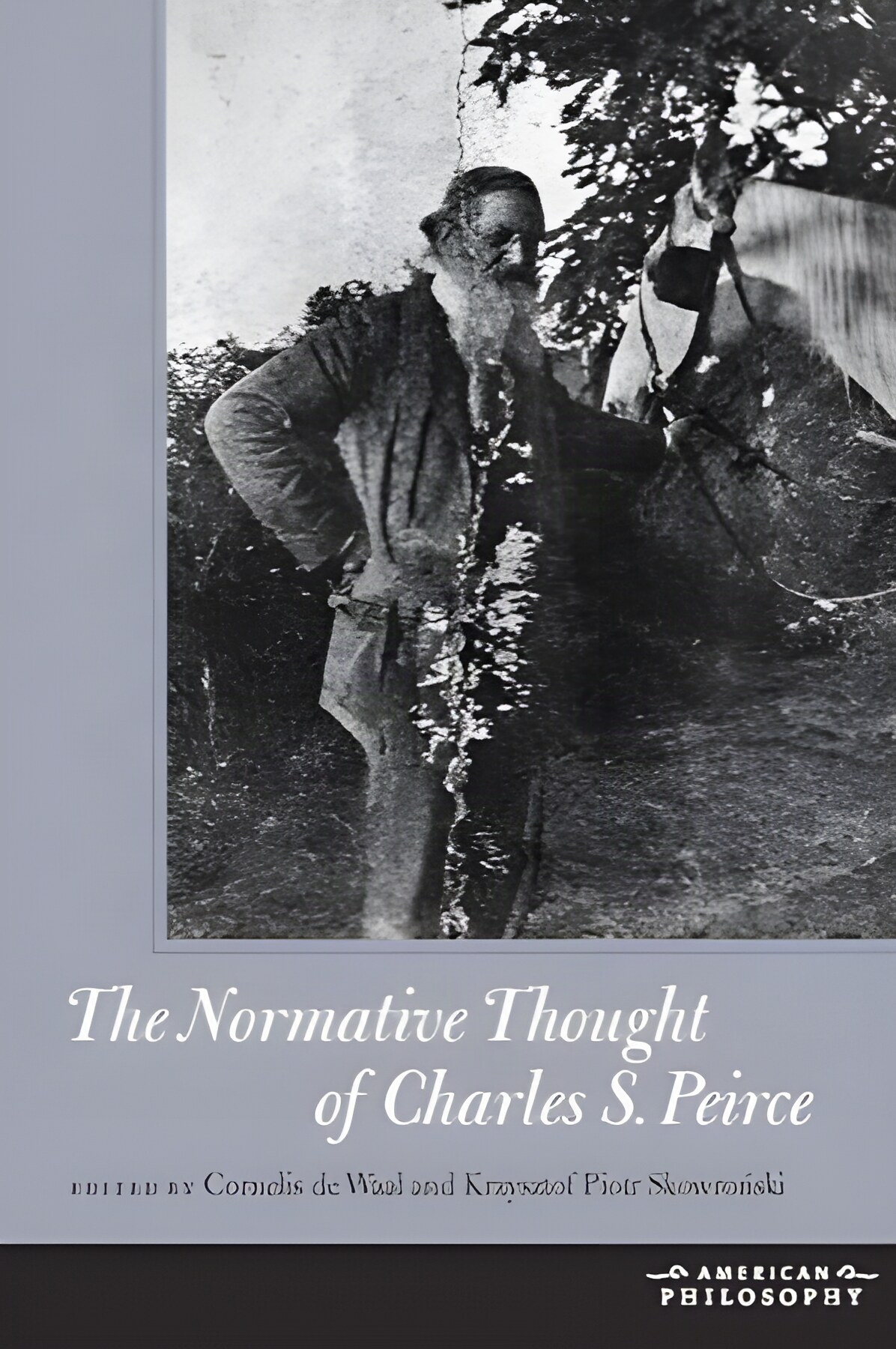
Hardcover. NY, Fordham University Press, 1st, 2012, Book: Very Good, Dust Jacket: Very Good, Hardcover in a bright dust jacket, 321 pages. This volume explores the three normative sciences that Peirce distinguished (aesthetics, ethics, and logic) and their relation to phenomenology and metaphysics. The essays approach this topic from a variety of angles, ranging from questions concerning the normativity of logic to an application of Peirce's semiotics to John Coltrane's A Love Supreme. A recurrent question throughout is whether a moral theory can be grounded in Peirce's work, despite his rather vehement denial that this can be done. Some essays ask whether a dichotomy exists between theoretical and practical ethics. Other essays show that Peirce's philosophy embraces meliorism, examine the role played by self-control, seek to ground communication theory in Peirce's speculative rhetoric, or examine the normative aspect of the notion of truth. Proceedings of a conference held June 26-30, 2007 at Opole University, Poland. Clean copy.
Hardcover. NY, Doubleday and Company, 1st, 1983, Book: Very Good, Dust Jacket: Very Good, Hardcover in a lightly chipped dust jacket. The writers of the Bible, like any other authors, were dependent on a vast array of literary sources from their time-the ancient world. Many of these documents are tragically lost, but what remains provides insight into the voluminous, fascinating, complex, and dynamic literary world that shaped the expressions of faith found in the Old and New Testaments. Part of these extant sources are known as the Pseudepigrapha. This collection of Jewish and Christian writings shed light on early Judaism and Christianity and their doctrines. Volume 1 only (of a 2-volume set). 995 pages. Clean copy.
Hardcover. NY, Doubleday and Company, 1st, 1985, Book: Very Good, Dust Jacket: Very Good, Hardcover in a lightly chipped dust jacket. The writers of the Bible, like any other authors, were dependent on a vast array of literary sources from their time-the ancient world. Many of these documents are tragically lost, but what remains provides insight into the voluminous, fascinating, complex, and dynamic literary world that shaped the expressions of faith found in the Old and New Testaments. Part of these extant sources are known as the Pseudepigrapha. This collection of Jewish and Christian writings shed light on early Judaism and Christianity and their doctrines. Volume 2 only (of a 2-volume set). 1006 pages. Clean copy.
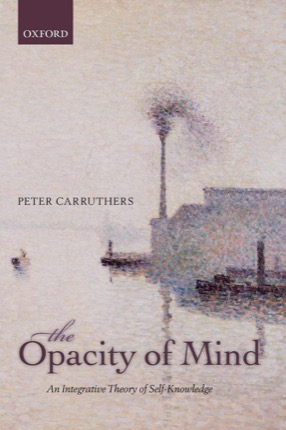
Hardcover. UK, Oxford University Press, 1st, 2011, Book: Very Good, Dust Jacket: Very Good, Hardcover in a bright dust jacket, 437 pages. It is widely believed that people have privileged and authoritative access to their own thoughts, and many theories have been proposed to explain this supposed fact. The Opacity of Mind challenges the consensus view and subjects the theories in question to critical scrutiny, while showing that they are not protected against the findings of cognitive science by belonging to a separate "explanatory space." The book argues that our access to our own thoughts is almost always interpretive, grounded in perceptual awareness of our own circumstances and behavior, together with our own sensory imagery (including inner speech). In fact our access to our own thoughts is no different in principle from our access to the thoughts of other people, utilizing the conceptual and inferential resources of the same "mindreading" faculty, and relying on many of the same sources of evidence. Peter Carruthers proposes and defends the Interpretive Sensory-Access (ISA) theory of self-knowledge. This is supported through comprehensive examination of many different types of evidence from across cognitive science, integrating a diverse set of findings into a single well-articulated theory. One outcome is that there are hardly any kinds of conscious thought. Another is that there is no such thing as conscious agency. Clean, like new.
Hardcover. Chicago, University of Chicago Press, 1st, 2017, Book: Very Good, Dust Jacket: Very Good, Hardcover in a bright dust jacket, 541 pages. b&w illustrations. As Joel Dinerstein reveals in this book, cool began as a stylish defiance of racism, a challenge to suppressed sexuality, a philosophy of individual rebellion, and a youthful search for social change. Through portraits of iconic figures, Dinerstein illuminates the cultural connections and artistic innovations among Lester Young, Humphrey Bogart, Robert Mitchum, Billie Holiday, Frank Sinatra, Jack Kerouac, Albert Camus, Marlon Brando, and James Dean, among others. We eavesdrop on conversations among John-Paul Sartre, Simone De Beauvoir, and Miles Davis, and on a forgotten debate between Lorraine Hansberry and Norman Mailer over the 'white negro' and Black cool. We come to understand how the cool worlds of Beat writers and Method actors emerged from the intersections of film noir, jazz, and existentialism. Clean copy.
Hardcover. Oxford UK, Clarendon Press, reprint, 2006, Book: Very Good, Dust Jacket: None, Hardcover, black glossy boards, 363 pages. This volume belongs to the first new critical edition of the works of Francis Bacon (1561-1626) to have been produced since the nineteenth century. The edition presents the works in broadly chronological order and according to the best principles of modern textual scholarship. The seven works in the present volume belong to the final completed stages (Parts III-V) of Bacon's hugely ambitious six-part sequence of philosophical works, collectively entitled Instauratio magna (1620-6). All are presented in the original Latin with new facing-page translations. Three of the seven texts (substantial works in two cases, and all sharing a startlingly improbable textual history) are published and translated here for the first time: these are an early version of the Historia densi, the 'lost' Abecedarium, and the Historia de animato & inanimato. Another--the Prodromi sive anticipationes philosphiae secundae--has likewise never been translated before. Together with their commentaries and the introduction they open the way to important new understandings of Bacon's mature philosophical thought. Clean copy.
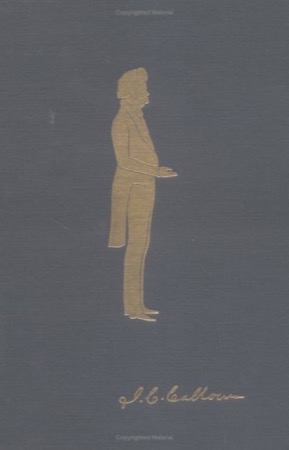
Hardcover. Columbia, University of South Carolina Press, reprint, 2003, Book: Very Good, Dust Jacket: None, Hardcover, blue cloth wth gilt lettering on spine, gilt silhouette of Calhoun on cover. 244 pages with index. The Papers of John C. Calhoun, Volume XXVIII is the final volume in a distinguished documentary edition, the first volume of which was published more than fifty years ago. While identical to others in the series in terms of typeface, binding, and letterpress printing, this volume does not contain any of John C. Calhoun's personal papers, rather it features Calhoun's only formal, scholarly writings on political science and political philosophy. A Disquisition on Government is an examination of the first principles of political science, much in the model of Aristotle's Politics or Baron Montesquieu's Spirit of the Laws. It examines basic principles of politics, including concepts of sovereignty and personal liberty and the relationships between states and nations. A Discourse on the Constitution and Government of the United States is a focused study of American political thought and constitutional history since the ratification of the Constitution. It pays particular attention to antifederalist views of the Constitution, the Virginia and Kentucky Resolutions of the 1790s, and the Bill of Rights, the first ten amendments to the Constitution. Clean copy.
Softcover. The Hague, Martinus Nijhoff, 2nd Ed., 1965, Book: Very Good, Dust Jacket: None, Two matching softcover volumes, 765 total pages, b&w illustrations. Clean copies.
Hardcover. Rochester NY, University of Rochester Press, 1st, 1996, Book: Very Good, Dust Jacket: Very Good, Hardcover in a bright dust jacket, 224 pages. 10 Essays, ranging from Locke, Berkeley, and Hume to Foucault's Critique of the Enlightenment, with an Introduction by Sylvana Tomaselli. Contributors include Richard H. Popkin, Peter Laslett, and Michael Ayers.
Hardcover. Chicago, Open Court, 1st, 1921, Book: Very Good, Dust Jacket: None, Hardcover, blue cloth with gilt lettering on front cover and spine, 245 pages. Top edge gilt. Pencil notations to about 20 pages.






 "The Moral Philosopherby: Morgan, Thomas /Price, John V. (Intro)")


 "The Nature and Destiny of Man; A Christian Interpretation; I. Human Nature; II. Human Destiny; Gifford Lectures by: Reinhold Niebuhr")
 "The Nature of Truth: An Essayby: Harold H. Joachim")



 "The Oxford Francis Bacon XIII: The Instauratio Magna: Last Writingsby: Bacon, Francis, and Rees, Graham (Edited and translated by)")
 "The Phenomenological Movement: A Historical Introduction (2 volumes). by: Spiegelberg, Herbert")
 "The Philosophical Writings of Richard Burthoggeby: Richard Burthogge; Margaret W. Landes (editor)")