Hardcover. Evanston IL, Northwestern University Press, 1st, 1966, Book: Very Good, Dust Jacket: Good, Hardcover in a lightly worn dust jacket with mild tanning, 220 pages. Lowith is probably most known for his two books From Hegel to Nietzsche, which describes the decline of German classical philosophy, and Meaning in History, which discusses the problematic relationship between theology and history.
Hardcover. London, Macmillan & Co, reprint, 1956, Book: Good, Dust Jacket: Good, Hardcover, 530 pages, dust jacket edge wear and small tears, price clipped. Pencil markings and underlining on some pages, foxing on edges, and previous owner's signature on front fly leaf, otherwise, clean and tight copy.
Hardcover. Cambridge, MA, Harvard University Press, 1st, 1968, Book: Very Good, Dust Jacket: None, 208 pages. Hardcover. Green-blue cloth, gilt lettering to spine. No dust jacket. Previous owner's signature on front fly leaf, light fading to spine title, else a clean, tight copy.
Softcover. New York, John Day Company, 1st Edition, 1933, Book: Very Good, Dust Jacket: None, 32 pages. Softcover pamphlet with French flaps. Tan wrapper with black title on front cover and text on back cover (see image). Staple bound. A couple of stray marks on front cover (see image). Some light tanning throughout from age. In amazing shape for its age.
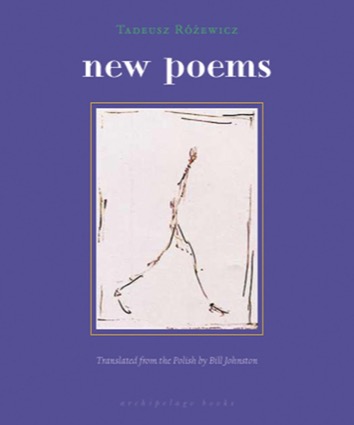
Softcover. NY, Archipelago Books, 1st, Book: Very Good, Dust Jacket: None, Softcover in pictorial wrappers, 259 pages. Written in a pared-down, direct language, and filled with allusions to everything from philosophy to TV talk shows, the poetry of Tadeusz Rozewicz encompasses the complexity of human experience in the early 21st century. Rozewicz's unique voice, formed during his experiences as a member of the Polish resistance in World War II, and honed by decades living under communist rule, holds a merciless mirror up to the crimes and excesses of the poet's lifetime. In his eighties now, Rozewicz continues to be a prolific writer and an acerbic commentator on his life and times. This collection combines his latest three volumes: professor's knife, gray zone, and exit. These are extraordinary poems from an acknowledged European master. Clean copy.
Hardcover. Brattleborough VT, J. Holbrook, 1819, Book: Very Good, Dust Jacket: None, 336 pages, black leather binding with gilt lettering and decorations on spine. Early Vermont imprint. Previous owner's inscription on blank prelim page, otherwise clean, bright copy.
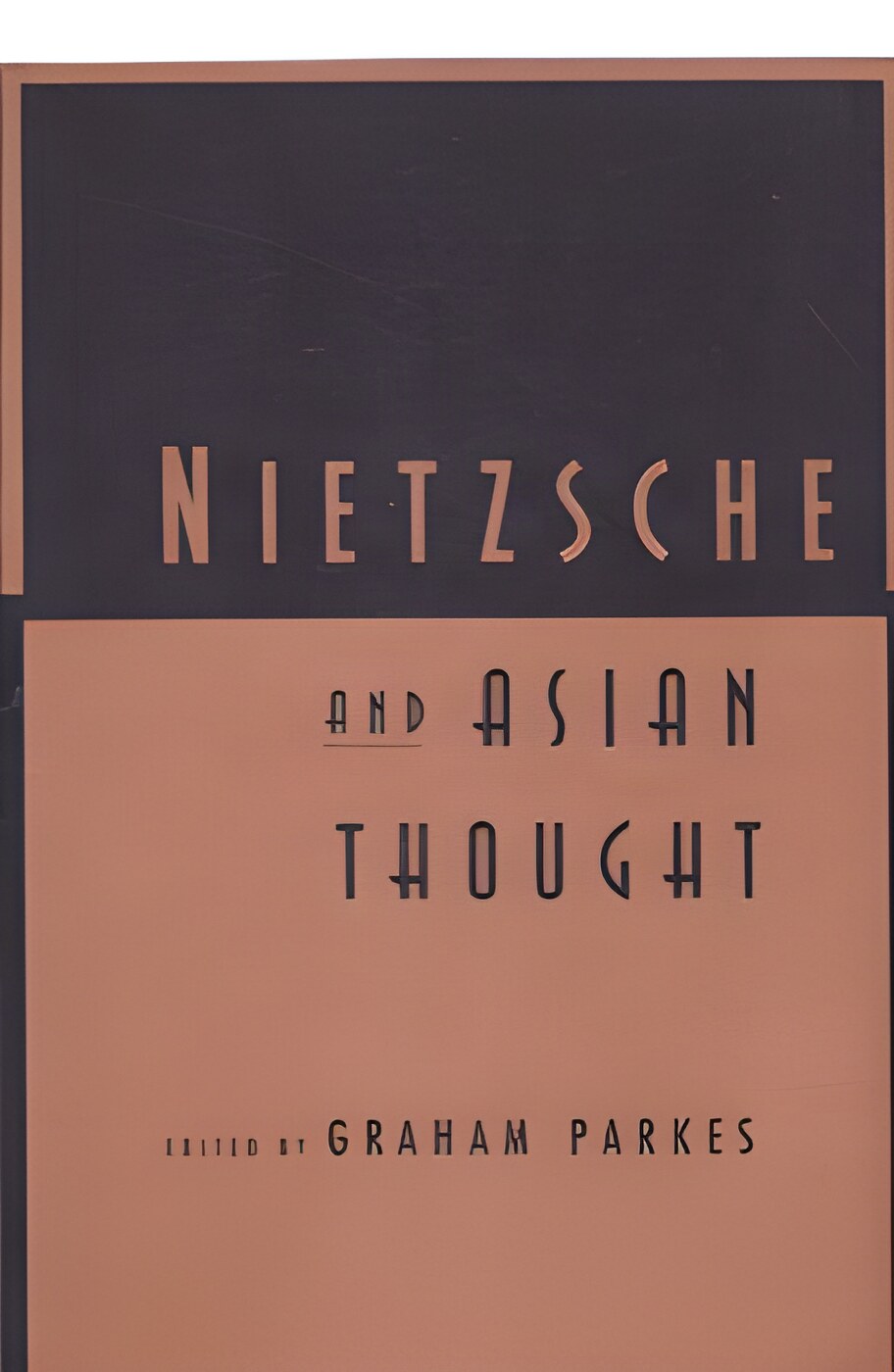
Softcover. Chicago, University of Chicago Press, reprint, 1996, Book: Very Good, Dust Jacket: None, Softcover, 253 pages. Friedrich Nietzsche's work has had a significant impact on the intellectual life of non-Western cultures and elicited responses from important thinkers outside of the Anglo-American philosophical traditions as well. Bringing together thirteen internationally renowned scholars, this is the first collection of essays to address the connection between Nietzsche's ideas and philosphies in India, China, and Japan. The contributors are Roger T. Ames, Johann Figl, Chen Guying, Michel Hulin, Arifuku Kogaku, David A. Kelly, Glen T. Martin, Sonoda Muneto, Graham Parkes, okochi Ryogi, Eberhard Scheiffele, Mervyn Sprung, and Joan Stambaugh.
Hardcover. NY, Cambridge University Press, 1st, 1994, Book: Very Good, Dust Jacket: Very Good, Hardcover in a bright dust jacket. This pioneering study documents the extent and diversity of the impact of Nietzschean ideas on Soviet literature and culture. It shows for the first time how these ideas, unacknowledged and reworked, entered and shaped that culture and stimulated the imagination of both supporters and detractors of the regime. 421 pages, a bright, clean copy.
Softcover. Ithaca NY, State University of New York , 2nd pr., 1990, Book: Very Good, Dust Jacket: None, Softcover, 350 pages. The contributors discuss the current debate about what philosophy is, how it works, and how Nietzsche's thought clarifies or complicates its understanding. They represent a wide range of views and practices, some aggressively postmodern in their approach, some profoundly skeptical about postmodernism. Although the issue of postmodernism is the central focus, the essays also touch on many other areas of interest to readers of Nietzsche. Spine faded, light pencil underlining to a few pages.
Softcover. UK, Cambridge University Press, reprint, 1991, Book: Very Good, Dust Jacket: None, Softcover, 298 pages. Friedrich Nietzsche haunts the modern world. His elusive writings with their characteristic combination of trenchant analysis of the modern predicament and suggestive but ambiguous proposals for dealing with it have fascinated generations of artists, scholars, critics, philosophers, and ordinary readers. Maudemarie Clark's highly original study gives a lucid and penetrating analytical account of all the central topics of Nietzsche's epistemology and metaphysics, including his views on truth and language, his perspectivism, and his doctrines of the will-to-power and the eternal recurrence. CLEAN COPY.
Softcover. Chjcago, University of Chicago Press, 2nd pr., 1991, Book: Very Good, Dust Jacket: None, Softcover, 240 pages. Nietzsche's New Seas makes available for the first time in English a representative sample of the best recent Nietzsche scholarship from Germany, France, and the United States. Michael Allen Gillespie and Tracy B. Strong have brought together scholars from a variety of disciplines--philosophy, history, literary criticism, and musicology--and from schools of thought that differ both methodologically and ideologically. The contributors--Karsten Harries, Robert Pippin, Eugen Fink, Hans-Georg Gadamer, Kurt Paul Janz, Sarah Kofman, Jean-Michel Rey, and the editors themselves--take a new approach to Nietzsche, one that begins with the claim that his enigmatic utterances can best be understood by examining the style or structure of his thought. Clean copy.
Softcover. New Haven CT, Yale University Press, reprint, 1986, Book: Very Good, Dust Jacket: None, Softcover, 378 pages. The first comprehensive interpretation of Nietzsche's Thus Spoke Zarathustra-an important and difficult text and the only book Nietzsche ever wrote with characters, events, setting, and a plot. Laurence Lampert's chapter-by-chapter commentary on Nietzsche's magnum opus clarifies not only Zarathustra's narrative structure but also the development of Nietzsche's thinking as a whole. "An impressive piece of scholarship. Insofar as it solves the riddle of Zarathustra in an unprecedented fashion, this study serves as an invaluable resource for all serious students of Nietzsche's philosophy. Lampert's persuasive and thorough interpretation is bound to spark a revival of interest in Zarathustra and raise the standards of Nietzsche scholarship in general."-Daniel W. Conway, Review of Metaphysics. Clean copy.
Softcover. Amherst MA, University Of Massachusetts , 1st, 1990, Book: Very Good, Dust Jacket: None, Softcover, 205 pages. This study challenges the common view that Nietzsche passed through several discrete periods of thought, each based on a different set of values, and that his work can best be understood as a collection of isolated insights. Through close textual analysis, Robert John Ackermann exposes the underlying unity and consistency in Nietzsche's thought that has long been overlooked. Ackermann is to be highly commended for this clearly written introduction to Nietzsche. Light pencil underlining to several pages.
Hardcover. NY, Gallery Books, 1st, 2025, Book: Very Good, Dust Jacket: Very Good, Hardcover in a bright, unclipped dust jacket, 267 pages. Now Departing explores the science, craft, and mindfulness behind Victor M. Sweeney's very peculiar skill set. Working in the funeral business since he was eighteen years old, Sweeney astutely shares the powerful and moving lessons of how we can exist and be remembered with intention and meaning. Each page is filled with reflective observations and true stories from the lives and deaths that Sweeney has come to know through his work in a small Minnesota town. With grace and understanding, he also explores the rituals around preparing and saying goodbye to those we mourn; the love and forgiveness that arises in the face of grief; the universal interplay of walking between the chasm of the mundanity of a required business practice that touches on humanity's deepest metaphysical realities; and ultimately, how loss gives us the opportunity to focus on and celebrate the elements we have gained. Clean copy.
Hardcover. Hildesheim, Germany, Georg Olms Verlagsbuchhandlung, Reprint, 1967, Book: Very Good, Dust Jacket: None, Volumes 1-2. Hardcovers. Vol. 1: 512 pages. Vol. 2: 455 pages plus index. Green cloth covers, gilt title on black on spine and gilt title on front cover boards. top edge dyed. Key work by British philosopher, explaining his theories on the mind-body connection, including his doctrines of vibrations and associations, the formation and growth of consciousness, etc. Clean copies.
Softcover. Paris, Hachette Livre, reprint, nd, Book: Very Good, Dust Jacket: None, Softcover, 1084 pages, text in FRENCH. Clean, fresh copy. M. Pierre Bayle was a French philosopher, author, and lexicographer. Voltaire, in the prelude to his Poeme sur le desastre de Lisbonne, calls Bayle "le plus grand dialecticien qui ait jamais ecrit": the greatest dialectician to have ever written.
Softcover. Hanover NH, Wesleyan University Press, 3rd pr., 1987, Book: Very Good, Dust Jacket: None, Softcover in pictorial wraps, 343 pages. The focus of this book is the secular cultures of pagan Greece and imperial Rome, and the religious cultures of Judaism and Christianity which, in turn, grew from and influenced them and the modern world. For Momigliano, religion, secular ideology, and politics live in and illuminate the present. Brings together nineteen essays written over five years from sources such as The New York Review of Books, The American Scholar, and the Annali della Scuola Normale Superiore di Pisa. Clean copy.
Hardcover. Cambridge MA, Harvard University Press, 1st, 2007, Book: Very Good, Dust Jacket: Very Good, Hardcover in a bright dust jacket, 206 pages. Lorenzo Valla (1407-1457) was the most important theorist of the humanist movement. He wrote a major work on Latin style, On Elegance in the Latin Language, which became a battle-standard in the struggle for the reform of Latin across Europe, and Dialectical Disputations, a wide-ranging attack on scholastic logic. His most famous work is On the Donation of Constantine, an oration in which Valla uses new philological methods to attack the authenticity of the most important document justifying the papacy's claims to temporal rule. It appears here in a new translation with introduction and notes by G. W. Bowersock, based on the critical text of Wolfram Setz (1976). This volume also includes a text and translation of the Constitutum Constantini, commonly known as the Donation of Constantine.
Hardcover. Springer, 1st, 2021, Book: Very Good, Dust Jacket: None, Hardcover, glazed pictorial boards, 894 pages. INSCRIBED BY BOTH AUTHORS on front fly leaf. This work is a large, powerfully illustrated interdisciplinary natural sciences volume, the first of its kind to examine the critically important nature of ecological paradox, through an abundance of lenses: the biological sciences, taxonomy, archaeology, geopolitical history, comparative ethics, literature, philosophy, the history of science, human geography, population ecology, epistemology, anthropology, demographics, and futurism. The ecological paradox suggests that the human biologicaland from an insular perspective, successful struggle to exist has come at the price of isolating H. sapiens from life-sustaining ecosystem services, and far too much of the biodiversity with which we find ourselves at crisis-level odds. It is a paradox dating back thousands of years, implicating millennia of human machinations that have been utterly ruinous to biological baselines. Clean copy. DUE TO WEIGHT, DOMESTIC SHIPPING ONLY.
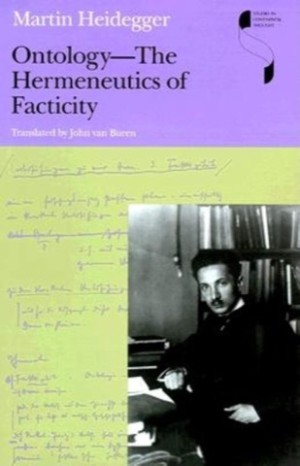
Hardcover. Bloomington, Indiana University Press, 1st, 1999, Book: Very Good, Dust Jacket: Good, Hardcover in a very good dust jacket with fading to spine and spine edge, 138 pages. "With thematic trajectories pointing both toward and beyond Being and Time, this translation ...is of enormous significance for students of the development of Heidegger's early thought." - Daniel O. Dahlstrom, Boston University. First published in 1988 as volume 63 of Heidegger's Collected Works, "Ontology" follows Heidegger's lectures at the University of Freiburg during the summer semester of 1923. In these lectures, Heidegger reviews and makes critical appropriation of the hermeneutical tradition from Plato, Aristotle, and Augustine to Schleiermacher and Dilthey. Other important themes that are taken up are his turn to the facticity and everyday world of Dasein, his interpretation of human existence in the present historically and philosophically, his understanding of phenomenology, and his repeated insistence on the temporal dimension of interpretation and significance. Students of Heidegger's thought will find initial breakthroughs in his unique elaboration of the meaning of human existence and "question of Being," which received mature expression in Being and Time. Name on front fly leaf, light pencil notations to rear endpapers, 3 pages.
Softcover. Belgium, Brepols Publishers, 1st, 1994, Book: Very Good, Dust Jacket: None, Softcover, 76 pages. INSCRIBED BY RICHTER on front fly leaf. Light pencil marks to several pages.
Hardcover. Princeton, N.J., Princeton University Press, 1st, 1992, Book: Very Good, Dust Jacket: Very Good, Hardcover, 287 pages. Clean, unmarked copy with only minor wear to dust jacket.

![Nature, History, and Existentialismby: Karl Lowith; Arnold Levison [Editor]](https://www.browsingisarousing.com/shop/images/Nature-History-and-Existentialism_by_Karl-Lowith-Arnold-Levison-Editor400196-457823.jpg "Nature, History, and Existentialismby: Karl Lowith; Arnold Levison [Editor]")
 "Nature, Man and God: Being the Gifford Lectures Delivered in the University of Glasgow in the Academical Years 1932-1933 and 1933-1934by: Temple, William")




 "New Testament of Our Lord and Saviour Jesus Christ, Theby: N/A")
 "Nietzsche and Soviet Culture: Ally and Adversaryby: Bernice Glatzer Rosenthal (Ed.)")
![Nietzsche as Postmodernist: Essays Pro and Contra by: Clayton Koelb [Ed.]](https://www.browsingisarousing.com/shop/images/399735.jpg "Nietzsche as Postmodernist: Essays Pro and Contra by: Clayton Koelb [Ed.]")
 "Nietzsche on Truth and Philosophy by: Maudemarie Clark")
 "Nietzsche: A Frenzied Look by: Ackerman, Robert John")
 "Objects of Thoughtby: Prior, Arthur N./P. T. Geach/A. J. P. Kenny (Editors)")