Hardcover. Holland/Boston, D. Reidel Publishing, 1dt, 1983, Book: Very Good, Dust Jacket: Very Good, Hardcover in a blue dust jacket, 186 pages. A criticism of Fideism, the view that religious faith should not seek the support of reason. Clean, bright copy.
Hardcover. Manhasset NY, Round Table Press, reprint, 1963, Book: Very Good, Dust Jacket: Good, Hardcover in a lightly worn dust jacker, 143 pages. Introduction by Elmer Homrighausen. Owner's name on front fly leaf, otherwise clean.
Hardcover. UK, Oxford University Press, 1st, 2012, Book: Very Good, Dust Jacket: Very Good, Hardcover in a bright, unclipped dust jacket. God in the Age of Science? is a critical examination of strategies for the philosophical defence of religious belief. The main options may be presented as the end nodes of a decision tree for religious believers. The faithful can interpret a creedal statement (e.g. "God exists") either as a truth claim, or otherwise. If it is a truth claim, they can either be warranted to endorse it without evidence, or not. Finally, if evidence is needed, should its evidential support be assessed by the same logical criteria that we use in evaluating evidence in science, or not? Each of these options has been defended by prominent analytic philosophers of religion. In part I Herman Philipse assesses these options and argues that the most promising for believers who want to be justified in accepting their creed in our scientific age is the Bayesian cumulative case strategy developed by Richard Swinburne. Parts II and III are devoted to an in-depth analysis of this case for theism. Using a "strategy of subsidiary arguments," Philipse concludes (1) that theism cannot be stated meaningfully; (2) that if theism were meaningful, it would have no predictive power concerning existing evidence, so that Bayesian arguments cannot get started; and (3) that if the Bayesian cumulative case strategy did work, one should conclude that atheism is more probable than theism. Philipse provides a careful, rigorous, and original critique of theism in the world today. Clean copy.
Hardcover. Chapel Hill NC, University of North Carolina, 1st, 2004, Book: Very Good, Dust Jacket: Very Good, Hardcover in a bright, unclipped dust jacket, 349 pages. SIGNED BY AUTHOR on the title page. Clean copy.
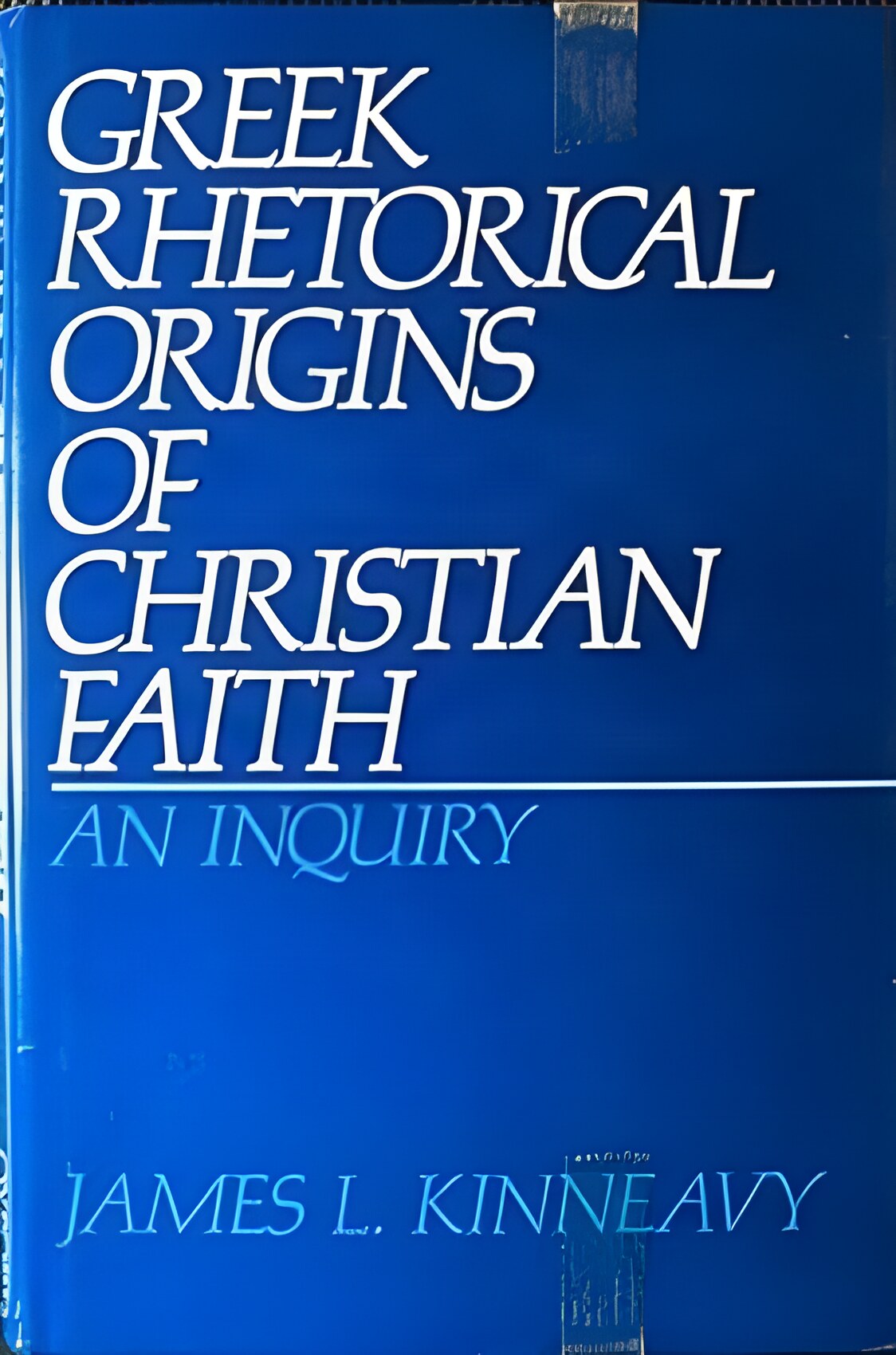
Hardcover. NY, Oxford University Press, 1st, 1987, Book: Very Good, Dust Jacket: Very Good, Hardcover in a bright dust jacket, 186 pages. What is the origin of Christian faith? Are the roots of the concept the same in both the Old and New Testaments? With the support of semantic, historical, and analytical evidence, Kinneavy develops a controversial and persuasive hypothesis that the origin of the Christian concept of faith can be traced to Greek classical rhetoric. The author examines the notions of faith formulated by eight major Christian and Jewish theologians, presents a meticulous case for the historical influence of Greek rhetoric on Hebraic thought, and concludes with a novel rhetorical study of the several hundred occurrences of the Greek terms for "faith" and "to believe," emerging with overwhelming support for the Greek influence on Christian faith. Name on front fly leaf, otherwise clean.
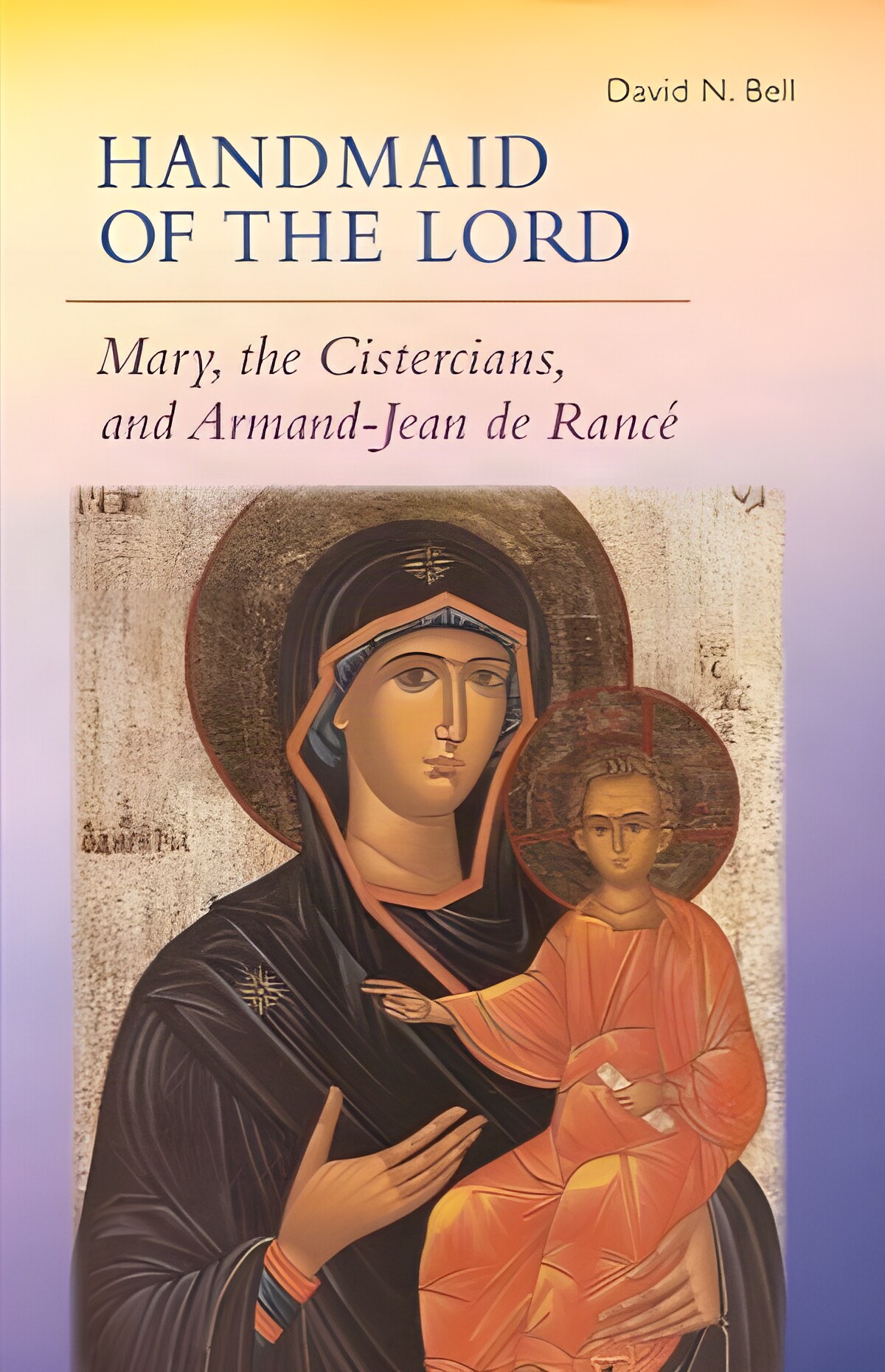
Softcover. Collegeville MN, Liturgical Press, 1st, 2021, Softcover, pictorial wrappers, 388 pages. In this book, David N. Bell explores what Cistercian writers and preachers have said about Mary from the time of the founding fathers of the Order to Armand-Jean de Rance, who introduced the Cistercian Strict Observance and who died in 1700. This work is divided into three parts. The first part presents some selective background material on Mary that is necessary for understanding where the Cistercian writers are coming from and the sources and ideas they are using. The next eight chapters, the second part of the book, examine the Marian ideas of Cistercian writers from Bernard of Clairvaux to a number of visionaries, both male and female, who take us to the very end of the thirteenth century. There is then a gap of more than three centuries--the reasons are given at the end of chapter 12--before we arrive at the birth of Armand-Jean de Rance in 1626. The final chapters--part 3 of the book--summarize the life of Rance, examine the place of Mary at La Trappe, and present annotated translations of Rance's five conferences for three Marian feasts: the Nativity of Mary, the Annunciation, and the Assumption. Clean copy.
Hardcover. NY, J. & J. Harper, 1831, Book: Very Good, Hardcover, Harper's Stereotype Edition. 6" tall; 261 pages + 4 page list of books in series; craft paper over boards. The frontis is a fold-out of the Sacred Temple of Mecca; the fold-out is quite clean, with only a bit of light foxing. Pages clean, covers tanned, remarkably nice condition, square and sound.
Hardcover. Santa Cruz, CA, Flesk Publications, 1st, 2010, Book: Very Good, Dust Jacket: Very Good, 304 pages. Hardcover with dust jacket. Color illustrations. Clean, unmarked copy with only minor wear to dust jacket. Harvey Dunn was one of twentieth century America's most powerful illustrators, painters and teachers. This comprehensive volume covers a major portion of his illustrations and paintings for the first time. Content includes illustration art, pioneer and western works, and his powerful World War I pieces inspired by his battlefield sketches. Also included are the rarely seen nudes, portraits, and murals. Paintings from museums and private collections showcase the full range of this talented American artist. For this book, many original paintings were tracked down and re-photographed in order to reintroduce the work of this important artist. Until now, most of Dunn's paintings and illustrations have been unavailable to the public in their original form. Locations of pictures in public collections are listed, as are the original publication dates and places. Additionally, a section is devoted to the artist's working and teaching methods. Also included is a reprinting of Dunn's "An Evening in the Classroom," compiled from notes made during critiques, passing on his inspirational teaching philosophy. A comprehensive list of Dunn's students with sample art is included as well.
Hardcover. Cambridge, U.K. ; New York, Cambridge University Press, 1st, 2001, Book: Very Good, Dust Jacket: Very Good, Hardcover, 442 pages. Light shelf-wear to dust jacket with slight sun-fade on spine. Clean, tight copy.
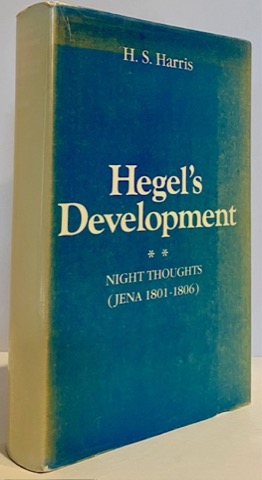
Hardcover. Oxford, England, Clarendon Press, 1st Edition, 1983, Book: Very Good, Dust Jacket: Very Good, 627 pages. Hardcover. Sequel to Hegel's Development: Toward the Sunlight 1770-1801(Clarendon Press, 1972). Black cover boards, gilt title and design on spine. Pages clean and bright. Binding tight. Spine straight. Dust jacket unclipped, faded (shelfwear), light agewear, glossy. Harris distinguishes three main phases in Hegel's development over this period: the period of callaboration with Schelling (1801-3); the appearance of a three-part 'phenomenological' system (1803-50; and the emergence of the mature system.
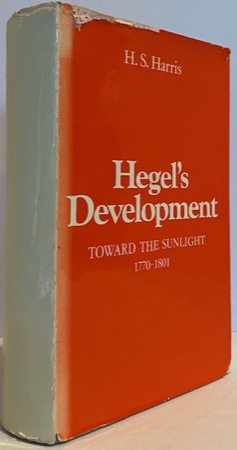
Hardcover. London, England, Oxford University Press, 1st, 1972, Book: Very Good, Dust Jacket: Fair, 574 pages. Hardcover. Previous owner's name on front flyleaf with small notations (pencil) throughout. Black cover boards (some light chipping), gilt title on spine. Spine slightly cocked, doesn't affect binding. Dust jacket unclipped, has agewear: chipping, fading, some small tears (see image). This book provides an intellectual biography of Hegel from the Gymnasium years until he went to his first academic post at Jena.
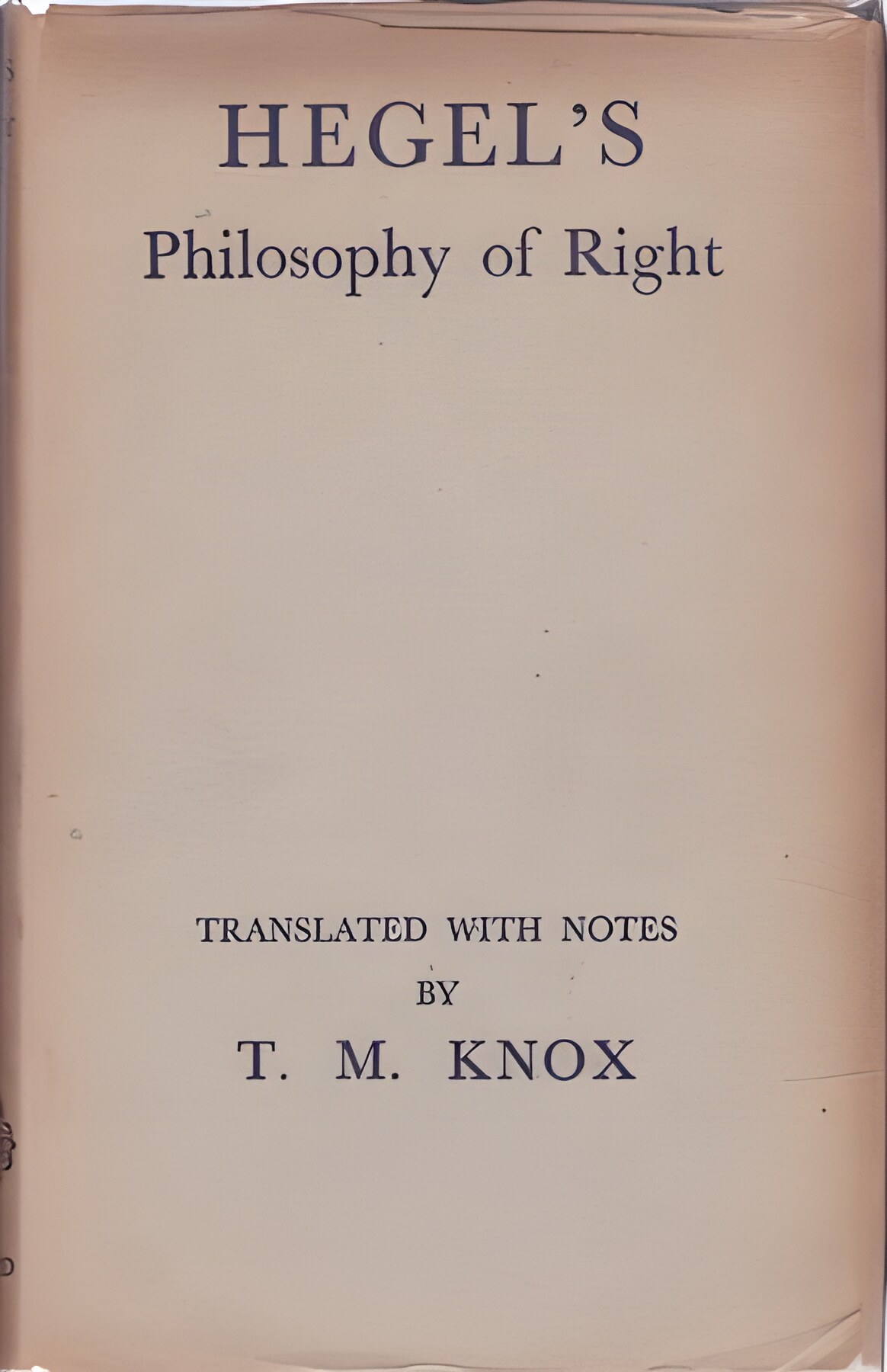
Hardcover. UK, Oxford University Press, 1st transl. thus, 1942, Book: Very Good, Dust Jacket: Good, Hardcover, blue cloth in a lightly worn dust jacket, 382 pages. Contains his mature views on such subjects as law, rights, morality, the family, economic life, and the state. First published in 1821. Dust jacket with tanning, otherwise clean.
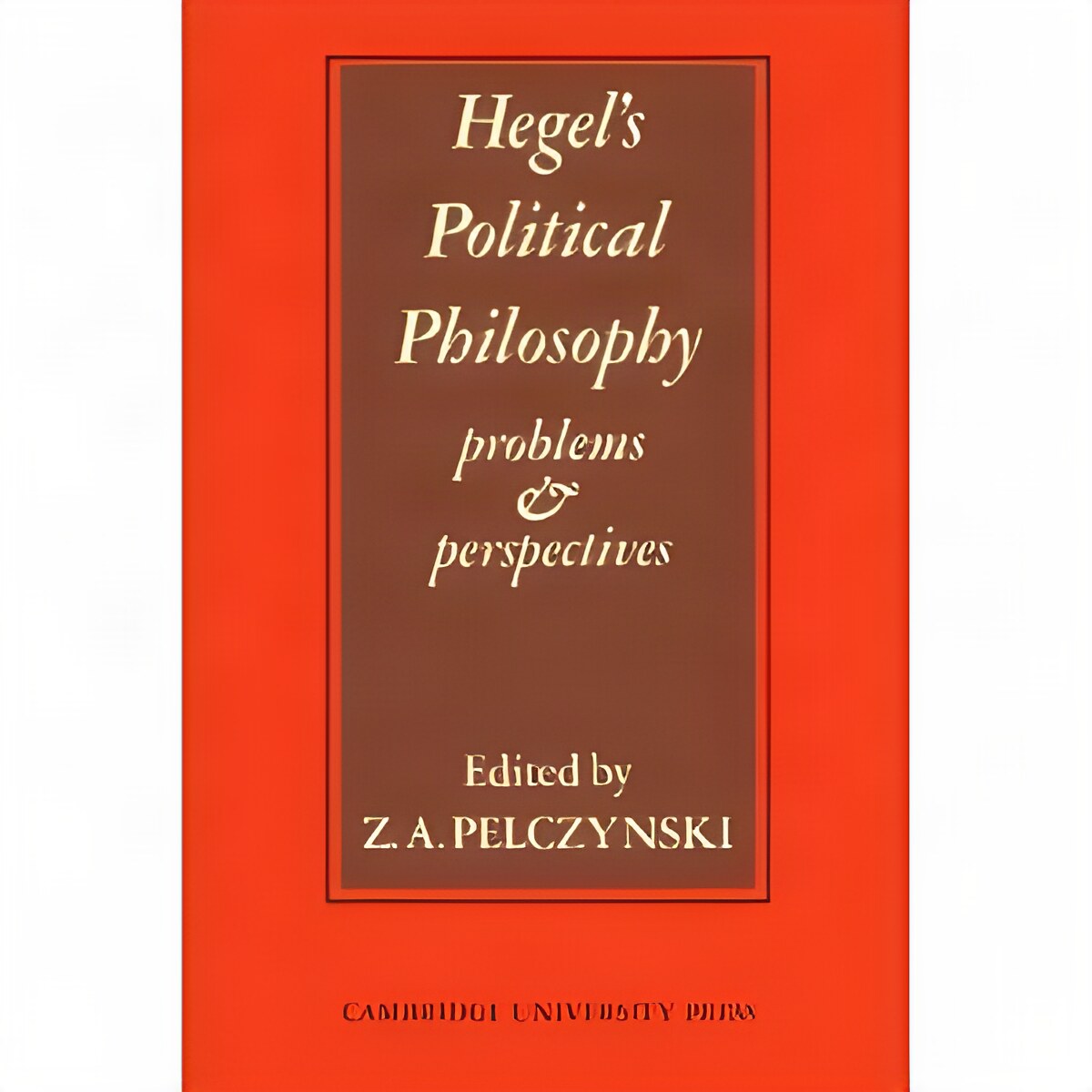
Hardcover. NY, Cambridge University Press, reprint, 2000, Book: Very Good, Dust Jacket: Very Good, Hardcover in a bright, price-clipped dust jacket, 256 pages. Originally published in 1971, this volume was created to commemorate the bicentenary of Hegel's birth in 1770. Thirteen essays are included from experts with diverse approaches, concentrating on the central issues of Hegel's political philosophy, and covering all of the major political works. These essays demonstrate the vitality of Hegel's philosophical perspective, engaging the reader and providing a way into the often difficult explication of his ideas. Whilst this is a commemorative edition, and the views put forward are broadly sympathetic, a critical distance is maintained, allowing for numerous fresh insights. Accessible and highly informative, this book will be of value to anyone with an interest in Hegelian thought and its political implications.
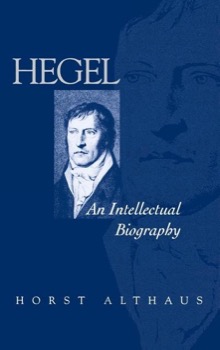
Hardcover. UK, Polity Press, 1st, 2000, Book: Very Good, Dust Jacket: None, Hardcover, blue pictorial boards, 292 pages. This accessible and highly readable book is the first full-length biography of Hegel to be published since the largely outdated treatments of the nineteenth century. Althaus draws on new historical material and scholarly sources about the life and times of this most enigmatic and influential of modern philosophers. He paints a living portrait of a thinker whose personality was more complex than is often imagined, and shows that Hegel's relation to his revolutionary times was also more ambiguous than is usually accepted. Clean copy.
Hardcover. New York, State University of New York Press, 1st, 1991, Book: Very Good, Dust Jacket: Very Good, 233 pages. Hardcover. Dust jacket with light wear. Clean unmarked text.
Hardcover. Minneapolis, University of Minnesota, 2nd pr., 1965, Book: Very Good, Dust Jacket: Very Good, Hardcover in a lightly worn dust jacket, 197 pages. Professor Noble examines the basic philosophy and writing of six American historians, George Bancroft, Frederick Jackson, Charles A. Beard, Carl Becker, Vernon Louis Parrington, and Daniel J. Boorstin, and finds in them a common tradition which he calls anti-historical. He argues that this viewpoint is founded in the frontier interpretation of American history, that American historians have served as the chief political theorists and theologians of this country since 1830, and that their writings can be interpreted as Jeremiads designed to preserve a national covenant with nature. Clean copy.
Hardcover. Cambridge, W. Heffer & Sons, Revised, 1928, Book: Very Good, Dust Jacket: None, 94 pages. Hardcover with no dust jacket. A few minor margin marks in pencil. Dark blue cover boards.
Softcover. Evanston, IL, Northwestern University Press, reprint, 2001, Book: Very Good, Dust Jacket: None, 355 pages. Softcover with light edgewear to paper wrappers. In this groundbreaking volume, Krzysztof Ziarek rethinks modern experience by bringing together philosophical critiques of modernity and avant-garde poetry. Ziarek explores, through selective readings of avant-garde poetry, the key aspects of the radical critique of experience: technology, everydayness, event, and sexual difference. To that extent, The Historicity of Experience is less a book about the avant-garde than a critique of experience through the avant-garde. Ziarek reads the avant-garde in dialogue with the work of some of the major critics of modernity (Martin Heidegger, Walter Benjamin, Jean-Francois Lyotard, and Luce Irigaray) to show how avant-garde experiments bear critically on the issue of modern experience and its technological organization. The four poets Ziarek considers--Gertrude Stein, Velimir Khlebnikov, Miron Biaoszewski, and Susan Howe--demonstrate the broad reach of and variety of forms taken by the avant-garde revision of experience and aesthetics.
Softcover. Evanston IL, Northwestern University Press, reprint, Book: Very Good, Dust Jacket: None, Softcover, 333 pages. A work about the problems in the philosophy of history by the French hermeneutic phenomenologist. Introduction by Charles A. Kelbley; Foreword by David M. Rasmussen. Clean copy.
Hardcover. London, England, Routledge & Kegan Paul Limited, 1st Editions, 1950, Book: Very Good, Dust Jacket: None, International Library of Sociology and Social Reconstruction. Two Volumes: Vol. 1: 352 pages. Vol. 2: 706 pages plus publisher ads. Previous owner's name on front flyleafs. Green cloth cover boards, gilt title on spine, fading to boards, especially to spines. Binding tight. Spines straight. Pages/edges have light tanning, otherwise clean. Appearing in isolation as they do, autobiographies demand for their description and appreciation, a comprehensive view of the development of the human mind. DOMESTIC SHIPPING ONLY.
Softcover. Cambridge MA, The MIT Press, 1st thus, 1995, Book: Very Good, Dust Jacket: None, 256 pages, b&w illustrations. Light edgewear and rubbing to wrappers with small hole to spine. Clean, tight copy.
Hardcover. New York , The Macmillan Company, 1st U.S., 1953, Book: Very Good, Dust Jacket: Good, 141 pages. Red cloth cover in good condition. Inside bright, clean and crisp. Dust jacket has some wear. Frontispiece has b&w illustration of the opening verses of the Koran. A nice copy.



 "God In Action by: Barth, Karl")

 "God's Sacred Tongue (SIGNED COPY)by: Shalom Goldman")


 "Hegel and Aristotleby: Ferrarin, Alfredo")






 "Historical Account of The Church Hymnary: Revised Edition, Anby: Kinloch, T.F.")

 "History of Autobiography in Antiquity (Two Volumes)by: Misch, Georg, Dr. Karl Mannheim (Editor)")


 "History Without a Subject: The Postmodern Conditionby: Ashley, David")
 "Holy Koran, The: An Introduction with Selectionsby: Arberry, A. J.")