Hardcover. New York, Cassell, 1st, 1880, Book: Fair, Dust Jacket: None, Unpaginated, 100 b&w illustrations by Dore. Brown cloth covers w/ faded gilt lettering and design. Rubbing, chipping to corners. Hinges and binding cracked. Foxing to end papers. Previous owner's signature on front fly leaf. Else pages clean and crisp
Hardcover. NY, Macmillan Company, 1st, 1936, Book: Very Good, Dust Jacket: None, Hardcover, gray cloth with gilt lettering on spine faded, 271 pages. The book covers the life and work of Bishop Butler and the impact his philosophy had on the Age of Reason. Name, date on front fly leaf, otherwise a clean, tight copy.
Hardcover. New York, Thomas Whittaker, 1st, 1886, Book: Very Good, Dust Jacket: None, 225 pages, blue cloth covers with gilt lettering on spine. Clean, bright copy.
Hardcover. New York, Viking Studio Books, 2nd pr., 1994, Book: Very Good, Dust Jacket: None, Unpaginated. Hardcover with no dust jacket in a slipcase. Clean, tight copy with only light fading to slipcase. Paper on top of slip case is starting to become unglued. Bright colorful pictures throughout.
Softcover. UK, Cambridge University Press, reprint, 1996, Book: Very Good, Dust Jacket: None, Softcover, 141 pages. This volume contains the essential points of Jean Bodin's theory of sovereignty, a landmark in legal theory and royalist ideology. The four chapters presented form the core of Bodin's classic work, Six Livres de la Republique. Bodin was primarily responsible for introducing the seductive but erroneous notion that sovereignty is indivisible, that the entire power of the state had to be vested in a single individual or group. This thesis, combined with the prevailing crisis of authority during the French religious wars, led Bodin to a systematically absolutist interpretation of the French and other European monarchies. This is the first complete translation of this material into English since 1606, and is accompanied by a lucid introduction, chronology, and bibliography. Clean copy.
Hardcover. Oxford UK, Clarendon Press, 1st, 1981, Book: Very Good, Dust Jacket: Very Good, Hardcover in a bright dust jacket, 313 pages. The Consolations of Philosophy by Boethius, whose English translators include King Alfred, Geoffrey Chaucer, and Queen Elizabeth I, ranks among the most remarkable books to be written by a prisoner awaiting the execution of a tyrannical death sentence. Its interpretation is bound up with his other writings on mathematics and music, on Aristotelian and propositional logic, and on central themes of Christian dogma. Chadwick begins by tracing the career of Boethius, a Roman rising to high office under the Gothic King Theoderic the Great, and suggests that his death may be seen as a cruel by-product of Byzantine ambitions to restore Roman imperial rule after its elimination in the West in AD 476. Subsequent chapters examine in detail his educational programme in the liberal arts designed to avert a threatened collapse of culture and his ambition to translate into Latin everything he could find on Plato and Aristotle. Name on front fly leaf, otherwise bright and clean.
Hardcover. NY, Reagan Books, 1st, 2006, Book: Very Good, Dust Jacket: None, Hardcover, 272 pages. Through striking illustrations and stunning photographs, Bohemian Modern explores the unique structural and interior designs that have put California's ultra-chic Silver Lake neighborhood at the forefront of a new style phenomenon. One of the country's most renowned modernist architects, Barbara Bestor has fully embraced and perfected Silver Lake's "bohemian modern" style: a practical philosophy that is Californian in origin but achievable anywhere. It is a look that favors raw, authentic materials, brilliant colors, creative space planning, and a natural flow between indoors and outdoors. The results, as Bohemian Modern presents, are striking: a flawlessly restored Neutra house decorated with both whimsy and restraint, a rooftop constructed for viewing the stars, a lavish outdoor garden delicately integrated into the surrounding architecture, a double-sided bookcase that soars three stories and serves as a functional art installation...there is no limit to the creativity and beauty of Silver Lake style.
Hardcover. NY, Reagan Books, 1st, 2006, Book: Very Good, Dust Jacket: None, Hardcover, 272 pages. Through striking illustrations and stunning photographs, Bohemian Modern explores the unique structural and interior designs that have put California's ultra-chic Silver Lake neighborhood at the forefront of a new style phenomenon. One of the country's most renowned modernist architects, Barbara Bestor has fully embraced and perfected Silver Lake's "bohemian modern" style: a practical philosophy that is Californian in origin but achievable anywhere. It is a look that favors raw, authentic materials, brilliant colors, creative space planning, and a natural flow between indoors and outdoors. The results, as Bohemian Modern presents, are striking: a flawlessly restored Neutra house decorated with both whimsy and restraint, a rooftop constructed for viewing the stars, a lavish outdoor garden delicately integrated into the surrounding architecture, a double-sided bookcase that soars three stories and serves as a functional art installation...there is no limit to the creativity and beauty of Silver Lake style.
Hardcover. Oxford, Thomas Baskett and Robert Baskett, 1st, 1743, Book: Good, Dust Jacket: None, Unpaginated in parts. Leather binding shows heavy wear to edges, especially corners. Gilt decoration on spine and stamped embellishment on front. Heavy foxing on pages. Gutter cracked in center. Black and white illustrations.
Hardcover. Cambridge, England, Cambridge University, 1st Edition, 1777, Book: Good, Dust Jacket: None, Nonpaginated. Hardcover. Cover boards bound in polished calf (agewear--see image), gilt bands on spine. Front cover boards and front flyleaf still attached but coming loose from binding,Binding tight otherwise. Spine straight. Previous owner's inscription on front flyleaf and dated signatures (178? and 1792) on title page (see image). Some light pencil on top of title page (see image). Tanning throughout from age. Beautiful old volume, a collector's dream.
Hardcover. New York , Abaris Books, Inc., 1st, 1974, Book: Very Good, Dust Jacket: None, 344 pages. Oversized red decorated cloth cover, gilt lettering, minor wear to corners. This copy does not have original slipcase. Light foxing on top and fore edge, but inside is bright and clean, with many colored illustrations throughout. Contains a history of the Prayer Book and a synopsis of the life of Emperor Maximilian I.
Hardcover. NY, Simon & Schuster, 3rd pr., 2000, Book: Very Good, Dust Jacket: Very Good, Hardcover in a bright dust jacket, color illustrations. Renowned artist and architect Maya Lin's visual and verbal sketchbook--a unique view into her artwork and philosophy. Boundaries is her first book: an eloquent visual/verbal sketchbook produced with the same inspiration and attention to detail as any of her other artworks. Like her environmental sculptures, it is a site, but one which exists at a remove so that it may comment on the personal and artistic elements that make up those works. In it, sketches, photographs, workbook entries, and original designs are held together by a deeply personal text. Boundaries is a powerful literary and visual statement by "a leading public artist" (Holland Carter). It is itself a unique work of art. Clean copy.
Softcover. Berkeley, University of California Press, 1st pbk, 1987, Book: Very Good, Dust Jacket: None, Softcover, 839 pages. Traces the history of bribery from ancient Egypt to ABSCAM, examines changing perceptions of bribery, and discusses the legal, ethical and religious injunctions against bribes. Clean, bright copy.
Hardcover. Boston, Ginn & Co, 1st, 1906, Book: Good, Dust Jacket: None, 296 pages. Bookseller's label on rear end paper. Black & white illustrations by Charles Copeland and color frontispiece. Green cloth covers with gold decoration and lettering. Rubbing to spine and corners. No dust jacket. Gilt top edge.
Hardcover. Oxford UK, Oxford University Press, 1st, 2015, Book: Very Good, Dust Jacket: Very Good, Hardcover in a bright dust jacket, 286 pages. Sarah Hutton presents a rich historical study of one of the most fertile periods in modern philosophy. It was in the seventeenth century that Britain's first philosophers of international stature and lasting influence emerged. Its most famous names, Hobbes and Locke, rank alongside the greatest names in the European philosophical canon. Bacon too belongs with this constellation of great thinkers, although his status as a philosopher tends to be obscured by his statusas father of modern science. The seventeenth century is normally regarded as the dawn of modernity following the breakdown of the Aristotelian synthesis which had dominated intellectual life since the middle ages. In this period of transformational change, Bacon, Hobbes, Locke are acknowledged tohave contributed significantly to the shape of European philosophy from their own time to the present day. But these figures did not work in isolation. Sarah Hutton places them in their intellectual context, including the social, political and religious conditions in which philosophy was practised. She treats seventeenth-century philosophy as an ongoing like all conversations, some voices will dominate, some will be more persuasive than others and there will be enormous variationsin tone from the polite to polemical, matter-of-fact, intemperate. The conversation model allows voices to be heard which would otherwise be discounted. Hutton shows the importance of figures normally regarded as 'minor' players in philosophy (e.g. Herbert of Cherbury, Cudworth, More, Burthogge,Norris, Toland) as well as others who have been completely overlooked, notably female philosophers. Crucially, instead of emphasizing the break between seventeenth-century philosophy and its past, the conversation model makes it possible to trace continuities between the Renaissance and seventeenth century, across the seventeenth century and into the eighteenth century, while at the same time acknowledging the major changes which occurred.
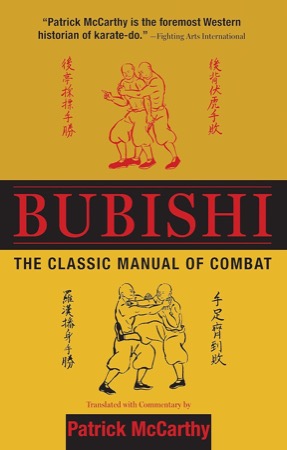
Hardcover. Rutland VT, Tuttle Publishing, 2nd pr., 2008, Book: Very Good, Dust Jacket: Very Good, Hardcover in a bright dust jacket, 255 pages, b&w illustrations. Treasured for centuries by karate's top masters, the Bubishi is a classic Chinese work on philosophy, strategy, medicine, and technique as they relate to the martial arts. Referred to as the "bible of karate" by famous master Chojun Miyagi, for hundreds of years the Bubishi was a secret text passed from master to student in China and later in Okinawa. All of karate's legendary masters have studied it, applied its teachings, or copied passages from it. No other classic work has had as dramatic an impact on the shaping and development of karate as the Bubishi. Karate historian and authority Patrick McCarthy spent over ten years researching and studying the Bubishi and the arts associated with it. The first English translation of this remarkable tome includes numerous explanations and notes. McCarthy's work also includes groundbreaking research on Okinawan and Chinese history, as well as the fighting and healing traditions that developed in those countries, making it a gold mine for researchers and practitioners alike. For the final word on the true origins and spirit of classic Okinawan martial arts, one need look no further. This karate book is one of the best karate training supplements available. Clean copy.
Hardcover. Delhi, Motilal, 1st, 1982, Book: Very Good, Dust Jacket: None, Hardcover, blue cloth, gilt lettering on spine, 320 pages. All forms of Buddhism--The Theravada, the Mahayana and the Vajrayana--affirm the perfectability of the person, and one finds this notion of perfection embodied in three images; the arahant, the bodhisattva and the mahasiddha. Reader also finds, in scholarly treatments of Buddhism, much made of the perceived differences among these three `vehicles` (yana). By close textual analysis as well as by extensive field work, Katz criticizes this emphasis on difference and prefers to treat Buddhism as a whole, a position he finds in accord with the teachings of both Buddhists and Buddhist texts. By a close examination of these three images of human perfection, bridges among the Theravada, the Mahayana and the Vajrayana are built and continuities within Buddhism are explored. This comparison involves pioneering discussions of Buddhist philosophy of language and hermeneutics, which are facilitated by Katz`s familiarity with Pali, Sanskrit and Tibetan Buddhist texts as well as his sympathetic involvement with the living Buddhist tradition. Light pencil marking to several pages in the margins. Otherwise clean, no dust jacket.
Hardcover. NY, Harry N Abrams, 1st, 1996, Book: Very Good, Dust Jacket: Very Good, Hardcover in a bright dust jacket. 208 pages illustrated in color. A surprising look at who designed for Disney: Michael Graves, Frank Gehry, Aldo Rossi, Robert Venturi etc. Based on interviews with those involved plus original photos and drawings. From fairy-tale castles to extraordinary buildings designed by the world's most distinguished architects, The Walt Disney Company has set new standards for the imaginative use of popular imagery in architecture. The company's enormously influential architectural philosophy, first expressed more than fifty years ago at Disneyland, draws on characters and settings from the world's most compelling legends and stories, especially Disney's own remarkable animated films. Clean copy.
Hardcover. UK, Oxford University Press, reprint, 2003, Hardcover in pictorial boards, 309 pages. Byzantine philosophy is an almost unexplored field. Being regarded either as mere scholars or as primarily religious thinkers, Byzantine philosophers have not been studied on their own philosophical merit. The eleven contributions in this volume, which cover most periods of Byzantine culture from the 4th to the 15th century, for the first time systematically investigate the attitude the Byzantines took towards the views of ancient philosophers, to uncover the distinctive character of Byzantine thought. Clean, bright copy.
Hardcover. Berkeley CA, University of California Press, 1st, 2009, Book: Very Good, Dust Jacket: Very Good, Hardcover, 320 pages. In the voluminous scholarship that's been written on Paul Cezanne, little has been said about the twenty-four portraits in oil that Cezanne made of his wife, Hortense Fiquet Cezanne, over an extended twenty-year period. In Cezanne's Other: The Portraits of Hortense, Susan Sidlauskas breaks new ground, focusing on these paintings as a group and looking particularly at the differences that render many of them unrecognizable as the same person. She argues that Cezanne sidestepped the conventional goals of portraiture-he avoids representing a consistent, identifiable physiognomy or conventional feminine postures and does not portray the subject's inner life-making lack of fixedness itself his subject, which leads him ultimately to a radical reformulation of modern portraiture. Sidlauskas also upends the notion of Mme Cezanne as the irrelevant and absent spouse. Instead she reveals Hortense Fiquet Cezanne as a presence so crucial to the artist that she became the essential "other" to his ever-evolving "self." Coupling historical texts from philosophy, psychology, and physiology with more recent writings from women's and gender studies, cognitive psychology, and visual culture, Sidlauskas demonstrates that Mme Cezanne offered intimacy at arm's length for the painter who has been dubbed "the lone wolf of Aix."
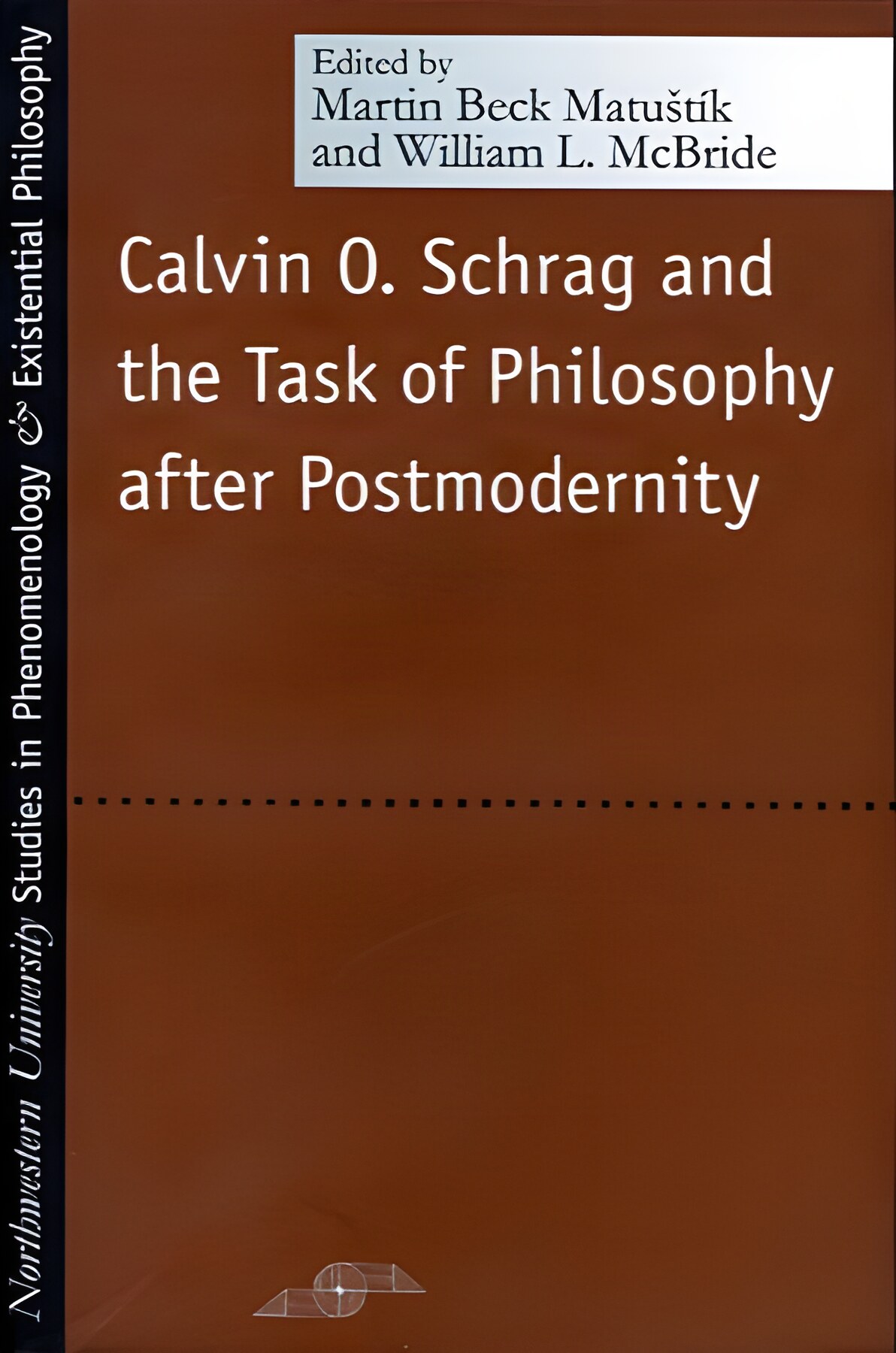
Softcover. Evanston IL, Northwestern University , 1st, 2002, Book: Very Good, Dust Jacket: None, Softcover, 325 pages. Devoted to the most important American Continental philosopher of his generation and one of the discipline's founding fathers, and featuring some of the field's most distinguished luminaries, this anthology constitutes a critical document in Continental philosophy, reflecting its recent history, its present state, and its debt to Calvin Schrag. Taking up themes central to Schrag's own philosophical concerns, these essays refer throughout to his salient "interventions" in the dialogue of late twentieth-century thought characterized as "postmodernity." In doing so, all contributors address, implicitly or directly, the question of philosophy's role and responsibility, or "task." The volume begins with an overview of this task and of Schrag's contributions to it, written from the perspective of a resolute defender of the phenomenological tradition that Schrag's work has extended and reconfigured. Clean copy.
Softcover. Cambridge [England] ; New York, Cambridge University Press, reprint, 1993, Book: Very Good, Dust Jacket: None, Softcover, 389 pages. Minor wear to edges of cover. Previous owner's inscription on front flyleaf. Slight foxing on top edge. Inside is bright, clean and unmarked. A nice copy.
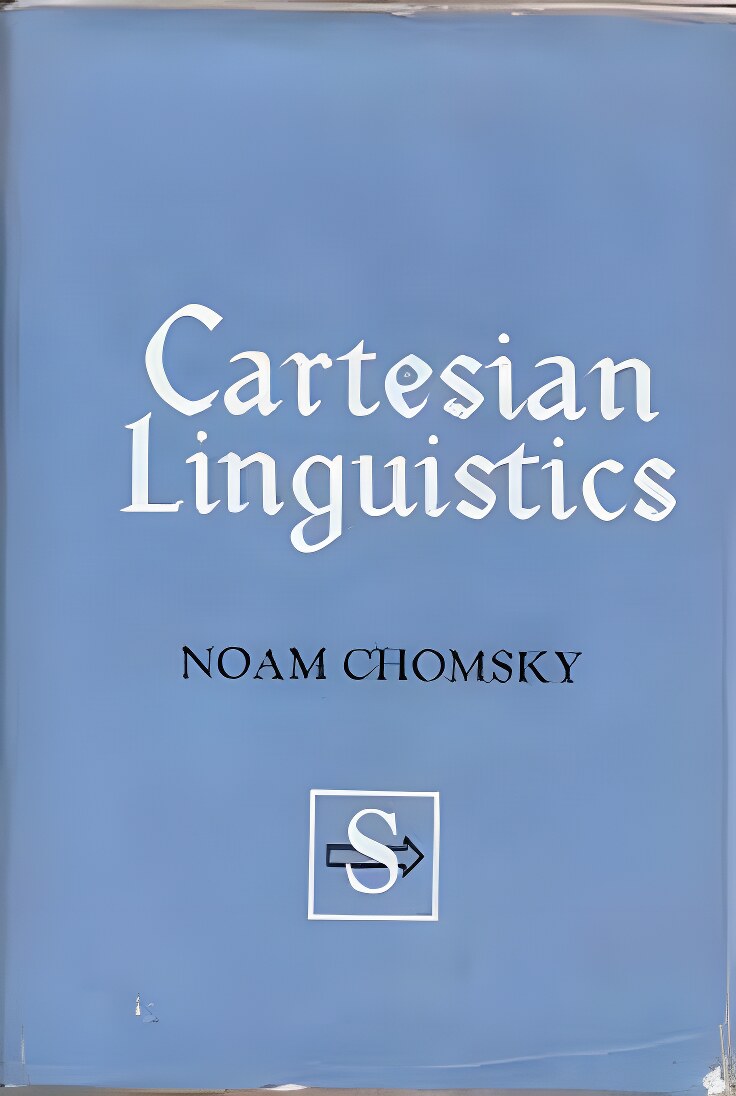
Hardcover. NY, Harper & Row, reprint, Book: Very Good, Dust Jacket: Very Good, Hardcover in a bright dust jacket, 119 pages. A book on linguistics by Noam Chomsky, written with the purpose of deepening 'our understanding of the nature of language and the mental processes and structures that underlie its use and acquisition'. Chomsky wished to shed light on these underlying structures of the human language, and subsequently whether one can infer the nature of an organism from its language. Cartesian linguistics refers to a form of linguistics developed during the time of RenE Descartes, a prominent 17th century philosopher whose ideas continue to influence modern philosophy. In Cartesian Linguistics, Chomsky traces the development of linguistic theory from Descartes to Wilhelm von Humboldt, that is, from the period of the Enlightenment directly up to Romanticism. The central doctrine of Cartesian linguistics maintains that the general features of grammatical structure are common to all languages and reflect certain fundamental properties of the mind. Clean copy.

 "Bible Gallery, Theby: Chambers, Talbot W. and Gustave Dore")
 "Bishop Butler and the Age of Reason: A Study in the History of Thoughtby: Mossner, Ernest Campbell")
 "Bishops in the Tower, The: A Record of the Stirring Events Affecting the Church and Nonconformists from the Restoration to the Revolutionby: Luckock, Herbert Mortimer")


 "Boethius: The Consolations of Music, Logic, Theology, and Philosophy by: Chadwick, Henry")


 "Book of Common Prayer, The: and Administration of the Sacraments, and Other Rites and Ceremonies of the Church, According to the Use of the Church of England; Together with the Psalter or Psalms of David, Pointed as they are to be su")


 "Boundariesby: Maya Lin")

 "British Philosophy in the Seventeenth Century by: Hutton, Sarah")




![Byzantine Philosophy and Its Ancient Sources by: Ierodiakonou, Katerina [Editor]](https://www.browsingisarousing.com/shop/images/Byzantine-Philosophy-and-Its-Ancient-Sources_by_Ierodiakonou-Katerina-Editor386262-438221.jpg "Byzantine Philosophy and Its Ancient Sources by: Ierodiakonou, Katerina [Editor]")