Hardcover. Brattleboro VT, Joseph Steen & Co, reprint, 1851, Book: Good, Dust Jacket: None, All leather bound, with illustrations, a critical introduction, sermons and essay, and historical index. Gilt border on covers and title on spine with all edges marbled. Bound upside down, cover worn with wear and rub, two rough worn down patches on cover, otherwise, internally clean and tight.
Hardcover. Lanham MD, Prometheus Books, 1st, 1994, Book: Very Good, Dust Jacket: None, Hardcover, glossy boards, 181 pages. Throughout its first three centuries, the growing Christian religion was subjected not only to official persecution but to the attacks of pagan intellectuals, who looked upon the new sect as a band of fanatics bent on worldwide domination even as they professed to despise the things of this world. Prominent among these pagan critics was Porphyry of Tyre (ca. 232-ca. 305 C.E.), scholar, philosopher, and student of religions. His book Against the Christians (Kata Christianon), was condemned to be burned by the imperial Church in 448. It survives only in fragments preserved by the cleric and teacher Macarius Magnes.This new translation of the remains of Against the Christians, by renowned biblical scholar R. Joseph Hoffmann, reveals a work of deft historical and literary criticism. Porphyry's trenchant comments extend to key figures, beliefs, and doctrines of Christianity as he roundly attacks the divinity of Jesus, the integrity of the apostles, the Christian concept of God, and the Resurrection. Clean copy.
Softcover. UK, Cambridge University Press, reprint, 2004, Book: Very Good, Dust Jacket: None, Softcover, orange wrappers, 341 pages. Classic scholarly text contains a collection of the surviving attested fragments of Posidonius, the leading stoic philosopher of his time in the first half of the first century, B.C. This exhaustive work was begun by Prof. Edelstein, a preeminent authority on Posidonius, and subsequently completed and edited after his death by Ian Kidd. There are some sixty different ancient reporters represented in this volume. First published in 1972, this re-issue contains 60 new readings, nearly eighty alterations to the apparatus criticus and corrections of errors. GREEK AND LATIN TEXT. Name on front fly leaf, otherwise, clean.
Hardcover. New Vienna OH, Peace Association of Friends in America, 1st, 1876, Book: Very Good, Dust Jacket: None, Hardcover, 64 pages, thin flexible cloth covers. INSCRIBED "For my Dear Sister" from the author, dated 1876 Germantown on front fly leaf. Clean.
Softcover. UK, Oxford University Press, Revised Ed., 2001, Book: Very Good, Dust Jacket: None, Softcover, 384 pages. Published here for the first time is much of a final and long-anticipated work on the philosophy of history by the great Oxford philosopher and historian R. G. Collingwood (1889-1943). The original text of this uncompleted work has only recently been discovered and is accompanied here by Collingwood's shorter writings on historical knowledge and inquiry. Besides containing entirely new ideas, these incredible writings discuss many of the issues which Collingwood famously raised in The Idea of History and in his Autobiography. This book also includes two conclusions written by Collingwood, which were eventually revised and published as The Idea of Nature. and a lengthy editorial introduction that puts Collingwood's writings in their context and discusses the philosophical questions they initiate. A landmark publication, this work will appeal not only to those studying Collingwood but also to anyone broadly curious about philosophy of history. Clean copy.
Hardcover. UK, Oxford University Press, reprint, 1997, Book: Very Good, Dust Jacket: Very Good, Hardcover in a bright dust jacket, 250 pages. Priscillian (died c.385) was a wealthy nobleman of Roman Hispania who promoted a strict form of Christian asceticism. He became bishop of Avila in 380. Certain practices of his followers (such as meeting at country villas instead of attending church) were denounced at the Council of Zaragoza in 380. Tensions between Priscillian and bishops opposed to his views continued, as well as political manoeuvring by both sides. Around 385, Priscillian was charged with sorcery and executed by authority of the Emperor Maximus. The ascetic movement Priscillianism is named after him, and continued in Hispania and Gaul until the late 6th century. Tractates by Priscillian and close followers, which had seemed lost, were discovered in 1885 and published in 1889. Clean, bright copy.
Hardcover. London/NY, Basil Blackwell, 1st, 1984, Book: Very Good, Dust Jacket: Very Good, Hardcover in a very good dust jacket with fading to spine, 251 pages. Name on front fly leaf otherwise clean.
Hardcover. New York, NYUP, 1st, 1969, Book: Very Good, Dust Jacket: Very Good, Hardcover. 208 pages of text followed by a ection of corresponding black & white illustrations. Titian's fame as the greatest colorist in the history of painting has led students of his art to concentrate on problems of style and authenticity rather than on problems of content and meaning. Dr. Panofsky treats this neglected aspect of the Venetian master's work with a wealth of humanistic scholarship, exploring such varied topics as Titian's relationship to the philosophy and literature of his time, his attitude toward the antique, and the reasons behind his unrivaled acclaim as a portraitist. These studies show Titian to have been a man of far richer and more complex culture than hitherto assumed, possessed not only of the supremely gifted hand but of a subtle and poetic mind.Light wear. Clean, tight copy.
Hardcover. Edinburgh, Edinburgh University Press, 1st, 1996, Book: Very Good, Dust Jacket: Very Good, Hardcover in a bright dust jacket, 340 pages. Proclus was the most important figure in Neo-Platonism when it was established as the dominant philosophy of Late Antiquity. Neo-Platonism is not only the final flowering of Greek thought but also the mode in which it was transmitted to the Byzantine, Western European and Islamic civilisations. Stripping away the complexities surrounding this traditionally difficult philosopher, Lucas Siorvanes takes the reader through Proclus' metaphysics and theory of knowledge with original research examining all aspects of Proclus' work. This is the first book which places Proclus in his complete intellectual context and sheds new light on aspects of Proclus' thought, to which previous scholars have rarely done justice. - Presents a general survey of Proclus and his Neo-Platonism- Introduces results of original research, mainly on his metaphysics, theory of knowledge and science. All areas of Proclus' philosophical interest are covered including religion, physics, astronomy, mathematics and poetry. His philosophy is found in all these because concern with being and truth is central to all. Also introduced is the neglected area of his natural philosophy with its remarkable freshness of thought punctuated by the rejection of Aristotelian science and Ptolemy's cosmology. In this book, Proclus is shown as much more than just a metaphysician.
Hardcover. Edinburgh, Edinburgh University Press, 1st, 1996, Book: Very Good, Dust Jacket: Very Good, Hardcover in a bright dust jacket, 340 pages. Proclus was the most important figure in Neo-Platonism when it was established as the dominant philosophy of Late Antiquity. Neo-Platonism is not only the final flowering of Greek thought but also the mode in which it was transmitted to the Byzantine, Western European and Islamic civilisations. Stripping away the complexities surrounding this traditionally difficult philosopher, Lucas Siorvanes takes the reader through Proclus' metaphysics and theory of knowledge with original research examining all aspects of Proclus' work. This is the first book which places Proclus in his complete intellectual context and sheds new light on aspects of Proclus' thought, to which previous scholars have rarely done justice. - Presents a general survey of Proclus and his Neo-Platonism- Introduces results of original research, mainly on his metaphysics, theory of knowledge and science. All areas of Proclus' philosophical interest are covered including religion, physics, astronomy, mathematics and poetry. His philosophy is found in all these because concern with being and truth is central to all. Also introduced is the neglected area of his natural philosophy with its remarkable freshness of thought punctuated by the rejection of Aristotelian science and Ptolemy's cosmology. In this book, Proclus is shown as much more than just a metaphysician. Clean copy.
Hardcover. NY, Harper and Brothers, 1st US, Book: Very Good, Dust Jacket: None, Hardcover in green cloth, silver lettering on spine, 435 pages. Appendix, List of English Translations (of books cited), Index of Names, and Index of Subjects. Clean, bright copy, lacks dust jacket.
Softcover. Cambridge UK, Cambridge University Press, reprint, 2014, Book: Very Good, Dust Jacket: None, Softcover, like new. 371 pages. Written by noted quantum computing theorist Scott Aaronson, this book takes readers on a tour through some of the deepest ideas of maths, computer science and physics. Full of insights, arguments and philosophical perspectives, the book covers an amazing array of topics. Beginning in antiquity with Democritus, it progresses through logic and set theory, computability and complexity theory, quantum computing, cryptography, the information content of quantum states and the interpretation of quantum mechanics. There are also extended discussions about time travel, Newcomb's Paradox, the anthropic principle and the views of Roger Penrose. Aaronson's informal style makes this fascinating book accessible to readers with scientific backgrounds, as well as students and researchers working in physics, computer science, mathematics and philosophy.
Hardcover. Ithaca, Cornell University Press, 1st, 1990, Book: Very Good, Dust Jacket: None, Hardcover, 260 pages. No dust jacket. John Locke's untitled manuscript "Questions concerning the Law of Nature" (1664) was his only work focused on the subject of natural law, a circumstance that is especially surprising since his published writings touch on the subject frequently, if inconclusively. Containing a substantial critical apparatus, this new edition of Locke's manuscript is faithful to Locke's original intentions and to the format he chose for his discourse on the law of nature-a late-Scholastic quaestio disputata, the form through which in 1664 the young Locke debated questions with his students as moral censor of Christ Church. For this volume, Robert Horwitz provides an introduction summarizing the history of the manuscript and analyzing Locke's role in the development of thinking on natural law. Jenny Strauss Clay offers a superb critical edition of the Latin text, for which she has supplemented the Latin text of Manuscript B, written by an amanuensis, with Manuscript A, a first draft in Locke's own hand. Diskin Clay's precise English translation-with the Latin presented on facing pages-is accompanied by annotations identifying Locke's references and allusions and explaining difficulties of translation. In the view of Horwitz, Clay, and Clay, Questions concerning the Law of Nature shows a tension between several opposing conceptions of natural law. In developing this view, the editors break with W. von Leyden, who prepared the first edition of the text and who interpreted Locke's understanding of natural law squarely within a Christian framework. The editors here present a fresh interpretation of Locke as a thinker who posed a series of subtle challenges to traditional natural law doctrine. That Locke was aware of the political danger of this challenge is evident from his refusal to publish the work during his lifetime and from the care he took to conceal these manuscripts among his possessions. Clean, tight copy.
Hardcover. UK, Bristol Thoemmes, reprint, 1990, Book: Very Good, Dust Jacket: None, Hardcover, green cloth, gilt title on spine, 120 pages. Originally published in 1951, this concise book presents an engaging study of the works and influence of the renowned English philosopher Ralph Cudworth (1617-88), the leader of the Cambridge Platonists. A bibliography of writings by and about Cudworth is also included, together with an appendix section on his manuscripts. The text was an early work by Australian philosopher and historian of ideas John Passmore (1914-2004). This book will be of value to anyone with an interest in Cudworth, the Cambridge Platonists and the historical development of philosophy. Light pencil marking in margins, ink name on front fly leaf. Tight copy.
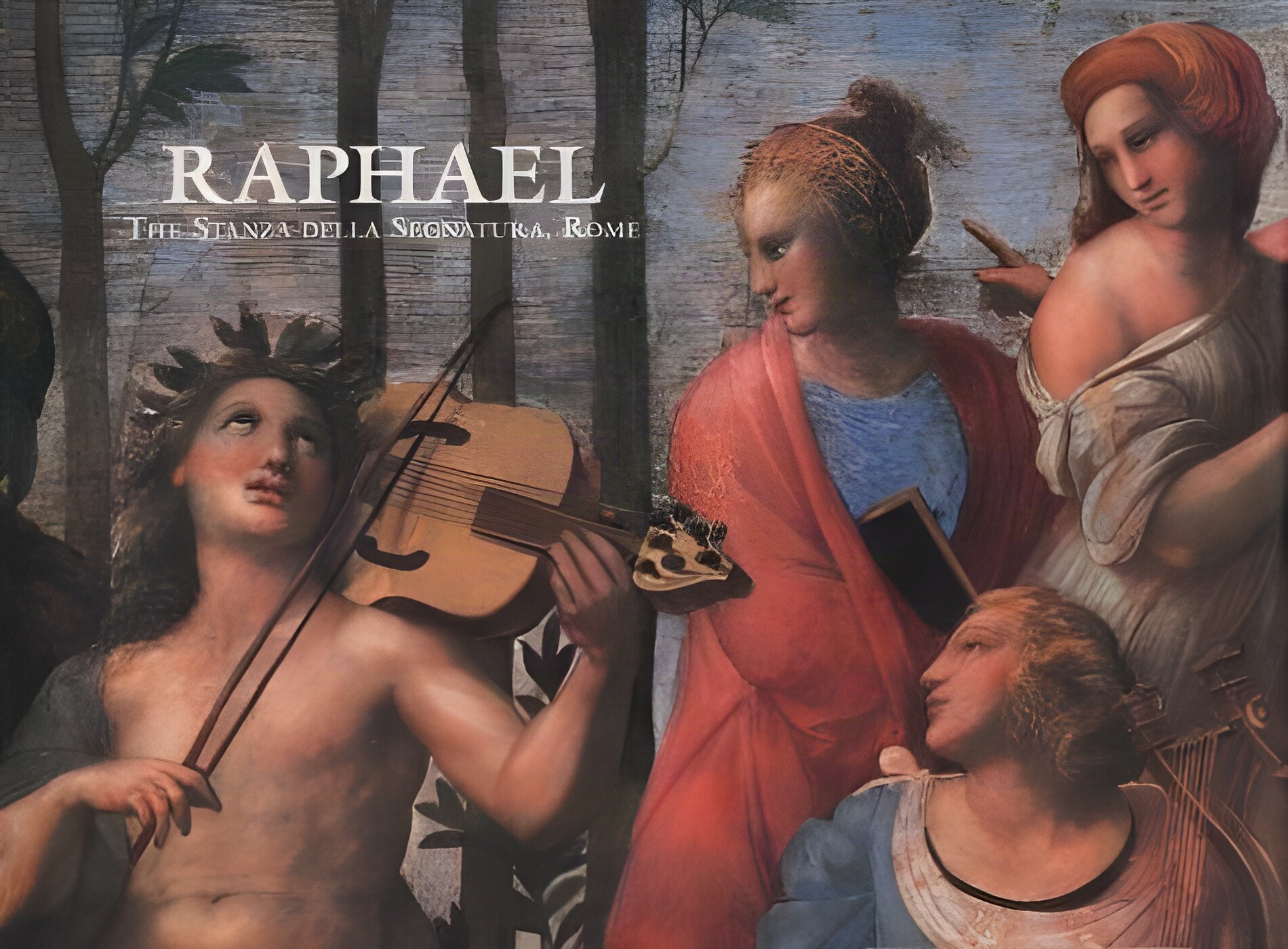
Hardcover. NY, George Braziller , 1st, 1993, Book: Very Good, Dust Jacket: Very Good, Hardcover in a bright dust jacket, 95 pages. Oblong format. 33 color plates of the artist's fresco in the Vatican. Other b&w illustrations. Recognizing the precocious talent of Raphael, then age twenty-six, Pope Julius II commissioned the artist in 1509 to paint four monumental murals and numerous smaller scenes that gave visual form to the enlightened world of the Renaissance. Guided by the leading scholars of his day, Raphael chose themes that glorified the four branches of learning required for a general education, particularly that of a pope: Theology, Poetry, Jurisprudence, and Philosophy. The painting of the latter, perhaps best known today as "The School of Athens," shows Plato and Aristotle striding through a vast, open hallway and flanked by scientists and philosophers of the ancient world; rediscovered in the Renaissance, they hold a convention where they discuss issues that will inspire a new age. Short inscription on front fly leaf, otherwise clean.
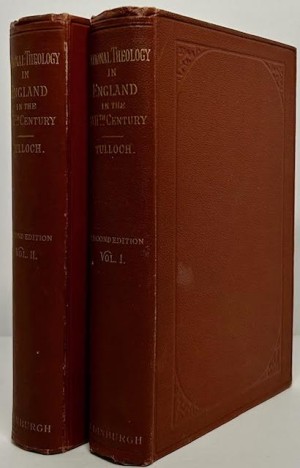
Hardcover. Edinburch and London, William Blackwood and Sons, 2nd revised edition, 1874, Book: Very Good, Dust Jacket: None, Vol. 1: 463 pages. Vol. 2: 500 pages. Scarce. Hardcovers. Colored endpapers (black). Light pencil notes/marks in margins. Red cloth cover boards, gilt title on spine, light age wear to covers. Front endpapers' gutters are split, binding is good. Spines straight. Edges untrimmed, pages and edges have some tanning from age. Some foxing to preliminary pages. DOMESTIC SHIPPING ONLY.
Hardcover. Reilly & Britton Co., 1st Edition, 1910, Book: Good, Dust Jacket: None, 110 pages. Hardcover. Also included: "The Bells", "Annabel Lee" and "The Philosophy of Composition", an essay by Edgar Allan Poe. Gorgeous Color & B/W Illustrated Drawings by John Rea Neill, Cover boards bound in green cloth, with illustrated paste-on on front cover board. Previous owner's bookplate on verso of front fly leaf. Some wear and soil to covers. Top edge gilt. Tanning to edges and pages, doesn't affect text or illustrations. Binding tight. Spine straight. Previous bookstore proprietary stamp on page 21.
Hardcover. NY, Cooper Square, reprint, 1972, Book: Very Good, Dust Jacket: None, Hardcover, light blue cloth with gilt lettering on spine, 862 pages. All four parts in one volume. Name on front fly leaf, otherwise clean, bright copy.
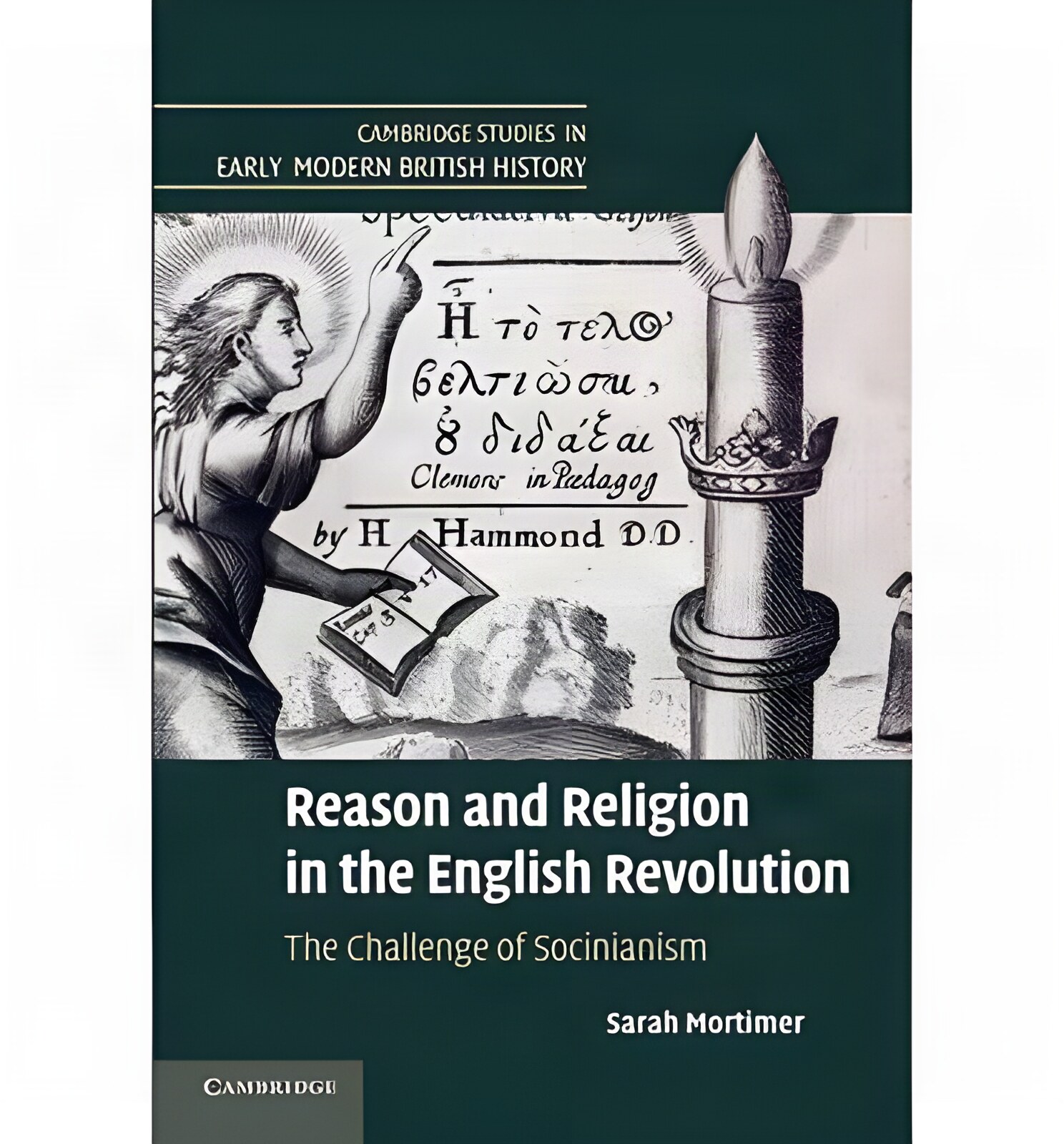
Softcover. Oxford UK, Cambridge University Press, reprint, 2013, Book: Very Good, Dust Jacket: None, Softcover, 264 pages. Examines the reception of Socinian ideas in England, providing a rereading of political and ecclesiastical developments during the English Revolution. Light pencil marking to 10 pages, otherwise clean.
Hardcover. NY/London, Oxford University Press, 1st, 2011, Book: Very Good, Dust Jacket: Very Good, Hardcover in a bright, unclipped dust jacket, 350 pages. Reason in Action collects John Finnis' work on the theory of practical reason and moral philosophy. The essays in the volume range from foundational issues of meta-ethics to the practical application of natural law theory to ethical problems such as nuclear deterrence, obscenity and free speech, and abortion and cloning.
Hardcover. NY, Oxford University Press, 1st, 2000, Book: Very Good, Dust Jacket: Very Good, Hardcover in a bright dust jacket, 236 pages including index. Translation and Introduction by Mahmoud Sadri & Ahmad Sadri. Clean copy.
Hardcover. UK, Cambridge University Press, 1st, 1991, Book: Very Good, Dust Jacket: Very Good, Hardcover in a bright dust jacket, 277 pages. Rivers examines the rise of Anglican moral religion during the period 1660-1780, and the reactions against it. Series Editor(s): Erskine-Hill, Howard; Richetti, John. Series: Cambridge Studies in Eighteenth-Century English Literature & Thought. Volume 1 ONLY. Name, date on front fly leaf.

 "Polyglott BIbleby: N/A")
 "Primitive Christians Estimate of War and Self-Defense (SIGNED)by: Leeds, Josiah W.")


 "Protestant Thought: From Rousseau to Ritschl. Being the translation of eleven chapters of Die Protestantische Theologie im 19. Jahrhundertby: Barth, Karl")
 "Pufendorf: On the Duty of Man and Citizen according to Natural Law by: Pufendorf, Samuel / James Tully (Ed.)")

 "Que la religion chretienne est tres raisonnable telle qu'elle nous est representee dans l'Ecriture sainte:discours sur les miracles ; essai sur la necessite d'expliquer les epitres de S. Paulby:")
 "Questions Concerning the Law of Natureby: Locke, John")





 "Raven, The: And Other Poems by Edgar Allan Poeby: Poe, Edgar Allan, John Rea Neill (Illustrations)")


 "Realms of Being: One-Volume Edition With a New Introduction By the Authorby: Santayana, George")