Lawrence, KS, Spencer Museum of Art, 1st, 1984, Book: Very Good, Dust Jacket: None, Hardcover, 158 pages. Black & white illustrations throughout. No dust jacket.
Hardcover. NY, Alfred A. Knopf, 1st, 1933, Hardcover, black cloth stamped with gilt title and design, 68 pages. Gilt lettering on spine with light fading. This is the first printing with 1933 on title page and First Edition stated on copyright page. Illustrated with seven drawings on glossy stock by Gibran and two facsimile manuscript pages, all present and intact. Previous owner's signature on front fly leaf, mild wear to covers, faint foxing to endpapers, otherwise clean.
Hardcover. NY, Hugh Lauter Levin, 1st, 2002, Book: Very Good, Dust Jacket: Very Good, 100 pages. Hardcover with dust jacket. The planning and sketches for the famous installation that took place in 2005. Many black and white and color photographs. Bibliography.
Softcover. London, The Observer/Thames & Hudson, 1st, 1980, Book: Very Good, Dust Jacket: None, Softcover, 120 full-page black-and white plates. Semi-stiff pictorial covers, titled in purple. Published to accompany an exhibition at the National Portrait Gallery. Introduction by Patrick O'Donovan. This collection showcases the distinctive photographic work of Jane Bown, a renowned British photographer known for her ability to capture candid and evocative portraits with a "gentle eye." Clean, bright copy.
Softcover. Rutland VT, self-published, 2nd Ed., 1909, Book: Very Good, Dust Jacket: None, Softcover, red paper covers stamped with a black title and cartoon portrait of author. Yankee humor in the form of short sketches originally published in the Rutland Herald. The author (pictured in a photo on the first inside page) was a member of the Vermont legislature. Several cartoons by George Randall embellish the 90 pages of text. Ads in rear. Clean copy.
Hardcover. NY, Simon & Schuster, 1st, 1993, Book: Very Good, Dust Jacket: Very Good, Hardcover in a bright, unclipped dust jacket, 303 pages. Eighty percent of everything ever built in America has been built since the end of World War II. This tragic landscape of highway strips, parking lots, housing tracts, mega-malls, junked cities, and ravaged countryside is not simply an expression of our economic predicament, but in large part a cause. It is the everyday environment where most Americans live and work, and it represents a gathering calamity whose effects we have hardly begun to measure. In The Geography of Nowhere, James Howard Kunstler traces America's evolution from a nation of Main Streets and coherent communities to a land where everyplace is like noplace in particular, where the city is a dead zone and the countryside a wasteland of cars and blacktop. Now that the great suburban build-out is over, Kunstler argues, we are stuck with the consequences: a national living arrangement that destroys civic life while imposing enormous social costs and economic burdens. Kunstler explains how our present zoning laws impoverish the life of our communities, and how all our efforts to make automobiles happy have resulted in making human beings miserable. Name on front fly leaf, otherwise like new.
Hardcover. NY, Viking Press, 1st, 1968, Book: Very Good, Dust Jacket: None, Hardcover, Illustrated red paper covered boards over black cloth spine; illustrated endpapers. Illustrated stylistically in black and white by Richard M. Powers. 64 pages, "the exaggerated nonsense, the bellylaugh humor, and the colorful salt-water lingo of Miss Ritchie's story clearly stem from the well-loved American traditional tale. But it is also as modern as today, and Richard M. Powers has designed and illustrated it with the bold, freewheeling vigor of our times." Clean copy.
Hardcover. NY, Dutton, 1st, 1984, Book: Very Good, Dust Jacket: Very Good, Hardcover in a bright, unclipped dust jacket, 69 pages. Black & white illustrations by Alan E. Cober. A young adult fantasy about a frozen land, written in second person.
Softcover. Cambridge MA, Harvard University Press, 1st, 1995, Book: Very Good, Dust Jacket: None, Softcover, 139 pages. How does a poet repeatedly make art over a lifetime out of an arbitrary assignment of fate? By asking this question of the work of four American poets--two men of the postwar generation, two young women writing today--Helen Vendler suggests a fruitful way of looking at a poet's career and a new way of understanding poetic strategies as both mastery of forms and forms of mastery. Fate hands every poet certain unavoidable "givens." Of the poets Vendler studies, Robert Lowell sprang from a family famous in American and especially New England history; John Berryman found himself an alcoholic manic-depressive; Rita Dove was born black; Jorie Graham grew up trilingual, with three words for every object. In Vendler's readings, we see how these poets return again and again to the problems set out by their givens, and how each invents complex ways, both thematic and formal, of making poetry out of fate. Clean copy.
Hardcover. NY, Scholastic, 1st, 1994, Book: Very Good, Dust Jacket: Very Good, Hardcover in a bright, unclipped dust jacket. "Those shackles didn't rob us of being black, son, they robbed us of being human."This is the story of one family. A family whose history saw its first ancestor captured, shackled, and brought to this country from Africa. A family who can still see remnants of the shackles that held some of its members captive -- even today. It is a story of pride, determination, struggle, and love. And of the piece of the land that holds them together throughout it all. Clean copy.
Hardcover. Taschen , reprint, 2020, Book: Very Good, Dust Jacket: None, Hardcover in pictorial boards. As special photographer on the sets and locations of Francis Ford Coppola's The Godfather trilogy, Steve Schapiro had the remarkable experience of witnessing legendary actors giving some of their most memorable performances. Schapiro immortalized Marlon Brando, Al Pacino, Robert De Niro, James Caan, Robert Duvall, and Diane Keaton in photos that have since become iconic images, instantly recognizable and endlessly imitated. Gathered together in this book are Schapiro's finest photographs from all three Godfather films, lovingly reproduced from the original negatives. With contextual essays and interviews covering the trilogy in its entirety, this book contains over 300 color and black-and-white images. Schapiro's images take us behind the scenes of this epic and inimitable cinematic saga, revealing the director's working process, capturing the moods and personalities involved, and providing insight into the making of movie history. This book is a smaller edition of the 2010 Taschen edition. Still in publisher's shrinkwrap.
Hardcover. London, John Lane, 1st thus, 1900, Book: Very Good, Dust Jacket: None, Hardcover, maroon cloth with with 41 gold X's and 40 gilt butterflies stamped on the cover, no dust jacket, top edge gilt, untrimmed edges. With the date of 1900 on the title page, but with a John Lane Copyright 1899, The University Press U.S.A. on the CR page. With 18 Maxfield Parrish black & white plates. Previous owner's bookplate on inside front cover, name on front fly leaf, otherwise clean.
Hardcover. San Francisco, Encounter Books, 1st, 2002, Book: Very Good, Dust Jacket: Very Good, Hardcover in a bright dust jacket, 222 pages. SIGNED BY AUTHOR ON HALF TITLE PAGE. Clean, unmarked copy. Black and white pictures in center. Goodyear was an entrepreneur who actually made good on the ever-popular claim that his company would change the world. Korman, senior editor of Engineering News-Record, dryly traces the life of the rubber pioneer and American industrial legend in this part scientific history lesson and part American business story. Goodyear (1800-1860) became an inventor not out of any great scientific thirst; he was self-taught and wanted to make money. He earned success, but endured continual patent monopoly battles and numerous trips to debtors' prison as he steadfastly and compulsively held onto his dream of using rubber to change just about every aspect of life. (According to Korman, Goodyear frequently wore a coat made of rubber in his early inventing days to underscore the versatility of his product.) Korman waxes scientific at times, offering in-depth descriptions of how Goodyear cooked rubber and sulfur compounds, yet his technical discourses are not so esoteric that they will turn away amateurs. His book is also valuable for its accurate portrayal of factory life in the 1830s and '40s; his accounts of the aproned men who chopped rubber with axes and knives and the machines that ground it are lively examples of industrial age America. Clean copy.
Hardcover. San Francisco, Encounter Books, 1st, 2002, Book: Very Good, Dust Jacket: Very Good, Hardcover in a bright dust jacket, 222 pages. Clean, unmarked copy. Black and white pictures in center. Goodyear was an entrepreneur who actually made good on the ever-popular claim that his company would change the world. Korman, senior editor of Engineering News-Record, dryly traces the life of the rubber pioneer and American industrial legend in this part scientific history lesson and part American business story. Goodyear (1800-1860) became an inventor not out of any great scientific thirst; he was self-taught and wanted to make money. He earned success, but endured continual patent monopoly battles and numerous trips to debtors' prison as he steadfastly and compulsively held onto his dream of using rubber to change just about every aspect of life. (According to Korman, Goodyear frequently wore a coat made of rubber in his early inventing days to underscore the versatility of his product.) Korman waxes scientific at times, offering in-depth descriptions of how Goodyear cooked rubber and sulfur compounds, yet his technical discourses are not so esoteric that they will turn away amateurs. His book is also valuable for its accurate portrayal of factory life in the 1830s and '40s; his accounts of the aproned men who chopped rubber with axes and knives and the machines that ground it are lively examples of industrial age America. Clean copy.
Hardcover. NY, Doubleday, Page & Co. , 1st, 1908, Book: Very Good, Dust Jacket: None, Hardcover, rust colored cloth binding decorated in silver and gilt. Color illustrated end papers. Four color plates by C. Cole Phillips. Gertrude Franklin Horn Atherton (October 30, 1857 - June 14, 1948) was an American author. Many of her novels are set in her home state of California. Her bestseller Black Oxen (1923) was made into a silent movie of the same name. In addition to novels, she wrote short stories, essays, and articles for magazines and newspapers on such issues as feminism, politics, and war. Light smudge to blank prelim page, otherwise clean.
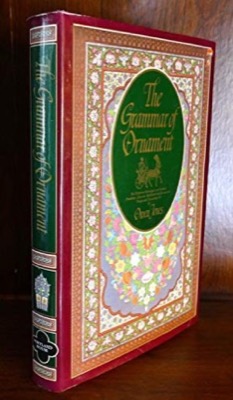
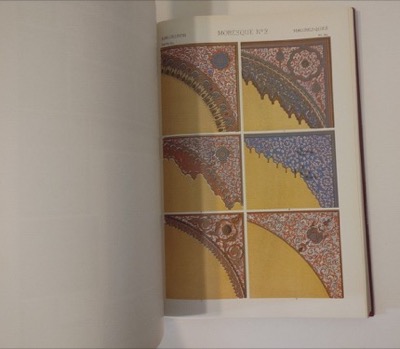
Hardcover. NY, Portland House, reprint, 1986, Book: Very Good, Dust Jacket: Very Good, Hardcover in a bright dust jacket. Illustrated with 100 full-page color plates, each with multiple patterns; additional black & white figures. Originally published in 1867 by S. & T. Gilbert of London. Folio.
NY, Simon & Schuster, 1st, 2021, Book: Very Good, Dust Jacket: Very Good, Hardcover in a bright, unclipped dust jacket. 609 pages, b&w illustrations. They say that history is written by the victors. But not in the case of the most famous dissenter on the Supreme Court. Almost a century after his death, John Marshall Harlan's words helped end segregation and gave us our civil rights and our modern economic freedom. But his legacy would not have been possible without the courage of Robert Harlan, a slave who John's father raised like a son in the same household. After the Civil War, Robert emerges as a political leader. With Black people holding power in the Republican Party, it is Robert who helps John land his appointment to the Supreme Court. At first, John is awed by his fellow justices, but the country is changing. Northern whites are prepared to take away black rights to appease the South. Giant trusts are monopolizing entire industries. Against this onslaught, the Supreme Court seemed all too willing to strip away civil rights and invalidate labor protections. So as case after case comes before the court, challenging his core values, John makes a fateful decision: He breaks with his colleagues in fundamental ways, becoming the nation's prime defender of the rights of Black people, immigrant laborers, and people in distant lands occupied by the US. Harlan's dissents, particularly in Plessy v. Ferguson, were widely read and a source of hope for decades. Thurgood Marshall called Harlan's Plessy dissent his "Bible"--and his legal roadmap to overturning segregation. In the end, Harlan's words built the foundations for the legal revolutions of the New Deal and Civil Rights eras.
Hardcover. London, The Folio Society, reprint, 2003, Book: Very Good, Dust Jacket: None, Hardcover, 261 pages indexed, with black slipcase. Striking Folio Society edition of Bell's revised 1952 account of the Great Fire of London, describing the state of the city prior to the inferno; the cause of the blaze and accounts of its spread throughout London, as well the immediate and long term aftermath. With color images and maps to end-papers.
Hardcover. Boston, Ginn and Company, reprint, Book: Very Good, Dust Jacket: None, Hardcover, black cloth with silver lettering, 525 pages with index. B&w maps, illustrations. A historical interpretation of the semi-arid Short grass Country, the so called Cattle Kingdom. A well written book with a long chapter on the cattle industry. Copyright page states 1931, but titles listed in front date to 1937. Name on front fly leaf, mild musty odor.
Hardcover. NY, W. W. Norton & Company, 1st, 2013, Book: Very Good, Dust Jacket: None, Hardcover, 24-foot-long black-and-white drawing printed on heavyweight accordion-fold paper and packaged in a deluxe hardcover slip-case. From "the heir to R. Crumb and Art Spiegelman" (Economist) comes a monumental, wordless depiction of the most infamous day of World War I. Launched on July 1, 1916, the Battle of the Somme has come to epitomize the madness of the First World War. Almost 20,000 British soldiers were killed and another 40,000 were wounded that first day, and there were more than one million casualties by the time the offensive halted. In The Great War, acclaimed cartoon journalist Joe Sacco depicts the events of that day in an extraordinary, 24-foot- long panorama: from General Douglas Haig and the massive artillery positions behind the trench lines to the legions of soldiers going "over the top" and getting cut down in no-man's-land, to the tens of thousands of wounded soldiers retreating and the dead being buried en masse. Printed on fine accordion-fold paper and packaged in a deluxe slipcase with a 16-page booklet, The Great War is a landmark in Sacco's illustrious career and allows us to see the War to End All Wars as we've never seen it before. Clean copy.
Hardcover. UK, Sutton Publishing, 1st, 2005, Book: Very Good, Dust Jacket: Very Good, Hardcover in a bright, unclipped dust jacket, 244 pages, b&w photos. In 1908 talented black US fighter Jack Johnson won the heavyweight championship of the world from the Canadian Tommy Burns. There was an immediate storm of protest. Writers, including Jack London, and politicians feared the accession of the fearless and outspoken Johnson would threaten white supremacy. It was predicted that his reign would lead to civic unrest and race riots. Over the next seven years, more than 30 white fighters tried to beat Jackson, lured by the prospect of fame and a quick buck. It was not until 1915 that Jackson lost his crown, and during the years in between an extraordinary human drama was played out on the boxing world stage. Clean copy.
Hardcover. NY, The Dial Press, 1st, 1974, Book: Very Good, Dust Jacket: None, Hardcover, black cloth with red gilt lettering on cover and spine. No dust jacket. It was the year the Babe hit 60 and Lou Gehrig hit 47 home runs and drove in 175 runs. Plus the team had Bob Meusel, Tony Lazzeri, Earle Combs, Herb Pennock, Urban Shocker, and manager Miller Huggins. The team won 110 games (in a 154 game season) and won the pennant by 19 games. Inscription on front fly leaf otherwise clean.
Softcover. NY, Avon, 1st pbk, 1947, Book: Good, Dust Jacket: None, Paperback, Avon Murder Mystery Monthly #46, digest size with pictorial wraps. 124 pages. Hardboiled detective novel by Black Mask author about a guy released from prison for a crime he didn't commit & determined to go out after the big shot criminals who prey on the little guys. Mild creasing, soil to covers.

 "The Franklin D. Murphy Lectures V - Programs of Medieval Illuminationby: Calkins, Robert G.")
 "The Fugitive Slave Law and Anthony Burns: A Problem in Law Enforcement by: Jane H Pease; William H Pease")
 "The Garden of the Prophetby: Gibran, Kahlil")
 "The Gates - Project for Central Park, New York Cityby: Christo and Jeanne-Claude, Christo")
 "The Gentle Eye: Photographs by Jane Bown of The Observer by: Jane Bown")
 "The Gentleman from Hayvilleby: Howard L. Hindley")
 "The Geography of Nowhere: The Rise and Decline of America's Man Made Landscape by: Kunstler, James Howard")
 "The Ghost That Haunted The House That Culpepper Built by: Ritchie, Barbara/ illustrated by Richard M. Powers")
 "The Giant Coldby: Dickinson, Peter")
 "The Given and the Made: Strategies of Poetic Redefinition by: Helen Vendler")
 "The Glory Field by: Myers, Walter Dean")
 "The Godfather Family Album/40th Anniversary Edition by: Steve Schapiro")
 "The Golden Ageby: Grahame, Kenneth/Maxfield Parrish")
 "The Goodyear Story: An Inventor's Obsession and the Struggle for a Rubber Monopoly (SIGNED COPY)by: Richard Korman")
 "The Goodyear Story: An Inventor's Obsession and the Struggle for a Rubber Monopoly by: Richard Korman")
 "The Gorgeous Isle by: Atherton, Gertrude / Coles Phillips (Illust.)")
 "The Grammar of Ornament: The Victorian Masterpiece on Oriental, Primitive, Classical, Mediaeval and Renaissance Design and Decorative Artby: Jones, Owen")
 "The Great Dissenter: The Story of John Marshall Harlan, America's Judicial Heroby: Peter S. Canellos")
 "The Great Fire of London in 1666by: Bell, Walter George")
 "The Great Plains by: Webb, Walter Prescott")
 "The Great War: July 1 1916: The First Day of the Battle of the Somme by: Sacco, Joe/Adam Hochschild (Contributor)")
 "The Great White Hopes: The Quest to Defeat Jack Johnson by: Kent, Graeme")
 "The Greatest of All: The 1927 New York Yankees by: John Mosedale")