Softcover. NY, Delta, reprint, 1968, Book: Very Good, Dust Jacket: None, Softcover, 108 pages, selected poetry by the author, 1957-1968. Published as "Writing 20"; original price $1.95 on front wrap; cover photo by Edmund Shea (black-and-white photo of a barefoot woman sitting amid some rubble). Inscription on front fly leaf, otherwise clean.
Hardcover. NY, Macmillan Co, 9th pr., Book: Very Good, Dust Jacket: Good, Hardcover in a bright dust jacket that has some edgewear and chipping. No date but probably an 90s printing with a $14.95 price on flap, Newbery Honor sticker on front. "Junior Brown, a 300-pound musical prodigy with a neurotic, overprotective mother, and Buddy Clark, a loner who lives by his wits because he has no family whatever, have been on the hook from their eighth grade classroom all semester. Junior and Buddy are among the most original and memorable characters in recent fiction for young readers. Writing with imagination and tough-minded humor about what happens when despair is no longer tenable, miss Hamilton has told a fable of courage and strength. It is a story of tomorrow." Clean copy.
Hardcover. Cambridge MA, The Belknap Press of Harvard University, 7th pr., 1979, Book: Very Good, Dust Jacket: None, Three uniform volumes in original red slipcase, 1266 pages. Gray cloth covers with black and gilt stamping to titles on spines. Interest in Emily Dickinson has grown throughout the years until, now, in this three-volume edition Thomas Johnson presents the entire body of poems she is known to have written, 1775 in all. Here are the familiar "I never saw a Moor" and "Because I could not stop for Death," along with other less well-known poems, including forty-three never before published. Casual notes to friends and relatives which frequently accompany scraps of verse help to reveal the poet's enigmatic character. After keen analysis of the manuscripts, Johnson has arranged the poems in what is believed to be their chronological order, with variations and rejected versions of each poem following .No dust jackets. Ink notations to about 15 pages in the 3 volumes, Otherwise clean and tight.
Hardcover. London, Hodder & Stoughton, 1st thus, 1916, Book: Very Good, Dust Jacket: None, Hardcover, original black lettered grey cloth, 179 pages, illustrated with 10 color plates by Claude Allin Shepperson tipped-in to tan pages. Light foxing to text pages. Edge-block foxed. Bringing together the best of Keats' poetry, this beautifully illustrated volume includes a critical essay by Robert Bridges, Poet Laureate.
Hardcover. NY, Frederick A. Stokes Company, 1st thus, 1890, Book: Very Good, Dust Jacket: None, Four hardcover volumes. All volumes have marbled bindings with maroon leather spines and corners and gold lettering on spines. All have gilded top page edgings. 292, 319, 326, 287 pages. Volume I contains a black and white frontispiece bearing a portrait of Robert Browning. Six pages in Vol 3 have some rough edges otherwise a clean, bright set.
Hardcover. Salem MA, Peabody Museum, 1st, 1981, Book: Very Good, Dust Jacket: Very Good, Hardcover in a bright, price clipped dust jacket. 192 pages with frontispiece, maps, color plates, black and white plates, figures, facsimiles and index. Admiral Henry Byam Martin's first command in the British Navy was Captain of the 50-gun frigate, H.M.S. Grampus, in the year 1846. He was ordered to a sail from Plymouth 'round the Horn to Hawaii for further orders. Those orders sent him to Tahiti for a full year, the fatal year in which the French subjugated the Tahitians by bloody force, made the island a "Protectorate" of France but allowed the glamorous Queen Pomare to be the titular ruler until they took it over completely, as a colony, in 1880. This Polynesian portion of Captain Martin's daily Journal has lain unnoticed in the depths of the British Museum until this publication. But it still sparkles with wit and with acute observations of the personalities and events of that critical year in the struggle between the French and English for the conquest of the Pacific and the hopeless struggles of the poor islanders to defend their homelands and their freedom. Inscription on front fly leaf, otherwise clean.
Hardcover. Philadelphia , J. B Lippincott Company, 1st, 1908, Book: Very Good, Dust Jacket: None, Hardcover, 360 pages, 4 color illustrations by Clarence F. Underwood. Green cloth binding with pictorial cover stamped in red, black and gilt. Minor edgewear, internally very good.
Hardcover. NY, Knoedler Publishers, 1st, 1980, Book: Very Good, Dust Jacket: Very Good, Hardcover in a lightly worn dust jacket, 362 pages. 219 color plates and 75 black and white illustrations. White buckram with tipped in color illustration of elephants on front panel, embossed gilt lettering on the spine. This beautifully produced book contains four color reproductions of every serigraph, lithograph and etching that Neiman has published since he began making prints to 1980. Says "Book-of-the-Month-Club Selection" on front flap of DJ, though the quality of the book appears to be an original printing. Tight, clean and crisp. DOMESTIC SHIPPING ONLY.
Tulsa OK, Thomas Gilcrease Museum, 1st, 1986, Book: Very Good, Dust Jacket: None, Hardcover. light gray cloth with black lettering, 255 pages, b&w plates throughout. Thomas Moran (1837-1926) from Bolton, England was an American painter & printmaker of the Hudson River School in New York whose work often featured the Rocky Mountains. This catalog features 129 prints with extensive notes. Bibliography and index. Bright, clean copy.
Softcover. Chicago, University of Chicago Press, reprint, 1956, Softcover, 257 pages. This monograph by a professional thief--with the aid of Edwin H. Sutherland's expert comments and analyses--is a revealing sociological document that goes far to explain the genesis, development, and patterns of criminal behavior. "Chic Conwell," as the author was known in the underworld, gives a candid and forthright account of the highly organized society in which the professional thief lives. He tells how he learned to steal, survive, succeed, and ultimately to pay his debt to society and prepare himself for full and useful citizenship. The Professional Thief presents in amazing detail the hard, cold facts about the private lives and professional habits of pickpockets, shoplifters, and conmen, and brings into focus the essential psychological and sociological situations that beget and support professional crime. Coversworn with small tape repair, name blacked out on title page. Otherwise clean.
Hardcover. Stockport, UK, Dewi Lewis, 1st, 1996, Book: Very Good, Dust Jacket: Very Good, Hardcover in a dust jacket, 55 pages. 26 black & white photos. Life, Love, Death and Decay are the elements that Reverdot, one of France's leading photographers, carefully shapes using a sequence of extraordinary single images to create a flow thatechoes the unrelenting progress of Life Towards Decay. Reverdot's sixth book to date.
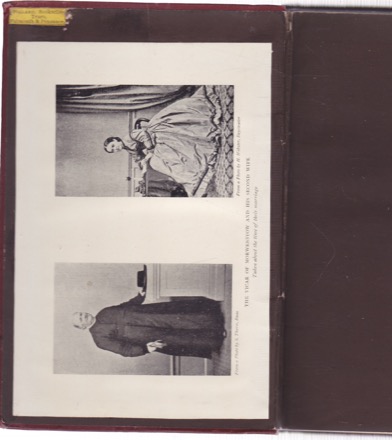
Hardcover. Edinburgh/London, William Blackwood and Sons, 1st thus, 1893, Book: Very Good, Dust Jacket: None, Hardcover, maroon cloth with gilt lettering on the spine, 187 pages plus publisher's catalog in rear. "Carefully Re-Edited, with Sketches never before published." Mainly a reprint of Hawker's contributions to "Notes and Queries", "Household Words", "All the Year Round". Frontis. photo of Morwenstow Church, protected by tissue guard. Also pasted to inside front cover a clipping of two photos: Hawker and his second wife, taken about the time of their marriage.
Hardcover. Birmingham AL, Legal Classics Library, reprint, 1984, Book: Very Good, Dust Jacket: None, Hardcover, full black leather. all edges gilt, ribbon marker, marbled endpapers, raised bands. A facsimile reprint of the 1832 edition published by John Murray. "The importance of his work was the strict delimitation of the sphere of law and its distinction from that of morality, elaboration of the idea of law as a kind of command, and the close examination of the connotations of such common legal terms as right, duty, liberty, injury [and] punishment.": Walker, The Oxford Companion to Law 96. Former owner's name plate is pasted in the front inside cover. Clean, bright copy.
Hardcover. Gloucester MA, Peter Smith, reprint, 1973, Book: Very Good, Dust Jacket: None, Hardcover, orange cloth covers, black lettering on spine, 337 pages. Name on front fly leaf otherwise tight and clean.
Hardcover. NY, Grosset & Dunlap, 1st, 1943, Book: Good, Dust Jacket: Fair, Hardcover in an edgeworn and chipped dust jacket. Tan brown cloth covers stamped in black. Illustrations for DJ and frontispiece by I. B. Hazelton. Wartime paper resulting in tanned pages. No markings.
Hardcover. NY, The Crime Club/ Doubleday, Doran & Co.,, 1st, 1937, Book: Very Good, Dust Jacket: Fair, Hardcover, black cloth covers stamped in red. Dust jacket cover panel tipped onto inside front cover with flap copy opposite on front fly leaf. Attractively done. A Hildegarde Withers mystery. Classic crime tale from the 1930s set south of the border in old Mexico. 293 pages.
Hardcover. NY, Harper & Row, reprint, Book: Good, Dust Jacket: None, Hardcover, pictorial boards with mild soil, black cloth spine. Color illustrations by Williams, 32 pages. Two rabbits decide they want to remain friends forever, so they marry each other in a forest wedding. Copyright page states 1958 but a reprint with ISBN number, so post 1970. Lacks dust jacket.
Hardcover. Peterborough NH, Noone House/Richard B. Smith , 1st thus, 1967, Book: Very Good, Dust Jacket: Very Good, Hardcover in a bright, unclipped dust jacket. 194 pages, bound in red cloth; black lettering; gold endpapers with pencil drawing of street scene. 12 full page pencil drawings by Tasha Tudor. Cream dust jacket printed in black & red, price of $3.95 on flap. Second state signified by reviews on back panel.
Hardcover. London, Pickering & Chatto, 1st, 1999, Book: Very Good, Dust Jacket: None, Hardcover, black cloth, spine with maroon title block and gilt lettering, 377 pages. Vol. 2 ONLY of a six volume set. Clean, bright copy, no markings.
Hardcover. London, Pickering & Chatto, 1st, 1999, Book: Very Good, Dust Jacket: None, Hardcover, black cloth, spine with maroon title block and gilt lettering, 384 pages. Vol. 3 ONLY of a six volume set. Name and date on front fly leaf, otherwise clean.
Hardcover. London, Pickering & Chatto, 1st, 1999, Book: Very Good, Dust Jacket: None, Hardcover, black cloth, spine with maroon title block and gilt lettering, 448 pages. Vol. 4 ONLY of a six volume set. Clean, bright copy, no markings.
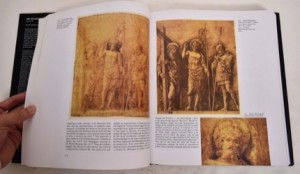
Hardcover. New Haven CT, Yale University Press, 1st, 1994, Book: Very Good, Dust Jacket: None, Hardcover, black cloth covers with gilt lettering on spine. No dust jacket. Profusely illustrated throughout in black & white and color. 433 pages. This book examines the technical and aesthetic experimentation that went into printmaking, workshop practices, and the material and social contexts of print production, and it gives the fullest account ever written of the ways in which Renaissance prints were produced, distributed, and acquired. David Landau and Peter W. Parshall pose a range of practical questions about the production of prints. They investigate, for example, what materials were used, how they were acquired, and how a Renaissance printmaker's workshop operated. They explore the evidence that individual prints were beginning to be esteemed as works of art rather than as inexpensive substitutes for them, and the relationship between prints made to be collected and those of a more ephemeral nature intended for a wider audience. They discuss how prints were valued during the period, including the relative value of woodcuts to engravings, and engravings to etchings. And they investigate how prints evolved in relation to the pictorial arts of the Renaissance generally. Clean, bright copy. NOTE: DUE TO SIZE AND WEIGHT, DOMESTIC SHIPPING ONLY.
Softcover. Lincoln NE, Bison Books/University of Nebraska Press, 1st, 2011, Book: Very Good, Dust Jacket: None, Softcover, 247 pages, b&w illustrations. In the spring of 1968, the Omaha Central High School basketball team made history with its first all-black starting lineup. Their nickname, the Rhythm Boys, captured who they were and what they did on the court. Led by star center Dwaine Dillard, the Rhythm Boys were a shoo-in to win the state championship. But something happened on their way to glory. In early March, segregationist George Wallace, in a third-party presidential bid, made a campaign stop in Omaha. By the time he left town, Dillard was in jail, his coach was caught between angry political factions, and the city teetered on the edge of racial violence. So began the Nebraska state high school basketball tournament the next day, caught in the vise of history. The Rhythm Boys of Omaha Central tells a true story about high school basketball, black awakening and rebellion, and innocence lost in a watershed year. The drama of civil rights in 1968 plays out in this riveting social history of sports, politics, race, and popular culture in the American heartland.

 "The Pill Versus The Spinghill Mine Disaster by: Richard Brautigan")
 "The Planet of Junior Brown by: Virgnia Hamilton")
 "The Poems of Emily Dickinson, Including Variant Readings Critically Compared with All Known Manuscripts-3 Volumesby: Dickinson, Emily, Editor: Johnson, Thomas H.")
 "The Poetical Works Of John Keats by: Keats, John /Claude Shepperson")
 "The Poetical Works of Robert Browning (Four Volumes)by: Browning, Robert")
 "The Polynesian Journal of Captain Henry Byam Martin, R.N. by: Captain Henry Byam Martin, R.N.")
 "The Princess Dehraby: Scott/Clarence Underwood, John Reed")
 "The Prints of Leroy Neiman: A Catalogue Raisonne of Serigraphs Lithographs and Etchingsby: Leibovitz, Maury / Leroy Neiman")
 "THE PRINTS OF THOMAS MORAN. In the Thomas Gilcrease Institute of American History and Art Tulsa, Oklahomaby: Morand, Anne & Friese, Nancy")


 "The Professional Thief by: Sutherland, Edwin H.; Conwell, Chic")
 "The Proofby: Reverdot, Jean Philippe")
 "The Prose Works of Rev R S Hawker, Vicar of Morwenstow Including Footprints of Former Men in Far Cornwall by: Hawker, R. S. (Rev.)")

 "The Province of Jurisprudence Determined by: John Austin")
 "The Puritan Revolution: A Documentary History by: Prall, Stuart E. (editor)")
 "The Pursuit Patrol; or, Chasing the Platinum Plates (The Ted Scott Flying Stories Book 20)by: Dixon, Franklin W.")
 "The Puzzle of the Blue Banderilla; A Hildegarde Withers Storyby: Palmer, Stuart")

 "The Rabbits Weddingby: Garth Williams")
![The Real Diary of a Real Boyby: Shute, Henry A. [Illustrated by Tasha Tudor]](javascript:largeIMTop('https://www.browsingisarousing.com/shop/images/The-Real-Diary-of-a-Real-Boy_by_Shute-Henry-A.-Illustrated-by-Tasha-Tudor-372554-393811.jpg','https://www.browsingisarousing.com/shop/images/The-Real-Diary-of-a-Real-Boy_by_Shute-Henry-A.-Illustrated-by-Tasha-Tudor-372554-393811.jpg',0,'372554',0,'') "The Real Diary of a Real Boyby: Shute, Henry A. [Illustrated by Tasha Tudor]")
 "The Reception of Locke's Politics Vol 2: Patriarchalism, the Social Contract and Civic Virture 1705- 1760by: Goldie, Mark (Ed.)")
 "The Reception of Locke's Politics Vol 3: The Age of the American Revolution 1760-1780by: Goldie, Mark (Ed.)")
 "The Reception of Locke's Politics Vol 4: Poitical Reform in the Age of The French Revolution 1780-1838by: Goldie, Mark (Ed.)")
 "The Renaissance Print 1470-1550by: David Landau and Peter Parshall")

 "The Rhythm Boys of Omaha Central: High School Basketball at the '68 Racial Divide by: Marantz, Steve")