Hardcover. NY, Simon & Schuster , 2nd pr., 1953, Book: Very Good, Dust Jacket: Very Good, Hardcover in a bright dustjacket, Illustrated wth 12 b/w cartoons by George Price. A wry and witty history of the American motion picture by a giant of the industry. Postcard of Brown Derby Restaurant laid-in.
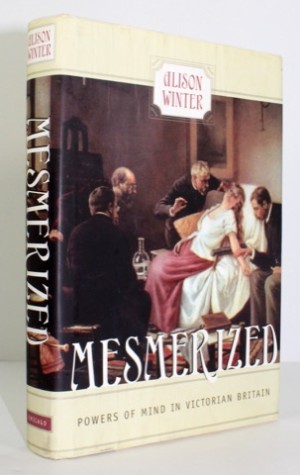
Hardcover. Chicago, University of Chicago Press, First Edition, 1998, Book: Very Good, Dust Jacket: Very Good, 464 pages. Hardcover. Ivory & light grey cloth boards with gilt titles to spine. Black & white illustrations throughout. Bright dust jacket with ligh wrinkles. Clean, unmarked copy.
Hardcover. Secaucus, N.J., Chartwell Books, 1st, 1989, Book: Very Good, Dust Jacket: Very Good, Hardcover, 128 pages, color illustrations. Clean, tight copy. Discusses the main collecting areas, provides expert advice on how to avoid expensive mistakes, how to care for old toys, and how to spot the works of the masters.
Hardcover. New York , Nelson & Phillips, 1st, 1873, Book: Very Good, Dust Jacket: None, Hardcover, 309 pages. Terracota cloth with gilt titles and decor to front and spine. Light edgewear and rubbing to covers, previous owner's bookplate on front end paper, else a clean, tight copy.
Hardcover. Folkestone UK, Winterdown Books, reprint, 1987, Book: Very Good, Dust Jacket: Very Good, Hardcover in a bright dust jacket, 248 pages. Sydenham's first book on the treatment of fevers, has been reprinted since the 2nd edition of 1668 and has never been translated as a whole until this book. Text is in both Latin and English. The Latin text of the 1666 and 1668 editions with English translation from R.G. Latham (1848). Introduction, notes and index by G.G. Meynell. Limited to 275 copies. Name on front fly leaf, otherwise clean.
Hardcover. UK, Cambridge University Press, 1st, 2001, Book: Very Good, Dust Jacket: Very Good, 444 pages. Hardcover with dust jacket. Light fading to dust jacket front. Light edgewear to dj. Black and white pictures throughout. Clean, tight copy. In 1999 Pope John Paul II proclaimed Our Lady of Guadalupe a patron saint of the Americas. According to oral tradition and historical documents, in 1531 Mary appeared as a beautiful Aztec princess to Juan Diego, a poor Indian. Speaking to him in his own language, she asked him to tell the bishop her name was La Virgen de Guadalupe and that she wanted a church built on the mountain. During a second visit, the image of the Virgin miraculously appeared on his cape. Through the centuries, the enigmatic power of this image has aroused such fervent devotion in Mexico that it has served as the banner of the rebellion against Spanish rule and, despite skepticism and anticlericalism, still remains a potent symbol of the modern nation. In Mexican Phoenix, David Brading traces the intellectual origins, the sudden efflorescence, and the theology that has sustained the tradition of Our Lady of Guadalupe. Brading also documents the interaction of religion and patriotism, and describes how the image has served as a banner both for independence and for the Church in its struggle against the Liberal and revolutionary state.
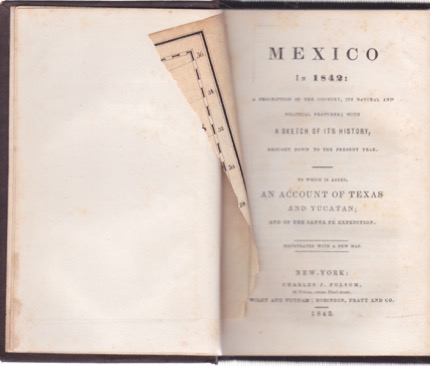
Hardcover. NY, Charles J. Folsom, 1st, 1842, Book: Very Good, Dust Jacket: None, Hardcover, publisher's brown cloth, stamped in blind, spine gilt. 256 pages including index with a color folded map laid in. Map was tipped-in and removed leaving a sliver or the map still attached at title page (see photos), map itself is clean, no wear to folds. First edition of this important work. The section on Texas and the Santa Fe expedition is attributed to Franklin Coombs, a veteran of the latter ill-fated debacle, and his account of the expedition and his captivity (which first appeared in NILES WEEKLY REGISTER) is reprinted herein, along with another account (Wagner-Camp 86) of a trip to Santa Fe appearing here for the first time in book form. The map shows Texas, Mexico, and the southwest region as far north as the Arkansas River, south to Yucatan, west to the Pacific, and east to New Orleans. Light chipping to spine cloth at top, penciled notation on front fly leaf, mild foxing to several pages, otherwise a clean, bright copy.
Hardcover. Norman OK, University of Oklahoma Press, 1st, 2001, Book: Very Good, Dust Jacket: Very Good, Hardcover in a bright dust jacket, 348 pages, b&w illustrations. This handsomely illustrated book offers a panoramic view of ancient Mexico, beginning more than thirty thousand years ago and ending with European occupation in the sixteenth century. Drawing on archaeological and ethnohistorical sources, the book is one of the first to offer a unified vision of Mexico's precolonial past. Typical histories of Mexico focus on the prosperity and accomplishments of Mesoamerica, located in the southern half of Mexico, due to the wealth of records about the glorious past of this region. Mesoamerica was only one of three cultural superareas of ancient Mexico, however, all interlinked by complex economic and social relationships. Tracing the large social transformations that took place from the earliest hunter-gatherer times to the Postclassic states, the authors describe the ties between the three superareas of ancient Mexico, which stretched from present-day Costa Rica to what is now the southwestern United States. According to the authors, these superareas-Mesoamerica, Aridamerica, and Oasisamerica - cannot be viewed as independent entities. Instead, they must be considered as a whole to understand the complex reality of Mexico's past.
Hardcover. Norman OK, University of Oklahoma Press, 1st, 1996, Book: Very Good, Dust Jacket: Very Good, Hardcover, 212 pages, b&w photos. Clean, unmarked copy with only minor wear to dust jacket. Today, roughly fifty thousand Tarahumara continue living in ways similar to those of their ancestors, retaining many customs from their pre-Columbian past. Striking sepia-toned monochrome photographs and a historical narrative document the lives and past of people in mountainous southwestern Chihuahua, Mexico.
Hardcover. New York, Aperture, 1st, 2003, Book: Near Fine, Dust Jacket: Near Fine, 220 pages, 155 b&w photographs by Casasola. Edited by Pablo Ortiz Monasterio, essay by Pete Hamill. Agustin Victor Casasola photographed everyone of consequence in Mexico at the time of the revolution, from Francisco (Pancho) Villa, Emiliano Zapata and the exiled Russian leader Leon Trotsky to artists Diego Rivera and Frida Kahlo. For this splendid collection of Casasola's work, the noted American author Pete Hamill has written a rich essay on the photographer and the Mexico he pictured so well.
Hardcover. Ann Arbor, MI, Ardis, 1st English, 1981, Book: Very Good, Dust Jacket: Good, Hardcover, 565 pages. B/w illustrations throughout. Gilt title on spine. Decorated endpapers. Dust Jacket shows some wear due to age: yellowing, fraying and chipping to edges of front, spine and back, but still in tact. Cover boards clean, covered in teal fabric and in good shape. Pages clean, edges slightly yellowed. From the front flap: "...a landmark work in Russian theater scholarship, this study reveals Meyerhold in the context of his time, as seen by friends and enemies, actors and critics, and analyzes the development of his remarkable career as Russia's most celebrated and influential experimental director."
Hardcover. NY, Free Press, 1st, 2005, Book: Very Good, Dust Jacket: Very Good, Hardcover in a bright, unclipped dust jacket. No artist looms so large in Western consciousness and culture as Michelangelo Buonarroti, the most celebrated sculptor of all time. And no place on earth provides a stone so capable of simulating the warmth and vitality of human flesh and incarnating the genius of a Michelangelo as the statuario of Carrara, the storied marble mecca at Tuscany's northwest corner. It was there, where shadowy Etruscans and Roman slaves once toiled, that Michelangelo risked his life in dozens of harrowing expeditions to secure the precious stone for his Pieta, Moses, and other masterpieces. Many books have recounted Michelangelo's achievements in Florence and Rome. Michelangelo's Mountain goes beyond all of them, revealing his escapades and ordeals in the spectacular landscape that was the third pole of his tumultuous career and the third wellspring of his art. Eric Scigliano brings this haunting place and eternally fascinating artist to life in a sweeping tale peopled by popes and poets, mad dukes and mythic monsters, scheming courtiers and rough-hewn quarrymen. In showing how the artist, land, and stone transformed one another, Scigliano brings fresh insight to Michelangelo's most cherished works and illuminates his struggles with the princes and potentates of Carrara, Rome, and Medici Florence, who raised intrigue to a high art.
Hardcover. New Haven CT, Yale University Press, 1st, 2010, Book: Very Good, Dust Jacket: Very Good, Hardcover, 438 pages, illustrations in color and b&w. Clean, unmarked copy with only minor wear to dust jacket.
Hardcover. NY, Taschen, reprint, 2023, Book: Very Good, Dust Jacket: None, Hardcover, pictorial boards, 190 pages. A smaller edition of the book published in 2019. Rewind back to the midcentury, before the age of Instagram and Snapchat, where people were using 35mm cameras loaded with color film to document both monumental and mundane moments in their lives. They took pictures of their loved ones, their vacations, their celebrations. They memorialized the births of babies; a child in a cowboy outfit; a new color television set; sightseeing in National Parks; fishing trips; lazing on the beach; weddings; office parties; family reunions; holding hands, kissing and dancing. Imagining these lives and the possible stories that lie behind the images is what makes The Anonymous Project such a compelling journey into our past. Clean copy.
Softcover. NY, Harper Torchbooks, reprint, 1969, Book: Good, Dust Jacket: None, Softcover, 458 pages. This book argues that there was a middle-class democracy in Massachusetts even before the Revolution, which only removed British power from the area. Bump to top corner of volume causing a crease, remainder lines to bottom edge. No markings.
Hardcover. New York, McGraw-Hill Book Company, Inc., 1st, 1957, Book: Very Good, Dust Jacket: Very Good, 547 pages. Hardcover. A Special Hall of Fame Edition of 1,000 copies of which this is SIGNED and hand numbered #738/1000 BY THE AUTHOR. Illustrated with 8 pages of black & white photographs. Faint darkening to top right corner, edge of front endpaper. Price clipped dust jacket with light wear - jacket now protected with clear plastic cover. Unmarked text. Clean, tight copy.
Hardcover. Poughkeepsie, New York, Abraham Tomlinson, 1st, 1855, Book: Fair, Dust Jacket: None, 128 pages, gilt title on cover and frontispiece illustration, with numerous illustrative notes throughout and a supplement containing official papers on the skirmishes at Lexington and Concord. Ex-library residue, front cover loose and binding needs new back strip. Internal pages are clean and bright.
Hardcover. NY, Norton, 1st, 2004, Book: Very Good, Dust Jacket: Very Good, Hardcover, 256 pages. Through a lively text and 250 stunning duotone images (most never previously published), Millionaires, Mansions, and Motor Yachts re-creates an era of opulence and extravagance that today seems incredible. Dominating this volume are the mansions and yachts of Alfred and Jessie du Pont. Equally larger-than-life personalities include Thomas Lawson, his expansive estate, Dreamwold, and yachts such as Dreamer; empire builder John Spreckels's 227-foot Venetia; Emily Cadwalader, who commissioned a vessel destined for world renown as a U.S. presidential yacht, before checkmating this achievement by ordering the largest private yacht ever built, the 407-foot Savarona; Eugene Tompkins, the "Napoleon of Theater Managers"; George Fabyan; Harry Darlington; and William Rands. Enfolded in this volume's fascinating pages are not only the wealthy individuals who shaped this era but also curmudgeonly writer/yachtsman Thomas Fleming Day, photographer Nathaniel Stebbins, and the designers and builders who created the splendid yachts that here return to life.
Hardcover. NY, Harry N. Abrams/Hood Museum of Art, 1st, 1988, Book: Very Good, Dust Jacket: Very Good, Hardcover in a bright, unclipped dust jacket. A beautiful and intimate treatment of the architecture of the early industrialization of New England. 108 pages of color plates. Essays by Noel Perrin & Kenneth Breisch. Clean copy.
Softcover. NY, Archipelago Books, 1st English, 2021, Book: Very Good, Dust Jacket: None, Softcover in pictorial wrappers, 131 pages. With an introduction by award-winning author Alberto Manguel, Milongas is Edgardo Cozarinsky's love letter to tango, and the diverse array of people who give it life. Argentine writer and filmmaker Edgardo Cozarinsky traces [tango's] fascinating journey through time and the seedy brothels and rough Argentine and European bars where the dance could be quite mannered or could spark with theatrical violence . . . Cozarinsky takes us through the ebbs and flows of the popularity of the tango, and also through a number of its evolutionary adaptive speciations. Clean copy.
Hardcover. Liberty Street, 1st, 2007, Book: Very Good, Dust Jacket: Very Good, Hardcover, 196 pages. A stirring visual tribute to the Civil Rights Movement and the long and difficult battle for racial equality captures in more than 150 extraordinary photographs the leaders and events of the era, with portraits of Sidney Poitier, James Baldwin, Miles Davis, Martin Luther King, Jr., and many other activists, both famous and unknown, who took part in the struggle.
Hardcover. London, Jonathan Cape Ltd], 1st, 2000, Book: Very Good, Dust Jacket: Very Good, Hardcover in a bright dust jacket, 373 pages. 50 line and 24 halftone illustrations. In this text, the author argues that the celebrated archaeologist, Sir Arthur Evans, who at the turn of the century claimed to have discovered the labyrinth which housed the Minotaur, was in fact a fabulist. MacGillivray uses Evans's own papers as evidence for his exposee.

 "Merely Colossal: The Story of the Movies from the Long Chase to the Chaise Longue by: Mayer, Arthur")
 "Mesmerized - Powers of Mind in Victorian Britainby: Winter, Alison")

 "Metal Toys and Automataby: King, Constance")
 "Methodism Forty Years Ago and Now: Embracing Many Interesting Reminiscences and Incidentsby: Culver, Rev. Newell")
 "Methodus Curandi Febres Propriis Observationibus Superstructuraby: Sydenham, Thomae / Latham, R.G. (trans.) / Meynell, G.G. (intro.)")
 "Mexican Phoenix: Our Lady of Guadalupe: Image and Tradition Across Five Centuriesby: Brading, D.A.")
 "Mexico in 1842: A Description of the Country Its Natural and Political Featuresby: Folsom, George")

 "Mexico's Indigenous Past (The Civilization of the American Indian Series) (Volume 240) by: Austin, Alfredo Lopez / Leonardo Lopez Lujan")
 "Mexico's Sierra Tarahumara: A Photohistory of the People of the Edgeby: Raat, W. Dirk and Janecek, George R.")
 "Mexico: The Revolution and Beyond - Photographs by Agustin Victor Casasola 1900-1940by: Casasola, Agustin Victor")
 "Meyerhold the Directorby: Rudnitsky, Konstantin")
 "Michelangelo's Mountain: The Quest For Perfection in the Marble Quarries of Carraraby: Eric Scigliano")
 "Michelangelo: The Achievement of Fame, 1475-1534by: Hirst, Michael")
 "Midcentury Memories: The Anonymous Project by: Shulman, Lee (Ed.)")
 "Middle Class Democracy and the Revolution in Massachusetts, 1691-1780 by: Robert E. Brown")
 "Middletown Springs, Vermont: A Gem in the Hillsby: Krouse, Frances B.")
 "Mighty Stonewall (SIGNED COPY)by: Vandiver, Frank E.")


 "Miliitary Journals of Two Private Soldiers, 1758-1775by: N/A")
 "Military Commission to Europe in 1855 and 1856 (with) Rifled Infantry Arms: A Brief Description of the Modern System of Small Arms as Adopted in the Various European Armiesby:")
 "Millionaires, Mansions, and Motor Yachts: An Era of Opulenceby: Ross MacTaggart")
 "Mills and Factories of New England by: Hambourg, Serge/Perrin Noel & Kenneth Breisch (essays)")
 "Milongasby: Edgardo Cozarinsky /Valerie Miles (Translator), & 1 more")
 "Mine Eyes Have Seenby: Adelman, Bob")
 "Minotaur : Sir Arthur Evans and Archaeology of the Minoan Mythby: MacGillivray, Joseph Alexander")