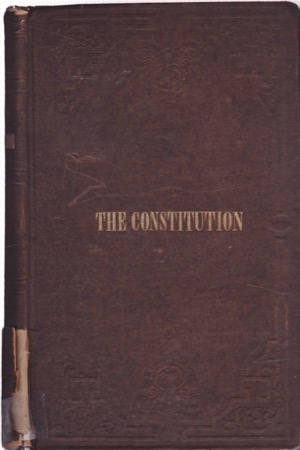
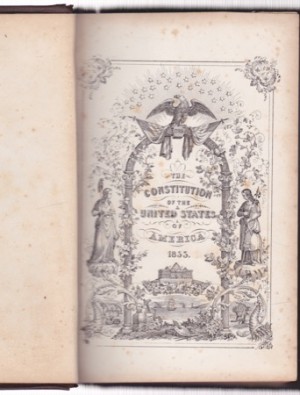
Hardcover. Philadelphia, 7th Ed., 1855, Book: Good, Dust Jacket: None, Hardcover, embossed brown cloth with gilt lettering on spine and front cover, 521 pages. Cloth has peeled back from spine with some missing chips. The book's binding is solid and tight, clean interior. First published in 1854. This is the seventh printing with an illustrated title page dated 1855. Name and address on blank prelim page otherwise clean.
Softcover. Chicago, University of Chicago , 1st, 1995, Book: Very Good, Dust Jacket: None, Softcover, 303 pages. Martin Burke traces the surprisingly complicated history of the idea of class in America from the forming of a new nation to the heart of the Gilded Age. Surveying American political, social, and intellectual life from the late 17th to the end of the 19th century, Burke examines in detail the contested discourse about equality--the way Americans thought and wrote about class, class relations, and their meaning in society.Burke explores a remarkable range of thought to establish the boundaries of class and the language used to describe it in the works of leading political figures, social reformers, and moral philosophers. He traces a shift from class as a legal category of ranks and orders to socio-economic divisions based on occupations and income. Throughout the century, he finds no permanent consensus about the meaning of class in America and instead describes a culture of conflicting ideas and opinions. Some fading to covers, otherwise like new.
Hardcover. Oxford UK, Clarendon Press, Revised Ed., 1992, Book: Very Good, Dust Jacket: Very Good, Hardcover in a bright dust jacket, 592 pages, b&w illustrations. Lady Anne Conway was a remarkable woman who became a philosopher in her own right at a time when most women were denied even basic education. The Conway Letters is the record of her friendship with the Cambridge Platonist, Henry More, which began when he acted as her unofficial tutor in philosophy and lasted until her death. The letters cover a wide range of topics - personal, philosophical, religious, and social. They give a detailed picture of the More-Conway circle, including such figures as Jeremy Taylor, Ralph Cudworth, Robert Boyle, and Francis Mercury van Helmont, as well as Lady Conway's Quaker associates, George Keith and William Penn. The letters are thus a valuable source for mid-seventeenth-century history, and especially for the intellectual history of the period. Revised from the 1930 printing with new material and introduction by Sarah Hutton. Name on front fly leaf, small chip/tear to top spine of the dust jacket.
Hardcover. NY, W.W. Norton , 1976, Book: Very Good, Dust Jacket: Very Good, Hardcover in a bright, lightly worn dust jacket. 318 pages, A veteran producer provides an inside view of television, combining anecdotal discussions of agents, performers, and sponsors with detailed information on network organization and business activities. A good overview of the TV broadcasting business in the 1970s. No markings.
Softcover. Los Angeles, Augustan Reprint Society, reprint, 1987, Book: Very Good, Dust Jacket: None, Softcover. Facsimile reprints of two 18th century pamphlets, 29 and 52 pages. Introduction by Robert Adams Day. Two profiles of a infamous doctor named Richard Mead in mid-18th century London. The first an attack, the second a defense. Clean copy.
Softcover. Italy, Leo S. Olschki Editore, 1st, 2002, Book: Very Good, Dust Jacket: Very Good, Softcover in a dust jacket, 313 pages. The first complete collection of all that is conserved of the correspondence that endured for more than thirty years between two great scholars of 16th century religious toleration. The ample introduction and detailed erudite comments accompanying each letter provide precious information on four decades of American and European historiography on the 16th century. Name on cover
Softcover. NY, Pantheon Books, 1st US, 1983, Book: Very Good, Dust Jacket: None, Softcover, 301 pages. The classic study of the life of the nobility at the royal court of France, especially under Louis XIV. Paper tanning slightly, clean copy.
Softcover. Syracuse NY, Gustav Stickley, 1st, 1905, Book: Very Good, Dust Jacket: None, Softcover, approx. 200 pages, b&w illustrations, ads. Gustav Stickley showed his designs and ideas through his magazine The Craftsman. Published monthly between Oct 1901 and Dec 1916, The Craftsman was "the bible" of the Arts and Crafts Movement in the United States, which emphasized spare design, hand-crafting, and the importance of the individual craftsman. This issue features his article "Ornament: Its Use and Its Abuse". Also articles on The Development of the Public Library, The Future of Ceramics in America, Old Pewter Plate, The Modern House Beautiful, others. Clean, bright copy.
Hardcover. Princeton NJ, Princeton University Press, 1st, 2009, Hardcover in a bright dust jacket, 157 pages. Was George W. Bush the true heir of Woodrow Wilson, the architect of liberal internationalism? Was the Iraq War a result of liberal ideas about America's right to promote democracy abroad? In this timely book, four distinguished scholars of American foreign policy discuss the relationship between the ideals of Woodrow Wilson and those of George W. Bush. The Crisis of American Foreign Policy exposes the challenges resulting from Bush's foreign policy and ponders America's place in the international arena. Led by John Ikenberry, one of today's foremost foreign policy thinkers, this provocative collection examines the traditions of liberal internationalism that have dominated American foreign policy since the end of World War II. Clean copy.
Softcover. Stanford CA, Stanford University Press, 1st pbk, 2004, Book: Very Good, Dust Jacket: None, Softcover, 271 pages, b&w illustrations. The Cult of Art in Nazi Germany presents a new interpretation of National Socialism, arguing that art in the Third Reich was not simply an instrument of the regime, but actually became a source of the racist politics upon which its ideology was founded. Through the myth of the "Aryan race," a race pronounced superior because it alone creates culture, Nazism asserted art as the sole raison d'etre of a regime defined by Hitler as the "dictatorship of genius." Michaud shows the important link between the religious nature of Nazi art and the political movement, revealing that in Nazi Germany art was considered to be less a witness of history than a force capable of producing future, the actor capable of accelerating the coming of a reality immanent to art itself. Light sticker residue to rear cover otherwise clean, very good.
Hardcover. University Park PA, Pennsylvania State University Press, 1st, 2010, Book: Very Good, Dust Jacket: Very Good, Hardcover in a bright dust jacket, 295 pages illustrated in b&w and color. Beginning in the 1730s, Heather Minor tells us, Rome "began to resemble one huge construction site," with a series of ambitious and expensive new building campaigns that transformed the face and substance of the city. From renovations of the Santa Maria Maggiore and San Giovanni in Laterano and the restoration of the Arch of Constantine to the creation of the Capitoline Museum and the establishment of the papacy's Calcografia, the push for reform not only renewed papal and Church identity but also revived Italian culture as a whole. Based on extensive archival research and full of fascinating stories about the often stormy theological and intellectual debates central to the attempts at reform, The Culture of Architecture in Enlightenment Rome brings to life the personalities of architects, theologians, and intellectuals and links the extensive architectural programs with powerful shifts in the intellectual climate of the time. Clean, bright copy.
Hardcover. Baltimore, Clearfield Company, reprint, 1989, Book: Very Good, Dust Jacket: None, Hardcover, blue cloth, gilt lettering on spine, 132 pages. A reprint of a book written by Alexander Jones in 1855. The book explores the role of Welsh immigrants and their descendants during the American Revolution. It provides a detailed account of the Welsh contributions to the war effort, including their participation in battles, their leadership in politics and commerce, and their support for the cause of American independence. The book is divided into several chapters, each focusing on a different aspect of Welsh involvement in the Revolution. It begins by discussing the early settlement of Welsh immigrants in America, their struggles to maintain their language and culture, and their eventual integration into American society. Jones then goes on to describe the various battles and campaigns in which Welsh soldiers fought, including the Battle of Bunker Hill, the Battle of Saratoga, and the Battle of Yorktown. He also highlights the contributions of Welsh leaders such as General Richard Montgomery and Colonel William Davies.In addition to military contributions, the book also explores the role of Welsh Americans in politics and commerce during the Revolution. Jones discusses the involvement of Welshmen in the Continental Congress, as well as their contributions to the development of American industry and trade. Overall, The Cymry of '76 provides a comprehensive and detailed account of the Welsh contribution to the American Revolution. Clean copy.
Hardcover. NY, Princeton Architectural Press, 1st, 2015, Book: Very Good, Dust Jacket: Very Good, Hardcover in a bright, unclipped dust jacket, 224 pages. The Dakota is arguably the best-known residential address in the world, home to dozens of New York City's most famous artists, performers, and successful executives. The rare sale of an apartment there, usually at jaw-dropping prices, is newsworthy, as is the financial and architectural health of the building itself, a landmark in every sense of the word. The first true luxury apartment house built in New York City, more than 130 years ago, the Dakota is still the gold standard against which all other apartment buildings are weighed. Historian Andrew Alpern tells the fascinating story of how the Dakota came to be, how Singer sewing magnate Edward Clark dared to build an apartment building luxurious enough to coax the city's wealthy from their mansions downtown for ultra-modern living on what was then the swamplands of the Upper West Side. Redrawn plans of the entire building, published here for the first time, show how Clark created apartments glamorous enough that they made living under a shared roof as acceptable in Manhattan as it already was in Europe's grand capitals, forever revolutionizing apartment life in New York City.
Softcover. Lexington KY, University Press of Kentucky, 2nd Ed., 2001, Softcover, 377 pages. The first part of the book deals with the production code as it existed from 1922-34 with the introduction of figures such as Will Hays, Mae West and Joe Breen. The second part deals with the administration of the production code from 1934-66. Specific detail is given on the movies Dead End; Gone With the Wind; The Outlaw and The Postman Always Rings Twice; The Bicycle Thief; Detective Story and A Streetcar Named Desire; The Moon is Blue and The French Line; Lolita and Who's Afraid of Virginia Woolf. This second edition is updated to include the introduction of the PG-13 and NC-17 ratings of the 1990s. Mild wear to covers, clean.
Hardcover. Philadelphia, Chilton Book Co, 1st, 1971, Book: Very Good, Dust Jacket: Very Good, Hardcover in a bright, unclipped dust jacket. 176 pages, profusely illustrated in b&w. Clean copy.
Hardcover. Boston, Little, Brown and Company, 1st US, 1945, Book: Very Good, Dust Jacket: None, Hardcover, red cloth with front and spine printed in black and gilt, 417 pages. This volume publishes his speeches, broadcasts, messages, statements, and letters made, sent, and issued between 22 February and 31 December 1944. A full and momentous year, 1944 included the Normandy invasion, the largest amphibious operation in history, which re-established the Allied military presence in German-occupied Europe. Light spotting to covers, otherwise clean.
Hardcover. NY, Lyle Stuart, 1st, 1983, Book: Very Good, Dust Jacket: Good, Hardcover in a lightly worn dust jacket, 190 pages, b&w illustrations. The story of the rise and near-collapse of the Playboy Empire, told by the manager of Playboy's London casinos. Clean copy.
Hardcover. NY, Alfred A. Knopf , 1st, 1995, Book: Very Good, Dust Jacket: Very Good, Hardcover in a bright, unclipped dust jacket, 314 pages. Contrasting the Victorian system of virtues - respectability, self-help, discipline, cleanliness, obedience, orderliness - with the opportunistic, superficial morality of modern society, an intellectual historian calls for a deeper commitment to moral responsibility. According to Himmelfarb, Victorian "manners and morals" created a society that emphasized a strong family life for all classes and gave rise to a prosperous economy and the early feminist and social service movements. Furthermore, the influence of these virtues caused the incidence of illegitimate births and violent crimes to drop significantly and remain low until the 1960s. Clean copy.
Hardcover. Cambridge MA, Harvard University Press, 2nd pr., 2017, Book: Very Good, Dust Jacket: Very Good, Hardcover in a bright dust jacket, 502 pages, b&w illustrations. "Superb...A remarkable achievement, by far the best general account of the war now available. It is critical, insightful, and rooted in a wealth of archival sources; it brings far more of the Mexican experience than any other work...and it clearly demonstrates the social and cultural dynamics that shaped Mexican and American politics and military force." -Journal of American History It has long been held that the United States emerged victorious from the Mexican-American War because its democratic system was more stable and its citizens more loyal. But this award-winning history shows that Americans dramatically underestimated the strength of Mexican patriotism and failed to see how bitterly Mexicans resented their claims to national and racial superiority. Their fierce resistance surprised US leaders, who had expected a quick victory with few casualties. By focusing on how ordinary soldiers and civilians in both countries understood and experienced the conflict, The Dead March offers a clearer picture of the brief, bloody war that redrew the map of North America. Clean copy.
Hardcover. NY, Library of America, 8th pr., Book: Very Good, Dust Jacket: Very Good, Hardcover in a bright dust jacket, 1175 pages. Part Two of a two-volume set. Assembled here in chronological order are hundreds of newspaper articles, pamphlets, speeches, and private letters written or delivered in the aftermath of the Constitutional Convention. Along with familiar figures like Franklin, Madison, Patrick Henry, Jefferson, and Washington, scores of less famous citizens are represented, all speaking clearly and passionately about government. The most famous writings of the ratification struggle - the Federalist essays of Hamilton and Madison - are placed in their original context, alongside the arguments of able antagonists, such as "Brutus" and the "Federal Farmer." Part Two gathers collected press polemics and private commentaries from January to August 1788, including all the amendments proposed by state ratifying conventions as well as dozens of speeches from the South Carolina, Virginia, New York, and North Carolina conventions. Included are dramatic confrontations from Virginia, where Patrick Henry pitted his legendary oratorical skills against the persuasive logic of Madison, and from New York, where Alexander Hamilton faced the brilliant Antifederalist Melancton Smith. Like new.
Hardcover. Princeton NJ, Princeton University Press, 1st, 1958, Book: Very Good, Dust Jacket: Very Good, Hardcover in a lightly worn, price-clipped dust jacket, 513 pages, b&w illustrations. In 1918 the U.S. government decided to involve itself with the Russian Revolution by sending troops to Siberia. This book re-creates that unhappily memorable story: the arrival of British marines at Murmansk, the diplomatic maneuvering, the growing Russian hostility, the uprising of Czechoslovak troops in central Siberia which threatened to overturn the Bolsheviks, the acquisitive ambitions of the Japanese in Manchuria, and finally the decision by President Wilson to intervene with American troops. Of this period Kennan writes, "Never, surely, in the history of American diplomacy, has so much been paid for so little." Name on front fly leaf, otherwise clean.
NY, Simon and Schuster, 1st, 1967, Book: Very Good, Dust Jacket: Very Good, Hardcover in a bright, unclipped dust jacket. 256 pages, 16 pages of B&W photos. Over a 45 year span the Yankees were the most magnetic drawing card in American sports. Why did the House That Ruth Built come tumbling down after so many years of triumph? Long inscription on front fly leaf otherwise clean.

 "The Constitution of the United States of America; The Declaration of Independence; The Articles of Confederation; The Prominent Political Acts of George Washington; Electorial Votes for all the Presidents and Vice-Presidents ;. Chron")
 "The Conundrum of Class: Public Discourse on the Social Order in Americaby: Burke, Martin J")
 "The Conway Letters: The Correspondence of Anne, Viscountess Conway, Henry More, and Their Friends, 1642-1684 by: Nicolson, Marjorie Hope/Hutton, Sarah")
 "The Cool Fire: How to Make It in Televisionby: Bob. Shanks")
 "The Cornutor of Seventy-Five and Don Ricardo Honeywater Vindicated (1748) by: Douglas, William/Tobias Smollett")
 "The Correspondence of Roland H. Bainton and Delio Cantimori (1932-1966). An enduring transatlantic friendship between two historians of religious tolerationby: Tedesc")

 "The Craftsman Magazine: February 1905 Vol. VII, No. 5by: Gustav Stickley (Ed.)")
 "The Crisis of American Foreign Policy: Wilsonianism in the Twenty-first Century by: Ikenberry, G. John; Knock, Thomas; Slaughter, Anne-Marie; Smith, Tony")
 "The Cult of Art in Nazi Germany by: Eric Michaud")
 "The Culture of Architecture in Enlightenment Rome by: Minor, Heather Hyde")
 "The Dakota: A History of the World's Best-Known Apartment Buildingby: Andrew Alpern/Christopher Gray/Kenneth Grant (Photos)")


 "The Dame in the Kimono. Hollywood Censorship and the Production Code by: Leff, Leonard J. & Simmons, Jerold L.")
 "The Dance Band Era: The Dancing Decades from Ragtime to Swing: 1910-1950by: McCarthy, Albert")
 "The Darkness and the Light: Photographs By Doris Ulmann with a New Heaven and Earth By Robert Colesby: Ulmann, Doris and William Clift, Robert Coles")
 "The Dawn of Liberation War Speeches by the Right Hon. Winston S. Churchill CH. MP. C. H. M. P. by: Winston S. Churchill")
 "The Day the Bunny Died by: Lownes, Victor")
 "The De-Moralization of Society: From Victorian Virtues to Modern Valuesby: Gertrude Himmelfarb")
 "The Dead March: A History of the Mexican-American Warby: Guardino, Peter")
 "The Debate on the Constitution: Federalist and Antifederalist Speeches Articles and Letters During the Struggle over Ratification Part Two: January to August 1788 by:")
 "The Debate on the Constitution: Federalist and Antifederalist Speeches Articles and Letters During the Struggle over Ratification: Part One September 1787 - February 1788 by:")
 "The Decision to Intervene: The Prelude to Allied Intervention in the Bolshevik Revolution by: Kennan, George F.")
 "The Decline and Fall of the New York Yankees by: Mann, Jack")