Hardcover. NY, Glitterati Incorporated, 1st, 2017, Book: Very Good, Dust Jacket: Very Good, Hardcover in a bright dust jacket, 368 pages. An expanded edition of the best-selling collection, Freeze Frame: Second Cut, featuring 150 new photographs (more than 450 in all) of stars shot on-set over a period of more than 50 years, by the planet's most famous on-set photographer, Douglas Kirkland. From Angelina Jolie and Brigitte Bardot to Baz Luhrmann and Antonio Banderas, Kirkland, an artist in his own right, has been chronicling the making of films for more than half a century through his lens, and his riveting images take us behind the scenes to reveal much about the way movies are made. Going beyond the first edition, this book includes stories and anecdotes of behind the scenes, along with the pictures ranging from the 1960s through the 2000s. Here is a glamorous volume in a luxurious oversized format, chock-full of amazing portraits of the most illustrious and talented movie stars, directors, and performers from the last half-century of movie-making. Clean copy. PLEASE NOTE: DUE TO SIZE & WEIGHT, DOMESTIC SHIPPING ONLY.
Hardcover. New York, Assouline Publishing, 1st, 2013, Book: Very Good, Dust Jacket: Very Good, 124 pages. Hardcover with dust jacket. Like new in publishers shrink-wrap. A tight copy. 165 color illustrations. With rich and dynamic photographs juxtaposing concepts from haute couture and scientific advancements to pop stars and popular culture, French Style is as sophisticated and chic as the nation it celebrates. This lavishly illustrated, fun and informal yet surprisingly informative compendium brings to life the savoir faire and joie de vivre that is French Style.
Hardcover. New Haven CT, Yale University Press, 1st, 2010, Book: Very Good, Dust Jacket: None, Hardcover, pictorial boards, 216 pages. Galleries of Friendship and Fame is the first comprehensive investigation of the origin, development, and practices of 19th-century American photograph albums. In this fascinating book, the author argues that the album--whether functioning as family record, parlor entertainment, social register, national portrait gallery, or advertisement for photography itself--helped transform the nature of self-presentation at the cusp of modernity. This handsome volume examines carte de visite and cabinet card albums from their introduction in the United States in 1861 through the rise of the snapshot at the century's end. By examining a wealth of previously overlooked primary materials, this study offers a completely new understanding of photograph albums, revealing how they emerged, how they were marketed and sold, and how families displayed and told stories through them. Galleries of Friendship and Fame addresses the history of technology and innovation, the interconnectedness of the commercial and domestic spheres, and the ways photography helped shape notions of identity, family, and nation in a rapidly changing America.
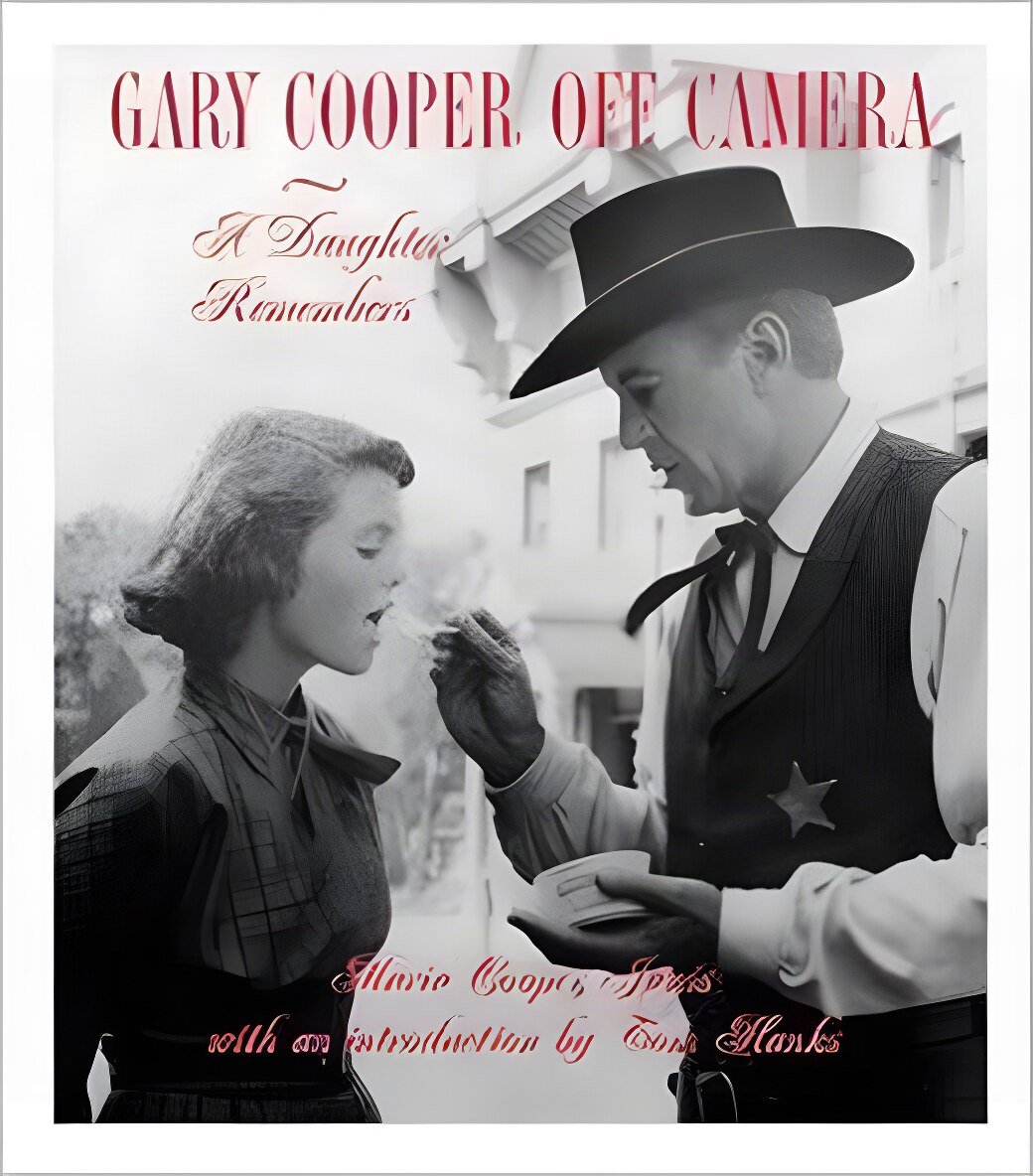
Hardcover. New York , Harry N. Abrams, 1st, 1999, Book: Very Good, Dust Jacket: Very Good, 175 pages. Hardcover. Black and white photographs. Clean, unmarked copy with only minor wear to dust jacket. A photographic memoir charts Gary Cooper's off-screen life from his boyhood in Montana, to his family life in Hollywood, to his relationships with Ernest Hemingway, Pablo Picasso, and Jimmy Stewart, among many others.
Hardcover. NY, Aperture, 1st, 2005, Book: Very Good, Dust Jacket: None, Hardcover, 80 pages. In this previously unpublished body of work, Gary Schneider presents a haunting series of nudes and faces that emerge and seem to float above a receding black ground. Each image is rendered through a long exposure and by exploring the surfaces of the skin with a small handheld light. Due to the prolonged time required and the inevitable movements and consequent distortions that occur in the process, the results both reveal and obscure the intimate physical details and personality of the individual who poses. The sensibility and the obsessions of the artist are reflected by his decisions to expose certain areas more than others. The skin-tones are lush and luminous as they emerge from the darkness, yet these portraits also disturb as a result of the exaggerations and irregularities--the blurred traces of unconscious gesture matched with a stiffness that implies the innate physicality and mortality within each body.
Hardcover. NY, powerHouse Books, 1st, 2006, Book: Very Good, Dust Jacket: Very Good, Hardcover in a bright dust jacket, 119 pages. SIGNED AND INSCRIBED BY STANLEY BURNS on the title page. Japanese geisha and courtesans intrigue and fascinate Westerners. During the mid-nineteenth century, Japan opened its doors to the world and became an essential destination for travelers. Tourists desired images of landscapes and traditional Japanese culture, which Japanese photographers provided. They created souvenir albums consisting of hand-colored photographs individually chosen by the tourist. Many are so beautifully painted that they challenge modern sensibilities familiar with color photography. The photographic conventions were inspired by the aesthetics of the noted colored woodblock print medium of ukiyo-e and the privately published surimono. These works depicted the "floating world"--courtesans, geisha, and entertainments--which also were intriguing subject matter for tourists. The beautiful, large photos in this volume give a special insight into the old world of geisha. Clean copy.
Hardcover. Philadelphia, Running Press, 1st, 2013, Book: Very Good, Dust Jacket: Very Good, Hardcover, 416 pages, illustrated throughout in color and b&w. Light shelf-wear to dust jacket. Clean, tight copy. George Hurrell is credited as the master of the Hollywood glamour portrait. He photographed every star from Greta Garbo to Humphrey Bogart to Sharon Stone. Written by historian and former Hurrell assistant Mark A. Vieira, George Hurrell's Hollywood is the definitive retrospective. Covers Hurrell's entire career, from his beginnings as a Los Angeles society photographer to his finale as the celebrity photographer who became a celebrity himself. Hundreds of pristine images showcase the photographer's work with Hollywood icons from 1929 to 1992. The text recounts the artist's life, from his childhood to the heyday of his career as a starmaker, through the previously untold stories of his fall from grace and eventual comeback.
Hardcover. New York, Abrams/ Metropolitan Museum of Art, 1st, 1997, Book: Very Good, Dust Jacket: Very Good, Large format, 148 pages with 81 full-page plates in monochrome and sepia tone. Still in publisher's shrinkwrap. A wonderful set of photographs of the artist by one of the greatest photographers of the 20th century - her husband. Contains nudes and portraits including closeups of hands.
Hardcover. NY, Abrams, 1st, 1981, Book: Very Good, Dust Jacket: Very Good, Hardcover, 96 pages, in a bright dust jacket. Photographs taken by Alfred Eisenstaedt in Germany in the 1920s and 1930s and on a return trip to Germany in 1979.
Hardcover. New Haven CT, Yale University Press, 1st, 2019, Book: Very Good, Dust Jacket: None, Hardcover, brick red cloth with a color photo illustrations on the front board with gilded and black letters to the front boards and spine, 168 pages. A fresh, comprehensive, and critical look at the California gold rush through the lens of the daguerreotype camera.The California gold rush was the first major event in American history to be documented in depth by photography. This fascinating volume offers a fresh, comprehensive, and critical look at the people, places, and culture of that historical episode as seen through daguerreotypes and ambrotypes of the era. After gold was discovered at Sutter's Mill in 1848, thousands made the journey to California, including daguerreotypists who established studios in cities and towns and ventured into the gold fields in specially outfitted photographic wagons. Their images, including portraits, views of cities and gold towns, and miners at work in the field, provide an extraordinary glimpse into the evolution of mining culture and technology, the variety of nationalities and races involved in the mining industry, and the growth of cities such as San Francisco and Sacramento. Still in publisher's shrinkwrap.
Softcover. Washington CT, Craftsbury Common, 1st, 1980, Book: Very Good, Dust Jacket: None, Softcover, 88 pages. Illustrated with b&w photographs by Hubbard, taken while traveling throughout America, reminiscent of the Farm Security Administration photographers of the 1930s. INSCRIBED BY PHOTOGRAPHER on the inside front cover. Clean copy.
Hardcover. Thistle Hill Publications & Vermont Folklife Center, 1st, 2001, Book: Very Good, Dust Jacket: Very Good, Hardcover in a bright dust jacket, 108 pages, 68 b&w photographs. SIGNED BY BOTH MOSHER AND MILLER on the half-title page. Granite and Cedar represents an unusual collaboration between a documentary photographer and a writer of fiction to produce a haunting portrait of the people and the land of Vermont's most rural area, often referred to as the "Northeast Kingdom." Veteran photographer JOHN M. MILLER uses his brilliant collection of elegiac, but unsentimental, images dating from the 1970s to evoke the disappearing folkways, the rugged people, and the desolate and abandoned landscape of his native corner of the Green Mountain State. Miller's austere, black-and-white photos richly detail the erosion and the breakup of the small farms of the region and of the families who worked those farms. While they emphasize the stark beauty of the land, they also pay homage to the innate dignity and fierce pride of the people who live in such hardscrabble circumstances.
Hardcover. Thistle Hill Publications & Vermont Folklife Center, 1st, 2001, Book: Very Good, Dust Jacket: Very Good, Hardcover in a bright dust jacket, 108 pages, 68 b&w photographs. Granite and Cedar represents an unusual collaboration between a documentary photographer and a writer of fiction to produce a haunting portrait of the people and the land of Vermont's most rural area, often referred to as the "Northeast Kingdom." Veteran photographer JOHN M. MILLER uses his brilliant collection of elegiac, but unsentimental, images dating from the 1970s to evoke the disappearing folkways, the rugged people, and the desolate and abandoned landscape of his native corner of the Green Mountain State. Miller's austere, black-and-white photos richly detail the erosion and the breakup of the small farms of the region and of the families who worked those farms. While they emphasize the stark beauty of the land, they also pay homage to the innate dignity and fierce pride of the people who live in such hardscrabble circumstances.
Hardcover. New York, Harper & Row, 1st, 1978, Book: Very Good, Dust Jacket: Very Good, 170 pages, hardcover with price-clipped dust jacket. A photographic document of the Rocky Mountain West. Foxing to top copy edge. Light edgewear to dust jacket, boards lightly rubbed. Price-clipped. Unmarked. Bright and clean; a tight copy.
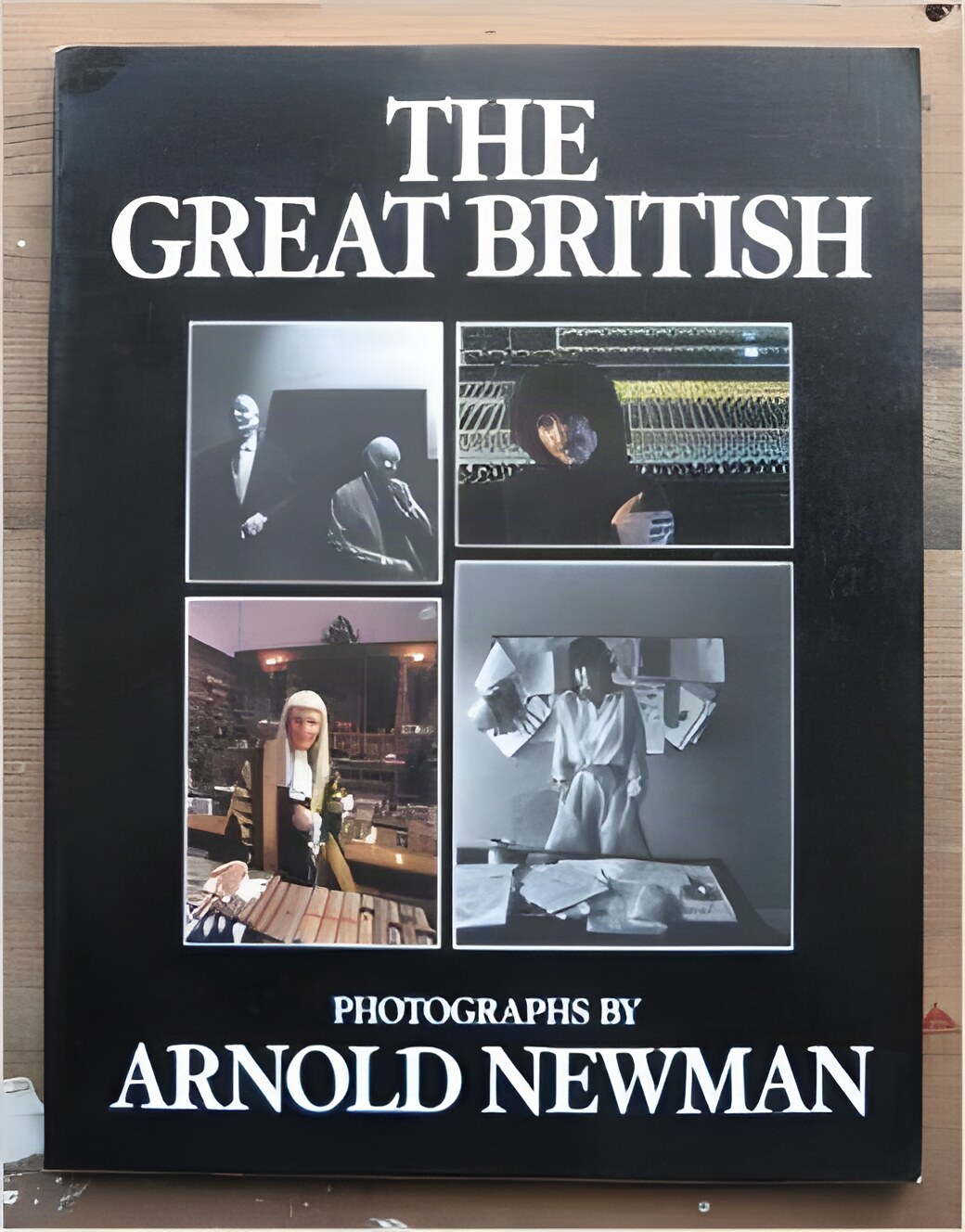
Hardcover. New York, Knopf, 1st, 1991, Book: Very Good, Dust Jacket: Very Good, Hardcover, 100 photos by Arnold, 25 in color. Clean, bright copy in an unclipped dust jacket.
Hardcover. New York, Knopf, 1st, 1991, Book: Very Good, Dust Jacket: Very Good, 69 pages. Hardcover with dust jacket. Clean, unmarked copy with only minor wear to dust jacket.
Hardcover. Chicago, University of Chicago , 1st, 1980, Book: Very Good, Dust Jacket: Very Good, 50 portraits in b&w and color by Newman.. Clean, unmarked copy with only minor wear to dust jacket.
Hardcover. New York, Tim Duggan Books, 1st, 2017, Book: Very Good, Dust Jacket: Very Good, Hardcover, 248 pages, b&w illustrations. The first great portrait photographer, a pioneering balloonist, the first person to take an aerial photograph, and the prime mover behind the first airmail service, Nadar was one of the original celebrity artist-entrepreneurs. A kind of 19th-century Andy Warhol, he knew everyone worth knowing and photographed them all, conferring on posterity psychologically compelling portraits of Manet, Sarah Bernhardt, Delacroix, Daumier and countless others--a priceless panorama of Parisian celebrity. Born Gaspard-Felix Tournachon, he adopted the pseudonym Nadar as a young bohemian, when he was a budding writer and cartoonist. Later he affixed the name Nadar to the facade of his opulent photographic studio in giant script, the illuminated letters ten feet tall, the whole sign fifty feet long, a garish red beacon on the boulevard. Nadar became known to all of Europe and even across the Atlantic when he launched "The Giant," a gas balloon the size of a twelve-story building, the largest of its time. With his daring exploits aboard his humongous balloon (including a catastrophic crash that made headlines around the world), he gave his friend Jules Verne the model for one of his most dynamic heroes.
Hardcover. Damiani, 1st, 2015, Hardcover in a bright dust jacket, still sealed in publisher's shrinkwrap, 156 pages. Outside the Studio is photographer Greg Gorman's tenth monograph. This book takes Gorman (born 1949) outside the reaches of his studio portrait and figure-study work, for which he is best known, and onto the streets of Southeast Asia-uncharted territory for the artist. Traveling initially on behalf of Epson, giving symposiums on fine art digital printing throughout Singapore, Malaysia, China and India, Gorman got a firsthand look at these very different cultures at the very beginning of the digital revolution. The transition from analogue to digital cameras was another new experience for Gorman, who had shot film for more than 30 years. For Gorman, being in the studio with the likes of Marlon Brando or Robert De Niro was second nature, but being thrust in front of strangers in China, Kuala Lampur, India, Thailand, Cambodia and Vietnam was a new adventure.
Hardcover. New York , Harry N. Abrams, 1st, 2005, Book: Very Good, Dust Jacket: Very Good, Hardcover, 288 pages with 250 b&w illustrations. A wealth of film stills, production photographs, and portraits, many previously unpublished, all beautifully reproduced from pristine print. Still in publisher's shrinkwrap.
Hardcover. NY, Skira, 1t, 2010, Book: Very Good, Dust Jacket: Very Good, Hardcover, 216 pages. The never-before-published wardrobe of a timeless star, for lovers of fashion, photography and film history. Greta Garbo's influence over fashion has transcended time. Her dresses, suits, impeccably-tailored coats with a slightly masculine look and the indispensable accessories (shoes, bags, glasses, foulards) has created a style emulated, imitated, even occasionally reviled, but never fully examined. For the first time a catalogue of great glamour and a travelling exhibition detail this extraordinary wardrobe whose minimalism fits so well with current fashion trends. Edited by Stefania Ricci, the Director of Museo Salvatore Ferragamo in Florence, as the Divine Greta Garbo was a Ferragamo client from the 1920s until her death, and the founder of the Italian maison designed hundreds of original, classical, futuristic, hand-made shoes and sandals exclusively for her, most of them shown here for the first time. A stunning selection of black and white Garbo portraits by celebrated photographers completes the volume.
Hardcover. Portland, OR, Nazraeli Press, 1st, 2010, Book: Very Good, Dust Jacket: None, 108 pages. This printing limited to 1000 copies. Hardcover with no dust jacket. Creasing to a few pages. An otherwise clean, unmarked copy with only minor edgewear. In the mid-1980s, Stu Levy began making 'grid-portraits' in order to overcome his his frustration with traditional portraiture's limited point of view. These constructs of photographs, consisting of twelve to twenty-five individual images, scan the architecture and flow of time in a subject's living or working environment. The resulting portraits, usually of artists, craftspeople and musicians, are made in the subjects' studios or living spaces and serve as a backstage tour of the artist s mind and creative process. Levy is fascinated by the artifacts that fill these spaces the possessions by which the subjects are themselves possessed. Rather than confining himself to a single 'decisive' moment, Levy explore its antithesis, a maze of scrambled time. These are made with a view camera using 4 x 5-inch negatives to allow for precision of detail. The sections are printed together to form the illusion of glancing through a window at a 'snapshot' of an event, which in reality might consist of fragmentary views made months apart and in totally separate rooms or environments. Among the subjects included in this important new monograph are Dr. Stanley Burns, Linda Connor, Barbara Crane, Jay Dusard, David Hockney, Graham Nash, and Jerry Uelsmann. Beautifully printed in duotone on matt art paper and bound in black Japanese cloth, this first printing of Grid-Portraits is limited to 1,000 copies.
Hardcover. London, V & A Publishing, 1st, 2008, Book: Very Good, Dust Jacket: Very Good, Hardcover in a bright, unclipped dust jacket, 240 pages. From the emergence of Bill Haley and his Comets to the meteoric rise of the Beatles and the Rolling Stones, Halfway to Paradise is an extraord Wer'e allowed see near legendary performers still at the height of their powers like Gene Vincent, Eddie Cochran, Little Richard from the State, and Lonnie Donnegan, Marty Wilde, Billy Fury, and Petula Clark of England. This pictures, posed or candid, are well done and open us to a world of music from the golden age of British rock.
Hardcover. Washington DC, Smithsonian, 1st, 1999, Book: Very Good, Dust Jacket: Very Good, Hardcover, 166 pages. Accompanied by a biographical essay by Carolyn Kinder Carr, this collection of seventy-five of Hans Namuth's photographic portraits, taken between 1950 and 1989, shows how his friendships with his often reclusive subjects and his determination to capture the essence of each artist's style resulted in revealing portraits of such notable painters as Willem and Elaine de Kooning, Mark Rothko, Roy Lichtenstein, Jasper Johns, Andrew Wyeth, Helen Frankenthaler, and Andy Warhol. Although Namuth identified most closely with the Abstract Expressionists who became famous in the 1950s and early 1960s, his repertoire included a new generation of 1980s artists, among them Julian Schnabel and David Salle. In both his black-and-white and color photographs, Namuth used subtle but telling poses, settings, and details: John Steinbeck appears with his famous dog Charley; Philip Johnson stands jauntily on a staircase in the Museum of Modern Art beside a painting that he donated; Louise Nevelson wears jewelry that echoes the sweeping lines of her wood sculpture.


 "French Styleby: Vila, Berenice")
 "Galleries of Friendship and Fame: A History of Nineteenth-Century American Photograph Albums by: Elizabeth Siegel")
 "Gary Schneider: Nudesby: Schneider, Gary")

 "George Hurrell's Hollywood: Glamour Portraits 1925-1992by: Vieira, Mark A.")
 "Georgia O'Keeffe: A Portrait by Alfred Stieglitzby: Stieglitz, Alfred and Georgia O'Keeffe")
 "Germanyby: Eisenstaedt, Alfred")

 "Good Folks, Good Country.by: Ethan Hubbard")



 "Granite and Cedar: The People and the Land of Vermont's Northeast Kingdom by: Miller/Howard Frank Mosher, John M.")
 "Grass Roots People, The: An American Requiemby: Wood, Nancy")
 "Great British, Theby: Arnold, Eve")
 "Great British, Theby: Arnold, Eve")
 "Great Nadar, The: The Man Behind the Cameraby: Begley, Adam")
 "Greg Gorman: Outside the Studioby: Greg Gorman (Introduction), James Nachtwey (Foreword)")
 "Greta Garbo: A Cinematic Legacyby: Vieira, Mark A.")
 "Greta Garbo: The Mystery of Styleby: Stefania Ricci")
 "Grid-Portraits (SIGNED)by: Levy, Stu")
 "Halfway to Paradise: The Birth of British Rockby: Alwyn Turner/Harry Hammond (photographer)")


 "Hans Namuth Portraitsby: Carr, C.K.")