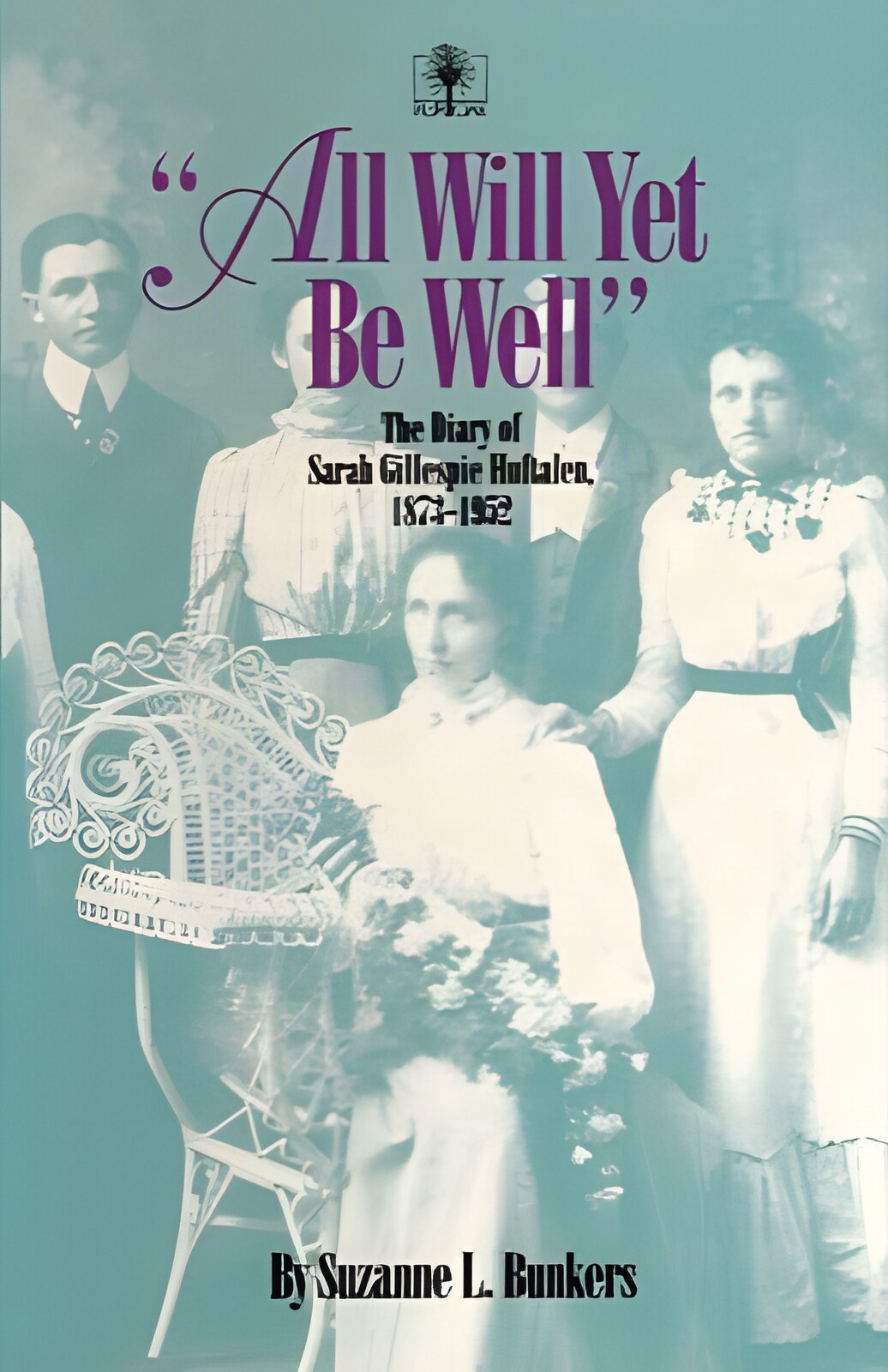
Softcover. Iowa City, University of Iowa Press, 1st, 1993, Book: Very Good, Dust Jacket: None, Softcover, 325 pages with index, b&w illustrations. Sarah Gillespie Huftalen led an unconventional life for a rural midwestern woman of her time. Born in 1865 near Manchester, Iowa, she was a farm girl who became a highly regarded country school and college teacher; she married a man older than either of her parents, received a college degree later in life, and was committed to both family and career. A gifted writer, she crafted essays, teacher-training guides, and poetry while continuing to write lengthy, introspective entries in her diary, which spans the years from 1873 to 1952. In addition, she gathered extensive information about the quietly tragic life of her mother, Emily, and worked to preserve Emily's own detailed diary. Taken together, Emily's and Sarah's extraordinary diaries span nearly a century and thus form a unique mother/daughter chronicle of daily work and thoughts, interactions with neighbors and friends and colleagues, and the destructive family dynamics that dominated the Gillespies. Sarah's consciousness of the abusive relationship between her mother and father haunts her diary, and this dramatic relationship is duplicated in Sarah's relationship with her brother, Henry, Suzanne Bunkers' skillful editing and analysis of Sarah's diary reveal the legacy of a caring, loving mother reflected in her daughter's work as family member, teacher, and citizen. Clean, bright copy.
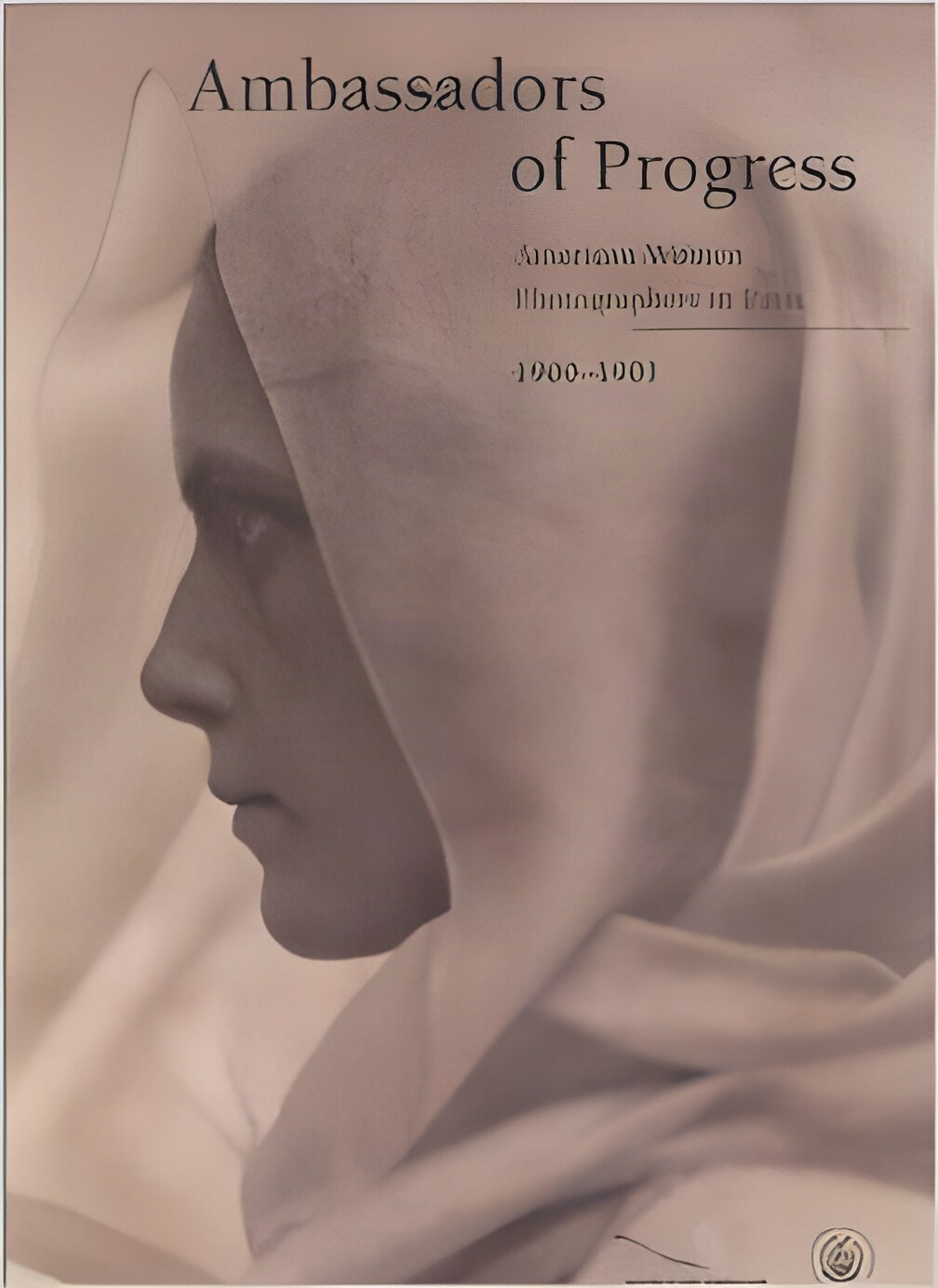
Hardcover. Giverney, France, Library of Congress/Musee d'Art Giverny, 1st, 2001, Book: Very Good, Dust Jacket: Very Good, Hardcover, 200 pages. Lovely copy. Minor wear to dust jacket, else like new. An exhibition held in Paris a century ago demonstrated the key role American women photographers played in the international pictorialist movement. Each of the 29 artists, including such well-known figures as Gertrude Kaesebier, Amelia van Buren and Zaida Ben-Yusuf, is represented in a selection of approximately 70 breathtaking color plates drawn from the Frances Benjamin Johnston Collection at the Library of Congress and the National Museum of American History. The photographs include landscapes, portraiture, genre scenes, and still-lifes, all of which are evocatively composed and delicately toned using a variety of photographic techniques.
Hardcover. Washington DC, Library of Congress/Musee d'Art Giverny, 1st, 2001, Book: Very Good, Dust Jacket: Very Good, Like new in publishers shrink-wrap. Hardcover exhibition catalog with a dust jacket. 200 pages, 218 bw plates. An exhibition held in Paris a century ago demonstrated the key role American women photographers played in the international pictorialist movement. The accomplishment of these professional and amateur photographers clearly demonstrated a mastery of the medium and made a strong impression on those in attendance. Ambassadors of Progress explores this largely unknown event. Each of the 29 artists, including such well-known figures as Gertrude Kaesebier, Amelia van Buren and Zaida Ben-Yusuf, is represented in a selection of approximately 70 breathtaking color and b&w plates.
Hardcover. US, Library of Congress/Musee d'Art Giverny, 1st, 2001, Book: Very Good, Dust Jacket: Very Good, Like new in publisher's shrink-wrap. Hardcover, 250 pages. An exhibition held in Paris a century ago demonstrated the key role American women photographers played in the international pictorialist movement. The accomplishment of these professional and amateur photographers clearly demonstrated a mastery of the medium and made a strong impression on those in attendance. Ambassadors of Progress explores this largely unknown event. Each of the 29 artists, including such well-known figures as Gertrude Kaesebier, Amelia van Buren and Zaida Ben-Yusuf, is represented in a selection of approximately 70 breathtaking color plates drawn from the Frances Benjamin Johnston Collection at the Library of Congress and the National Museum of American History. The photographs include landscapes, portraiture, genre scenes, and still-lifes, all of which are evocatively composed and delicately toned using a variety of photographic techniques. The book contains essays by Verna Curtis (Curator of Photography, Library of Congress -- on Frances Benjamin Johnston as photographer and curator), Michel Poivert (President, Societe Francaise de Photographie -- on the French critical reception), Derrick R. Cartwright (Director, Hood Museum of Art, Dartmouth College -- on the relationship of pictorialist photography to contemporary American painting), and Andrew Robb (Senior Photograph Conservator, Library of Congress -- on the conservation processes surrounding these works).
Hardcover. NY, Gulliver Books, 1st, 2000-03-01, Book: Very Good, Dust Jacket: Very Good, Hardcover, Illustrated throughout in color by Terry Widener. Light edgewear and rubbing to dust jacket, else a clean, tight copy. This picture-book biography covers the life of Gertrude Ederle, highlighting her world-record breaking, long-distance swims. In 1926, women were thought to be the weaker sex, but this indomitable young athlete broke the men's record by two hours when she swam the English Channel. Fascinating tidbits about her 21-mile swim will entice readers: "She floated on her back and ate chicken and drank beef broth." For her victory, she was rewarded with a ticker-tape parade and a letter from President Coolidge calling her "America's Best Girl." More information about her life is appended. In the acrylic paintings, characters with large bodies and small heads, suggesting Depression-era art, are set on impressionistic backgrounds. The pictures of the swirling, rough water add fluidity and motion, and the perspectives that show the small figure of the swimmer in the vast sea capture the immensity of Ederle's endeavor.
Softcover. NY, Dover, reprint, 2012, Book: Very Good, Dust Jacket: None, Softcover, 160 pages. Harrison Fisher's portraits of healthy, poised, active, and confident women set the standard for the concept of American beauty during the early years of the twentieth century. The artist enjoyed enormous popularity from 1905 to 1920, serving as a judge in nationwide beauty contests and maintaining a celebrity status that was unparalleled for an illustrator. This original publication recaptures the images that made Fisher famous, compiling his very best black-and-white and color illustrations for Cosmopolitan, The Saturday Evening Post, and The Ladies Home Journal as well as for books and other publications. The successors to the stylish Gibson Girls created by Charles Dana Gibson, Fisher's idealized women reflect an aspirational degree of wealth and social ease. They ride horses, play tennis, swim, go motoring in newfangled automobiles, and graciously bask in the admiration of attractive young men. These century-old images from a moment in our country's cultural history will appeal to enthusiasts of graphic art and illustration as well as to students of American art and popular culture.
Hardcover. Garden City, NY, Doubleday, Page & Co., 1st, 1915, Book: Very Good, Dust Jacket: Poor, INSCRIBED BY AUTHOR to a Mrs. Thomas (the levelest head I know among women) with sincere affection and regard. Dated Newport. 27 May, 1915. The dust jacket is fragile with large missing chips and a few tape repairs on the inside, but with both flaps intact and the front and back being essentially there to be able to read the extensive copy on both sides. Internally very clean.
Softcover. NY, Cambridge University Press, 1st pbk, 2009, Book: Very Good, Dust Jacket: None, Softcover, 309 pages. An Empire of Facts presents a fascinating account of the formation of French conceptions of Islam in France's largest and most important colony. During the period from 1870 to 1914, travelers, bureaucrats, scholars, and writers formed influential and long-lasting misconceptions about Islam that determined the imperial cultural politics of Algeria and its interactions with republican France. Narratives of Islamic mysticism, rituals, gender relations, and sensational crimes brought unfamiliar cultural forms and practices to popular attention in France, but also constructed Algerian Muslims as objects for colonial intervention. Personal lives and interactions between Algerian and French men and women inflected these texts, determining their style, content, and consequences. Drawing on sources in Arabic and French, this book places such personal moments at the heart of the production of colonial knowledge, emphasizing the indeterminacy of ethnography, and its political context in the unfolding of France's empire and its relations with Muslim North Africa. Clean copy.
Softcover. Los Angeles, Augustan Reprint Society, reprint, 1980, Book: Very Good, Dust Jacket: None, Softcover, facsimile reprint of a 1673 pamphlet. Introduction by Paula L. Babour, 56 pages. Early feminist tract. Name on front cover, otherwise a clean copy.
Softcover. Hanover NH, University Press of New England, 1st, 2004, Softcover, 222 pages. From 1942 to 1945, Lieutenant Colonel Betty Bandel (retired) served in the Women's Army Auxiliary Corps (WAAC, later WAC, the Women's Army Corps), eventually heading the WAC Division of the Army Air Force. During these years she wrote hundreds of letters to family and friends tracing her growth from an enthusiastic recruit, agog in the presence of public figures such as Eleanor Roosevelt (code named Rover), to a seasoned officer and leader. Bandel was one of the Corps' most influential senior officers. Her letters are rich with detail about the WAC's contribution to the war effort and the inner workings of the first large, non-nurse contingent of American military women. In addition, her letters offer a revealing look at the wartime emergence of professional women. Perhaps for the first time, women oversaw and directed hundreds of thousands of personnel, acquired professional and personal experiences, and built networks that would guide and influence them well past their war years.
Hardcover. Pasadena MD, Minerva Center, 1st, 1994, Book: Very Good, Dust Jacket: Very Good, Hardcover in a bright dust jacket, 110 pages, b&w illustrations. As the debate on the role of women in the military continues, an interesting historical footnote has been brought forth: the publication of the only known surviving set of letters of one of the estimated 400 women who disguised themselves as men to fight as soldiers in the Civil War. Born on a farm in New York in 1843, Wakeman was the oldest of nine children. Few details of her family life are known, nor what exactly precipitated her flight into the army, but glimpses of this strong-minded woman are provided throughout: "I am as independent as a hog on the ice. If it is God's will for me to fall in the field of battle, it is my will to go and never return home." Private Wakeman did not return home: she is buried under her masculine pseudonym. How many more women were buried as men? Civil War historian Burgess provides an intriguing introduction to what is sure to become an area of growing interest. Name on front fly leaf, otherwise clean.
Hardcover. NY, Warner/Amistad, 1st, 1990, Book: Very Good, Dust Jacket: Very Good, Hardcover in a bright. unclipped dust jacket. Wonderful, inspiring stories of dozens of black women in opera and classical music. Features in-depth portrais of such notables as Sissieretta Jones, Elizabeth Taylor-Greenfield, Marie Selika, Marian Anderson, Flora Batson, Dorothy Maynor and many more. 236 pages including index. B&W photos. Inscription on front fly leaf, otherwise clean.
Hardcover. UK, Harwood Academic Publishers, 1st, 1991, Book: Very Good, Dust Jacket: None, Hardcover, pictorial boards, 264 pages illustrated in b&w and color. Androgynous Objects explores the way meaning is encoded in material culture by focusing on the androgynous symbolism of the looped string bag, or bilum, of the Telefol people of Central New Guinea. The web of meanings 'woven' into the bag is shown to extend beyond women's lives and bodies. It is open to manipulation and reformation in a variety of contexts and is used by both Telefol women and men to explore, and so explain the complexities and ambiguities inherent in their social life. Clean copy.
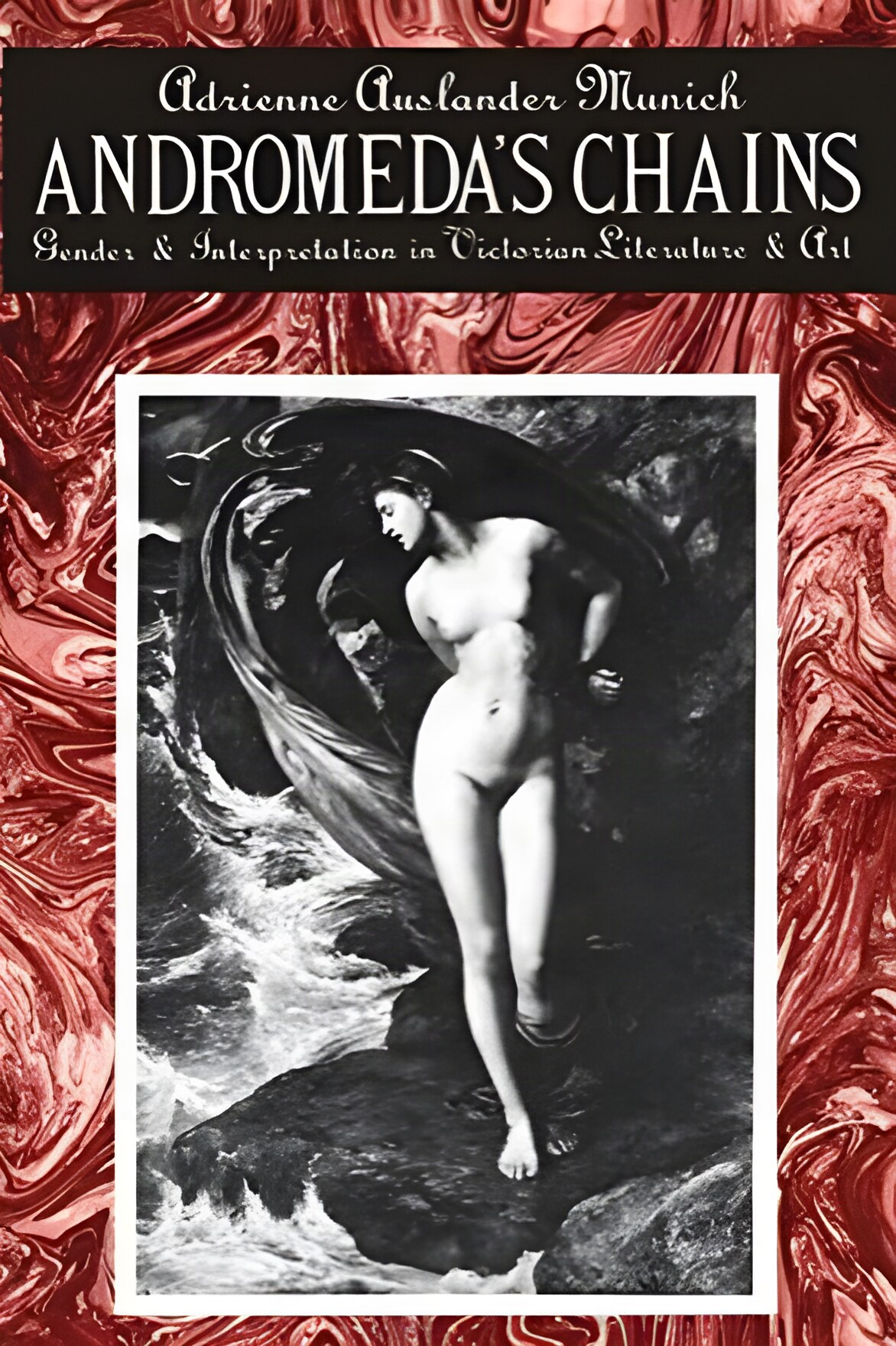
Hardcover. NY, Columbia University Press, 1st, 1993, Book: Very Good, Dust Jacket: Very Good, Hardcover in a bright dust jacket, 222 pages. Name on front fly leaf otherwise clean. Applying feminist theory to some lesser-known works by well known authors and painters, Munich (English, SUNY, Stony Brook) explores the psychological and cultural implications of the Victorian (male) treatment of the Perseus and Andromeda myth and its medieval analog, the legend of St. George and the dragon. With 31 photographs of the works discussed. A mild musty odor.
Hardcover. NY, Harper & Brothers, BC Ed., 1956, Book: Very Good, Dust Jacket: Very Good, Hardcover in a bright dust jacket. 305 pages, 16 pages of b&w illustrations. A legend in her own time, Clara Barton, comes to life in these pages. One can almost sense the death and destruction of the battlefields (American Civil War) and disasters to which Barton was the first to bring aid and comfort to the suffering. Barton's life is great testimony as to the powerful influence that one person can have on the outcome of history, and was achieved in an age when women were secondary figures. A diminutive five-foot tall, she rose as a giant among her historical peers (e.g., Susan B. Anthony and Dorothea Dix, et al.) and forever shaped the topography of American society, healthcare, and emergency relief, by founding the American Red Cross [1881] at age 59. Clean copy.
Hardcover. NY, Alfred A. Knopf, 1st, 1929, Book: Good, Dust Jacket: None, Hardcover with paper boards multicolored in vertical stripe patterns, 64 pages. In her lifetime, Wylie garnered notoriety for her unconventional private life and acclaim for her poems and novels. The collection is most renowned for the sonnet sequence "One Person," a deeply moving and technically masterful exploration of love, devotion, and the human spirit.She was considered one of the most distinguished American poets of the 1920s. Though her literary career lasted only eight years, she was recognized as an extremely adept, accomplished author. Wylie's poetry is marked by a lively inventiveness, a subtle treatment of emotion, and a detached sensibility that Louis Untermeyer has described as "a passion frozen at its source." Her last book, published after her untimely death 1n 1928. Covers with mild soil, edgewear.
Hardcover. NY, Oxford University Press, 1st, 1984, Book: Very Good, Dust Jacket: Very Good, Hardcover in a bright, unclipped dust jacket. This book examines the far-reaching legacy of one of the great myths of classical antiquity. According to Greek legend, Antigone, daughter of Oedipus, secretly buried her brother in defiance of the orders of Creon, king of Thebes. Creon sentenced Antigone to death, but, before the order could be executed, she committed suicide. The theme of the conflict between Antigone and Creon - between the state and the individual, between young and old, between men and women - has captured the Western imagination for more than 2,000 years. Antigone and Creon are as alive in the politics and poetics of our own day as they were in ancient Athens. Here, Steiner examines the treatment of the Antigone theme in Western art, literature and thought, leading us to look again at the unique influence Greek myths exercise on twentieth-century culture.
Hardcover. New York, Rizzoli, 1st, 2012, Book: Very Good, Dust Jacket: Very Good, Hardcover, like new. Best known for dazzling illustrations in Women's Wear Daily, Vogue, the New York Times, Interview, and for high fashion labels, Antonio Lopez (1943-1987) was a major force in the fashion world for three decades. In the '60s, Lopez's vibrant illustrations helped usher youth culture into the pages of magazines, setting a new, free-flowing, sexually liberated standard for fashion imagery. Living in Paris during the 70s with his creative partner Juan Ramos, Lopez launched the modeling careers of Jerry Hall, Grace Jones, and Jessica Lange among others, and worked with design royalty like Karl Lagerfeld and Yves Saint Laurent. Returning to New York City in 1976, Antonio documented the sexy influence of athletic-wear, puffy, down coats, and break-dancing style, inspiring such designers as Norma Kamali and Anna Sui. Lopez produced an incredible number of drawings, illustrations, paintings, photographs, and fantastic mixed-media journals, and the book Antonio Lopez: Fashion, Art, Sex, and Disco showcases his most iconic works, as well as never-before-seen photos, behind-the-scenes Polaroids, letters, and ephemera which, together, provide an understanding of the career trajectory of an extraordinarily talented artist.
Softcover. NY, Aperture Foundation, 1996, Book: Very Good, Dust Jacket: None, Softcover, 80 pages. A large, beautifully designed photography publication with many full page photographs in black and white and color. Glossy wraps. Features: The Earth Remembers By Jeanloup Sieff, Blaise Cendrars, and Ernst Junger Photographs by Jeanloup Sieff Midway Poem by Robert Desnos Photographs by Marc Le Mene Moments in the City Vignettes by Annie Ernaux Photographs by Dolores Marat In the World's Heart Poem by Blaise Cendrars Photographs by Mi-Hyun Kim, Sarah Moon Autobiographical Stories Installations and texts by Sophie Calle Love Chambers Photographs and texts by Bernard Faucon Evening Poem by Tristan Tzara Photographs by Caroline Feyt The Light of Home Photographs and text by Raymond Depardon Two-Way Mirrors By Xavier Emmanuelli Photographs by Jean-Francois Joly Uprooted Lives: France's New Poverty Photographs and text by Marie-Paule Negre Veiled Destinies: Women in Algeria Photographs and text by Nadia Benchallal No Pity For Sarajevo By Jean Baudrillard Photographs by Jean-Claude Coutausse War And Dreams Photographs and text by Christine Spengler Monuments To Darkness Installations by Christian Boltanski Apartheid Photographs and text by Marc Pataut The Theatrical Identity Photographs by Lise Sarfati, Pierre et Gilles, Jean-Francois Lepage, Keiichi Tahara Sines, poem by Raymond Queneau Photography in its Childhood Interview with Robert Delpire
Softcover. New York , Aperture, 1st, 2006, Book: Very Good, Dust Jacket: None, Softcover. 88 pages. Winter 2006. Photography quarterly with an essay on authenticity in news photography, women in the middle east and photographs by Marilyn Bridges, Jessica Dimmock, Patti Smith and others. A clean, tight issue.
Softcover. New York , Aperture, 1st, 1987, Book: Very Good, Dust Jacket: None, Softcover. Essays by Tillie Olsen, Julie Olsen Edwards, and Estelle Jussim. This issue features the work of Larry Fink, Paul Fusco, Joseph Szabo, Bruce Davidson, Linda Brooks, Barbara Crane, Jill Freedman, Danny Lyon, Harry Callahan, Eve Arnold, Dorothea Lange, Starr Ockenga, and many more. A clean, very good copy.
Hardcover. Penland, NC, Jargon Society, 1st, 1971, Book: Very Good, Dust Jacket: Very Good, 63 pages. Hardcover with dust jacket. Clean, tight copy with only minor wear to edges. Related news clipping laid in.
Hardcover. NY, Bantam, 1st, 2010, Book: Very Good, Dust Jacket: Very Good, Hardcover in a bright, unclipped dust jacket. 518 pages, b&w illustrations. Appetite for America is the incredible real-life story of Fred Harvey--told in depth for the first time ever--as well as the story of this country's expansion into the Wild West of Bat Masterson and Billy the Kid, of the great days of the railroad, of a time when a deal could still be made with a handshake and the United States was still uniting. As a young immigrant, Fred Harvey worked his way up from dishwasher to household name: He was Ray Kroc before McDonald's, J. Willard Marriott before Marriott Hotels, Howard Schultz before Starbucks. His eating houses and hotels along the Atchison, Topeka, and Santa Fe railroad (including historic lodges still in use at the Grand Canyon) were patronized by princes, presidents, and countless ordinary travelers looking for the best cup of coffee in the country. Harvey's staff of carefully screened single young women--the celebrated Harvey Girls--were the country's first female workforce and became genuine Americana, even inspiring an MGM musical starring Judy Garland. Clean copy.
Hardcover. Princeton NJ, Princeton University Press, 1st, 1995, Book: Very Good, Dust Jacket: Very Good, Hardcover in a bright dust jacket. 327 pages, clean copy. Few diseases have exercised the Western imagination as chronically as hysteria--from the wandering womb of ancient Greek medicine, to the demonically possessed witch of the Renaissance; from the "vaporous" salon women of Enlightenment Paris, through to the celebrated patients of Sigmund Freud, with their extravagant, erotically charged symptoms. In this fascinating and authoritative book, Mark Micale surveys the range of past and present readings of hysteria by intellectual historians; historians of science and medicine; scholars in gender studies, art history, and literature; and psychoanalysts, psychiatrists, clinical psychologists, and neurologists. In so doing, he explores numerous questions raised by this ever-growing body of literature: Why, in recent years, has the history of hysterical disorders carried such resonance for commentators in the sciences and humanities? What can we learn from the textual traditions of hysteria about writing the history of disease in general? What is the broader cultural meaning of the new hysteria studies? In the second half of the book, Micale discusses the many historical "cultures of hysteria." He reconstructs in detail the past usages of the hysteria concept as a powerful, descriptive trope in various nonmedical domains, including poetry, fiction, theater, social thought, political criticism, and the arts. His book is a pioneering attempt to write the historical phenomenology of disease in an age preoccupied with health, and a prescriptive remedy for writing histories of disease in the future.

 "Ambassadors of Progress: American Women Photographers in Paris, 1900-1901by: Griffith, Bronwyn (Contributor)")
 "Ambassadors of Progress: American Women Photographers in Paris, 1900-1901by: Griffith, Bronwyn")
 "America's Champion Swimmer: Gertrude Ederleby: Adler, David A.")
 "American Beauties: The Artwork of Harrison Fisherby: Harrison Fisher")
 "American Navy, The (SIGNED COPY)by: Chadwick, French E.")
 "An Empire of Facts: Colonial Power, Cultural Knowledge, and Islam in Algeria, 1870??\"1914 by: Trumbull IV, George R.")



 "And So I Sing: African-American Divas of Opera and Concert by: Story, Rosalyn M.")

 "Angel of the Battlefield: The Life of Clara Barton by: Ross, Ishbel")



 "Antonio Lopez: Fashion, Art, Sex, and Discoby: Roger Padilha; Mauricio Padilha")
 "Aperture 142: France: New Visions (Aperture Magazine)by: Aperture Foundation Inc. Staff")
 "Aperture 185 Winter 2006by: Harris, Melissa (Ed.)")
 "Aperture: Mothers & Daughters, That Special Quality/No 107by: Olsen, Tillie")
 "Appetite for America: How Visionary Businessman Fred Harvey Built a Railroad Hospitality Empire That Civilized the Wild Westby: Stephen Fried")
 "Approaching Hysteriaby: Micale, Mark S.")