Softcover. NY, NYU Press, 1st pbk., 2013, Book: Very Good, Dust Jacket: None, Softcover, 272 pages. Since the 1980s, when the War on Drugs kicked into high gear and prison populations soared, the increase in women's rate of incarceration has steadily outpaced that of men. As a result, women's prisons in the US have suffered perhaps the most drastically from the overcrowding and recurrent budget crises that have plagued the penal system since harsher drugs laws came into effect. In Breaking Women, Jill A. McCorkel draws upon four years of on-the-ground research in a major US women's prison to uncover why tougher drug policies have so greatly affected those incarcerated there, and how the very nature of punishment in women's detention centers has been deeply altered as a result. Clean copy.
Hardcover. NY, Viking, 1st, 2000, Book: Very Good, Dust Jacket: Very Good, Hardcover in a bright, unclipped dust jacket. Like new. Ellie Haskell visits three elderly women, the bridesmaids from her late grandmother's wedding, who have informed her that her grandmother needs to communicate a message to her from beyond the grave.
Hardcover. Chicago, University of Chicago Press, 1st, 2008, Book: Very Good, Dust Jacket: Very Good, 320 pages, b&w illustrations. Clean, unmarked copy with only minor wear to dust jacket. Building the Devil's Empire is the first comprehensive history of New Orleans's early years, tracing the town's development from its origins in 1718 to its revolt against Spanish rule in 1768. Shannon Lee Dawdy's picaresque account of New Orleans's wild youth features a cast of strong-willed captives, thin-skinned nobles, sharp-tongued women, and carousing travelers. But she also widens her lens to reveal the port city's global significance, examining its role in the French Empire and the Caribbean, and she concludes that by exemplifying a kind of rogue colonialism--where governments, outlaws, and capitalism become entwined--New Orleans should prompt us to reconsider our notions of how colonialism works.
Softcover. Atglen PA, Schiffer , 1st, 2004, Book: Very Good, Dust Jacket: None, Softcover, 128 pages, b&w photos throughout. As the 1950s dawned, a new level of sexual openness developed in behavior and dress. In magazines and on beaches, women appeared in revealing two-piece bathing suits called bikinis. Bunny Yeager, model and commercial photographer, forged a unique role in 1952, photographing bikinis and the beautiful women who wore them. This collection of Bunny's work from the 1950s features 169 original photographs and featuring little known models and women she helped launch to fame, such as Betty Page. The bikinis they wore were often of Bunny's own creation, sewn with her own hands. Clean, bright copy.
Softcover. US, Schiffer Publishing, 1st, 2004, Book: Very Good, Dust Jacket: None, 128 pages. Softcover. Light edgewear to wrappers. Black and white pictures throughout.
Softcover. Manchester University Press , 1st pbk, 2012, Book: Very Good, Dust Jacket: None, Softcover, 416 pages, b&w illustrations. During the Algerian War the French army engaged in the 'emancipation' of Muslim women as part of a strategy of subverting the nationalist movement whilst also inflicting widespread violence. First comprehensive study in English of the role of Muslim women during the Algerian war, bringing a unique interdisciplinary approach to the subject. Clean copy.
Hardcover. Berkeley CA, University of California Press, 1st, 2009, Book: Very Good, Dust Jacket: Very Good, Hardcover, 320 pages. In the voluminous scholarship that's been written on Paul Cezanne, little has been said about the twenty-four portraits in oil that Cezanne made of his wife, Hortense Fiquet Cezanne, over an extended twenty-year period. In Cezanne's Other: The Portraits of Hortense, Susan Sidlauskas breaks new ground, focusing on these paintings as a group and looking particularly at the differences that render many of them unrecognizable as the same person. She argues that Cezanne sidestepped the conventional goals of portraiture-he avoids representing a consistent, identifiable physiognomy or conventional feminine postures and does not portray the subject's inner life-making lack of fixedness itself his subject, which leads him ultimately to a radical reformulation of modern portraiture. Sidlauskas also upends the notion of Mme Cezanne as the irrelevant and absent spouse. Instead she reveals Hortense Fiquet Cezanne as a presence so crucial to the artist that she became the essential "other" to his ever-evolving "self." Coupling historical texts from philosophy, psychology, and physiology with more recent writings from women's and gender studies, cognitive psychology, and visual culture, Sidlauskas demonstrates that Mme Cezanne offered intimacy at arm's length for the painter who has been dubbed "the lone wolf of Aix."
Hardcover. NY, Farrar, Straus and Giroux, 1st, 2024, Book: Very Good, Dust Jacket: Very Good, Hardcover in a bright, unclipped dust jacket, 417 pages, color and b&w illustrations. The Warhol superstar and transgender icon Candy Darling was glamour personified, but she was without a real place in the world. Growing up on Long Island, lonely and quiet and queer, she was enchanted by Hollywood starlets like Kim Novak. She found her turn in New York's early Off-Off-Broadway theater scene, in Warhol's films Flesh and Women in Revolt, and at the famed nightclub Max's Kansas City. She inspired songs by Lou Reed and the Rolling Stones. She became friends with Jane Fonda and Lily Tomlin, borrowed a dress from Lauren Hutton, posed for Richard Avedon, and performed alongside Tennessee Williams in his own play. Yet Candy lived on the edge, relying on the kindness of strangers, friends, and her quietly devoted mother, sleeping on couches and in cheap hotel rooms, keeping a part of herself hidden. She wanted to be a star, but mostly she wanted to be loved. Her last diary entry was: "I shall try to be grateful for life . . . Cannot imagine who would want me." Candy died at twenty-nine in 1974, just as conversations about gender and identity were beginning to enter the broader culture. She never knew it, but she changed the world. Clean copy.
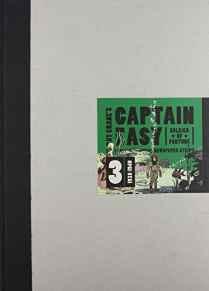
Hardcover. Seattle, Fantagraphics Books, 1st, 2010, Book: Very Good, Dust Jacket: None, Hardcover, 132 pages, illustrated in color by the strip's creator, Roy Crane. No dj issued. Roy Crane created the first American adventure strip: Wash Tubbs. The character Captain Easy spun off into his own Sunday page in 1933, and Captain Easy, Soldier of Fortune: The Complete Sunday Newspaper Strips Vol. 1 collects these full-color strips from that point until 1935. In Volume One, Captain Easy visits a lost city, battles pirates, dons a diving suit in search of treasure; everywhere he goes, he finds beautiful women. Captain Easy not only influenced roles for the likes of Hollywood actors such as Cary Grant or Errol Flynn, he influenced virtually every comics hero who followed him - Gil Kane once said "Superman was Captain Easy; Batman was Captain Easy." Crane combined adventure and humor in a Bigfoot cartooning style: according to comic-strip historian Richard Marschall, Crane "develop[ed] expressive techniques and a whole dictionary of conventions and signs for future comic strip artists. Volume One also features some of the best and rarest Roy Crane art, as well as illustrations from his sketchbooks. It will also contain biographical and critical introductions to Crane and his work.
Hardcover. Seattle, Fantagraphics, 1st, 2012, Book: Very Good, Dust Jacket: None, 144 pages. Hardcover with no dust jacket. Clean, unmarked copy with only minor wear to covers. The third volume in Fantagraphics' ongoing reprint of Roy Crane's legendary comedy-action series features what many consider the absolute peak of the series: "Temple of the Swinks," in which Wash and Easy discover an ancient temple with statues of an unknown animal called a swink... a real-life specimen of which shows up! In other stories, Wash and Easy sail for Singapore with a cargo of wild animals, crash land a plane on an island inhabited by (inevitably) pirates and (just as inevitably) beautiful women, and sail the South Seas in a schooner whose villainous captain plans to rob them. When they return to America, Wash Tubbs' pet swink draws huge crowds and a reputation for being worth a million dollars. Then Wash and Easy travel to Peru to rescue an American lost in the jungle and, in the cover-featured story, Easy goes deep sea diving in search of a beautiful girl's lost diamond.
Hardcover. Boston, Northeastern University, 1st, 1986, Book: Very Good, Dust Jacket: Good, Hardcover. Light wear and rubbing to dust jacket, spine slightly sunned. Fowler attempts to restore to Catt her central role in the suffragist movement in the United States and in the founding of the League of Women Voters. Although the first three chapters do recount her life, the author himself notes that this is not a conventional biography. Rather, the work aims primarily at an analysis of Catt as a political leader and political visionary.
Hardcover. Southport, CT, Hugh Lauter Levin Associates, 1st, 1996, Book: Very Good, Dust Jacket: Very Good, Hardcover. A companion book to Mathews' definitive biography of Cassett. 357 pages, Comprehesive retrospective of the American artist Mary Cassatt, which includes a scholarly introduction, a wealth of texts and letters by Cassatt as well as by her contemporaries (including Zola, Degas, Pissarro), a chronology and genealogy, detailed bibliography, hundreds of archival photos, and 118 color plates of her paintings. Still in shrinkwrap.
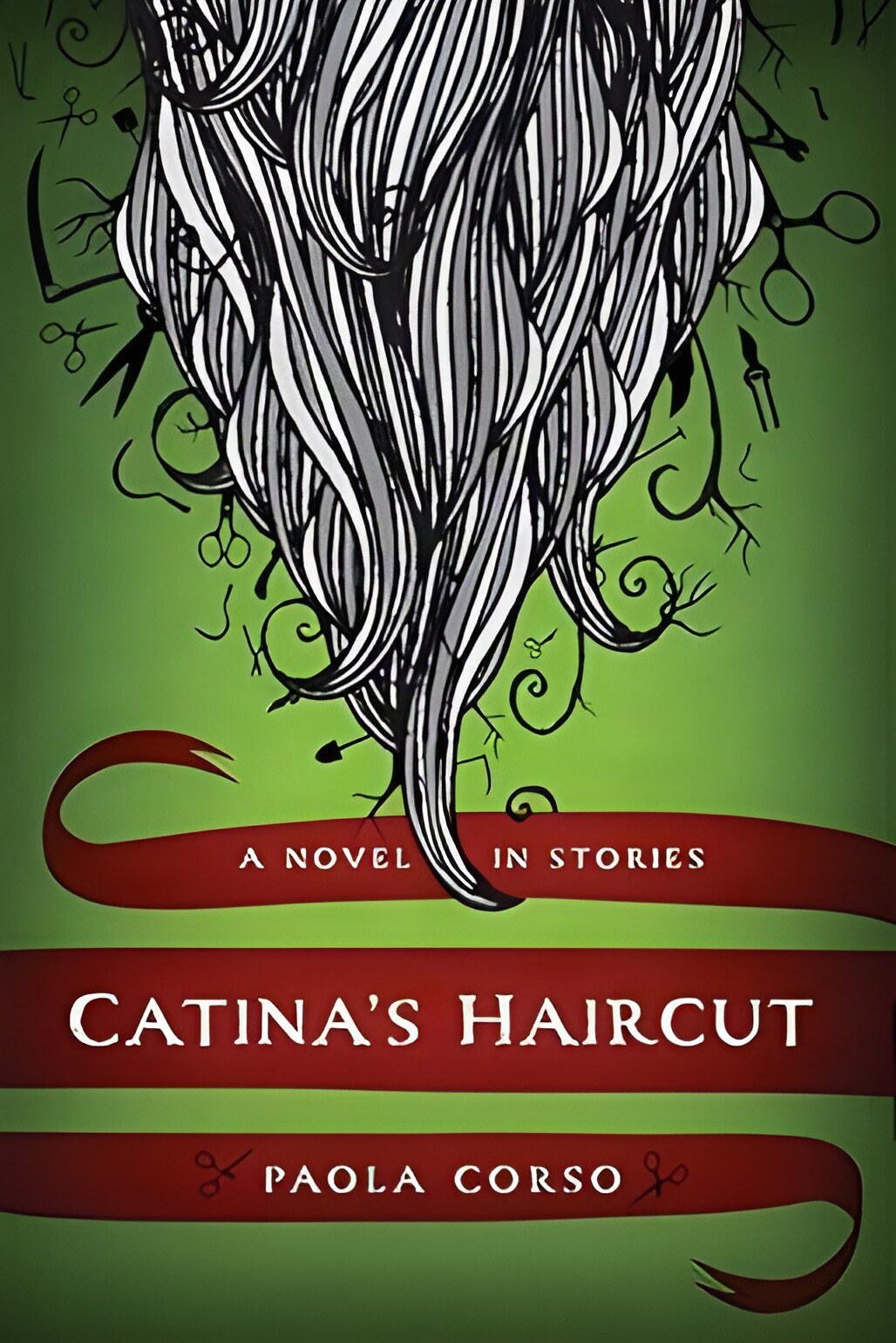
Hardcover. Madison WI, University of Wisconsin Press, 1st, 2010, Book: Very Good, Dust Jacket: Very Good, Hardcover in a bright dust jacket, 203 pages. INSCRIBED BY AUTHOR on title page. Catina's Haircut: A Novel in Stories spans four generations of a peasant family in the brutal poverty of post-Unification southern Italy and in an immigrant's United States. The women in these tales dare to cross boundaries by discovering magical leaps inherent in the landscape, in themselves, and in the stories they tell and retell of family tragedy at a time of political unrest. Clean copy.
Hardcover. New York, The Monacelli Press, 1st, 2003, Book: Near Fine, Dust Jacket: Near Fine, Hardcover, 383 pages, b&w illustrations. Like new in publishers shrink-wrap. "Born in Paris in 1903, she was hired as an assistant to the famously visionary modern architect Le Corbusier when she was just twenty-four. She soon became one of his closest collaborators, and their ten year working relationship yielded some of the best-known icons of modern furniture. Perriand went on to become a world renowned designer in her own right, at a time when that was almost unheard of for a woman."
Hardcover. New Haven CT, Yale University Press, 1st, 1998, Book: Very Good, Dust Jacket: Very Good, Hardcover in a bright dust jacket, 436 pages, b&w illustrations. The humiliation of Russia by separatist rebels in the Chechen War marked a key moment in Russian - and perhaps world - history. In this new analysis Anatol Lieven offers a riveting account of the war as a means to explore the painful fate of the post-Soviet state. Lieven looks into the long, troubled history of Russian-Chechen relations, noting that each side despised the other for largely cultural reasons (the Chechens have long been involved in organized crime in major Russian cities, whereas Russians have long tried to strip Chechnya of its resources). He notes that Chechen society has historically been militarized (one Armenian said to Lieven, "The men are always fighting and the women are cooking for them, nursing their wounds, and bringing up their children"), making the mountain people a formidable foe. In the meanwhile, writes Lieven, the Russian military suffered from low morale and from corruption of various kinds: Russian field soldiers sold their guns to Chechen guerrillas for vodka and currency, while Russian officers stole their soldiers' pay and Russian politicians skimmed off the top. This is an extraordinary look at a little-known conflict. Clean copy.
Hardcover. NY, Abrams, 1st, 1999, Book: Very Good, Dust Jacket: Very Good, Hardcover in a bright, unclipped dust jacket. Small paper scar on front fly leaf where tape pull left dime-size white spot. Otherwise like new. 256 pages. Childe Hassam's impressive career as one of America's foremost Impressionists is celebrated and illuminated in this dazzlingly beautiful volume. No other American Impressionist ever surpassed the quality and variety of Hassam's output as a painter and draftsman. Equally talented in oils, watercolors, and prints, he explored rain-swept city scenes, glorious gardens, exquisite women, and stirring flag-lined streets. Many of these irresistible pictures are hidden in private collections and are rarely, if ever, accessible to the public; others are on view at major museums across the country, from the Metropolitan Museum to the Museum of Fine Arts, Boston, to the Los Angeles County Museum of Art. By approaching Childe Hassam (1859-1935) from different angles, the three authors reveal this multitalented artist's many facets and uncover previously unknown aspects of his life and work. The authoritative essays are illustrated with a brilliant array of color illustrations that represent all of Hassam's styles, from Barbizon-inspired Tonalism to Impressionism to Post-Impressionism. The book concludes with an invaluable illustrated chronology and an annotated bibliography.
Hardcover. New York, Schiffer, 1st, 2015, Book: Very Good, Dust Jacket: Very Good, 160 pages. Hardcover with dust jacket. Color photographs throughout. Clean, tight copy.
Hardcover. New York , Norton , 1st, 1999, Book: Very Good, Dust Jacket: Very Good, Hardcover in a bright dust jacket. 190 pages, illustrated in color and b&w. Cipe Pineles was art director for leading fashion magazines between 1930 and 1960. Tracing Pineles's career from young immigrant to "ranking" female in the design world, Martha Scotford chronicles a time when few women were involved in design and assesses Cipe's brilliant contributions to graphic design and magazine design in particular.
Hardcover. Knoxville, University of Tennessee Press , 1st, 1980, Book: Very Good, Dust Jacket: Very Good, Hardcover in a bright dust jacket, 149 pages. The chief nurse of the Union Hospital in Washington, D.C., describes life and stress in the hospital and comments on notable persons of power. Her heretofore unpublished diary and letters comprise a fresh, highly significant document concerning the medical history of the Civil War and the contributions of women nurses in the Northern military hospitals. This book is edited, with Introduction and Commentary, by John R. Brumgardt.
Hardcover. NY, Jonathan Cape & Harrison Smith, 2nd pr., 1930, Book: Very Good, Dust Jacket: None, Hardcover, bound in publisher's black cloth ruled in blind with faded gilt title on the spine. Top edge stained black. Stated second printing, October 1930 on the copyright page. Translated by Alice Riviere. Ownership signature in pencil by Gertrude Franchot Tone, women's rights activist with her pencil marking in text. Owner's small embossed stamp on front fly leaf.
Softcover. Los Angeles, J. Paul Getty Museum, 1st, 2004, Book: Very Good, Dust Jacket: None, Softcover, 118 pages. Like new in publishers shrink-wrap. A Siamese cat beneath a clothes line, three women with linked arms standing on the front lawn, a man drying his hands on a dish towel in front of the kitchen stove. These scenes are part of Close to Home and the accompanying the Getty Museum exhibition held from October 12, 2004 to January 16, 2005, which celebrate snapshots--"found" photographs by anonymous photographers--that capture everyday life in all of its joy, banality, and mystery. Taken between 1930 and the mid-1960s, these photographs, most of them in black-and-white, create an unpretentious portrait of suburban American life by untrained photographers whose images can be unexpectedly lyrical and moving.
Softcover. Los Angeles, J. Paul Getty Museum, 1st, 2004, Book: Very Good, Dust Jacket: None, Softcover, 118 pages. Like new in publishers shrink-wrap. A Siamese cat beneath a clothes line, three women with linked arms standing on the front lawn, a man drying his hands on a dish towel in front of the kitchen stove. These scenes are part of Close to Home and the accompanying the Getty Museum exhibition held from October 12, 2004 to January 16, 2005, which celebrate snapshots--"found" photographs by anonymous photographers--that capture everyday life in all of its joy, banality, and mystery. Taken between 1930 and the mid-1960s, these photographs, most of them in black-and-white, create an unpretentious portrait of suburban American life by untrained photographers whose images can be unexpectedly lyrical and moving.
Hardcover. NY, Harcourt, Brace and Company, 1st, 1941, Book: Very Good, Dust Jacket: None, Hardcover, tan cloth covers stamped in blue, 294 pages. Endpapers art and b&w illustrations by Eva A. Watson. A story based on the formation of the Coat-Rolls. New England women were asked to make coats for their men fighting in the War of Independence. Clean copy.
Softcover. Cambridge UK, Cambridge University Press, 1st, 1998, Book: Very Good, Dust Jacket: None, Softcover, 196 pages. investigates the intersection between post-colonial and feminist criticism, via the Western fascination with veiled women of the Orient. Her original and compelling argument calls into question dualistic conceptions of identity and difference, West and East masculinist assumptions of Orientalism, and Western feminist discourses that seek to 'liberate' the veiled woman. Clean copy.


 "Bridesmaid Revisited (Ellie Haskell Mystery)by: Cannell, Dorothy")


 "Bunny Yeager's Bikini Girls of the 1950sby: Yeager, Bunny")

 "C")

 "Captain Easy, Soldier of Fortune: The Complete Sunday Newspaper Strips 1933-1935 (Vol. 1)by: Norwood, Rick (Editor) and Roy Crane")
 "Carrie Catt: Feminist Politicianby: Fowler, Robert Booth")
 "Cassatt: A Retrospectiveby: Cassatt, Mary & Nancy Mowll Mathews")
 "Charlotte Perriand: A Life of Creationby: Perriand, Charlotte")
 "Chechnya: Tombstone of Russian Powerby: Anatol Lieven")
 "Childe Hassam: Impressionistby: Warren Adelson and Jay E. Cantor/ William Gerdts")


 "Chocolate Cheesecake: Celebrating the Modern Black Pin-Upby: Cox PHD, Earnest L.")
 "Cipe Pineles: A Life of Designby: Golden, Cipe Pineles and Martha Scotford")
 "Civil War Nurse: The Diary and Letters of Hannah Ropesby: Hannah Ropes /John R. Brumgardt (Editor)")
 "Civilization and its Discontentsby: Freud, Sigmund")
 "Close to Home: An American Album by: Waldie, D.")
 "Close to Home: An American Albumby: Waldie, D.")
 "Coat for a Soldierby: Florence Maule Updegraff")


 "Colonial Fantasies: Towards a Feminist Reading of Orientalism by: Yegenoglu, Meyda")