Hardcover. NY, Taschen, reprint, Book: Very Good, Dust Jacket: None, Hardcover, illustrated boards. "Silly Fool Comics" fills the final page in this sixth volume, with a devilish creature telling the anguished Crumb, "YOU Will Soon Be DEAD!" He was a mere 67, but in his self-absorbed Crumbish way was obsessing about death, when not making intimate and loving portraits of his wife Aline and all the other women who'd tormented his libido since boyhood. Most impressive in this book are his historic tableau, some single page, others multi-page strips, including Piers the Ploughman of 14th century England, My Secret Life by "Walter," Rough Women of the Dark Ages and The Apache Dance, from a 1930s Parisian postcard. His Rapidographed cross hatching is superb as ever and we are treated to long screeds displaying his undimmed brilliance at analyzing the human condition, in a morbid but nonetheless amusing way. One could say there are no surprises in content, as Crumb has produced a consistent body of work over the last 40, if not 50, years, yet each page is also jarringly different from the one before, due to his personal juxtaposition of images. So much is packed in you can spend an hour and find you're only a quarter of the way through, with Crumb bemoaning his mortality, while continuing to prosper, every few pages. A fine stand-alone volume, and must-have completion for the sketchbook set.
Hardcover. NY, Taschen, reprint, Book: Very Good, Dust Jacket: None, Hardcover, illustrated boards. "Silly Fool Comics" fills the final page in this sixth volume, with a devilish creature telling the anguished Crumb, "YOU Will Soon Be DEAD!" He was a mere 67, but in his self-absorbed Crumbish way was obsessing about death, when not making intimate and loving portraits of his wife Aline and all the other women who'd tormented his libido since boyhood. Most impressive in this book are his historic tableau, some single page, others multi-page strips, including Piers the Ploughman of 14th century England, My Secret Life by "Walter," Rough Women of the Dark Ages and The Apache Dance, from a 1930s Parisian postcard. His Rapidographed cross hatching is superb as ever and we are treated to long screeds displaying his undimmed brilliance at analyzing the human condition, in a morbid but nonetheless amusing way. One could say there are no surprises in content, as Crumb has produced a consistent body of work over the last 40, if not 50, years, yet each page is also jarringly different from the one before, due to his personal juxtaposition of images. So much is packed in you can spend an hour and find you're only a quarter of the way through, with Crumb bemoaning his mortality, while continuing to prosper, every few pages. A fine stand-alone volume, and must-have completion for the sketchbook set.
Hardcover. Berkeley CA, Counterpoint, 1st, 2013, Book: Very Good, Dust Jacket: Very Good, Hardcover in a bright, unclipped dust jacket. Dr. Crandall Taylor--or rather the actor who plays him--is enjoying a cushy new life in the City of the Lights where his now-cancelled American soap opera has become a prime time retro cult hit. This newfound stardom isn't wasted on him. Anxious to keep his brutal past a secret from fans, he's enjoying all the fruits that fame has to offer: adulation, entree into the trendiest clubs, and sex. What he really wants is to fund a feature film. Crandall uses his charm and intellect to draw into his narcissistic web four women: a horny network executive; an internet porn star; a bookish university student with a nasty bent; and the fetching starlet wife of an arms dealer. Crandall accepts both the crime lord's cash and his beautiful wife's advances. Big mistake. Now Crandall must channel his violent, megalomaniacal dark side just to stay alive--and on the run.
Hardcover. Taschen, 1st trade, 2012, Book: Very Good, Dust Jacket: Very Good, Hardcover, 368 pages. "A photographer once said that beauty in women is endless. Perhaps it was I who said it. I love photographing women and could say that the form of the female body is absolute and perfect. "Master photographer Ralph Gibson returns with an exquisite collection of nudes, combining the best of his work with an in-depth interview by Eric Fischl. Strikingly graphic, meticulously composed, and loaded with subtle provocations, Gibson's mysterious, dreamlike images pay homage to greats such as Man Ray and Edward Weston, while continually pursuing new frontiers. DOMESTIC SHIPPING ONLY.
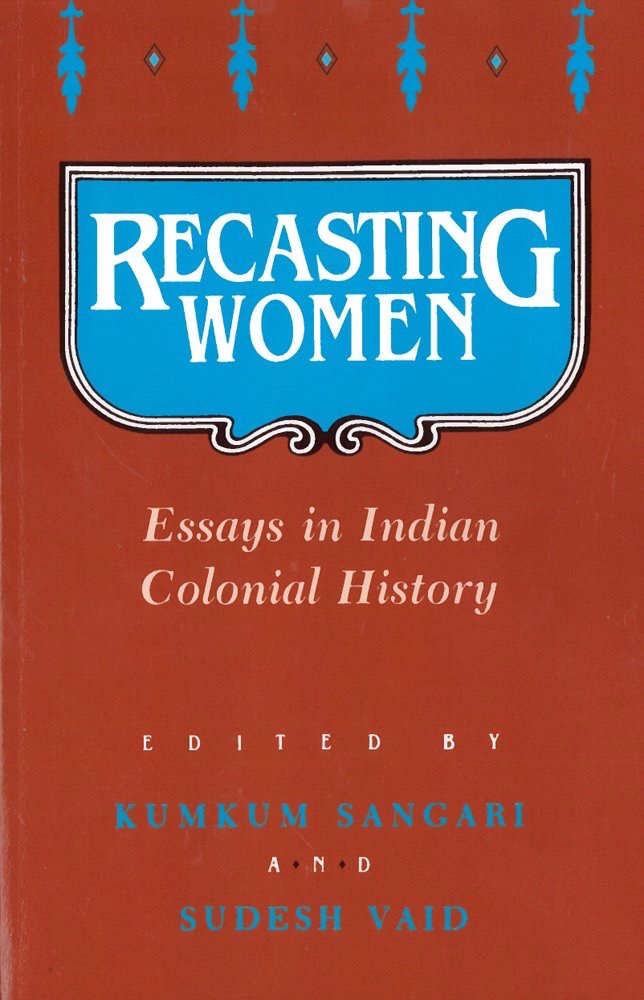
Softcover. New Brunswick NJ, Rutgers University Press, 1st pbk., 1990, Book: Very Good, Dust Jacket: None, Softcover, 372 pages. The first set of essays seeks to analyze the patriarchal discourses of a colonial society and includes an analysis of the shaping of Hindu-Aryan identity, the parameters of the discourse on widow-immolation, the "defeminization" of popular culture in nineteenth-century urban Calcutta, the nature of the reforms proposed by early women's journals in Hindi, and the implications of the nationalist movement and of Indo-Anglian literature on middle-class patriarchal norms. The second set of articles relates to women of the productive classes--the reconstitution of patriarchies in the agrarian transition in Haryana, in the Oudh peasant movement, in the armed peasant struggle in Telangana, and among the working class in Bengal. The contributors explore the interrelation of patriarchies with political economy, law, religion, and culture, and suggest a different history of "reform" movements, and of class and gender relations. Clean copy.
Hardcover. NY, Viking, 1st, 2020, Book: Very Good, Dust Jacket: Very Good, Hardcover in a bright dust jacket, 244 pages. In Recollections of My Nonexistence, Rebecca Solnit describes her formation as a writer and as a feminist in 1980s San Francisco, in an atmosphere of gender violence on the street and throughout society and the exclusion of women from cultural arenas. She tells of being poor, hopeful, and adrift in the city that became her great teacher, and of the small apartment that, when she was nineteen, became the home in which she transformed herself. She explores the forces that liberated her as a person and as a writer--books themselves; the gay community that presented a new model of what else gender, family, and joy could mean; and her eventual arrival in the spacious landscapes and overlooked conflicts of the American West. Remainder dot on bottom edge, otherwise like new.
Hardcover. NY, powerHouse Books, 1st, 1996, Book: Very Good, Dust Jacket: Very Good, Hardcover, 256 pages. Sylvia Plachy, a photographer for the Village Voice, and James Ridgeway, a reporter for the same publication, have delved into the depths of the pornography trade to explore and explain both its allure and its vulgarity. There is a sense of shock value in exposing the most lurid of fantasies--a man who has his dominatrix mummify him in concrete--that is tempered with theories as to how such an industry could have evolved. We also get to meet for ourselves those in the trade, providing a walk on the wild side within the safe confines of photographs and words.
Hardcover. New York, Harper Design, 1st, 2019, Book: Very Good, Dust Jacket: Very Good, 158 pages. Hardcover with dust jacket. Clean, tight copy with minor wear to edges.
Hardcover. NY, Rizzoli, 1st, 1991, Book: Very Good, Dust Jacket: Very Good, Hardcover. Three page introduction by the photographer followed by approx. 60 portraits of redheads in full page with one double page and one foldout three page beach scene. A wonderful study of the distinction of red haired men, women and children. Beautiful intriguing portraits.
Hardcover. London/NY, Oxford University Press, 1st, 1995, Book: Very Good, Dust Jacket: Very Good, Hardcover in a bright dust jacket, 304 pages. Reforming Sex reconstructs the complicated history of a movement that has been romanticized as the harbinger of 1960s sexual radicalism and demonized as a precursor to Nazi racial policy, but mostly buried and obscured by Nazi book-burnings and repression. Relying on a broad range of sources--from police reports, films and personal interviews to sex manuals unearthed from library basements and secondhand book stores--the book analyzes a remarkable mass mobilization during the turbulent and innovative Weimar years of doctors and lay-people for women's right to abortion and public access to birth control and sex education. Clean copy.
Hardcover. Kampen GR, teNeues, 1st, 2014, Book: Very Good, Dust Jacket: Very Good, Hardcover, large format, 304 pages, cloth over boards, stamped spine and cover. 300 duotone photographs by Erwitt. Photographic master Elliott Erwitt has created many noteworthy portraits of womankind over the years. In Regarding Women he presents us with an exceptional collection composed (almost) exclusively of black-and-white female portraits. This volume is Erwitt's evocative personal tribute to female strength, intelligence, and beauty. The archival material spans several generations, with many images not previously published or rarely seen before. Conveying respect, admiration, and sometimes awe, these photographs portray all the complex elements that make up the feminine nature, whether formidable and tenacious, or occasionally capricious and coy. Through capturing their many varied facets the photographer shares his insights into how all kinds of women make their way into -- not to mention their mark on -- the world. In these pages, readers will find romance and glamor, touches of sensuality, as well as much affection. Of course, there are also those disarming flashes of candid everyday humor that are so quintessentially Erwitt. Text in English, German, French, Spanish and Italian.
Hardcover. Madison WI, University of Wisconsin Press, 1st, 1989, Book: Very Good, Dust Jacket: Good, Hardcover in a lightly worn dust jacket with fading to the spine. "Cary Nelson performs an invaluable service to the reader by recovering the work of dozens of forgotten poets, especially women, blacks, and writers on the left, while making it clear that the texts we recover inevitably gain new meaning from their positioning within contemporary culture." Nicely illustrated in b&w and some color, mostly book jackets and title pages of books discussed. Some light pencil marking in margins.
Hardcover. NY, Random House, 1st, 1997, Book: Very Good, Dust Jacket: Very Good, Hardcover in a lightly worn, price-clipped dust jacket, 336 pages. Illustrated with black and white photos from the war in Vietnam and Indochina from the 1950s to 1975. Listing 135 photographers ( men & women ) from all sides of this conflict are recorded as missing or having been killed. A very emotional book and one of the better memorials to the war correspondents who died and who are still missing.
Hardcover. NY, Atheneum, 1st, 1978, Book: Very Good, Dust Jacket: Very Good, Hardcover in a bright dust jacket, 228 pages, b&w illustrations. Using legends, myth, folklore, the history, politics and commonsense, the author shows that from the late Middle Ages until the time of the Salem trials, men used the threat of witchcraft as a way of keeping women from power and from reaping the rewards of their own labours. To examine the historical association of women and witchcraft is to see most clearly the social focus that through the centuries has condemned women to ignorance and dependency.
Hardcover. NY, Henry Holt, 1st, 1995, Book: Very Good, Dust Jacket: Very Good, Hardcover in a bright dust jacket, 524 pages. Robert Graves was astonishingly prolific and worked in many genres. He wrote lyric poetry, scholarly studies of mythology, drama, criticism, and journalism, he translated from Latin, and is probably best known for his potboilers "I, Claudius" and "Claudius the God," works that he considered purely commercial and took little interest in. And, as Miranda Seymour makes clear, he was as odd a duck as ever walked. His life was defined by the women to whom he devoted himself. "Abased himself" would perhaps be the better term. The first and most influential was the American Laura Riding, a second-rate poet who fancied herself some sort of prophetess who would save the world from war and turned Graves into her adoring puppy. Later in life Graves devoted himself to a series of young women, each of whom he claimed embodied "the goddess" in whose service he thought he dwelled. Seymour (a novelist herself) writes beautifully, and with the cooperation of key members of the Graves family she has produced what will surely be the definitive biography of Graves for years to come.
Hardcover. US, The Curated Collection, 1st, 2013, Book: Very Good, Dust Jacket: None, 224 pages. Like new in publisher's shrink-wrap. A visual journey of over 300 photographs with fashion's most cutting-edge photographers, designers and stylists exposes the ominously beautiful obsession with the bad boy aesthetic and reveals what draws us into the darkness, providing a daring testament to the love affair with the gloomy, sultry side of Rock 'n' Roll. Divided into five chapters that explore the different dark sides of high fashion: Dark Angel, Vamp Glam, Tribal Nomad, Hard Rock, and Future Punk.
Hardcover. US, The Curated Collection, 1st, 2013, Book: Very Good, Dust Jacket: None, 224 pages. Like new in publisher's shrink-wrap. A visual journey of over 300 photographs with fashion's most cutting-edge photographers, designers and stylists exposes the ominously beautiful obsession with the bad boy aesthetic and reveals what draws us into the darkness, providing a daring testament to the love affair with the gloomy, sultry side of Rock 'n' Roll. Divided into five chapters that explore the different dark sides of high fashion: Dark Angel, Vamp Glam, Tribal Nomad, Hard Rock, and Future Punk.
Hardcover. Montpelier, Vermont General Assembly, 1st, 1927, Book: Very Good, Dust Jacket: None, 1665 pages, black leatherette binding with gilt lettering. Bright, clean copy.
Softcover. Port Townsend WA, Feral House, 1st, 2022, Book: Very Good, Dust Jacket: None, Softcover, 339 pages. Ladies' man. Child soldier. Civil War hero. Egotist. Tramp. Drunkard. Published author. Roving Bill Aspinwall: Dispatches from a Hobo in Post-Civil War America tells the story of an American hobo entirely in his own words. William 'Roving Bill' Aspinwall was all of these things and yet no lone descriptor does him justice. Born one of 23 siblings, married 5 times, wounded fighting for the Union in one of the bloodiest battles of the American Civil War, kicked out of numerous jobs and soldiers' homes for drunkenness, and having spent decades wandering as a penniless vagabond, Bill also kept up a 24-year correspondence with John James McCook, Professor of Modern Languages at Trinity College, Hartford, Connecticut. In so doing Bill provided the earliest and best account of life on the road by an American hobo. Written between 1893 and 1917, Roving Bill Aspinwall: Dispatches from a Hobo in Post-Civil War America tells Bill's story entirely in his own words. Describing experiences on the road, the people he meets, his dalliances with women and his memories of the Civil War, the letters are a rich and unique correspondence. Having been physically and mentally scarred at the 1863 Battle of Champion Hill, Bill details his lifelong battle with booze. He also gives first-hand accounts of men thrown out of work during the economic Panic of 1893, of wandering around the country as an itinerant umbrella-mender, of working in factories, farms and even a circus, as well as his visit to the St. Louis World's Fair in 1903. Bill's words are the real voice of a nineteenth-century hobo.
Hardcover. NY, Cooper Square Press, 1st, 2002, Book: Very Good, Dust Jacket: Very Good, Hardcover, 432 pages. The most popular painter of his day, yet an artist whose reputation has fluctuated among art scholars and critics of the succeeding centuries, Peter Paul Rubens (1577-1640) is chiefly remembered today for his large canvases of sensual gardens, religious scenes, and voluptuous "Rubenesque" women. In Oppenheimer's account of his life, Rubens emerges not only as a talented painter but also as an intellectual with a unique conception of beauty that proved very influential and ahead of his time. Oppenheimer explores Rubens' ideas as he tells the story of his life, which included years as a diplomat, and illuminates his response to the humanism of the Renaissance in which he lived.
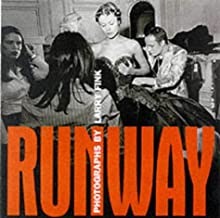
Hardcover. NY, powerHouse, 1st, 2001, Book: Very Good, Dust Jacket: Very Good, Hardcover, 128 pages. Acclaimed photographer Larry Fink's behind-the-scenes photographs from the fashion shows in Milan, New York, and Paris, Fink's distinctive take of the perversely unusual world of fashion teases, baits, and whets our morbid fascination with its glamour with humor and style like no other photographer possibly could. B&w photos throughout.
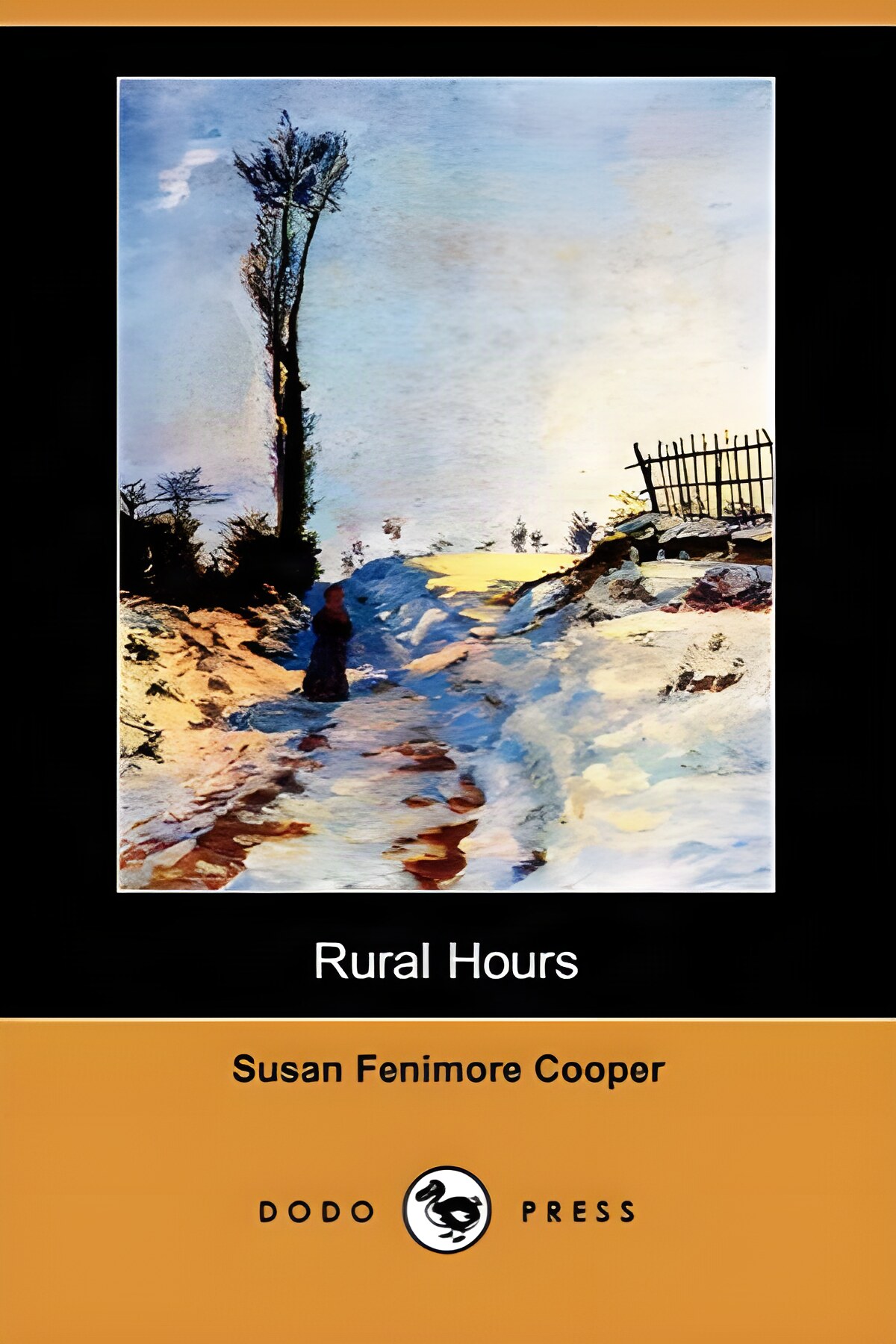
Softcover. UK, Dodo Press, reprint, 2008, Book: Very Good, Dust Jacket: None, Softcover, 261 pages. Susan Augusta Fenimore Cooper (1813- 1894) was an American writer and amateur naturalist. She was the daughter of the well known novelist James Fenimore Cooper. Her most famous work is Rural Hours (1850), a nature diary of Cooperstown, New York. Amongst her works are Female Suffrage: A Letter to the Christian Women of America, The Lumley Autograph, and Elinor Wyllys; or, The Young Folk of Longbridge (1846), a novel. Clean copy.
Hardcover. Cambridge MA, Harvard University Press, 3rd pr., 1975, Book: Very Good, Dust Jacket: Very Good, Hardcover in a lightly worn dust jacket, 231 pages. Frontispiece facsimile manuscript page showing names of the accused at Salem. The stark immediacy of what happened in 1692 has obscured the complex web of human passion, individual and organized, which had been growing for more than a generation before the witch trials. Salem Possessed explores the lives of the men and women who helped spin that web and who in the end found themselves entangled in it. From rich and varied sources-many previously neglected or unknown-Paul Boyer and Stephen Nissenbaum give us a picture of the events of 1692 more intricate and more fascinating than any other in the already massive literature on Salem. Name on front fly leaf, otherwise clean.
Hardcover. Somerville MA, Candlewick Press, 1st, 2022, Book: Very Good, Dust Jacket: Very Good, Hardcover in a bright dust jacket, illustrated in color by Victoria Tentler-Krylov. When Kip Tiernan was growing up during the Great Depression it was believed that there were no women experiencing homelessness. And yet Kip would see women sleeping on park benches and searching for food in trash cans. Kip decided to open the first shelter for women--a shelter with no questions asked, no required chores, just good meals and warm beds. With persistence, Kip took on the city of Boston in her quest to open Rosie's Place, our nation's first shelter for women. Christine McDonnell, a former educator at Rosie's Place, and illustrator Victoria Tentler-Krylov bring warmth to Kip Tiernan's story of humanity and tenacity, showing readers how one person's dream can make a huge difference, and small acts of kindness can lead to great things.







 "Rake: A Novel by: Phillips, Scott")
 "Recollections of My Nonexistence: A Memoir by: Solnit, Rebecca")
 "Red Light: Inside the Sex Industryby: James Ridgeway and Sylvia Plachy")
 "Red Lipstick: An Ode to a Beauty Iconby: Felder, Rachel")
 "Redheadsby: Meyerowitz, Joel")

 "Regarding Womenby: Erwitt, Elliott")
 "Repression And Recovery: Modern American Poetry & Politics Of Cultural Memory 1910-1945by: Cary Nelson")
![Requiem: By the Photographers Who Died in Vietnam and Indochina by: Faas, Horst [Editor]; Page, Tim [Editor];](https://www.browsingisarousing.com/shop/images/Requiem-By-the-Photographers-Who-Died-in-Vietnam-and-Indochina_by_Faas-Horst-Editor-Page-Tim-Editor398312-451715.jpg "Requiem: By the Photographers Who Died in Vietnam and Indochina by: Faas, Horst [Editor]; Page, Tim [Editor];")
 "Riding the Nightmare. Women & Witchcraftby: Williams, Selma R. And Pamela J.")
 "Robert Graves: Life on the Edgeby: Miranda Seymour")
 "Rock Star Chic: The Dark Side of High Fashionby: Farameh, Editor) Patrice (Author")
 "Rock Star Chic: The Dark Side of High Fashionby: Farameh, Editor) Patrice (Author")
 "Roster of Vermont Men and Women in the Military and Naval Service of the United States and Allies in the World War 1917-1919by: Johnson, Herbert T.")
 "Roving Bill Aspinwall: Dispatches from a Hobo in Post-Civil War America by: Bill Aspinwall (Author), Owen Clayton (Editor)")
 "Rubens: A Porraitby: Oppenheimer, Paul")