Softcover. London, Hard Case Crime, 1st thus, 2011, Book: Very Good, Dust Jacket: None, Softcover, colorful wraps with a retro-style illustration by Robert McGinnis. Compared to the $40 million the cops think he stole, seventy-five thousand dollars may not sound like much. But it's all the money in the world to the struggling Cuban exiles of Miami who rescued Morgan the Raider. So when it's snatched by a man the Cubans trusted, Morgan sets out to get it back. A simple favor--but as the bodies pile up...dead men and beautiful women...the Raider wonders what kind of Latin hell he's gotten himself into, and just who or what is the mysterious Consummata? Begun by mystery master MICKEY SPILLANE in the late 1960s and completed four decades later by his buddy MAX ALLAN COLLINS (Road to Perdition), The Consummata is the long-awaited follow-up to Spillane's bestseller The Delta Factor--a breathtaking tale of treachery, sensuality, and violence, showcasing two giants of crime fiction at their pulse-pounding, two-fisted best. Like new.
Hardcover. Oxford UK, Clarendon Press, Revised Ed., 1992, Book: Very Good, Dust Jacket: Very Good, Hardcover in a bright dust jacket, 592 pages, b&w illustrations. Lady Anne Conway was a remarkable woman who became a philosopher in her own right at a time when most women were denied even basic education. The Conway Letters is the record of her friendship with the Cambridge Platonist, Henry More, which began when he acted as her unofficial tutor in philosophy and lasted until her death. The letters cover a wide range of topics - personal, philosophical, religious, and social. They give a detailed picture of the More-Conway circle, including such figures as Jeremy Taylor, Ralph Cudworth, Robert Boyle, and Francis Mercury van Helmont, as well as Lady Conway's Quaker associates, George Keith and William Penn. The letters are thus a valuable source for mid-seventeenth-century history, and especially for the intellectual history of the period. Revised from the 1930 printing with new material and introduction by Sarah Hutton. Name on front fly leaf, small chip/tear to top spine of the dust jacket.
Hardcover. NY, Bloomsbury, 1st, 2001, Book: Very Good, Dust Jacket: Very Good, Hardcover in a bright, unclipped dust jacket. A brilliant and feared critic, Kenneth Tynan was a nabob of the National Theatre alongside Laurence Olivier, and he was also the daring impresario who created "Oh Calcutta". He was a notorious eccentric, a louche sophisticate: connoisseur of cuisine, wine, literature and women. Where else could you find such a judicious blend of aesthetics, theatre lore, love, marriage, sex and politics? These sizzling diaries will remind older readers of a man whose reputation as the greatest critic of the twentieth century is still unchallenged and introduce younger readers to an electrifying writer who simply could not be boring. B&w photos, 439 pages. Clean copy.
Hardcover. NY, Riverhead Books, 1st US, 2023, Book: Very Good, Dust Jacket: Very Good, Hardcover in a bright, unclipped dust jacket. The secrets people kept, the lies they told. In these visceral, stunningly crafted stories, people are effortlessly cruel to one another, and the natural world is a primitive salve. Here, women are domestically trapped by predatory men. Ireland's folklore and politics loom large, and poverty, emotional and material, seeps through every crack. By an award-winning Irish writer, her second book. Clean copy.
Hardcover. NY, Scribner, 1st, 2023, Book: Very Good, Dust Jacket: Very Good, Hardcover in a bright dust jacket, 409 pages. In 1963, a female student was attending a lecture given by Nobel Prize winner James Watson, then tenured at Harvard. At nineteen, she was struggling to define her future. She had given herself just ten years to fulfill her professional ambitions before starting the family she was expected to have. For women at that time, a future on the usual path of academic science was unimaginable--but during that lecture, young Nancy Hopkins fell in love with the promise of genetics. In 1999, Hopkins, now a noted molecular geneticist and cancer researcher at MIT, divorced and childless, found herself underpaid and denied the credit and resources given to men of lesser rank. Galvanized by the flagrant favoritism, Hopkins led a group of sixteen women on the faculty in a campaign that prompted MIT to make the historic admission that it had long discriminated against its female scientists. The sixteen women were a formidable group: their work has advanced our understanding of everything from cancer to geology, from fossil fuels to the inner workings of the human brain. And their work to highlight what they called "21st-century discrimination"--a subtle, stubborn, often unconscious bias--set off a national reckoning with the pervasive sexism in science. Clean copy.
Hardcover. London, Faber & Faber, 1st, 1963, Book: Very Good, Dust Jacket: Very Good, Hardcover in a bright dust jacket, 94 pages. David Daube was a scholar of Roman and Jewish law, and his expertise led him to some unique scriptural insights. In this stimulating monograph, Daube argues that the Bible presents the exodus as a judicial proceeding, with Egypt coming under God's judgment for its treatment of the Israelite slaves. He shows that this judicial model explains some unusual details of the narrative. For example, Moses' negotiations with Pharaoh and the fact that Israelite women were given jewelry before their departure are part of implementing the proper procedures for releasing slaves as outlined in Deut 15:13. Daube also brings out parallels in the biblical accounts of Israel's release from Egypt, Jacob's departure from Laban in Gen 31, and the release of the captured ark of the covenant by the Philistines in I Sam 6. Name on front fly leaf, light pencil notations to several pages.
Hardcover. New Haven CT, Yale University Press, 1st, 2016, Book: Very Good, Dust Jacket: Very Good, Hardcover in a bright dust jacket. A compelling account of how women shaped the common law right to privacy during the late nineteenth and early twentieth centuries Drawing on a wealth of original research, Jessica Lake documents how the advent of photography and cinema drove women--whose images were being taken and circulated without their consent--to court. There they championed the creation of new laws and laid the groundwork for America's commitment to privacy. Vivid and engagingly written, this powerful work will draw scholars and students from a range of fields, including law, women's history, the history of photography, and cinema and media studies.
Softcover. Los Angeles, Augustan Reprint Society, reprint, 1984, Book: Very Good, Dust Jacket: None, Softcover, 64 pages, facsimile reprint of a pamphlet, an early feminist document in the form of a poem with a 14 page introduction by Gae Holladay. Clean copy.
Softcover. Los Angeles, Augustan Reprint Society, reprint, 1989, Book: Very Good, Dust Jacket: None, Softcover, The Augustan Reprint Society Publication Number 257. Facsimile of the 1750 version of the 'conventionalized' story of Hannah Snell, who was a real person (1723-1792). Introduction by Dianne Dugaw. xiii, iv, 42 pages. Heroines such as Hannah Snell actually surface as commonplace, particularly in works catering to the lower classes. In 1750 the London printer Robert Walker, an important early newspaper publisher, presented his readers with two anonymous versions of The Female Soldier, the 46-page unillustrated octavo reproduced here and a more developed 187-page book which included engraved illustrations. Clean, bright copy.
Hardcover. NY, Thames & Hudson, 1st, 2021, Book: Very Good, Dust Jacket: Very Good, Hardcover in a bright dust jacket. 408 pages, color illustrations, In this provocative and resonant autobiography, world-renowned artist and feminist icon Judy Chicago reflects on her extraordinary life and career. Judy Chicago is America's most dynamic living artist. Her works comprise a dizzying array of media from performance and installation to the glittering table laid for thirty-nine iconic women in The Dinner Party (now permanently housed at the Brooklyn Museum), the groundbreaking Birth Project, and the meticulously researched Holocaust Project. She designed the monumental installation for Dior's 2020 Paris couture show and, in 2019, established the Judy Chicago Portal, which will help to accomplish her lifelong goal of overcoming the erasure that has eclipsed the achievements of so many women. The Flowering is her vivid and revealing autobiography, fully illustrated with photographs of her work, as well as never-before-published personal images and a foreword by Gloria Steinem. Black remainder line on bottom edge, otherwise clean and bright.
Hardcover. NY, Viking, 1st, 2018, Book: Very Good, Dust Jacket: Very Good, Hardcover in a bright, unclipped dust jacket. 294 pages, b&w photos. Sam Kleiner's The Flying Tigers uncovers the hidden story of the group of young American men and women who crossed the Pacific before Pearl Harbor to risk their lives defending China. Led by legendary army pilot Claire Chennault, these men left behind an America still at peace in the summer of 1941 using false identities to travel across the Pacific to a run-down airbase in the jungles of Burma. In the wake of the disaster at Pearl Harbor this motley crew was the first group of Americans to take on the Japanese in combat, shooting down hundreds of Japanese aircraft in the skies over Burma, Thailand, and China. At a time when the Allies were being defeated across the globe, the Flying Tigers' exploits gave hope to Americans and Chinese alike. Clean copy.
Softcover. New Haven CT, Yale University Press, reprint, 1999, Book: Very Good, Dust Jacket: None, Softcover, 436 pages, b&w illustrations. Eighteenth-century women have long been presented as the heroines of traditional biographies, or as the faceless victims of vast historical processes, but rarely have they been deemed worthy of historical inquiry. "The Gentleman's Daughter" provides an account of the lives of genteel women - the daughters of merchants, the wives of lawyers and the sisters of gentlemen. Based on a study of the letters, diaries and account books of over 100 women from commercial, professional and gentry families, mainly in provincial England, "The Gentleman's Daughter" challenges the view that the period witnessed a new division of the everyday worlds of privileged men and women into the separate spheres of home and work. Amanda Vickery invokes the women's own accounts of their lives to argue that in the course of the 18th and early 19th centuries the scope of female experience did not diminish - in fact, quite the reverse. Contrary to orthodoxy, in the 18th century there was neither a loss of female freedoms, nor a novel retreat into the home. In their own writing, genteel women throughout the Georgian era singled out their social and their emotional roles: kinswoman, wife, mother, housekeeper, consumer, hostess and member of polite society. Clean copy.
Softcover. Cambridge MA, Harvard University Press, 1st, 1995, Book: Very Good, Dust Jacket: None, Softcover, 139 pages. How does a poet repeatedly make art over a lifetime out of an arbitrary assignment of fate? By asking this question of the work of four American poets--two men of the postwar generation, two young women writing today--Helen Vendler suggests a fruitful way of looking at a poet's career and a new way of understanding poetic strategies as both mastery of forms and forms of mastery. Fate hands every poet certain unavoidable "givens." Of the poets Vendler studies, Robert Lowell sprang from a family famous in American and especially New England history; John Berryman found himself an alcoholic manic-depressive; Rita Dove was born black; Jorie Graham grew up trilingual, with three words for every object. In Vendler's readings, we see how these poets return again and again to the problems set out by their givens, and how each invents complex ways, both thematic and formal, of making poetry out of fate. Clean copy.
Hardcover. NY, Pantheon, 1st US, 1999, Book: Very Good, Dust Jacket: Very Good, Hardcover in a bright, unclipped dust jacket. A magisterial achievement: part biography, part history, part moral meditation on the resurrection of torture as an instrument of political power in the twentieth century, The Good Listener tells the story of Helen Bamber, a good but complex woman now in her seventies, who has spent her life battling to bring the dark side of history into the light. In almost every situation in our century where mankind has demonstrated its capacity to intensify evil--during the Nazi Holocaust, in Algeria, Chile, Africa, the USSR, and Israel, as well as in postwar Britain and Germany--Bamber has served as a witness, an expert, or a reproach, as well as a repository of our collective memory of debasement. Her father, a Polish Jew, had been so obsessed by the Fascist threat that he would read to Helen from Goebbels' speeches, teaching her how corrupting and manipulative language can be. She went to Bergen-Belsen after World War II had ended, and upon her return to London she dedicated herself to caring for the young survivors of the camp. So began Bamber's brave devotion to the grim and dangerous task of undoing the work of the torturer--culminating, after her participation as a central force in Amnesty International, in her establishment in England of the Foundation for the Care of Victims of Torture. Because Bamber's uncanny openness to others has been one of her great skills, Clean copy.
Softcover. London, Hard Case Crime, 1st thus, 2005, Book: Very Good, Dust Jacket: None, Softcover, colorful wraps with a retro-style illustration by Richard B. Farrell. Detective Matt Cordell was happily married once, and gainfully employed, and sober. But that was before he caught his wife cheating on him with one of his operatives and took it out on the man with the butt end of a .45. Now Matt makes his home on the streets of New York and his only companions are the city's bartenders. But trouble still knows how to find him, and when Johnny Bridges shows up from the old neighborhood, begging for Matt's help, Cordell finds himself drawn into a case full of beautiful women and bloody murder. It's just like the old days--only this time, when the beatings come, he may wind up on the receiving end. Like new.
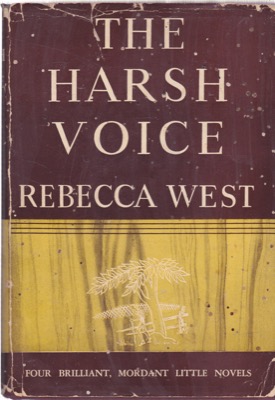
Hardcover. NY, Doubleday, Doran & Co., 1st, 1937, Book: Very Good, Dust Jacket: Fair, Hardcover in a very worn and chipped dust jacket, 294 pages. In these four short novels set in America, England and Paris, Rebecca West explores the lives and relationships of rich women and men who are ruled by 'the harsh voice we hear when money talks, or hate'. There is Josie, a flower of American girlhood with boundless ambition for wealth. There is Etienne de Sefavenac, a dilettante French aristocrat whose courtly stratagems are intended to ensnare Nancy Sarle - a plain American businesswoman. There is Alice Pemberton, a sensible Englishwoman - the very salt of the earth - in her own estimation. And lastly there is Sam Hartley, an American businessman who has fought his way to riches with his wife at his side, but whose life is now haunted by visions of beautiful young women.
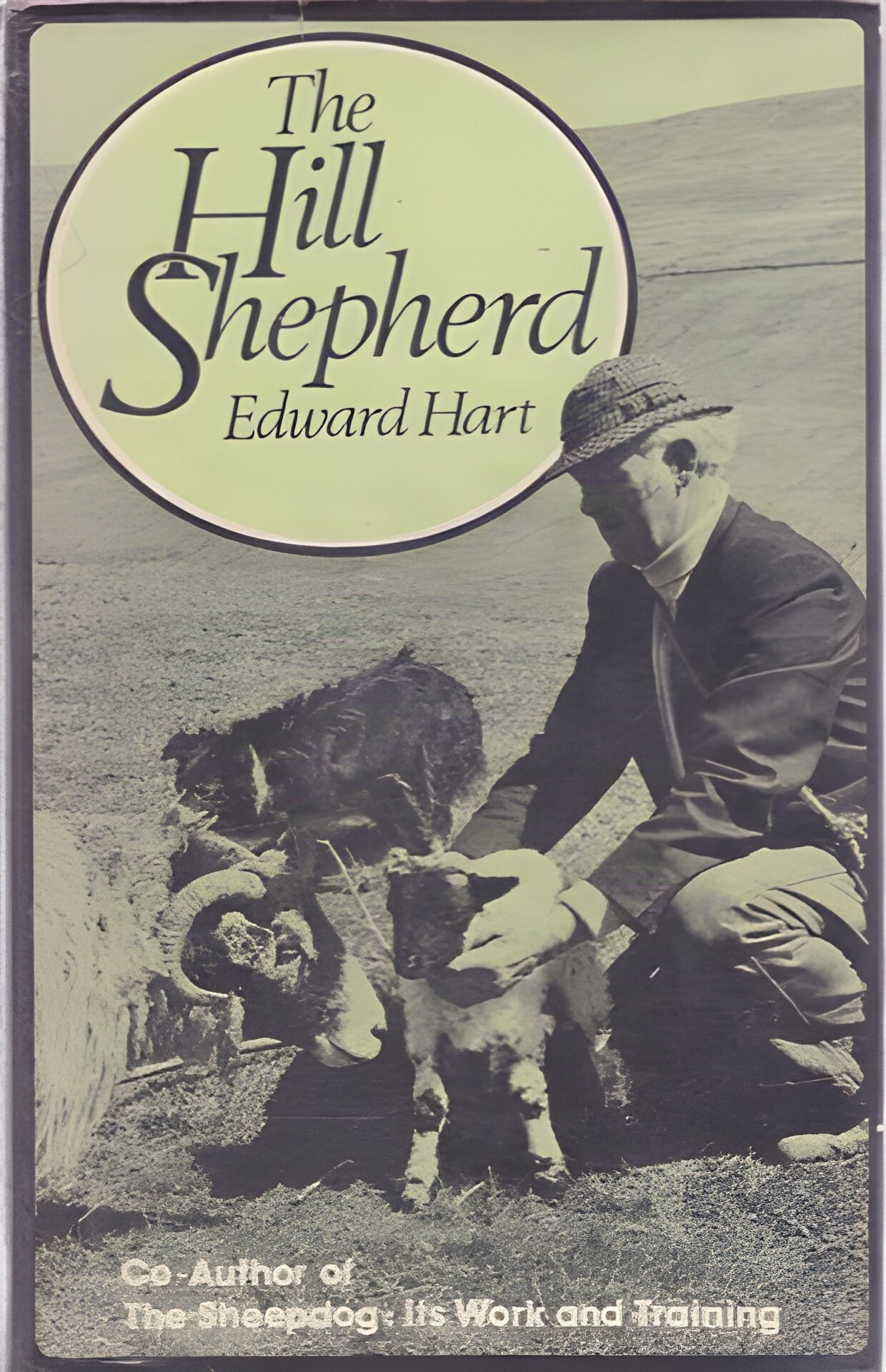
Hardcover. Newton Abbot UK, David & Charles, 1st, 1977, Book: Very Good, Dust Jacket: Very Good, 127 pages. Hardcover. SIGNED BY AUTHOR ON TITLE PAGE. Illustrated with black & white photographs and drawings. Dust jacket with moderate wear. Clean, tight copy. Hill shepherds are the unsung heroes of British rural life. As indispensable to the nation's economy as the flocks they tend, these tough, gifted men and women deserve our recognition and gratitude. Edward Hart, an ex-farmer, has lived and worked with shepherds for many years. Originator of the idea for a Shepherd of the Year award, he now describes the life of a typical hill shepherd, including the daily round, seasonal changes, home life, hobbies and events. There are practical sections on the shepherd's work, his tools and their uses, whilst entertaining chapters cover the annual sales and shows, crafts such as crook-making and social pleasures.
Softcover. New Haven CT, Yale University Press, 1st, 2014, Book: Very Good, Dust Jacket: Very Good, Softcover, 339 pages, b&w illustrations. The Hundred Years War (1337-1453) dominated life in England and France for well over a century. It became the defining feature of existence for generations. This sweeping book is the first to tell the human story of the longest military conflict in history. Historian David Green focuses on the ways the war affected different groups, among them knights, clerics, women, peasants, soldiers, peacemakers, and kings. He also explores how the long war altered governance in England and France and reshaped peoples' perceptions of themselves and of their national character. Clean copy.
Hardcover. NY, powerHouse, 1st, 2009, Book: Very Good, Dust Jacket: Very Good, Hardcover, 112 pages. Established in 1866, the Ku Klux Klan still remains one of America's most secretive organizations. New York photojournalist Anthony Karen first transcended that secrecy several years ago when he got the opportunity to photograph a KKK cross-lighting ceremony. Since then, Karen has been documenting Klan organizations throughout the country. In The Invisible Empire: Ku Klux Klan, those photographs are compiled to form an absorbing document of one of the most notorious groups in history. Taken with unrestricted access, Karen's images bring us deep inside America's most private white nationalist organizations. Beginning with a brief introduction into the history of the Klan, the book provides detailed visual accounts of modern-day Klan life, including candid shots of rallies, individual portraits of Klansmen and women, as well as a look at the naturalization process for new members. Presented in intimate profiles are: a functioning Klan ministry, a group that has merged National Socialism with Klan ideologies, and a 58-year-old seamstress who makes custom Klan robes, among others. Accompanied by quotations from the late Dale Fox, Imperial Wizard of The Brotherhood of the Klans, The Invisible Empire: Ku Klux Klan offers an unprecedented glimpse into the shadowy society and its mysterious inner workings.
Hardcover. NY, Viking Press, 1st, 1954, Book: Very Good, Dust Jacket: None, Hardcover, two-tone blue cloth covers, 120 pages. The blackly comic play about the oppressed lives of women in 1950s New York. One of literature's leading humorists, Dorothy Parker drew from the dark side of her imagination to pen The Ladies of the Corridor, a searing drama about women living on their own in a New York residence hotel. Loosely based on Parker's life, and co-written with famed Hollywood playwright Arnaud d'Usseau, The Ladies of the Corridor exposes the limitations of a woman's life in a drama teeming with Parker's signature wit. This copy INSCRIBED BY FRANCES STARR on the front fly leaf who had a leading role in the play as Mrs. Nichols.
Hardcover. NY, W. W. Norton & Company, 1st, 2012, Book: Very Good, Dust Jacket: Very Good, Hardcover in a bright, unclipped dust jacket. From the Pulitzer Prize-winning biographer John Matteson, an account of the "Susan Sontag" of nineteenth-century America. A brilliant writer and a fiery social critic, Margaret Fuller (1810-1850) was perhaps the most famous American woman of her generation. Outspoken and quick-witted, idealistic and adventurous, she became the leading female figure in the transcendentalist movement, wrote a celebrated column of literary and social commentary for Horace Greeley's newspaper, and served as the first foreign correspondent for an American newspaper. While living in Europe she fell in love with an Italian nobleman, with whom she became pregnant out of wedlock. In 1848 she joined the fight for Italian independence and, the following year, reported on the struggle while nursing the wounded within range of enemy cannons. Amid all these strivings and achievements, she authored the first great work of American feminism: Woman in the Nineteenth Century. Despite her brilliance, however, Fuller suffered from self-doubt and was plagued by ill health. John Matteson captures Fuller's longing to become ever better, reflected by the changing lives she led. 28 black-and-white illustrations. Smallbump to top corner otherwise like new.
Hardcover. NY, HarperCollins, 1st, 2002, Book: Very Good, Dust Jacket: Very Good, Hardcover in a bright, unclipped dust jacket. SIGNED BY PROSE on the title page. In a brilliant, wry, and provocative book, National Book Award finalist Francine Prose explores the complex relationship between the artist and his muse. In so doing, she illuminates with great sensitivity and intelligence the elusive emotional wellsprings of the creative process. Clean copy.
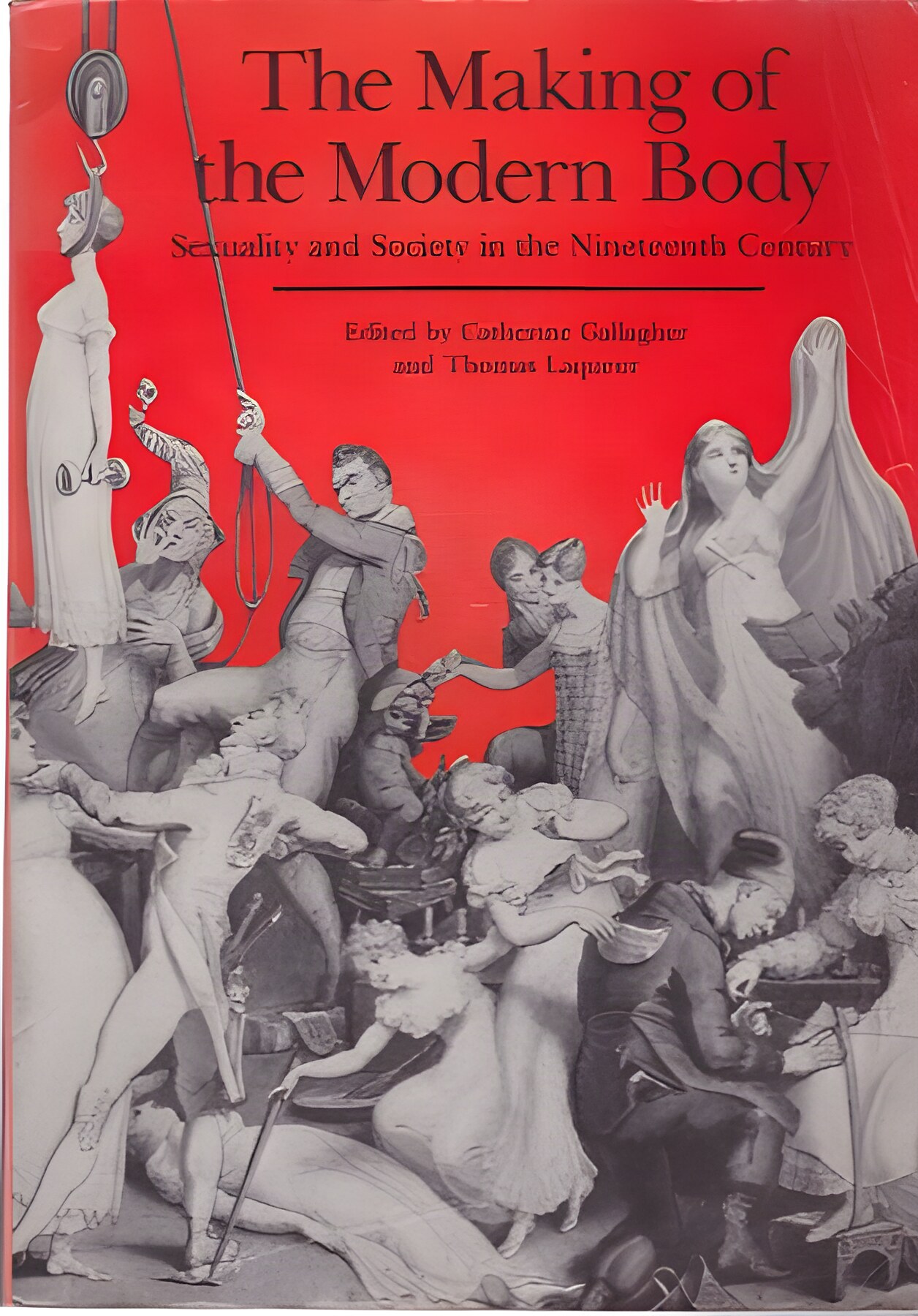
Softcover. Berkeley CA, University of California Press, reprint, 1987, Book: Good, Dust Jacket: None, Softcover, 242 pages. Scholars have only recently discovered that the human body itself has a history. Not only has it been perceived, interpreted, and represented differently in different epochs, but it has also been lived differently, brought into being within widely dissimilar material cultures, subjected to various technologies and means of control, and incorporated into different rhythms of production and consumption, pleasure and pain. The eight articles in this volume support, supplement, and explore the significance of these insights. They belong to a new historical endeavor that derives partly from the crossing of historical with anthropological investigations, partly from social historians' deepening interest in culture, partly from the thematization of the body in modern philosophy (especially phenomenology), and partly from the emphasis on gender, sexuality, and women's history that large numbers of feminist scholars have brought to all disciplines. Lightly worn copy, clean, solid binding.

 "THE CONSUMMATAby: Mickey Spillane, Max Allan Collins")
![The Diaries of Kenneth Tynanby: Tynan, Kenneth] Lahr, John (Ed.)](javascript:largeIMTop('https://www.browsingisarousing.com/shop/images/The-Diaries-of-Kenneth-Tynan_by_Tynan-Kenneth-Lahr-John-Ed.374500-411995.jpg','https://www.browsingisarousing.com/shop/images/The-Diaries-of-Kenneth-Tynan_by_Tynan-Kenneth-Lahr-John-Ed.374500-411995.jpg',0,'374500',0,'') "The Diaries of Kenneth Tynanby: Tynan, Kenneth] Lahr, John (Ed.)")

 "The Face That Launched a Thousand Lawsuits: The American Women Who Forged a Right to Privacyby: essica Lake")


 "The Flowering: The Autobiography of Judy Chicagoby: Chicago, Judy")
 "The Flying Tigers: The Untold Story of the American Pilots Who Waged a Secret War Against Japanby: Sam Kleiner")
 "The Gentleman's Daughter: Women's Lives in Georgian England by: Vickery, Amanda")


 "THE GUTTER AND THE GRAVEby: Ed McBain")



 "The Invisible Empire: Ku Klux Klanby: Anthony S. Karen")

 "The Lives of Margaret Fuller: A Biographyby: Matteson, John")
 "The Lives of the Muses: Nine Women & the Artists They Inspired (SIGNED COPY)by: Prose, Francine")