Softcover. Boston, Museum of Fine Arts, 1st, 1979, Book: Good, Dust Jacket: None, Softcover, 255 pages, b&w illustrations. Newspaper clippings paper-clipped to front fly leaf. Previous price sticker on back cover. Edge wear, rubbing to wrappers, front cover slightly bent. Light stain to bottom edge. Else pages clean and tight.
Softcover. Baltimore, MD, Baltimore Museum of Art, 1st, 1977, Book: Very Good, Dust Jacket: None, Softcover, 151 pages, b&w and color illustrations. Light edge wear, rubbing to wrappers. Else a clean, tight copy.
Hardcover. NY, Schwartz & Wade, 1st, 2019, Book: Very Good, Dust Jacket: None, Hardcover, pictorial boards. Illustrated in color by Chuck Groenink. This simple nonfiction picture book about the beloved American poet William Carlos Williams is also about how being mindful can result in the creation of a great poem like 'The Red Wheelbarrow'--which is only sixteen words long. In this lovely picture book, young listeners will see how paying attention to the simplest everyday things can inspire the greatest art, as they learn about a great American poet.
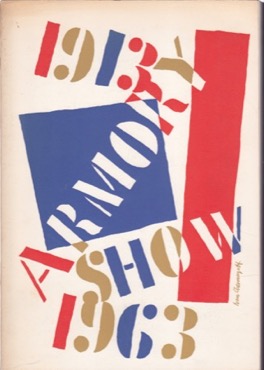
Softcover. Utica NY, Munson-Williams-Proctor Institute, Museum of Art, 1st, 1963, Book: Very Good, Dust Jacket: None, Softcover, 212 pages. Very good condition with thick card covers, printed with graphic design by Ivan Chermayeff. Contents includes information about the exhibit and The Henry Street Settlement Creative Arts Center, color reproductions of American and European works, and articles and memorabilia about the artists and the Armory shows. Related ephemera laid in. Owner's bookplate on inside front cover, otherwise clean.
Softcover. NY, Thames & Hudson, 1st, 2019, Book: Very Good, Dust Jacket: None, Softcover in a cardboard slipcase. A large-scale publication dedicated to the 1950s as captured in the pages of American Vogue. This book is illustrated by fashion's greatest photographs of that period-the era when the magazine became the cultural force it is today. One of only seven editors in chief in American Vogue's history, Jessica Daves has remained one of fashion's most enigmatic figures. Diana Vreeland's direct predecessor in the role, it is Daves who first catapulted the magazine into modernity. A testament to a changing America on every level, Daves's Vogue was the first to embrace a "high/low" blend of fashion in its pages and to introduce world-renowned artists, literary greats, and cultural icons into every issue, offering the reader a complete vision of how design, interiors, architecture, entertaining, art, literature, and culture all connected and contributed to refining and defining taste and personal style. Daves profiled icons of American style, from John and Jackie Kennedy to Charles and Ray Eames, alongside Dior, Chanel, Givenchy, and Balenciaga creations. Organized in multifaceted, thematic chapters, 1950s in Vogue features carefully curated photographs, illustrations, and page spreads from the Vogue archives (with iconic images as well as lesser-known wonders), and unpublished photographs and letters from Jessica Daves's personal archives. Clean, bright copy. Slipcase with minor wear, line in bottom edge. PLEASE NOTE: DUE TO WEIGHT, DOMESTIC SHIPPING ONLY.
Hardcover. New York , Random House , 1st, 1977, Book: Very Good, Dust Jacket: Very Good, 436 pages, hardcover in publisher's original deep navy cloth covers, gilt title and author lettering to the spine. Folio 12 1/2 '' x 10 1/4 ''. Contains 436 printed pages of text with 350 color and approximately 550 monochrome illustrations throughout. Illustrator Raeburn Van Buren's copy with his ownership signature on the half-title page dated February 24, 1978. His illustrations featured on several pages. Foreward by Norman Rockwell, notes on the artists, bibliography. Dust jacket bright with minor shelf wear.
Softcover. NY, Assouline, 1st, 2001, Book: Very Good, Dust Jacket: None, Softcover, 152 pages. The history of advertising is detailed here through five of the world's most influential figures in the field. Albert Davis Lasker, who changed the consumer habits of the American public with his campaigns for Palmolive, Kotex and Lucky Strike. Leo Burnett, who gave life to mythical characters such as the Marlboro man and the Green Giant. Marcel Bleustein-Blanchet, the Frenchman who earned a place at the side of the American giants. David Ogilvy, who brought British style to American advertising. And finally, Bill Bernbach, who invented a new style of advertising, inspiring unique and creative work for clients such as Levy's bread and Polaroid film. This book profiles these pioneers and illustrates the campaigns that made them authorities in the advertising world. Although The 5 Giants Of Advertising focuses primarily on these men, it also includes many others who created, animated and reformed this profession. This book is a tribute to all these great talents who have made history with their contributions to the advertising industry.
Hardcover. NY, Harry N. Abrams, 1st, 2000, Book: Very Good, Dust Jacket: Very Good, Hardcover, 240 pages. This stylish book re-creates the charmed life of two American expatriates in France at the turn of the 20th century-the noted artist Walter Gay and his wife, Matilda, whose glittering social circle included John Singer Sargent, Edith Wharton, Henry James, and many other artists and aristocrats. Narrated by witty excerpts from Matilda Gay's recently discovered journal, and richly illustrated with Walter Gay's remarkable, sought-after paintings of the rooms in which they and their friends lived, in Paris, Fontainebleau, Venice, and elsewhere, A Charmed Couple offers an intimate glimpse of a long-gone social milieu whose hold on the popular imagination continues to this day. WILLIAM RIEDER is a curator in the Department of European Sculpture and Decorative Arts at the Metropolitan Museum of Art in New York. Author of numerous articles, most on European furniture, in such journals as Architectural Digest, Connoisseur, and Antiques, he lives in New York City. 128 illustrations, 55 in full color, 81/2 x 101/2".
Hardcover. NY, St. Martin's Press, 2nd pr., 2018, Book: Very Good, Dust Jacket: Very Good, Hardcover in a bright, unclipped dust jacket. 388 pages, b&w illustrations. A revealing biography of Florence Gould, fabulously wealthy socialite and patron of the arts, who hid a dark past as a Nazi collaborator in 1940's Paris. Born in turn-of-the-century San Francisco to French parents, Florence moved to Paris at the age of eleven. Believing that only money brought respectability and happiness, she became the third wife of Frank Jay Gould, son of the railway millionaire Jay Gould. She guided Frank's millions into hotels and casinos, creating a luxury hotel and casino empire. She entertained Zelda and Scott Fitzgerald, Pablo Picasso, Joseph Kennedy, and many Hollywood stars-like Charlie Chaplin, who became her lover. While the party ended for most Americans after the Crash of 1929, Frank and Florence stayed on, fearing retribution by the IRS. During the Occupation, Florence took several German lovers and hosted a controversial Nazi salon. As the Allies closed in, the unscrupulous Florence became embroiled in a notorious money laundering operation for Hermann Goring's Aerobank. Yet after the war, not only did she avoid prosecution, but her vast fortune bought her respectability as a significant contributor to the Metropolitan Museum and New York University, among many others. It also earned her friends like Estee Lauder who obligingly looked the other way. A seductive and utterly amoral woman who loved to say "money doesn't care who owns it," Florence's life proved a strong argument that perhaps money can buy happiness after all.
Hardcover. Berghahn Books, 1st, 2008, Book: Very Good, Dust Jacket: None, Hardcover, pictorial boards, 193 pages, b&w illustrations. With six Academy Awards, four entries on the American Film Institute's list of 100 greatest American movies, and more titles on the National Historic Register of classic films deemed worthy of preservation than any other director, Billy Wilder counts as one of the most accomplished filmmakers ever to work in Hollywood. Yet how American is Billy Wilder, the Jewish emigre from Central Europe? This book underscores this complex issue, unpacking underlying contradictions where previous commentators routinely smoothed them out. Wilder emerges as an artist with roots in sensationalist journalism and the world of entertainment as well as with an awareness of literary culture and the avant-garde, features that lead to productive and often highly original confrontations between high and low. Clean copy.
Hardcover. Boston, The Peabody Museum / Little Brown and Company, 1st, 1968, Book: Very Good, Dust Jacket: Very Good, Hardcover, 279 pages. 168 full-page black-and-white illustrations and 16 color plates. Light sun-fade to dust jacket spine and flaps, as well as minor chipping along edges and wear along spine. Otherwise, clean, tight copy. This handsome book is the first full study of American marine painting ever published. In it are drawn together representative works by more than sixty painters from Colonial times to the present, including such diverse figures as John Smibert, John Quidor, John Marin, Albert Bierstadt, Geroge Bellows, Thomas Chambers, and Andrew Wyeth. Mr. Wilmerding discusses the development of these artists' concern with marine subjects, the influences (both native and European) on their styles and approaches, and the meaning of their achievement for American art in general.
Hardcover. Louisville, University Press of Kentucky, 1st, 1986, Book: Very Good, Dust Jacket: Very Good, Hardcover in a bright dust jacket., 160 pages. Sulky races at the Mercer County Fair, church suppers, sorghum making, shooting marbles in the school yard, housing tobacco, loafing at the courthouse-here are 129 beautifully reproduced images of who we were as Kentuckians not so long ago-during the Depression and the early years of World War II. This collection is part of the remarkable series of photos shot for the Farm Security Administration-more than 125,000 photographs taken over a period of nine years by some of the best American photographers of the time, including Ben Shahn, Marion Post Wolcott, Russell Lee, John Vachon, and Arthur Rothstein. To reintroduce us to that important slice of our history, Beverly Brannan and David Horvath have selected a rich sampling from among several thousand photos taken in Kentucky for the FSA. They have added an extra dimension to the images by including in their commentary excerpts from the photographers' own correspondence and field notes.
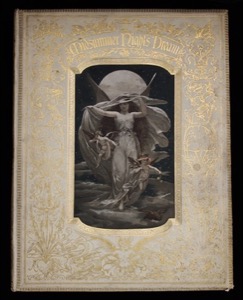
Hardcover. NY/London, E.P. Dutton, 1st, Book: Near Fine, Dust Jacket: None, Original white cloth with elaborate full gilt decoration to spine and front board, which also has a sunken panel, with a beveled gilt tooled edge, where a full color illustration is placed. Silk patterned paper endpapers. All edges gilt. Binding tight. This is a near fine copy, in exceptional condition. Folio, 15 X 11 1/2", illustrated with six stunning full color chromolithographic plates and twenty-seven sepia vignettes throughout the text. The artist is Julius Hoppner, a master of fairy and fantasy illustration. Printed in Nuremberg in 1888, this is the American edition with the Dutton imprint.
Hardcover. Boston, Faber and Faber, 1st, 1994, Book: Very Good, Dust Jacket: Very Good, Hardcover in a bright, unclipped dust jacket, pages. "I write of peoples and of a struggle." So begins A New World, an ambitious and extraordinary book that challenges conventional historical narrative by presenting episodes in North America's history through the eyes and voices of the Europeans who established the first colonial outposts here. Beginning with the swaggering John Smith at Jamestown and ending with the beleaguered Montcalm at Quebec, Arthur Quinn allows towering historical figures to emerge from an often beautiful, sometimes forbidding early American landscape and speak. An elderly William Bradford looks back with growing despair at the early promise of the Pilgrim colony at Plymouth. Governor John Winthrop tries to administer a dose of practicality to the Puritans of Massachusetts. Jesuit missionaries bring Christianity and disaster to the Huron Confederacy. A blustering Peter Stuyvesant watches Manhattan slip from Dutch grasp. William Penn's Holy Experiment in Pennsylvania goes increasingly awry. And, finally, the British and the French fight history's first world war for supremacy in the New World. Telling each story using the literary conventions of the day, Quinn casts North America's colonial beginnings as a multicultural epic, gripping the reader throughout with his uncanny eye and storytelling skill. Clean copy.
Softcover. NY, New York Museum of the American Indian, 1st, 1926, Book: Very Good, Dust Jacket: None, Softcover, leaflet of the Museum of the American Indian, account of a rare blanket, thought to be woven of dog hair, of the Salish Indians along with discussion of technique. Very good condition, bound between stiff card wraps.
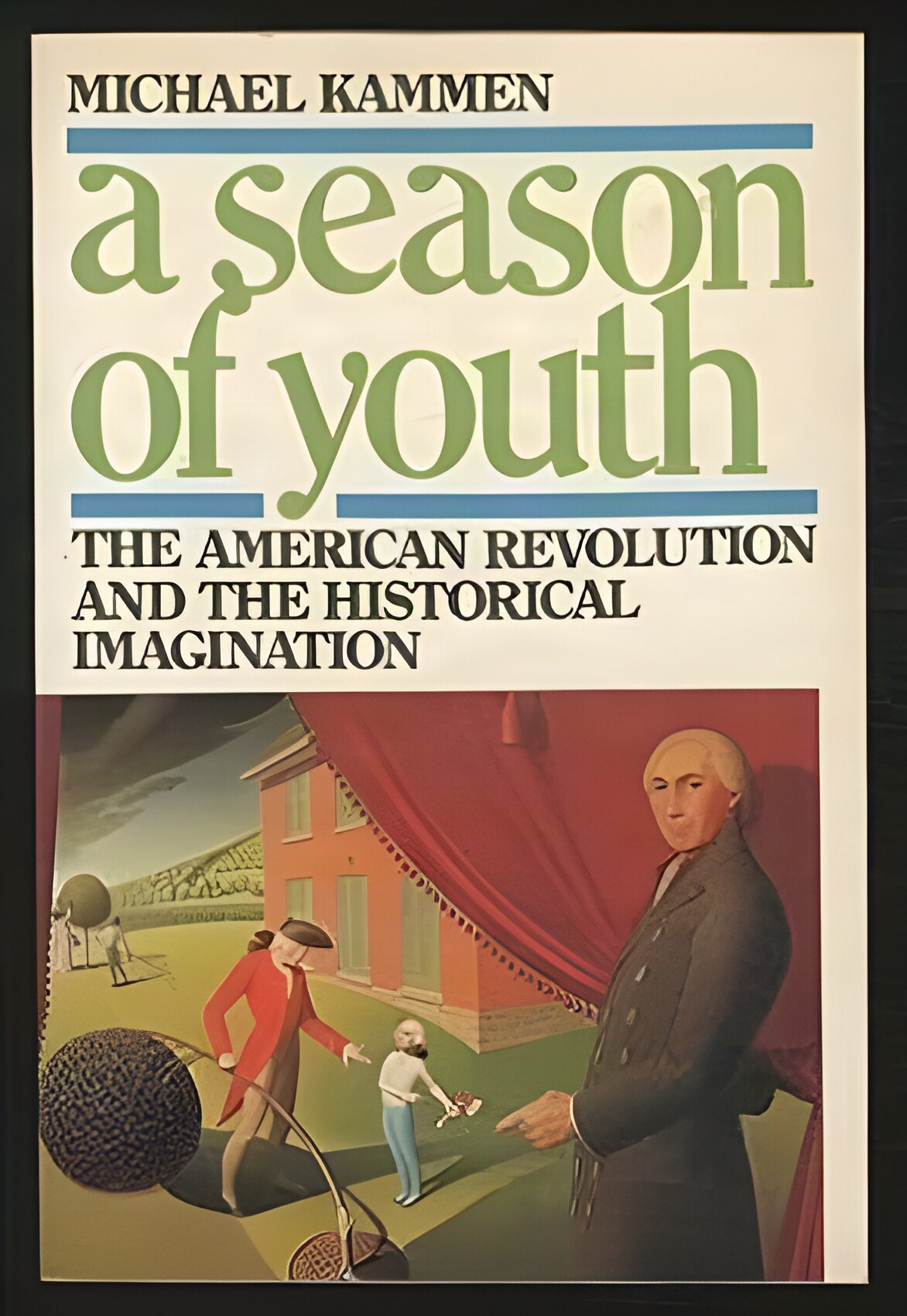
Softcover. NY, Oxford University Press, reprint, 1980, Book: Very Good, Dust Jacket: None, Softcover, 384 pages with index. In this major contribution to cultural history Kammen focuses on the American Revolution and it's impact on literature and art. Name on front fly leaf, otherwise clean.
Softcover. NY, Noonday Press, 1st, 1992, Book: Very Good, Dust Jacket: None, Softcover, full color as well as B&W illustrations. Detailed overview of American Black movies from 1915 to 1965. Introduction by Donald Bogle. Foreword by Spike Lee. A collection of movie posters featuring black actors, with brief comments on each plus a brief history of the black cinema. Pages are bright and clean (no writing, underlining, or highlighting). Binding is tight with no cracks or breaks.
Hardcover. Boston, Garden Press, 1st, 1910, Book: Very Good, Dust Jacket: None, Hardcover, 143 pages, b&w frontispiece. INSCRIBED BY BAYLEY on front fly leaf. Maroon and gray cloth with gilt lettering on front cover.
Hardcover. NY, Knopf, 1st, 2002, Book: Very Good, Dust Jacket: Very Good, Hardcover in a bright, unclipped dust jacket, 592 pages, b&w illustrations. Samuel Fuller, independent director-producer extraordinaire, tells the story of his life, a life that spanned most of the twentieth century. His twenty-nine tough, gritty pictures made from 1949 to 1989 set out to capture the truth of war, racism, and human frailties, and incorporate some of his own experiences. He writes of his years in the newspaper business--selling papers as a boy on the streets of New York, working for Hearst's New York Journal American, first as a copyboy, then as personal runner for the famous Hearst editor in chief Arthur Brisbane. His film Park Row was inspired by his years as a reporter for the New York Evening Graphic, where his beat included murders, suicides, state executions, and race riots--he scooped every other New York paper with his coverage of the death by drug overdose of the legendary Jeanne Eagels. Fuller talks about directing his first picture (he also wrote the script), I Shot Jesse James . . . and how, as a result, he was sought after by every major studio, choosing to work for Darryl Zanuck of Twentieth Century Fox. We see him becoming one of the most prolific, independent-minded writer-directors, turning out seven pictures in six years, among them Pickup on South Street, House of Bamboo, and China Gate. He writes about making Underworld U.S.A., a movie that shows how gangsters in the 1960s were no longer seen as thugs but as "respected" tax-paying executives . . . about the making of the movie Shock Corridor--about a journalist trying to solve a murder in a lunatic asylum--which exposed the conditions in mental institutions . . . and about White Dog (written in collaboration with Curtis Hanson), a film so controversial that Paramount's then studio heads, Jeffrey Katzenberg and Michael Eisner, refused to release it. Clean copy.
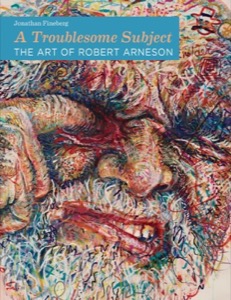
Hardcover. Berkeley/Los Angeles, University of California Press, 1st, 2013, Book: Very Good, Dust Jacket: None, Hardcover, pictorial boards, 270 pages in color and b&w. The first major book to consider the life and work of Robert Arneson, A Troublesome Subject tells the fascinating story of how a high school art teacher transformed himself into an artist of international stature and ambition. Representing the full scope of Arneson's career in a rich survey of color reproductions, this book is at once a study of the trajectory of contemporary culture, the work of Robert Arneson, and the relationship between the two. It shows how Arneson's work articulated the crisis of narcissism that has defined American culture since 1970. Jonathan Fineberg develops his ongoing work toward a psychosocial history of art as he proceeds through Arneson's career-chronicling his early life, the formation of a personal style, and finding a unique subject matter in his famous post-1970 turn to self-portraiture. Clean, bright copy.
Hardcover. NY, E. P. Dutton , 1st, 1946, Book: Good, Dust Jacket: None, Hardcover, beige cloth covers stamped in red and gilt. 450 pages, b&w illustrations. Ione Robinson (1910 - 1989) was an American artist, writer and socialite. She is most known for her reporting of the Mexican muralist movement. in the 1920s and early 30s she worked on Diego Rivera's murals at the National Palace in Mexico City. The first 3 pages with small holes to pages, the rest of text is clean. Light shelf wear.
Softcover. Montclair, NJ, Montclair Art Museum, 1st, 1971, Book: Good, Dust Jacket: None, 111 pages 49 b&w plates and 4 color plates, along with a catalog of works from the exhibit at the Montclair Art Museum from October 24 - November 28, 1971. Includes a biographical introduction. There is a tear on the bottom left corner of the back cover as well as rubbing. Light soil along the spine of the book. Overall, a good clean copy, pages unmarked.
Softcover. Montclair, NJ, Montclair Art Museum, 1st, 1971, Book: Good, Dust Jacket: None, 111 pages 49 b&w plates and 4 color plates, along with a catalog of works from the exhibit at the Montclair Art Museum from October 24 - November 28, 1971. Includes a biographical introduction. Overall, a good clean copy, pages unmarked.
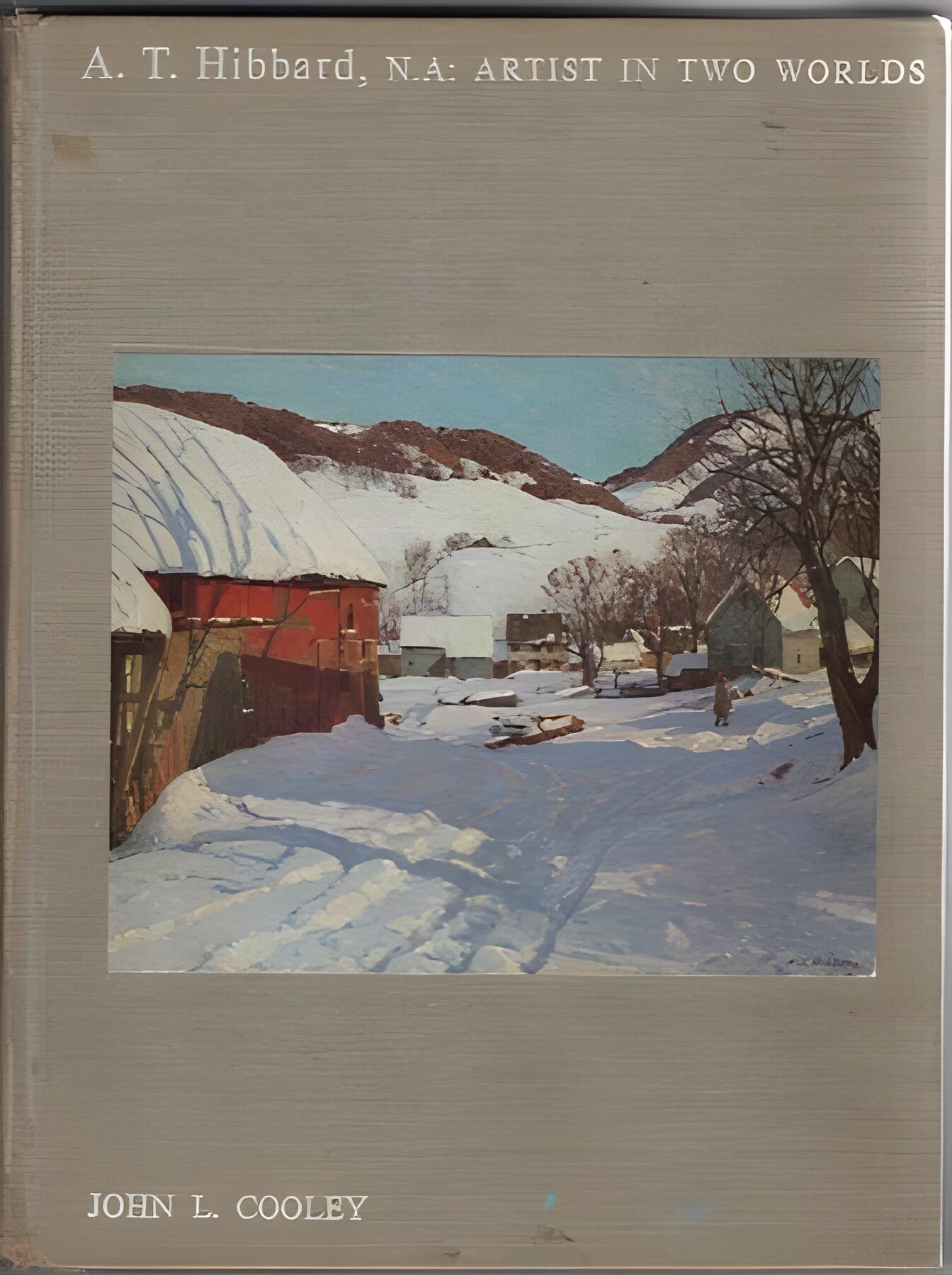
Hardcover. Concord MA, Rumford Press, 1st, 1968, Book: Very Good, Dust Jacket: None, Hardcover, light gray cloth with white lettering, color label on front cover, 175 pages, b&w and color illustrations. Commentary by Aldren A. Watson. This man of many seasons and interests went north each winter to his second home in East Jamaica, Vermont. There he painted glistening snowscapes, loggers and their oxen, rushing streams and mountain vistas. In Rockport, he painted granite quarries, the harbors, the sea and the town itself. As you look at Hibbard's paintings, you will find an ensemble, a legacy of a vanishing America. And it is important to remember that Aldro Hibbard was a leader among Cape Ann artists who evolved a style of painting known as The Rockport School of Painting which is universally recognized as an integral part of the history of American Art. Clean copy.

 "\"A Man of Genius\": The art of Washington Allstonby: Gerdts, William H")
 "\"And Eagles Sweep Across the Sky\": Indian Textiles of the North American West Navajo Blankets and Rugs, Baskets of the Westby: Katzenberg, Dena S.")
 "16 Words: William Carlos Williams and the Red Wheelbarrow by: Rogers, Lisa, Illustrator: Groenink, Chuck")
 "1950s in Vogue: The Jessica Daves Years, 1952-1962by: Tuite, Rebecca C.")


 "200 Years of American Illustrationby: Pitz, Henry")
 "5 Giants Of Advertisingby: Lorin, Philippe")
 "A Charmed Couple: The Art and Life of Walter and Matilda Gayby: Rieder, William")
 "A Dangerous Woman: American Beauty, Noted Philanthropist, Nazi Collaborator - The Life of Florence Gould by: Susan Ronald")



 "A Kentucky Album: Farm Security Administration Photographs, 1935-1943by: Beverly W. Brannan, David Horvath, et al.")




 "A Sketch of the Life and a List of Some of the Works of John Singleton Copley (SIGNED COPY)by: Bayley, Frank W.")
 "A Third Face: My Tale of Writing, Fighting and Filmmakingby: Samuel Fuller")