Hardcover. Syracuse, N.Y., Syracuse University Press, 1st, 1981, Book: Very Good, Dust Jacket: Very Good, Hardcover, 239 pages, b&w photographs and maps. Minor edgewear to dust jacket. Else a very clean, tight copy.
Hardcover. Mechanicsburg PA, Stackpole Books, 1st, 2010, Book: Very Good, Dust Jacket: Very Good, Hardcover, 227 pages, b&w photos. Light scratching to dust jacket front cover. Clean, tight copy. They shot some of the most iconic footage of World War II while risking their lives, yet the stories--and sheer guts--of the U.S. Marine Corps combat cameramen have been overshadowed by the heroism of the men with the rifles. War Shots brings these photographers into sharp focus through the career of Norm Hatch, a true American character whose skill with a camera and knack for being in the right place at the right time thrust him to the fore of the effort to record the Marines at war in the Pacific.
Hardcover. Mechanicsburg PA, Stackpole Books, 1st, 2010, Book: Very Good, Dust Jacket: Very Good, Hardcover, 227 pages, b&w photos. Light scratching to dust jacket front cover. Clean, tight copy. They shot some of the most iconic footage of World War II while risking their lives, yet the stories--and sheer guts--of the U.S. Marine Corps combat cameramen have been overshadowed by the heroism of the men with the rifles. War Shots brings these photographers into sharp focus through the career of Norm Hatch, a true American character whose skill with a camera and knack for being in the right place at the right time thrust him to the fore of the effort to record the Marines at war in the Pacific.
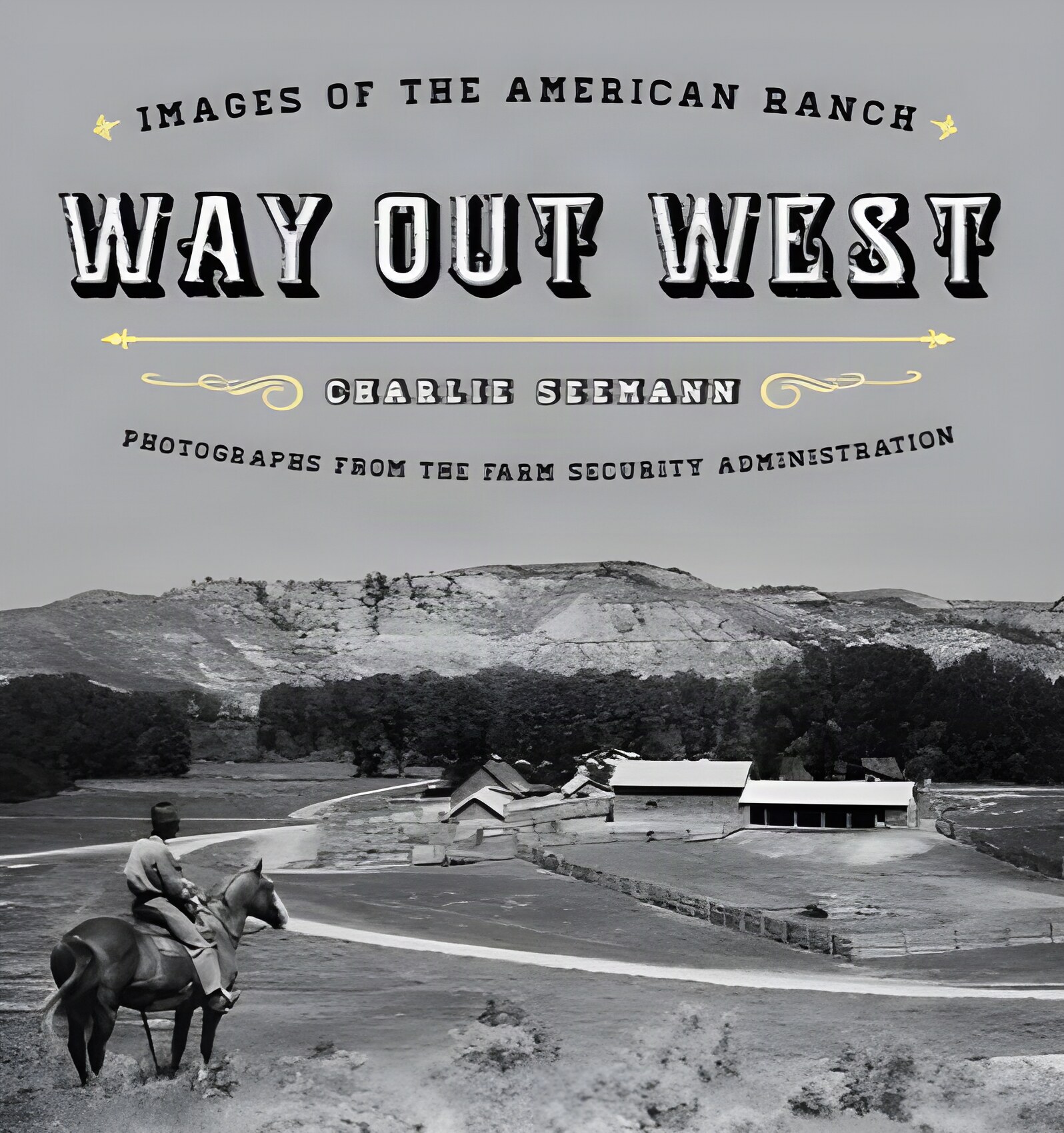
Hardcover. Guilford CT, TwoDot, 1st, Book: Very Good, Dust Jacket: None, Hardcover, pictorial boards, 159 pages, b&w photos throughout. Classic Photographs from the Farm Security Administration 1936-1943. Featuring images by such renowned photographers as Dorothea Lange, Arthur Rothstein, Russell Lee, and several others, this book documents ranching culture in western states during the Great Depression and leading up to World War II. This was a period of great change in the ranching West that included the introduction of the automobile, electricity, radio, the telephone, and other technologies that drastically transformed the lives and work of ranching people, and some of the best documentation exists in the powerful documentary photographs by this remarkable group of photographers. Clean copy.
Hardcover. Gretna LA, Pelican Publishing, 1st, 2003, Book: Very Good, Dust Jacket: Very Good, Hardcover in a bright dust jacket. In June 1892, a thirty-year-old shoemaker named Homer Plessy bought a first-class railway ticket from his native New Orleans to Covington, north of Lake Pontchartrain. The two-hour trip had hardly begun when Plessy was arrested and removed from the train. Though Homer Plessy was born a free man of color and enjoyed relative equality while growing up in Reconstruction-era New Orleans, by 1890 he could no longer ride in the same carriage with white passengers. Plessy's act of civil disobedience was designed to test the constitutionality of the Separate Car Act, one of the many Jim Crow laws that threatened the freedoms gained by blacks after the Civil War. This largely forgotten case mandated separate-but-equal treatment and established segregation as the law of the land. It would be fifty-eight years before this ruling was reversed by Brown v. Board of Education. Keith Weldon Medley brings to life the players in this landmark trial, from the crusading black columnist Rodolphe Desdunes and the other members of the Comite des Citoyens to Albion W. Tourgee, the outspoken writer who represented Plessy, to John Ferguson, a reformist carpetbagger who nonetheless felt that he had to judge Plessy guilty. Clean copy.
Hardcover. Baltimore, Gateway Press, 1st, 1990, Book: Very Good, Dust Jacket: Good, Hardcover in a lightly worn dust jacket, 335 pages, b&w illustrations. INSCRIBED BY THE AUTHOR on the title page to the previous owner, a Major in the US Air Force Reserve. His ownership signature on the front fly leaf. Otherwise clean.
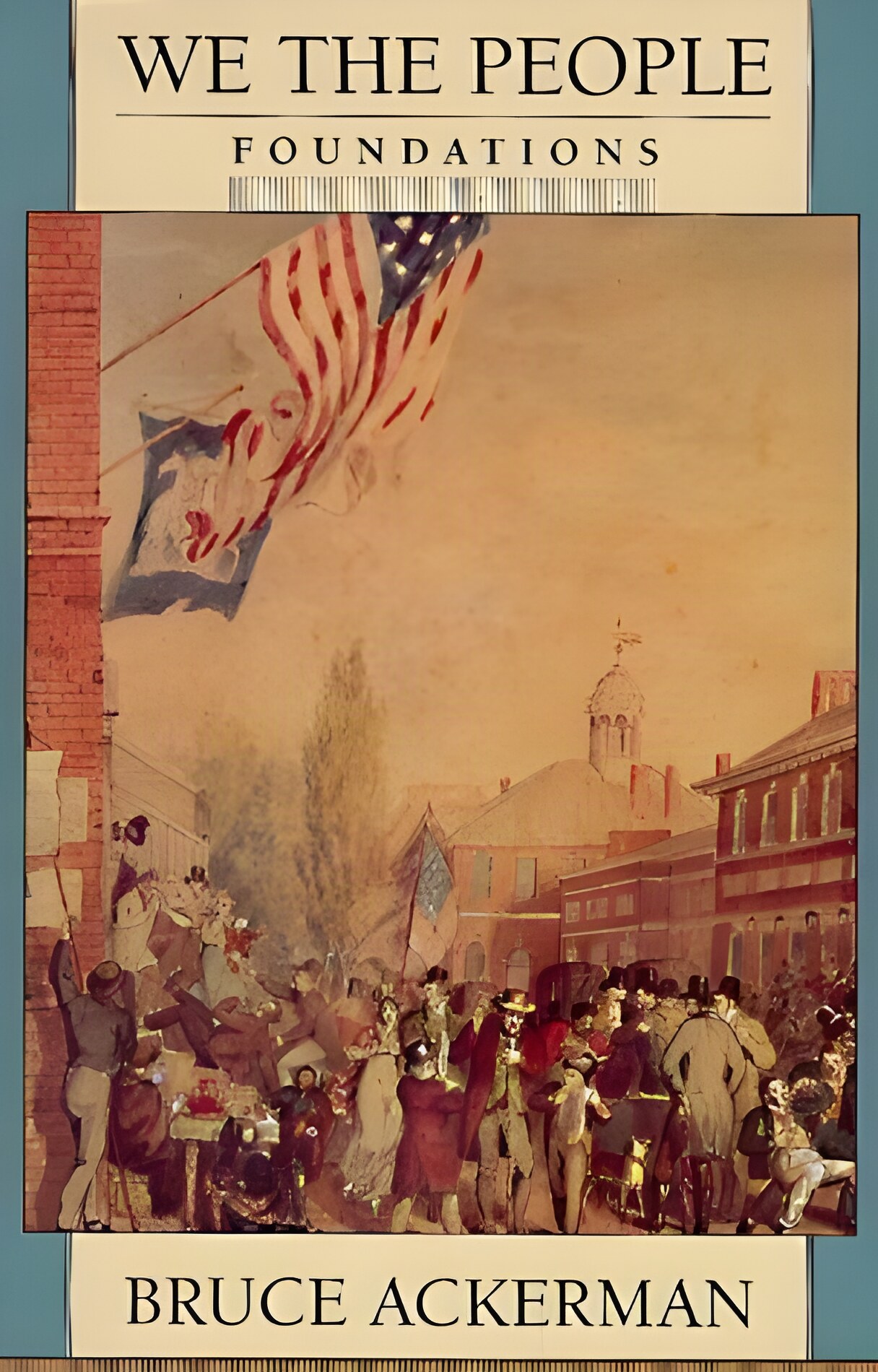
Hardcover. Cambridge MA, Harvard University Press, 1st, 1991, Book: Very Good, Dust Jacket: Very Good, Hardcover in a lightly worn dust jacket. Bruce Ackerman offers a sweeping reinterpretation of our nation's constitutional experience and its promise for the future. Integrating themes from American history, political science, and philosophy, We the People confronts the past, present, and future of popular sovereignty in America. Only this distinguished scholar could present such an insightful view of the role of the Supreme Court. Rejecting arguments of judicial activists, proceduralists, and neoconservatives, Ackerman proposes a new model of judicial interpretation that would synthesize the constitutional contributions of many generations into a coherent whole. The author ranges from examining the origins of the dualist tradition in the Federalist Papers to reflecting upon recent, historic constitutional decisions. The latest revolutions in civil rights, and the right to privacy, are integrated into the fabric of constitutionalism. Today's Constitution can best be seen as the product of three great exercises in popular sovereignty, led by the Founding Federalists in the 1780s, the Reconstruction Republicans in the 1860s, and the New Deal Democrats in the 1930s.
Softcover. Worcester MA, American Antiquarian Society, 1st, 1977, Book: Very Good, Dust Jacket: None, Softcover. Exhibition catalog. 141 pages, illustrated throughout in b&w. Tan stiff wrappers. Covers and spine slightly sunned, small stain to for-edge, dog-ears to upper page-corners. A nice, tight copy.
Softcover. Logan UT, Utah State University Press, reprint, 1994, Book: Good, Dust Jacket: None, Softcover, pictorial wrappers, 328 pages, b&w illustrations. Two fold-out maps in a rear pocket. Three pages with yellow highlighting, otherwise clean.
Hardcover. NY, Viking Press , 1st, 1956, Book: Very Good, Dust Jacket: Very Good, 95 pages. Hardcover with dust jacket. Illustrated in 2-colors by Daugherty. In a bright, unclipped dust jacket.
Hardcover. New York, William Morrow and Company, 1st, 1963, Book: Very Good, Dust Jacket: Good, Hardcover, 208 pages, illustrated with 50 early photographs and sketches. Minor dust jacket edge wear and rubbing, otherwise, very clean and tight copy.
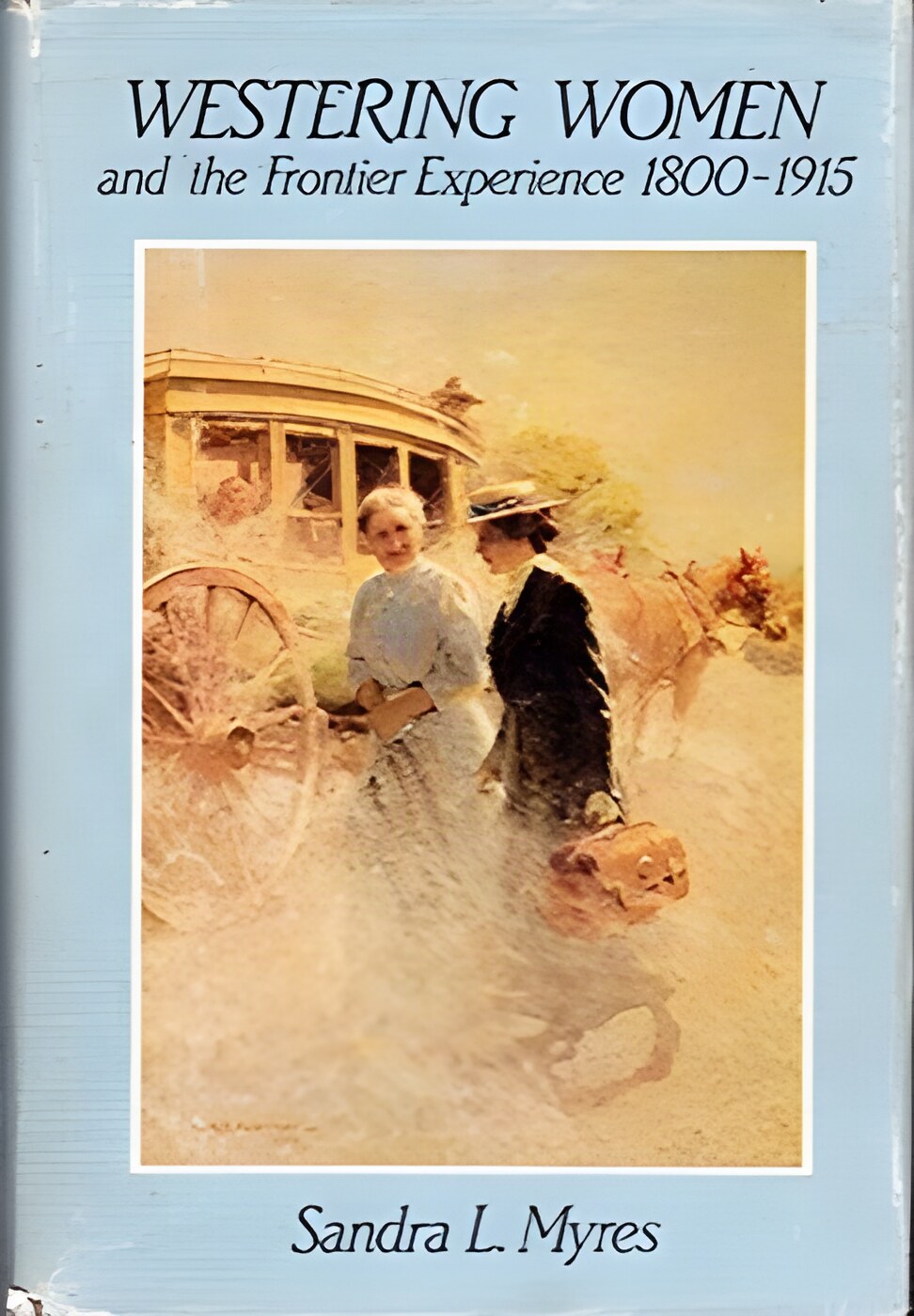
Softcover. Albuquerque NM, University of New Mexico Press, reprint, 1993, Book: Very Good, Dust Jacket: None, Softcover, 365 pages, b&w illustrations. Professor Myres gives frontier women a voice they never had. She uses extensive source material by and about women ( letters, journals, and reminiscences from over 400 collections ) to study the impact of the frontier on women's lives and the role of women in the West. She offers a major reinterpretation of the experience of pioneer women, including that of Indian, Mexican, French, black, and Anglo-American women. The account recreates in detail the frontier experience of all these women, beginning with their physical and intellectual responses to the trek West, and concluding with their struggle for political suffrage and economic opportunity. Clean copy.
Softcover. Essex New York , Eyrie Publications , 1st, 2001, Book: Very Good, Dust Jacket: None, 144 pages. Spiral bound softcover. Black & white photographs and maps throughout. SIGNED BY AUTHOR ON TITLE PAGE. Map of Whallonsburg, New York laid-in. Clean, tight copy with only minor wear to wrappers.
Hardcover. NY, Harper, 1st, 2020, Book: Very Good, Dust Jacket: Very Good, Hardcover in a bright dust jacket, 672 pages. 16 pages of photos. What Becomes a Legend Most is the first definitive biography of this luminary--an intensely driven man who endured personal and professional prejudice, struggled with deep insecurities, and mounted an existential lifelong battle to be recognized as an artist. Philip Gefter builds on archival research and exclusive interviews with those closest to Avedon to chronicle his story, beginning with Avedon's coming-of-age in New York between the world wars, when cultural prejudices forced him to make decisions that shaped the course of his life. Compounding his private battles, Avedon fought to be taken seriously in a medium that itself struggled to be respected within the art world. Gefter reveals how the 1950s and 1960s informed Avedon's life and work as much as he informed the period. He counted as close friends a profoundly influential group of artists--Leonard Bernstein, Truman Capote, James Baldwin, Harold Brodkey, Renata Adler, Sidney Lumet, and Mike Nichols--who shaped the cultural life of the American twentieth century. It wasn't until Avedon's fashion work was exhibited at the Metropolitan Museum of Art in the late 1970s that he became a household name. Balancing glamour with the gravitas of an artist's genuine reach for worldy achievement--and not a little gossip--plus sixteen pages of photographs, What Becomes a Legend Most is an intimate window into Avedon's fascinating world. Dramatic, visionary, and remarkable, it pays tribute to Avedon's role in the history of photography and fashion--and his legacy as one of the most consequential artists of his time.
Hardcover. NY, Harper, 1st, 2020, Book: Very Good, Dust Jacket: Very Good, Hardcover in a bright dust jacket, 672 pages. 16 pages of photos. What Becomes a Legend Most is the first definitive biography of this luminary--an intensely driven man who endured personal and professional prejudice, struggled with deep insecurities, and mounted an existential lifelong battle to be recognized as an artist. Philip Gefter builds on archival research and exclusive interviews with those closest to Avedon to chronicle his story, beginning with Avedon's coming-of-age in New York between the world wars, when cultural prejudices forced him to make decisions that shaped the course of his life. Compounding his private battles, Avedon fought to be taken seriously in a medium that itself struggled to be respected within the art world. Gefter reveals how the 1950s and 1960s informed Avedon's life and work as much as he informed the period. He counted as close friends a profoundly influential group of artists--Leonard Bernstein, Truman Capote, James Baldwin, Harold Brodkey, Renata Adler, Sidney Lumet, and Mike Nichols--who shaped the cultural life of the American twentieth century. It wasn't until Avedon's fashion work was exhibited at the Metropolitan Museum of Art in the late 1970s that he became a household name. Balancing glamour with the gravitas of an artist's genuine reach for worldy achievement--and not a little gossip--plus sixteen pages of photographs, What Becomes a Legend Most is an intimate window into Avedon's fascinating world. Dramatic, visionary, and remarkable, it pays tribute to Avedon's role in the history of photography and fashion--and his legacy as one of the most consequential artists of his time.
Art Intitute of Chicago/Yale University Press, 1st, 2021, Book: Very Good, Dust Jacket: None, Hardcover, pictorial cloth, 251 pages illustrated in color. The extraordinary life of a captivating American artist, beautifully illustrated with his dreamlike drawings Much of Joseph Elmer Yoakum's story comes from the artist himself--and is almost too fantastic to believe. At a young age, Yoakum (1891-1972) traveled the globe with numerous circuses; he later served in a segregated noncombat regiment during World War I before settling in Chicago. There, inspired by a dream, he began his artistic career at age seventy-one, producing some two thousand drawings over a decade. How did Yoakum gain representation in major museum collections in Chicago and New York? What fueled his process, which he described as a "spiritual unfoldment"? This volume delves into the friendships Yoakum forged with the Chicago Imagists that secured his place in art history, explores the religious outlook that may have helped him cope with a racially fractured city, and examines his complicated relationship to African American and Native American identities. With hundreds of beautiful color reproductions of his dreamlike drawings, it offers the most comprehensive study of the artist's work, illuminating his vivid and imaginative creativity and giving definition and dimension to his remarkable biography. Clean copy. NOTE: DUE TO WEIGHT, DOMESTIC SHIPPING ONLY.
Hardcover. NY, William Morrow , 1st, 2006, Book: Very Good, Dust Jacket: Very Good, Hardcover in a bright, unclipped dust jacket. In 1906 the baseball world saw something that had never been done. Two teams from the same city squared off against each other in a World Series that pitted the heavily favored Cubs of the National League against the hardscrabble American League champion White Sox. Now, more than a century later, noted historian Bernard A. Weisberger tells the tale of a unique time in baseball, a unique time in America, and a time when Chicago was at the center of it all. 213 pages, b&w photos. Clean copy.
Hardcover. Washington DC, Smithsonian Institution Press, 1st, 1998, Book: Very Good, Dust Jacket: Very Good, Hardcover in a bright dust jacket, 292 pages, b&w illustrations. SIGNED BY BOTH AUTHORS on the title page. Additionally INSCRIBED BY COHN on the dedication page. Kevin J. Crisman and Arthur B. Cohn show how a confluence of geographic, technological, economic, and social conditions in the United States and Canada turned an ancient idea into a practical alternative to more expensive and dangerous steamboats. Reviewing evidence from travelers' memoirs, regional histories, pictorial records, and the only horseboat ever studied by archaeologists - a wreck on the floor of Lake Champlain's Burlington Bay, in Vermont - the authors trace the evolution of horseboats from early mechanisms that forced the animals to walk in tight circles to "endless floor" treadmills that resembled modern exercise machines. In a lively narrative interspersed with quotes from passenger accounts, the book charts the rise and demise of horseboat businesses on the Hudson River, as well as in New York City, St. Louis, and Halifax, Nova Scotia. The authors also describe and record the underwater excavation of the Lake Champlain wreck, revealing a wealth of detail about the construction and operation of a typical treadwheel horseboat of the 1830s and 1840s. Clean copy.
Hardcover. Ames IA, University Museums at Iowa State, 1st, 2006, Book: Very Good, Dust Jacket: Very Good, Hardcover in a bright dust jacket, 398 pages. Mainly b&w illustrations with a small color section in center. In 1927, President Raymond Hughes began planning aesthetic improvements to the Iowa State campus. In 1933, at the depth of the Great Depression, and in an act that dramatically illustrates his artistic commitment, he began discussion with Grant Wood and Christian Petersen for each to create a significant mural cycle for the Iowa State College campus in Ames. The federal New Deal s Public Works of Art Project began in 1934 and offered a grand opportunity to employ artists in executing Grant Wood s painted mural for the library, When Tillage Begins, Other Arts Follow, and Christian Petersen s sculpted mural for the Dairy Industry Building, The History of Dairying. This book presents the first history of the Public Works of Art Project in Iowa and the first in-depth examination of the Grant Wood and Christian Petersen murals at Iowa State College. It also discusses the co-operative painting group that Grant Wood developed and illuminates the collaborative nature of the Iowa Project among its artists, as well as between the State University of Iowa in Iowa City and Iowa State College in Ames. Clean, like new. DOMESTIC SHIPPING ONLY.
Hardcover. Newtown CT, The Taunton Press, 1st, 2006, Book: Very Good, Dust Jacket: Very Good, Hardcover in a bright dust jacket, 266 pages. The past has left behind only scattered clues that, on their own, provide little insight into how the people of early America lived and the details of their daily lives. The photographs in this book, the deeply informed narrative that accompanies them, and the eyewitness accounts of daily life that the author weaves throughout, provide a fresh perspective on our early American ancestors and the places they called home. This book is about how their houses and their life in them, from the wealthy to the impoverished, from New York City to the small farms and plantations of the South, from coastal fishing towns to the Western frontier of Indiana and Kentucky. The stories focus on the remarkably vivid differences from one part of the country to the next, class and culture, and the realities of everyday life for American families. These stories twine around a wide selection of HABS photographs of early houses, covering the variety and evolutions of house styles -- not by labeling the style but by explaining the style in the context of everyday life. Richly illustrated with handsome black-and-white photography of old houses from the Library of Congress Historic American Building Survey (HABS) collection and supplemented with period woodcuts, engravings, drawings, paintings, artifacts, and maps, the book is printed on a 4-color press for a depth of tone. Sidebar excerpts from diaries, journals, and letters inject graphic eyewitness descriptions, adding an additional layer of insight. The book also includes sidebars called Still Standing that traces the history of specific houses, from their origins to the present and includes information on the original family, how the house has evolved over the centuries, and how it's used today.
Hardcover. New Haven CT, Yale University Press, 1st, 2014, Book: Very Good, Dust Jacket: Very Good, Hardcover in a bright dust jacket, 440 pages, colo and b&w illustrations. The first biography in more than twenty years of James McNeill Whistler (1834-1903) is also the first to make extensive use of the artist's private correspondence to tell the story of his life and work. This engaging personal history dispels the popular notion of Whistler as merely a combative, eccentric, and unrelenting publicity seeker, a man as renowned for his public feuds with Oscar Wilde and John Ruskin as for the iconic portrait of his mother. The Whistler revealed in these pages is an intense, introspective, and complex man, plagued by self-doubt and haunted by an endless pursuit of perfection in his painting and drawing. In his beautifully illustrated and deeply human portrayal of the artist, Daniel E. Sutherland shows why Whistler was perhaps the most influential artist of his generation, and certainly a pivotal figure in the cultural history of the nineteenth century. Whistler comes alive through his own magnificent work and words, including the provocative manifestos that explained his bold artistic vision, sparked controversy in his own time, and resonate to this day.
Softcover. Chapel Hill, University of North Carolina, reprint, 2002, Book: Very Good, Dust Jacket: None, Softcover, 378 pages. Namias shows that visual, literary, and historical accounts of the capture of Euro-Americans by Indians are commentaries on the uncertain boundaries of gender, race, and culture during the colonial Indian Wars, the American Revolution, and the Civil War. She compares the experiences and representations of male and female captives over time and on successive frontiers and examines the narratives of captives Jane McCrea, Mary Jemison, and Sarah Wakefield. Clean copy.
Hardcover. NY, Viking, 1st, 2016, Book: Very Good, Dust Jacket: Very Good, Hardcover in a bright, unclipped dust jacket. 480 pages. In her groundbreaking bestselling history of the class system in America, Nancy Isenberg upends history as we know it by taking on our comforting myths about equality and uncovering the crucial legacy of the ever-present, always embarrassing--if occasionally entertaining--poor white trash. "When you turn an election into a three-ring circus, there's always a chance that the dancing bear will win," says Isenberg of the political climate surrounding Sarah Palin. And we recognize how right she is today. Yet the voters who boosted Trump all the way to the White House have been a permanent part of our American fabric, argues Isenberg. The wretched and landless poor have existed from the time of the earliest British colonial settlement to today's hillbillies. They were alternately known as "waste people," "offals," "rubbish," "lazy lubbers," and "crackers." By the 1850s, the downtrodden included so-called "clay eaters" and "sandhillers," known for prematurely aged children distinguished by their yellowish skin, ragged clothing, and listless minds.
Hardcover. NY, GP Putnam And Sons, 1st, 2002, Book: Very Good, Dust Jacket: Very Good, Hardcover in a bright, unclipped dust jacket. his counting book has so much going for it that the inexplicable and jarring turn it takes at number seven is disappointing. Its most outstanding feature is Laroche's artwork-a mixture of drawing, painting, and paper-cutting on a variety of surfaces-that offers exquisite detail, from white-capped waves to feathery moth antennae to architectural features on the carefully rendered buildings. And there are more delights to this book: an afterword on the history of lighthouses; a key to the 11 found in the book; and handsome endpapers that list American lighthouses in continuous rows, state by state.

 "War of 1812 in the Champlain Valley, The by: Everest, Allan Seymour")






 "West on the 49th Parallel: Red River to the Rockies, 1872-1876by: Parsons, John E.")
 "Whallonsburg, New York Agricultural Heritage Area (SIGNED COPY)by: LaForest, Shirley")





 "When Horses Walked on Water: Horse-Powered Ferries in Nineteenth-Century America (SIGNED COPY)by: Kevin J. Crisman, Arthur B. Cohn")
 "When Tillage Begins, Other Arts Follow: Grant Wood and Christian Petersen Muralsby: Lea Rosson DeLong")


 "White Trash: The 400-Year Untold History of Class in Americaby: Isenberg, Nancy")