Hardcover. NY, Time Life, reprint, 1983, Book: Very Good, Dust Jacket: None, 376 pages. Hardcover with no dust jacket. Dark blue leather bound with gilt titles to front cover and spine. Embossed decoration on front cover. Gilt text block edges, red ribbon marker. Clean, tight copy.
Hardcover. Hartford CT, O.D. Case and Company, 1st, 1865, Book: Good, Dust Jacket: None, Hardcover, brown cloth covers with gilt title on spine faded. 450 pages, coated brown endpapers and pastedowns. Illustrated with a frontispiece and with eight plates (all in black and white). Completing the title page: "Including the author's capture at Vicksburg, May 3, 1863, while running the rebel batteries; his imprisonment at Vicksburg, Jackson, Atlanta, Richmond, and Salisbury; his escape and perilous journey of four hundred miles to the Union Lines at Knoxville." Light foxing throughout. No markings.
Hardcover. New York, Crown Publishers, 1st Thus, 1971, Book: Very Good, Dust Jacket: Very Good, 239 pages. Hardcover. Black & white illustrations. Dust jacket in protective clear plastic cover. Clean, unmarked text.
Hardcover. New Haven CT, Yale University Press, 1st, 2010, Book: Very Good, Dust Jacket: Very Good, Hardcover, 272 pages. The image of the untamed American West persists as one of our country's most enduring cultural myths, and few photographers have captured more compelling images of the frontier than Timothy H. O'Sullivan. Trained under Mathew Brady, O'Sullivan accompanied several government expeditions to the West--most notably with geologist Clarence King in 1867 and cartographer George M. Wheeler in 1871. Along these journeys, O'Sullivan produced many beautiful photographs that exhibit a forthright and rigorous style formed in response to the landscapes he encountered. Faced with challenging terrain and lacking previous photographic examples on which to rely, O'Sullivan created a body of work that was without precedent in its visual and emotional complexities. The first major publication on O'Sullivan in more than thirty years, Framing the West offers a new aesthetic and formal interpretation of O'Sullivan's photographs and assesses his influence on the larger photographic canon. The book features previously unpublished and rarely seen images and serves as a field guide for O'Sullivan's original prints, presenting them for the first time in sequence with the chronology of their production.
Hardcover. New Haven CT, Yale University Press, 1st, 2010, Book: Very Good, Dust Jacket: Very Good, Hardcover, 272 pages. In a lightly worn dust jacket with mild fading to spine.The image of the untamed American West persists as one of our country's most enduring cultural myths, and few photographers have captured more compelling images of the frontier than Timothy H. O'Sullivan. Trained under Mathew Brady, O'Sullivan accompanied several government expeditions to the West--most notably with geologist Clarence King in 1867 and cartographer George M. Wheeler in 1871. Along these journeys, O'Sullivan produced many beautiful photographs that exhibit a forthright and rigorous style formed in response to the landscapes he encountered. Faced with challenging terrain and lacking previous photographic examples on which to rely, O'Sullivan created a body of work that was without precedent in its visual and emotional complexities. The first major publication on O'Sullivan in more than thirty years, Framing the West offers a new aesthetic and formal interpretation of O'Sullivan's photographs and assesses his influence on the larger photographic canon. The book features previously unpublished and rarely seen images and serves as a field guide for O'Sullivan's original prints, presenting them for the first time in sequence with the chronology of their production.
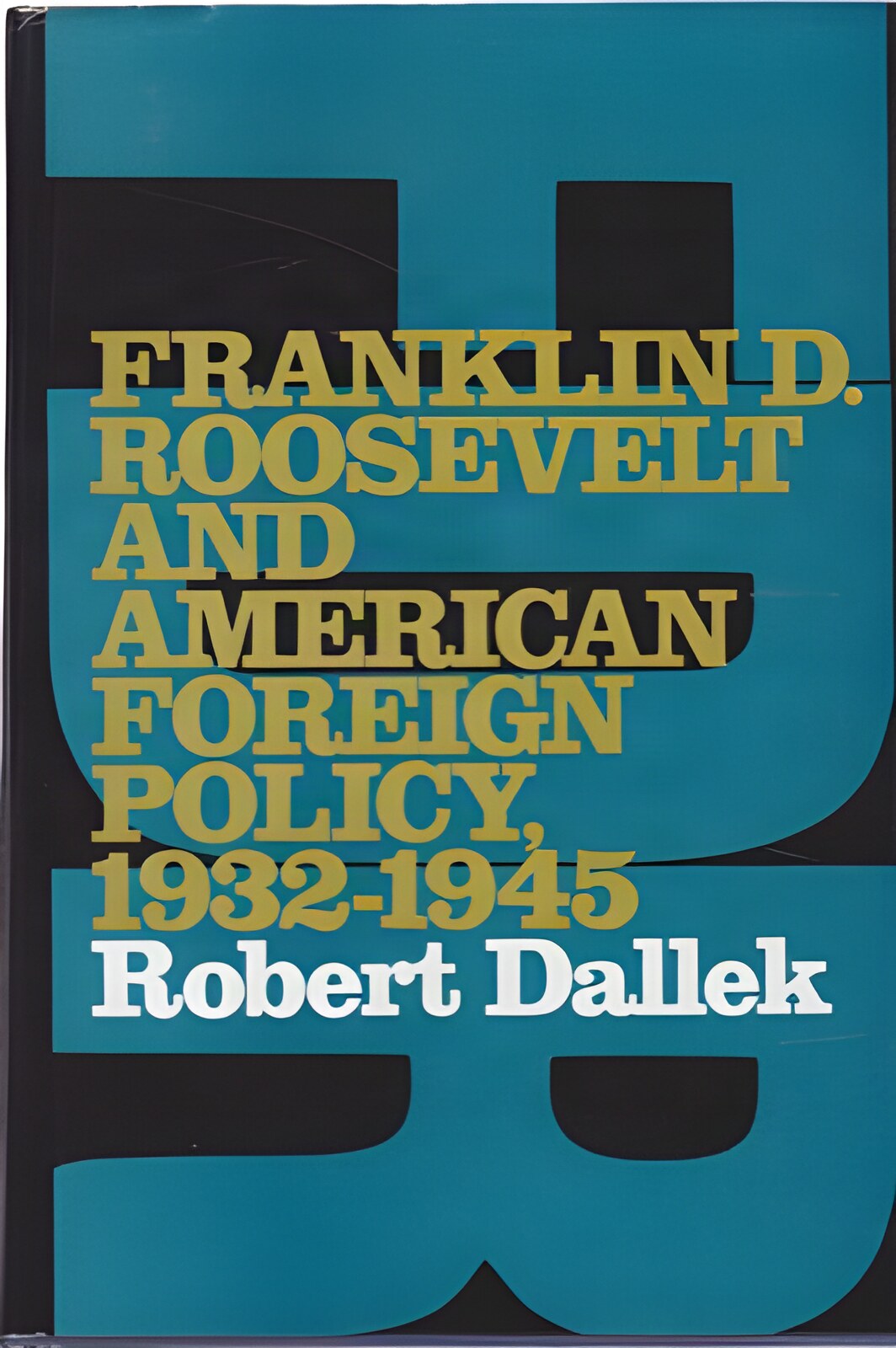
Hardcover. NY, Oxford University Press, 2nd pr., 1980, Book: Very Good, Dust Jacket: Very Good, Hardcover in a bright, unclipped dust jacket, 657 pages. Robert Dallek vigorously and convincingly defends Roosevelt's foreign policy. He emphasizes how Roosevelt operated as a master politician in maintaining a national consensus for his foreign policy throughout his presidency and how he brilliantly achieved his policy and military goals. Name on half-title page otherwise a clean copy.
Softcover. US, Detroit Institute of Arts, 1st, 2017, Book: Very Good, Dust Jacket: None, 224 pages. Softcover with publisher's shrinkwrap. Like new. Frederic Church (1826-1900), one of the leading painters of 19th-century America and the Hudson River School, also journeyed around the globe to find fresh inspiration for his highly detailed compositions. Among Church's lesser-known masterpieces are his paintings of the Middle East, Italy, and Greece, produced in the late 1860s through late 1870s, which explore themes of human history and achievement. Taking a closer look at this geographical and thematic shift in Church's practice, this handsome book brings together the artist's major paintings of Athens, Rome, Jerusalem, and the surrounding region. The essays concentrate on a set of six major paintings of architectural and archaeological marvels; one essay also spotlights Olana, Church's home in New York State, which reflects the influence of Middle Eastern design. This impressive volume stands apart in its new approach to the artist's work and its quest to determine why and how this quintessentially American figure was drawn to scenery and themes from the other side of the globe.
Hardcover. Garden City, Duobleday & Company Inc., First Edition, 1982, Book: Very Good, Dust Jacket: Very Good, 537 pages. Hardcover. Black cloth covered boards with white titles to spine. Black & white illustrations. Dust jacket with light, marginal wear, now protected with a plastic cover. Tight binding, clean & unmarked pages throughout.
Hardcover. NY, Houghton Mifflin Harcourt, 1st, 2018, Book: Very Good, Dust Jacket: Very Good, Hardcover in a bright, unclipped dust jacket. In 2008, when Michael McFaul was asked to leave his perch at Stanford and join an unlikely presidential campaign, he had no idea that he would find himself at the beating heart of one of today's most contentious and consequential international relationships As President Barack Obama's adviser on Russian affairs, McFaul helped craft the United States' policy known as "reset" that fostered new and unprecedented collaboration between the two countries And then, as US ambassador to Russia from 2012 to 2014, he had a front-row seat when this fleeting, hopeful moment crumbled with Vladimir Putin's return to the presidency This riveting inside account combines history and memoir to tell the full story of US-Russia relations from the fall of the Soviet Union to the new rise of the hostile, paranoid Russian president From the first days of McFaul's ambassadorship, the Kremlin actively sought to discredit and undermine him, hassling him with tactics that included dispatching protesters to his front gates, slandering him on state media, and tightly surveilling him, his staff, and his family. 506 pages, illustrations, clean copy.
Hardcover. Kent OH, Kent State University Press, 1st, 2001, Book: Very Good, Dust Jacket: Very Good, 387 pages, b&w illustrations. Clean, unmarked in a bright dust jacket. The Lincoln images, originally appearing in such publications as Budget of Fun, Comic Monthly, New York Illustrated News, Phunny Phellow, Southern Punch, and Yankee Notions, significantly expand our understanding of the evolution of public opinion toward Lincoln, the complex dynamics of Civil War, popular art and culture, the media, political caricature, and presidential politics. Lincoln, appealed to illustrators because of his distinctive physical features. (One could scarcely conceive of a similar book on James Buchanan, his immediate predecessor.) Despite ever-improving techniques, Lincoln pictorial prominence competed favorably with any succeeding president in the nineteenth century.
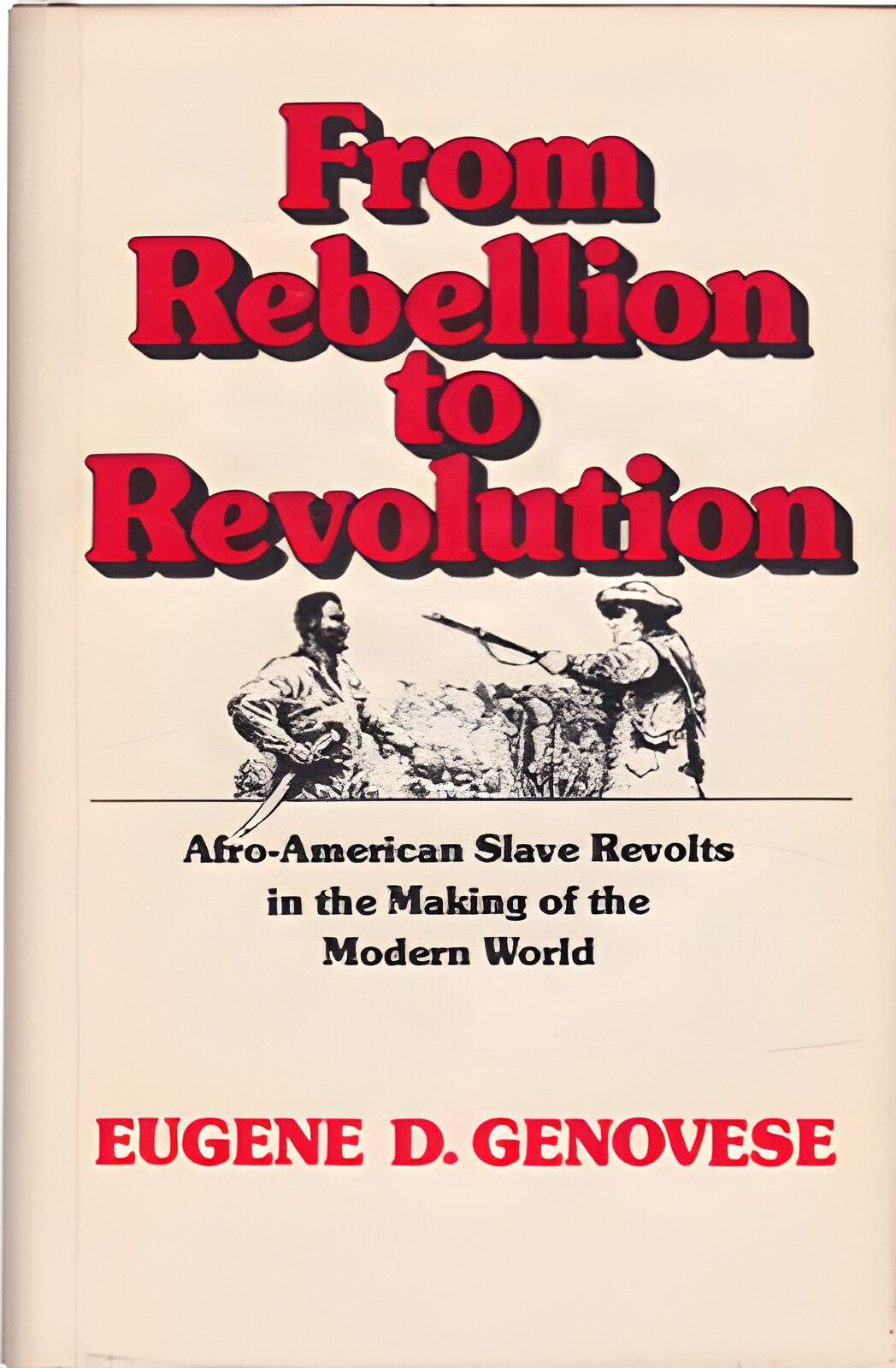
Hardcover. Baton Rouge, Louisiana State University , 1st, 1979, Book: Very Good, Dust Jacket: Very Good, Hardcover in a bright dust jacket, 173 pages. This work is a brief look at worldwide slave revolts in the 17th through 19th centuries, emphasizing their interrelations with European power struggles, which gave rebels hope of finding weak spots in the defenses of the slave powers. The French Revolution also had an influence on slave revolts, but the canny European powers used indigenous peoples to suppress slave revolts (e.g., native Americans) and took advantage of African ethnic divisions as well. American slaves stood little chance of revolt and were under constant surveillance from Southerners, who coward in fear after the successful rebellions in the Caribbean, particularly in Hispaniola, and after Nat Turner and John Brown's efforts. Genovese also brings up religion's double-edged sword: one side used to pacify slaves and the other side to inspire them to break their chains. In short, this scholarly treatise is thought-provoking as well as informative and ends with an inspirational quote from one of Frederick Douglass's lectures. Name on front fly leaf, otherwise a clean copy.
Hardcover. Boston, American Unitarian Association, 1st, 1905, Book: Very Good, Dust Jacket: None, Hardcover, black cloth with white lettering, 232 pages. Collection of six essays, including "Atlanta University" by Professor W. E. Burghardt Du Bois in which the author discusses the significance of Atlanta University. Other institutions and authors include: Howard University by Prof. Kelly Miller; Berea College, by President William G. Frost; Tuskegee Institute by Prof. Roscoe Conkling Bruce; Hampton Institute by Principal H. B. Frissell; and Fisk University by President James G. Merrill. From a church library with label on spine, bookplate and stamp on front endpapers. Otherwise a sharp copy with no other markings or residue. Scarce in original edition.
Hardcover. Detroit, Wayne State University Press , 1st, 1959, Book: Very Good, Dust Jacket: Very Good, Hardcover, 405 pages, b&w illustrations. Gray cloth covers with blue decoration and lettering. Dust jacket price-clipped otherwise very good.
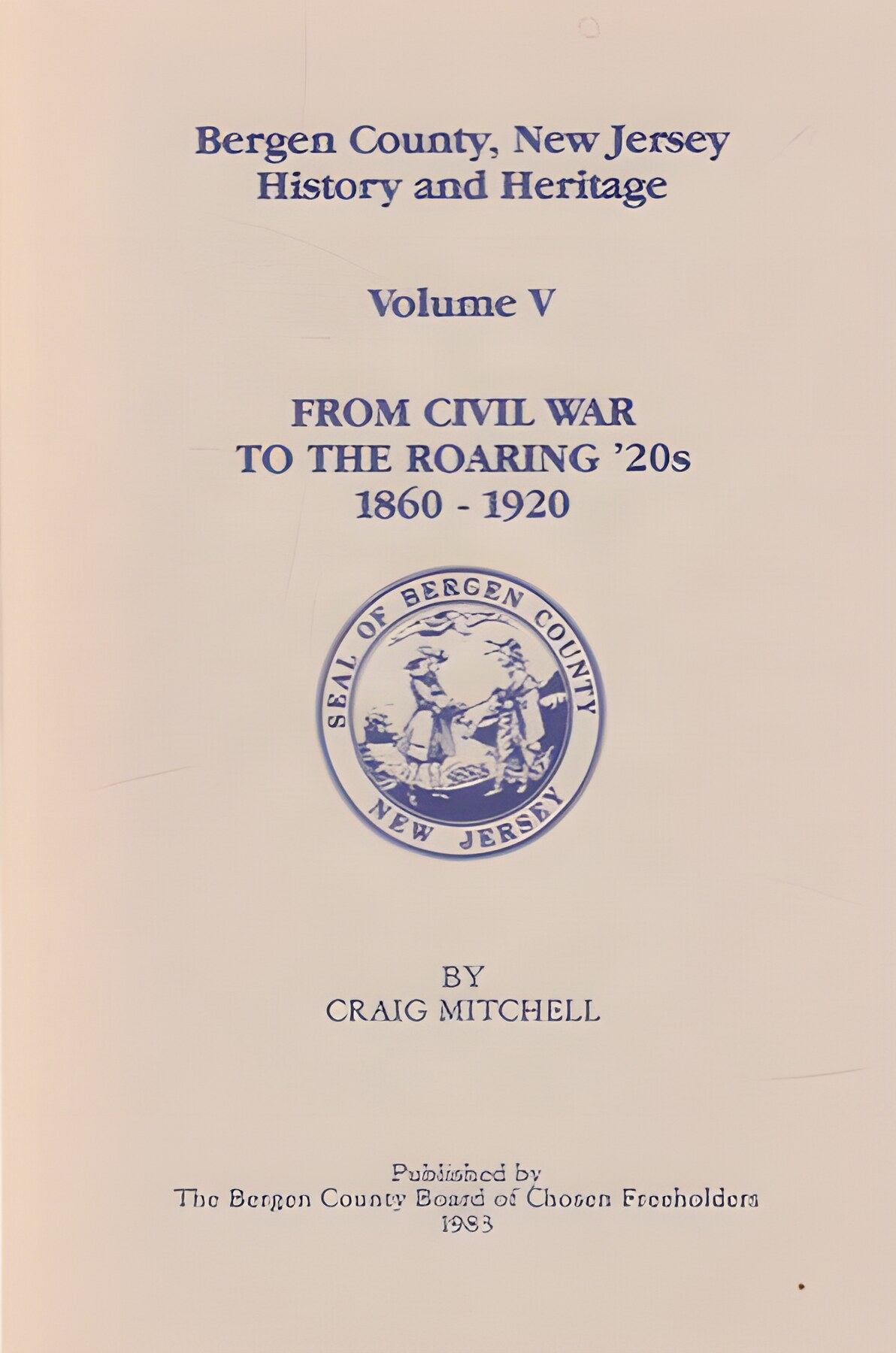
Softcover. New Jersey, Bergen County Board, 1st, 1983, Book: Very Good, Dust Jacket: None, Softcover, 101 pages. Volume five of a seven volume set on the history and heritage of Bergen County. Clean, like new..
Hardcover. NY, William Morrow, 1st, 1982, Book: Very Good, Dust Jacket: Very Good, Hardcover in a bright, unclipped dust jacket, 324 pages. This provocative study touches all the bases, probing the important cases of U.S. involvement in Africa (the Congo, Angola, South Africa), laying out U.S. interests in Africa's minerals and strategic outposts, and depicting the concern of American blacks with Africa since the nineteenth century. Riding his theses rather hard, Jackson argues strongly against an ineluctable U.S. tendency to react in cold-war terms to African crises. Name on front fly lesf, otherwise clean.
Softcover. St. Louis MO, Missouri Historical Society, 1st, 1997, Book: Very Good, Dust Jacket: None, Softcover. Perfect binding is tight. Interior is clean. Recreates, in words and pictures, the visual and emotional impact of the 1904 World's Fair. Using over two hundred images from the Missouri Historical Society's Photographs and Prints Collection, many reproduced from rare glass-plate negatives, From the Palaces to the Pike offers a tour of the St. Louis World's Fair that has been unavailable for nearly a century. Following an introduction that explains how the park was transformed into the World's Fair, the book takes readers inside the big exhibit palaces, brings them face-to-face with "human exhibits," and transports them over the fair grounds in hard-to-find aerial views. Special chapters also provide views of the Fair's entertainment district, known as the Pike, and of the 1904 Olympic Games. After the Fair, "the palaces crumbled, the exhibits dispersed, the Pike gave way to the mansions on Lindell Boulevard, and the fantasy land was reconfigured back into Forest Park," Clean, bright copy.
Hardcover. New Haven CT, Yale University Press, 1st, 1950, Book: Very Good, Dust Jacket: None, Hardcover. The Chronicles of America Vol. 51. 388 pages, b&w illustrations. Red gilt-decorated cloth, top edge gilt, no dust jacket as issued. A very nice, tight, clean copy in excellent condition.
Hardcover. NY, Abrams, 1st, 2006, Book: Very Good, Dust Jacket: Very Good, Hardcover in a bright dust jacket. The photographs produced by the United States Farm Security Administration (FSA) during the Great Depression constitute one of America's greatest artistic legacies. A team of young photographers, including Dorothea Lange, Walter Evans, and Gordon Parks, not only created an extraordinary and powerful portrait of American life between the wars but in doing so also set a new standard for contemporary photography. 357 pages. Over 470 photographs, many of which have never been published before.
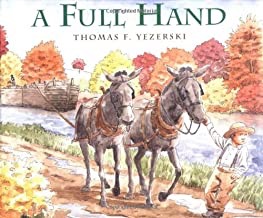
NY, Farrar Straus Giroux , 1st, 2002, Book: Very Good, Dust Jacket: Very Good, Hardcover in a bright, unclipped dust jacket. Color illustrations by Yezerski. Asa's father is a canal boat captain, a man who moves goods and cargo on a barge pulled by mules. In this gentle story, nine-year-old Asa gets to come along for the first time because his father's mule driver has quit. Their trip is a learning experience for Asa, who helps care for the mules and steers them along the path, visiting with familiar faces along the way.Clean copy
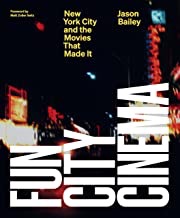
Hardcover. NY, Harry N. Abrams , 1st, 2021, Book: Very Good, Dust Jacket: None, Hardcover in pictorial boards, 352 pages. A visual history of 100 years of filmmaking in New York City, featuring exclusive interviews with NYC filmmakers. Fun City Cinema gives readers an in-depth look at how the rise, fall, and resurrection of New York City was captured and chronicled in ten iconic Gotham films across ten decades: The Jazz Singer (1927), King Kong (1933), The Naked City (1948), Sweet Smell of Success (1957), Midnight Cowboy (1969), Taxi Driver (1976), Wall Street (1987), Kids (1995), 25th Hour (2002), and Frances Ha (2012). A visual history of a great American city in flux, Fun City Cinema reveals how these classic films and legendary filmmakers took their inspiration from New York City's grittiness and splendor, creating what we can now view as "accidental documentaries" of the city's modes and moods. In addition to the extensively researched and reported text, the book includes both historical photographs and production materials, as well as still-frames, behind-the-scenes photos, posters, and original interviews with Noah Baumbach, Larry Clark, Greta Gerwig, Walter Hill, Jerry Schatzberg, Martin Scorsese, Susan Seidelman, Oliver Stone, and Jennifer Westfeldt. Extensive "Now Playing" sidebars spotlight a handful of each decade's additional films of note.
Hardcover. Lincoln NE, University of Nebraska Press, 1st thus, 2017, Book: Very Good, Dust Jacket: Very Good, Hardcover in a bright dust jacket. 693 pages with index, 16 pages of plates. A Fur Trader on the Upper Missouri offers the first annotated scholarly edition of Jean-Baptiste Truteau's journal of his voyage on the Missouri River in the central and northern Plains from 1794 to 1796 and of his description of the upper Missouri. This fully modern and magisterial edition of this essential journal surpasses all previous editions in assisting scholars and general readers in understanding Truteau's travels and encounters with the numerous Native peoples of the region, including the Arikaras, Cheyennes, Lakotas-Dakotas-Nakotas, Omahas, and Pawnees. Truteau's writings constitute the very foundation to our understanding of the late eighteenth-century fur trade in the region immediately preceding the expedition of Meriwether Lewis and William Clark commissioned by President Thomas Jefferson in 1803. French and English text. Bright, clean copy.
Hardcover. New Haven CT, Yale University Press, 1st, 2010, Book: Very Good, Dust Jacket: None, Hardcover, pictorial boards, 216 pages. Galleries of Friendship and Fame is the first comprehensive investigation of the origin, development, and practices of 19th-century American photograph albums. In this fascinating book, the author argues that the album--whether functioning as family record, parlor entertainment, social register, national portrait gallery, or advertisement for photography itself--helped transform the nature of self-presentation at the cusp of modernity. This handsome volume examines carte de visite and cabinet card albums from their introduction in the United States in 1861 through the rise of the snapshot at the century's end. By examining a wealth of previously overlooked primary materials, this study offers a completely new understanding of photograph albums, revealing how they emerged, how they were marketed and sold, and how families displayed and told stories through them. Galleries of Friendship and Fame addresses the history of technology and innovation, the interconnectedness of the commercial and domestic spheres, and the ways photography helped shape notions of identity, family, and nation in a rapidly changing America.

 "Four Years in Rebel Capitals (Collector's Library of the Civil War)by: DeLeon, Thomas Cooper")


 "Fourth World of the Hopis, Theby: Courlander, Harold")



 "Frederic Edwin Church: The Icebergsby: Carr, Gerald R.")


 "French Occupation of the Champlain Valley from 1609 to 1759by: Coolidge, Guy Omeron")

 "From Rail-Splitter to Icon: Lincoln's Image in Illustrated Periodicals, 1860-1865by: Bunker, Gary L.")
 "From Servitude to Service, Being the Old South Lectures on the History and Work of Southern Institutions for the Education of the Negroby: Du Bois, W.E.B. and others")
 "From the Cannon's Mouth: The Civil War Letters of General Alpheus S. Williamsby: Quaife (Ed.), Milo M.")



 "FSA: The American Visionby: Brannan, Beverly and Gilles Mora")
 "Fur Trader on the Upper Missouri: The Journal & Description of Jean-Baptiste Truteau, 1794-1796by: (Ed.) Raymond J. DeMallie et al")