Hardcover. Hartford CT, Hurlbut, Scranton & Co., 1st, 1864, Book: Very Good, Dust Jacket: None, Hardcover, 763 pages, illustrated with many full-page plates, most hand-colored (including second title page). Leather bound with some splitting along spine edges. Black spine label with gilt lettering. Internally very good, minor foxing.
Hardcover. Chicago, M.A. Donohue and Co., 1st, 1940, Book: Very Good, Dust Jacket: None, Hardcover, pictorial boards with blue cloth spine.64 pages. Six full page color illustrations by Lone Wolf. Map on end papers. Edgewear rubbing to covers.
Softcover. Yonkers NY, Fordham University Press , 1st, 2013, Book: Very Good, Dust Jacket: None, Softcover, 175 pages illustrated in color. It was not until the first decade of the twentieth century, as artists like Robert Henri and John Sloan turned their attention to the urban scene, that American art shifted its focus from bucolic landscapes to the cities, the towns, the crowds, especially the raucous urban scene of Manhattan--by then the nation's most important metropolis. This movement away from painting the land to painting the life on the street is often seen as a clean break with the depiction of the landscape, and with landscape painting generally as a mainstay of American art in the face of European Modernism. However, artists continued to paint the Hudson River, as well as its tributaries, the Harlem and East rivers, and the great harbor of New York City into which they flowed. What was different was their approach. Having jettisoned the romantic ideals of their forebears, artists like Henri and Sloan, and later, Georgia O'Keeffe, George Ault, Edward Hopper, and Preston Dickinson, celebrated the changing way of life along the city's waterfront. As the century progressed, they did so with sharper focus and with ideals borrowed from the Machine Age. Instead of majestic mountain ranges, their subjects were the arching bridges, swinging cranes, and streamlined ocean liners resting in the harbor. These artists took the elements of the Sublime, combined them with Modernism's interest in structure and form, and applied them to the manmade industrial one--thereby creating a new visual vocabulary for the twentieth century: the Industrial Sublime. Clean copy.
Hardcover. NY, Harcourt Brace , 1st, 1994, Book: Very Good, Dust Jacket: Very Good, Hardcover in a bright, unclipped dust jacket. Illustrated with 16 pages of black and white photographs, 338 pages. With wry humor and sharp observation, playwright Pifer elegantly mixes memory and research to reconstruct the world of his South African boyhood from 1933 to 1945. Pifer's father, an idealistic mining engineer in search of challenge and stability during the Depression, found it in Africa, but his earnest American egalitarianism soon put him in conflict with Afrikaner mine overseers, and his career under magnate Sir Ernest Oppenheimer stalled. The author deftly evokes his family--"my mother had the freedom of a disobedient daughter"--and the isolation of the desert town of Oranjemund. The book is even more resonant in its snapshots of mid-century Southern Africa: the still-simmering enmity between Afrikaners and the English; the ripples from Hitler's war in what prior to WW I had been the German territory of South West Africa (currently Namibia). Pifer's knowing account of the travails of servants--"the chasm that exists between white mistress and African maid"--still rings true today. Clean copy.
Softcover. Memphis, TN, The Dixon Gallery and Gardens, 1st, 1982, Book: Very Good, Dust Jacket: None, Softcover, 206 pages. With newspaper clipping slipped in. Illustrated in B&W and color. overall tight and clean copy. The narrative essays chart the routes taken by the American painters as they progressed from their experience at French communities to the re-establishment of their careers on native soil. Also included with the essays are the vivid artwork of these painters.
Hardcover. New York, Publishers Company, 2nd edition, 1968, Book: Very Good, Dust Jacket: None, 5 volumes: 291, 291, 317, 304, and 306 pages. Light brown cloth covers, with silver and black titles, profusely illustrated with b&w plates. Slight rubbing to covers, small brown stain to spines of Theater and Civil War volumes, previous owner's embossed stamp to all title pages, ex-lib bookplates to all copyright pages, pages very crisp and unmarked, tight binding; overall, volumes are in clean, tight condition. NOTE: DUE TO WEIGHT AND SIZE, DOMESTIC SHIPPING ONLY.
Hardcover. New York, Museum of Modern Art, 1st, 1984, Book: Very Good, Dust Jacket: Very Good, Hardcover, 216 pages, illustrated throughout in color and b&w. Clean, unmarked copy with only minor wear to dust jacket. The first major retrospective of the work of Irving Penn in more than twenty years will open at The Museum of Modern Art on September 13, 1984. The exhibition surveys Penn"s long career, spanning the past four decades, and features his work in portraiture, fashion, advertising, the nude, ethnographic subjects and still life, as well as a selection of Penn"s early, unpublished photographs.
Hardcover. Tucson, University of Arozona, 1st, 1974, Book: Near Fine, Dust Jacket: Very Good, 221 pages illustrated throughout in color and b&w. Limited edition, 1/2500 copies. Green cloth with dark green title to spine. White pictorial dust jacket with minor wear to edges, else like new. 4 color, 147 bw plates. Catalogue at rear lists 184 works. Foreword by John I.H. Baur. Introduction by Martin H. Bush. Main essay by Sheldon Reich, with notes. Includes reproductions of many etchings. A terrific copy of this uncommon title.
Hardcover. NY, Knopf, 1st, 1976, Book: Very Good, Dust Jacket: Very Good, Hardcover in a bright dust jacket, 360 pages. Published in association with the American Heritage Publishing Co. Text by Bernard Lewis, Richard Ettinghausen, Oleg Grabar, Fritz Meier, Charles Pellat, A. Shiloah, A.I. Sabra, Edmund Bosworth, Emilio Garcia Gomex, Roger M. Savory, Norman Itzkowitz, S.A.A. Rizvi, Elie Kedourie. Illustrated with 495 reproductions, photographs, drawings, and maps, 160 of them in full color.
Hardcover. New York, Hudson River Press, 1st, 1977, Book: Very Good, Dust Jacket: Very Good, 136 pages. Hardcover with lightly rubbed dust jacket. B&w and color illustrations throughout. The first comprehensive and fully illustrated study of two of the most important 19th-century American marine painters; twins John and James Bard. Blue cloth, gilt lettering to spine and front cover. Blue pictorial dust jacket, edge wear. Clean, tight copy.
Hardcover. NY, Watson Guptill, 1st, 1974, Book: Very Good, Dust Jacket: Very Good, Hardcover. Beautiful copy of this detailed study of the American illustrator. Color, black & white plates. 206 pages. In a bight, unclipped dust jacket.
Softcover. Princeton NJ, Pyne Press, 1st reprint, 1971, Book: Very Good, Dust Jacket: None, Softcover. A complete reprint of the Illustrated Catalogue and Price List of Copper Weathervanes manufactured by J.W. Fiske, New York. Probably the best reprint ever done of an old weathervane catalog. This catalog features well over 200 black and white illustrations of weathervanes, finials, lightning rods, and stable fittings with the original introduction to the catalog as well as an informative history of the company in back. Also included is a list of collections, and a great bibliography. Fiske was one of the premier weathervane makers of their time and this book accurately portrays many of their designs with original size and pricing information. Clean copy.
Hardcover. NY, Abrams, 1st, 2008, Book: Very Good, Dust Jacket: Very Good, Hardcover, 256 pages. One of the most prolific and successful artists of the Golden Age of American Illustration, J. C. Leyendecker captivated audiences throughout the first half of the 20th century. Leyendecker is best known for his creation of the archetype of the fashionable American male with his advertisements for Arrow Collar. These images sold to an eager public the idea of a glamorous lifestyle, the bedrock upon which modern advertising was built. He also was the creator instantly recognizable icons, such as the New Year's baby and Santa Claus, that are to this day an integral part of the lexicon of Americana and was commissioned to paint more Saturday Evening Post covers than any other artist. Leyendecker lived for most of his adult life with Charles Beach, the Arrow Collar Man, on whom the stylish men in his artwork were modeled. The first book about the artist in more than 30 years, J. C. Leyendecker features his masterworks, rare paintings, studies, and other artwork, including the 322 covers he did for the Post. With a revealing text that delves into both his artistic evolution and personal life, J. C. Leyendecker restores this iconic image maker's rightful position in the pantheon of great American artists.
Hardcover. NY, McGraw-Hill , 1st, 1972, Book: Very Good, Hardcover, 293 pages, b&w photographs. Edge wear, small tears to dust jacket. Dark blue top edge decorative stain w/ light spots, else a very clean, tight copy. Nowhere is the complex and destructive painter Jackson Pollock (1912-1956) revealed with more compassion and insight than in this exemplary biography. Friedman, a friend of Pollock's and active in the art world, shows him to be a brilliant man tormented by his relationship to his family; an artist who worked hard through years of poverty to achieve his controversial painting technique; the first American painter to gain an international reputation for himself and for what has been variously called Action Painting or Abstract Expressionism; and a man who struggled with alcohol and the tension between gentleness and violence.Newly illustrated with seminal Pollock paintings, this book takes the reader inside the art world of New York during the '40s and '50s, when Action Painting first emerged. Friedman reveals what it meant to Pollock to experience the invasion of his studio and of the very act of painting by the external pressures of shows, reviews, films, dealers, critics, hostile publicity; and how, despite it all, Pollock created many of the most graceful and powerful paintings ever made in America.
Softcover. New York, Abbeville, 1st, 1983, Book: Very Good, Dust Jacket: None, Softcover, 128 pages, b&w and color illustrations. Illustrated end papers. A very clean, tight copy.
Hardcover. Washington, DC, National Gallery of Art, 1st, 1995, Book: Very Good, Dust Jacket: Very Good, Exhibition catalog. Hardcover, 331 pages, illustrated throughout in color and b&w. Remainder mark on bottom edge, otherwise like new.
Softcover. Washington, DC, National Gallery of Art, 2nd, 1995, Book: Very Good, Dust Jacket: None, Exhibition catalog. 331 pages, illustrated throughout in color and b&w. Pictorial stiff wrappers. Minimal wear to covers, else like new.
Hardcover. New York , Watson Guptill, 1st, 1974, Book: Very Good, Dust Jacket: Very Good, Hardcover, 208 pages illustrated throughout with 175 b&w illustrations and 70 plates in full color. Clean, unmarked copy with only minor edgewear to dust jacket.
Hardcover. New York , Watson Guptill, 1st, 1974, Book: Very Good, Dust Jacket: Good, Hardcover, 208 pages illustrated throughout with 175 b&w illustrations and 70 plates in full color. Clean, unmarked copy with minor closed tears to dust jacket.
Hardcover. New York , Watson Guptill, 1st, 1974, Book: Very Good, Dust Jacket: Very Good, Hardcover, 208 pages illustrated throughout with 175 b&w illustrations and 70 plates in full color. Clean, unmarked copy with only minor edgewear to dust jacket.
Softcover. New York, Abbeville Press, 1st, 1984, Book: Very Good, Dust Jacket: None, Softcover, 128 pages, illustrated throughout in color and b&w. Pictorial stiff wrappers. Light wear to edges and covers, else a very nice, tight, clean copy.
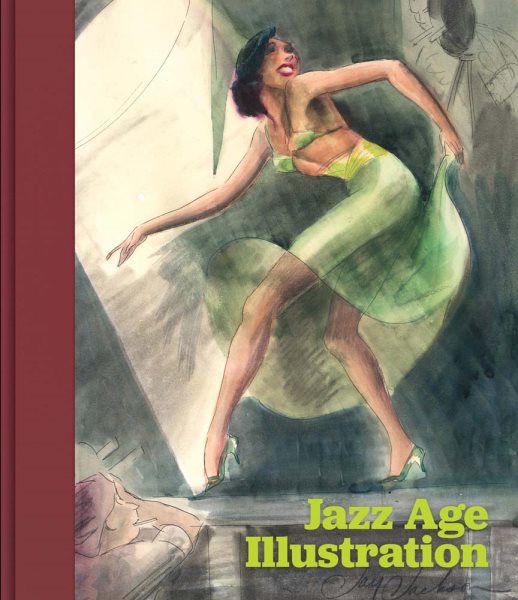
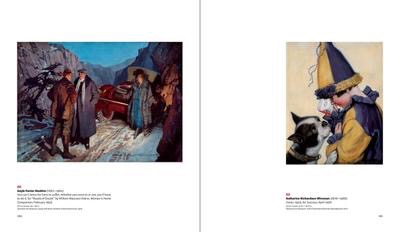
Hardcover. New Haven CT, Yale University Press, 1st, 2024, Book: Very Good, Dust Jacket: None, Hardcover, pictorial boards with a red cloth spine, 174 pages. A gorgeous look at popular illustrators of the Jazz Age and their influential role in the dynamic culture of the 1920s and '30s The 1920s in the United States was characterized by economic prosperity and dramatic social change. Known as the Jazz Age, it was a time when Black music, art, and literature became a powerful cultural force. Shifting roles for women and trends in youth culture coalesced in the figure of the flapper, causing a moral panic chronicled in the expanding popular press. Exploring how the art of popular illustration helped shape this new consciousness and impacted publishing, politics, and daily life, this volume features works by artists such as Aaron Douglas, Nell Brinkley, John Held Jr., and Lois Mailou Jones. Their striking images illustrated the New Yorker, Vanity Fair, The Crisis, Liberty, and the Saturday Evening Post, as well as newspapers, novels, and books for children. Essays foreground the contributions of women and Black artists; draw parallels between music, fashion, and the aesthetics of popular illustration; discuss the impact of the Harlem Renaissance and the national growth of the Black press; highlight the legacy of illustrator Howard Pyle and his students; and consider the appropriation of the subversive jazz culture by a white audience. Clean copy.
Hardcover. NY, Rizzoli, 1st, 2022, Book: Very Good, Dust Jacket: Very Good, Hardcover in a bright dust jacket, still in publisher's shrinkwrap. A rare and poignant compilation of photography and written anecdotes by American photographer and artist Lee Jaffe that captures his close friendship, collaboration, and travels with the artist Jean-Michel Basquiat as they traversed Japan, Thailand, and Switzerland in 1983. Lee Jaffe, a cross-disciplinary visual artist, musician, and poet, took photos of his friend, Jean-Michel Basquiat, when they traveled abroad in 1983. As a photographer, Jaffe had a connection to Basquiat, and their time spent together resulted in an archive of imagery that captured one of the art world's true legends through an unfiltered and authentic lens. Basquiat and Jaffe connected over reggae music at a mutual friend's art show. It was the early 1980s in New York, when the art scene was raw, complicated, and thriving, and Jaffe cultivated strong connections with cultural figures such as Basquiat, Bob Marley, and Peter Tosh. "For me, watching him [ Jean] paint reminded me of the times I would sit and play harmonica while Bob Marley, with his acoustic guitar, would be writing songs that were eventually to become classics," Jaffe says. "With Jean and Bob, it seemed like they were channeling inspiration coming from an otherworldly place." This beautiful volume presents snapshots of Basquiat: from the artist smiling on a bullet train to Kyoto and behind-the-scenes documentation of Basquiat creating artwork in St. Moritz, to poignant portraits that mirror his undeniable magnetism. These rare depictions of Basquiat come to life with Jaffe's unforgettable experiences of their friendship, collaborations, and travels detailed in private written memories and anecdotes. This insightful and moving illustrated volume captures the soul of the unedited, ambitious, young artist during the height of his short yet unprecedented artistic career.
Hardcover. Athens, University of Georgia, 1st, 1998, Book: Very Good, Dust Jacket: Very Good, Hardcover, 316 pages, b&w photographs. Light rubbing to dust jacket, sticker residue on rear. Else a clean, tight copy. During the Gilded Age, Jekyll Island, Georgia, was one of the most exclusive resort destinations in the United States. Owned by the most elite and inaccessible social club in America, a group whose members included Rockefellers, Pulitzers, Vanderbilts, Goulds, and Morgans, this quiet refuge in the Golden Isles was the perfect winter getaway for the wealthy new industrial class of the snowbound North. In this delightful book, a companion volume to The Jekyll Island Club: Southern Haven for America's Millionaires, June Hall McCash focuses on the social club's members and the "cottages" they built near the clubhouse between 1888 and 1928. Illustrated with hundreds of never-before-published photographs from private family collections, The Jekyll Island Cottage Colony tells the stories of each home, the owners' connections with the island, and their interactions with one another.