Softcover. Baltimore, Johns Hopkins University Press, 1st, 2007, Book: Very Good, Dust Jacket: None, Softcover, 155 pages. Thomas Dennis emigrated to America from England in 1663, settling in Ipswich, a Massachusetts village a long day's sail north of Boston. He had apprenticed in joinery, the most common method of making furniture in sixteenth- and seventeenth-century Britain, and he became Ipswich's second joiner, setting up shop in the heart of the village. During his lifetime, Dennis won wide renown as an artisan. Today, connoisseurs judge his elaborately carved furniture as among the best produced in seventeenth-century America. Robert Tarule, historian and accomplished craftsman, brilliantly recreates Dennis's world in recounting how he created a single oak chest. Writing as a woodworker himself, Tarule vividly portrays Dennis walking through the woods looking for the right trees; sawing and splitting the wood on site; and working in his shop on the chest-planing, joining, and carving. Dennis inherited a knowledge of wood and woodworking that dated back centuries before he was born, and Tarule traces this tradition from Old World to New. He also depicts the natural and social landscape in which Dennis operated, from the sights, sounds, and smells of colonial Ipswich and its surrounding countryside to the laws that governed his use of trees and his network of personal and professional relationships. Clean copy.
Hardcover. NY/London, Sotheby's Parke Bernet, Revised Ed., 1985, Book: Very Good, Dust Jacket: Very Good, Hardcover, 376 pages. 26 illustrations in color, and 420 in black and white. Originally published in 1979. John Harris was one of England's leading Architectural Historians at the time this book was written. He was curator of the Drawing Collection for RIBA. (Royal Institute of British Architects). Each section introduces a period such as: the Age of Estate Cartographers and the Garden Converstations, The Country House and Sporting Art: John Wootton, Peter Tillemans and Others, Caneletto and the Architectural Topographers, Gainsborough and the Picturesque, The Art of Turner and Constable. Harris comments on the artists , their style and pictures.
Hardcover. New Haven CT, Yale University Press, 1st, 2007, Book: Very Good, Dust Jacket: Very Good, Hardcover, 224 pages. How does the artist's self-conception change in old age? How does old age affect artistic practice? In this intriguing study, art historian Philip Sohm considers some of the greatest artists of Renaissance and Baroque Italy and their experiences of aging. Sohm investigates how art critics, collectors, biographers, and fellow artists dealt with old painters, what mental landscapes preconditioned responses to art by the elderly, and how biology and psychology were co-opted to explain the imprint that artists left on their art. He also looks carefully at the impact of prejudices, stereotypes, and other imaginary truths about old age. For some artists, the problems of old age were related to physical decline-Poussin's hands became shaky, Titian's eyesight dimmed. For others, psychological symptoms emerged. The book's cast of characters includes Michelangelo, the hypochondriac young fogy; Titian, the shrewd marketer of old age; the multiphobic Pontormo; and others. With sensitivity and insight, Sohm uncovers what it meant to be an old artist and how successive generations have looked at the art of an old master.
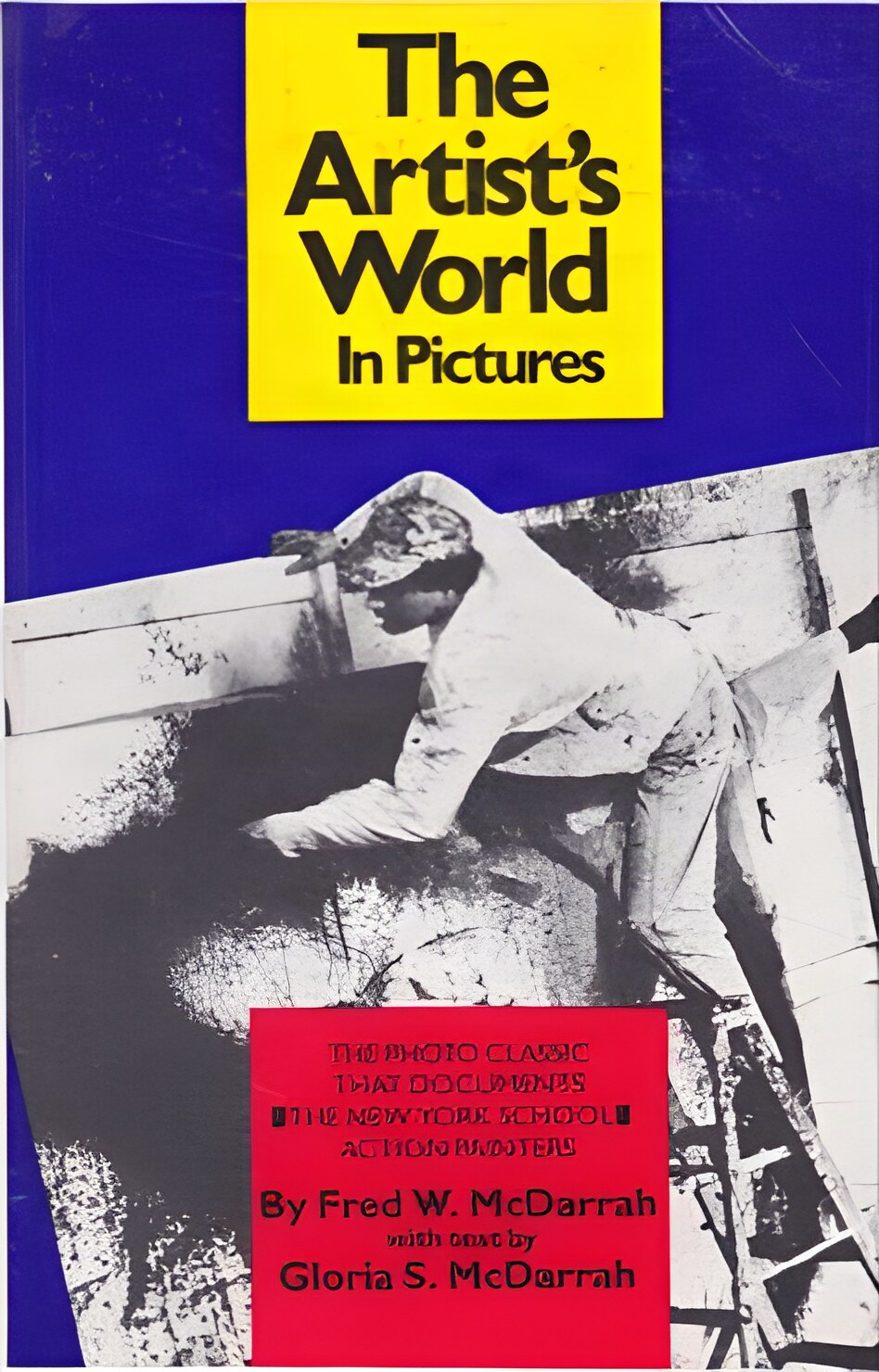
Softcover. NY, Shapolsky Publishers, 2nd Ed., 1988, Book: Very Good, Dust Jacket: None, Softcover, 196 pages, b&w photos throughout. Introduction by Thomas Hess. Fred McDarrah (1926-2007) was a photojournalist, author, and staff photographer for the Village Voice known for documenting the Beat Generation and the New York art world. The present work is a vital document of an exuberant moment in cultural history. Clean copy.
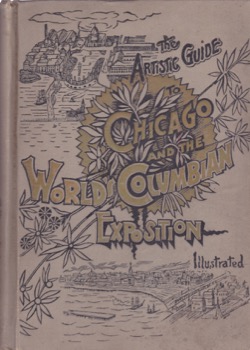
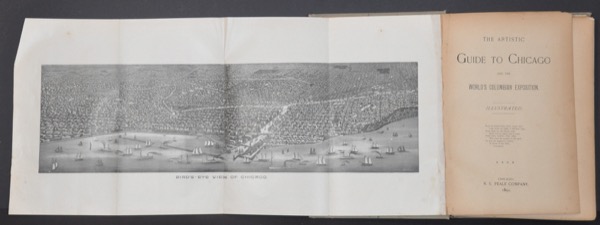
Hardcover. Columbian Art Company, 1st, 1892, Book: Very Good, Dust Jacket: None, Hardcover, bound in gray cloth with black and gilt titles and black embossed images to front. Illustrated with a fold-out frontispiece and with several full-page black and white illustrations, styled as plates, all illustrations in black and white. First published by R.S. Peale Co. the year before. A lovely overview of tourist spots in Chicago that World's Fair attendees could visit while enjoying the fair.
Hardcover. Westport CT, Greenwood Press, 1st, 2003, Book: Very Good, Dust Jacket: None, Hardcover, glazed pictorial boards, 177 pages. Postma draws on primary sources and current historical scholarship to offer secondary readers and researchers a comprehensive and well-written history. He covers the entire Atlantic slave trade era, from the 1400s to the final abolition of chattel slavery in the New World in 1888. The focus is on Africa and the entire New World. While he describes the many horrors of the Middle Passage, he also examines how the slave trade contributed to the development of the modern international economy. The last chapters discuss the efforts to abolish the slave trade and its legacy. Throughout, Postma documents the sources that support his discussion and conclusions. Chapter notes are supplemented by an extensive annotated bibliography that includes books, articles, films, and electronic resources. The volume concludes with biographical sketches of important people and excerpts from primary documents written by enslaved Africans and white officials. The black-and-white reproductions of period illustrations add little to the text. Clean copy.
Hardcover. Seattle, Fantagraphics, 1st, 2023, Book: Very Good, Dust Jacket: None, Hardcover, pictorial cloth, 212 pages. Atlas holds a special place among aficionados of the genre, producing more horror titles and issues by far, than anyone in the industry. While the quality of EC's six horror/sci-fi titles was unsurpassed with their elite cadre of talent, Atlas was the equivalent of the B-movies studio, churning out anywhere from 8 to 12 different horror titles a month, giving a wider array of artists, including some of the best craftsmen of the era, a chance to show off their talents: in addition to those already mentioned, future volumes will include Bill Everett, John Romita, Bernie Krigstein, Jerry Robinson, Harry Anderson, and Matt Fox. Stories from Marvel's Atlas line have barely been reprinted. The Fantagraphics Atlas Comics Library is the first attempt to publish a carefully curated line of Atlas titles. The first volume, Adventures Into Terror, includes a treasure trove of stories drawn by many of the most stylistically accomplished artists of the Golden Age including George Tuska, Carl Burgos, Mike Sekowsky, Joe Maneely, and Joe Sinnott. Highlights include Russ Heath's two-part story "The Brain" from issue #4 and "Return of the Brain" from issue #6; Basil Wolverton's classic "Where Monsters Dwell" from issue #7; Gene Colan's moody "House of Horror" in issue #3; and Don Rico's wild layouts are on display from #4's "The Torture Room." The stories are written firmly in the tradition of the pulpy, perverse, borderline deranged style that brought Fredric Wertham, the United States Senate Sub-Committee, and public opinion down like a sledgehammer on comics in the early '50s. Edited by Atlas scholar Dr. Michael J. Vassallo, scanned directly from the published comics, and meticulously restored by Allan Harvey, the first volume of the new Fantagraphics Atlas Library series is an event among comics lovers, collectors, and historians.
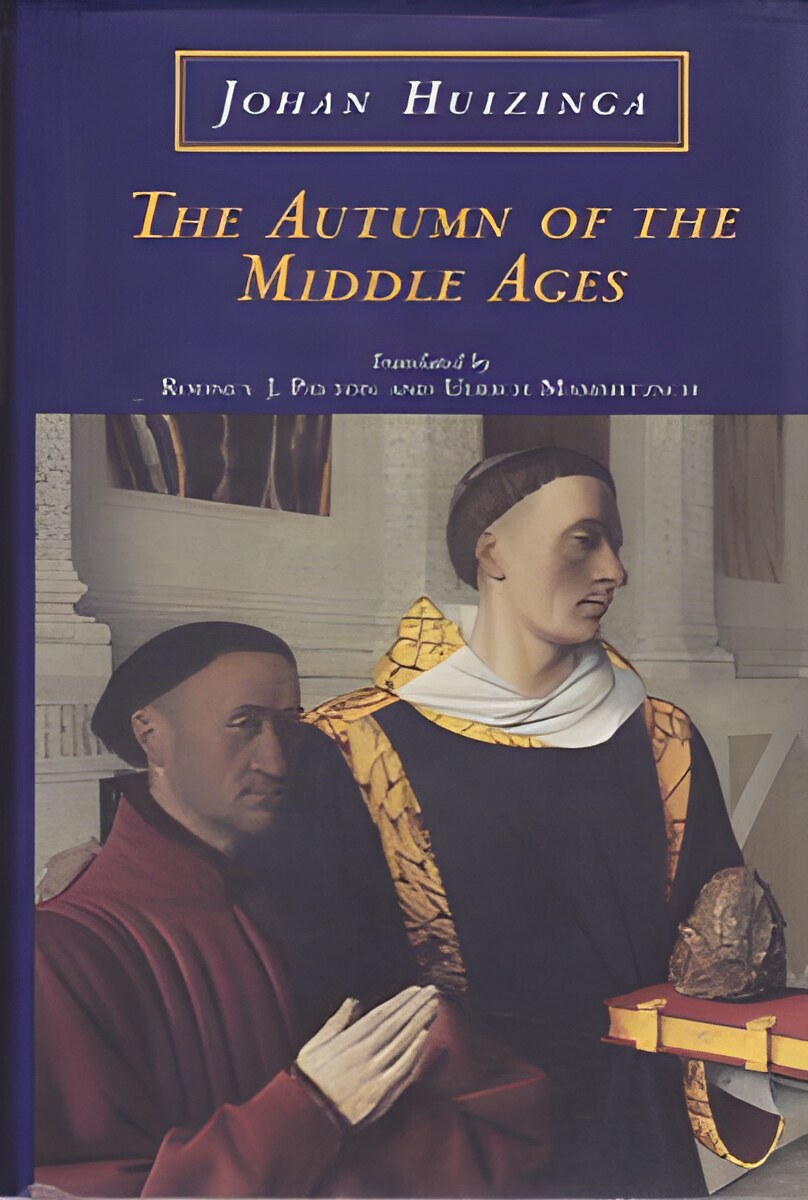
Hardcover. Chicago, University of Chicago Press, 1st, 1996, Book: Very Good, Dust Jacket: Very Good, Hardcover in a bright dust jacket. Clean, bright copy, 467 pages. Illustrated with 36 pages of historic Plates, b/w, on coated paper. One of the most famous works of history, Johan Huizinga presents a brilliant portrait of life, thought, and art in 14th and 15th century France and the Netherlands.
Hardcover. Chicago, University of Chicago Press, 1st, 1996, Book: Very Good, Dust Jacket: Very Good, Hardcover in a bright dust jacket. Clean, bright copy, 467 pages. Illustrated with 36 pages of historic Plates, b/w, on coated paper. One of the most famous works of history, Johan Huizinga presents a brilliant portrait of life, thought, and art in 14th and 15th century France and the Netherlands.
Softcover. Los Angeles County Museum of Art, 1st, 1980, Book: Very Good, Dust Jacket: None, Softcover, 288 pages. B&w illustrations, facsimiles, portraits. Published to accompany an exhibition at the Los Angeles County Museum of Art. Groundbreaking exhibition of Russian and Soviet art, with a special focus on Suprematism and Constructivism. Full of great information, excellent biographical entries. Essential art history.
Hardcover. Cambridge MA, Barefoot Books, 1st, 2004, Book: Very Good, Dust Jacket: Very Good, Hardcover in a bright, unclipped dust jacket, 96 pages. SIGNED BY BOTH AUTHORS on a tipped-in bookplate on the front fly leaf. Lovely color illustrations by Rebecca Guay. Let yourself be drawn into the magical world of the dance with this sumptuous anthology. Love, laughter, betrayal, adventure and tragedy intertwine to create stories that will reach deep into the heart and dreams of the reader. The story of "The Sleeping Beauty" will whisk you away to the thorny castle where Princess Aurora awaits her prince; the comedy and confusion of "Coppelia" will delight you, and the magical adventures of Clara in "The Nutcracker" will entrance you. Featuring a brief history of classical ballet, as well as historical details of each dance, composition, choreography and early performances, this book will captivate anyone with a love of this awe-inspiring art.
Hardcover. NY, H. Bittner and Company, 1st, 1945, Book: Very Good, Dust Jacket: None, Hardcover, blue buckram stamped with gilt code of arms and lettering on spine. Limited to 1000 copies. A study of an artistic family who created theatrical designs dating from the 1680s to the 1780s under eight names. Illustrated with 53 plates. Small review slip tipped on front fly leaf. Some darkening to covers and spine, internally clean and bright. No dust jacket.
Hardcover. NY, Abrams Press, 1st, 2022, Book: Very Good, Dust Jacket: Very Good, Hardcover in a bright, unclipped dust jacket. Illustrations, 470 pages with index. A groundbreaking, timely history of the largely unknown early days of Black basketball, bringing to life the trailblazers, entertainers, gangsters, and supremely talented athletes who made the game From the introduction of the game of basketball to Black communities in 1904 to the integration of the NBA in 1950, there was a full era in the development of the game. It was a time when Black players were discriminated against and opportunities were limited, but entrepreneurial men and women nurtured the game and breathed life into a sport they loved. This period was known as the Black Fives Era (teams at the time were often called "fives"), and was akin to the golden age of the Negro Leagues. But despite fierce rivalries between big-city clubs, innovative managers, and star players, this period is almost entirely unknown to basketball fans. Claude Johnson has made it his mission to change that. An advocate fiercely committed to our history, for more than two decades Johnson has conducted interviews, mined archives, collected artifacts, and helped to preserve an important, culturally rich era that otherwise would have been lost. The Black Fives is the result of his work, a landmark narrative history that will braid together the stories of these forgotten pioneers and rewrite our understanding of the story of basketball.
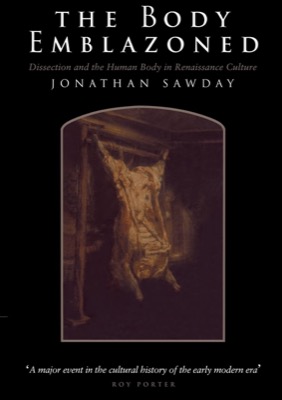
Softcover. London, Routledge, reprint, 1996, Book: Very Good, Dust Jacket: None, Softcover, 325 pages with index, b&w illustrations. An outstanding piece of scholarship and a fascinating read, The Body Emblazoned is a compelling study of the culture of dissection the English Renaissance, which informed intellectual enquiry in Europe for nearly two hundred years. In this outstanding work, Jonathan Sawday explores the dark, morbid eroticism of the Renaissance anatomy theatre, and relates it to not only the great monuments of Renaissance art, but to the very foundation of the modern idea of knowledge. Though the dazzling displays of the exterior of the body in Renaissance literature and art have long been a subject of enquiry, The Body Emblazoned considers the interior of the body, and what it meant to men and women in early modern culture. Clean, bright copy.
Hardcover. UK, Osprey Military Books, 1st, 1999, Book: Very Good, Dust Jacket: None, Hardcover, brown cloth with gilt lettering on spine, 160 pages. The Boer War devastated the South African economy and left a legacy of bitterness. It saw the invention of the concentration camp and a new style of guerilla warfare. This history of the campaign includes artwork of maps, weapons and uniforms, with contemporary photography from the period. Clean copy. No dust jacket.
Hardcover. NY, McGraw Hill, 2nd pr., 1974, Book: Very Good, Dust Jacket: Very Good, Hardcover. A history of illustrated flower books with a description of the various types. Handsome folio volume, 11" by 14.5". Olive green silk cloth binding, bright gilt spine titles, blindstamped flower design to front cover. 208 pages with bibliography and index. 126 illustrations, including 40 full page color plates taken from rare printed books. The period 1485 to 1850 is covered, after which standards of reproduction began to decline. There is a small crease which runs down the center of the dj font panel, but not conspicuous. clean copy.
Hardcover. Last Gasp, 1st, 2019, Book: Very Good, Dust Jacket: None, Hardcover, pictorial boards, 288 pages. Illustrated with photographs and back and white illustrations. Introduction by Drew Friedman. Fantastic reference work on the history and back story of the creation of R. Crumb's legendary humor comics anthology.
Hardcover. Last Gasp, 1st, 2019, Book: Very Good, Dust Jacket: None, Hardcover, 288 pages. The Book of Weirdo is the definitive - and hugely entertaining- examination of Weirdo magazine, renowned underground comix cartoonist Robert Crumb's legendary humor comics anthology, which was originally published throughout the 1980s. A "low-brow" counterpoint to Art Spiegelman and Francoise Mouley's rather high-faluttin' RAW comix publication, Weirdo influenced an entire generation of alternative and neo-underground artists, as well as creative refuge for the underground comix veterans, and this book features the complete story of the well-recalled comics magazine, along with testimonials from over 130 of the publication's contributors, including interviews with Weirdo's three editors - R. "Keep on Truckin'" Crumb, Peter "Hate" Bagge, and Aline "The Bunch" Kominsky-Crumb - and publisher "Baba Ron" Turner. As much a history of the alternative comics scene of the 1980s - from New York City punk to Seattle grunge - this exhaustive retrospective includes rare and unseen artwork from that era, as well as new comics from modern-day artists celebrating their love for the great oddball magazine. In its time, the periodical featured the finest work of many artists, particularly the best material by Robert Crumb himself, Weirdo's founder and best known for ZAP Comix, Fritz the Cat, and Mr. Natural, and a man widely heralded as the greatest cartoonist of all time. We get photos of the various contributors, some samples of the work, more than a few brand-spanking-new artistic tributes to the magazine and the people who made it. And lots and lots of stories about what it was like to work for and with Robert Crumb.
Hardcover. Chicago, University of Chicago Press, 1st, 2015, Book: Very Good, Dust Jacket: None, Hardcover, 336 pages. In a world where nearly everyone has a cellphone camera capable of zapping countless instant photos, it can be a challenge to remember just how special and transformative Polaroid photography was in its day. And yet, theres still something magical for those of us who recall waiting for a Polaroid picture to develop. Writing in the context of two Polaroid Corporation bankruptcies, not to mention the obsolescence of its film, Peter Buse argues that Polaroid was, and is, distinguished by its processby the fact that, as the New York Times put it in 1947, the camera does the rest. Polaroid was often dismissed as a toy, but Buse takes it seriously, showing how it encouraged photographic play as well as new forms of artistic practice. Drawing on unprecedented access to the archives of the Polaroid Corporation, Buse reveals Polaroid as photography at its most intimate, where the photographer, photograph, and subject sit in close proximity in both time and spacemaking Polaroid not only the perfect party camera but also the tool for frankly salacious pictures taking. Along the way, Buse tells the story of the Polaroid Corporation and its ultimately doomed hard-copy wager against the rising tide of digital imaging technology. Still in publisher's shrinkwrap.
Hardcover. NY, The Monacelli Press, 1st, 2005, Book: Very Good, Dust Jacket: Very Good, Hardcover, 640 pages, pofusely illustrated. In the late nineteenth century, Chicago -- the birthplace of modern architecture in the United States -- was a magnet for aspiring architects. The city was forced to rebuild after the destruction wrought by the Great Fire of 1871 and also to expand to accommodate a surge in the population. The seemingly endless demand for taller and more sophisticated buildings offered young draftsmen an unprecedented opportunity to influence the design of the American skyscraper. The Chicago Architecture Club: Prelude to the Modern documents the history of these draftsmen, the organization they founded, and its role in shaping architectural education and modern architectural practice.
Hardcover. NY, The Monacelli Press, 1st, 2005, Book: Very Good, Dust Jacket: Very Good, Hardcover, 640 pages, pofusely illustrated. In the late nineteenth century, Chicago -- the birthplace of modern architecture in the United States -- was a magnet for aspiring architects. The city was forced to rebuild after the destruction wrought by the Great Fire of 1871 and also to expand to accommodate a surge in the population. The seemingly endless demand for taller and more sophisticated buildings offered young draftsmen an unprecedented opportunity to influence the design of the American skyscraper. The Chicago Architecture Club: Prelude to the Modern documents the history of these draftsmen, the organization they founded, and its role in shaping architectural education and modern architectural practice.
Softcover. UK, Cambridge University Press, 1st pbk, 2008, Book: Very Good, Dust Jacket: None, Softcover in pictorial wrappers, 352 pages. A groundbreaking study of cultural life during a turbulent and formative decade in contemporary China, this book seeks to explode several myths about the Cultural Revolution (officially 1966-1976). Through national and local examination of the full range of cultural forms (film, operas, dance, other stage arts, music, fine arts, literature, and even architecture), Clark argues against characterizing this decade as one of chaos and destruction. Rather, he finds that innovation and creativity, promotion of participation in cultural production, and a vigorous promotion of the modern were all typical of the Cultural Revolution. Using a range of previously little-used materials, Clark forces us to fundamentally reassess our understanding of the Cultural Revolution, a period which he sees as the product of innovation in conflict with the effort by political leaders to enforce a top-down modernity. Clean copy.
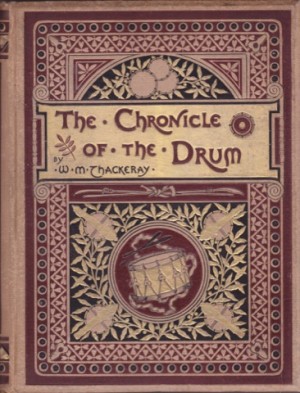
Hardcover. NY, Charles Scribner's Sons, 1st thus, 1882, Book: Very Good, Dust Jacket: None, Hardcover, gray cloth with red, black, and gilt embossed spine title, cover title, and bright cover illustration and decoration. Boards have beveled edges. All edges gilt. 70 pages, tissue-guarded frontispiece, 30 full-page illustrations; artists include A.B. Frost. Howard Pyle. Fredericks, J. S. Davis and others. A ballad written in Paris in 1841 at the time of the second funeral of Napoleon and is a narrative of French military history. Slender piece of cloth chipped away on rear cover, otherwise clean, very good.
Hardcover. Lexington KY, University of Kentucky Press, 1st, 1968, Book: Very Good, Dust Jacket: None, Hardcover, light green cloth, 307 pages. This volume of Eaton's selected writings forms a rich and provocative mosaic of southern life from the years of Thomas Jefferson to the close of the Civil War. These selections, perceptively edited by Albert D. Kinvan, show the wide range of Eaton's interests, including the impact of slavery, the influence of religion, and the art of politics, and they demonstrate the depth of his insight into the civilization of the Old South. Name on front fly leaf, otherwise clean.

 "The Artisan of Ipswich: Craftsmanship and Community in Colonial New England by: Robert Tarule")
 "The Artist & the Country House: A History of Country House & Garden View Painting 1540-1870by: John Harris")
 "The Artist Grows Old: The Aging of Art and Artists in Italy, 1500-1800by: Philip Sohm")

 "The Atlantic Slave Tradeby: Postma, Johannes")


 "The Avant-Garde in Russia, 1910-1930: New Perspectives by: Stephanie Barron (Editor), Maurice Tuchman (Editor)")
 "The Barefoot Book of Ballet Stories (SIGNED COPY)by: Jane Yolen , Heidi E. Y. Stemple, et al.")

 "The Black Fives: The Epic Story of Basketball's Forgotten Era by: Claude Johnson")

 "The Book of Flowers: Four Centuries of Flower Illustrationby: Coats, Alice M.")
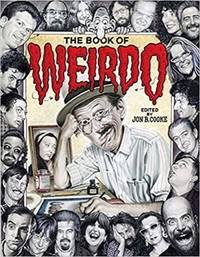
 "The Book of Weirdo: A Retrospective of R. Crumb's Legendary Humor Comics Anthology by: Cooke, Jon B.")


 "The Camera Does the Rest: How Polaroid Changed Photographyby: Peter Buse")
 "The Chicago Architectural Club: Prelude to the Modernby: Wilbert Hasbrouck")
 "The Chicago Architectural Club: Prelude to the Modernby: Wilbert Hasbrouck")