Hardcover. Ames IA, University Museums at Iowa State, 1st, 2006, Book: Very Good, Dust Jacket: Very Good, Hardcover in a bright dust jacket, 398 pages. Mainly b&w illustrations with a small color section in center. In 1927, President Raymond Hughes began planning aesthetic improvements to the Iowa State campus. In 1933, at the depth of the Great Depression, and in an act that dramatically illustrates his artistic commitment, he began discussion with Grant Wood and Christian Petersen for each to create a significant mural cycle for the Iowa State College campus in Ames. The federal New Deal s Public Works of Art Project began in 1934 and offered a grand opportunity to employ artists in executing Grant Wood s painted mural for the library, When Tillage Begins, Other Arts Follow, and Christian Petersen s sculpted mural for the Dairy Industry Building, The History of Dairying. This book presents the first history of the Public Works of Art Project in Iowa and the first in-depth examination of the Grant Wood and Christian Petersen murals at Iowa State College. It also discusses the co-operative painting group that Grant Wood developed and illuminates the collaborative nature of the Iowa Project among its artists, as well as between the State University of Iowa in Iowa City and Iowa State College in Ames. Clean, like new. DOMESTIC SHIPPING ONLY.
Hardcover. Newtown CT, The Taunton Press, 1st, 2006, Book: Very Good, Dust Jacket: Very Good, Hardcover in a bright dust jacket, 266 pages. The past has left behind only scattered clues that, on their own, provide little insight into how the people of early America lived and the details of their daily lives. The photographs in this book, the deeply informed narrative that accompanies them, and the eyewitness accounts of daily life that the author weaves throughout, provide a fresh perspective on our early American ancestors and the places they called home. This book is about how their houses and their life in them, from the wealthy to the impoverished, from New York City to the small farms and plantations of the South, from coastal fishing towns to the Western frontier of Indiana and Kentucky. The stories focus on the remarkably vivid differences from one part of the country to the next, class and culture, and the realities of everyday life for American families. These stories twine around a wide selection of HABS photographs of early houses, covering the variety and evolutions of house styles -- not by labeling the style but by explaining the style in the context of everyday life. Richly illustrated with handsome black-and-white photography of old houses from the Library of Congress Historic American Building Survey (HABS) collection and supplemented with period woodcuts, engravings, drawings, paintings, artifacts, and maps, the book is printed on a 4-color press for a depth of tone. Sidebar excerpts from diaries, journals, and letters inject graphic eyewitness descriptions, adding an additional layer of insight. The book also includes sidebars called Still Standing that traces the history of specific houses, from their origins to the present and includes information on the original family, how the house has evolved over the centuries, and how it's used today.
Hardcover. New Haven CT, Yale University Press, 1st, 2014, Book: Very Good, Dust Jacket: Very Good, Hardcover in a bright dust jacket, 440 pages, colo and b&w illustrations. The first biography in more than twenty years of James McNeill Whistler (1834-1903) is also the first to make extensive use of the artist's private correspondence to tell the story of his life and work. This engaging personal history dispels the popular notion of Whistler as merely a combative, eccentric, and unrelenting publicity seeker, a man as renowned for his public feuds with Oscar Wilde and John Ruskin as for the iconic portrait of his mother. The Whistler revealed in these pages is an intense, introspective, and complex man, plagued by self-doubt and haunted by an endless pursuit of perfection in his painting and drawing. In his beautifully illustrated and deeply human portrayal of the artist, Daniel E. Sutherland shows why Whistler was perhaps the most influential artist of his generation, and certainly a pivotal figure in the cultural history of the nineteenth century. Whistler comes alive through his own magnificent work and words, including the provocative manifestos that explained his bold artistic vision, sparked controversy in his own time, and resonate to this day.
Hardcover. New Haven CT, Yale University Press, 1st, 2014, Book: Very Good, Dust Jacket: Very Good, 440 pages, illustrations in color and b&w. Clean, unmarked copy with only minor wear to dust jacket. The first biography in more than twenty years of James McNeill Whistler (1834-1903) is also the first to make extensive use of the artist's private correspondence to tell the story of his life and work. This engaging personal history dispels the popular notion of Whistler as merely a combative, eccentric, and unrelenting publicity seeker, a man as renowned for his public feuds with Oscar Wilde and John Ruskin as for the iconic portrait of his mother. The Whistler revealed in these pages is an intense, introspective, and complex man, plagued by self-doubt and haunted by an endless pursuit of perfection in his painting and drawing. In his beautifully illustrated and deeply human portrayal of the artist, Daniel E. Sutherland shows why Whistler was perhaps the most influential artist of his generation, and certainly a pivotal figure in the cultural history of the nineteenth century. Whistler comes alive through his own magnificent work and words, including the provocative manifestos that explained his bold artistic vision, sparked controversy in his own time, and resonate to this day.
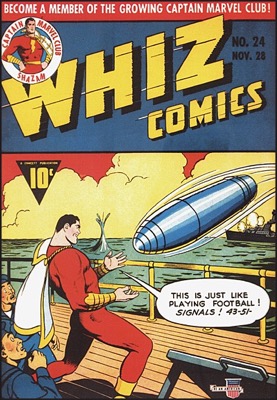
Softcover. UK, PS Artbooks, reprint, 2024, Book: Very Good, Dust Jacket: None, Softcover, pictorial wrappers. A facsimile reprint from 1941, 68 pages. Color art by C.C. Beck, Pete Costanza, Charles Sultan, Binder Studio et al. Another classic pre-war issue of Fawcett's #1 title, where Captain Marvel and all these other characters got their start. CM goes after a Nazi commander to rescue Whitey and Mr. Morris. Classic cover! Back-up strips include Doctor Voodoo, Ibis, Golden Arrow, Spy Smasher, Lance O'Casey.
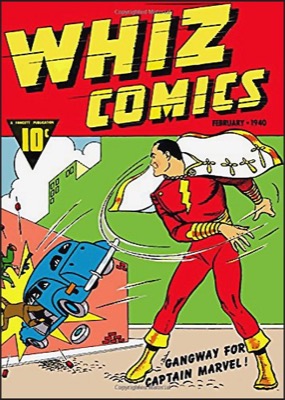
Softcover. UK, PS Artbooks, reprint, 2024, Book: Very Good, Dust Jacket: None, Softcover, pictorial wrappers. A facsimile reprint from 1940, 68 pages. Color art by C.C. Beck, Pete Costanza et al. The origin and first adventures of Captain Marvel (issue #1 was an ashcan). Young Billy Batson discovers the magical word that transforms him into the mighty Captain Marvel. Includes the first appearance of these back-up strip stars, most who would get their own title: Spy Smasher, Ibis, Golden Arrow, Dan Dare, Scoop Smith and Lance O'Casey. First appearance of arch villain Sivana. Clean, like new.
Hardcover. NY, GP Putnam And Sons, 1st, 2002, Book: Very Good, Dust Jacket: Very Good, Hardcover in a bright, unclipped dust jacket. his counting book has so much going for it that the inexplicable and jarring turn it takes at number seven is disappointing. Its most outstanding feature is Laroche's artwork-a mixture of drawing, painting, and paper-cutting on a variety of surfaces-that offers exquisite detail, from white-capped waves to feathery moth antennae to architectural features on the carefully rendered buildings. And there are more delights to this book: an afterword on the history of lighthouses; a key to the 11 found in the book; and handsome endpapers that list American lighthouses in continuous rows, state by state.
Chicago, CIty Files Press, 1st, 2008, Book: Very Good, Dust Jacket: Very Good, Hardcover in a bright dust jacket. A wonderful collection of amateur photographs. These personal snapshots form a pictorial history of everyday Americans from the last century. Unpaginated, 350 b&w and color images. Clean copy.
Hardcover. Jackson MS, University Press of Mississippi, 1st, 2014, Book: Very Good, Dust Jacket: None, Hardcover, 240 pages. Like new in publisher's shrink-wrap. Cartoonist Winsor McCay (1869-1934) is rightfully celebrated for the skillful draftmanship and inventive design sense he displayed in the comic strips Little Nemo in Slumberland and Dream of the Rarebit Fiend. McCay crafted narratives of anticipation, abundance, and unfulfilled longing. This book explores McCay's interest in dream imagery in relation to the larger preoccupation with fantasy that dominated the popular culture of early twentieth-century urban America. McCay's role as a pioneer of early comics has been documented; yet, no existing study approaches him and his work from an art historical perspective, giving close readings of individual artworks while situating his output within the larger visual culture and the rise of modernism. From circus posters and vaudeville skits to department store window displays and amusement park rides, McCay found fantastical inspiration in New York City's burgeoning entertainment and retail districts. Wide Awake in Slumberland connects McCay's work to relevant children's literature, advertising, architecture, and motion pictures in order to demonstrate the artist's sophisticated blending and remixing of multiple forms from mass culture. Studying this interconnection in McCay's work and, by extension, the work of other early twentieth-century cartoonists, Roeder traces the web of relationships connecting fantasy, leisure, and consumption. Readings of McCay's drawings and the eighty-one black and white and color illustrations reveal a man who was both a ready participant and an incisive critic of the rising culture of fantasy and consumerism.
Hardcover. NY, Abbeville Press, 1st US, 1990, Book: Very Good, Dust Jacket: Very Good, Hardcover, 272 pages, illustrated throughout with 700 illustrations, including 194 in full color. Minor edgewear to dust jacket. Clean, tight copy.
Hardcover. NY, Atlantic Monthly Press , 1st, 2020, Book: Very Good, Dust Jacket: Very Good, Hardcover in a bright, unclipped dust jacket. In 1911, famed cartoonist Winsor McCay debuted one of the first animated cartoons, based on his sophisticated newspaper strip "Little Nemo in Slumberland," itself inspired by Freud's recent research on dreams. McCay is largely forgotten today, but he unleashed an art form, and the creative energy of artists from Otto Messmer and Max Fleischer to Walt Disney and Warner Bros.' Chuck Jones. Their origin stories, rivalries, and sheer genius, as Reid Mitenbuler skillfully relates, were as colorful and subversive as their creations-from Felix the Cat to Bugs Bunny to feature films such as Fantasia-which became an integral part and reflection of American culture over the next five decades. Pre-television, animated cartoons were aimed squarely at adults; comic preludes to movies, they were often "little hand grenades of social and political satire." Early Betty Boop cartoons included nudity; Popeye stories contained sly references to the injustices of unchecked capitalism. "During its first half-century," Mitenbuler writes, "animation was an important part of the culture wars about free speech, censorship, the appropriate boundaries of humor, and the influence of art and media on society." During WWII it also played a significant role in propaganda. The Golden Age of animation ended with the advent of television, when cartoons were sanitized to appeal to children and help advertisers sell sugary breakfast cereals.
Softcover. San Francisco, Pomegranate Books, 1st, 1993, Book: Very Good, Dust Jacket: None, Softcover, 112 pages, color photos. "Art cars" are vehicles transformed by their creative owners into elaborately decorated statements of individual mobility. Blank, an independent filmmaker and art car aficionado, spent two years traveling the highways and byways of America in search of people who shared his unusual passion for artistically personalized transportation. The result was an independent documentary film (also entitled Wild Wheels ) and this book: a zany testament to the far reaches of the creative spirit enlivened by more than 100 color photographs and descriptions of 42 attention-grabbing autos with humorous names like the Beaded Bug, the Hippomobile, and the Grass Car. The book also contains brief stories about the artists who created them, providing insight into the ideas and emotions that sparked this novel pop art form.
Hardcover. NY, Holt, Rinehart and Winston, 1st, 1967, Book: Very Good, Dust Jacket: Good, Hardcover in a worn, chipped dust jacket. Dark blue cloth, 274 pages. Fully illustrated with reproductions of Father Point's paintings and drawings, most in full color. DOMESTIC SHIPPING ONLY.
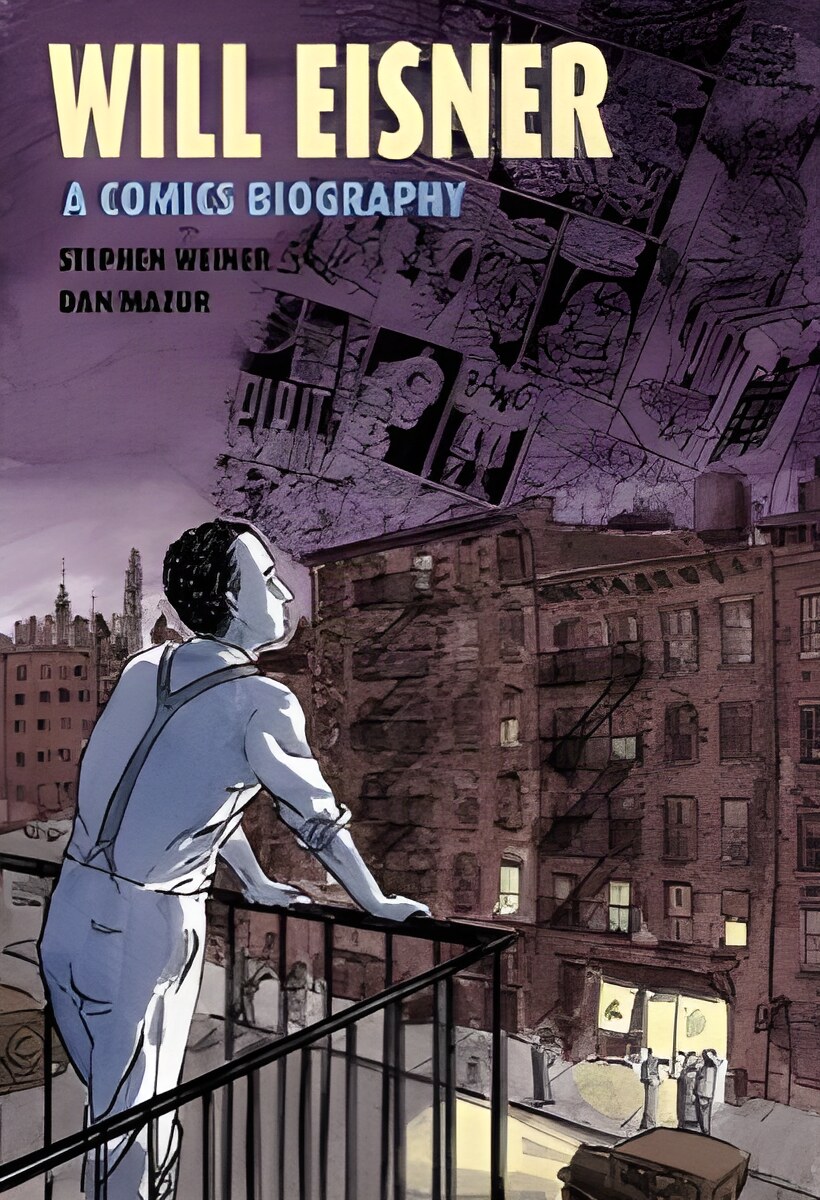
Hardcover. NY, Nantier Beall Minoustchine, 1st, 2025, Book: Very Good, Dust Jacket: None, Hardcover, pictorial boards. Explore the life of Will Eisner, one of the most influential artists in the history of comics through the most appropriate medium: a graphic novel! From his immigrant roots and childhood in New York, starting his own comics studio and business, and the creation and publication of his beloved comic, The Spirit, through inventing the term ' graphic novel' to convince a general trade publisher to publish the groundbreaking A Contract with God, you'll follow along in Eisner's life journey. With the most prestigious comics awards named after him, Will Eisner is forever celebrated not only in what he created but his unerring belief in comics' capacity to be better, to reach higher, to be a full art form in its own right. This is the life of this man of vision who helped to put comics on the map. Clean copy.
Hardcover. London, Sotheby's, 1st, 2006, Book: Very Good, Dust Jacket: None, Hardcover, glossy boards, 84 pages. The catalogue for an auction of a group of the original drawings Blake did to illustrate Blair's poem "The Grave," in 1805. These drawings had been lost, were recently re-discovered and were auctioned by Sothebys. The catalogue is of 20 lots, and theis essay by Bialler surveys the history and scholarship surrounding the works.
Hardcover. Birmingham AL, University of Alabama Press, 1st, 2007, Book: Very Good, Dust Jacket: Very Good, Hardcover, 64 pages. William Christenberry is enjoying wide exposure of his artistic body of work. Since the early 1960s, he has plumbed the regional identity of the American South, primarily centering on his early home in the Black Belt counties of Alabama, His poetic elucidation of Southern vernacular landscape and architecture using the media of photography, drawing, painting, collage, sculpture, and miniaturization reveals how history, the very story of place, is at the heart of his lifelong project.
Hardcover. New Haven CT, Yale University Press, 1st, 2009, Book: Very Good, Dust Jacket: Very Good, Hardcover, 192 pages. Admired for finding beauty in everyday surroundings, William Merritt Chase (1849-1916) brought an autobiographical element to his work, earning him a unique place in late-19th-century American art history. This book, the third of four volumes to document the complete works of Chase, traces his career as a landscape painter. Following Chase's training in Munich in the 1870s and his many trips to Spain in the early 1880s, his works became light filled and colorful. These paintings anticipate Chase's well-known park scenes of the 1880s painted in Brooklyn and New York and his 1890s works depicting the hills and shoreline adjacent to his home in Shinnecock Hills, Long Island, now recognized as being among the most important examples of American Impressionism. This book presents all of his known landscapes painted in oil, which include many of his best-loved works, in beautiful reproduction, accompanied by the most current and thorough documentation on them.
Hardcover. NY, Abrams, 1st, 2016, Book: Very Good, Dust Jacket: None, Hardcover in pictorial boards, 175 pages in color. William Wegman's postcard paintings reflect a lifetime of engagement with narrative, perspective, art history, architecture, popular culture, humor, and philosophy in art. Starting with one or more vintage postcards, Wegman constructs scenes that range from intimate interiors to cosmic vistas, filling audaciously complex spaces with intriguing incident. Collected together, the paintings possess the universal, encyclopedic, and mysterious qualities of their source materials. In addition to Martin Filler's introduction, a stellar group of contributors responds to the work.
Hardcover. Los Angeles, CA, J. Paul Getty Museum, 1st, 2013, Book: Very Good, Dust Jacket: Very Good, 112 pages. Hardcover with dust jacket. Very clean, unmarked copy still in publishers shrink-wrap. The Window in Photographs includes more than eighty color plates spanning the history of photography, all drawn from the J. Paul Getty Museum's permanent collection.
Softcover. Princeton, N.J., Princeton University Press, 1st, June 1990, Book: Very Good, Dust Jacket: None, Softcover, 77 pages, illustrated throughout in color and b&w. Clean, unmarked copy with only minor wear to wrappers. A catalog published on the occasion of the eponymous exhibition at The Art Museum, Princeton University, and the Wadsworth Atheneum in 1990. Appendix, bibliography, exhibition catalogue, chronology. Foreword by Allen Rosenbaum, 12 color plates and numerous other illustrations and photographs. ; Oblong 4to 11" - 13".
Hardcover. NY, Ballantine Books , 1st, 2008, Book: Very Good, Dust Jacket: Very Good, Hardcover in a bright, unclipped dust jacket, 368 pages illustrated in color. For thirty-five years, bestselling author and accomplished musician Jonathan Kellerman has been, as he puts it in his Introduction to this lavishly illustrated, endlessly fascinating volume, "chasing fabulous sound." The result of that quest is a world-class collection of guitars, mandolins, and other stringed instruments that number more than 120 . . . and counting. Whether writing about household names such as Fender, Gibson, Martin, and Dobro or about marques revered by aficionados-D'Angelico, Hauser, Stromberg, and Torres-Kellerman brings to bear the same sure storytelling instincts and keen attention to detail that characterize his bestselling fiction, making each entry a sparkling mini-essay as much to be savored as the sensual photographs that follow.
Softcover. Bloomington, IN, Indiana University Press, 1st, 2015, Book: Very Good, Dust Jacket: None, 232 pages. Softcover. A very clean, unmarked copy with only minor edgewear. Black and white photographs throughout. The center of the art world before the war, Paris fired the Nazis' greed. The discovery of more than 1,500 prized paintings and drawings in a private Munich residence, as well as a recent movie about Allied attempts to recover European works of art, have brought Nazi plundering back into the headlines, but the thievery was far from being limited to works of art. From 1942 onwards, ordinary Parisian Jews-mostly poor families and recent immigrants from Eastern Europe-were robbed, not of sculptures or paintings, but of toys, saucepans, furniture, and sheets. Witnessing the Robbing of the Jews tells how this vast enterprise of plunder was implemented in the streets of Paris by analyzing images from an album of photographs found in the Federal Archives of Koblenz. Brought from Paris in 1945, the photographs were cataloged by the staff of the Munich Central Collecting Point. Beyond bearing witness to the petty acts of larceny, these images provide crucial information on how the Germans saw their work. They enable us to grasp the "Nazi gaze" and to confront the issue of the relation between greed and mass destruction.
Hardcover. US, Conran, 2009, Book: Very Good, Dust Jacket: Very Good, Like new hardcover in publisher's shrink-wrap. 336 pages. In this endlessly provocative volume, Stephen Bayley, design authority and cultural critic, takes on the female body, analyzing each crook and every curve as a sign, a symbol, and as a designed object. From Aphrodite to the industrialization of the breast, and from pin-ups to the future of sex, WOMAN AS DESIGN is a fascinating mix of design, cultural history, erotica, fashion, and fetishism.

 "When Tillage Begins, Other Arts Follow: Grant Wood and Christian Petersen Muralsby: Lea Rosson DeLong")

 "Whistler: A Life for Art's Sakeby: Daniel E. Sutherland")
 "Whistler: A Life for Art's Sakeby: Sutherland, Daniel E.")


 "Who Sees The Lighthouse?by: Ann Fearrington and Giles Laroche")
 "Who We Were: A Snapshot History of Americaby: Williams, Michael; Cahan, Richard; Osborn, Nicholas")
 "Wide Awake In Slumberland: Fantasy, Mass Culture And Modernism In The Art Of Winsor McCayby: Roeder, Katherine")
 "Wiener Werkstatte: Design in Vienna 1903-1932by: Schweiger, Werner")
 "Wild Minds: The Artists and Rivalries That Inspired the Golden Age of Animation by: Reid Mitenbuler")


 "William Blake: Designs For Blair's Grave~Sotheby's Auction Catalog May 2, 2006by: Sotheby's/William Blake")
 "William Christenberry's Black Beltby: William Christenberry , Guin A. Nance, et al.")
 "William Merritt Chase: Landscapes in Oil by: Ronald G. Pisano")
 "William Wegman: Paintings by: William Wegman")
 "Window in Photographs, Theby: Hellman, Karen")
 "Winslow Homer in the 1870s: Selections from the Valentine-Pulsifer Collectionby: Wilmerding, John")
 "With Strings Attached: The Art and Beauty of Vintage Guitars by: Jonathan Kellerman")
 "Witnessing the Robbing of the Jews: A Photographic Album, Paris, 1940-1944by: Gensburger, Sarah")
 "Woman As Design: Before, Behind, Between, Above, Belowby: Bayley, Stephen")