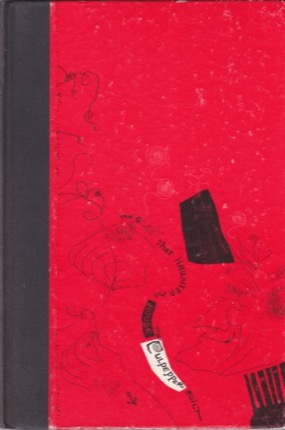
Hardcover. NY, Stein & Day, 1st, 1963, Book: Very Good, Dust Jacket: Very Good, Hardcover in a lightly worn dust jacket, unclipped. Quarter bound in publisher's gray cloth over brick boards, gilt lettering on brown panel on spine, author's facsimile signature, gilt, on cover, green endpapers, 457 pages with 164 black & white plates and 39 black & white line drawings. Red top edge. Corners a bit rubbed. Dust jacket with edgewear, closed tear.
Hardcover. London, Society for Promoting Christian Knowledge, 1st, 1892, Book: Good, Dust Jacket: None, Hardcover, blue cloth with gilt stamping. Black endpapers, title page states 1892 with only "Richard Clay and Sons, Limited/London & Bungay" on copyright page. A commentary on the biblical book of Revelation, also known as the Apocalypse, which describes the end of the world and the return of Christ. Throughout the book, Rossetti offers her insights and reflections on the various chapters and verses of the Apocalypse. She provides a devotional perspective, emphasizing the spiritual lessons that can be gleaned from the text. The book is divided into chapters, each of which covers a different section of the Apocalypse. Rossetti provides an overview of the text, followed by her commentary. Her last and perhaps most audacious volume, she found the Tractarian emphasis on emotional and imaginative freedom particularly helpful in her need for a woman's response to a 'masculine' text. Rear hinge cracked, 13 line quote from text written in ink on the half title page, otherwise clean.
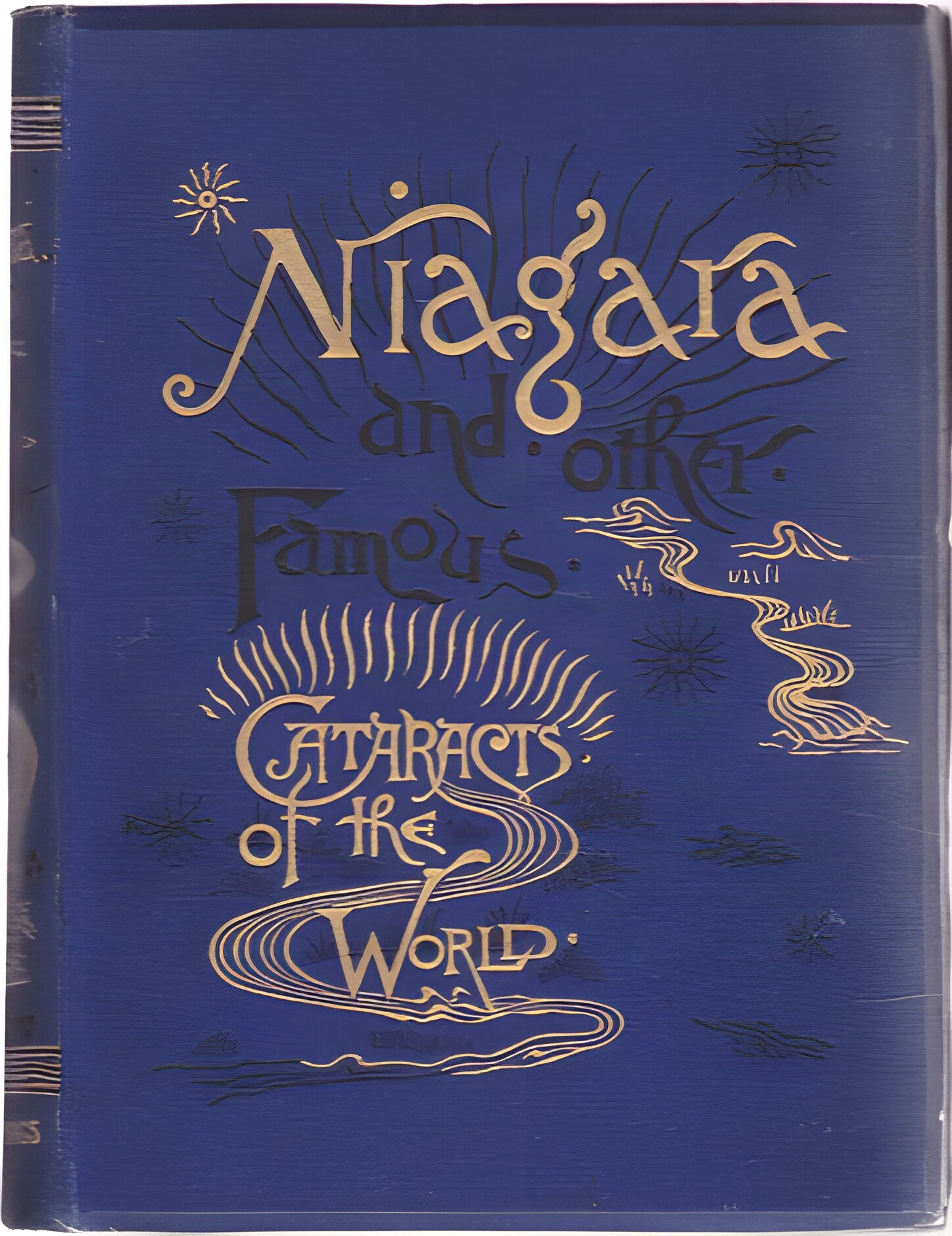
Hardcover. NY, A. C. Armstrong & Son, 1st, 1883, Book: Very Good, Dust Jacket: None, Hardcover, blue cloth, stamped in gilt and black, beveled edges, all edges gilt. 29 plates and one map, a very sound and bright copy. including Yosemite Falls of Yellowstone, upper Falls of Yellowstone, and the map of the Niagara region.
Hardcover. NY, Amphoto, 1st, 1981, Book: Very Good, Dust Jacket: Very Good, Hardcover in a bright, lightly edgeworn dust jacket. 192 pages with 80 color pages and over 80 black and white illustrations. This book goes behind the scenes in the fascinating world of fashion photography. It shows how the illusion of fashion photographs is created--shows the people, planning, and hard work behind these striking and sensual images. A combination of finished fashion photos, background shots, and interviews with top people in fashion, Moves step-by-step through the intricate process of producing a fashion photograph for a major magazine, newspaper, or catalog. Minor wear to dust jacket, clean copy.
Hardcover. New York , Phaidon, 1st , 2004, Book: Very Good, Dust Jacket: Very Good, Hardcover. Like new in publisher's shrink-wrap. Unpaginated (432 pages ), with 278 black-and-white plates. 11-3/4 x 8-3/4 inches. An epic collection of poignant and often controversial stories photographed and written by acclaimed social documentary photographer Eugene Richards.
Hardcover. NY, Robert M. McBride, 2nd pr., 1927, Book: Very Good, Dust Jacket: None, Hardcover, floral decorated boards, black cloth spine, paper title labels, lacking dust jacket. American playwright, Green won the Pulitzer in 1927 for In Abraham's Bosom. 317 pages, top edge stained red. A clean, bright copy.
Hardcover. NY, Charles Scribner's Sons, reprint, 1939, Book: Very Good, Dust Jacket: None, Hardcover, 597 pages, no dust jacket. Title page dated 1939, An early reprint without the 'A'. Bound in red cloth with black signature on top board and gold titles against black labels of spine. Light wear to top of cloth spine, mild darkening to spine. Clean copy.
Boston, Little Brown , 1st, 1971, Book: Very Good, Dust Jacket: None, Hardcover, green cloth stamped in black. B&w drawings by Erik Blegvad. Previous owner's inscription on front fly leaf other wise very good, clean. A banker rents a house to Peter Finch, charging him next to nothing because there's a small volcano in the basement. Eventually, there is a volcanic eruption, but of course, not in the basement. The house is spared, the family is safe, the town officials get re-elected, and everyone lives happily ever after.
Hardcover. New York, Franklin Watts, 1st, 1959, Book: Very Good, Dust Jacket: Very Good, 83 pages. Black & white illustrations by Douglas Gorsline. Dust jacket has light edgewear. Dust jacket is protected by a mylar cover.
Softcover. Berkeley, University of California Press, 1st pbk, 2006, Book: Very Good, Dust Jacket: None, Softcover, 417 pages, b&w illustrations. Hollywood celebrities feared her. William Randolph Hearst adored her. Between 1915 and 1960, Louella Parsons was America's premier movie gossip columnist and in her heyday commanded a following of more than forty million readers. This first full-length biography of Parsons tells the story of her reign over Hollywood during the studio era, her lifelong alliance with her employer, William Randolph Hearst, and her complex and turbulent relationships with such noted stars, directors, and studio executives as Orson Welles, Joan Crawford, Louis B. Mayer, Ronald Reagan, and Frank Sinatra-as well as her rival columnists Hedda Hopper and Walter Winchell. Loved by fans for her "just folks," small-town image, Parsons became notorious within the film industry for her involvement in the suppression of the 1941 film Citizen Kane and her use of blackmail in the service of Hearst's political and personal agendas. As she traces Parsons's life and career, Samantha Barbas situates Parsons's experiences in the broader trajectory of Hollywood history, charting the rise of the star system and the complex interactions of publicity, journalism, and movie-making.
Hardcover. Chicago, University of Chicago Press , 1st, 2015, Book: Very Good, Dust Jacket: Very Good, Hardcover in a bright dust jacket. 280 pages. Preface by Geoff Dyer. Essay by David Van Reybrouck. Includes 20 color plates and 80 halftones. Still in publisher's shrinkwrap. The First World War presents a startlingly different perspective, one based on rare glass plate photographs, that reveals the war with previously unseen, even uncanny, clarity. Scanned from the original plates, with scratches and other flaws expertly removed, these oversized reproductions offer a wealth of unusual moments, including scenes of men in training, pictures of African colonial troops on the Western front, landscapes of astonishing destruction, and postmortem portraits of Belgian soldiers killed in action. Readers previously familiar with only black-and-white or sepia-toned prints of the hostilities will be riveted by the book's many authentic color photographs, products of the early autochrome method. From children playing war games to a wrenching deathbed visit, these images are extraordinary not only for their subject matter, but also for the wide range of emotions they evoke.
Hardcover. NY, Junior Literary Guild, 1st, 1931, Book: Very Good, Dust Jacket: None, Hardcover, green cloth with mild discoloration, 278 pages, previous owner's signature on page opposite half-title. Color frontis painting and black & white illustrations by Herbert Rogers.
Hardcover. NY, Thames & Hudson, 1st, 2021, Book: Very Good, Dust Jacket: Very Good, Hardcover in a bright dust jacket. 408 pages, color illustrations, In this provocative and resonant autobiography, world-renowned artist and feminist icon Judy Chicago reflects on her extraordinary life and career. Judy Chicago is America's most dynamic living artist. Her works comprise a dizzying array of media from performance and installation to the glittering table laid for thirty-nine iconic women in The Dinner Party (now permanently housed at the Brooklyn Museum), the groundbreaking Birth Project, and the meticulously researched Holocaust Project. She designed the monumental installation for Dior's 2020 Paris couture show and, in 2019, established the Judy Chicago Portal, which will help to accomplish her lifelong goal of overcoming the erasure that has eclipsed the achievements of so many women. The Flowering is her vivid and revealing autobiography, fully illustrated with photographs of her work, as well as never-before-published personal images and a foreword by Gloria Steinem. Black remainder line on bottom edge, otherwise clean and bright.
Hardcover. Baton Rouge, Louisiana State University, 1st, 1987, Book: Good, Dust Jacket: Fair, Hardcover in a lightly worn dust jacket, 227 pages, b&w illustrations. In this penetrating study, Carl Brasseaux looks beyond long-standing mythology to provide a critical account of early Acadian culture in Louisiana and the reasons for its survival. He convincingly dispels many received notions about the routes Acadians traveled from Nova Scotia to Louisiana, their original settlement sites, and the patterns of their subsequent migrations within the state, and closely examines the relations of Louisiana's Acadians with their black, Spanish, Indian, and Creole neighbors. In adapting to subtropical Louisiana, with its turmoil of alternating French and Spanish regimes, the Acadians exhibited industry, pragmatism, individualism, and the ability to close ranks in the face of a general threat. As Brasseaux reveals, Acadians' cohesiveness and insularity preserved the core elements of their culture and helped them adjust to new physical and social demands. Names, inscription to front fly leaf, interior clean and bright.
Hardcover. London, Rider & Co., 1st, 1928, Book: Very Good, Dust Jacket: None, Hardcover, green cloth covers, black lettering on spine, 143 pages. A spiritual guidebook that explores the four major initiations of the human soul. The book delves into the spiritual journey of the soul and its evolution through the four initiations: Birth, Baptism, Transfiguration, and Resurrection. Conroy draws on the teachings of ancient wisdom traditions and modern spiritual practices to provide readers with a comprehensive understanding of these initiations and their significance in the spiritual path. The book is written in a clear and accessible language and provides practical exercises and meditations to help readers deepen their spiritual practice. Name on front fly leaf, inscription on dedication page. Otherwise a clean, tight copy.
New York, Farrar, Straus and Giroux, 1st, 1976, Book: Very Good, Dust Jacket: Very Good, hardcover, 108 pages. Black & white illustrations by William Geldart. In a nice dust jacket.
Lawrence, KS, Spencer Museum of Art, 1st, 1984, Book: Very Good, Dust Jacket: None, Hardcover, 158 pages. Black & white illustrations throughout. No dust jacket.
Hardcover. NY, Alfred A. Knopf, 1st, 1933, Hardcover, black cloth stamped with gilt title and design, 68 pages. Gilt lettering on spine with light fading. This is the first printing with 1933 on title page and First Edition stated on copyright page. Illustrated with seven drawings on glossy stock by Gibran and two facsimile manuscript pages, all present and intact. Previous owner's signature on front fly leaf, mild wear to covers, faint foxing to endpapers, otherwise clean.
Hardcover. NY, Hugh Lauter Levin, 1st, 2002, Book: Very Good, Dust Jacket: Very Good, 100 pages. Hardcover with dust jacket. The planning and sketches for the famous installation that took place in 2005. Many black and white and color photographs. Bibliography.
Softcover. London, The Observer/Thames & Hudson, 1st, 1980, Book: Very Good, Dust Jacket: None, Softcover, 120 full-page black-and white plates. Semi-stiff pictorial covers, titled in purple. Published to accompany an exhibition at the National Portrait Gallery. Introduction by Patrick O'Donovan. This collection showcases the distinctive photographic work of Jane Bown, a renowned British photographer known for her ability to capture candid and evocative portraits with a "gentle eye." Clean, bright copy.
Softcover. Rutland VT, self-published, 2nd Ed., 1909, Book: Very Good, Dust Jacket: None, Softcover, red paper covers stamped with a black title and cartoon portrait of author. Yankee humor in the form of short sketches originally published in the Rutland Herald. The author (pictured in a photo on the first inside page) was a member of the Vermont legislature. Several cartoons by George Randall embellish the 90 pages of text. Ads in rear. Clean copy.
Hardcover. NY, Simon & Schuster, 1st, 1993, Book: Very Good, Dust Jacket: Very Good, Hardcover in a bright, unclipped dust jacket, 303 pages. Eighty percent of everything ever built in America has been built since the end of World War II. This tragic landscape of highway strips, parking lots, housing tracts, mega-malls, junked cities, and ravaged countryside is not simply an expression of our economic predicament, but in large part a cause. It is the everyday environment where most Americans live and work, and it represents a gathering calamity whose effects we have hardly begun to measure. In The Geography of Nowhere, James Howard Kunstler traces America's evolution from a nation of Main Streets and coherent communities to a land where everyplace is like noplace in particular, where the city is a dead zone and the countryside a wasteland of cars and blacktop. Now that the great suburban build-out is over, Kunstler argues, we are stuck with the consequences: a national living arrangement that destroys civic life while imposing enormous social costs and economic burdens. Kunstler explains how our present zoning laws impoverish the life of our communities, and how all our efforts to make automobiles happy have resulted in making human beings miserable. Name on front fly leaf, otherwise like new.
Hardcover. NY, Viking Press, 1st, 1968, Book: Very Good, Dust Jacket: None, Hardcover, Illustrated red paper covered boards over black cloth spine; illustrated endpapers. Illustrated stylistically in black and white by Richard M. Powers. 64 pages, "the exaggerated nonsense, the bellylaugh humor, and the colorful salt-water lingo of Miss Ritchie's story clearly stem from the well-loved American traditional tale. But it is also as modern as today, and Richard M. Powers has designed and illustrated it with the bold, freewheeling vigor of our times." Clean copy.




 "The Fat Baby : Storiesby: Richards, Eugene")
 "The Field God and In Abraham's Bosomby: Green, Paul")
 "The Fifth Column and the First Forty-Nine Storiesby: Ernest Hemingway")
 "The Finche's Fabulous Furnaceby: Drury/Erik Blegvad, Roger W.")
 "The First Book of the Early Settlersby: Dickinson Rich, Louise")

 "The First World War: Unseen Glass Plate Photographs of the Western Front by Carl De Keyzerby: Carl De Keyzer/David Van Reybrouck")
 "The Flood-Fighters - A Boy's Adventure with the Raging Mississippiby: Williamson, Thames")
 "The Flowering: The Autobiography of Judy Chicagoby: Chicago, Judy")
 "The Founding of New Acadia: The Beginnings of Acadian Life in Louisiana, 1765 - 1803 by: Brasseaux, Carl A")

 "The Fox At Drummers' Darknessby: Stranger, Joyce")
 "The Franklin D. Murphy Lectures V - Programs of Medieval Illuminationby: Calkins, Robert G.")

 "The Garden of the Prophetby: Gibran, Kahlil")
 "The Gates - Project for Central Park, New York Cityby: Christo and Jeanne-Claude, Christo")

 "The Gentleman from Hayvilleby: Howard L. Hindley")