Hardcover. Cambridge MA, MIT Press, 1st, 2003, Book: Very Good, Dust Jacket: Very Good, Hardcover, 219 pages. This book documents the work of designer Brooks Stevens. It includes 250 illustrations of designs by Stevens and his firm, many in color, detailed studies of individual designs, interpretative essays, and several key writings by Stevens himself. Believing that an industrial designer "should be a businessman, an engineer, and a stylist, in that order," Stevens created thousands of ingenious and beautiful designs for industrial and household products-including a clothes dryer with a window in the front, a wide-mouthed peanut butter jar, and the Oscar Mayer Wienermobile.
Hardcover. NY, Warner Books, 1st, 2006, Book: Very Good, Dust Jacket: Very Good, Hardcover in a bright, unclipped dust jacket. The saucy and often humorous memoir of New York magazine food critic Gael Greene. From the glamorous restaurants of Manhattan to the culinary shrines of France, Greene's fierce wit and sensuous prose reveal the humor, obsession, and insatiable desires behind fine dining. Greene's love for life and food shine through in the pages of this book. From her midwestern roots to her position as a powerful critic for one of New York's most respected magazines, Greene brings readers on a quest to satisfy an insatiable hunger. 368 pages, b&w photos. Clean copy.
NY, Sports Illustrated Books, 1st, 2006, Book: Very Good, Dust Jacket: Very Good, Hardcover in a bright, unclipped dust jacket. Tom Verducci was Sports Illustrated lead baseball writer starting in 1993. Here are 21 of his Best Stories including The Left Hand of God- Sandy Koufax; What is Rickey Henderson Doing in Newardk; The Power of Perdo (Martinez); and Totally Juiced- the effect of steroids on baseball. Introduction by Roger Clemens. Clean copy.
Hardcover. NY/London, Oxford University Press, 1st, 2011, Book: Very Good, Dust Jacket: Very Good, Hardcover in a bright, unclipped dust jacket, 350 pages. The essays in Intention and Identity explore themes in Finnis' work touched on only lightly, if at all, in Natural Law and Natural Rights, developing profound accounts of personal identity and existence; group identity and common good; and intention and choice as action- and self-shaping. In his many-faceted study of what it is to be a human person, and a human community, Finnis not only engages with contemporary philosophers and bioethicists such as Peter Singer, Michael Lockwood and John Harris, with thinkers from other traditions such as Karol Wojtyla (John Paul II), and with judges in the highest courts. He also offers illuminating and deeply considered readings of Shakespeare and Aquinas, and debates with Roger Scruton, Joseph Raz, Hans Kelsen, John Rawls, Glanville Williams, Richard Posner, Ronald Dworkin and others. The role of intention in the criminal law and the law of civil wrongs is searchingly explored through case-law, as are judicial attempts to understand conditional and preparatory intentions. Moral or bioethical issues discussed include in vitro fertilization, cloning, abortion, euthanasia, and 'brain death', patriotism, multi-culturalism and immigration.
Softcover. Memphis, TN, The Dixon Gallery and Gardens, 1st, 1982, Book: Very Good, Dust Jacket: None, Softcover, 206 pages. With newspaper clipping slipped in. Illustrated in B&W and color. overall tight and clean copy. The narrative essays chart the routes taken by the American painters as they progressed from their experience at French communities to the re-establishment of their careers on native soil. Also included with the essays are the vivid artwork of these painters.
Hardcover. Canada, 5 Continents, 1st, 2016, Book: Very Good, Dust Jacket: None, Like new in publisher's shrink-wrap. light ding to bottom edge front board. 272 pages, many color and b&w photos. Josef Sudek (1896-1976) was a Czech photographer, best known for his photographs of Prague. He was a bookbinder before turning to photography after losing his right arm in WWI. This book, published to accompany an exhibition, examines how Sudek's photographs reflect his relationship to the world around him, from intimate explorations of cherished objects and views through his window to his night walks through the streets of Prague and its periphery, as well as excursions into the surrounding countryside. With essays, reminiscences by two former assistants, and stunning illustrations, here is a compelling view of Sudek's photographs, and the art of his friends and fellow artists. Sudek's legacy includes some of the 20th century's most haunting images of nature, monuments, city streets, and objects--all transformed by his sensitivity to the power of light to reveal and the power of darkness to render all impenetrable.
Hardcover. NY, The New Press, 1st, 2002, Book: Very Good, Dust Jacket: Very Good, Hardcover in a bright dust jacket, 355 pages. In a series of newly commissioned essays from the leading scholars and advocates in criminal justice, Invisible Punishment explores, for the first time, the far -reaching consequences of our current criminal justice policies. Adopted as part of "get tough on crime" attitudes that prevailed in the 1980s and '90s, a range of strategies, from "three strikes" and "a war on drugs," to mandatory sentencing and prison privatization, have resulted in the mass incarceration of American citizens, and have had enormous effects not just on wrongdoers, but on their families and the communities they come from. This book looks at the consequences of these policies twenty years later. Clean copy.
Hardcover. Lincoln NE, University of Nebraska Press, 1st, 2016, Book: Very Good, Dust Jacket: Very Good, Hardcover in a bright dust jacket, 167 pages. A previously unpublished photo series by Irwin Klein of northern New Mexican counterculture communes from 1967-1971 blended with modern essays on the topic. Dropouts, renegades, utopians. Children of the urban middle class and old beatniks living alone, as couples, in families, or as groups in the small Nuevomexicano towns. When photographer Irwin Klein began visiting northern New Mexico in the mid-1960s, he found these self-proclaimed New Settlers and many others in the back country between Santa Fe and Taos. His black-and-white photographs captured the life of the countercultures transition to a social movement. Clean copy.
Hardcover. NY, G.P. Putman's Sons, 1st, 1989, Book: Very Good, Dust Jacket: Very Good, Hardcover in a nice, unclipped dust jacket, 447 pages. B&w photos. Although he aspired to Princeton, Irwin Gilbert Shamforoff (aka Shaw) had to settle for local Brooklyn College, where he seems to have enjoyed football more than his studies. From his mid-20s, however, Shaw (1913-1984) was a highly regarded New Yorker short story writer ("The Girls in Their Summer Dresses") and left-wing playwright ( Bury the Dead ), and later became a successful Hollywood script writer and novelist ( The Young Lions ; Rich Man, Poor Man ). This sympathetic, objective biography, by a Vanity Fair contributing editor, convincingly shows how Shaw's career, character and fiction, influenced more by Hemingway's lifestyle than by his writing, were marked by incongruities. Far from abating with age, his romantic and alcoholic appetites overwhelmed him. Years of high living in Europe, surrounded by adoring friends, softened his self-judgment, and he took to writing "fluffy essays for swells." The New Yorker dropped him, and "serious" critics panned his novels. Shnayerson capably contrasts Shaw's inclinations and personality with his subject matter and literary output, and is especially astute at explaining the complications of being a commercially successful midcentury American writer. Clean copy.
Hardcover. US, University Of Chicago Press, 1st, 1991, Book: Very Good, Dust Jacket: Very Good, 229 pages. Light edgewear to dust jacket, else a clean, tight copy. Isaiah Berlin: A Celebration gathers tributes, reflections, and commentaries on the great thinker and his philosophy, politics, and life-including contributions from Michael Ignatieff, Leon Wieseltier, Ronald Dworkin, Stephen Spender, and many others.
Hardcover. NY, Knopf, 1st, 1976, Book: Very Good, Dust Jacket: Very Good, Hardcover in a bright dust jacket, 360 pages. Published in association with the American Heritage Publishing Co. Text by Bernard Lewis, Richard Ettinghausen, Oleg Grabar, Fritz Meier, Charles Pellat, A. Shiloah, A.I. Sabra, Edmund Bosworth, Emilio Garcia Gomex, Roger M. Savory, Norman Itzkowitz, S.A.A. Rizvi, Elie Kedourie. Illustrated with 495 reproductions, photographs, drawings, and maps, 160 of them in full color.
Softcover. Philadelphia, Temple University Press, 1st pbk, 1993, Book: Very Good, Dust Jacket: None, Softcover, 379 pages. A collection of ten essays covering topics ranging from the expansion of Islamic civilization to gender issues in the Industrial Revolution and European global expansion. Each essay provides an overview of the problems and themes relating to critical processes and periods in global history. Clean copy.
Hardcover. Zurich, Edition Stemmle, 1st, 1997, Book: Very Good, Dust Jacket: Very Good, Hardcover, 143 pages, illustrated throughout in color. Light shelf-wear to dust jacket, else a clean, tight copy. Photographs, drawings, sculpture and installations by Jack Pierson. Essays by Yilmaz Dziewior, Gerard A. Goodrow and Peter Weiermair. Includes a chronology with exhibitions and publications.
Hardcover. Los Angeles, CA, St. Ann's Press, 1st, 2001, Book: Very Good, Dust Jacket: Very Good, 175 pages. Hardcover with dust jacket. Very clean, unmarked copy still in publishers shrink-wrap. Limited to 200 copies. Presented here are the many black and white photographs of American icons and imagery that are thematically connected by Fee's obsession with the decline and destruction of the America that he knew as a young man: we see his series of New York imagery, including the Chrysler building and the Brooklyn Bridge; pictures of the crumbling Penn State penitentiary; Beat inspired series of photographs of the American road; a distinctive and unique series of nude imagery; as well as his innovative collaborations with multimedia artist George Herms.
Softcover. St. Louis, Washington University Libraries, 1st, 2001, Book: Very Good, Dust Jacket: None, Softcover. First edition. From an edition of 1500 copies. Small quarto. illustrated wrappers. 40 pages. With many facsimiles of pages from James Merrill manuscripts, correspondence, etc. Includes short essays on several different aspects of his work as well. Clean copy.
Hardcover. Paris, Flammarion, 1st, 2004, Book: Very Good, Dust Jacket: Very Good, Hardcover, 216 pages. Like new in publisher's shrink-wrap. The 150 photographs in this collection represent a unique vision of a nation struggling to define itself. These images are accompanied by essays from renowned Japanese experts, who provide social and historical insight into this period and its photographic output. The first comprehensive review of this period in Japanese photography,.
Hardcover. London, Macmillan Company, 1st, 1904, Book: Very Good, Dust Jacket: None, 541 pages. Hardcover with no dust jacket. Light fraying on edges of cover boards. Previous owner's name on front end paper. Gilt lettering on spine, light brown covers.
Softcover. Chicago, University Of Chicago Press, reprint, 1988, Book: Very Good, Dust Jacket: None, Softcover, 209 pages. The essays collected in this volume reveal the dramatic story of 'mindfulness' at all levels of Tokugawa society and demonstrate the importance of this history for modern Japanese culture. Name on front fly leaf, otherwise clean.
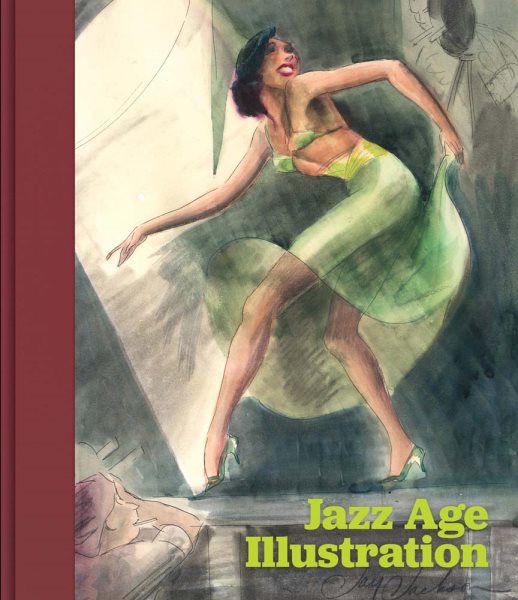
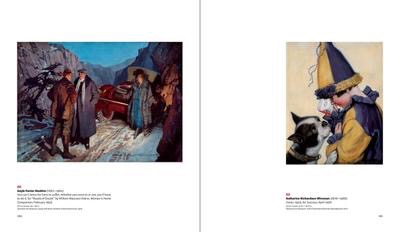
Hardcover. New Haven CT, Yale University Press, 1st, 2024, Book: Very Good, Dust Jacket: None, Hardcover, pictorial boards with a red cloth spine, 174 pages. A gorgeous look at popular illustrators of the Jazz Age and their influential role in the dynamic culture of the 1920s and '30s The 1920s in the United States was characterized by economic prosperity and dramatic social change. Known as the Jazz Age, it was a time when Black music, art, and literature became a powerful cultural force. Shifting roles for women and trends in youth culture coalesced in the figure of the flapper, causing a moral panic chronicled in the expanding popular press. Exploring how the art of popular illustration helped shape this new consciousness and impacted publishing, politics, and daily life, this volume features works by artists such as Aaron Douglas, Nell Brinkley, John Held Jr., and Lois Mailou Jones. Their striking images illustrated the New Yorker, Vanity Fair, The Crisis, Liberty, and the Saturday Evening Post, as well as newspapers, novels, and books for children. Essays foreground the contributions of women and Black artists; draw parallels between music, fashion, and the aesthetics of popular illustration; discuss the impact of the Harlem Renaissance and the national growth of the Black press; highlight the legacy of illustrator Howard Pyle and his students; and consider the appropriation of the subversive jazz culture by a white audience. Clean copy.
Hardcover. University Of Iowa Press, 1st, 2001, Book: Very Good, Dust Jacket: Very Good, Hardcover in a bright dust jacket, 168 pages. Using jazz as the key metaphor, Porter refocuses old interpretations of Ellison by placing jazz in the foreground and by emphasizing, especially as revealed in his essays, the power of Ellison's thought and cultural perception. Clean copy.
Hardcover. NY, Da Capo Press, reprint, 1979, Book: Very Good, Dust Jacket: None, Hardcover, red cloth with silver gilt lettering. First published in 1962 Jazz Panorama presents roughly forty short articles from the pages of The Jazz Review from the late 1950s and early 1960s, selected by respected jazz historian Martin Williams, the magazine's co-founder (with Nat Hentoff). This is the type of book that one can dip into from time to time and always find something both enjoyable and educational. Written in clear, understandable prose, the book collects short essays, record reviews (usually of multiple LPs), and two interviews. A wide range of jazz styles and movements is covered here, everything from Dixieland to "third stream" and the avant-garde of Ornette Coleman.The jazz musicians included for discussion range from King Oliver and Jelly Roll Morton to Bix Biederbecke. Louis Armstrong, Billie Holiday, Stan Getz, and Miles Davis. 318 pages, clean copy. No dust jacket.
Hardcover. Boston, The Atlantic Monthly Press , 1st, 1986, Book: Very Good, Dust Jacket: Very Good, Hardcover in a bright, unclipped dust jacket, 349 pages., profusely illustrated. In the first section, the six sketchbooks that relate to the scholarly essays are reproduced in full and in sequence, exactly as Picasso created them. The images in the second section have been taken from thirty of the finest sketchbooks. The final section is a CATALOGUE RAISONNE, which fully describes all 175 extant sketchbooks and features one image from each. A landmark volume, revealing for the first time the full glory of Picasso's hidden sketchbook masterpieces in over 700 color, duotone, and black-and-white reproductions, representing Picasso's astounding range and diversity. A clean, tight copy.
Softcover. New York , Guggenheim Museum, 1st, 2008, Book: Very Good, Dust Jacket: None, First edition, first printing. Softcover. Photographically illustrated stiff wrappers; no dust jacket as issued. Photographs by Jeff Wall. Essays by Jennifer Blessing and Katrin Blum. Includes an exhibition checklist and list of illustrations. 60 pages with 18 four-color illustrations and 19 black-and-white illustrations. 12 x 10 inches. Published on the occasion of an exhibition at Deutsche Guggenheim, Berlin.