Hardcover. Lexington, University Press of Kentucky, 1st, 2019, Book: Very Good, Dust Jacket: None, Hardcover, paper-covered boards, 172 pages. One of the most innovative films ever made, Sam Peckinpah's motion picture The Wild Bunch was released in 1969. From the outset, the film was considered controversial because of its powerful, graphic, and direct depiction of violence, but it was also praised for its lush photography, intricate camera work, and cutting-edge editing. Peckinpah's tale of an ill-fated, aging outlaw gang bound by a code of honor is often regarded as one of the most complex and impactful Westerns in American cinematic history. The issues dealt with in this groundbreaking film-violence, morality, friendship, and the legacy of American ambition and compromise-are just as relevant today as when the film first opened. To acknowledge the significance of The Wild Bunch, this collection brings together some of the leading Peckinpah scholars and critics to examine what many consider to be the director's greatest work. The book's nine essays cover an array of topics. Explored are the function of violence in the film and how its depiction is radically different from what is seen in other movies, the background of the film's production, the European response to the film's view of human nature, and the strong sense of the Texas/Mexico milieu surrounding the film's action. Clean copy.
Softcover. NY, Hearst Magazines/Getty Images, 1st, 2007, Book: Very Good, Dust Jacket: None, Softcover, 82 pages ilustrated mostly in color. A selection of photographer slim Aarons work, done in conjuction with Getty Images. Not to be confused with the 1974 book with the same title published by Harper and Row. This sampling covers his entire career. Introductory essays by Anthony Mazzola and Pamela Fiore, Editor of Town & Country. Clean copy.
Hardcover. Boston, Houghton Mifflin, 1s, 1901, Book: Very Good, Dust Jacket: None, Hardcover, Light green cloth, lettered and bordered in gilt, top text block edge in gilt. Illustrated with black and white photographic plates by Clifton Johnson. Light shelf wear, bookplate on inside front cover with black marking. Otherwise clean.
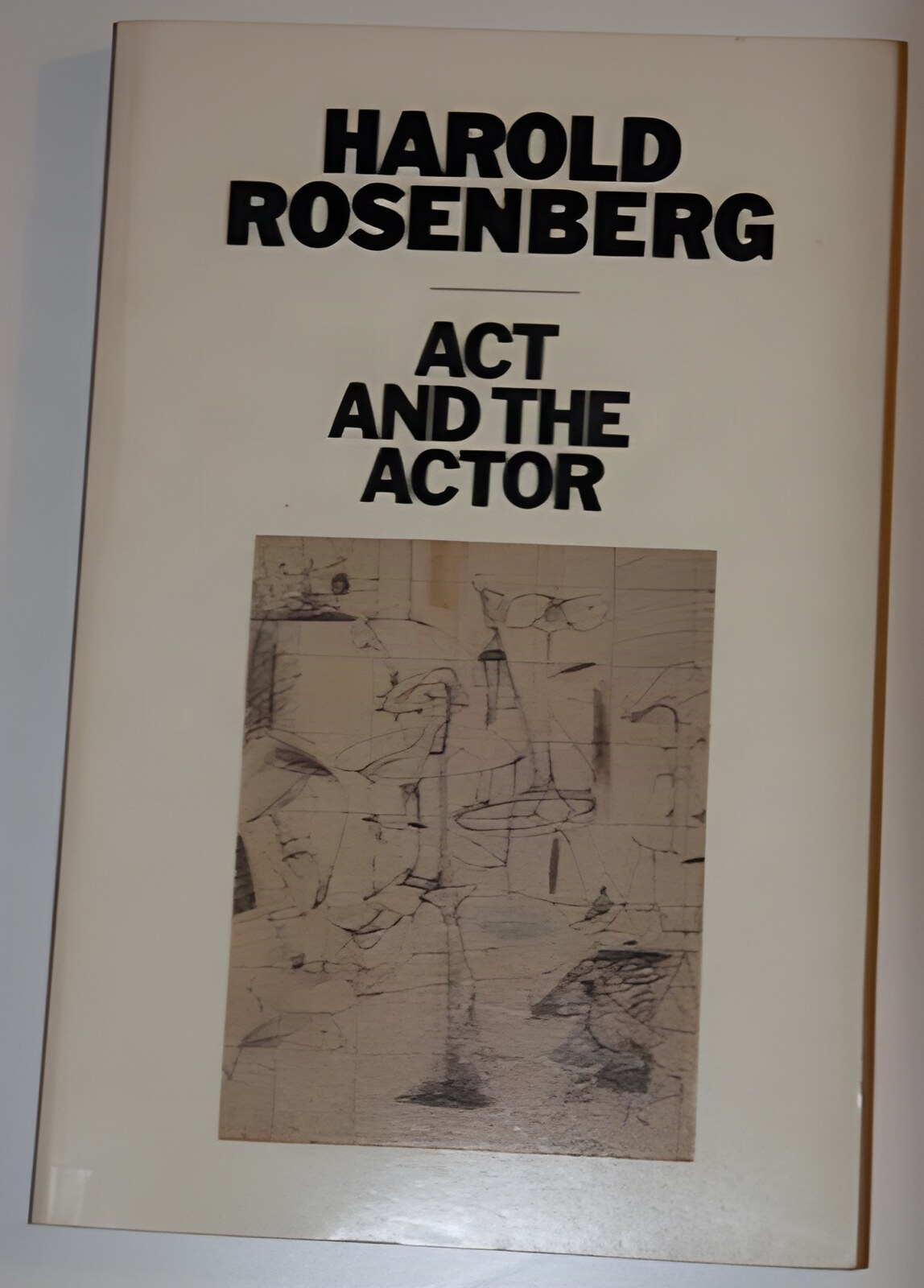
Softcover. Chicago, University of Chicago Press, reprint, 1983, Book: Very Good, Dust Jacket: None, Softcover with pages and covers in pristine condition. Like new, in shrinkwrap. Rosenberg's critial essays on the theatre. Originally published in 1970. CONTENTS: The stages: geography of action; A psychological case; From play acting to self; Criticism-action; Actor in history; Guilt to the vanishing point; Missing persons. Clean copy.
Softcover. Newport, California, Newport Harbor Art Museum, 1st, 1984, Book: Very Good, Dust Jacket: None, Softcover, 159 pages. Exhibition catalog featuring the work of Norman Bluhm, Michael Goldberg, Grace Hartigan, Al Held, Alfred Leslie and Joan MItchell. Color illustrated covers with white titles, foreword by Kevin E. Consey, acknowledgments by Paul Schimmel, essays by Paul Schimmel, B.H. Friedman, John Bernard Myers, and Robert Rosenblum, b&w frontispiece, 36 full page color plates, numerous b&w figures throughout, biographical notes. Light rubbing to covers; a very clean, tight copy in great condition.
Hardcover. London, S. Highley, Fleet-Street, 1st, 1792, Book: Good, Dust Jacket: None, Hardcover, half-leather over marbled boards, 556 pages. A collection of essays, letters, dedications, poems and other pieces purported to be the work of Johnson in the editor's Preface. The anonymous compiler makes the case that the pieces should have been included in the Dr. Johnson's Works lately published. Their authenticity may be questionable in some cases. A penciled note inside the front cover suggests this is Vol. 14 of his works with a new title page and "without Stockdale adds(?)..." Curious edition not found elsewhere. Front cover and first page detached, a solid binding, two bookplates, otherwise clean.
Hardcover. NY, Simon and Schuster, 1st, 1931, Book: Very Good, Dust Jacket: None, Hardcover, green cloth covers with faded gilt title on spine, 426 pages. A collection of profiles on great thinkers and writers through the ages. B&w frontis of Walt Whitman, 9 other b&w portraits. Clean copy.
Hardcover. NY, G.P. Putnam's Sons, 1st, 1959, Book: Very Good, Dust Jacket: Very Good, Hardcover in a bright, unclipped dust jacket with minor wear. 532 pages. An essential guide to the life and work of one of America's most controversial writers, Advertisements for Myself is a comprehensive collection of the best of Norman Mailer's essays, stories, interviews and journalism from the Forties and Fifties, linked by anarchic and riotous autobiographical commentary. Laying bare the heart of a witty, belligerent and vigorous writer, this manifesto of Mailer's key beliefs contains pieces on his war experiences in the Philippines (the basis for his famous first novel The Naked and the Dead), tributes to fellow novelists William Styron, Saul Bellow, Truman Capote and Gore Vidal and magnificent polemics against pornography, advertising, drugs and politics.
Hardcover. Urbana, University of Illinois, 1st, 1971, Book: Very Good, Dust Jacket: None, 212 Pages. Hardcover with NO dust jacket. EX-LIB with usual markings, stamps. Card residue on rear fly leaf. Tight copy.
Hardcover. NY, Knopf, 1st, 1988, Book: Very Good, Dust Jacket: Very Good, Hardcover in a bright, unclipped dust jacket. 202 pages. A collection of four pieces on African history or culture. "The Woman Who Loved Gorillas" is a stark, unflattering look at Dian Fossey. Differing from the usual hagiography about Fossey, this essay focuses on her mistreatment of the Africans, her erratic and supposedly violent behavior, and her anti-social arrogance. It's not a slam piece, though, offering motives about her murder and admitting that Dian did much for the gorillas of Rwanda. "The Last of the Dog-Headed Men" is a look at the elusive indri, a "singing" lemur of Madagascar. "The Emperor Who Ate His People" is a look back at the career of Central African Republic dictator Bokassa. Finally, "In Search of the Source Of AIDS" is both a quest for possible sources of the virus and a look at how the disease is ravaging Africa (circa 1987). Clean, bright copy.
Hardcover. Atlanta, High Museum of Art/Yale University Press, 1st, 2003, Book: Very Good, Dust Jacket: Very Good, 272 pages. Hardcover. Full color illustrations. Bright, clean copy. This illustrated book, published to commemorate the centenary of the artist's death, addresses Whistler's extraordinary legacy and establishes his pivotal place in the history of American art. array of pictures by 38 other American painters-including Henry Ossawa Tanner, William Merritt Chase, and John Singer Sargent-to demonstrate how Whistler's American contemporaries were affected by his techniques, colour palette, compositions and subject matter. with American artists and the reception of his work in the United States. The essays that follow discuss Whistler's Venetian sojourn and its effect on the American artists who flocked to that city, his relationship with Philadelphia's art community, the Whistler Memorial Exhibition held in Boston in 1904, and much more. Clean, bright copy.
Hardcover. New York, McDowell, Obolensky, 1st, 1958, Book: Very Good, Dust Jacket: Good, Volume 1 - 432 pages. Illustrated with black & white photographs and drawings by Tomi Ungerer. Dust jacket worn with chipping and small tears along edges. Clean, tight copy. Volume 2 - 488 pages. Dust jacket with light rubbing and small closed tears along edges. Clean, tight copy.
Hardcover. NY, Whitney Museum of Art/Abrams, 1st, 1992, Hardcover in a bright dust jacket, 187 pages. Published to accompany a 1992-93 exhibition held at the Whitney Museum of American Art, New York, this book deals with the full scope of Agnes Martin's art. It includes essays that place her work in the context of American and European 20th-century art and culture. Agnes Martin's paintings, constructions, and works on paper provide a link between the chromatic abstraction of artists such as Mark Rothko and Barnett Newman, her generational and ideological peers, and the Minimalist vocabulary of the 1960s. This book reproduces works made between 1957 and 1967, and better-known paintings and constructions created since 1974. A selection of Martin's writings reveals the spiritual philosophy that sustains her painting. Clean copy.
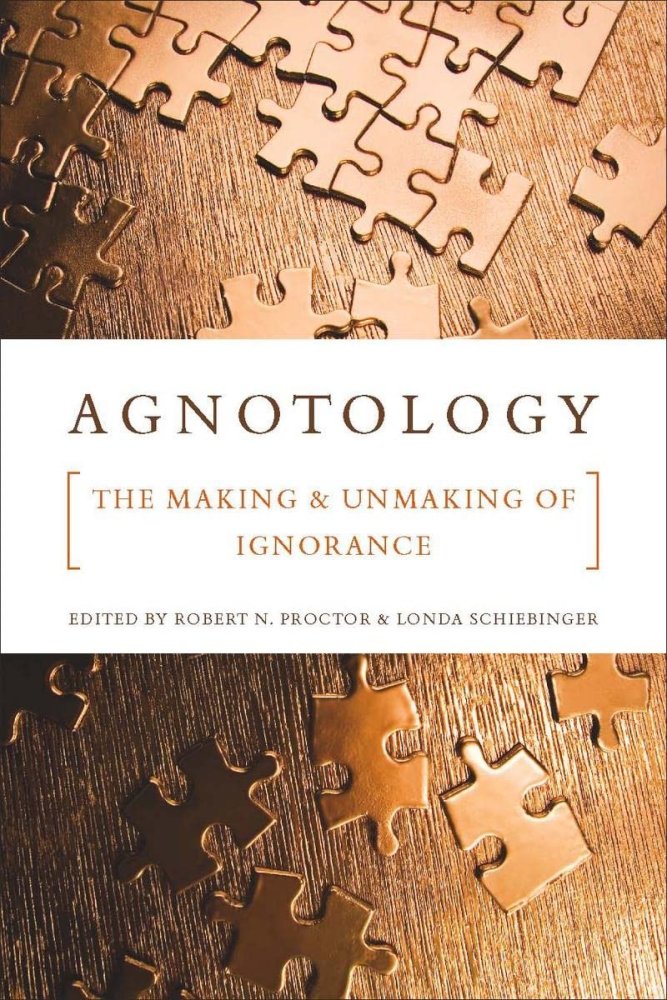
Softcover. Stanford CA, Stanford University Press, 1st pbk., 2008, Book: Very Good, Dust Jacket: None, Softcover, 298 pages. The essays assembled in Agnotology show that ignorance is often more than just an absence of knowledge; it can also be the outcome of cultural and political struggles. Ignorance has a history and a political geography, but there are also things people don't want you to know ("Doubt is our product" is the tobacco industry slogan). Individual chapters treat examples from the realms of global climate change, military secrecy, female orgasm, environmental denialism, Native American paleontology, theoretical archaeology, racial ignorance, and more. The goal of this volume is to better understand how and why various forms of knowing do not come to be, or have disappeared, or have become invisible. Clean copy.
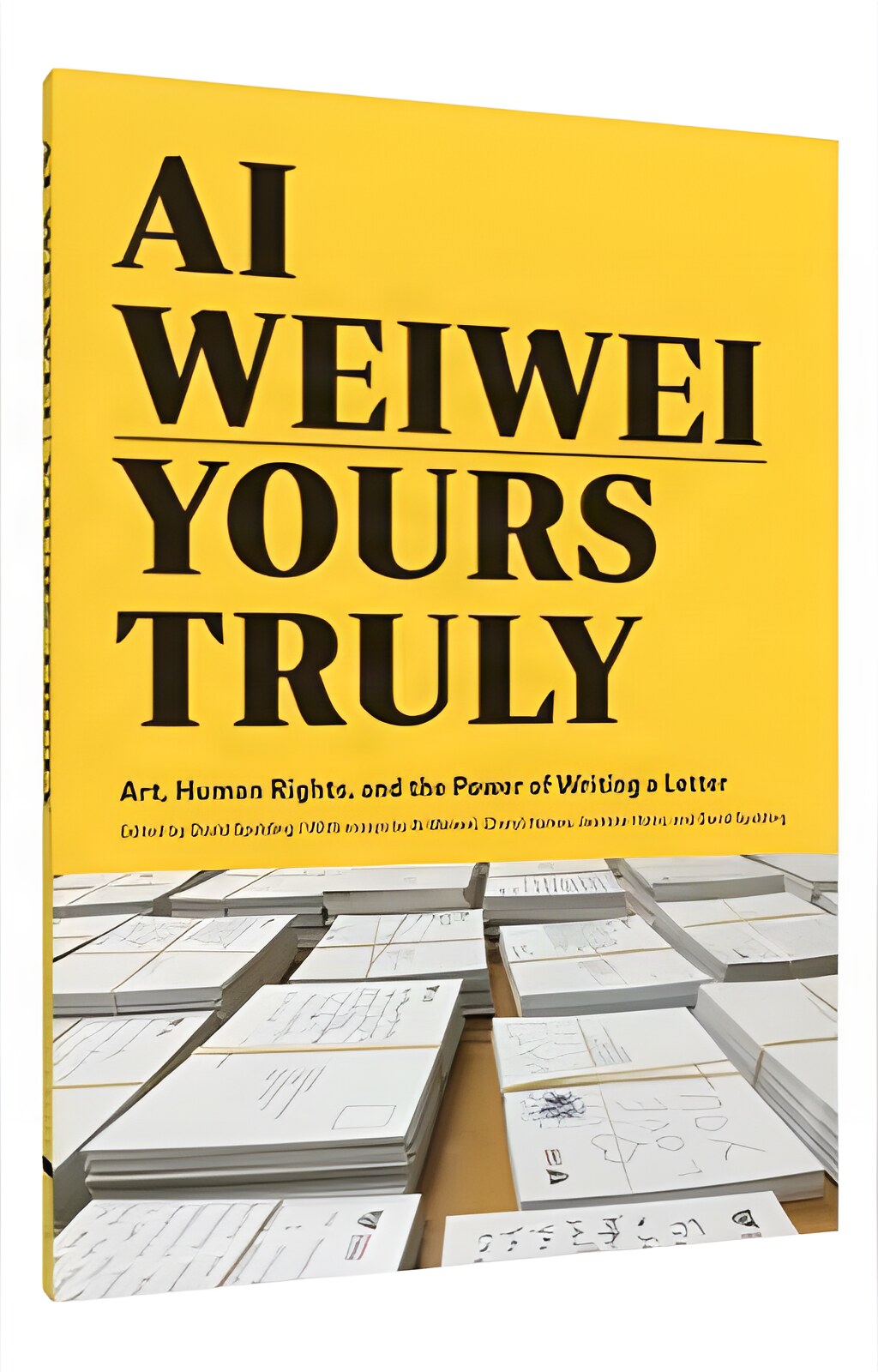
Softcover. San Francisco, Chronicle Books, 1st, 2018, Softcover, 128 pages. Includes essays by Ai Weiwei, Cheryl Haines, Jasmine Heiss, and David Spalding. Renowned artist Ai Weiwei engaged nearly 900,000 visitors in a conversation about human rights with his art installation @Large: Ai Weiwei on Alcatraz. In one participatory piece, Yours Truly, visitors sent 92,829 postcards to prisoners of conscience around the world. This book delves into those postcards' lasting impact. Five former prisoners and their loved ones reflect on the experience of receiving hundreds of postcards while imprisoned. Essays and a statement by Ai Weiwei contextualize this extraordinary project. And photographs taken during the exhibition show visitors and the messages they wrote. The book also includes four pre-addressed, tear-out postcards, inviting readers-whether art lovers or activists-to send hope to individuals still imprisoned for defending human rights. Clean copy.
Hardcover. NY, Harcourt Brace, 1st, 1935, Book: Very Good, Dust Jacket: Fair, Hardcover, 307 pages, b&w drawings by the author. 40 short fifteen minute essays/lectures the author gave over radio in the mid-thirties. They were broadcast every Thursday and Sundays at 8:45 pm. B&w frontispiece photo of Van Loon at the microphone. Dust jacket worn, chipped.
Hardcover. New Haven CT, Yale University Press, 1st, 2006, Book: Very Good, Dust Jacket: Very Good, Hardcover in a bright dust jacket, 190 pages, Includes chronology, footnotes, selected bibliography, list of exhibited works, index. Profusely illustrated with color and b&w prints. This beautifully illustrated book highlights the contrasts and correspondences in the lives and work of two of Modernism's greatest innovators, Josef Albers (1888-1976) and Laszlo Moholy-Nagy (1895-1947). Beginning in the 1930s, Albers and Moholy-Nagy each developed a rigorously abstract language that condensed art to its visual fundamentals: line, color, texture, light, and form. This language experienced a creative explosion during their Bauhaus years, when both artists moved freely between media and disciplines. Essays by leading scholars follow the artists' separate paths through to their emigration to the United States, where each continued to push tirelessly the conventions of artistic practice--Albers at Black Mountain College in North Carolina and then at Yale University, and Moholy-Nagy in Chicago at the New Bauhaus School and the Institute of Design. As highly influential teachers, Albers and Moholy-Nagy became important catalysts for the transmission of Modernist ideas from Europe to America.
Hardcover. New York, National Gallery of Art/Callaway Editions, 1st, 1983, Book: Very Good, Dust Jacket: Very Good, Hardcover, 247 pages. Illustrated with black & white photographs. Dust jacket with 2 tape repaired tears at bottom edge of front cover. Clean, tight copy. Alfred Stieglitz was a seminal figure in 20th century art. One of the foremost photographers in the century, he also helped other photographers define what the aesthetic means in photography. He also was a champion for many of the best known photographers, and seriously boosted their careers. In painting, he was an early advocate of important 20th century artists like Arthur Dove and Georgia O'Keeffe. In addition, he published two influential journals about photography, and exhibited art in his famous gallery in New York. Clearly, though, photography was his first love. "I have all but killed myself for Photography." This book focuses on his central vision of photography ("search for objective truth and pure form") which increasingly was about "antiphotographs" or images that move beyond simple representation. This concept is examined both in 73 of his best images and through numerous excerpts from his voluminous writings on the subject (over 200 essays).
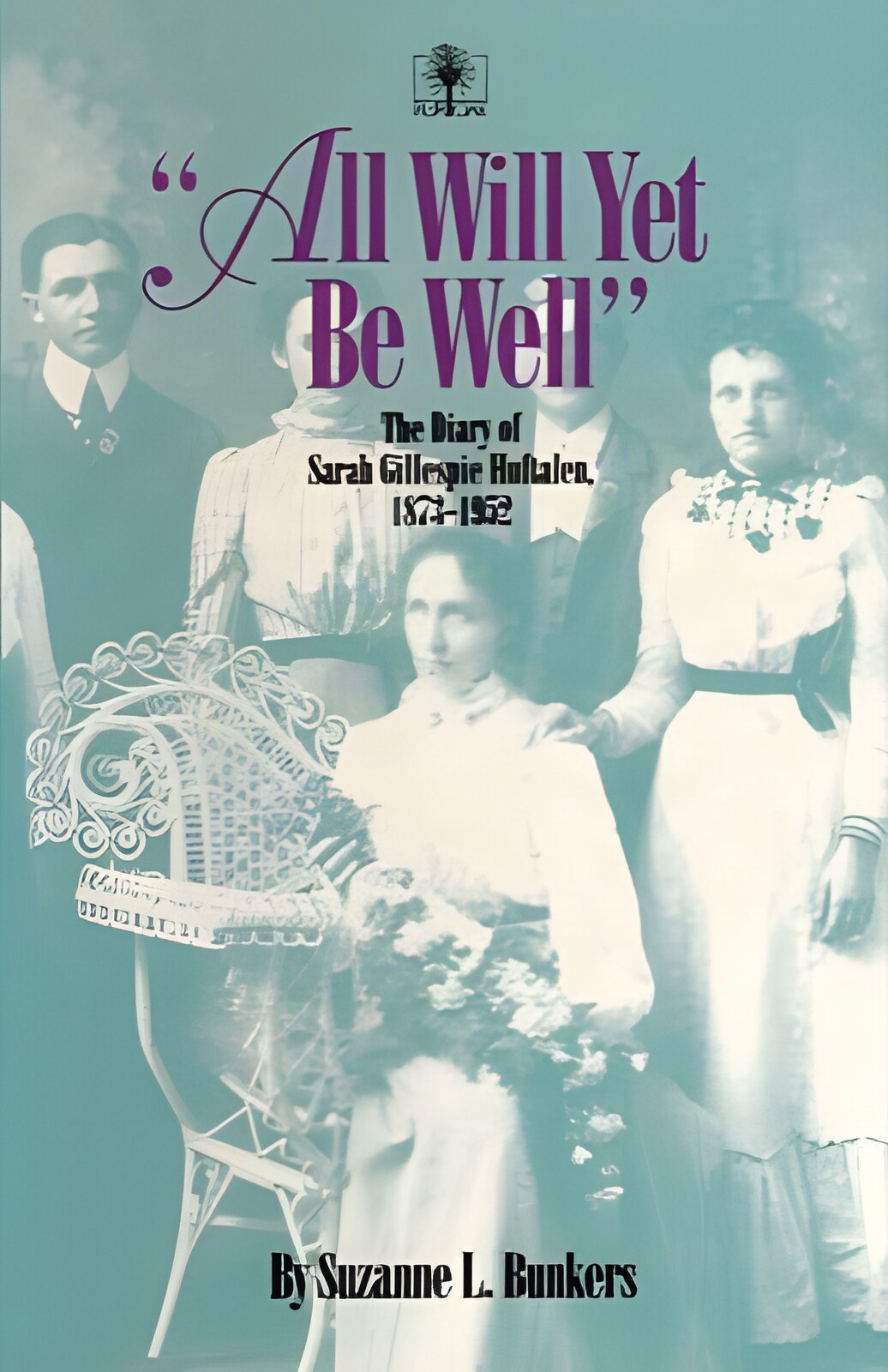
Softcover. Iowa City, University of Iowa Press, 1st, 1993, Book: Very Good, Dust Jacket: None, Softcover, 325 pages with index, b&w illustrations. Sarah Gillespie Huftalen led an unconventional life for a rural midwestern woman of her time. Born in 1865 near Manchester, Iowa, she was a farm girl who became a highly regarded country school and college teacher; she married a man older than either of her parents, received a college degree later in life, and was committed to both family and career. A gifted writer, she crafted essays, teacher-training guides, and poetry while continuing to write lengthy, introspective entries in her diary, which spans the years from 1873 to 1952. In addition, she gathered extensive information about the quietly tragic life of her mother, Emily, and worked to preserve Emily's own detailed diary. Taken together, Emily's and Sarah's extraordinary diaries span nearly a century and thus form a unique mother/daughter chronicle of daily work and thoughts, interactions with neighbors and friends and colleagues, and the destructive family dynamics that dominated the Gillespies. Sarah's consciousness of the abusive relationship between her mother and father haunts her diary, and this dramatic relationship is duplicated in Sarah's relationship with her brother, Henry, Suzanne Bunkers' skillful editing and analysis of Sarah's diary reveal the legacy of a caring, loving mother reflected in her daughter's work as family member, teacher, and citizen. Clean, bright copy.
Hardcover. NY, Atheneum, 1st, 1969, Book: Very Good, Dust Jacket: Good, Hardcover in a lightly worn dust jacket, 594 pages. A landmark in postwar American literary criticism, forty-one extended essays on contemporary poets, including Robert Bly, Sylvia Plath, Allen Ginsberg, W.S. Merwin, Denise Levertov, and James Merrill. Blending biography, textual analysis, and philosophical reflection, it defined a generation's poetic discourse. The book stands as both a map of mid-century American verse and a statement of Howard's erudite critical voice. Light shelfwear, fraying to top, bottom of dust jacket spine. Clean copy.
Hardcover. Reno ; Las Vegas, University of Nevada Press, 1st, 1999, Book: Very Good, Dust Jacket: Very Good, Hardcover, 143 pages, 69 BW and color plates, 36 figures. Essays by Patricia Nelson Limerick, Dave Hickey, and Thomas W. Southall. Includes work by John Pfhal, Terry Evans, Mark Klett and many others, with brief photographer biographies.Clean, unmarked copy with only minor shelf-wear to dust jacket.

 "A Uniquely American Epic: Intimacy and Action, Tenderness and Violence in Sam Peckinpah's the Wild Bunchby: Michael Bliss, Garner Simmons, et al.")
 "A Wonderful Time/Photographs by Slim Aaronsby: Aarons/Getty Images, Slim")
 "A Year in the Field: Selections from the Writings of John Burroughs by: Burroughs, John")
 "Action/Precision: The New Direction in New York, 1955-60by: Schimmel, Paul et al.")


 "Adventures in Geniusby: Durant, Will")

 "Affecting Presence, The: An Essay in Humanistic Anthropologyby: Armstrong, Robert Plant")
 "African Madnessby: Shoumatoff, Alex")
 "After Whistler - The Artist and His Influence on American Painting by: Merrill, Linda")
 "Afternoon of an Author - A Selection of Uncollected Stories and Essaysby: Fitzgerald, F. Scott")
 "Agee on Film - 2 Volumesby: Agee, James")


 "Air Storming A Collection of 40 Radio Talks Delivered Over the Stations of NBCby: Van Loon, Hendrik Willem")
 "Albers and Moholy-Nagy: From the Bauhaus to the New Worldby: Borchardt-Hume, Achim (Editor)")
 "Alfred Stieglitz - Photographs & Writingsby: Greenough, Sarah/Juan Hamilton")
 "Altered Landscape, The by: Pool, Peter E. (Editor)")