Softcover. New York, PictureBox, 1st, 2007, Book: Very Good, Dust Jacket: None, Softcover, Like new in publishers shrink-wrap. Ever wonder what indie rockers on tour do for the other 23 hours of their day? Real Fun answers that question with over 100 photographs of musicians lounging in the giant green room that is the world--sleeping, eating, fishing and just goofing off. Photographer Ashod Simonian has traveled with scores of bands, and his dreamy, lush Polaroids capture Death Cab for Cutie, Spoon, Sleater Kinney, Pavement, Jenny Lewis, the Shins, Wilco and Broken Social Scene, among many others, in colorful images conveying not just stories but the feelings behind them: boredom, exultation, frustration and bliss. Many of the performers have also contributed essays and memoirs, making this an essential compendium of wisdom and memories from the road. Others have recorded songs for the accompanying CD. The tracks were all selected by Simonian and most are original, recorded especially for this project. All of this is well and good, but what makes Real Fun more than a scrapbook is Simonian's acute photographic instincts, his eye for detail and sense of scene: compelling pictures regardless of the subject.
Hardcover. NY, Alfred A. Knopf, 1st, 1965, Book: Good, Dust Jacket: Very Good, Hardcover in a bright, price-clipped dust jacket. A collection of Updike's nonfiction prose written the previous decade, with topics including Ted Williams, J.D. Salinger, Vladimir Nabokov, Muriel Spark, Max Beerbohm, among others. Yellow cloth covers with spotting, concealed by the dj. Otherwise clean.
Softcover. Middlebury VT, Middlebury College Press, 1st, 1994, Book: Very Good, Dust Jacket: None, Softcover, 205 pages. Some fading to color on the covers, otherwise a tight, clean copy.
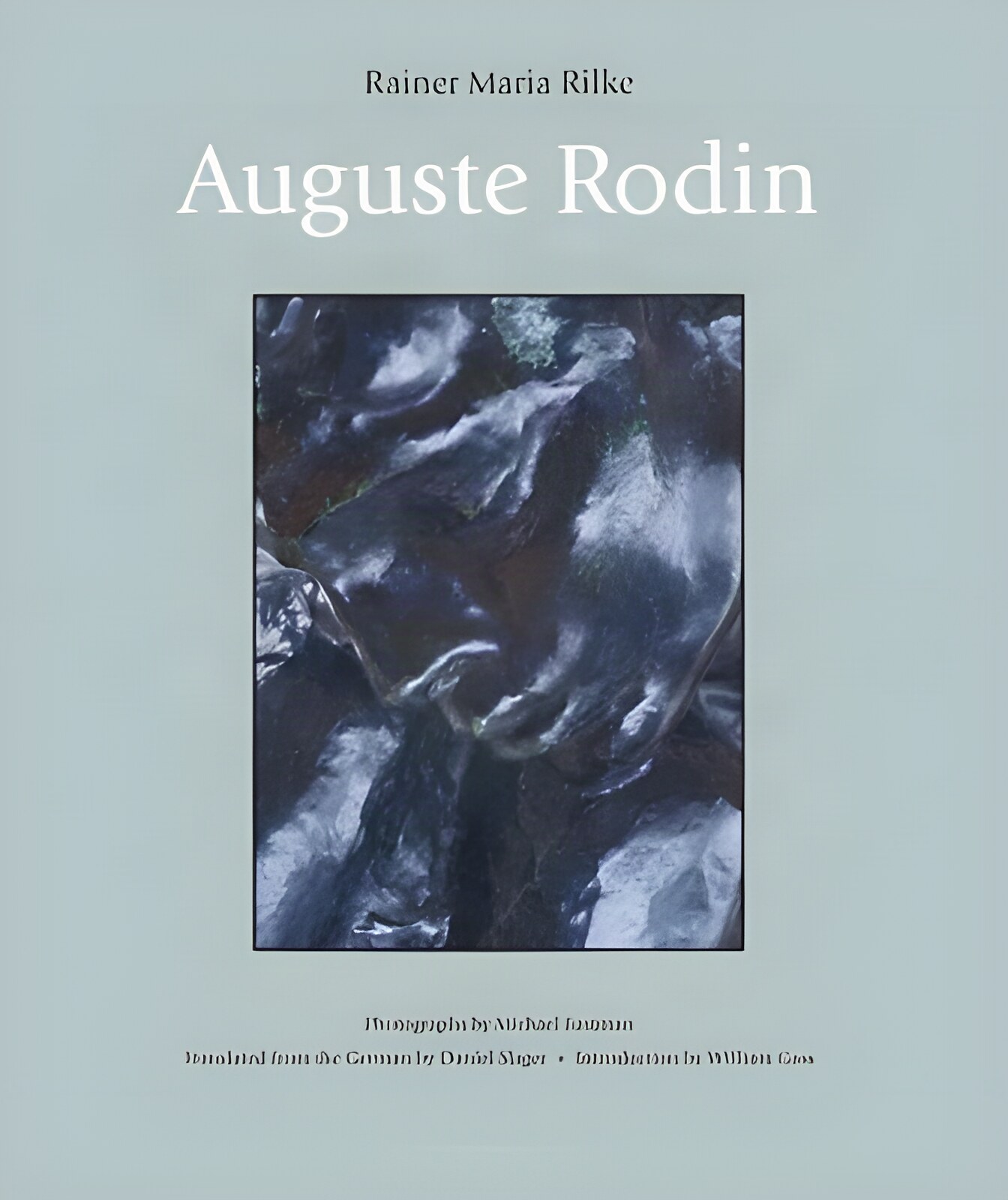
Hardcover. NY, Archipelago Books, 1st thus, 2004, Book: Very Good, Dust Jacket: Very Good, Hardcover in a bright, unclipped dust jacket, color illustrations, 88 pages. Sculptor Auguste Rodin was fortunate to have his secretary Rainer Maria Rilke, one of the most sensitive poets of our time. These two pieces discussing Rodin's work and development as an artist are as revealing of Rilke as they are of his subject. Written in 1902 and 1907, these essays mark the entry of the poet into the world of letters. Rilke's description of Rodin reveals the profound psychic connection between the two great artists, both masters of giving visible life to the invisible. Michael Eastman's evocative photographs of Rodin's sculptures shed light on both Rodin's art and Rilke's thoughts and catapult them into the 21st century. Clean copy.
Hardcover. Somogy Editions D'Art , 1st, 1999, Book: Very Good, Dust Jacket: Very Good, Hardcover in a bright dust jacket. Still in publisher's shrinkwrap. Full color exhibition catalogue of the new retrospective exhibition of Saint-Gaudens' work, the first in Europe since 1900. Venues include the Muse des Augustins, in Toulouse (February 2-May 30, 1999), and the Muse national de la Cooperation Franco-Americaine, at Blrencourt (June 26-October 18, 1999). The artwork covers Saint-Gaudens' entire career, from the cameos done during his youth, to sophisticated portrait reliefs, public monuments and coins. The essays contribute new scholarship on the sculptor's career and art, including his decorative art designs for Tiffany's, personalized pencil caricatures for friends, and the development of the monument to Charles Stewart Parnell in Dublin, the last public monument Saint-Gaudens saw to completion.
Hardcover. NY, Charles Scribner's Sons, 1st, 1931, Book: Very Good, Dust Jacket: None, Hardcover, black cloth with spine label, 319 pages. First printing with 1931 on title page and Scribner's "A" on copyright page. Edmund Wilson's first book of literary criticism - a landmark book that explores the evolution of the French Symbolist movement and considers its influence on six major twentieth-century writers: William Butler Yeats, Paul Valery, T. S. Eliot, Marcel Proust, James Joyce, and Gertrude Stein. As Alfred Kazin later wrote, "Wilson was an original, an extraordinary literary artist . . . He could turn any literary subject back into the personal drama it had been for the writer." Light tanning to spine label, clean, tight copy.
Hardcover. NY, Simon And Schuster, 1st, 1970, Book: Very Good, Dust Jacket: Very Good, Hardcover in a bright, unclipped dust jacket, 253 pages. Thirty-two essays by the New Yorker magazine humorist. Clean copy.
Hardcover. University Park, Pa., Penn State University Press, 1st, 1992, Book: Very Good, Dust Jacket: Very Good, 348 pages. Hardcover with dust jacket. Baudelaire's illustrations throughout. Minor dust jacket edge wear, otherwise, very clean, bright and tight copy.
Softcover. NY, Aperture, reprint, 1996, Book: Very Good, Dust Jacket: None, Softcover, 108 pages with b&w illustrations. The eight essays in Beauty in Photography provide a critical appreciation of photography by one of its foremost proponents. The result is a rare book of criticism, alive to the pleasure and mysteries of true exploration. Name on front fly leaf, otherwise clean.
Hardcover. NY, Walker and Co., 1st, 1975, Book: Very Good, Dust Jacket: None, Hardcover, tan cloth, b&w illustrations by Laura Lydecker. Short essays interspersed with poetry. No dust jacket.
Softcover. Baltimore, Johns Hopkins University Press, reprint, 1978, Book: Very Good, Dust Jacket: None, Softcover, 414 pages. A work of literary criticism in which Said differentiates between the concept of "origin" and "beginning", also reflecting reflexively on the role of criticism and of the intellectual within a larger culture. Clean copy.
Hardcover. NY, W. W. Norton & Company, 1st, 1925, Book: Very Good, Dust Jacket: None, Hardcover, in black cloth with pasted on "Lectures in Print, Behaviorism, John B.Watson " on spine and cover. Twelve lectures delivered by Watson at the People's Institute, whose publishing arm would soon become the legendary W.W. Norton. First appearing as 12 separate pamphlets, each published after Watson delivered a lecture for the adult education program at The People's Institute from 1924 to 1925, BEHAVIORISM gathers these important lectures in book form for the first time.
Hardcover. Stanford CA, Stanford University Press, 1st, 2006, Book: Very Good, Dust Jacket: Very Good, Hardcover in a bright, unclipped dust jacket, 559 pages. "Behind the Bamboo Curtain is an important collection of essays on Sino-Vietnamese relations during the Cold War An excellent contribution from a Vietnamese historian and well-documented chapters on Soviet and French policy further augment the importance of the volume. The contributors make extensive use of primary documents from the United States, the People's Republic of China, Vietnam, and Russia and offer authoritative analyses." -- The Journal of Cold War Studies. Claen, unread copy.
Hardcover. NY, Free Press, 1st, 1969, Book: Very Good, Dust Jacket: Very Good, Hardcover in a bright, lightly worn dust jacket. A collection of 15 essays. No markings.
Hardcover. New York, Penguin Press, reprint, 2011, Book: Very Good, Dust Jacket: Very Good, 310 pages. Hardcover with dust jacket. Color pictures throughout. Clean, unmarked copy with only minor wear to dust jacket. The author untangles the mysteries behind an eclectic range of documentary photographs. With his keen sense of irony, skepticism, and humor, Morris shows how photographs can obscure as much as they reveal, and how what we see is often determined by our beliefs.
Softcover. Tucson AZ, Grilled Flowers Press, 1st, 1978, Book: Very Good, Dust Jacket: None, Softcover, includes critical essays by Louis Gallo and Alan Ziegler, an interview by Naomi Shihab, and a preface and portfolio of 18 new poems by Benedikt. 75 pages. INSCRIBED BY BENEDIKT on title page. Also signed on copyright page in red. Clean copy.
Hardcover. Berlin GR, Nicolai, 1st, 1998, Book: Very Good, Dust Jacket: Very Good, Hardcover, 125 pages, b&w duotone photos throughout. Documents life in post-war Berlin. Essays by Edzard Reuter and Janos Frecot. GERMAN TEXT. Clean in a bright dust jacket.
Hardcover. 5 Continents Editions , 1st, 2006, Book: Very Good, Dust Jacket: Very Good, Hardcover, 304 pages. Plain cloth boards with B/W Photographic DJ, 12" x 9.75, page bibliography, 1-page biography of Bernatzik, 3 pages listing Bernatzik's published works. 2 maps. 145 Black & White Photos by Hugo A. Bernatzik (1897-1953), Many of the photos are presented on 2-Pages, and the balance on 1-Page.. An 18-Page Section at the end with 145 thumbnail photos of the principle illustrations accompanied by descriptions. Photographs by Hugo A. Beratzik. Preface by Ian C. Glover. Acknowledgements by Kevin Conru, Essays by Jacques Ivanoff, Alison Nordstrom, Christina Angela Thomas.
Hardcover. Museum of American Art and University of New Mexico Press, 1st, 1992, Book: Very Good, Dust Jacket: Very Good, Hardcover in a bright dust jacket, 176 pages. Numerous color and black and white plates. Essays by Merry A. Foresta, Stephen Jay Gould and Karal Ann Marling. Published on the occasion of the traveling exhibition, 1992-1993. Bar code sticker on rear of dust jacket, otherwise clean, bright copy. Uncommon in hardcover.
Softcover. Cambridge MA, MIT Press, 1st, 2000, Book: Very Good, Dust Jacket: None, 184 pages, illustrated in color, essays and an interview with the photographer. From his provocative Cover Girl series featuring photographic portraits of himself on the covers of popular magazines, to his writings on sexuality and identity, the work of Nigerian-born Ike Ude explores a world of dualities: African/postnationalist, photographer/performance artist, artist/spectator, male/female, mainstream/marginal, seduction/narcissism, and fashion/art. As an artist from Nigeria working in New York City, connected to the world of fashion and celebrity, Ude gives the political aspects of performance and representation a new vitality, melding his own theatrical selves and multiple personae with his art.
Hardcover. UK, Cambridge University Press, 1st, 1991, Book: Very Good, Dust Jacket: Very Good, Hardcover in a bright dust jacket, 328 pages. INSCRIBED BY CO-EDITOR GODELIER on the front fly leaf. The societies of Melanesia have been a constant stimulus to anthropological theory. In this collection of essays, anthropologists who have worked in all parts of the Melanesian region of the Pacific bring their expertise to bear on a single theoretical issue. This is a hypothesis formulated by Maurice Godelier concerning the relationship between power, kinship and wealth. Although tightly focused on Godelier's work, the book opens up a major enquiry into the constitution of society in a part of the world where men of prominence come to personify the nature of power. 'Big men', entrepreneurs of exchanges, and 'great men', who flourish in societies characterized by restricted exchanges and ritual complexity, appear to belong to quite different systems. This book considers how substantial the difference between them really is. Clean copy.
Hardcover. New York, Damiani, 1st, 2008, Book: Very Good, Dust Jacket: None, 224 pages. Hardcover with no dust jacket. Very clean, unmarked copy still in publishers shrink-wrap. Over 170 b&w and color photographs. A comprehensive monograph, this volume consists of several sections of work from 1969 to the present, opening at the height of flower power, with images of the Beat generation, Woodstock and the protests against Vietnam.
Hardcover. New York, Damiani, 1st, 2008, Book: Very Good, Dust Jacket: None, 224 pages. Hardcover with no dust jacket. Very clean, unmarked copy still in publishers shrink-wrap. Over 170 b&w and color photographs. A comprehensive monograph, this volume consists of several sections of work from 1969 to the present, opening at the height of flower power, with images of the Beat generation, Woodstock and the protests against Vietnam.
Hardcover. GR, Steidl, 1st, 2008, Book: Very Good, Dust Jacket: None, Hardcover, 272 pages. Bill Wood's business was photography, and he produced tens of thousands of images over the course of his career. A tall, slender, hardworking family man with a penchant for bow ties, Wood (1913-1979) was born, lived and died in the Fort Worth, Texas area, and his photography played a central role in how his clients chose to see and to portray themselves and their city. Bill Wood's Business features approximately 300 of Wood's photographs, alongside essays by Diane Keaton and Marvin Heiferman that pay homage to the skills Wood (and professional photographers like him) brought to the business of photography. What drew Keaton and Heiferman to this project was the extraordinary range of Wood's images, as well as a shared appreciation of archives and the construction of photographic realities. In an earlier collaboration, Still Life (1982), Keaton and Heiferman explored the Surrealism, the fantasies and the economic motivations percolating beneath the surface of the glamourous color publicity photographs that Hollywood studios orchestrated and distributed in the mid-twentieth century. Since then, Keaton (in her film and book projects) and Heiferman (in his curatorial, writing and publishing work) have continued to survey the quirks of American iconography. Keaton purchased the archive of Wood's negatives 20 years ago, and in Bill Wood's Business, she and Heiferman team up again to look at and through photographs, to show what they are intended to depict and what they actually reveal.

 "Ashod Simonian: Real Fun: Polaroids from the Independent Music Landscapeby: Simonian, Ashod")
 "Assorted Proseby: Updike, John")



 "Baudelaire and Caricature: From the Comic to an Art of Modernityby: Hannoosh, Michele")
 "Beauty in Photography: Essays in Defense of Traditional Values by: Robert Adams")


 "Behaviorismby: Watson, John B.")
 "Behind the Bamboo Curtain: China, Vietnam, and the World beyond Asia (Cold War International History Project)by: Priscilla Roberts (Ed.)")
 "Belief Magic and Anomie: Essays in Psychosocial Anthropologyby: Parsons, Anne")
 "Believing is Seeing: Observations on the Mysteries of Photographyby: Morris, Errol")

 "BERLIN: PHOTOGRAPHIEN 1946-1949 (GERMAN EDITION)by: Ries, Henry")
 "Bernatzik. Southeast Asiaby: Kevin Conru")

 "Beyond Decorum: The Photography of Ike Udeby: Bessire, Mark H. C. and Lauri Firstenberg")

 "Bill Owensby: Homes, A.M.")
 "Bill Owensby: Homes, A.M.")