Hardcover. Zurich, Scheidegger and Spiess, 1st, 2016, Book: Very Good, Dust Jacket: None, Hardcover in pictorial cloth, 210 pages, 164 color and 76 b/w illustrations. Le Corbusier (1887-1965) is one the most influential architects of the twentieth century. In the Scandinavian countries, his influence is arguably most pronounced in the writings and art of the Danish experimentalist Asger Jorn (1914-1973). Their collaboration on Le Corbusier's pavilion for the 1937 Paris World Exhibition sparked Jorn's lifelong fascination with the great architect and with architecture more broadly as an inherently public form of art. At the same time, Le Corbusier started working in the visual arts and began to move from a rational, technological approach to architecture towards a more poetic, materialist approach. Published in collaboration with the Museum Jorn, Silkeborg, What Moves Us? focuses specifically on the reception of Le Corbusier in Scandinavia, with the relationship between Jorn and Le Corbusier as a thematic thread. The book first highlights the architect's change of direction and subsequently takes readers through his influence on the young artist. The book's distinguished contributors explore the relationships that emerged among their artistic theories and practices, including Jorn's later critique of Le Corbusier. Essays also explore the wider influence of Le Corbusier on Scandinavian architecture and urbanization and consider Le Corbusier alongside the Danish architect Jorn Oberg Utzon and the Aarhus Brutalism movement.
Hardcover. NY, Reynal and Hitchcock, 1st, 1947, Book: Very Good, Dust Jacket: Poor, Hardcover in a tattered and chipped dust jacket. Off-white cloth with black spine title. 217 pages, b&w drawings by the author. Translated from the French, Quand les Cathedrales Etaient Blanches, by Francis E. Hyslop, Jr. Dj is poor with tape repair to the reverse side. Book has a small stamp to the front fly leaf, otherwise clean.
Softcover. Fredonia NY, White Pine Press, 1st, 1996, Book: Very Good, Dust Jacket: None, Softcover, 254 pages. SIGNED BY ST. JOHN at the 2000 Breadloaf Writers Conference. Essays and reviews by poet David St. John of collections of verse by poets including Marvin Bell, Charles Wright, Donald Hall, Randall Jarrell, Pablo Neruda, Donald Justice, Mark Strand, Jorie Graham et al, followed by six interviews with David St. John (in various journals).
Hardcover. NY, Methuen Publishing , 1st, 1988, Book: Very Good, Dust Jacket: Very Good, Hardcover in a bright dust jacket. 235 pages. Covers such subjects as black literature; the reconstruction of culture, changing arts, letters and sciences to include the topics of women and gender; and, the nature of family and the changing roles of women within society. As such, Catharine Stimpson employs a transdisciplinary approach, to encourage greater understanding of the differences among women, and thus socially-constructed differences in general. Where the Meanings Are tells of some of the arguments within feminism during the re-designing and designing of cultural spaces, as post-modernism began to change the boundaries of race, class, and gender. Clean copy.
Hardcover. Princeton NJ, Princeton University Press, 1st, 2004, Book: Very Good, Dust Jacket: Very Good, Hardcover in a bright dust jacket, 208 pages, b&w illustrations. During the economic boom of the 1990s, art museums expanded dramatically in size, scope, and ambition. They came to be seen as new civic centers: on the one hand as places of entertainment, leisure, and commerce, on the other as socially therapeutic institutions. But museums were also criticized for everything from elitism to looting or illegally exporting works from other countries, to exhibiting works offensive to the public taste. Whose Muse? brings together five directors of leading American and British art museums who together offer a forward-looking alternative to such prevailing views. While their approaches differ, certain themes recur: As museums have become increasingly complex and costly to manage, and as government support has waned, the temptation is great to follow policies driven not by a mission but by the market. However, the directors concur that public trust can be upheld only if museums continue to see their core mission as building collections that reflect a nation's artistic legacy and providing informed and unfettered access to them. The book, based on a lecture series of the same title held in 2000-2001 by the Harvard Program for Art Museum Directors, also includes an introduction by Cuno and a fascinating --and surprisingly frank-- roundtable discussion among the participating directors. Uncommon in the hardcover, clean copy.
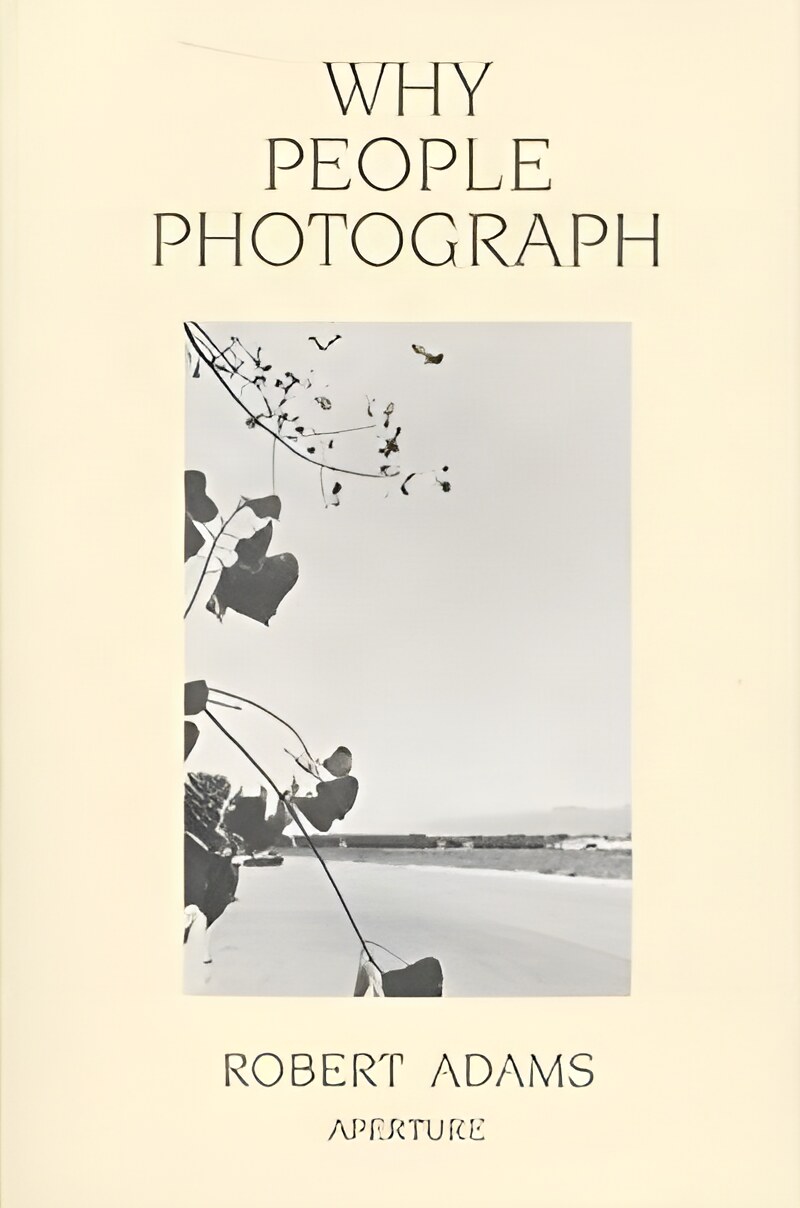
Softcover. NY, Aperture, 3rd pr., 1994, Book: Very Good, Dust Jacket: None, Softcover, 186 pages. A now classic text on the art, Why People Photograph gathers a selection of essays by the great master photographer Robert Adams, tackling such diverse subjects as collectors, humor, teaching, money and dogs. Adams also writes brilliantly on Edward Weston, Paul Strand, Laura Gilpin, Judith Joy Ross, Susan Meiselas, Michael Schmidt, Ansel Adams, Dorothea Lange, and Eugene Atget. The book closes with two essays on "working conditions" in the nineteenth- and twentieth-century American West, and the essay "Two Landscapes." Clean copy.
Softcover. NY, Aperture, 1st, 1994, Book: Very Good, Dust Jacket: None, Softcover, 186 pages, b&w illustrations. A now classic text on the art, Why People Photograph gathers a selection of essays by the great master photographer Robert Adams, tackling such diverse subjects as collectors, humor, teaching, money and dogs. Adams also writes brilliantly on Edward Weston, Paul Strand, Laura Gilpin, Judith Joy Ross, Susan Meiselas, Michael Schmidt, Ansel Adams, Dorothea Lange, and Eugene Atget. The book closes with two essays on "working conditions" in the nineteenth- and twentieth-century American West, and the essay "Two Landscapes." Name on front fly leaf otherwise clean.
Softcover. NY, Oxford University Press, 1st, 2011, Book: Very Good, Dust Jacket: None, Softcover, 433 pages. Punishment, like all complex human institutions, tends to change as ways of thinking go in and out of fashion. Normative, political, social, psychological, and legal ideas concerning punishment have changed drastically over time, and especially in recent decades. Why Punish? How Much? collects essays from classical philosophers and contemporary theorists to examine these shifts. Michael Tonry has gathered a comprehensive set of readings ranging from Kant, Hegel, and Bentham to recent writings on developments in the behavioral and medical sciences. Together they cover foundations of punishment theory such as consequentialism, retributivism, and functionalism, new approaches like restorative, communitarian, and therapeutic justice, and mixed approaches that attempt to link theory and policy. This volume includes an accessible introduction that chronicles the development of punishment systems and theorizing over the course of the last two centuries. Clean copy.
Hardcover. NY, New Amsterdam Book Co., 1st, 1898, Book: Very Good, Dust Jacket: None, 364 pages. Newspaper photography of author tipped-in to front end paper. Essays on the history, natural history and sociology of the South Seas and their islands, (including some whaling). Previous owner's inscription front fly leaf.
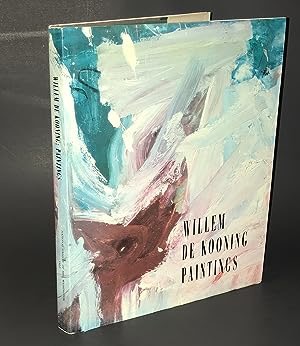
Hardcover. Washington DC, National Gallery /Yale University, 1st, 1994, Book: Very Good, Dust Jacket: Very Good, Hardcover in a bright dust jacket. 231 pages, numerous color and bw plates. Catalogue of a de Kooning exhibition, organized by the National Gallery in association with the Tate Gallery and the Metropolitan Museum of Art. This illustrated survey of de Kooning's paintings covers the period from 1938 through 1986. The catalogue, by curator Prather, is preceded by two critical essays: Sylvester's "Flesh Was the Reason" and Shiff's "Water and Lipstick: De Kooning in Transition." 12'' x 9.75''. Clean copy. DOMESTIC SHIPPING ONLY.
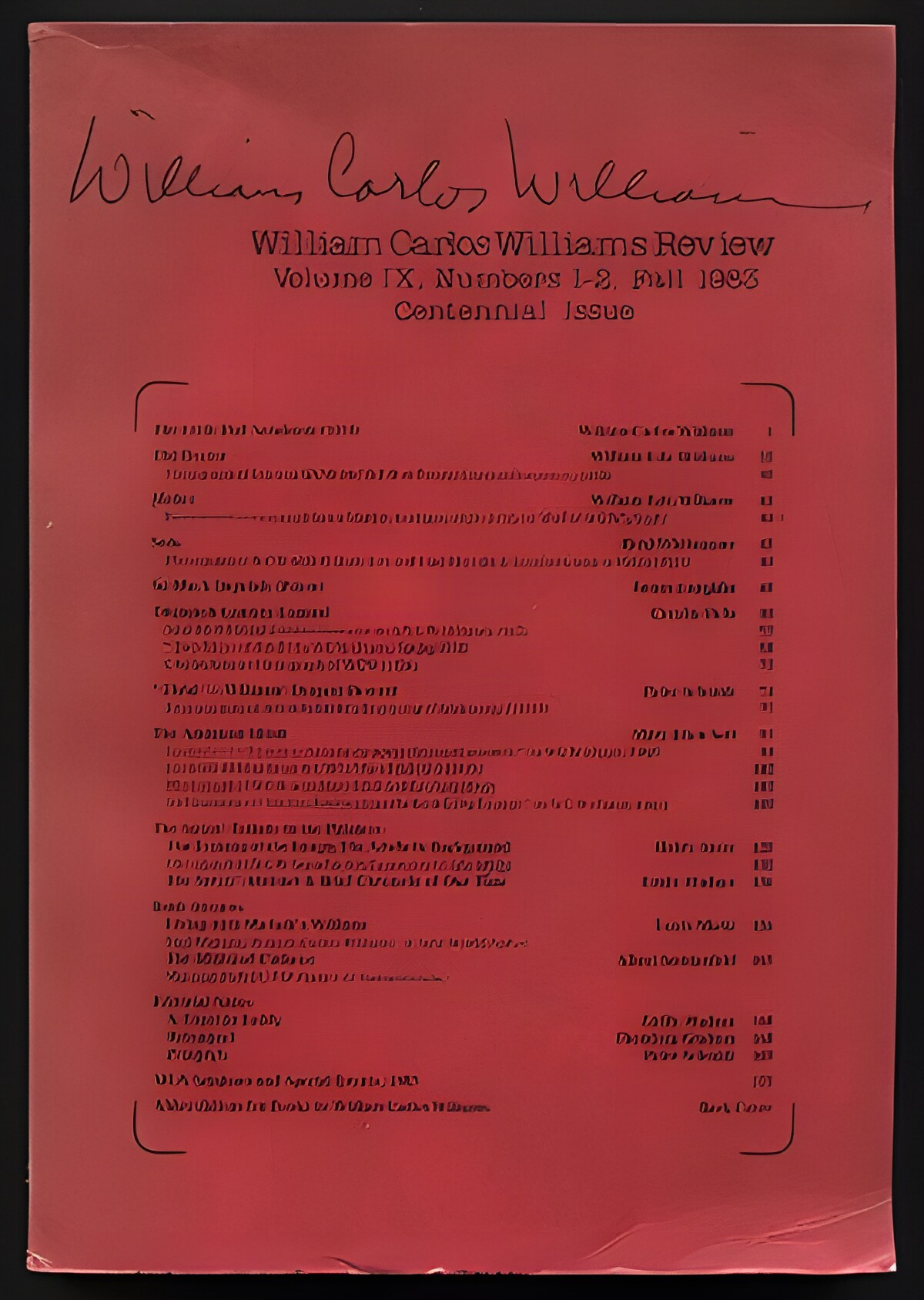
Softcover. Middletown PA, Pennsylvania State University, 1st, 1983, Book: Good, Dust Jacket: None, Softcover. Red perfect bound wrappers, 176 pages. Covers with a few faint creases, spine slightly faded, mild wave to book. Prints Williams' 80-page 1914 little red notebook in exact-size facsimiles with a transcription and two additional essays from his son William Eric Williams; additional contributions by Reed Whittemore, James Laughlin, Cecelia Tichi, Peter Schmidt, Mary Ellen Solt, Henry Sayre, Emily Wallace, Louis Martz and Albert Sonnenfeld. The journal showcases scholarly essays on any aspect of the life and work of William Carlos Williams.
Hardcover. Goteborg SW, Scalo/Hasselblad Center, 1st, 1999, Book: Very Good, Dust Jacket: None, 126 pages with 112 color plates by Eggleston. Includes an interview with the photographer. Black cloth with a color plate pasted on cover, gilt lettering. No dust jacket issued. Even before he was thrust into the spotlight in 1976 when he garnered a one-person show at New York's Museum of Modern Art, Eggelston was hailed as one of the pioneers of color art photography. This survey, published on the occasion of his winning the prestigious Hasselblad Award, will confirm his reputation among admirers and win new converts to his deceptively straightforward photographs of the everyday. The book brings together 112 pictures made between 1967 and 1996 with an interview, a couple of short essays, and biographical and bibliographical appendixes. The subject matter here is almost exclusively his trademark images of the people, townscapes, and found still lifes of Memphis, TN, and northern Mississippi. The book's modest size (9.5" x 9.5"), simple presentation (small-format images are centered amid plenty of white space), and beautiful printing on matt paper appropriately evoke equal parts family album and gallery wall.
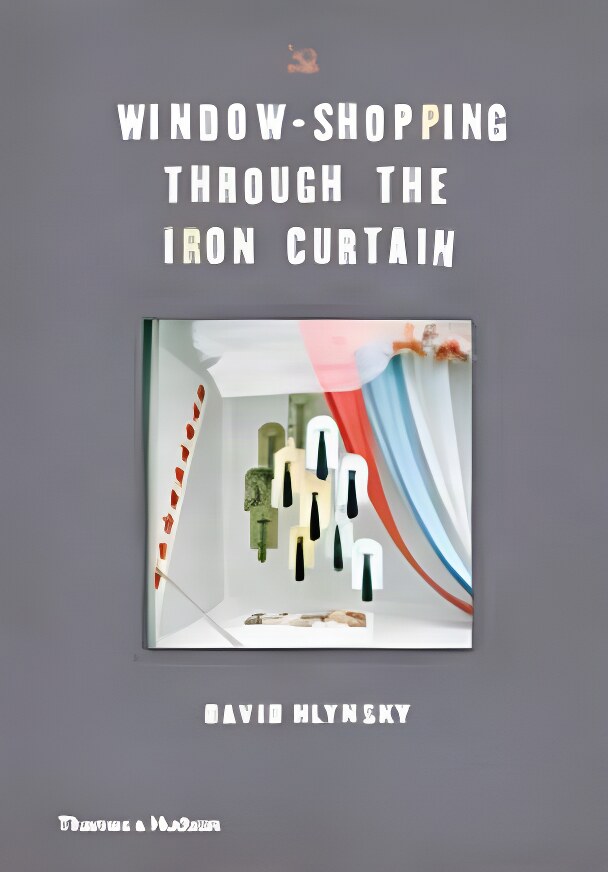
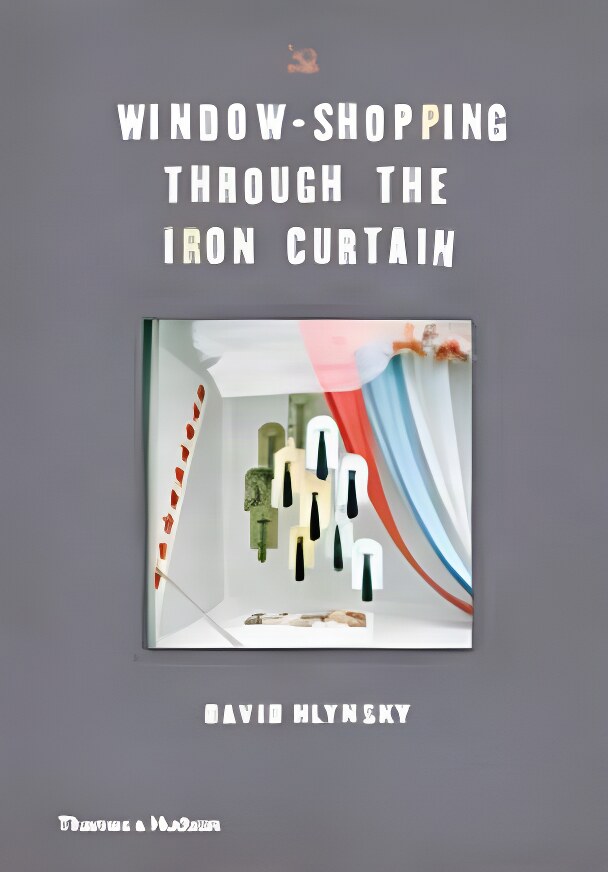
Hardcover. NY, Thames & Hudson, 1st, 2015, Book: Very Good, Dust Jacket: None, Hardcover, 208 pages, 174 color plates. Window-Shopping through the Iron Curtain presents a selection of more than 100 images of shop windows shot by David Hlynsky during four trips taken between 1986 and 1990 to Poland, Czechoslovakia, Hungary, Yugoslavia, Bulgaria, East Germany, and Moscow. Using a Hasselblad camera, Hlynsky captured the slow, routine moments of daily life on the streets and in the shop windows of crumbling Communist countries. The resulting images could be still-lifes representing the intersection of a Communist ideology and a consumerist, Capitalist tool-the shop window-with the consumer stuck in the middle. Devoid of overt branding or calculated seduction, the shop windows were typically adorned with traditional yet incongruous symbols of cheer: homey lace curtains, paper flowers, painted butterflies, and pictures of happy children. Some windows were humble in their simple offerings of loaves and tinned fishes; others were zanily artistic, as in the modular display of military shirts in a Moscow storefront; and some illustrated intense professional pride, such as a sign in a Prague beauty salon depicting a pedicurist smiling fiendishly over an imperfect sole. The photographs are accompanied by essays by art historian Martha Langford and cultural studies specialist Jody Berland, as well as Hlynsky's own account of his time as a flaneur in the shopping plazas of the collapsing Soviet empire-"a vast ad-hoc museum of a failing utopia" that in 1989 began to close forever. No dj issued.
Hardcover. NY, Thames & Hudson, 1st, 2015, Book: Very Good, Dust Jacket: None, Hardcover, 208 pages, 174 color plates. Window-Shopping through the Iron Curtain presents a selection of more than 100 images of shop windows shot by David Hlynsky during four trips taken between 1986 and 1990 to Poland, Czechoslovakia, Hungary, Yugoslavia, Bulgaria, East Germany, and Moscow. Using a Hasselblad camera, Hlynsky captured the slow, routine moments of daily life on the streets and in the shop windows of crumbling Communist countries. The resulting images could be still-lifes representing the intersection of a Communist ideology and a consumerist, Capitalist tool-the shop window-with the consumer stuck in the middle. Devoid of overt branding or calculated seduction, the shop windows were typically adorned with traditional yet incongruous symbols of cheer: homey lace curtains, paper flowers, painted butterflies, and pictures of happy children. Some windows were humble in their simple offerings of loaves and tinned fishes; others were zanily artistic, as in the modular display of military shirts in a Moscow storefront; and some illustrated intense professional pride, such as a sign in a Prague beauty salon depicting a pedicurist smiling fiendishly over an imperfect sole. The photographs are accompanied by essays by art historian Martha Langford and cultural studies specialist Jody Berland, as well as Hlynsky's own account of his time as a flaneur in the shopping plazas of the collapsing Soviet empire-"a vast ad-hoc museum of a failing utopia" that in 1989 began to close forever. No dj issued.
Hardcover. Kent OH, Kent State University, 1st, 1971, Book: Very Good, Dust Jacket: Good, Hardcover in a lightly worn dust jacket, 315 pages. 9 illustrations. A collection of 23 scholarly essays from this conference commemorating the 200th anniversary of the death of Irish novelist and clergyman Laurence Sterne (1713-1768). Clean copy.
Hardcover. Middletown CT, Wesleyan University Press, 1st, Book: Very Good, Dust Jacket: Very Good, Hardcover in a bright, unclipped dust jacket, 204 pages. Composer John Luther Adams makes his home in the boreal forest near Fairbanks, Alaska, where he has created a unique musical world grounded in the elemental landscapes and indigenous cultures of the North. Winter Music, a collection of Adams's essays, journal entries, and other writings is poetic and inspirational and delves into the environmental and cultural awareness that creates his reflective, almost spiritual, approach to music. The accompanying audio CD includes two previously unrecorded works by Adams. Adams's music explores natural phenomena from the songs of birds, to the complex nature of chaos, fractal geometry, and elemental noise. Similarly, his writings explore "that region between place and culture, between environment and imagination," reflecting a philosophy of deep awareness that makes him one of the most original composers working today. Clean copy.
Hardcover. University Press of Colorado, 1st, 1990, Book: Very Good, Dust Jacket: Very Good, Hardcover in a bright dust jacket, 198 pages, b&w illustrations. Women of the New Mexico Frontier, 1846-1912 is a collection of essays that include biographical sketches and writings from women of all walks of life who helped bring about the Americanization of the New Mexico Territory, from the Mexican War until statehood in 1912. These women were wives of missionaries, soldiers and military officers, and government officials who came from the eastern part of the United States. INSCRIBED BY AUTHOR on title page. Clean copy.
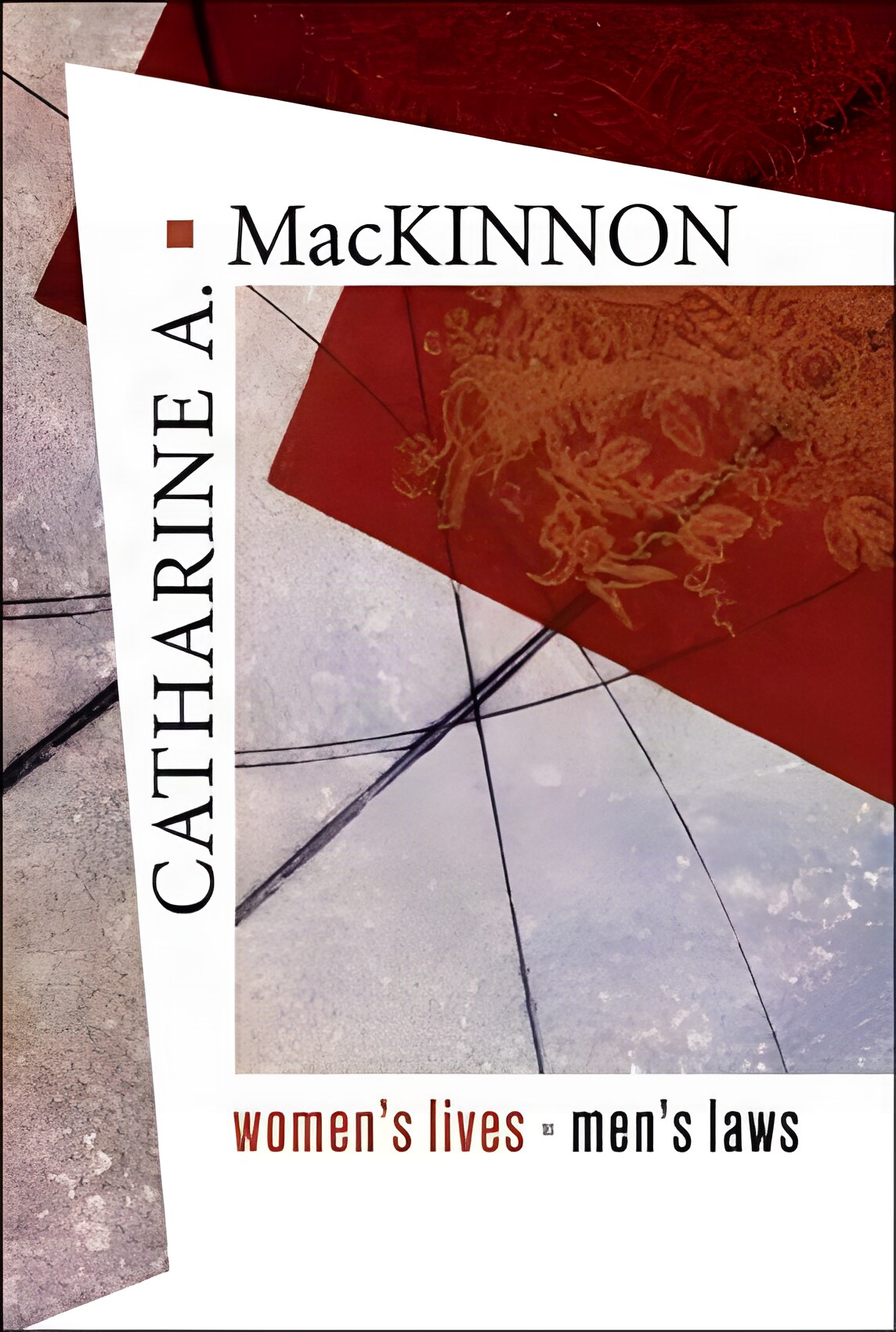
Hardcover. Cambridge MA, Harvard University Press, 1st, 2005, Book: Very Good, Dust Jacket: Very Good, Hardcover in a bright dust jacket, 558 pages. In the past twenty-five years, no one has been more instrumental than Catharine MacKinnon in making equal rights real for women. As Peter Jennings once put it, more than anyone else in legal studies, she "has made it easier for other women to seek justice." This collection, the first since MacKinnon's celebrated Feminism Unmodified appeared in 1987, brings together previously uncollected and unpublished work in the national arena from 1980 to the present, defining her clear, coherent, consistent approach to reframing the law of men on the basis of the lives of women.By making visible the deep gender bias of existing law, MacKinnon has recast legal debate and action on issues of sex discrimination, sexual abuse, prostitution, pornography, and racism. The essays in this volume document and illuminate some of the momentous and ongoing changes to which this work contributes; the recognition of sexual harassment, rape, and battering as claims for sexual discrimination; the redefinition of rape in terms of women's actual experience of sexual violation; and the reframing of the pornography debate around harm rather than morality. The perspectives in these essays have played an essential part in changing American law and remain fundamental to the project of building a sex-equal future. Clean copy.
Hardcover. Bostom, Small Maynard & Co., 1st, 1910, Book: Very Good, Dust Jacket: None, Hardcover, green cloth stamped in bright gilt. Essays on nature, originally published in the Boston Transcriot in rhe early 1900s. B&w drawings by Charles Copeland. Top edge gilt. An exceptional copy of a scarce title.
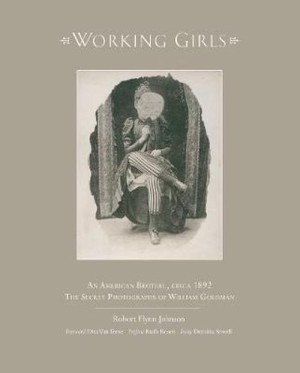
Hardcover. NY, Glitterati, 1st, Book: Very Good, Dust Jacket: Very Good, Hardcover in a bright dust jacket. After becoming captivated by the beauty and originality of a group of nineteenth-century photographs, Robert Flynn Johnson has uncovered more than two hundred vintage images of women who lived and worked at a brothel in Reading, Pennsylvania, circa 1892, and showcases them here for the first time for a wider public. Working Girls details the private, creative archive of commercial photographer William Goldman, whose imagery paints a complete picture of the environments that these women inhabited - from inside the brothel, posing artistically for the camera, to their off-duty routines, such as reading, smoking, and bathing. Taken two decades before the famous E. J. Bellocq photographs of prostitutes in Storyville, New Orleans, circa 1913, Johnson chronicles the aesthetic, historical, and sociological importance of Goldman's artwork in the history of photography, referencing them alongside paintings and photographs by such artists as Degas, Eakins, and Monsieur X. With essays that provide an insightful historical overview of Goldman's work in context of the period in which they were taken, by feminist and cultural luminaries including Dita Von Teese, Ruth Rosen and Dennita Sewell, this extraordinary collection provides a personal visual record of lives of these women while also offering a deeper understanding of the 'working girls' that existed in that era. Clean copy.
Hardcover. Edinburgh, John Grant, 1st, 1927, Book: Good, Dust Jacket: None, 3 hardcover volumes: 351 pages, 400 pages, 600 pages. Brown boards with tan cloth spine. Leather spine labels with gilt lettering. Frontispiece in Vols 1 & 2. Previous owner's sticker front paste-down. Foxing on front paste-down. Previous owner's signature and bookplate in each book.
Hardcover. US, Sansom Foundation, Inc., 1st, 2011, Book: Very Good, Dust Jacket: Very Good, 240 pages. Like new in publisher's shrink-wrap. The painter William Glackens (1870-1938) and his friends were among the liveliest and most influential American artists of the opening decades of the twentieth century. Their continued importance in the history of American art is explored in this informative collection of essays. Colin Bailey chronicles the beginnings of Albert C. Barnes' unparalleled collection of modern art, as well as Glackens' role in forming it, and Avis Berman investigates the friendship of John Sloan, Robert Henri and John Butler Yeats. Carol Troyen examines George Bellows' war paintings and Richard J. Wattenmaker probes the relationship between Glackens' paintings and sketchbooks. H. Barbara Weinberg documents how the leading American Impressionists and members of The Eight dealt with the pressures of economic survival. This profusely illustrated publication is an essential reference for curators, collectors and historians.


![When the Cathedrals Were White: A Journey to the Country of Timid Peopleby: Le Corbusier [Charles-Edouard Jeanneret]](https://www.browsingisarousing.com/shop/images/NoImage.jpg "When the Cathedrals Were White: A Journey to the Country of Timid Peopleby: Le Corbusier [Charles-Edouard Jeanneret]")

 "Wild Life in Southern Seasby: Becke, Louis")


 "William Egglestonby: Knape, Gunilla")
 "William Goldman: Four Screenplays with Essays by: William Goldman")




 "Winged Skull: Papers from the Laurence Sterne Bicentenary Conference by: Cash, Arthur H. & Stedmond, John M. (eds.)")

 "Women of the New Mexico Frontier, 1846-1912 (SIGNED COPY)by: Cheryl Foote")
 "Woodland Pathsby: Winthrop Packard")
 "Works of Sir Thomas Browne, The (3 Volume Set)by: Sayle (Ed.), Charles")
 "World of William Glackens. The: The C. Richard Hilker Art Lecturesby: Bailey, Colin")