Softcover. NY, Viking Press, 1st pbk., 1973, Book: Very Good, Dust Jacket: None, Softcover, 221 pages with b&w illustrations. A clean, unmarked and solid copy. A title in the series 'The Documents of 20th Century Art'. Essays, written between 1920 and 1953, by Fernand Leger, an influential, modern painter, on the purpose of art in modern life. Translated by Alexandra Anderson; Edited by Edward F. Fry; Preface by George L. K. Morris.
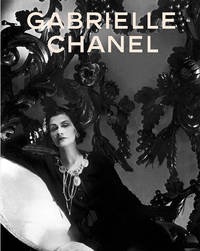
Hardcover. Thames & Hudson, 1st, 2020, Book: Very Good, Dust Jacket: None, Hardcover, pictorial cloth. Gabrielle 'Coco' Chanel is an icon of fashion, and can lay claim to having invented the look of the 20th century. At the height of the Belle Epoque, she stripped women of their corsets and feathers, bobbed their hair, put them in bathing suits and sent them out to get tanned in the sun. She introduced the little black dress; trousers for women; costume jewelry; the exquisitely comfortable suit that became her trademark. Early in the Roaring Twenties, Chanel made the first ever couture perfume - No. 5 - presenting it in the famous little square-cut flagon that, inspired by Picasso and Cubism, became the arch symbol of the Art Deco style. No. 5 remains the most popular scent ever created. This volume, published to accompany a landmark exhibition in Paris, traces the birth and evolution of Chanel's timeless style. Specially commissioned photographs by Julien T. Hamon showcase the clothing, while essays by fashion historians illuminate a period, an event or a theme. Rare archival documents, including portraits of Gabrielle Chanel herself, round out the book. Remainder line on bottom edge otherwise clean copy. DOMESTIC SHIPPING ONLY.
Softcover. San Francisco, Sierra Club Books, 1st pbk., 1995, Book: Very Good, Dust Jacket: None, Softcover, 288 pages illustrated in color. In sixty practical yet inspirational essays drawn from his Outdoor Photographer column, and in 145 stunning color photographs, world-renowned photographer Galen Rowell explains and demonstrates the techniques he uses to transform light and color into vivid, uniquely expressive art. The illuminating essays in Galen Rowell's Vision are grouped into four chapters covering the fundamental aspects of the art of adventure photography as practiced by one of its masters: "Goals," transforming dreams into realities through personal vision; "Preparations," pushing the limits of equipment, film, and technique; "Journeys," merging visions with realities; and "Realizations," communicating one's worldview through photography. Throughout, Rowell includes examples of some of his most memorable images and relates fascinating anecdotes from his extraordinary photographic career. Clean copy.
Hardcover. Boston, Houghton Mifflin, 1st, 1923, Book: Very Good, Dust Jacket: None, Hardcover, blue cloth covers with gilt stamping, top edge gilt. 400 pages with index. 4 b&w plates including a frontis portrait of the editor/publisher. Inscription, light note on front fly leaf, otherwise clean. Gilt lettering on spine has fading/chipping.
Hardcover. New Haven CT, Yale University Press, 1st, 2012, Book: Very Good, Dust Jacket: Very Good, Hardcover in a bright dust jacket. Published on the occasion of the exhibition held at the Philadelphia Museum of Art, 20 June-3 September 2012]/edited by Joseph J Rishel; with essays by Stephanie D'Allessandro.[et al.] A trio of masterpieces by Gauguin, Cezanne, and Matisse are joined by works by other major artists in this exploration of the enduring vitality of the theme of Arcadia. Paul Gauguin's Where Do We Come From? What Are We? Where Are We Going? (1897-98), Paul Cezanne's The Large Bathers (1906), and Henri Matisse's Bathers by a River (1909-10, 1913, and 1916-17). Other masterpieces by Jean-Baptiste-Camille Corot, Nicolas Poussin, and Pierre Puvis de Chavannes establish the high value given to Arcadia in the history of French painting. Still in publisher's shrinkwrap.
Softcover. Baltimore, Clearfield, reprint, 2000, Book: Very Good, Dust Jacket: None, Softcover, light gray wrappers, 278 pages. This volume consists of abstracts of genealogical data from four of New York's earliest newspapers--the New-York Gazette (1726-1744) and the New-York Weekly Journal (1733-1751), the two earliest city papers, and the New-York Mercury and the Weekly Mercury (1752-1783). These newspapers were originally produced as weeklies and usually consisted of four pages, with occasional supplementary issues. Their subject matter encompassed essays, treatises, parliamentary proceedings, governors' messages, European and West Indian news, shipping news, incidents culled from other newspapers, and many advertisements. In this volume of abstracts may be found items yielding information concerning marriage, birth, death, age, status, place of residence, and place of origin, covering, in all, the years 1726 through most of 1783. Treatment is not confined to New York, for among individuals mentioned are those from all the other colonies, especially New Jersey (which had no newspaper in the colonial period), New England, Pennsylvania, and Maryland.
Softcover. New Haven CT, Yale University Press, 2nd pr., 1984, Book: Very Good, Dust Jacket: None, Softcover, 194 pages. This book presents the first English translation of 4 important essays by the noted German philosopher dealing with love, sexuality and relations between men and women. Clean copy. Some fading to cover wrapper.
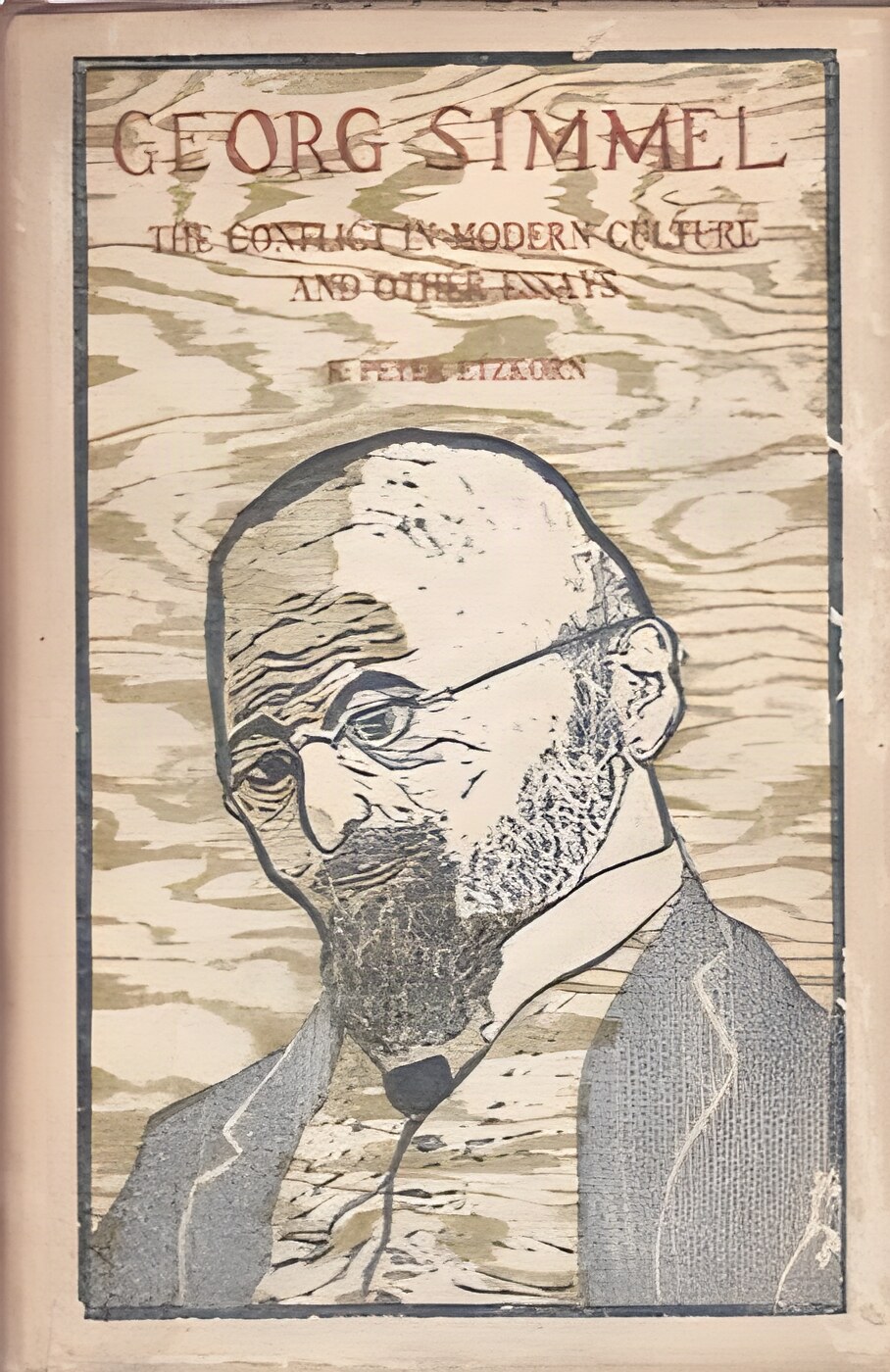
Hardcover. NY, Teachers College Press, 1st, 1968, Book: Very Good, Dust Jacket: Good, Hardcover in a lightly worn, unclipped dust jacket, 140 pages. A collection of essays by the German sociologist and philosopher concerning man's relationship to culture. Clean copy, minor wear to dust jacket.
Hardcover. Peacham VT, The Perpetua Press, 1st, 2002, Hardcover in the publisher's cream-colored linen over boards with spine and upper board gilt-stamped black leather labels. No dust jacket, as issued. 88 pages, only 500 copies printed. A collection of interviews done with Shaw from 1924 - 1945. Bright and clean copy.
Hardcover. London , Bell & Daldy, reprint, 1869, Book: Very Good, Dust Jacket: None, Hardcover in 3/4 polished leather with marbled boards, spine with gilt lettering, raised bands. Engraved title and twelve full-page engraved plates and 116 engravings on wood by Cruikshank. 277 pages, humorous essays and commentary throughout by various writers. Reprint of the 1845 Edition.
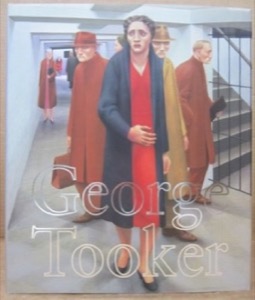
Hardcover. Merrell, 1st, Book: Very Good, Dust Jacket: None, Softcover, pictorial wrappers with silver lettering. 191 pages, color plates. The first representative overview of Tooker's work for thirty years, provides a much-deserved and comprehensive examination of the scope of his art. In essays comprising new research and offering fresh insights, it explores his passion for composition, his spirituality and his exploration of identity. Featuring superb reproductions of more than eighty of the artist's timeless images, the book also enables readers to see the unexpected ways in which Tooker's work echoes what has been considered avant-garde in American art and to appreciate the depth of his resonant, prescient imagery. A major new study of one of America's most influential modern painters. Clean copy.
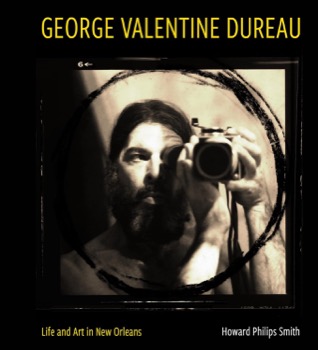
Hardcover. Jackson MS, University Press of Mississippi, 1st, 2025, Book: Very Good, Dust Jacket: Very Good, Hardcover in a bright dust jacket, 520 pages. New Orleans artist George Valentine Dureau (1930-2014) has always been an enigma. His status as an important artist gained momentum beginning with his first exhibition at the New Orleans Museum of Art, then the Isaac Delgado Museum of Art, in the mid-1960s. Not only did his career undergo a meteoric rise, but his work proved at once controversial and provocative, nuanced and groundbreaking. Critics and collectors embraced his bold images, describing them as sexual, sensual, exploitative, erotic, iconoclastic, and innovative. Beneath the surface, Dureau was even more complex as a person and persona, as he crafted a sensational character out of his artistic acumen. His reputation dimmed after his death, but in recent years his importance, and that of the New Orleans art scene he occupied, has once again been recognized. This lush publication features 100 large-format photographic plates, most of which have never been seen or published and surprisingly some in color. There are more than 200 illustrations and two essays to accompany the plates, along with a special section devoted to the artists and artwork of 1980s New Orleans, featuring hundreds of additional photographs, and several appendices of supplementary materials, such as interview transcripts, a timeline of Dureau's life and career, a map of important locations, and a section on relevant art publications, invitations, and posters. Clean copy. This is a heavy and oversized book and will require extra shipping. International customers please ask for a shipping quote before purchasing.
Hardcover. Washington DC, National Gallery of Art / Yale University Press, 1st, 1996, Book: Very Good, Dust Jacket: Very Good, Hardcover in a bright, unclipped dust jacket. Publisher's full red cloth, gilt lettering on spine, gold endpapers. Profusely illustrated with numerous full-color plates (many full-page) as well as B&W illustrations. Published to coincide with the exhibition held at the National Gallery of Art, Washington, and the Kimbell Art Museum, Fort Worth, October 1996 to May 1997. Includes essays by Jean-Pierre Cuzin, Gail Feigenbaum, Patricia Behre Miskimin, Edmund P. Pillsbury, and Leonard J. Slatkes; and also technical essays by Claire Barry, Barbara Berrie, Melanie Gifford, and Michael Palmer. Also includes Bibliography and detailed Index. . Both the volume and the unclipped dust jacket are in pristine condition.
Hardcover. NY/Boston, Little Brown & Co., 1st, 2008, Book: Very Good, Dust Jacket: Very Good, Hardcover in a bright, unclipped dust jacket, 175 pages. This is the first major publication and exhibition devoted to a comparative view of the work of Georgia O'Keeffe and Ansel Adams." who became friends in Taos. The exhibition was organized y the Georgia O'Keeffe Museum in Santa Fe. Contains essays and beautiful illustrations by both artists. Contains an index, source notes, chronologies, and a bibliography in the rear. Clean copy.
Hardcover. Washington, D.C., Phillips Collection, 1st, 1999, Book: Very Good, Dust Jacket: Very Good, 158 pages. Hardcover with dust jacket. A very clean, unmarked copy with only minor wear to dust jacket edges. Color illustrations throughout. Explores O'Keeffe's unmatched accomplishments in still-life painting in two essays accompanied by reproductions of her work and photographs of her studios.
Hardcover. Paris, Editions Gallimard, 1st, 2005, Book: Very Good, Dust Jacket: None, Hardcover, large heavy volume in glossy pictorial boards. 495 pages with index. Accompanying DVD in rear pocket inside cover. Girodet was one of the greatest French painters of the early 19th century. His career reached its height under the reign of Napoleon. Illustrated throughout in color, scholarly essays by various experts, a chronology. No dj issued, minor bump to lower corner of cover, otherwise like new. DOMESTIC SHIPPING ONLY.
Hardcover. Urbana IL, University of Illinois Press, 1st, 1975, Book: Very Good, Dust Jacket: Very Good, Hardcover in an unclipped dust jacket, 221 pages, b&w illustrations. Sketches and essays that combine White's scholarly research on the origins of western folksong with his personal knowledge and experience as a cowboy singer. A work that bridges the generations of balladry and folksong scholarship. Includes a four song vinyl record laid in at rear.
Hardcover. Manhasset NY, Round Table Press, reprint, 1963, Book: Very Good, Dust Jacket: Good, Hardcover in a lightly worn dust jacker, 143 pages. Introduction by Elmer Homrighausen. Owner's name on front fly leaf, otherwise clean.
Hardcover. NY/Oxford UK, Routledge, 1st, 2023, Book: Very Good, Dust Jacket: None, Hardcover in pictorial boards, 190 pages. This book examines Gore Vidal's lifelong engagement with the ancient world. Incorporating material from his novels, essays, screenplays and plays, it argues that his interaction with antiquity was central to the way in which he viewed himself, his writing, and his world. Divided between the three primary subjects of his writing - sex, politics, and religion - this book traces the lengthy dialogue between Vidal and antiquity over the course of his sixty-year career. Broughall analyses Vidal's portrayals of the ancient past in novels such as Julian (1964), Creation (1981) and Live from Golgotha (1992). He also shows how classical literature inspired Vidal's other fiction, such as The City and the Pillar (1948), Myra Breckinridge (1968), and his Narratives of Empire (1967-2000) novels. Beyond his fiction, Broughall examines the ways in which antiquity influenced Vidal's careers as a playwright, an essayist and a satirist, and evaluates the influence of classical authors and their works upon him. Clean copy.
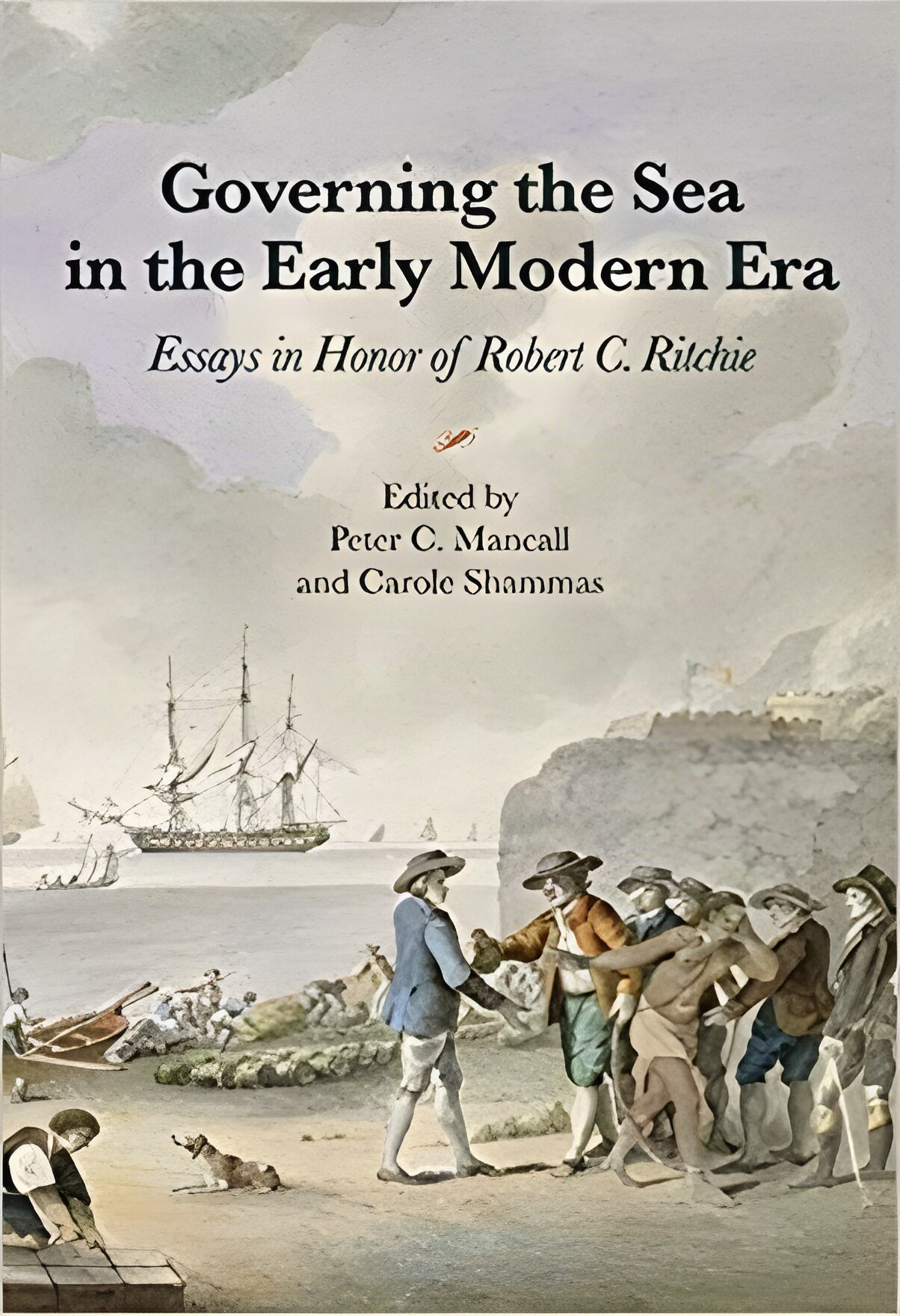
Hardcover. San Marino CA, The Huntington Library, 1st, 2015, Book: Very Good, Dust Jacket: Very Good, Hardcover in a bright dust jacket, 326 pages, b&w illustrations. Early modern European governments and their subjects had difficulty agreeing to laws governing behavior on the sea - an environment that featured watery borders, rampant piracy, the threat of free trade, and the large-scale transportation of human cargo. The essays in this volume explore how the exploitation of the oceans changed the institution of slavery, long-distance trade, property crime, the environment, literature, and memory from medieval times to the nineteenth century. Clean copy.
Hardcover. Princeton Architectural Press, 1st, 2006, Book: Very Good, Dust Jacket: Very Good, Hardcover, 256 pages. The Breakers, the Waldorf, the Biltmore, the Sherry, the Pierre--these landmark hotels are synonymous with grand luxury and style. When they were built, in the 1920s, their refined elegance and grandeur set the bar for hotels and resorts the world over. Responsible for creating these and countless other hotels throughout the United States, were the partners of a single architectural firm: Schultze & Weaver. Together, this duo--an architect and an engineer--virtually invented the glamorous lifestyle made famous in films like Grand Hotel. Catering to the social elite of which they were themselves a part, Schultze & Weaver synthesized the Old World style of Renaissance Italy, Moorish Spain, and Georgian England with all of the modern amenities that made hotel living luxurious. This book presents portfolios of fifteen of the firm's most spectacular hotels, culminating in the Art Moderne masterpiece of the Waldorf-Astoria. Over two hundred period photographs and hand-colored architectural renderings chart the ascent of the American hotel in all its glory and glamour, before the Great Depression forever changed the lifestyles of America's rich and famous. Essays address the cultural and technological developments that underpin the creation of resort and residential hotels, including the elemental role played by Schultze & Weaver.
Softcover. San Francisco, Pomegranate, Revised Ed., 2001, Book: Very Good, Dust Jacket: None, Softcover, 168 pages. Many cans of tuna have been opened and emptied since the collection's first mostly black-and-white edition, in 1981; the revised edition adds more color art as well as coverage of classics including The Cat in the Hat, Bill the Cat, and pets penned by B. Kliban and Edward Gorey. The volume covers cartoon depictions of the cat dating back to 1100 B.C., though the bulk of the images date to the 20th century. Brief essays about printing, literature, contemporary society, and other historical facts are interspersed with the goods selections from the comics themselves. Editor Whyte is a publisher who founded the Cartoon Art Museum in San Francisco.
Softcover. San Francisco, Pomegranate, Revised Ed., 2001, Book: Very Good, Dust Jacket: None, Softcover, 168 pages. Many cans of tuna have been opened and emptied since the collection's first mostly black-and-white edition, in 1981; the revised edition adds more color art as well as coverage of classics including The Cat in the Hat, Bill the Cat, and pets penned by B. Kliban and Edward Gorey. The volume covers cartoon depictions of the cat dating back to 1100 B.C., though the bulk of the images date to the 20th century. Brief essays about printing, literature, contemporary society, and other historical facts are interspersed with the goods selections from the comics themselves. Editor Whyte is a publisher who founded the Cartoon Art Museum in San Francisco.

 "Functions of Painting by: Leger, Fernand")

 "Garland Series: On the Freedom of Printing and of Speech - Charles Blount - A Just Vindication of Learning - Daniel Defoe - An Essay on the Regulation of the Press - Jeremy Bentham - On the Liberty of the Press.")


 "Genealogical Data from Colonial New York Newspapers: A Consolidation of Articles from The New York Genealogical and Biographical Record by: Kenneth Scott (Compiler)")
![Georg Simmel: On Women, Sexuality and Love by: Simmel, Georg; Oakes, Guy [Editor]](javascript:largeIMTop('https://www.browsingisarousing.com/shop/images/Georg-Simmel-On-Women-Sexuality-and-Love_by_Simmel-Georg-Oakes-Guy-Editor380316-421720.jpg','https://www.browsingisarousing.com/shop/images/Georg-Simmel-On-Women-Sexuality-and-Love_by_Simmel-Georg-Oakes-Guy-Editor380316-421720.jpg',0,'380316',0,'') "Georg Simmel: On Women, Sexuality and Love by: Simmel, Georg; Oakes, Guy [Editor]")
 "George Bernard Shaw: Eight Interviews By Hayden Churchby: Bernard Shaw, Editor: Edward Connery Lathem")
 "George Cruikshank's Table Bookby: Cruikshank, George/Gilbert Albert A'Beckett (Ed.)")
 "Georges de la Tour and His World by: Conisbee, Philip, Tour Georges Du Mesnil De LA and Jean-Pierre Cuzin")
 "Georgia O'Keeffe and Ansel Adams: Natural Affinities by: Lynes, Barbara Buhler and Richard B. Woodward, Sandra S. Phillips, Georgia O'Keeffe, Ansel Adams")
 "Georgia O'Keeffe: The Poetry of Thingsby: Turner, Elizabeth Hutton")


 "God In Action by: Barth, Karl")

 "Grand Hotels of the Jazz Age: The Architecture of Schultze & Weaverby: Marianne Lamonaca")
 "Great Comic Catsby: Malcolm Whyte")