Hardcover. Oxford UK, Clarendon Press, reprint, 2003, Book: Very Good, Dust Jacket: None, Hardcover in glossy boards, 639 pages. Volume 3 ONLY of a six volume set. Clean, bright copy.
Hardcover. Bristol UK, Thoemmes , 1st, 2003, Hardcover set, two volumes complete, black cloth with red and gilt titles on spine, 1116 pages, ribbon bookmarks. No slipcase. In this Dictionary, more than four hundred biographical entries encompass all the Dutch thinkers who exercised a major influence on the intellectual life of the Golden Age, as well as those who developed their ideas and beliefs through interaction with other scholars. Additional entries describe foreign philosophers who lived in the country temporarily and whose work was influenced by their stay. These include John Locke, Rene Descartes and Pierre Bayle. Ther is some pencil marking to the endpapers, mostly in Vol. 1. Otherwise clean, tight copies. PLEASE NOTE: DUE TO WEIGHT, DOMESTIC SHIPPING ONLY.
Hardcover. NY, Alfred A. Knopf, 1st, 1935, Book: Very Good, Dust Jacket: None, Hardcover, maroon cloth with gilt lettering on spine, pages 415-797, plus index. Volume 2 ONLY. No dust jacket. Name on front fly leaf otherwise a clean, bright copy.
Hardcover. NY, Alfred A. Knopf, 1st, 1935, Book: Very Good, Dust Jacket: None, Hardcover, maroon cloth with gilt lettering on spine, 414 pages. Volume 1 ONLY. No dust jacket. Name on front fly leaf otherwise a clean, bright copy.
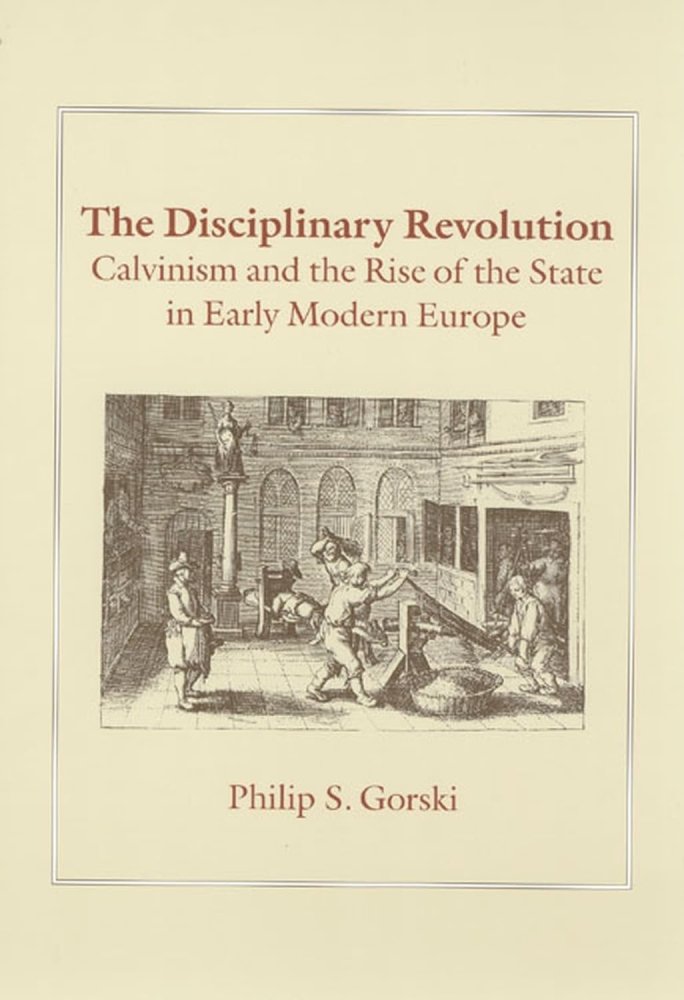
Softcover. University of Chicago Press, reprint, 2010, Book: Very Good, Dust Jacket: None, Softcover, 249 pages. What explains the rapid growth of state power in early modern Europe? While most scholars have pointed to the impact of military or capitalist revolutions, Philip S. Gorski argues instead for the importance of a disciplinary revolution unleashed by the Reformation. By refining and diffusing a variety of disciplinary techniques and strategies, such as communal surveillance, control through incarceration, and bureaucratic office-holding, Calvin and his followers created an infrastructure of religious governance and social control that served as a model for the rest of Europe--and the world. Clean, bright copy.
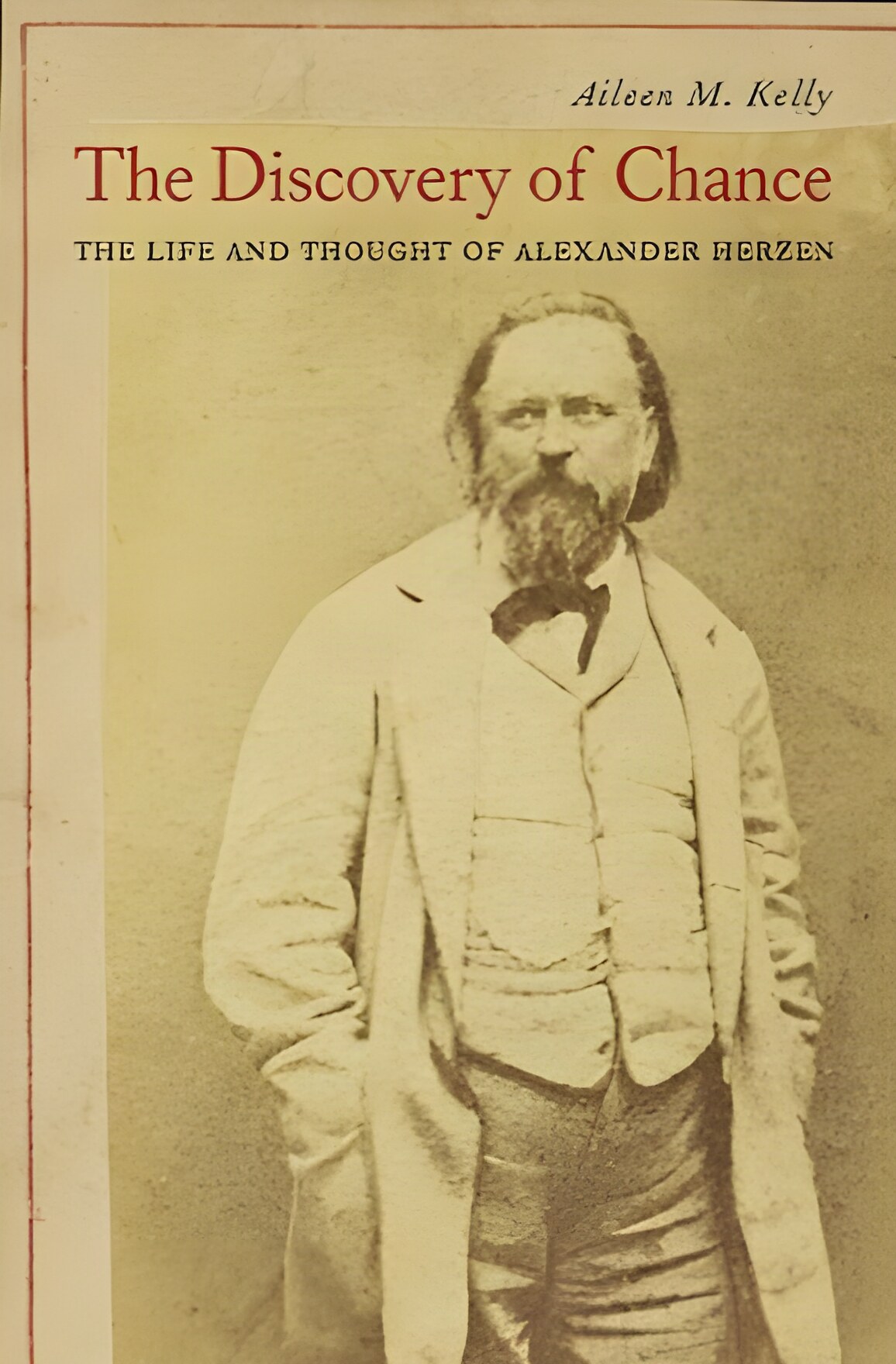
Hardcover. Cambridge MA, Harvard University Press, 1st, 2016, Book: Very Good, Dust Jacket: Very Good, Hardcover in a bright dust jacket, 592 pages. Alexander Herzen-philosopher, novelist, essayist, political agitator, and one of the leading Russian intellectuals of the nineteenth century-was as famous in his day as Tolstoy and Dostoevsky. While he is remembered for his masterpiece My Past and Thoughts and as the father of Russian socialism, his contributions to the history of ideas defy easy categorization because they are so numerous. Aileen Kelly presents the first fully rounded study of the farsighted genius whom Isaiah Berlin called "the forerunner of much twentieth-century thought." In an era dominated by ideologies of human progress, Herzen resisted them because they conflicted with his sense of reality, a sense honed by his unusually comprehensive understanding of history, philosophy, and the natural sciences. Following his unconventional decision to study science at university, he came to recognize the implications of early evolutionary theory, not just for the natural world but for human history. In this respect, he was a Darwinian even before Darwin. Clean, bright copy.
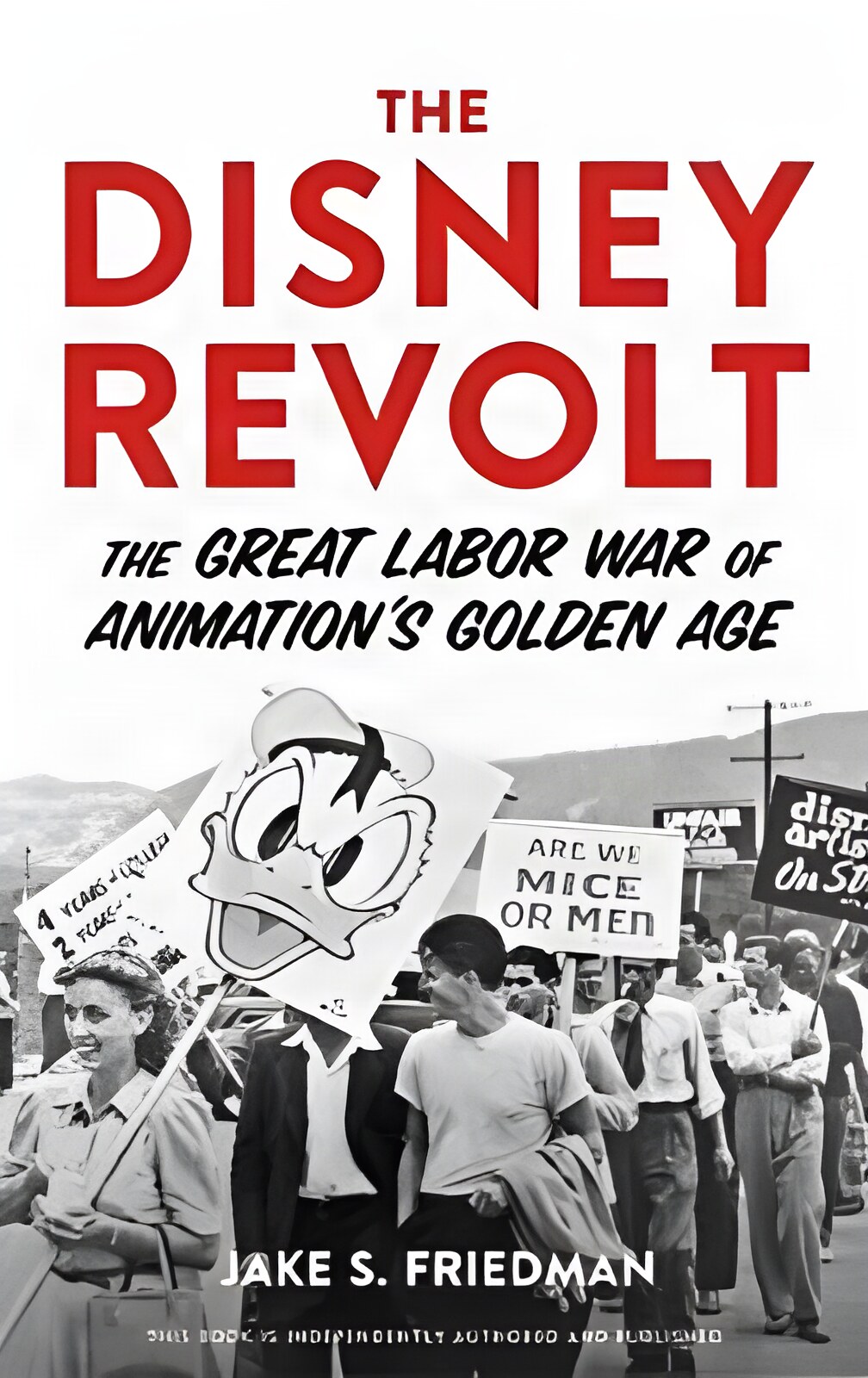
Hardcover. Chicago, Chicago Review Press, 1st, 2022, Book: Very Good, Dust Jacket: Very Good, Hardcover in a bright dust jacket, 322 pages, b&w photos. An essential piece of Disney history has been largely unreported for eighty years. Soon after the birth of Mickey Mouse, one animator raised the Disney Studio far beyond Walt's expectations. That animator also led a union war that almost destroyed it. Art Babbitt animated for the Disney studio throughout the 1930s and through 1941, years in which he and Walt were jointly driven to elevate animation as an art form, up through Snow White, Pinocchio, and Fantasia. But as America prepared for World War II, labor unions spread across Hollywood. Disney fought the unions while Babbitt embraced them. Soon, angry Disney cartoon characters graced picket signs as hundreds of animation artists went out on strike. Adding fuel to the fire was Willie Bioff, one of Al Capone's wiseguys who was seizing control of Hollywood workers and vied for the animators' union. Using never-before-seen research from previously lost records, including conversation transcriptions from within the studio walls, author and historian Jake S. Friedman reveals the details behind the labor dispute that changed animation and Hollywood forever. Clean copy.
Softcover. Chicago, Chicago Review Press, 1st, 2022, Book: Very Good, Dust Jacket: None, Softcover, 322 pages, b&w illustrations. An essential piece of Disney history has been unreported for eighty years.Soon after the birth of Mickey Mouse, one animator raised the Disney Studio far beyond Walts expectations. That animator also led a union war that almost destroyed it. Art Babbitt animated for the Disney studio throughout the 1930s and through 1941, years in which he and Walt were jointly driven to elevate animation as an art form, up through Snow White, Pinocchio, and Fantasia.But as America prepared for World War II, labour unions spread across Hollywood. Disney fought the unions while Babbitt embraced them. Soon, angry Disney cartoon characters graced picket signs as hundreds of animation artists went out on strike. Adding fuel to the fire was Willie Bioff, one of Al Capones wiseguys who was seizing control of Hollywood workers and vied for the animators union.Using never-before-seen research from previously lost records, including conversation transcriptions from within the studio walls, author and historian Jake S. Friedman reveals the details behind the labour dispute that changed animation and Hollywood forever. Clean copy.
Hardcover. Chicago, University of Chicago Press, 1st, 2022, Book: Very Good, Dust Jacket: Very Good, Hardcover in a bright dust jacket, 328 pages with index. INSCRIBED BY AUTHOR on the title page. This gripping history shows how the electronic devices we use to access and receive care influence the kind of care we receive. The Doctor Who Wasn't There traces the long arc of enthusiasm for and skepticism of electronic media in health and medicine. Over the past century, a series of new technologies promised to democratize access to healthcare. From the humble telephone to the connected smartphone, from FM radio to wireless wearables, from cable television to the electronic brains of networked mainframe computers: each new platform has promised a radical reformation of the healthcare landscape. With equal attention to the history of technology, the history of medicine, and the politics and economies of American healthcare, physician and historian Jeremy A. Greene explores the role that electronic media play, for better and for worse, in the past, present, and future of our health. Clean copy.
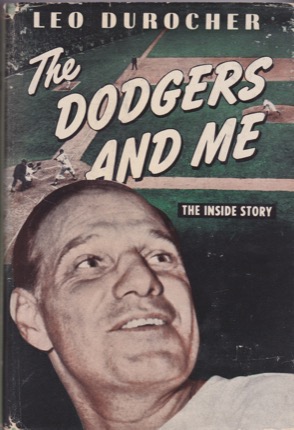
Hardcover. Chicago, Ziff-Davis Publishing , 1st, 1948, Book: Very Good, Dust Jacket: Good, Hardcover in a worn, chipped dust jacket that has the $2.50 flap price. The Brooklyn Dodgers and Leo "Lippy" Durocher were made for each other. Here are the breezy accounts of internal struggles, clubhouse brawls and front-office tempests that marked the Dodgers climb to national fame and the National League Pennant. Has green boards and is in good condition. Has a number of black and white photos: Pete Reiser, Pee Wee Reese, Al Gionfriddo's World Series catch, and Leo arguing with the umpires. Mild soil and rubbing to rear of dj, book is bright and clean.
Hardcover. Baltimore, Johns Hopkins University, 1st, 1978, Book: Very Good, Dust Jacket: Very Good, Hardcover in a bright dust jacket with light edgewear, 460 pages. Translated by Lawrence Lipson. A vivid historical narrative of the US military intervention in Central America. Uncommon. Name on front fly leaf otherwise clean.
Hardcover. Cambridge MA, Harvard University Press, 1st, 1972, Book: Very Good, Dust Jacket: Very Good, Hardcover in a bright, unclipped dust jacket, 246 pages. Preface, Introduction, Chapters on: The United States and the Dominican Republic to 1965: Background to Intervention; The Origins of the 1965 Dominican Crisis: Setting the Stage; The Decision to Intervene; Deploying the Troops; and Explaining the Dominican Intervention. Drawing on nearly 150 personal interviews with individuals in the Dominican Republic and the United States, on rare access to classified U.S. government documents, and on his own first-hand experiences during the crisis, Abraham F. Lowenthal rejects official, liberal, and radical accounts of the intervention. Instead, he explains it as the product of fundamental premises, of decision-making procedures, and of bureaucratic politics. Name on front fly leaf, otherwise clean.
Hardcover. NY, Orion/Crown, 1st, 1989, Book: Very Good, Dust Jacket: Very Good, Hardcover, 272 pages. Recaptures the World War II bombing raid over Tokyo under the command of Lt. Col. "Jimmy" Doolittle and the incredible seek-and-destroy mission that he and other American pilots endured after the bombing.
Softcover. Luminare Press, 1st, 2016, Book: Very Good, Dust Jacket: None, Softcover, pictorial wrappers, 138 pages. This memoir immerses the reader in post-World War II rural Oregon where logging trucks laden with timber rumbled along gravel roads and moonshine was secreted in nearby shadows. Here a man's measure was taken not by his wealth or success but by his toil, and a woman was assessed not by her virtues but by her virtue. Rivers and reputations rose and fell swiftly. Electricity came to this rural area almost to the day the girl and her family arrived at the farm. Lowell and Fall Creek were charged for change. Even though families of pioneers and newcomers together celebrated in 1948 the centennial of the Oregon Territory, the landscape flush with virgin forests and rivers in very short time changed exponentially. Clean copy.
Softcover. Luminare Press, 1st, 2016, Book: Very Good, Dust Jacket: None, Softcover, pictorial wrappers, 138 pages. This memoir immerses the reader in post-World War II rural Oregon where logging trucks laden with timber rumbled along gravel roads and moonshine was secreted in nearby shadows. Here a man's measure was taken not by his wealth or success but by his toil, and a woman was assessed not by her virtues but by her virtue. Rivers and reputations rose and fell swiftly. Electricity came to this rural area almost to the day the girl and her family arrived at the farm. Lowell and Fall Creek were charged for change. Even though families of pioneers and newcomers together celebrated in 1948 the centennial of the Oregon Territory, the landscape flush with virgin forests and rivers in very short time changed exponentially. Clean copy.
Hardcover. Walburg Pers, 1st, 2003, Book: Very Good, Dust Jacket: Very Good, Hardcover in a bright dust jacket, 192 pages illustrated in color and b&w. A study about the development of a company founded in Amsterdam in the Dutch Golden Age. The VOC, as it was called, was a joint venture company of the Dutch in controlling trade in the world. This scientific paper is one of the main references in terms of research on VOC History. Clean copy.
Softcover. UK, Cambridge University Press, 1st, 2005, Book: Very Good, Dust Jacket: None, Softcover, 317 pages, b&w illustrations. Translated from the Dutch by Diane Webb. "Rembrandt, Hals and Vermeer are still household names, even though they died over three hundred years ago. In their lifetimes they witnessed the extraordinary consolidation of the newly independent Dutch Republic and its emergence as one of the richest nations on earth. As one contemporary wrote in 1673: the Dutch were 'the envy of some, the fear of others, and the wonder of all their neighbours'. During the Dutch Golden Age, the arts blossomed and the country became a haven of religious tolerance. However, despite being self-proclaimed champions of freedom, the Dutch conquered communities in America, Africa and Asia and were heavily involved in both slavery and the slave trade on three continents." Clean copy.
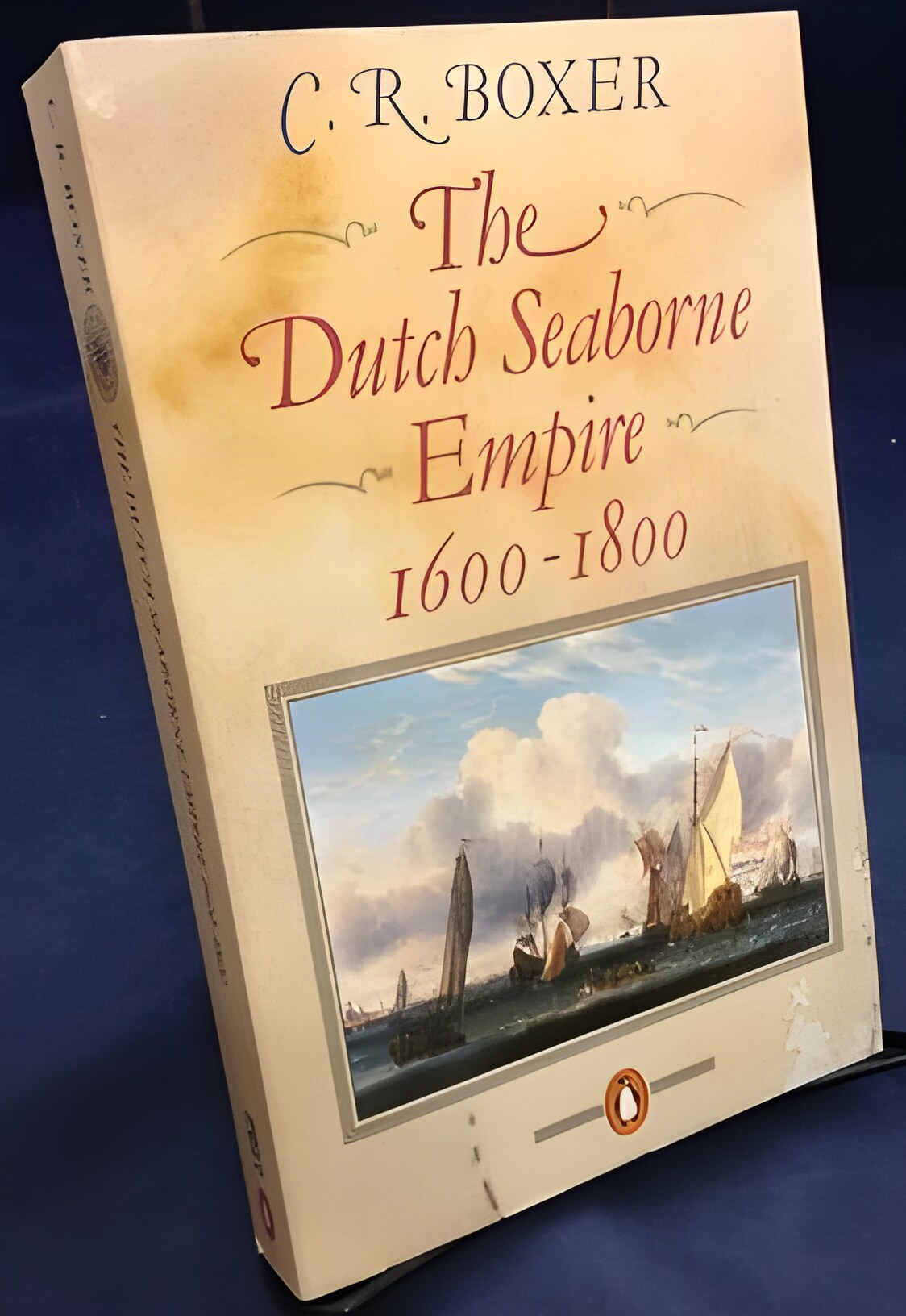
Softcover. NY, Penguin Books, reprint, 1990, Book: Very Good, Dust Jacket: None, Softcover, 363 pages. Despite ceaseless conflict between different classes and cities, Holland's rise to power was almost miraculously rapid. In a few short years a tiny country gained control of territory from Indonesia to the West Indies, from South Africa to South America. In this marvelously evocative book Professor Boxer recaptures the scenes of adventure and dissipation in the four corners of the earth , the up surge in the arts and sciences, and the sad decoines from the ' Golden Century' to the 'Periwig Period'. Few stories could be as rich and colorful, yet it was largely inspired by the ' grave and sober people of Holland', the Calvinist merchants of Amsterdam who forged a nation based on ' gain and godliness'. Such were the people whom Rembrandt painted, who debated policies of apartheid or assimilation, who founded factories and forts. The Dutch Seaborne empire offers a portrait of them all, as they made their spectacular entrance into the modern world. Clean copy.
Hardcover. NY, New York University Press, 1st, 1992, Book: Good, Dust Jacket: Very Good, Hardcover in a bright dust jacket, 240 pages. Under the influence of European historians, scholarship about the Dutch in America has generally emphasized what was derived from the urban and merchant character of the Netherlands, particularly the single province of Holland in the seventeenth century. But it was among the farmers of New York and New Jersey, according to David Steven Cohen, rather than the urban merchants of Albany and New York City, that a distinctive Dutch-American regional subculture arose, thrived, and survived through the end of the nineteenth century. By examining the life of the early emigrant Dutch settlers, the author constructs a picture of their culture through the farmhouses they built, the landscapes they cultivated, and the tools and equipment they used, relating it all to the structure of their families, their folklore, and folklife. It was in the second quarter of the eighteenth century, according to Cohen, that a change occurred in the culture of the Dutch in America by which they became Dutch-American, and the most striking material evidence of this transformation was in the development of a new type of farmhouse, which began to replace those still traceable to the Netherlands.Thirty black-and-white illustrations. Many pages with light pencil notations.
Hardcover. Leiden/Boston, Brill, 1st, 2002, Book: Very Good, Dust Jacket: None, Hardcover, decorated cloth, 482 pages. This book explores the dynamics of the commentary and textbook traditions in Aristotelian natural philosophy under the headings of doctrine, method, and scientific and social status. It inquires what the evolution of the Aristotelian commentary tradition can tell us about the character of natural philosophy as a pedagogical tool, as a scientific enterprise, and as a background to modern scientific thought. In a unique attempt to cut old-fashioned historiographic divisions, it brings together scholars of ancient, medieval, Renaissance and seventeenth-century philosophy. The book covers a remarkably broad range of topics: it starts with the first Greek commentators and ends with Leibniz. Small ink stamp on front fly leaf, otherwise clean.
Softcover. Notre Dame IN, Theatre Historical Society, 1st, 1986, Book: Very Good, Dust Jacket: None, Softcover, stapled wrappers, 40 pages. Profusely illustrated in b&w. A visual history of the design and building of the Earle Theatre in Philadelphia. Some of the world's biggest stars performed there in it's heyday. Old price sticker on rear cover, otherwise clean, very good.
Hardcover. Cambridge MA, The MIT Press, 1st, 2016, Book: Very Good, Dust Jacket: Very Good, Hardcover in a bright dust jacket. The daguerreotype, invented in France, came to America in 1839. By 1851, this early photographic method had been improved by American daguerreotypists to such a degree that it was often referred to as "the American process." The daguerreotype-now perhaps mostly associated with stiffly posed portraits of serious-visaged nineteenth-century personages-was an extremely detailed photographic image, produced though a complicated process involving a copper plate, light-sensitive chemicals, and mercury fumes. It was, as Sarah Kate Gillespie shows in this generously illustrated history, something wholly and remarkably new: a product of science and innovative technology that resulted in a visual object. It was a hybrid, with roots in both fine art and science, and it interacted in reciprocally formative ways with fine art, science, and technology. Gillespie maps the evolution of the daguerreotype, as medium and as profession, from its introduction to the ascendancy of the "American process," tracing its relationship to other fields and the professionalization of those fields. She does so by recounting the activities of a series of American daguerreotypists, including fine artists, scientists, and mechanical tinkerers. She describes, for example, experiments undertaken by Samuel F. B. Morse as he made the transition from artist to inventor; how artists made use of the daguerreotype, both borrowing conventions from fine art and establishing new ones for a new medium; the use of the daguerreotype in various sciences, particularly astronomy; and technological innovators who drew on their work in the mechanical arts.
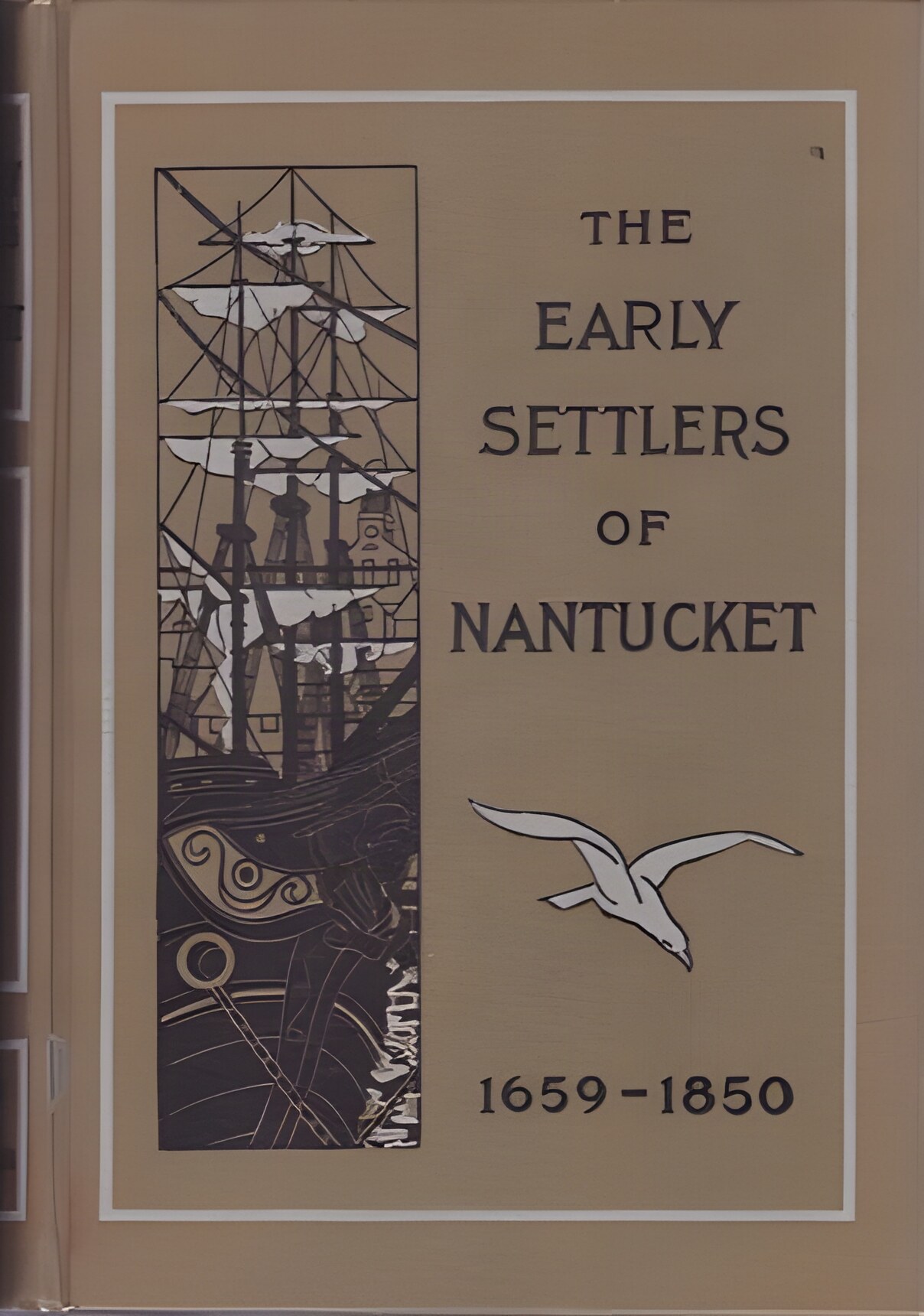
Hardcover. Philadelphia, W.A. Henry Press, 3rd Ed., 1926, Book: Very Good, Dust Jacket: None, Hardcover, pictorial gray cloth stamped in black and white. 330 pages, top edge gilt. frontis., b/w plates, text illustrations appendix, index. A highly regarded social history of Nantucket treats the purchase and settlement of the island, the early proprietors, and various events in Nantucket history, such as Nantucket's role in the Revolution. The balance of the work consists of histories of some thirty founding families. Genealogists should also consult the appendices for a list of Quakers who visited Nantucket between 1664 and 1847. Small embossed stamp on front fly leaf, otherwise a bright, clean copy.


 "The Dictionary of Seventeenth and Eighteenth-Century Dutch Philosophers- 2 Volumesby: Van Bunge, Wiep & Henri Krop, Bart Leeuwenburgh, Han van Ruler, Paul Schuurman,")


 "The Discovery of the South Shetland Islands. The Voyages of the Brig Williams 1819-1820, as Recorded in Contemporary Documents and The Journal of Midshipman C. W. Poynter by:")





 "The Doolittle Raid: America's daring first strike against Japanby: Carroll V. Glines")
 "The Dusky Afternoon: An Oregon Childhood by: Sara Jeanne Duncan Widness")
 "The Dusky Afternoon: An Oregon Childhood by: Sara Jeanne Duncan Widness")




![The Dynamics of Aristotelian Natural Philosophy from Antiquity to the Seventeenth Centuryby: Herausgeber: Leijenhorst, C., Herausgeber: L]thy, C., Herausgeber: Thijss](https://www.browsingisarousing.com/shop/images/383974.jpg "The Dynamics of Aristotelian Natural Philosophy from Antiquity to the Seventeenth Centuryby: Herausgeber: Leijenhorst, C., Herausgeber: L]thy, C., Herausgeber: Thijss")
 "The EARLE THEATRE, Philadelphia, Penna., Hoffman & Henon, Architects, Opened: March 24, 1924. Theatre Historical Society Annual for 1986by: Irvin R. Glazer")


 "The Early American Daguerreotype: Cross-Currents in Art and Technologyby: Sarah Kate Gillespie")