Softcover. Providence RI, John Carter Brown Library, 1st, 1988, Book: Very Good, Dust Jacket: None, Softcover, 62 pages illustrated in b&w. Clean copy.
Hardcover. East Sussex, Ammonite Press, 1st, 2009, Book: Very Good, Dust Jacket: Very Good, 300 pages, color and b&w photographs. Hardcover in a very good dust jacket, clean. As pointed out in the introduction by Elizabeth Roberts, this book isn't aiming to be a history of fashion of the past century. It explores the ideas behind it; the influences of clothing by society we live in, and to convey this the outstanding work of the Press Association is used. This book is a visual, eye-watering history that tells the story of how we've become today.The book is split into five chapters followed by a page-to-page picture index. 1. FILMSTARS, FULL SKIRTS AND FUR: POST-WAR GLAMOUR 2. ROMANCE AND REVOLUTION: 1960's 3. FROM THE QUEEN TO POSH: FASHION ICONS 4. ON THE STREETS AND IN THE SHOPS: WHAT WE REALLY WORE 5. FANTASY AND REALITY: LONDON FASHION WEEK 2008-2009
Hardcover. Berkeley, University of California Press, Revised 2nd, 1975, Book: Very Good, Dust Jacket: Good, 201 pages. Hardcover. Black & white illustrations. Dust jacket with moderate wear, closed tear. Previous owners name on front endpaper. Clean, tight copy.
Hardcover. NY, Alfred A. Knopf, 1st, 1986, Book: Very Good, Dust Jacket: Very Good, Hardcover in a bright dust jacket, 240 pages, INSCRIBED BY AUTHOR HENG on front fly leaf. The authors (husband and wife) return to China after the Cultural Revolution, interviewing hundreds of Chinese and observing the signs of a surprising new China in the making. Among those interviewed are Peng Ming, now a composer and television executive; Chen Yizhi, head of the planners; and Wu Tianming, one of China's best-known filmmakers. 1986. Minor dust jacket edge wear and fade, otherwise, very clean and tight copy.
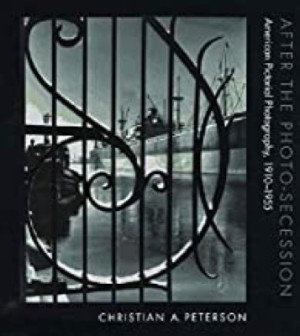
Hardcover. NY, Norton, 1st, 1997, Hardcover,224 pages, 93 full-color photographs. Much has been written about Alfred Stieglitz and his role in establishing photography as an art. Little attention, however, has been paid to the pictorial photographers who followed Stieglitz, among them Imo Jean Cunningham, Edward Weston, Clarence H. White, and a host of others -- those who, in a widespread movement, approached photography in a painterly fashion, creating beautiful images through the use of careful lighting, manipulated tones, soft focus effects, and artistic compositions. In this important volume, Christian A. Peterson finally gives the pictorialists of the first half of the twentieth century their due. He describes the backgrounds of the movement, their methods, the photo clubs they belonged to, and their work, illustrated here with ninety-three stunning reproductions. The movement seemed to die out, Peterson suggests, with the rising popularity of 35mm photography in mid-century, when the care and slow working procedures required by large-format cameras became unpopular.
Hardcover. Atlanta, High Museum of Art/Yale University Press, 1st, 2003, Book: Very Good, Dust Jacket: Very Good, 272 pages. Hardcover. Full color illustrations. Bright, clean copy. This illustrated book, published to commemorate the centenary of the artist's death, addresses Whistler's extraordinary legacy and establishes his pivotal place in the history of American art. array of pictures by 38 other American painters-including Henry Ossawa Tanner, William Merritt Chase, and John Singer Sargent-to demonstrate how Whistler's American contemporaries were affected by his techniques, colour palette, compositions and subject matter. with American artists and the reception of his work in the United States. The essays that follow discuss Whistler's Venetian sojourn and its effect on the American artists who flocked to that city, his relationship with Philadelphia's art community, the Whistler Memorial Exhibition held in Boston in 1904, and much more. Clean, bright copy.
Hardcover. NY, Knopf, 1st, 2022, Book: Very Good, Dust Jacket: Very Good, Hardcover in a bright, unclipped dust jacket. A revelatory history of the transformational decade that followed World War II, when Germany raised itself put of the ashes of defeat, turned away from fascism, and reckoned with the corruption of its soul and the horrors of the Holocaust.
Hardcover. NY, Rizzoli, 1st, 2002, Book: Very Good, Dust Jacket: Very Good, Hardcover, 192 pages. This volume surveys over thirty groundbreaking women who were able to negotiate the conventional boundaries of their time in order to forge successful careers and build distinguished bodies of work. Includes works by Dorothea Lange, Berenice Abbott, Margaret Bourke-White, etc.
Hardcover. NY, Harper Business/ Harper Collins , 1st, 1995, Book: Very Good, Dust Jacket: Very Good, Hardcover, 532 pages, b&w photos. In a bright, unclipped dust jacket. Notes and Sources. Bibliography. Index. This is a story of loyalty and betrayal, a multigenerational saga that culminates in the emergence of Michael Ovitz and his Creative Artists Agency as the dominant force in Hollywood. Good in very good dust jacket. Clean copy.
Hardcover. NY, Free Press , 1st, 1997, Book: Very Good, Dust Jacket: Very Good, Hardcover in a bright, unclipped dust jacket. 464 pages, b&w illustrations. A great but frequently overlooked figure in America during the early decades of the 19th century now gets his due. Military historian Eisenhower (son of the late president) describes a natural leader of imposing stature, overweening pride, exceptional courage, and wide learning, who possessed considerable organizational and diplomatic skills along with outstanding martial instincts. As the nation's youngest general, Scott distinguished himself in the War of 1812, and he was a hero of the Mexican War in the 1840s. After a brilliant campaign fought entirely on foreign soil, he stormed and captured Mexico City despite considerable political maneuvering on the battlefield and the homefront by a variety of influential enemies. In peacetime, he served successfully as a diplomat to the Canadians, the British, the Seminoles, and the Cherokees. Clean copy.
Softcover. Stanford CA, Stanford University Press, 1st pbk., 2008, Book: Very Good, Dust Jacket: None, Softcover, 298 pages. The essays assembled in Agnotology show that ignorance is often more than just an absence of knowledge; it can also be the outcome of cultural and political struggles. Ignorance has a history and a political geography, but there are also things people don't want you to know ("Doubt is our product" is the tobacco industry slogan). Individual chapters treat examples from the realms of global climate change, military secrecy, female orgasm, environmental denialism, Native American paleontology, theoretical archaeology, racial ignorance, and more. The goal of this volume is to better understand how and why various forms of knowing do not come to be, or have disappeared, or have become invisible. Clean copy.
Hardcover. NY, Harcourt Brace, 1st, 1935, Book: Very Good, Dust Jacket: Fair, Hardcover, 307 pages, b&w drawings by the author. 40 short fifteen minute essays/lectures the author gave over radio in the mid-thirties. They were broadcast every Thursday and Sundays at 8:45 pm. B&w frontispiece photo of Van Loon at the microphone. Dust jacket worn, chipped.
Hardcover. Boston, Houghton Mifflin, 2nd pr., 1969, Book: Very Good, Dust Jacket: Good, Hardcover in a worn, chipped dust jacket, 505 pages with b&w illustrations. Amazing detail, yet easily flowing narrative of the governor who preceded FDR, who--with Frances Perkins assistance as Industrial Commissioner--shaped a state's humane response to sweatshops, immigration. His 1928 presidential campaign faced burning Klu Klux Klan crosses and harrassment when he ventured outside the Northeast. After losing to Herbert Hoover he left his successor to Governor of New York, Franklin D. Roosevelt, a working government and blueprint for social reform that Roosevelt would later put to use as President. Name on half title page, otherwise clean internally.
Hardcover. Portland OR, Binfords & Mort, 1st, 1953, Book: Very Good, Dust Jacket: Good, Hardcover in a lightly worn and chipped dust jacket, 406 pages with b&w illustrations and endpapers maps. No markings.
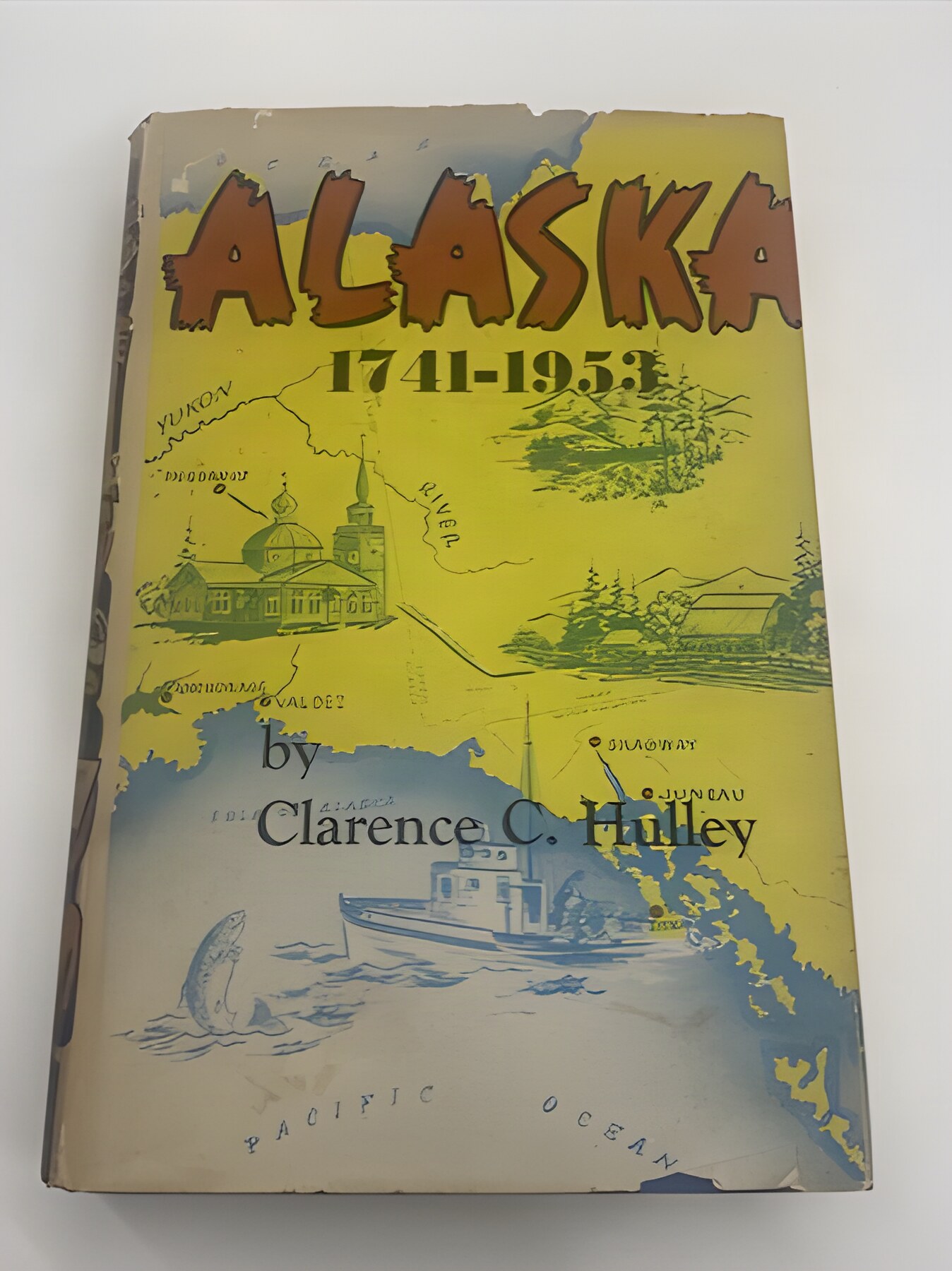
Hardcover. Norman OK, University of Oklahoma Press, 2nd pr., 1952, Book: Very Good, Dust Jacket: Very Good, Hardcover in a lightly worn dust jacket, 350 pages, b&w illustrations. Terra-cotta cloth with gilt on spine. This book traces the history of Alaska from the explorations of Bering up to 1945. Beginning with a chapter on "The Land", the author devotes the next 11 of 19 chapters to the Russian period of Alaska's history. The remaining 7 concern the American period. The book covers Russian exploration and settlement along the shores of northwestern America, of the Russian -American company and its great general manager, Baranov. A whole chapter on the attempt of Russia to establish a monopoly of the north Pacific in the face of increasing encroachment by British and American traders. Clean copy.
Hardcover. New Havn CT, Yale University Press, 1st , 2001, Book: Very Good, Dust Jacket: Very Good, 333 pages. Hardcover with dust jacket. Illustrated in color, B&W. Clean, tight copy. Few painters lived the intellectual adventures of the early twentieth century as intensely as Albert Gleizes. At the centre of the public scandal over Cubism that broke out in Paris in 1911, he was with Marcel Duchamp and Francis Picabia in New York during the war and was one of the first European avant-garde artists to respond to the scale and vigour of New York life. Gleizes was also one of the few French painters of the 1920s to recognise nonrepresentational painting as the logical development of Cubism. His work as a painter is accompanied by an immense body of theoretical work, addressing the question posed so starkly by Duchamp and Picabia: why should we paint? What is the justification for the work of art? Over his life he touches on many spheres of human activity - religious, political and cultural history, physics and the philosophy of work. This book follows Gleizes' argument as it evolves, drawing on painting, and both published and unpublished writings. It reveals Gleizes, not just as a significant historical personality, but as a man whose work and thinking remains surprisingly fresh and relevant to the needs of our own time.
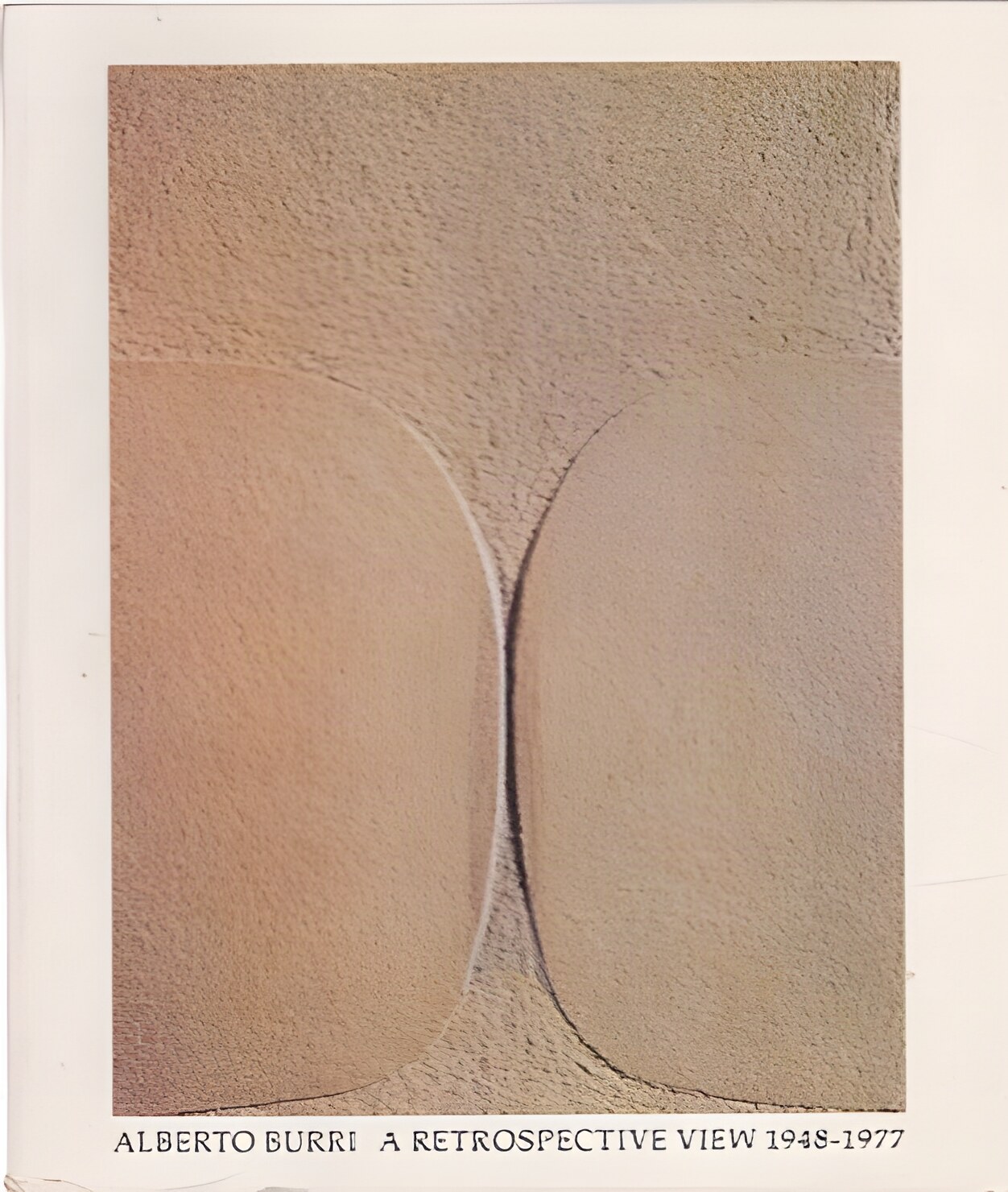
Softcover. Los Angeles, Frederick S Wight Art Gallery, 1st, 1977, Book: Very Good, Dust Jacket: None, Softcover, 96 pages. B&w and color illustrations. Issued in conjunction with several 1977-1978 exhibitions featuring the work of Italian artist Alberto Burri (1915-1995). The entire book is an illustrated essay by Gerald Nordland that serves as a good introduction to the man and his craft. Also includes a chronology and an expansive exhibition history. Faint crease to front cover, otherwise a clean, bright copy.
hardcover. London, Mitchell Beazley, 1st, 2003, Book: Very Good, Dust Jacket: Very Good, Hardcover, 256 pages illustrated in color. A visual history of the record album cover. Great graphic reference. In a bright, unclipped dust jacket.
Hardcover. Garden City NJ, Doubleday & Company , 1st, 1964, Book: Very Good, Dust Jacket: Very Good, 242 pages, hardcover with dust jacket. SIGNED BY TRANSLATOR on front flyleaf. Translated by William Meredith. Landmark in the history of French poetry. With an introduction and notes by Francis Steegmuller. Heavy fading to dust jacket spine. Minor rubbing and edgewear to dust jacket. Slight yellowing and age toning to prelim pages. Age toning to text block edges. A clean and tight copy.
Hardcover. Syracuse University Press, 1st, 1958, Book: Very Good, Dust Jacket: Very Good, Hardcover, brown cloth with title on cover label. Translated by Antje Lemke. Introduction by Donald Bean. Fine in fine printed acetate dust jacket. Contains the first appearance in English of the prologue in which Aldus announces his plans to publish the first printed editions of Aristotle's works. facsimiles printed on rectos and versos of 14 pages at back, facsimiles in text. Clean copy.


 "After A Fashion: What We Wore 1947 to the Presentby: Roberts, Elizabeth")

 "After the Guns Fell Silent: A Post-Appomattox Narrative April 1865-March 1866by: Hoehling, A.A.")
 "After the Hunt - William Harnett and Other American Still Life Painters 1870-1900by: Frankenstein, Alfred")


 "After Whistler - The Artist and His Influence on American Painting by: Merrill, Linda")

 "Against the Odds: Women Pioneers in the First Hundred Years of Photographyby: Sandler, Martin W.")


 "Agency, The: William Morris and the Hidden History of Show Business by: Rose, Frank")
 "Agent Of Destiny: The Life And Times Of General Winfield Scottby: John Eisenhower")

 "Air Storming A Collection of 40 Radio Talks Delivered Over the Stations of NBCby: Van Loon, Hendrik Willem")

 "Alaska: Promyshlennik and Sourdoughby: Stuart Ramsay Tompkins")


 "Albert Gleizes - For and Against the Twentieth Century by: Brooke, Peter")
 "Album - Style and Image in Sleeve Designby: de Ville, Nick")
 "Alcools: Poems 1898-1913 (SIGNED BY MEREDITH)by: Apollinaire/William Meredith (transl.), Guillaume")